Covert cameras - Expert commentary

There was a time when physical security and cybersecurity occupied two very different worlds. One was concerned with the nuts and bolts of locks, doors and perimeter protection. The other focused on networks, software and digital threats. Today’s modern access control systems – used in everything from offices and hotels to hospitals and data centres – combine the two, fusing mechanical engineering and cloud platforms. That means that a door is no longer simply a physical barri...

When news broke that a Renoir painting had been stolen from an exhibition in the south of France, days after 600 diamonds were taken from a museum in Vienna, few in the art or security worlds would have been surprised. Europol had recently published “Changing Tactics, Changing Targets: The Evolving Nature of Museum Heists,” highlighting criminals’ growing focus on high-value objects and their increasing use of force. The latest theft also echoes the Louvre heist almost a year...

The eagerness to adopt AI in physical security is increasing as teams want to implement technology solutions for faster, smarter operations. At the same time, the conversations surrounding AI have changed. The focus now includes not only efficiency gains but also concerns about accountability and trust. According to the Genetec 2026 State of Physical Security report, AI ranked alongside access control and video surveillance as a key priority. However, approximately 40% of the over 7,000 physica...
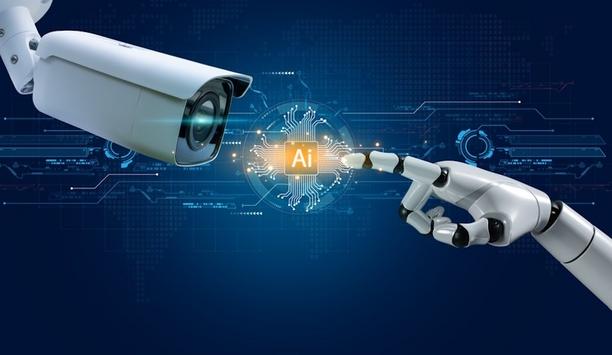
The biggest return on investment from an AI-enabled camera might have nothing to do with security. Organisations are increasingly discovering that the same cameras installed to protect people and property can also improve safety, streamline operations, automate routine workflows, and generate valuable business intelligence. Security remains the primary mission, but it is increasingly only the first customer for the intelligence these systems produce. AI-enabled cameras are rapidly becoming dis...

Europe has set an ambitious goal. With the European Green Deal, leaders aim to make the continent climate neutral by 2050. Ireland is following this lead, promising to cut greenhouse gas emissions by 51% before 2030. And solar energy is a key part of this plan. If you drive through rural Ireland today, you can see the changes happening. Solar farms now cover former grazing land and open fields. They work quietly and efficiently, providing clean electricity to homes, hospitals, schools, and busi...

For years, physical security and cybersecurity evolved on parallel tracks. One team managed doors, badges and cameras, while the other handled network access, authentication and logical assets. The systems rarely shared information and, in many organisations, they still do not. That separation is becoming harder to defend now that employees move continuously between physical and logical environments throughout the workday. A single person may badge into a building, access cloud applications, re...
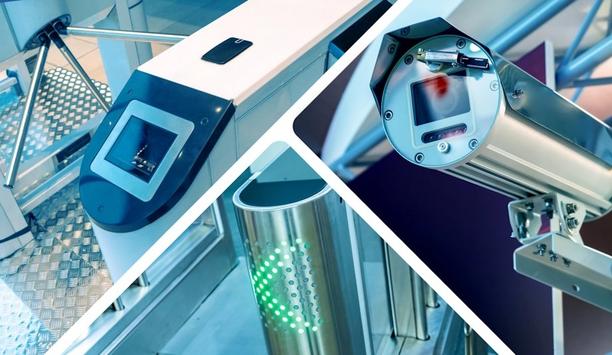
Modernising security infrastructure requires research and planning to build intelligent, connected systems that are secure, scalable and positioned to take the organisation into the future. Prioritising needs, total cost of ownership, interoperability, resilience and sustained value will help ensure that a surveillance system upgrade will deliver both protection and measurable operational impact. Before making that investment, however, security leaders must answer a few key questions to manage...

For years, innovation in physical security has focused on what systems can do: higher-resolution cameras, AI-driven analytics, smarter access control, and cloud-based management. But across deployments, from residential systems to enterprise campuses, a more fundamental issue continues to undermine performance: Connectivity. It is increasingly clear that the effectiveness of modern security systems is not limited by sensors or software, but by the reliability, reach, and architecture of the net...

A security camera installed today has more AI processing power than the systems that guided early autonomous vehicle prototypes. And yet the operator who mounts that camera on a wall will, in all likelihood, never use most of that capability. Industry surveys bear this out: a wide gap persists between the number of security professionals who believe AI can improve outcomes and the much smaller share who have adopted it operationally. The reason has nothing to do with the silicon and every...

Banking is built on change. The financial services landscape is evolving faster than ever, as mobile adoption, digital transactions, and customer expectations continue to accelerate. Success in this space now depends on more than keeping pace — it’s about anticipating what comes next and building the agility to move with it. At the same time, financial institutions face the dual challenge of transformation and trust. They must modernise operations, integrate emerging technologies, a...

Acquisitions are often billed as moments of bold opportunity. For senior executives and boards, these deals are about accelerating growth, unlocking synergies, and strengthening competitive advantage. But for the teams responsible for making operations run safely and smoothly — including physical security — acquisitions can feel like controlled chaos. Decisions happen without warning, details are opaque, and the ripple effects of choices made in the boardroom cascade down through ev...

For years, the worlds of physical security and information technology (IT) remained separate and often at cross-purposes. The departments often worked in silos, despite the fact that infrastructure needs were crucial in the security industry and network traffic and data were of interest to IT professionals. Today, these practices are no longer divided. Physical security depends on network security, and vice versa. For partners, this presents a new challenge – how to speak to both IT and s...

In security, vision is paramount. The surveillance camera serves as an unwavering digital eye—the foundational source of truth. Yet a critical vulnerability persists: what happens when these “eyes” falter without warning? Corrupted footage or unexplained gaps in recorded evidence can render an entire system unreliable, turning trusted video into questionable data. Relying on chance is no longer a viable strategy. Traditionally, ensuring the health of a video surveillance syste...
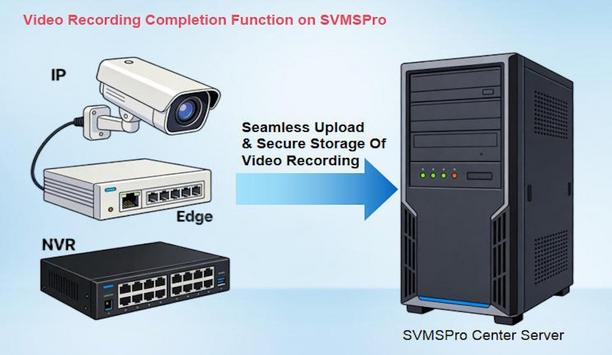
In mobile surveillance, remote sites, and environments with unstable networks, video recordings often suffer from "time gaps" due to network interruptions, a longstanding technical challenge for security systems. Under traditional architectures, central servers rely on real-time streams for storage. Once the network connection is lost, the recording timeline experiences an irrecoverable interruption, leading to the loss of footage of critical events. This creates a fundamental flaw in post-eve...

In the old days, hopping onto the platform from a not-yet-stopped train was a commonplace stunt for daily commuters in a hurry. It was a thrilling, but dangerous part of railway travel. Today, rail travel is generally much safer, but thrill and fame seekers are finding new, creative ways to use the railway to court notoriety online. Earlier this month, a young man filmed himself laying on the tracks and allowing a train to pass over him. In another instance, two people were seen misusing...

In 2021, New Orleans took bold steps to modernise its public safety strategy after experiencing a dramatic increase in criminal activity. The city invested $70M in advanced video security systems, placing smart cameras in high-risk areas like busy transit hubs and crowded public spaces to promote community safety. The cameras weren’t just traditional CCTV setups—they were smart security solutions equipped with real-time alerts that leverage AI-powered analytics, facial recogni...

Artificial Intelligence isn’t just a buzzword anymore. It has become part of our lives, and its uses and applications are growing every other day. Even the public sector, which usually is a late adopter of new technologies, has come onboard this new train. Law enforcement, in particular, has seen the advantages different AI technologies can offer to their work and has started to integrate them into their workflow and daily routines. But there is much more to come. Task automation: AI as...

In today’s world, almost any electronic security system holds the potential to become a gateway for cybercriminals. With physical security and cybersecurity increasingly entwined, security professionals aren’t doing their job unless they take all possible precautions to lock down unauthorised access to camera systems, access control platforms, intercoms, and other network-based security devices and solutions. Let’s explore the many steps companies should take throughout their...

Rapid technological advancement, artificial intelligence (AI) and machine learning (ML) are revolutionising traditional on-premises video security systems. These next-level tools are not just enhancing video data capabilities; they're transforming how businesses approach security, operational efficiency, and information analysis. Video analytics have been a part of security systems for many years, but the arrival of deep learning in 2009 marked a turning point. By training neural networks, basi...

As part of ever-evolving technological advancements and the increase in digitisation, home security systems remain a vital piece of equipment for at least 39 million households in the U.S., and as many as 13 million more households may install new security systems in the next 12 months. Global home security market In addition, a recent study found that 60% of burglars are deterred from attempting a burglary when a home has a security system, looking for alternative targets that are easier. A...

In the realm of physical security, the distinction between being perceived as a security vendor and a security partner holds great importance. While both may seem interchangeable at first glance, how an organisation is viewed by its clients can have a huge impact on the success of its security programmes. At the heart of this differentiation is the concept of relationships and how they shape the dynamics between providers and their clients. Time, care, and diligence For security vendors...

With the rise of organised retail crime (ORC) making headlines, retailers are grappling with the dual challenge of safeguarding both their staff and store assets, while addressing the economic pressures that impact profitability and consumer demand. RFID technology The key lies in identifying effective solutions to counter the current surge in ORC, enabling retailers to secure their vulnerable staff and protect inventory for paying customers. Technology plays a crucial role in supportin...

In the early stages of childhood education, kindergarten imparts foundational principles that shape future behaviour. Today, you can think about cloud computing in a similar manner: it has become a fundamental element in the architecture of modern technology. The cloud now plays a critical role in digital interaction, security, and infrastructure development. Far from being just another tool, the cloud is a cornerstone, providing essential support for the intricate network that supports today'...

The importance of data is ever-growing. For every profession, we’re witnessing the increasing reliance on data and its ability to promote efficiency for corporate decision-makers. The security industry is no different. The growing reliance on data and technological tools has allowed for a new breed of professionals with specialised skill sets. This evolution reflects the changing nature of security challenges in the digital age. The new security environment We know one thing from near...
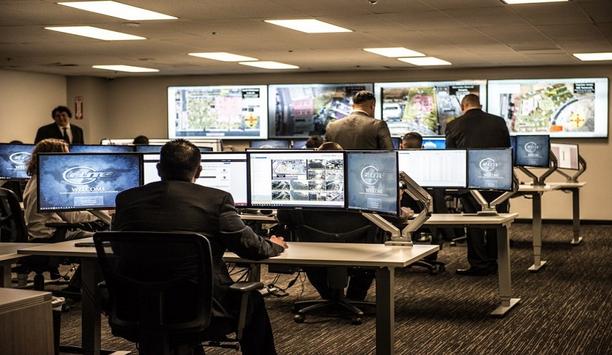
The average business owner or investor has some kind of security precaution in place, especially in the after-hours when there are fewer deterrents to inhibit criminal activity. Security guards, video surveillance systems, motion sensor lights, or even just fake cameras placed around the property are some of the common options people choose. Future of overnight security Smart business owners are starting to realise, however, that some of these traditional security measures are becoming...

The autumn equinox, which marks the start of autumn, occurs this weekend on Saturday, September 23. With darker evenings ahead, the experts at ADT have shared five ways to maximise your home's security. Author's quote Michele Bennett, General Manager at ADT UK&I comments: “Opportunistic thieves use darkness to their advantage, so it’s no surprise that the number of burglaries committed increases when the darker nights draw in." He adds, "Our 2022 burglary report found that bu...

Mass attacks continue to lead the news far too often. All are horrific and disturbing, but the heartbreaking tragedies that have unfolded on school campuses touch us the deepest and have the most profound effects on our communities. NTAC statistics According to a January 2023 report from the United States Secret Service National Threat Assessment Center (NTAC), K-12 events accounted for 6% of all mass attacks in public and semi-public spaces between 2016 and 2020. 6% may strike some as being...

Open platform video technology software is more than just a product; it's a tool that helps customers achieve their desired business outcomes. Safety, round-the-clock security, and increased operational efficiencies are now the norm due to video technology. Responsible Technology Despite humanity’s impressive technological advances, we also recognise the immense responsibility that comes with technological innovation. It's not enough to focus solely on the positive impact video technol...

There’s been a long history of people thinking of “gates, guards, and guns” when referring to physical security. And for a long time, this was the norm. When analogue cameras required significant amounts of wiring and a dedicated guard to watch said feeds (think about any action movie from the 90s), the assumption was that security was protecting assets, but had little to do with the overall business. Defining security with recent advancements Fast forward to more rec...

Keeping people and property safe is the purpose of the entire security industry, and the methods for ensuring safety take numerous forms. From cameras to paging horns to door locks and badge readers, facility managers and security manufacturers must consider multiple factors for securing a building and managing emergencies. Mass notification is critical for many customers to protect a facility and keep people safe. Still, the technology may consist of many elements from one or multiple manufac...

Technology's role in securing banks and financial institutions
Download
Security technologies promote real-time awareness in K-12 schools
Download
Integrated systems enable critical and compliant security for transportation
Download
Modernising physical access control
Download
Access. Intrusion. One estate.
Download
