As the anticipated "Q-Day" approaches—a critical juncture when quantum computers might overpower current encryption technologies—organisations are increasingly viewing quantum risk management as an imperative shared across the value chain rather than a narrowly focused cybersecurity task. The capacity to withstand upheavals spurred by quantum advancements is now reliant on how well companies—encompassing suppliers, customers, platforms, and partners—coordinate their protective measures. In today's interconnected economy, resilience is built between firewalls, not just behind them.
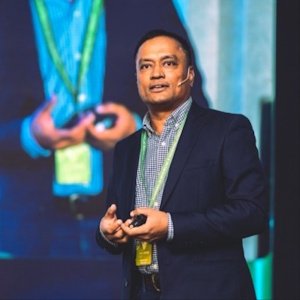
Offering insights into this pivotal shift was Rajesh Patil, Chief Technology Officer of enQase, during a recent session on BizTechReports Executive Vidcast. EnQase offers quantum-safe platforms, integrating quantum-era hardware with sophisticated software to maintain crypto-agility, which is essential for supporting both traditional and post-quantum cryptography during the transition period. Patil noted this move towards quantum resilience marks one of the most significant shifts in enterprise risk management since the internet's inception.
Redefining cybersecurity with extended trust
Methodology is no longer feasible in an era where data frequently crosses institutional boundaries
For a long time, cybersecurity strategies focused on protecting the perimeter. Yet, as Patil elaborated, this methodology is no longer feasible in an era where data frequently crosses institutional boundaries.
"We live in a digital world where information moves fluidly between enterprises," he observed, highlighting that one of their banking clients manages data with about 200 partners.
This interdependent risk is reshaping corporate accountability, with large organisations setting quantum-safe standards that their suppliers must adhere to, often aligning with frameworks like the Commercial National Security Algorithm Suite 2.0 and the post-quantum cryptography standards from NIST.
Impact on the mid-market
The implications for mid-sized businesses are notable, particularly for those serving as crucial suppliers to larger entities. As Patil pointed out, "Quantum-safe organizations will rise to the top of the partner list."
He compared this transition to previous shifts, like the adoption of electronic data interchange in manufacturing and retail, where early adopters gained significant advantages. Unlike past transitions fraught with compatibility issues, the current shift to quantum safety is moving toward a unified standard with guidance from NIST and CNSA 2.0.
The complexity of quantum-safe migration
Transitioning to a quantum-safe framework is a long-term, multi-phase process requiring comprehensive visibility and coordination. Patil stresses the initial step involves creating a cryptographic bill of materials (C-BoM), a complete inventory of algorithms and protocols used in an organisation's systems.
EnQase facilitates this process through non-intrusive discovery methods, which identify cryptographic dependencies and vulnerabilities to craft a phased migration plan.
Ensuring Crypto-Agility
Central to enQase's strategy is the concept of crypto-agility, as quantum-safe algorithms cannot instantly replace
Central to enQase's strategy is the concept of crypto-agility, as quantum-safe algorithms cannot instantly replace existing encryption. Their platform permits organisations to use classical and post-quantum cryptography concurrently, allowing a fallback to traditional encryption when necessary.
"Crypto-agility is the bridge between the present and the quantum future," Patil stated, underscoring the importance of dynamic adaptation over abrupt shifts.
Financial considerations and quantum preparedness
The financial ramifications of quantum-safe migration are substantial, requiring new cost-benefit analyses to weigh short-term modernisation expenses against long-term risks of inaction.
Patil highlighted regulatory exposure and cyber-insurance as key economic signals already influencing executive decisions. Organisations with documented quantum-readiness plans could benefit from reduced insurance costs, echoing experiences from the Y2K era.
Frameworks for quantum safety
Patil emphasises the importance of adherence to frameworks like CNSA 2.0 and NIST’s PQC algorithms
While quantum computing poses uncertainties, the cybersecurity community is benefiting from a consolidated set of standards. Patil emphasises the importance of adherence to frameworks like CNSA 2.0 and NIST’s PQC algorithms to ensure consistent goals across industries.
This alignment simplifies collaboration and governance, with automated scans being crucial to prevent outdated protocols from re-entering systems.
Quantum competence and industry collaboration
Quantum readiness is expected to become an important business credential, akin to ISO certifications. Patil noted, "Being quantum-compliant will signal that your data, your partners’ data, and your customers’ data are safe in your hands."
EnQase aims to democratise access to the necessary expertise and tools for this transition, supporting large enterprises as well as smaller companies through various deployment options.
Collaboration as the foundation for quantum resilience
According to Patil, the success of quantum-safe programmes will be driven by the collaboration they encourage across sectors. “Quantum resilience is a collective achievement," he remarked. "It’s a shared responsibility requiring transparency, coordination, and accountability." Industry-specific groups promoting best practices and alignment are crucial, and Patil advocates for these collaborative efforts to become as routine as compliance audits in the future.
Initiating collaboration with value-chain partners now will smooth the transition to a quantum-safe environment. Patil emphasized, "The time to plan is right now," stressing that those who master quantum safety across their networks will redefine digital trust in the post-quantum era.
As the anticipated “Q-Day” approaches—the moment when quantum computers will render traditional encryption obsolete—executives are beginning to recognise that quantum risk management has evolved into a shared value-chain imperative, not a narrow cybersecurity exercise within individual organisations. The ability to withstand quantum-driven disruption now depends on how effectively corporate ecosystems—spanning suppliers, customers, platforms, and partners—coordinate their defences. In the interconnected economy, resilience is not built behind firewalls; it is built between them.
That was the central message from Rajesh Patil, Chief Technology Officer of enQase, in a recent BizTechReports Executive Vidcast. enQase specialises in quantum-safe platforms that combine quantum-era hardware with a sophisticated software abstraction layer, designed to simplify implementation and maintain crypto-agility—the ability to support both classical and post-quantum cryptography during a complex and gradual transition. According to Patil, the shift toward quantum resilience represents one of the most far-reaching changes in enterprise risk management since the dawn of the Internet itself.
Extending trust beyond organisational boundaries
For decades, cybersecurity strategies have been rooted in the idea of defending the perimeter. But as Patil explained, that concept is no longer viable in an era where data continuously crosses organisational boundaries. “We live in a digital world where information moves fluidly between enterprises,” he said. “A large bank we work with manages data across roughly 200 partners. Even smaller organisations easily have dozens. Once data leaves your direct control, your partners’ security posture becomes part of your own risk equation.”
This shift from isolated risk to interdependent risk is redefining corporate accountability. Large “hub” organisations—multinational banks, automakers, logistics firms, and cloud providers—are now establishing minimum quantum-safe baselines that suppliers must meet to remain part of their trusted ecosystems. Those baselines increasingly align with the Commercial National Security Algorithm Suite 2.0 (CNSA 2.0), a framework introduced by U.S. federal agencies, and the post-quantum cryptography (PQC) standards developed under the auspices of the National Institute of Standards and Technology (NIST).
Adoption of electronic data interchange
The implications for the mid-market are profound. Smaller firms that serve as critical suppliers to larger entities are being pulled into this transformation, often with fewer resources but the same obligations. “Quantum-safe organisations will rise to the top of the partner list,” Patil noted. “Those that fail to prepare may find themselves at the margins of the digital economy.”
He likened the emerging environment to previous industry transitions, such as the adoption of electronic data interchange (EDI) in manufacturing and retail. In those periods, firms that aligned early with dominant standards gained privileged access to contracts and markets. Those that resisted were left behind. But here, Patil emphasised, the industry is learning from history. Unlike EDI—where competing standards and formats created years of confusion and expensive integration—the quantum-safety community is converging around a common foundation.
With NIST’s PQC algorithms and the CNSA 2.0 framework guiding implementation, organisations worldwide are moving in a unified direction. “This time, there’s real consensus,” he said. “That shared understanding will make collaboration smoother and far less fragmented than what we saw in earlier eras of digital transformation.”
Mapping, migrating, and managing complexity
Moving to a quantum-safe architecture is not a one-time event. It is a multiyear, multi-phase process that demands visibility, discipline, and coordination across the entire value chain. Patil emphasises the importance of beginning with a cryptographic bill of materials (C-BoM)—a comprehensive inventory that identifies every algorithm, key, protocol, and certificate in use across an organisation’s systems.
“Over the past three decades, encryption became so ubiquitous that we stopped noticing it,” he said. “But quantum computing changes the equation. You can’t modernise what you can’t find. Every connection, every application, every device that touches sensitive data must be mapped.”
Patil described how enQase begins its engagements by performing non-intrusive discovery initiatives to identify cryptographic dependencies, assess vulnerabilities, and determine where data in transit is most exposed. That assessment becomes the foundation for a migration plan that is typically executed in phases, beginning with the most critical systems and progressing toward lower-risk domains. “It’s like changing the tires on a moving car,” Patil explained. “You must keep the business running while modernising the underlying security fabric.”
Quantum-safe algorithms
The company’s approach to crypto-agility is central to this process. Because quantum-safe algorithms cannot simply replace existing encryption overnight, enQase’s platform allows organisations to run classical and post-quantum cryptography in parallel.
This dual-mode capability provides a safety net: if an issue arises with the new algorithms, systems can temporarily fall back to legacy encryption without disrupting operations. “Crypto-agility is the bridge between the present and the quantum future,” Patil said. “It allows you to adapt dynamically rather than make a single, irreversible leap.”
He warns that time is short. “If organisations wait until 2028 or 2029 to start this process, they’ll be competing for the same small pool of talent and resources,” he said. “The enterprises that act now will have the advantage—not only in security, but in market trust.”
Quantifying Quantum exposure
While the technology transition itself is complex, the financial implications are even more far-reaching. Quantum-safe migration requires new forms of cost-benefit analysis that balance the near-term expense of modernisation against the long-term costs of inaction. Patil pointed to two clear economic signals that are already shaping executive decision-making.
The first is regulatory and reputational exposure. New data-protection laws and breach-notification requirements impose steep penalties for non-compliance and reputational damage that extends throughout the value chain. “When one partner fails, the entire network feels the impact,” Patil said. “Customers don’t distinguish between who owned the data and who transmitted it.”
Quantum-readiness plans
The second is insurance economics. Cyber-insurance providers are beginning to differentiate between organisations that have quantum-readiness plans and those that do not. “Carriers are already signalling that premiums will reflect your preparedness,” Patil explained. “A documented plan—a roadmap, milestones, and evidence of progress—can translate directly into lower costs and better coverage.”
He likened this shift to the early days of Y2K, when firms that upgraded early avoided the resource bottlenecks that hit the market as deadlines approached. “The difference is that Y2K had a date on the calendar,” he said. “Quantum threats don’t. Q-Day could come earlier than expected, or it may already have passed without anyone realising it.”
Patil also highlighted a more subtle but equally critical risk: the ‘harvest now, decrypt later’ strategy already being employed by sophisticated adversaries. Data intercepted and stored now can be decrypted years later once quantum capabilities mature. “That means the risk is not hypothetical,” he warned. “Sensitive data being exchanged right now could be compromised in the future, long after organisations think they are safe.”
As standards mature, discipline matters
While quantum computing introduces uncertainty, the good news is that the cybersecurity community is coalescing around a coherent set of standards. The CNSA 2.0 framework offers graded levels of cryptographic strength tailored to specific use cases, while NIST’s PQC algorithms—such as CRYSTALS-Kyber and Dilithium—are rapidly being integrated into mainstream technology stacks. “This alignment ensures that organisations across industries and geographies are working toward compatible goals,” Patil said.
Yet governance remains the bottleneck. “Every code deployment should include a cryptographic check,” he advised. “Automated scanning of repositories, applications, and APIs is the only way to ensure outdated or non-compliant algorithms don’t sneak back in through legacy processes.”
Patil emphasised that these controls should extend to all partners and service providers. Managed service providers (MSPs), system integrators, and SaaS vendors must now be held to the same cryptographic standards as their clients. “Contracts should explicitly define PQC timelines, testing procedures, and attestation requirements,” he said. “Quantum safety cannot be delegated; it must be shared.”
Quantum competence as a new business credential
In the coming years, quantum readiness will become an element of corporate reputation. “We’ll see organisations publicly declaring their quantum-safe status the way they once touted ISO certifications or cloud-first strategies,” Patil predicted. “Being quantum-compliant will signal that your data, your partners’ data, and your customers’ data are safe in your hands.”
The mission of enQase in this transformation, according to Patil, is to democratise access to the expertise and tools required to make that transition possible. The company works both directly with large enterprises and through an ecosystem of integrators and managed-service providers, offering deployment options that range from on-premises implementations to SaaS-based solutions. “Our goal,” Patil said, “is to remove complexity, reduce cost, and accelerate time to compliance. We want every organisation—regardless of size—to participate confidently in a quantum-safe value chain.”
He also sees this shift as a cultural inflection point for IT and risk pioneers. “In the past, cybersecurity has been viewed as an internal concern. Quantum risk management forces us to think externally—to consider our partners, our suppliers, and even our customers as part of a continuous fabric of trust,” he said. “That mindset will define which organisations thrive in the next decade.”
Collaboration as the cornerstone of Quantum resilience
Patil believes the defining feature of successful quantum-safe programs will not be the technology itself, but the collaboration it fosters across industries. “Quantum resilience is a collective achievement,” he said. “No single organisation can achieve it in isolation. It’s a shared responsibility that demands transparency, coordination, and accountability.”
He advocates for industry-specific working groups that allow organisations to share best practices, align roadmaps, and synchronise testing. Some sectors, including finance and defense, are already experimenting with these collaborative frameworks, and Patil expects others to follow suit. “As more hub enterprises establish quantum-safety mandates, value-chain alignment will become as routine as compliance audits or SOC 2 certifications,” he said.
The sooner organisations begin collaborating with their value-chain partners on quantum risk management, the smoother the eventual transition will be. “The time to plan,” Patil concluded, “is right now. Enterprises that pursue quantum-safe mastery across their value chains will not only reduce risk—they will redefine digital trust for the post-quantum era.”