Banking & finance security applications - Expert commentary

A defibrillator can save the life of a person suffering from cardiac arrest – but it is most effective when used in the first few minutes of the patient collapsing. Studies have shown that a shock given within the first three minutes provides the best chance of survival and even one minute of further delay can substantially lower the chances of recovering. Public Access Defibrillators (PADs) were created to allow untrained members of the public to deliver life-saving treatment in those pr...

Smart security is advancing rapidly. As AI and 4K rise in adoption on smart video cameras, these higher video resolutions are driving the demand for more data to be stored on-camera. AI and smart video promise to extract greater insights from security video. Complex, extensive camera networks will already require a large amount of data storage, particularly if this is 24/7 monitoring from smart video-enabled devices. With 4K-compliant cameras projected to make up over 24% of all network camera...

Across the world, the impact of the current pandemic has majorly disrupted how we function in our everyday lives, as a society, and the ways in which we do our jobs. Throughout, our personal safety and wellbeing, as well as that of our families, neighbours and colleagues, has been paramount - and adapting our day-to-day lives to meet social distancing measures has been a learning curve for us all. As we start to reassemble normal life, precautionary measures will continue to be put in place to...

The new buzz in the thermal imaging world goes by many names. In a short time, a small niche in the world of IR, which was previously sidelined to make way for more lucrative markets such as security and defence, has taken the top spot in the attention, production and sales for many manufacturers and integrators. It’s no surprise considering the size of this new market. Suddenly, hotels, cinemas, malls, hospitals, critical services, public transportation, office buildings and more h...

A total of £1.6 billion worth of goods are reported as ‘lost’ to in-store theft in supermarkets each year, with figures increasing steadily. The presence of self-checkout systems have increased in supermarkets, as well as other industry retailers. By 2021, we’re globally on track to have 468,000 self-checkout machines in operation, nearly double the 240,000 in existence since 2016. While this increase comes with such benefits as reduced wait times for customers and staff...

The modern working world has evolved dramatically over the last few decades - from how and when we work, to the places we work from. Widespread internet connection advances, alongside the growth of cloud-based shared working platforms, have not only created the possibility for increasingly flexible working arrangements, but also fuelled a desire to do so – particularly among millennials. The preference for flexible working has now created a widespread need for more agile workforces, saddl...

The COVID-19 pandemic is the defining global health crisis of our time. In order to be able to fight against it, mask detection and temperature measurement have become daily routines for everyone. In this situation, Merit LILIN, with over 40 years of experience in IP video manufacturers of IP cameras, recording devices, and software, have created a cost-effective COVID-19 solution to ensure end-user health and safety. Temperature measurement Many solutions should provide temperature informatio...

The coronavirus (COVID-19) pandemic marks the biggest global disruption since World War II. While the ‘new normal’ after the crisis is still taking shape, consumers are apprehensive about the future. According to a recent survey, 60% of shoppers are afraid of going grocery shopping, with 73% making fewer trips to physical stores. Returning to the workplace is also causing unease, as 66% of employees report feeling uncomfortable about returning to work after COVID-19. Businesse...

As businesses, schools, hospitals and sporting venues look to safely reopen in a COVID-19 world, thermal imaging systems will play a critical role in helping to detect and distinguish skin temperature variations in people. Thermal surveillance, a mainstay of traditional physical security and outdoor perimeter detection, is now being deployed to quickly scan employees, contractors and visitors as part of a first line of defense to detect COVID-19 symptoms. In the coming weeks and months, the se...

We all know that having CCTV around your home can help to protect you and your family. Without CCTV, you could end up in danger and an intruder could get away with breaking into your house, hurting your loved ones and stealing your possessions. Similarly, without CCTV in the office, you’ll be leaving yourself open to all kinds of damage and could lose a lot of equipment in the process. In short, making sure you have CCTV is important for both home and business security. However, it can be...

With the pandemic still in full swing and no certainty as to when exactly it will come to an end, the world has been battling anxiety for months now. And with each day, circumstances change quickly and almost make it impossible to predict what will happen next, how events will unfold, and what actions to take in light of a new situation. But one thing is certain: the world has been shut down and paralysed for way too long, and the eventual reopening is unavoidable – in fact, it’s we...

The unprecedented global impact of COVID-19 has taken its toll on all of us, but as cases of the virus thankfully recede, employers are now forced to confront how they can enable a safe return to work for employees. For many employers, this means they will have to carry out a COVID-19 risk assessment, redesign workspaces to maintain social distances, carry out more frequent cleaning, manage the transmission risk and find alternatives to touch-based security devices. Protecting workplace occupan...

You are not alone: operators everywhere are asking themselves what are they going to do? How are they going to get back to business, and fast? How are they going to cost-effectively operate with all the new safety requirements that have arisen as a result of COVID? How are they going to ensure it all gets done for the safety of customers and staff? How are they going to protect their brand from the negative exposure of being identified as a property with a reputation for COVID? The economic imp...

Technology has played a vital role in how businesses have enabled their employees to work productively from home during the COVID-19 pandemic. For those of us who can do our jobs from home you only have to look at the ‘Zoom Boom’ to see how much our working lives have changed compared to the beginning of the year. Despite the fact that those companies that can are now productively and efficiently operating remotely, the country is now facing the next challenge in this crisis: how to...

Today’s environment has evolved into something that according to some may seem unexplainable. But in the context of video surveillance, this is something that we understand. Allow me to shed some light and understanding in terms of security and why it truly is a necessity. Security is not a luxury, it is a necessity. An essential practice now peaking the interests of all businesses small and large. A video surveillance system is a cost effective option that does not require monitoring fee...
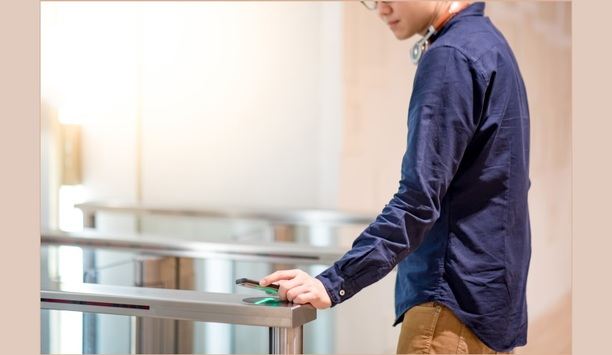
The emergence of smartphones using iOS and Android is rapidly changing the landscape of the IT industry around the world. Several industries, such as digital cameras, car navigation, MP3, and PNP, have been replaced by equivalent or even better performance using smartphones. Smartphones provide increasing portability by integrating the functions of various devices into a single unit which allows them to connect to platforms with network-based services and offer new services and conveniences that...

Large event venues spend significant resources on physical security, and the vast majority invest in video surveillance systems as a way of monitoring public areas such as parking lots, garages and seating, as well as “backstage” areas such as loading docks and offices. Even though the camera footage is often preserved for investigating incidents, for the most part, video footage goes untapped because – realistically – security staff cannot constantly and efficiently moni...

News reports and opinion columns about face recognition are appearing everyday. To some of us, the term sounds overly intrusive. It even makes people shrink back into their seats or shake their head in disgust, picturing a present-day dystopia. Yet to others, face recognition presents technology-enabled realistic opportunities to fight, and win, the battle against crime. What are the facts about face recognition? Which side is right? Well, there is no definitive answer because, as with all powe...

Companies are following government guidance and getting as many people as possible working from home. Some companies will have resisted home working in the past, but I’m certain that the sceptics will find that people can be productive with the right tools no matter where they are. A temporary solution will become permanent. But getting it right means managing risk. Access is king In a typical office with an on-premise data centre, the IT department has complete control over network acce...

Artificial Intelligence. You’ve heard the words in just about every facet of our lives, just two words, and they’re quite possibly the most moving, life-changing words employed in everyday conversations. So what exactly is AI, who currently uses it and should be using it? What is AI? AI is a powerful way of collecting, qualifying and quantifying data toward a meaningful conclusion to help us reach decisions more quickly or automate processes which could be considered mundane or rep...

From drone fleets and autonomous transportation systems to smart homes with computer-controlled lighting, heating, media and security systems, a new group of highly-automated technologies is gripping the popular imagination. These technologies – made possible by the Internet of Things (IoT) – form advanced ecosystems of interrelated devices with the capacity to monitor, detect, communicate and act on the real world independently of human intervention. Promising to fulfil all of our w...

With the start of the 2020s, many security industry experts are reflecting on the emerging technologies over the past decade and looking forward to what is in store in the future. Artificial Intelligence (AI) is a buzzword that has infiltrated everyday nomenclature throughout the past decade. Every industry from healthcare, to banking, to security has implemented some form of AI that is touted as the hidden key to maximising productivity and/or security. However, AI technology is still in its in...

Leap years occur every four years as a way to help synchronise the calendar year with the solar year, or how long it takes the Earth to orbit the sun. While this is necessary, leap years require our security systems to account for an extra day, apart from its normal schedule. As a result, leap years create problems with computing and can cause major issues to access control system functionality if a provider is not leap year compatible. There are a few things to keep in mind as we near February...

Many industries are, to a greater or lesser extent, in the throes of digital transformation. As with any change programme, digital transformation efforts often under-perform against expectations. Yet, the number of digital transformation programmes continue to increase, as commercial pressures intensify. As security professionals we need to embrace our role in digital transformation, as security is everybody’s business. For all those people weary of hearing about digital transformation an...

ISC West, the world's largest security industry trade show, is just around the corner. This in-person show gathered more than 1,000 manufacturers and over 30,000 visitors from all over the world in 2019. On top of that, more than 200 brands exhibited at ISC West for the first time. This year's event promises to be just as exciting, if not more so. Let’s overview some leading security trends in video management systems development, and what's worth your time and attention at ISC West 2020....

Being in the physical security industry for almost two decades has been an exciting journey, with significant changes that have impacted the world of security. Companies today must be proactive when it comes to securing their facility and are lucky to have so many choices when it comes to security technology. From the beginning, the ISC West show was always at the forefront of new technology and brought together the very best technology and industry professionals in the “City of Lights&rdq...

How can security system integrators not just survive but thrive in today’s IT-led market? The key seems to be in training. As increasingly more clients look to integrate access control with IT environments, they want integrators with the specialist skills to achieve this. For integrators that don’t invest in training, the risk is being left behind. Because many security system integrators aren’t providing specialist IT support, manufacturers are now offering services to make...

Security managers, installers and integrators look into a wide variety of factors when selecting a remote video monitoring receiving centre to provide continued real-time surveillance of their sites. But there’s one factor which isn’t often taken into consideration, when it really should be. That’s the welfare of the CCTV operators who are tasked with responding to alarms and ensuring on-site incidents are dealt with appropriately. The fact is, in most UK monitoring centres th...

It’s not just a new year, it’s a new decade. And somehow this makes it feel bigger. Almost like we’re moving faster or reaching farther. Technology is certainly advancing at an unprecedented pace. While there’s a lot to talk about, there are three big security trends that we think will continue to have a huge impact in the year to come. 1. What is artificial intelligence and is it going to take over? We’ve seen countless versions of artificial intelligence (AI) in...

Entrance control and access control - of the physical kind - are common terms in the security industry which are often used interchangeably, but should they be? Having worked both sides of the fence, with previous roles at TDSi and HID and now the Major Accounts and Marketing Manager at Integrated Design Limited, Tony Smith highlights the subtle but important differences between these two terms and the systems they refer to, outlining how they should work together to achieve optimal security....

Security technologies promote real-time awareness in K-12 schools
Download
Technology's role in securing banks and financial institutions
Download
Integrated systems enable critical and compliant security for transportation
Download
Modernising physical access control
Download
Access. Intrusion. One estate.
Download
