Check out our special report on casino security

How is AI transforming physical security?
28 Apr 2025

Editor Introduction
In the physical security marketplace, artificial intelligence (AI) has evolved beyond the novelty phase. The emphasis has now shifted to the more practical aspects of implementing AI technology. That a system implements AI is no longer impressive in and of itself. The question becomes: What can this AI system do for me? How can it improve my physical security stance? We asked our Expert Panel Roundtable: How is artificial intelligence (AI) transforming physical security?

AI solutions are poised to help shape the future of identity and access management, especially when combined with biometric technologies. An example is the integration of AI-driven monitoring and biometrics for tracking and observing individuals entering and moving within the hospital. AI technology employs machine learning to identify individuals through facial recognition, fingerprint analysis, and anti-spoofing techniques, and can be used to flag unauthorised individuals and monitor unusual behaviour. It can be embedded with machine learning directly on edge devices like security cameras located closer to where data is collected for improved real-time threat response while prioritising privacy. According to HID’s 2025 State of Security and Identity Report, the use of AI agents to enhance security operations is proliferating, and key benefits include improved efficiency and speed of security processes (50%) and enhanced real-time data analysis capabilities (47%). Demand for AI will continue to grow as mobile and physical access credentials are increasingly integrated with smart building technologies.


Physical security is finally reaching a critical tipping point where investment in AI-driven technology makes sense – especially if it's tied to more streamlined operations, reduction of cost, and addressing resourcing challenges that all security teams are facing. In a global security operations centre, for example, the use of an AI Agent to intelligently detect and respond to security incidents in accordance with specific, customised security protocols can deliver a new level of vigilance and productivity that we have not seen in the industry. Imagine being able to infinitely scale your first line triaging of alarms with AI, where the only remaining ones are real critical incidents that require a human in the loop. Doing so reduces operator turnover, missed incidents, and cost, ultimately allowing security teams to focus on more impactful and preventative initiatives to reduce risk for the business and keep assets and people safe.

The recent adoption of Generative AI in physical security has led to an unfortunate proliferation of low-value features. Many of these features fail to provide meaningful benefits and will likely be short-lived. The security industry depends on a vast number of workflows that must be 100% consistent, predictable, and trustworthy every time. The real breakthrough for AI in security will come from integrating AI’s flexible, humanlike reasoning with these rigid, mission-critical workflows. Agentic AI has the potential to intelligently orchestrate complex environments, blending adaptability with the precision that security operations demand. AI can enable systems that are not only smarter but also more reliable more secure and more human-friendly. The future of AI in physical security lies in meaningful automation that balances intelligence with predictability, delivering real value in high-stakes, real-world contexts.

AI is transforming the physical security industry in ways that were hard to imagine just a few years ago. Tracking down security footage of an incident was often a time-consuming, manual process that could take hours. But today, AI solutions allow users to conduct natural language searches — like “person in white hat last Tuesday” — to quickly find footage of specific people or vehicles within minutes. What’s exciting is that we are still only scratching the surface of what AI can do for security operations — and the technology is evolving fast. Today, we are using natural language to search for people and vehicles, but soon, those capabilities could expand to include more abstract inputs, such as the sound of glass breaking or specific actions like a person running. At its core, AI is helping organisations move from a reactive approach to a more proactive one. And thanks to the rise of cloud-based platforms, advanced AI tools are now more accessible than ever.

The race to implement AI is accelerating, with more companies shifting their focus from simply adopting AI for its popularity to leveraging it for practical, high-impact applications. One key area of advancement is using AI to streamline setup and configuration, enabling technicians to consistently achieve expert-level installations with greater efficiency. Additionally, we are transitioning beyond the era when security cameras merely captured footage for human review. AI integration is transforming cameras into intelligent sensors that not only detect real-time potential threats but also help to mitigate them instantly. These advanced systems can issue vocal warnings, sort through false alarms, and escalate issues automatically for human review to control access and significantly improve security.

For several years, AI has made waves in the security industry, nudging integrators across verticals to begin implementing AI/machine learning (ML)-enabled technologies in various capacities. Suffice it to say, the future is bright for AI in the world of physical security, as evidenced by the significant number of standing-room-only sessions at ISC West 2025 and continued launches of AI-based technologies from major manufacturers. While these innovations have dominated headlines for several years now, the software and services used to retrofit end user systems needs significant attention. Across the board, system integrators are working with customers to determine what they can keep and what needs to be refreshed, to take advantage of the latest analytics features, which requires an unprecedented level of collaboration between integrators, end users and their vendors. To ensure the adoption of AI/ML technologies happens smoothly, intelligent system design tools and lifecycle management will play a prominent role.

As we grapple with the challenges posed by AI’s ever-expanding influence, identity verification has become vital to securing our interactions and transactions physically and digitally. While AI is not new, the tactics used by fraudsters leveraging the technology are, requiring professionals to update their security approach to incorporate both digital and physical defences for a new era of sophisticated fraud. Historically, scammers created physical counterfeit documents from scratch. Now, for the first time, digital techniques have surpassed physical fraud. Recent data revealed a 244% year-over-year increase in digital forgeries, driven by the availability of AI-assisted tools like deepfakes, as well as shared methodologies and the rise of fraud-as-a-service. These findings point to an inflection point for security teams – physical security is no longer sufficient; instead, teams need to integrate digital strategies in tandem with physical to successfully combat fraudsters in today’s sophisticated landscape.

Xthings firmly believes that artificial intelligence (AI) is revolutionising physical security by enhancing its speed, intelligence, and proactive nature. Traditional security systems rely heavily on human monitoring and reactive responses. However, AI has transformed this approach. With the integration of machine learning and computer vision, cameras now detect not only motion but also unusual behaviours. For instance, an AI-powered system can promptly flag individuals loitering near restricted areas or identify abandoned objects in real-time. Facial recognition further enhances security by enabling instant identity verification for access control systems. This reduces the reliance on badges or PIN codes and, when combined with AI, allows these systems to accurately identify known threats from watchlists or detect identity fraud attempts. AI also brings automation to threat analysis. It efficiently sifts through vast video footage or sensor data to pinpoint relevant events, thereby reducing the frequency of false alarms and allowing security teams to focus on actual risks. As technology continues to advance, striking a harmonious balance between safety, privacy, and accountability will be paramount.
Editor Summary
For physical security, AI is being deployed in areas such as intelligent video analytics, facial recognition, object detection and tracking, and anomaly detection. AI is adding intelligence to command-and-control systems. New analytics are becoming increasingly predictive and preventative, and incident response is becoming better than ever. Beyond the newfangled early days of the technology, AI is now seen as an additional practical tool that can transform physical security for the better.
Johnson Controls, Inc. products


Johnson Controls, Inc. news
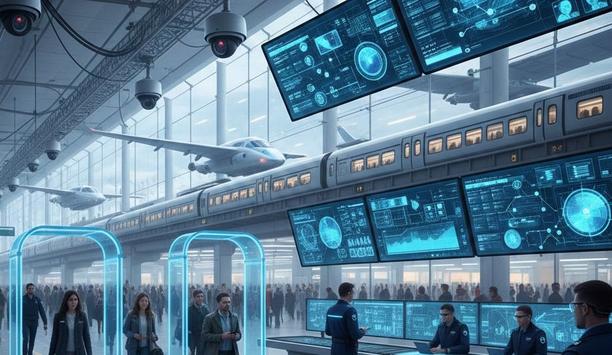
Transportation systems need robust physical security to protect human life, to ensure economic stability, and to maintain national security. Because transportation involves moving large numbers of people and critical goods across vast, often interconnected infrastructure, it presents a highly attractive target for various threats. More threats equate to a greater need for security. We asked our Expert Panel Roundtable: What are the emerging applications of physical security in the transportation...

Installing physical security systems requires integrating diverse technologies (e.g., cameras, access control, alarms) that often use different protocols and must be adapted to a building's unique physical layout and legacy infrastructure. Specialised technical expertise is required for seamless networking and proper configuration. Hopefully, no important factors are overlooked in the installation process. We asked our Expert Panel Roundtable: What is the most overlooked factor when inst...

Emphasising proactive rather than reactive security shifts the focus from dealing with crises and damage control to prevention. Advantages of a proactive approach include cost efficiency, better business continuity, and fewer crises that draw attention away from strategic improvements. Staying ahead of threats is a core mission of the security department, and technology has evolved to enable security professionals to deliver on that mission better than ever. We asked our Expert Panel Roundtable:...
Johnson Controls, Inc. case studies

Keeping beachgoers, swimmers and surfers safe is all in a day’s work for the team at South Maroubra Surf Live Saving Club, and every second counts when an incident unfolds on the water. One of the most topical issues and threats to those enjoying Australia’s world-renowned beaches is sharks, so for the surf club it made sense to look to smart, new technology to keep those who enjoy the sand and surf safe. Security technology to lifesavers "Since the club wa...

SwiftConnect, a pioneering provider of connected access enablement, is powering easy, secure, and private access using an iPhone and Apple Watch with the Johnson Controls Software House C•CURE 9000 access control system. The SwiftConnect AccessCloud platform integration with the Software House C•CURE 9000 access control system makes it possible for Software House C•CURE 9000 customers to take advantage of the employee badge in Apple Wallet for physical access. Deployments of emp...

It may sound like a small change, but installing security cameras on a property can significantly impact occupant and visitor behaviour by enabling more accountability. This is notable for environments such as K-12 schools where occupants are younger and more impulsive. Lack of visibility A public school system on the East Coast faced frequent incidents of bullying, vandalism and theft among students as well as the harassment of faculty and staff and was struggling to keep its occupants accou...
Johnson Controls, Inc. white papers
Johnson Controls, Inc. videos


Frictionless access control: 5 minutes with Rick Focke Tyco Software House

Video Surveillance Solutions: 5 Minutes with Ryan Hulse from JCI

Johnson Controls P2000 Security Management System Controls Access at RWU, Rhode Island, USA
An overview of the Johnson Controls P2000 Security Management System

Johnson Controls Company Profile

Johnson Controls Corporate Profile

Expert commentary
Security beat

Johnson Controls, Inc.
507 E Michigan Street
Milwaukee, WI 53202


