Check out our special report on Cybersecurity

What are emerging applications for physical security in transportation?
27 Nov 2025
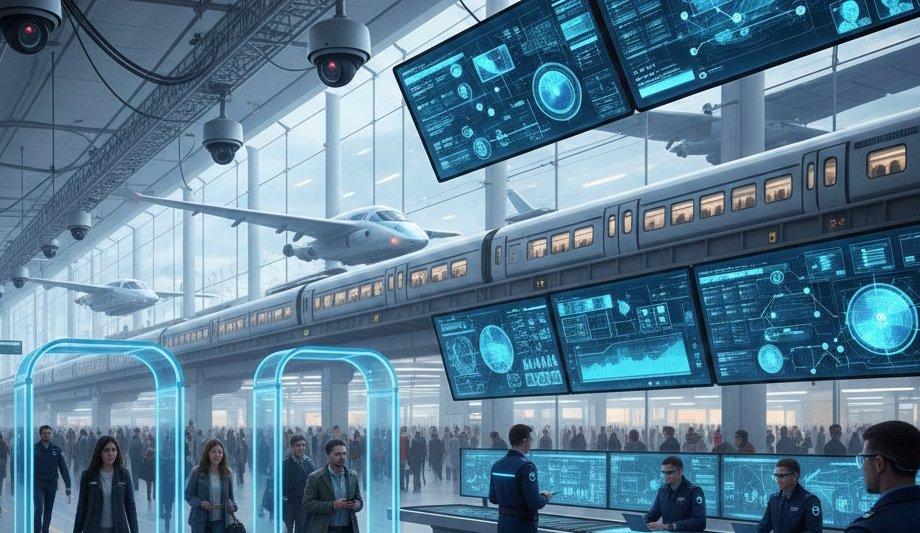

- Transportation systems require advanced physical security for safeguarding human lives and economic stability.
- Interconnected transport infrastructure makes an attractive target, necessitating emergent security applications.
- Physical security developments are crucial for addressing escalating threats in transportation sectors.
Editor Introduction
Transportation systems need robust physical security to protect human life, to ensure economic stability, and to maintain national security. Because transportation involves moving large numbers of people and critical goods across vast, often interconnected infrastructure, it presents a highly attractive target for various threats. More threats equate to a greater need for security. We asked our Expert Panel Roundtable: What are the emerging applications of physical security in the transportation market?


AI and Biometrics Boost Cargo Theft Prevention in Transport
Transportation security today is driven by integration, intelligence, and innovation. Airports, rail stations, and ports are consolidating traditionally siloed security systems of access control and video surveillance into unified platforms, accelerating incident response, enhancing situational awareness, and enabling smarter threat detection.
AI analytics and biometrics are also rapidly emerging as transformative forces in transportation security to address an estimated 22% increase in cargo theft by the end of 2025, including a rise in the frequency of incidents involving insider participation.
For example, AI is revolutionizing access control and video surveillance by automatically flagging suspicious behavior, tracking individuals across camera networks, and correlating access events with footage. This dramatically reduces human processing time and shifts operations from reactive investigation to proactive threat prevention.
Meanwhile, mass transit systems are leveraging facial recognition to verify identity beyond credentials and access levels, preventing tailgating or anti-passback violations to ensure secure, accountable access in high-traffic environments.

AI and Biometrics Transform Transportation Threat Detection and Response
In the transportation industry, physical security is evolving to connect every part of the network, from vehicles to control centers. Unifying onboard systems with land-side infrastructure gives fleet managers real-time visibility and faster, more coordinated responses when incidents occur.
Many agencies are also modernizing by shifting from on-premises systems to the cloud. Cloud-connected and hybrid deployments simplify updates, enhance scalability, and enable secure data sharing with operations teams and law enforcement. New integrations are further expanding what’s possible.
Body-worn cameras improve driver and passenger safety by providing real-time visibility and evidence. At the same time, combining video with LiDAR (light detection and ranging) offers better situational awareness in tunnels, depots, and along tracks where traditional cameras may struggle.
Together, these advancements help create a unified, flexible foundation that strengthens safety, streamlines investigations, and enables transportation agencies to run more efficiently.

Integrated AI Enhances Proactive Surveillance in Transportation Security
The transportation industry is evolving fast, with video surveillance, analytics, and sensors working together to create smarter, more proactive security systems. Airports, seaports, and transit networks are now using AI-powered tools that combine video, radar, and thermal data to instantly detect threats like perimeter breaches or suspicious activity.
Camera metadata integrated into video management systems (VMS) allow operators to find the needle in the haystack. Vehicles, terminals, and logistics hubs are linking cameras with telematics for better situational awareness and incident reconstruction. Predictive analytics and sensor analytics give operators the ability to spot risks early — whether it’s crowd surges or equipment tampering.
The future of transportation security lies in unified platforms that connect video, access control, and IoT sensors. By merging physical and cybersecurity, these systems are transforming security from reactive monitoring to intelligent prevention and operational insight.

Gunshot Detection to Revolutionize Transportation Security Systems
A key emerging trend in transportation is the use of technology to enhance public safety, particularly through gunshot detection. Airports, train stations, and other transit hubs are high-density environments with limited visibility into who is moving through them, making them vulnerable to violent incidents.
Traditional security measures, like Transportation Security Administration (TSA) checkpoints, cover only part of the journey and many public transportation facilities remain open and unmonitored. Gunshot detection technology addresses this gap by rapidly identifying and verifying active shooter incidents in real time.
This allows authorities to respond quickly, limit risk, and reduce operational disruption. By integrating detection systems, transportation facilities can better protect travelers, improve situational awareness, and make informed decisions during emergencies.

Unified Security Platforms Streamline Incident Response in Transportation
Emerging applications of physical security in the transportation market are increasingly focused on integrating advanced technologies to enhance safety, efficiency, and cyber resilience. Modern access control systems now use biometrics, mobile credentials, and centralized cloud platforms to protect terminals and restricted areas.
Perimeter security integrates radar, LiDAR, and intelligent fencing for real-time detection and deterrence, while video surveillance leverages AI-driven analytics for proactive incident response, traffic management, and predictive maintenance. Importantly, as these systems transition from legacy, stand-alone platforms to interconnected networks, cybersecurity has become a critical layer of protection.
Securing data flows between physical and digital systems ensures continuity and safeguards against cyber-physical threats.
These unified, intelligent solutions not only strengthen protection across airports, seaports, rail, and logistics hubs but also improve business efficiency, reduce downtime, and enhance operational visibility – transforming transportation security into a strategic enabler of resilience and performance.
Editor Summary
Transportation security relies on unifying systems like access control and video surveillance. Key emerging trends include AI analytics and biometrics for proactive threat prevention and identity verification. Modern systems are shifting to cloud-connected platforms, integrating new sensors like LiDAR and radar, and incorporating tools like gunshot detection to enhance safety and operational efficiency.
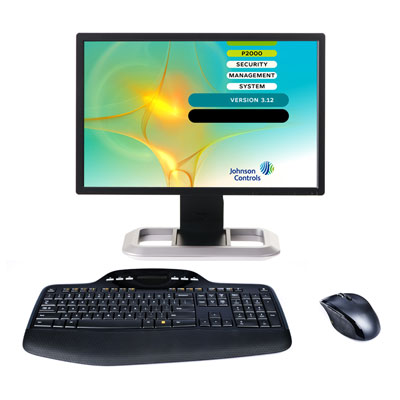
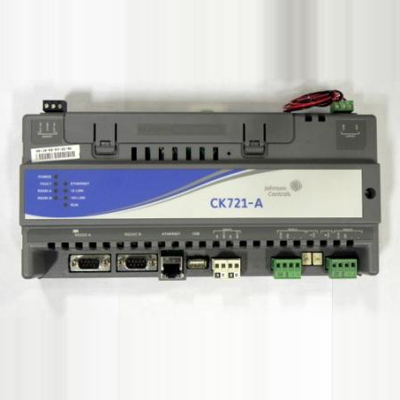
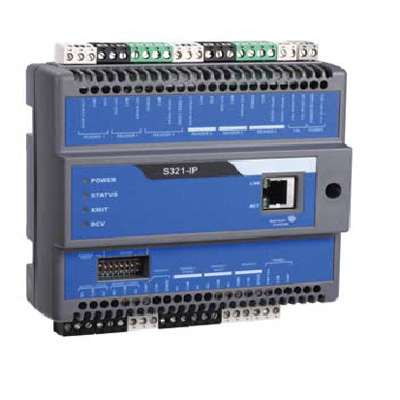
Johnson Controls, Inc. products


Johnson Controls, Inc. news
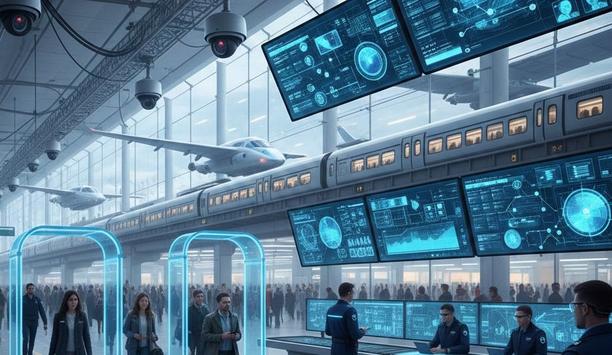
Transportation systems need robust physical security to protect human life, to ensure economic stability, and to maintain national security. Because transportation involves moving large numbers of people and critical goods across vast, often interconnected infrastructure, it presents a highly attractive target for various threats. More threats equate to a greater need for security. We asked our Expert Panel Roundtable: What are the emerging applications of physical security in the transportation...

Installing physical security systems requires integrating diverse technologies (e.g., cameras, access control, alarms) that often use different protocols and must be adapted to a building's unique physical layout and legacy infrastructure. Specialised technical expertise is required for seamless networking and proper configuration. Hopefully, no important factors are overlooked in the installation process. We asked our Expert Panel Roundtable: What is the most overlooked factor when inst...

Emphasising proactive rather than reactive security shifts the focus from dealing with crises and damage control to prevention. Advantages of a proactive approach include cost efficiency, better business continuity, and fewer crises that draw attention away from strategic improvements. Staying ahead of threats is a core mission of the security department, and technology has evolved to enable security professionals to deliver on that mission better than ever. We asked our Expert Panel Roundtable:...
Johnson Controls, Inc. case studies

Keeping beachgoers, swimmers and surfers safe is all in a day’s work for the team at South Maroubra Surf Live Saving Club, and every second counts when an incident unfolds on the water. One of the most topical issues and threats to those enjoying Australia’s world-renowned beaches is sharks, so for the surf club it made sense to look to smart, new technology to keep those who enjoy the sand and surf safe. Security technology to lifesavers "Since the club wa...

SwiftConnect, a pioneering provider of connected access enablement, is powering easy, secure, and private access using an iPhone and Apple Watch with the Johnson Controls Software House C•CURE 9000 access control system. The SwiftConnect AccessCloud platform integration with the Software House C•CURE 9000 access control system makes it possible for Software House C•CURE 9000 customers to take advantage of the employee badge in Apple Wallet for physical access. Deployments of emp...

It may sound like a small change, but installing security cameras on a property can significantly impact occupant and visitor behaviour by enabling more accountability. This is notable for environments such as K-12 schools where occupants are younger and more impulsive. Lack of visibility A public school system on the East Coast faced frequent incidents of bullying, vandalism and theft among students as well as the harassment of faculty and staff and was struggling to keep its occupants accou...
Johnson Controls, Inc. white papers
Johnson Controls, Inc. videos


Frictionless access control: 5 minutes with Rick Focke Tyco Software House

Video Surveillance Solutions: 5 Minutes with Ryan Hulse from JCI

Johnson Controls P2000 Security Management System Controls Access at RWU, Rhode Island, USA
An overview of the Johnson Controls P2000 Security Management System

Johnson Controls Company Profile

Johnson Controls Corporate Profile

Expert commentary

Security beat

Johnson Controls, Inc.
507 E Michigan Street
Milwaukee, WI 53202


