
What is the impact of smart buildings on the security market?

Editor Introduction
We have been hearing about smart buildings for more than a decade, but the increasing profile of the Internet of Things (IoT) expands the possibilities for intelligent building systems and makes them even more attainable. Security is often among the “smart” functions of a building, and the capabilities of many physical security systems can contribute in new ways to building intelligence. We asked this week’s Expert Panel Roundtable: What is the impact of “smart buildings” on the physical security marketplace?

Increasingly, smart buildings are tapping into the Internet of Things to enable more applications to connect, and that includes physical security solutions such as video surveillance. In a smart building, video surveillance solutions can identify potential risks, such as a person of interest in a parking lot, track that person, and report findings back to a security team, all in real-time. Surveillance cameras with high-definition capabilities can zoom to view and capture details such as facial features and report them to an onsite security team, or remotely using smart phones or tablet apps. Video surveillance solutions can also monitor traffic as it happens, and security staff can quickly adjust their positions. In a smart building, a video management system can act as an intelligence centre hub, where security alerts are verified and immediately acted upon. Video surveillance solutions add to a smart building’s intelligence and improve business operations.

The Internet of Things is driving the adoption of smart buildings. These buildings better align with the property owner’s priorities and provide an improved tenant experience. Adding levels of intelligence to buildings – whether building systems, smart sprinklers or destination dispatch elevators – reduces operational costs and provides insights into behaviours and patterns in the building. As buildings become smarter, the physical security market is expected to bring this intelligence as well, and many applications are delivering. With the migration to cloud-based platforms, mobile credentials, and IP-based access control, property managers can connect more and more of their platforms together and see efficiencies across their buildings and campuses. In addition, as more companies in the physical security market tout an open platform philosophy, they give property managers a choice in the best of video surveillance, access control, visitor management and more to their tenants.


We foresee three major impacts of this new technology on physical security systems and operations. First is the disruptive effect that the integration of new edge devices will have on how systems are designed, implemented and utilised by users. These edge devices can include everything from conventional smart phones to cameras with advanced analytics to sensors that detect anything from explosives to other volatile substances. Security professionals will look for the simplicity and cost effectiveness that these smart devices bring; such as being able to capture live video from consumers’ smart phones. The second major impact is on monitoring providers, as they need to evolve their service offerings to support customers with highly integrated systems. And the third impact deals with better cybersecurity. More edge devices hung on any network increase the vulnerabilities the system is exposed to. Cybersecurity will need to be a component of every physical security plan.

In some regards, instead of there being a significant impact of smart buildings on physical security, it's the other way around, and physical security is emerging as a big part of making buildings smarter. For example, there is now technology in place that can leverage the existing Wi-Fi infrastructures to provide a new level of situational awareness and presence detection. Not only does this allow stakeholders to locate individuals within a campus, but it also provides a two-way communication module to message individuals if there are any emerging threats to the safety and security of occupants. A platform like this can also integrate with existing building management platforms to determine if a building is empty and automatically work to save energy and money by turning off lights, adjusting thermostats, etc., to streamline usage. Physical security platforms like this are emerging as a way to mitigate risk and improve operations.

The physical security marketplace is increasingly using trusted identities to bridge the gap between smart buildings and connected workers. Previously used exclusively for physical access control, trusted identities now do double duty to integrate smart buildings and user applications at lower cost and with better ROI than other approaches. By connecting disparate systems, they enhance monitoring and deliver a better experience as people enter, navigate and interact with buildings and their services – and that’s just the beginning. By 2020, an estimated 20 percent of physical access solutions will be shaped by mobile and cloud architectures that drive smart building innovation. Many customers already use mobile access technology to create more identity-aware buildings that go beyond physical security to improve convenience and productivity in applications like booking rooms, visitor management, and office-space sharing. Watch for more examples as smart buildings continue to impact the physical security marketplace, and vice versa.

Smart building platforms use automation to control and manage their operations. Integrating access control systems can save money, streamline operations and gather critical information about ingress and egress points. This trend is affecting the way access control is installed in a new location: not solely for the purpose of monitoring coming and going, but adding more value for customers by realising new ways to use the technology. For example, many access control systems can record when the last person leaves a building, communicating that information with the building's management system. Using that level of automation can trigger a thermostat to be automatically adjusted to reduce energy costs. Additionally, event management systems are being integrated into access control platforms to help manage access during "off" hours. Barrier-free biometrics-managed access control is also playing a role in making buildings smarter (and appear more open and welcoming) by helping reduce lobby traffic backup.

A major trend today is the movement toward broader and deeper integration between previously disparate systems and technologies. Integrating video surveillance, access control, analytics, building automation and other systems transforms what would be a conventional physical security system deployment into an enterprise level solution capable of providing valuable business intelligence. Video Management System (VMS) platforms often serve as the hub for integrated security systems with the capability to collect, sort and analyse data generated by multiple systems. As an example, the integration of video analytics and access control could enable a VMS to trigger building operations such as elevators or lights when an authorised individual enters a location after hours. Advanced VMS solutions also feature strong network security measures, which helps ensure valuable data remains safe.
Editor Summary
Clearly smarter security systems are an integral component of smarter buildings. Not coincidentally, security systems have become much more intelligent in the same timeframe as buildings have become smarter. Today, given IP connectivity and the IoT, the two can work together better than ever, both increasing building “intelligence” and security. In the age of Big Data, there are greater possibilities than ever to realise the long-promised potential of smart buildings, and the physical security marketplace has a critical role to play.
HID products
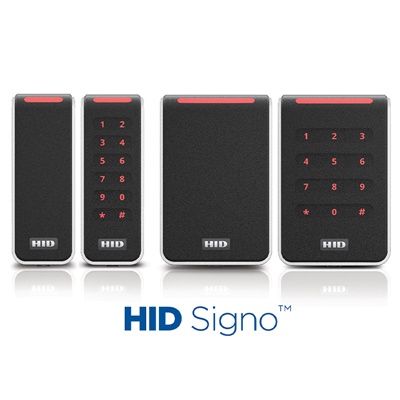
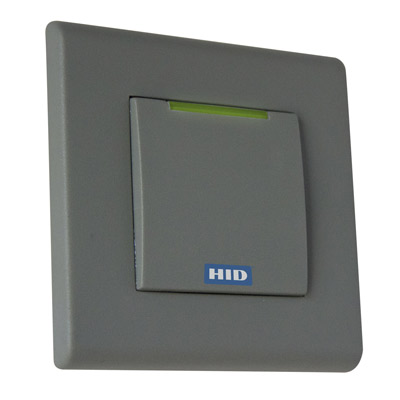
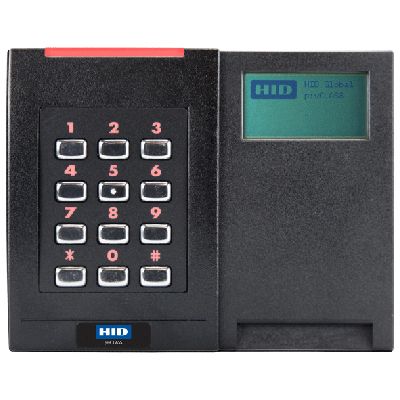





HID news

HID, a pioneer in trusted identity solutions, has achieved Texas Risk and Authorisation Management Program (TX-RAMP) certification for its Public Key Infrastructure as a Service (PKIaaS) solution. This certification demonstrates HID’s commitment to cybersecurity excellence and enables Texas state and local government to confidently engage with approved, trusted providers to procure secure, cloud-based certificate lifecycle management services with faster timelines and reduced administrati...

HID, a worldwide pioneer in trusted identity solutions, announced the appointment of Jos Beernink as Vice President Europe for its Physical Access Control (PACS) business. In this role, Beernink will lead HID’s strategy, sales and operations across the whole European region, helping organisations leverage trusted identity and access control technologies to create a secure, smarter and more efficient workplace and physical spaces. Prior roles of Beernink Beernink brings more than 2...

On Wednesday, November 19, starting at 08:00 CST, ASSA ABLOY hosts its Capital Markets Day in Milwaukee, Wisconsin, USA. Nico Delvaux, President & CEO and Erik Pieder, CFO, will provide an update on ASSA ABLOY’s strategy and direction, including an overview of the company’s strategic objectives and priorities to accelerate profitable growth. The financial targets of an EBIT-margin of 16-17% and annual sales growth of 10% over a business cycle are re-confirmed. No deta...
HID white papers












HID case studies

Enhancing enterprise security is high on the list of priorities for businesses across sectors. Within the retail industry, there is an additional focus on enabling new ways of working through management tools. Integrated solutions and applications help to create a robust security landscape and ensure a future-ready posture as organisations look to address emerging risks and create better experiences for next-gen employees. Physical access control (i.e., the readers on the door and the credentia...

Founded in 2010, Avolon is the third-largest aircraft leasing company in the world with 824 aircraft and 145 customers in 62 countries. Its new global headquarters in Dublin is comprised of 6,967 sq m (75,000 sq ft) of secure office space across six floors that houses its IT, catering, legal, and communications departments. Need for a centralised monitoring solution Avolon’s new premises in the upmarket Ballsbridge area of Dublin provided an opportunity for the company to rethink its app...

How do you rethink and transform building access for a 241-year-old company? BNY started by asking employees. The response was encouraging. The BNY team found that employees embraced the concept of mobile access solutions. The thought of implementing access solutions was already being considered by the company and the team was excited about the idea of providing a modern experience that allows employees worldwide to conveniently access their building spaces with a simple iPhone or Apple Watch....
HID virtual events





Expert commentary

Security beat

Haverhill Business Park, Phoenix Road, Haverhill, Suffolk, CB9 7AE, United Kingdom
Telephone: +44 (0)1440 714 850