Biometric Security - Round table discussions
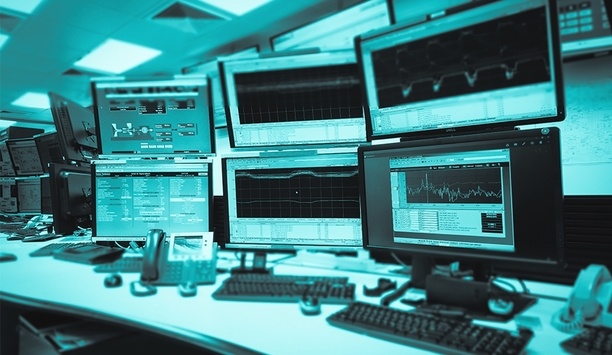
Along with the integration of security and other systems in an enterprise environment comes a need to centralise monitoring and control of the unified network. A control room is at the center of managing integrated systems, providing the focal point to collect information from a variety of sensors, analyse the data, and then respond appropriately. The technologies that drive these functions are changing and evolving, thus increasing the efficiency and efficacy of systems. We asked this week&rsqu...

Video analytics are undergoing a fundamental change in the market as machine learning enhances their accuracy while expanding their capabilities. But what are those expanded capabilities and how are they impacting the operation of security and video systems? We asked this week’s Expert Panel Roundtable: What new video analytics are having an impact in the market and how?

An aging employee population and the influx of a new generation of workers and customers is driving change in the physical security industry. Millennials – those born in the 1980s and mid-1990s – are especially impacting how the industry operates, the technologies it produces, and the customers it serves. This tech-savvy generation grew up with the Internet at their fingertips. They embrace innovation in all its glory and expect it to play a seamless role in their lives – and w...

The new school year is a good time to reflect on the role of security in protecting our schools. From video to access control to some newer technologies, our Expert Panel Roundtable found plenty to talk about when we asked this week’s question: How does security technology make our schools safer?

Driven by technology developments such as voice recognition, smart devices and the Internet of Things, our homes are getting “smarter” all the time. Increasingly, we expect our residential environments to be responsive to our voice commands, whether we are adjusting a thermostat, turning on a light, or lowering the window shade. Smarter home integration yields new opportunities and challenges for home security, too, which contributes an element of safety and protection to the conveni...

Passwords are one of the most familiar elements of information systems, but also one that can be overlooked or underutilised. New alternatives are emerging, and the role of passwords is evolving in the age of the Internet of Things. We asked this week’s Expert Panel Roundtable: How is the role of passwords changing in physical security systems?

One impact of Chinese companies entering the physical security market has been an erosion in product pricing, creating what has been called the "race to the bottom". However, political forces and cybersecurity concerns have presented new challenges for Chinese companies. Adding cybersecurity increases costs, and the addition of more functionality to edge devices is another trend that has impacted product pricing. We asked this week's Expert Panel Roundtable: Has price erosion ended (or slowed do...

In the digital age, software is a component of almost all systems, including those that drive the physical security market. A trend toward hardware commoditisation is making the role of software even more central to providing value to security solutions. Software developments make more things possible and drive innovation in the market. We asked this week's Expert Panel Roundtable: How do software improvements drive physical security?

People are an essential component of any physical security system. Automation hasn’t taken over completely yet! But how has innovation changed the skillsets security operators need to operate systems effectively? The two elements – technology and manpower – must operate seamlessly and hand-in-glove to ensure that modern systems live up to their full potential. We asked this week’s Expert Panel Roundtable: How does technology innovation in security systems impact the skill...

The ability to treat patients in a secure environment is a base requirement of hospitals and other healthcare facilities. Whether facilities are large or small, security challenges abound, including perimeter security, access control of sensitive areas, video surveillance, and even a long list of cyber-risks. We asked this week’s Expert Panel Roundtable: What are the security challenges of hospitals and the healthcare industry?

The definition of a standard is “an authoritative principle or rule that usually implies a model or pattern for guidance, by comparison with which the quantity, excellence, correctness, etc., of other things may be determined.” In technology markets, such as physical security, standards are agreed-upon language, specifications or processes that are used across the board by multiple stakeholders to enable easier interconnectivity and smoother operation of systems. We asked this week&r...

Technology advancements often come with new terms and definitions. The language of our marketplace evolves to include new words that describe innovations in the industry. In the skilled hands of marketers, terms intended to be descriptive can also take a new element of ‘buzz,’ often presaging exciting developments that will drive the future. We asked this week’s Expert Panel Roundtable: What new buzzword have you heard, and what does it mean for the industry?

Statistically speaking, incidents of terrorism are unlikely to impact most businesses and institutions. However, the mere possibility of worst-case-scenario attacks is enough to keep security professionals awake at night. Compounding the collective anxiety is the minute-by-minute media coverage when an attack does occur. The immediacy of the shared experience of global tragedy impacts us all – including security system decision-makers. We asked this week’s Expert Panel Roundtable: Ho...

The new year 2019 is brimming with possibilities for the physical security industry, but will those possibilities prove to be good news or bad news for our market? Inevitably, it will be a combination of good and bad, but how much good and how bad? We wanted to check the temperature of the industry as it relates to expectations for the new year, so we asked this week’s Expert Panel Roundtable: How optimistic is your outlook for the physical security industry in 2019? Why?

In many regards, 2018 was a turbulent year for the physical security marketplace, driven by evolving technologies and changing customer needs, among other factors. Year-end is a great time to reflect, so we asked our Expert Panel Roundtable: What caused the most disruption in the physical security marketplace in 2018?

The concept of how security systems can contribute to the broader business goals of a company is not new. It seems we have been talking about benefits of security systems beyond “just” security for more than a decade. Given the expanding role of technologies in the market, including video and access control, at what point is the term “security” too restrictive to accurately describe what our industry does? We asked the Expert Panel Roundtable for their responses to this p...

Even the most advanced and sophisticated security systems are limited in their effectiveness by a factor that is common to all systems – the human factor. How effectively integrators install systems and how productively users interface with their systems both depend largely on how well individual people are trained. We asked this week’s Expert Panel Roundtable: What is the changing role of training in the security and video surveillance market?

Using a smart phone as an access control credential is an idea whose time has come – or has it? The flexible uses of smart phones are transforming our lives in multiple ways, and the devices are replacing everything from our alarm clocks to our wallets to our televisions. However, the transformation from using a card to using a mobile credential for access control is far from a no-brainer for many organisations, which obstacles to a fast or easy transition. We asked this week’s Exper...

The physical security industry is embracing the cloud in a big way. Cloud-based systems – which involve accessing a shared pool of information technology resources via the Internet – are much higher-profile in the video and access control markets, and large and small companies are getting on the cloud bandwagon. We asked this week's Expert Panel Roundtable: What factors are contributing to growth in cloud systems in the security market?

Hospitality businesses work to provide a safe and pleasant customer experience for their guests. Hotels offer a “home away from home” for millions of guests every day around the world. These are businesses of many sizes and types, providing services ranging from luxury accommodations to simple lodging for business travelers to family vacation experiences. Hospitality businesses also include restaurants, bars, movie theaters and other venues. Security needs are varied and require tech...

Finding the exact right technology to solve an end user’s problem is challenging, but the rewards are great when an integrator gets it right. A wide range of available product types, price levels and added features increases the likelihood of identifying a technology to solve any problem. But with so many technology and product choices in the marketplace, identifying that one solution can be akin to finding a needle in a haystack. We wondered whether a vast range of product choices is alwa...

The reviews are in, and ISC West was another hit. Brisk attendance and a comprehensive lineup of the industry’s top companies and products contributed to another successful show for Reed Exhibitions. Our Expert Panel Roundtable, who have attended many such events, added their own reflections to the industry’s post-ISC glow. We asked this week’s Expert Panel Roundtable: How successful was ISC West 2018 for security industry exhibitors and visitors?

Among its many uses and benefits, technology is a handy tool in the fantasy world of movie and television thrillers. We all know the scene: a vital plot point depends on having just the right super-duper gadget to locate a suspect or to get past a locked door. In movies and TV, face recognition is more a super power than a technical function. Video footage can be magically enhanced to provide a perfect image of a license plate number. We have all shaken our heads in disbelief, and yet, our indus...

Body-worn cameras are becoming more common every day, driven both by needs of the marketplace and technology developments. However, questions remain about the usefulness of the devices, and their future role in promoting safety and security. We asked this week’s Expert Panel Roundtable: What are the challenges of body-worn cameras for the security industry?

It seems there are more “bad things” happening than ever before. We hear news every day of workplace shootings and terrorist attacks, of smash-and-grab thefts and child abductions. Beyond the possible human tragedy involved, such events pose a persistent question to anyone involved in the realm of security: Could we have prevented it? The first step toward prevention is to predict or foresee an event before it happens. Too often, technology enters the picture after the fact, most com...

We have been hearing about smart buildings for more than a decade, but the increasing profile of the Internet of Things (IoT) expands the possibilities for intelligent building systems and makes them even more attainable. Security is often among the “smart” functions of a building, and the capabilities of many physical security systems can contribute in new ways to building intelligence. We asked this week’s Expert Panel Roundtable: What is the impact of “smart buildings&...

Industry standards make it possible for systems and technologies to connect and work together. Standards enable today’s integrated systems. But does adherence to standards stifle innovation? Does the necessity to interface using an industry-wide standard slow down the implementation of newer (and possibly not standards-compliant) capabilities? Or do standards eliminate extraneous variables, empower more integration and encourage greater innovation? We asked this week’s Expert Panel R...

They call it “critical” for a reason. The so-called “critical infrastructure” is composed of the basic services that citizens have come to depend on, and which are necessary to support society and ensure national stability. The term includes high-visibility segments such as airports, refineries, transportation, wastewater, nuclear reactors, electric utilities, pipelines, and more. Because these functions are so critical, the stakes of providing security are higher than fo...

Video systems today offer more capabilities than ever. Consequently, the systems can be used in new ways. For a variety of reasons, however, many customers don’t take full advantage of the capabilities of their video systems and therefore are leaving value on the table. Education and training are tools to alleviate the situation, but the first step is to identify the new ways that video can be used. We asked this week’s Expert Panel Roundtable: How do customers under-utilise their vi...

Remarkable changes are happening in the video camera market for surveillance applications, including the emergence of lower-priced products that offer features that previously were only available at a much higher price point. Deflating prices of cameras are sometimes referred to as a “race to the bottom” – foreshadowing a market of low-cost cameras that all provide similar features. We asked this week’s Expert Panel Roundtable to comment on camera pricing trends and how c...

Technology's role in securing banks and financial institutions
Download
Security technologies promote real-time awareness in K-12 schools
Download
Integrated systems enable critical and compliant security for transportation
Download
Modernising physical access control
Download
Access. Intrusion. One estate.
Download
