Biometric Security - Round table discussions

Critical national infrastructure encompasses sectors such as energy, utilities, healthcare, and data centers – environments that underpin economic stability and public safety. With so much at stake, the importance of effective security systems is that much higher. We asked our Expert Panel Roundtable: What are the unique aspects of the critical infrastructure market, and how should the security industry adapt?

Biometrics today provide better security and frictionless user experiences. Biometric identifiers like fingerprints, facial recognition, and iris scans are unique and difficult to forge. They eliminate the vulnerabilities of traditional authentication and streamline secure access control. Identity verification reliably protects sensitive digital information and physical entry. We asked our Expert Panel Roundtable: How is the role of biometrics evolving in physical access control?

Like other disciplines in the world of corporate security, executive protection is evolving from reactive to proactive. Unlike reactive bodyguards, modern executive protection professionals use a proactive approach focused on risk mitigation, advance planning, and threat intelligence to prevent incidents before they happen. What is the role of technology? We asked our Expert Panel Roundtable: How can physical security technology promote better executive protection?

At mid-year 2026, the broader economy tells a story of resilience under pressure. Conflict in the Middle East has triggered a shock to the energy supply, driving oil prices up and reigniting global inflation. However, a total downturn has been averted. Exceptional, historic levels of business investment and data centre construction are providing a firm floor for growth, offsetting cooler consumer spending and keeping labour markets fundamentally stable. But how are changing economics impacting t...

In the simplest terms, technology modernisation accelerates when older systems become too expensive to maintain or fail to support modern standards. Market competition pushes businesses to update their technologies to meet rising customer demands. Additionally, the rapid shift toward cloud-based infrastructures and artificial intelligence creates a fear of missing out, forcing companies to adapt or risk irrelevance. Focusing on the physical security market, we asked our Expert Panel Roundtable:...
Traditional security models protected a perimeter like a castle moat, assuming anyone inside was safe. Zero trust removes that implicit trust entirely, recognising that threats can exist both outside and inside a facility. Zero trust is a routine and accepted concept in cybersecurity. Given the importance of information technology and the increasing convergence of physical and logical security, the tenet is becoming a dominant principle in physical security, too. We asked our Expert Panel Roundt...

Artificial intelligence (AI) transforms physical security from a passive, reactive function into an autonomous, proactive one. Rather than just alerting human guards after an event, new systems driven by intelligent agents analyse, decide, and act in real time—handling routine deterrence, investigating anomalies, and reducing alarm fatigue. We asked our Expert Panel Roundtable: What is agentive (or agentic) AI and how is it changing physical security?

In the world of cybersecurity, ethical hacking proactively identifies security vulnerabilities before malicious actors (i.e., unethical hackers) can exploit them. By simulating real-world attacks, organisations can strengthen defences, protect sensitive data, and maintain public trust. In the physical security world, ethical hacking can transform cybersecurity of security systems from a reactive struggle into a strategic safeguard. We asked our Expert Panel Roundtable: What is the role of ethica...
False alarms are the security industry's oldest and most persistent challenge. Industry estimates suggest that as many as 95% to 98% of security system activations are non-emergencies. The high rate stems from a combination of human behaviour, environmental triggers, and technical limitations. However, newer technologies are finally addressing the challenge of false alarms. We asked our Expert Panel Roundtable: What are the new solutions to security's oldest challenge, reducing false alarms?
Modernising a legacy physical security system requires a transition from isolated, hardware-dependent silos to an integrated, data-driven ecosystem. This transition involves shifting toward open architecture and encrypted communication to ensure long-term scalability and resilience. Other elements to facilitate upgrading a legacy system include leveraging cloud and hybrid topologies and ultimately moving toward more predictive analytics. Our Expert Panelists offer plenty of ideas for making the...

ISC West (International Security Conference & Exposition), March 25–27, 2026, at The Venetian Expo in Las Vegas, is widely regarded as the most important event in the security industry. The yearly exhibition serves as the primary launchpad for new technology and as the central meeting point for global security professionals. We asked our Expert Panel Roundtable: What will be the big topics of discussion at ISC West 2026?
Historically, physical security systems have protected retail companies’ assets, people, and profits. Security prevents theft (shrinkage), while maintaining order and ensuring a safe environment for customers and staff. Today’s retail business is changing by leaps and bounds, driven in large part by technology advances. Newer physical security systems are finding new ways to deter crime and provide operational data, in the process preserving brand reputation and ensuring the business...

When working in the technology marketplace, it’s always good to expect the unexpected. Increasingly, readiness to anticipate and embrace uncertainty is the baseline for survival in the world of technology. If we in the physical security industry know anything, it is that technology is in a state of perpetual disruption. Therefore, looking ahead to the next 12 months, surprises are inevitable. We turn to our Expert Panel Roundtable for guidance, asking our panelists: What will be the bigges...
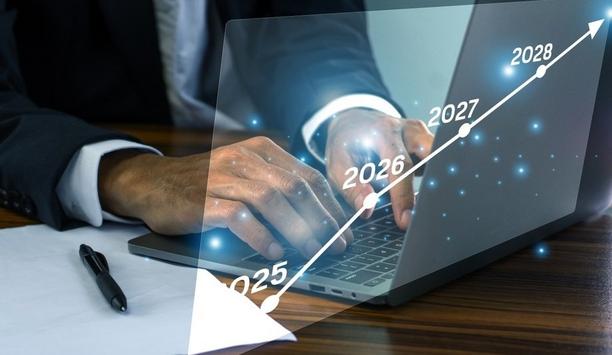
Physical security innovation is accelerating due to the convergence of AI-driven automation and IoT connectivity. The trend makes you wonder: How far will physical security technologies evolve in the next decade? Already, modern systems are shifting from reactive recording to proactive prevention via real-time analytics. Additionally, the need for hybrid cloud scalability and integration with IT infrastructure is driving rapid hardware-to-software modernisation. We asked our Expert Panel Roundta...
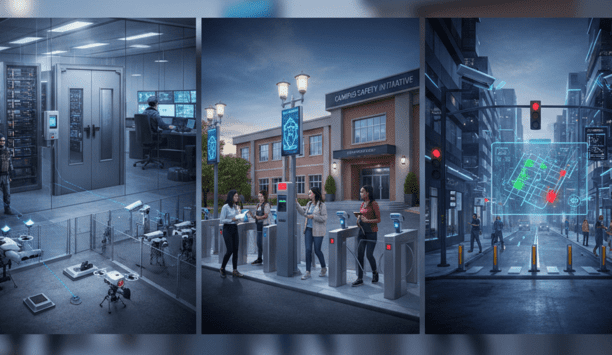
To serve various vertical markets and industries effectively, security professionals must recognise that each sector has unique assets, risks, compliance requirements, and operational needs. Instead of offering a one-size-fits-all solution, security system providers must tailor their products, services, and integration strategies to address the distinct requirements of vertical markets. We asked our Expert Panel Roundtable: Which vertical markets have the greatest growth potential for physi...
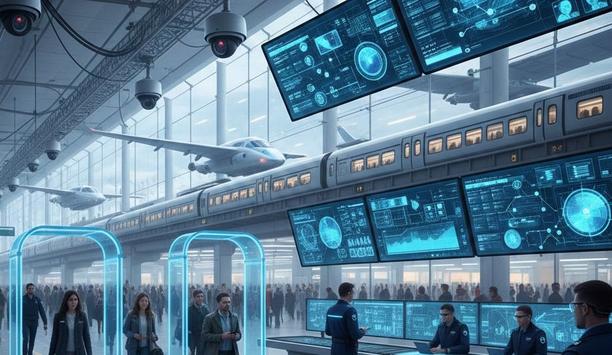
Transportation systems need robust physical security to protect human life, to ensure economic stability, and to maintain national security. Because transportation involves moving large numbers of people and critical goods across vast, often interconnected infrastructure, it presents a highly attractive target for various threats. More threats equate to a greater need for security. We asked our Expert Panel Roundtable: What are the emerging applications of physical security in the transportation...

Installing physical security systems requires integrating diverse technologies (e.g., cameras, access control, alarms) that often use different protocols and must be adapted to a building's unique physical layout and legacy infrastructure. Specialised technical expertise is required for seamless networking and proper configuration. Hopefully, no important factors are overlooked in the installation process. We asked our Expert Panel Roundtable: What is the most overlooked factor when inst...

The healthcare industry faces unique and significant security challenges. Healthcare security professionals must balance an open, welcoming environment for patients and visitors with the need to protect valuable assets and personnel in a high-stress, 24/7 setting. These requirements direct the physical security technologies deployed in medical facilities. We asked our Expert Panel Roundtable: What are the unique aspects of the healthcare market, and how should the physical security industry ad...

Data overload is real. Sometimes it seems we are bombarded by the sheer volume, velocity, and variety of data available in our personal lives, and in our work lives. The solution is to figure out how to make sense of the data and transform it into real information we can use. In the case of physical security systems, new opportunities are emerging every day to utilise data to make our businesses safer and better managed. We asked our Expert Panel Roundtable: What is the expanding role of...

Students deserve a safe and positive environment where they can learn and thrive. Teachers and administrators should be able to focus on their primary role of educating students because they feel supported and protected by a comprehensive security plan. Staff require a clear protocol for responding to emergencies. And parents deserve peace of mind that their children are safe during the school day. One of the tools for safer schools is physical security technology. We asked our Expert Panel Roun...

Access control, video surveillance, and intrusion detection systems evolved largely independently in the physical security industry. Integrating those systems to the benefit of an enterprise's overall security has traditionally fallen on security integrators working in cooperation with manufacturers. However, today's market has also evolved to include companies that provide "unified platforms,” bringing together various disparate security systems and functions under a single, centralised...

New technology advancements significantly increase efficiency and productivity in any industry, including physical security. Enhanced innovation both creates new products and services and improves existing products, all for the benefit of security manufacturers, integrators, and end users. Companies that embrace new technology stay ahead of the curve and gain a significant competitive advantage. In addition, they can differentiate themselves in the marketplace. We asked this week's Expert Panel...

Port forwarding is a networking technique that allows incoming traffic on a specific port number to be redirected to a particular device or application on a local network. Open ports on the network expose an IP video system to the internet. This makes it a potential target for malicious cyberattacks. In the physical security industry, the elimination of port forwarding is seen as a basic and manageable precaution to shore up cybersecurity. We asked this week's Expert Panel Roundtable: What are t...

A software platform designed to centralise and manage various physical security systems within an organisation used to be called a PSIM (physical security information management) system. Generally speaking, however, the PSIM term has fallen out of favour because the systems were seen as expensive and difficult to manage. The phrase has been replaced by command-and-control, referring to software that combines access control, video surveillance, intrusion detection, and other systems into a unifie...

There is no shortage of threats facing security professionals, including some that are new and emerging. Understanding various new threats allows individuals and organisations to take proactive steps to protect themselves, but the first step is to identify what those threats are. Early detection of threats can minimise the impact of a successful attack, whatever the vulnerability at issue. We asked this week’s Expert Panel Roundtable: What new and emerging threats will physical security pr...

Suddenly, artificial intelligence (AI) is everywhere. The smart technology brings a range of benefits to our lives, from streamlining everyday tasks to making scientific breakthroughs. The advantages of AI and machine learning (ML) also include automating repetitive tasks, analysing vast amounts of data, and minimising human error. But how do these benefits apply to the physical security industry, and is there a downside? We asked this week’s Expert Panel Roundtable: What are the benefits,...

The design of buildings encompasses many elements, from the practical to the aesthetic. Well-designed buildings should be functional, and they can also be beautiful and inspiring. But can security systems and building design coexist and complement each other? We asked this week’s Expert Panel Roundtable: How does building design impact physical security systems -- and vice versa?

The economic fallout of the COVID-19 epidemic was felt in supply chain disruptions, higher prices, and shortages of certain goods. The physical security industry was not spared, although the epidemic also presented opportunities for security companies. Changing access control trends triggered by the pandemic are still reverberating throughout the industry, for example. Four years later, the impact of the pandemic is still being felt in the security market, lingering like the symptoms of "long CO...

When it comes to preventing theft and ensuring overall safety, technology offers a robust toolkit for retail stores to enhance security in several ways. From intelligent surveillance systems to RFID tags used to avoid shoplifting, today’s retail and loss prevention strategies are more effective than ever. Beyond security, the newer technologies can also provide benefits related to merchandising, inventory control, customer service, and the list goes on. The combination of abundant data and...

The security industry offers a vast array of technologies and vendors. This can be overwhelming for end users, who depend on security integrators for guidance and service. But how well do security integrators provide end users with what they need? We asked this week’s Expert Panel Roundtable: What are the biggest challenges that end users face when working with integrators?

Technology's role in securing banks and financial institutions
Download
Security technologies promote real-time awareness in K-12 schools
Download
Integrated systems enable critical and compliant security for transportation
Download
Modernising physical access control
Download
Access. Intrusion. One estate.
Download
