HID - Experts & Thought Leaders



























White papers from HID

How digital transformation is delivering new opportunity
Download
The 2024 state of physical access trend report
Download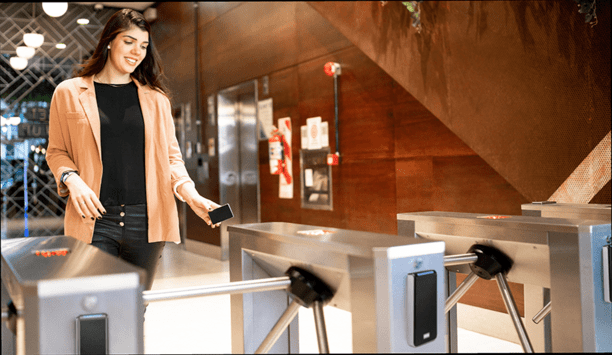
The truth behind 9 mobile access myths
Download
6 good reasons to embrace mobile credentialing
Download
Three essential reasons to upgrade your access control technology in 2022
Download
The role of access control in a safe return to the workplace
Download
Physical access control in higher education
Download
A brief history of access control credentials
Download
The 2020 State of Physical Access Control Report
Download
Financial institutions require future-ready physical security technologies
Download
Latest HID news & announcements

Enhancing enterprise security is high on the list of priorities for businesses across sectors. Within the retail industry, there is an additional focus on enabling new ways of working through management tools. Integrated solutions and applications help to create a robust security landscape and ensure a future-ready posture as organisations look to address emerging risks and create better experiences for next-gen employees. Physical access control (i.e., the readers on the door and the credentials that individuals present to them for authentication) is not only one of the first interactions employees have with security technology but is also the first line of defence in security programs. Good user experience The balance of a good user experience and strong security is critical, though striking that balance has been a challenge historically as security teams are tasked with prioritising safety and protection. Innovative companies who want to go beyond traditional access control have found the balance of a frictionless user experience and strong security in mobile access solutions. Żabka is one of the largest European retail companies with 7000 locations across Poland Żabka is one of the largest European retail companies with 7000 locations across Poland and the Czech Republic. Innovation is in its DNA and the organisation is known as an early adopter. From introducing AI to create an autonomous and checkout-free shopping experience to launching a cloud-based platform to better the franchise management process, Żabka has actively embraced continuous change and improvement. When implementing security for its new headquarters in Poznań, Poland, Żabka returned to its pioneering roots, requiring a highly secure, automated solution that enabled the integration of custom applications and simplified the use of other building-wide office functionalities. Physical security components Żabka’s vision included seamless access starting at building entrances with employees using their mobile phones to ‘badge’ into the building. From there, the same mobile credential would unlock turnstiles, authenticate floor access in elevators, track time and attendance and release documents at shared printers. Most importantly, user data would need to be secured via encryption and authentication through appropriate access keys with the introduction of new users being completely under Żabka’s control. The implementation of an ecosystem with multiple capabilities — including a migration from plastic cards to mobile identities, surveillance tools, access management, and physical security components to underpin the entire solution — also necessitated collaboration between partners who shared Żabka’s spirit of modernisation and vision for a seamless user experience. Traditional plastic credentials Żabka’s comprehensive ecosystem utilises digital access control processes The project team included HID Global who managed the transition from traditional plastic credentials to mobile identities, with Zonifero to develop a custom mobile app, and Cynergy to complete the installation of hardware and embedded components. Żabka’s comprehensive ecosystem utilises digital access control processes and integrated surveillance tools with a security management platform enabling Żabka to migrate completely to the use of mobile identities. The move to HID Mobile Access has changed the experience of employees, visitors, HR, and security administrators by accelerating and automating access control management for the entire building. Integrated surveillance tools Mobile identities, contactless employee onboarding, touchless visitor management, time and attendance, and integration with the security system of the entire building are now aggregated and facilitated within the smartphone app. Security administrators remotely managed a pool of allocated mobile identities The ability to manage the access control system from anywhere with no physical contact was especially valuable. Launched amid the pandemic, the new infrastructure enabled Żabka employees to maintain social distancing and limit contact through automatic and remote activation of access. Security administrators remotely managed a pool of allocated mobile identities and individual access to users’ devices, thereby solving the problem of storing physical cards, facilitating credential transfers, issuing new credentials in the case of lost or damaged ones, and deactivating cards in the event they were lost or stolen. Mobile identity functionalities Żabka implemented mobile access on a large scale with mobile IDs in use by about 800 employees. The retailer also plans to implement further mobile identity functionalities, such as opening parking lot gates, making cafeteria purchases, and seamlessly logging in to computers. Steve is responsible for leading and coordinating demand generation programs and channel marketing activities for HID's Physical Access Control Solutions (PACS) business area in Europe. He has over 20 years of experience working in B2B marketing, 15 of which have been in the safety and security industries.

Founded in 2010, Avolon is the third-largest aircraft leasing company in the world with 824 aircraft and 145 customers in 62 countries. Its new global headquarters in Dublin is comprised of 6,967 sq m (75,000 sq ft) of secure office space across six floors that houses its IT, catering, legal, and communications departments. Need for a centralised monitoring solution Avolon’s new premises in the upmarket Ballsbridge area of Dublin provided an opportunity for the company to rethink its approach to building security. Avolon was looking for an innovative, flexible solution that could be personalised to individuals, easily accessed, and managed remotely. Additional requirements included: the need to provide different levels of security clearance in different areas of the building, the ability to manage individual security clearances, the facilitation of access outside of the usual workday, and secure parking lot access for employees and visitors. As a global company, Avolon wanted a solution that could be deployed worldwide to provide a consistent experience for its employees, regardless of their location. HID’s flexible access control solution Powered by Seos® technology, the solution uses BLE and iCLASS® readers to create a secure access control solution Avolon partnered with systems integrator Summit Security Systems Ltd and deployed HID Mobile Access at its Dublin headquarters. Powered by Seos® technology, the solution uses Bluetooth Low Energy (BLE) and iCLASS® readers to create a secure, convenient, and flexible access control solution for its headquarters. The building’s security system enables credentials on smartphones via an app rather than on physical access cards and uses iCLASS SE® mobile-enabled readers installed at points of access. Key benefits of a mobile access system include: Employees are less likely to forget smartphones, which they always carry than an access badge Security clearances are more efficient and easily changed because security status is provisioned to an app A cloud-based central control system provides security administrators with easy oversight, access to a complete set of metrics, and the ability to manage a network of premises around the globe Employing various access control measures Avolon has implemented a range of different solutions for different parts of its premises that can vary by time of day. For example, elevators utilise access control measures to ease the flow of people within the building during work hours, while assuring that after-hours access is more controlled. Employees simply twist their iOS or Android™ phones when they approach the parking readers to gain entry The ease-of-use and security also extend to the parking lot, which benefits from HID’s “Twist and Goes” feature. Employees simply twist their iOS or Android™ phones when they approach the parking readers to gain entry. Avolon encourages its employees to cycle to work and has extended mobile access to a secure employee bike parking area that links directly into the shower and changing facilities. Advantages of mobile access solution The HID Mobile Access Solution provides many advantages over the previous card-based system including after-hours access (vital to a 24/7 business like Avolon), ready access to secure rooms, and easy management of security clearances. With HID Mobile Access, fine-grained security access for a global network of offices is controlled centrally through a cloud-based portal. Access levels can be set on an individual basis so they are very flexible and can be modified as needed. “Using a mobile phone is much more convenient than access cards. People forget their access cards, but their mobile phone is with them all the time,” said Allan Dawson, facilities project manager at Avolon. “It’s much more efficient. For example, we now have much lower instances of people leaving the perimeter and having to ask for re-entry because they’ve left their pass in the office.” Worldwide installation of physical access solution In the future, Avolon anticipates expanding its new physical access solution across its global campuses. “As well as deploying in our Dublin head office we have also deployed in our New York, Florida, and Hong Kong offices,” said Dawson. “The benefit of using a global platform means our people can travel between offices with their security status intact and ready to go for each location.”

Mercury Security, a pioneer in open architecture access control hardware and an HID brand, releases its 2026 Trends in Access Controllers Report, revealing how changing cybersecurity requirements, interoperability needs, cloud adoption and emerging technologies are putting greater emphasis on the role controllers play in long-term physical access control strategy. Based on a global survey of 561 physical security and cybersecurity professionals, including administrators responsible for access control management, systems integrators, installers and end users, the report found that 78% of respondents consider the controller important or critical to their physical access control system (PACS) strategy, up from 72% in 2025. This growth reflects the controller's expanding role in the security environment. As it connects more devices, systems and applications across the security environment, organisations are placing greater importance on infrastructure that can address current requirements while supporting new capabilities over time. Data protection standards Cybersecurity represents one of the clearest gaps between respondents’ requirements and their existing infrastructure. 32% say cybersecurity features are missing from their current controller systems, up from 21% in 2025. The gap comes as 74% reported cybersecurity and IT coordination have become more complex to manage, even as 86% say their organisations actively work to stay current with changing cybersecurity and data protection standards. “Organisations recognise the cybersecurity risks facing connected access control systems, but the infrastructure in place isn’t always keeping pace,” said Steve Lucas, Vice President, Sales, Mercury Security. “As they look to modernise, users also want to protect existing investments. That makes interoperability increasingly important and puts more weight on choosing controller platforms that can address current security requirements while providing the flexibility to support what comes next.” Driving controller purchases Additional findings from the report include: Interoperability influences purchasing 69% of respondents identified interoperability as a critical factor in controller procurement, while 82% said backward and forward compatibility is important to future infrastructure planning. The findings point to a preference for gradual modernisation that protects existing investments while giving organisations the flexibility to adopt new capabilities over time. Mobile credentials are influencing those decisions as well, with half of respondents already using or planning to adopt mobile solutions and 46% ranking mobile credential integration among the trends driving controller purchases. Cloud demand is growing faster than deployment Cloud connectivity ranked among the leading factors influencing controller purchases, cited by 56% of respondents, up from 50% in 2025. However, only 41% reported that their controllers are currently cloud-enabled, and 26% said cloud enablement is missing from their existing systems. The findings suggest interest in cloud capabilities is growing faster than current infrastructure can support them. AI and advanced capabilities add new infrastructure demands Behavioural analysis and anomaly detection rose from 44% in 2025 to 56% in 2026, while facial recognition was cited by 60%, and predictive security and threat prevention by 50%. As these applications advance, processing power, storage, connectivity, cybersecurity and integration architecture are becoming greater considerations in controller selection. More than 39% of respondents are also exploring or have adopted edge computing within their security ecosystems, while 41% have integrated controller data with building occupancy and utilisation programs, demonstrating how access control infrastructure can increasingly support applications beyond traditional door control. Taken together, the findings show how controller selection is evolving from a hardware purchase into a longer-term infrastructure strategy. Organisations are balancing immediate priorities such as reliability and cybersecurity with the need to support future technologies, integrate with surrounding systems and modernise without replacing infrastructure all at once.
Insights & Opinions from thought leaders at HID

Biometrics today provide better security and frictionless user experiences. Biometric identifiers like fingerprints, facial recognition, and iris scans are unique and difficult to forge. They eliminate the vulnerabilities of traditional authentication and streamline secure access control. Identity verification reliably protects sensitive digital information and physical entry. We asked our Expert Panel Roundtable: How is the role of biometrics evolving in physical access control?

At mid-year 2026, the broader economy tells a story of resilience under pressure. Conflict in the Middle East has triggered a shock to the energy supply, driving oil prices up and reigniting global inflation. However, a total downturn has been averted. Exceptional, historic levels of business investment and data centre construction are providing a firm floor for growth, offsetting cooler consumer spending and keeping labour markets fundamentally stable. But how are changing economics impacting the physical security market? We asked our Expert Panel Roundtable: How do changes in the broader economic climate impact physical security?

In the simplest terms, technology modernisation accelerates when older systems become too expensive to maintain or fail to support modern standards. Market competition pushes businesses to update their technologies to meet rising customer demands. Additionally, the rapid shift toward cloud-based infrastructures and artificial intelligence creates a fear of missing out, forcing companies to adapt or risk irrelevance. Focusing on the physical security market, we asked our Expert Panel Roundtable: What factors are accelerating technology modernisation in security?

Technology's role in securing banks and financial institutions
Download
Security technologies promote real-time awareness in K-12 schools
Download
Integrated systems enable critical and compliant security for transportation
Download
Modernising physical access control
Download
Access. Intrusion. One estate.
Download