Acre Security - Experts & Thought Leaders














White papers from Acre Security

Access. Intrusion. One estate.
DownloadLatest Acre Security news & announcements

St. Andrew’s House is a Boarding Home for International students in St. Andrew’s School. The school is a government-aided Anglican boys’ secondary school in Potong Pasir, Singapore. It was founded in 1862. The house had a standalone access control system that had stopped working to their satisfactory standard. As such, the decision was made by the school to upgrade the school’s security to an entirely new system. No specification for the project was provided. ACTpro access control and Bluetooth readers Wincheer (Winchester Security Services Inc.) managed the security system upgrade for St. Andrew’s. Wincheer selected Vanderbilt’s ACTpro access control and Bluetooth readers. In the Asian market, pricing always plays an essential factor in deciding what product to choose. And, as Vanderbilt’s ACTpro is exceptionally competitively priced, it was the ideal product to meet this project’s requirements. The primary function of ACTpro at the boarding home is monitoring the safety of their students in accommodation. ACTpro keeps audit trails in the boarding home, by monitoring and recording fob activity for time and attendance. ACTpro also produces diagnostic reports on door status. ACTpro smartphone app The ACTpro smartphone app offers ultimate flexibility for St Andrew’s House Campus security can provide pin codes, access fobs, and cards to students. These credentials can be easily enabled or disabled remotely if required. Moreover, ACTpro can be managed on desktops, laptop tablets, and smartphone devices. The ACTpro smartphone app offers ultimate flexibility for St Andrew’s House. It ensures convenient connectivity to the system day or night. Thanks to the app, the security managers no longer need to visit their premises out of hours, with quick access to the system's pulse from the palm of their hand. They can also enable and disable alarms, lock and unlock doors, authorise users, and check who’s in and out. Muster reports In the event of a fire or other emergency, ACTpro can automatically unlock all doors, in order to allow students to reach safety. The ACTpro muster report gives the security campus a real-time list of all campus accommodation students. When students exit their accommodation and swipe out, the muster report automatically updates. A muster report can also be generated directly from the ACTpro smartphone app. ACTpro access control solution “I have been working with Vanderbilt for many years. I know the company well and trust their ACTpro access control solution. I always send my project requirements to Vanderbilt first for a consultation. I have a comfortable working relationship with them”, stated Mr. Berg Kok of Winchester Security Services Inc.

Acre Security, a pioneer in physical security solutions, announces a full user interface and user experience refresh for Access It!, its on-premises access control platform. Delivered with Access It! 13.0, the modernisation gives security operators and administrators a cleaner, faster, and more intuitive experience across both desktop and web clients while retaining the platform, workflows, and Access It! identity. The platform refresh is designed around the way teams use Access It! every day. It includes updated layouts, clearer visual hierarchy, modernised tables and icons, and a harmonised design to make it easier to find information and act on what is most important. Access control platform Records and credential management have been streamlined through a new credential grid and more powerful sorting and filtering. Features such as per-column filters, search functionality, Boolean logic, and the ability to drag and drop when grouping help users to arrange and find the information in fewer steps. A new System Insights view brings live warnings, key counts, and system health into a single dashboard, giving a clearer at-a-glance overview. "This refresh is about making Access It! easier and faster to use while protecting what customers already value about the platform," said Kumar Sokka, CEO of Acre Security. "Security teams should not have to choose between a modern experience and the workflows they know. With Access It! 13.0, they gain both, backed by the services and support to help them get more from their investment over time." Access control investment The modernisation builds on Acre's steady investment in Access It! as a flexible on-premises access control platform. Because familiar workflows remain intact, current customers can receive a more modern day-to-day experience with less disruption and minimal retraining. For Acre's VAR and systems integrator partners, the release provides a stronger experience and a clear path for helping customers extend the value of their existing access control investment. Access It! is supported by Acre Solutions, Acre's services division, which provides support to customers from the first evaluation all the way through the years of regular use. Organisations that are thinking of adopting Access It! can start by attending a migration readiness workshop and then making use of dedicated migration services. Dedicated migration services Existing customers can keep up to date by availing themselves of Acre Care and Acre Care Pro, as well as participating in the ongoing training and certification programs. These services together offer support throughout the entire process, from the initial planning and migration to daily operations. Acre first introduced the refreshed experience to partners at Access Austin on August 31. The company will showcase Access It! 13.0 at booth #4170 at GSX in Atlanta, September 14-16, 2026.

HiveWatch, a physical security software company reimagining how organisations keep their people and assets safe, announced today that Dinesh Coca has joined the company as GM & SVP, Product & Engineering – along with a wave of new capabilities and integrations built around one idea: operators shouldn’t spend their shifts digging through noise. HiveWatch will showcase all of these during GSX 2026, Sept. 14-16, in Atlanta, at booth #4459. Meet Dinesh Coca joins HiveWatch with the experience to lead these efforts: he has spent more than 20 years building and scaling technology products, starting as a software engineer before moving into product and leadership roles. “HiveWatch stood out because the problem is so clear,” said Coca. “Security teams already feel the pain of working across a dozen systems just to understand and respond to one incident. There’s a huge opportunity to make that experience dramatically simpler.” Dinesh spent nearly a decade at Medallia, helping grow the company from pre-Series A through the public markets. At BigPanda, he helped customers cut through noisy monitoring and observability data. Most recently, he built a new SaaS product line at Motive, taking it from zero to 500 customers in 18 months. “My focus is going to be listening closely to customers and making sure we’re building products they want to use, while also giving security leaders a clearer view into the value those products are delivering,” Coca said. Part of that effort will be building on the AI-centric focus of the platform. Let AI handle more of the noise HiveWatch is also focused on a common challenge in security operations centers: the hundreds (if not thousands) of calls that come into an enterprise organisation’s security operations center (SOC). Many aren’t emergencies. Someone might be reporting a broken window, water leak, or another facility issue, something that needs to be documented and routed, but shouldn’t require a SOC operator to drop everything and respond. That’s changing with AI Operator Communicate, a new HiveWatch capability designed to handle and route incoming calls to SOCs. “There’s been plenty of conversation about using AI to replace people. That’s not how we think about it,” said Ryan Schonfeld, Co-Founder & CEO, HiveWatch. “The operator is still at the center of the experience. We’re using AI to clear away the boring, repetitive work around them, so they can spend more time on the situations where human judgment actually matters.” Answering incoming calls HiveWatch can now answer an incoming call, figure out what's happening, and guide the caller through a decision tree built on the organisation's own security protocols and SOPs. It responds in the caller's language, too, with support for 40+ languages across global security operations. If the call is an emergency, it escalates immediately and brings a human operator into the loop. If it isn't, the platform documents the issue and routes it where it belongs without pulling an operator off more important work. Every interaction delivers a transcript and audit trail inside HiveWatch: what happened, what was said, and how the call was handled. The call-in capability is initially rolling out in beta with a major U.S. telecom company, which has seen early results better managing a monthly volume of 1000+ inbound calls. Keep making the operator’s job easier AI Operator Communicate is part of a broader push at HiveWatch to make the day-to-day operator experience simpler. A few more updates working toward the same goal: Program recommendations surface patterns that are easy to miss, such as recurring hardware issues, faulty alarm configuration rules, or risky employee behavior patterns. With this new feature, teams can track each recommendation through completion, building a clear record of how their security program is improving over time. One beta program customer decreased false incident volume by ~95% based on HiveWatch GSOC OS recommendations. Configurable workflows turn SOPs into step-by-step, dynamic instructions inside HiveWatch, with no digging through a PDF or hunting for a phone number mid-incident. Every incident response follows the SOP and documents it, automatically. Email alert ingestion for older systems without a clean API. If it can send an email, HiveWatch can ingest it, and bring that alert into the same operator workflow as everything else. Together, the updates reduce the manual work on operators and paint a clear picture of the next step. HiveWatch brings security stack into one place with key partnerships HiveWatch has always been built to work with the tools you already own, not replace them. New partnerships with Acre Security, Arcules Video Surveillance-as-a-Service from Milestone Systems, and Lumana add more ways to connect what's already there: Acre Security (booth #4170): HiveWatch can ingest access control events from acre security, bringing those events into the same queue where operators manage alarms and incidents from the rest of their physical security stack. Arcules VSaaS (Milestone Systems, booth #2312): Teams can bring video from the Arcules VSaaS into HiveWatch to add visual context around access control events and help operators understand what happened without jumping between systems. Lumana: HiveWatch can ingest Lumana video and video-based analytics, including alerts for scenarios such as slip-and-fall events, people of interest, license plate recognition, occupancy, traffic activity, and line crossing. Those alerts can then be standardised and managed alongside other security events inside HiveWatch. Join us at GSX 2026 Learn more about these product updates and integrations at GSX 2026, Sept. 14-16. Come find HiveWatch at booth #4459.
Insights & Opinions from thought leaders at Acre Security

The security landscape is undergoing a profound transformation, as evidenced by the innovations showcased at the ISC West Expo 2026. From dismantling of silos between physical and digital security to the ongoing transition to cloud and hybrid platforms, much of the discussion on the show floor was familiar, if somehow more urgent than ever. Clearly the industry is moving toward unified, cloud-native, and highly automated ecosystems. In a series of deep-dive meetings and demonstrations at the recent show, I got a first-hand glimpse of the future of the physical security marketplace. Spoiler alert: The future is now! HID Global: Tearing down the silos HID Global is addressing the long-requested convergence of physical and digital security. Recognising that the industry has historically operated in silos, HID is now leading with a combined implementation team to leverage the power of both sides. HID is supporting the transition by combining its logical and physical security teams to help end users design secure, end-to-end journeys for their employees. By leveraging its massive existing footprint in physical access, HID is uniquely positioned to help organisations upgrade their cybersecurity posture without a total "rip and replace" of their hardware. HID is seeing a surge in demand for converged credentials that unite building access with digital identity. On the digital front, HID has implemented FIDO (Fast Identity Online) and passkeys to replace traditional passwords with more secure, biometric-backed authentication methods. Acre Security: Bridging the gap to the cloud Acre Security previewed a cloud-native video solution, reinforcing its cloud-first security strategyAcre Security is currently consolidating brands, bringing established names like Feenics and AccessIt under a single corporate umbrella. A primary theme for the company at ISC West is the migration of legacy systems to modern infrastructure. To facilitate the transition, they are launching "The Bridge," a technology designed to help on-premise customers transition to the cloud at a pace that suits their operational needs. The company is also expanding its portfolio into video. Attendees at the show received a preview of a new cloud-native video solution slated for release later this year, signaling Acre’s commitment to a holistic, cloud-first security suite. Acoem: Real-time acoustic threat detection With a 35-year foundation in vibration and acoustics—including military sniper detection—Acoem is providing gunshot detection through edge processing. Unlike systems that rely on the cloud and may suffer from latency, Acoem’s technology processes data at the sensor level for instant alerts. Their sensors are engineered for massive outdoor spaces, covering a 500-foot radius (roughly 11 football fields) and can detect high-powered rifle shots from up to half a mile away. The system provides critical intelligence by distinguishing between muzzle blasts and "mach noise" from bullet travel, delivering an audio file to the end-user that maps the location and direction of the threat. They use AI to filter out environmental false positives, such as skateboards hitting metal rails. Alarm.com: The all-in-one dealer ecosystem Beyond hardware, Alarm.com is leveraging AI to streamline the sales process Alarm.com is doubling down on "giving tools to dealers to help them be successful," with a focus on unified commercial solutions. A highlight at ISC West is their new fire communicator, which integrates fire monitoring into their single app, completing what they call the "fourth leg of the stool." The product allows fire systems to benefit from the same real-time customer engagement and push notifications that have long been available for intrusion and video. The key products, such as commercial-grade hardware, are now available for immediate purchase. Beyond hardware, Alarm.com is leveraging AI to streamline the sales process. Their new AI Proposal Builder uses customer meeting notes to automatically generate customised, value-driven sales proposals for dealers. Allegion: A global shift in credentialing Following the acquisition of ELATEC, Allegion is adopting a more global market approach and expanding its OEM business. The company is involved in the development of Aliro, the newly unveiled mobile credentialing standard. Allegion’s strategy is built on versatility: While Aliro serves the burgeoning mobile market, they also offer PKOC for plastic cards, allowing them to provide solutions regardless of the user's preferred credential type. The ELATEC acquisition has effectively filled previous gaps in their use-case portfolio, positioning them as a comprehensive provider for both physical and digital access needs. AtlasIED: Engineering for life safety Transitioning from audio to a fully automated threat detection company, AtlasIED showcased its new IPX line at ISC West. This modular platform uses a single PoE++ port to power various "plug-and-play" modules, allowing for easy system upgrades. Their gun detection technology achieves a 99% confidence rating by "stacking" AI models; it cross-references audio data with infrared signatures to detect muzzle flashes and air quality sensors for particulates. With systems already running in 80% of U.S. international airports, the company maintains 24/7 domestic engineering support to manage these "life-safety adjacent" environments. Axis Communications: Unifying connectivity Axis Communications is advancing network video with 4G/5G surveillance, reducing cabling needs Axis Communications continues to lead in network video, with a new focus on offering surveillance through 4G and 5G networks to eliminate the need for extensive cabling in long-range applications. Axis also introduced several specialised hardware pieces, including the P1486-LE global shutter camera for high-speed traffic monitoring and the Q2802-TE, which integrates thermal and visual monitoring into a single unit. To assist technicians, they launched a new installer app that uses Bluetooth for easier camera pairing and management directly from a mobile device. Axon: De-escalation through enterprise wearables Focusing on frontline safety, Axon is expanding from law enforcement into the enterprise sector with its retail and healthcare-focused body camera. Weighing only 0.25 lb, these cameras are designed to be less intimidating, using colorful designs and acting as a primary de-escalator for aggressive behavior. A clear front display signals when recording is active, striking a balance between safety and a non-intimidating appearance. These devices feature live-streaming and panic alarms that connect workers to a Global Security Operations Center (GSOC). To ensure the footage is legally viable, Axon maintains a rigorous audit trail that authenticates every action recorded. Genetec: The value of the unified platform Genetec is advocating for unified platforms that reduce the time between incident detection and resolution. They argue that AI is becoming a commodity and that the true value lies in unified platforms that reduce the time from incident to resolution. Their approach emphasises the "outcomes" customers need, such as allowing security teams to coalesce around an investigation quickly. Genetec remains a strong supporter of open systems for enterprise customers, ensuring they have the choice to integrate diverse technologies rather than being locked into a manufacturer’s “walled garden.” This flexibility is critical for high-end security environments that require tailored, responsive systems. Johnson Controls: Large-scale enterprise solutions Johnson Controls has made a significant push into the enterprise video market with C-Cure IQ, a standalone VMS designed for major hubs like airports and large campuses. Through a partnership with Scylla, they have integrated 11 advanced analytics—including facial recognition and weapons detection—directly into their cameras. They also showcased new multi-sensor panoramic cameras capable of "stitching" multiple images into a single 360-degree view. While innovating in video, Johnson Controls also confirmed modern upgrades to their intrusion line, including their legacy DSC Neo line. The new DSC PowerSeries Neo 5, a high-end residential and commercial platform, features an all-new user interface and built-in PowerG+. They have also begun shipping the IQ5 family lineup, which is powered by a Qualcomm DragonWing processor. ONVIF: Standardising the future of AI and cloud ONVIF continues to lead the charge in establishing common languages for the security industry. A major focus is their new "Cloud Profile," which enables cameras to connect directly to the cloud through a standardised protocol. They are also expanding into audio standards to ensure IP-based speakers can seamlessly connect to Video Management Systems (VMS). To combat the rise of sophisticated digital manipulation, ONVIF is developing "video signing" standards. ONVIF is actively seeking more diverse enterprise participation to help shape these emerging AI standardsThis feature protects the integrity of video for evidentiary purposes by embedding a digital signature and timestamp directly into the footage at the camera level. Additionally, the organisation has formed an AI Working Group to develop common communication methods for "AI agents" within physical security systems. ONVIF is actively seeking more diverse enterprise participation to help shape these emerging AI standards. Roberto Licari is the new ONVIF Ambassador, seeking to attract new companies (even outside the security sector) to ONVIF as they look to expand their offerings. SwiftConnect: Bridging digital and physical identity SwiftConnect is redefining access control by shifting the focus from physical cards to digital identity. As a cloud-based "connected access network," the platform bridges the gap between IT identity providers (like Okta or Azure AD) and legacy physical access control systems. At the show's Security Experience Center demonstrations, SwiftConnect showcased its ability to integrate mobile credentials within Apple and Google Wallets across multiple technology platforms. By aligning physical security with Zero Trust principles, they ensure that access is governed by the same rigorous standards as digital networks. Their software-centric approach allows for a more seamless employee experience while simplifying the management of complex, multi-site building security. This emphasises a future where the mobile device becomes the primary tool for navigating the physical workspace. Wasabi Technologies: Redefining cloud storage economics With cloud technology becoming a baseline requirement at every booth, Wasabi Technologies highlighted its "hot cloud storage" as a cost-effective alternative to major hyperscalers. Their model claims to be 80% less expensive than competitors, notably removing hidden fees. Wasabi is increasingly bundled at the "back end" of security solutions through partnerships with integrators and end users. A key feature for law enforcement and high-security sectors is their "Object Lock" capability, which ensures that video evidence remains untampered with and immutable during defined retention periods. By providing high-performance storage without the unpredictable costs typically associated with the cloud, Wasabi is positioning itself as the foundational layer for data-heavy video surveillance applications that require long-term, secure retention. Wasabi is positioning itself as the foundational layer for data-heavy video surveillance applications ZKTeco USA: Versatile and integrated access ZKTeco USA showcased a range of integrated solutions, including turnstiles, visitor management, and access control. Their Atlas access control series offers versatility, supporting everything from traditional readers and keypads to QR codes and fingerprint scanning, with the flexibility to operate on-premise or in the cloud. For tight environments, they introduced the Mars 100 turnstile, which features a compact 2x3-foot footprint. They also highlighted the Omni series, an all-in-one standalone reader-controller that manages access, intercom, and visitor functions in a single device. Innovation in portability was evident in their new walk-through metal detectors, which consist of two poles with an 8-hour battery life—ideal for schools and temporary events. While they offer their own Armatura readers, ZKTeco emphasised that their solutions can integrate with other industry leaders to fit diverse customer needs.

As AI infrastructure concentrates into fewer, more powerful data centres, the most dangerous disruption method is no longer just hacking, but control, too. And the weakest link is often identity, authority, and operational access, not software vulnerabilities. All data centres have operational levers that can shut them down instantly, and none require sophisticated cyberattacks. Shut off the cooling, turn off the power, close down access, or misuse maintenance procedures, and you can shut down a vital data centre just as effectively as ransomware. Physical security procedures None of this requires high-tech cyber attacks. It just requires a failure in the physical security procedures at a site: a door propped open, an old access credential never revoked, or a contractor allowed access to places that should be off-limits. These are preventable failures – but only if identity, access, offboarding, and audit are treated as critical infrastructure, not local housekeeping. As AI usage proliferates throughout enterprises, governments, and individuals, AI data centers are becoming strategic assets that can’t tolerate disruptions. Availability failures cascade fast and widely, and often can’t be fixed by just flipping a switch back on. In AI infrastructure, availability has become a primary attack surface. AI gives kill switches power (and shrinks the margin for error) The same characteristics that make AI performant also reduce operational tolerance for human error Built for massive, parallel computing with dense GPU/TPU clusters rather than traditional CPUs, AI data centres require specialised, high-capacity liquid cooling, significantly higher power densities, and ultra-fast networking to move vast datasets. This extreme power density, tight thermal margins, and fragile high-value hardware make AI facilities uniquely vulnerable to kill-switch failures. The same characteristics that make AI performant also reduce operational tolerance for human error, insider misuse, and process drift. And when AI systems fail, they often fail catastrophically, with cooling failures destroying equipment and recovery times measured in weeks, not hours. An improper shutdown can cause more damage than a data breach. This is why “who can touch what” and “who can authorise what” matter as much as patching – and often more so. Kill switches are built in (and widely shared) Kill switches are boring compared to data hacks and ransomware, but they can be just as fatal Kill switches are boring compared to data hacks and ransomware, but they can be just as fatal. The first kill switch is cooling control, which can be far more complex than what traditional enterprise data centres require. Then there’s power sequencing, which will raise its head if power is turned off in the wrong order. In practice, these controls are accessed by a mix of operators, facility managers, and vendors, which raises the bar for identity assurance, separation of duties, and auditability. Physical access is another key failure point: either allowing unauthorised personnel into restricted zones, or locking out the right responders in a critical moment. Then there are maintenance and safety procedures that can be interfered with. Intrusion events, tailgating, and contractor overreach are not “minor” incidents in AI facilities – they can be precursor events to outages. These systems are designed to keep facilities safe, which is exactly why they are so dangerous when misused. The size of AI data centres poses another potential threat, as they tend to be smaller and spread out rather than concentrated in large industrial parks. More sites mean more potential areas of failure. More sites, more risk (and faster policy drift) That shift to smaller, distributed, and edge AI data centres means operators now run dozens if not hundreds of sites, each with fewer staff and more contractors, to say nothing of shared tech support personnel. In these situations, insider drift, unnecessary access, and slow revocation of access permissions are the major risks. Gradually, these lead to expanded access as employees change roles, contractors finish projects but retain credentials, and temporary exceptions become permanent. To prevent this, cloud-managed access control, centralised identity databases, and rapid revocation of access permissions are essential. Centralised identity databases Cloud-managed access control ensures that policies are applied consistently across all sites Cloud-managed access control ensures that policies are applied consistently across all sites, rather than allowing local administrators to make ad hoc exceptions. Centralised identity databases provide proof of who someone is and what they’re allowed to do. Fast, accurate removal of unnecessary access permissions eliminates one of the biggest risks, removing access instantly across all sites when a job ends or changes. The core operational lessons still apply: doors must lock, access zones have to be clear, and alarms must work locally even if the site is cut off from centralised authority. Access control devices have to have edge intelligence - the ability to make decisions even when the network is down. Without these basic security measures in place, kill-switch risks grow exponentially. Where kill switches hide Modern data centres are run by a group of stakeholders, each with authority that overlaps without always aligning. Owners control strategy but rarely engage in day-to-day operations. Operators run the facilities and implement procedures for power access, cooling controls, and incident response. Facility managers - sometimes in-house, sometimes not - have direct day-to-day control of the systems that keep AI infrastructure up and running. Contractors and vendors rotate in and out performing maintenance, upgrades, and security work with high but (theoretically) short-lived access. These gaps exist because authority is distributed, but accountability isn’t. Collectively, this structure creates seams - areas of overlap where control and accountability is blurred. Kill-switch risks live in these seams, where the authority to act exists without oversight or coordination. Who actually controls AI data centres Encryption won’t stop physical cooling shutdowns, and zero trust doesn’t prevent misuse of legitimate authority Data centre security discussions tend to focus on cybersecurity breaches, whereas outages are generally treated as engineering or reliability issues and handled by facility teams rather than security. This makes sense in traditional data centres, where downtime is inconvenient but not ultimately that damaging. That’s not the case with AI infrastructure. Downtime cripples AI infrastructure, halting data processing, breaking model training, disrupting real-time inference, corrupting data pipelines, and creating operational backlogs, with costs quickly running into the millions of dollars. To say nothing of reputational damage. Cybersecurity alone cannot address these risks. Encryption won’t stop physical cooling shutdowns, and zero trust doesn’t prevent misuse of legitimate authority. Shutdown authority, maintenance procedures, and emergency overrides are trusted by default and thus receive less scrutiny. Reducing kill-switch risk Access control modernisation is vital, but there is a layer above it. There must be clear authority over shutdowns and overrides, and clear separation of duties across roles. There must be centralised control over access, contractors, maintenance, and emergency procedures. Centralised, cloud-managed access is necessary to keep AI infrastructure secure, and edge intelligence is necessary to keep systems functioning during a network outage. To keep the kill switch threat at bay, leadership needs to be able to answer four questions: Who can turn a facility off? Under what conditions? With what oversight? And how fast would leadership know about it? As AI becomes foundational infrastructure, availability can no longer be treated as an operational afterthought; it must be governed as a security outcome, with identity, policy, offboarding, and audit unified across every site and every stakeholder.
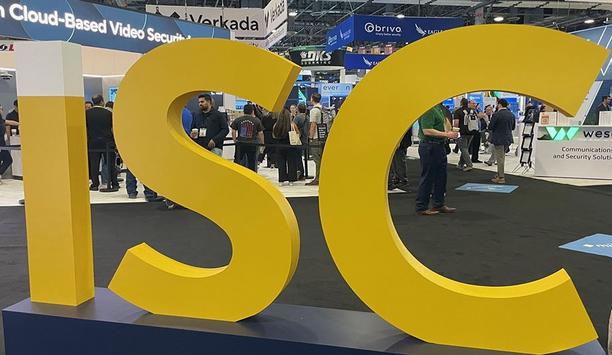
ISC West 2025 in Las Vegas showcased the latest advancements in security technology, offering security professionals a glimpse into the future of the industry. This year's expo highlighted the growing influence of artificial intelligence (AI), cloud computing, and enhanced integration. The pioneering comprehensive and converged security event attracted nearly 29,000 industry professionals to the Venetian Convention Centre. Integration into unified platforms Several companies emphasised the importance of cloud-based solutions and the integration of diverse security components into unified platforms. For example, Brivo's Security Suite provides “everything in one platform” – not just access control. Customers only pay for what they use because the system is flexible and scalable from a single door to enterprise level applications. Brivo’s suite includes video, but the system can also tie in with third-party “partners.” Genetec's Security Centre allows for more frequent updates through the cloud. Milestone is undergoing a two-year transition to bring its Xprotect system into the future by incorporating Arcules and Briefcam into a video-as-a service product. Suprema introduced BioStar X, which integrates access control and video analytics into a single platform. AI and mobile credentials Axis Communications’ Cloud Connect product announced three new partnerships at ISC West 2025 Axis Communications’ Cloud Connect product announced three new partnerships at ISC West – Eagle Eye Networks, SecuriThings, and Wesco. They join the three partners announced during the first year of Axis Cloud Connect – Genetec, Kone (elevators) and Milestone. AI and mobile credentials were still hot topics at ISC West 2025, but the conversation has evolved beyond amazement at the technologies’ capabilities and now centres on more practical aspects. From the theoretical to the practical “AI and mobility are still the ‘flavors de jour,’ but messages are evolving to manifest AI for better outcomes,” says Heather Torrey, General Manager, Commercial Security, Americas, for Honeywell Building Automation. The company has reframed its security portfolio to be very building- and business-focused, continuing to grow and evolve after the recent acquisition of LenelS2. “From the theoretical to the practical, we want customers to be part of the conversation so we can deliver AI that is meaningful to them, focusing on what’s most important,” says Torrey. Under Honeywell’s new ownership structure, “each part of the business can be more focused on customers’ needs,” she says. Honeywell continues its journey around mobile access and credentialing and migrating to cloud solutions. Innovations in Access Control Gallagher’s new Quickswitch access control board simplifies the migration from legacy systems Access control remains a critical component of security systems, and ISC West 2025 showcased several innovations in this area. Acre is releasing “Gallery,” its version of the App Store for access control. DormaKaba is launching the Keyscan KC Series door controller with TCP/IP connectivity and enhanced features. Gallagher’s new Quickswitch access control board simplifies the migration from legacy systems. Johnson Controls highlighted its C-Cure command centre and C-Cure IQ web client, offering a unified approach to access control and video. Hardware integrations for security panels For service provider Alarm.com, hardware products prepare a path to greater customer experiences, says Abe Kinney, Alarm.com’s Director, Product Management, who oversees hardware integrations for security panels, sensors, video, etc., and drives new product development. “We are looking to bridge the physical world to digital world,” he says. “We want to bring an advantage to our dealers that they can bring to customers.” Because Alarm.com’s customers pay a monthly fee, the products must be durable and economical, says Kinney. “It should work with no need for truck rolls.” The importance of longevity and flexibility Products are evaluated based on features, price, and ease of installation Products are evaluated based on features, price, and ease of installation. In particular, longevity is important for the Alarm.com’s pro channel. There is also a growing emphasis on deterrence industrywide. Says Kinney: “We recognise that detection is part of it, but we need to prevent problems from happening in the first place. And the industry is re-evaluating.” When it comes to cloud intelligence, Eagle Eye Networks puts the emphasis on flexibility. They offer AI that can perform anywhere on the system infrastructure, on the camera, on their on-site bridge device, or in the cloud. They support their own AI and also any AI product from a third party. “We focus on what customers want from the data AI detects,” says Hans Kahler, Eagle Eye Networks’ Chief Operating Officer. Integration with other systems A timely alert from gun detection could save a life, but AI can also generate information that might be used and analysed later, such as point-of-sale information, dwell time, foot traffic, etc. “What people want is the ability to work with the data for business intelligence,” says Kahler. Integration with other systems provides new opportunities for customers: For example, a licence plate reader at a restaurant drive-thru could trigger customisation of the menu board digital signage based on the customer’s previous buying pattern. Relentless Innovation Assa Abloy handles more than 40 million SKUs for all its various brands, faked in 28 factories in the US Assa Abloy handles more than 40 million stock keeping units (SKUs) for all its various brands manufactured in 28 factories in the United States. Merely complying with regulations such as the “Buy American Act” is a monumental effort considering the massive product line, attendees heard at Assa Abloy’s Annual ISC West Breakfast focusing on compliance challenges in the security market. Meanwhile, back at the trade show booth, Assa Abloy focused on “relentless innovation” in every corner of its product line. Assa Abloy’s message: Innovation in security does not have to be about AI or automation. In fact, inventive approaches to products come in all shapes and sizes and at every level of the product portfolio, and innovation is happening faster than ever. For example, the Safebolt product from Securitech, a brand recently acquired by Assa Abloy, can quickly lock down existing doors with the press of a red button on a cylindrical or mortise lock. Temporary Systems to Secure Events Securing events is the focus of Allied Universal's Unified Command Solutions, which specialises in setting up temporary security systems for conventions, trade shows, festivals, construction sites, parades, and other events. They can add technology to situations where previously mostly security officers were used, providing safety/security and enabling more efficient event operation. “We can put cameras anywhere, whether they need power or not, use cell service or WiFi, a localised network or the internet, or whatever,” says Andrew LaMadrid, VP, Sales for Allied Universal's Unified Command Solutions. Event operation and management IDIS came to ISC West looking to leverage new products that they did not promote in the past The focus is on easy implementation, flexibility, and fast setup and removal. “We look for a solution to solve each customer’s pain points,” says LaMadrid. They specialise in setting up and deploying surveillance cameras for safety/security and for event operation and management. Mobile surveillance is a relatively new “piece of our puzzle” when it comes to protecting high-profile events. “People are excited about what we can offer that’s new,” says LaMadrid. Unified Command Solutions has been around for about 12 years and was acquired by Allied Universal last summer. IDIS came to ISC West looking to leverage new products that they did not promote in the past, and visitors were very interested in those solutions, says Scott Switzer, IDIS CEO. “The progression of our product line has been tremendous,” he says. Last year, the IDIS booth offered only basic analytics, but this year they had 30 different advanced analytics including gun and aggression detection using the advanced solution “IDIS Vaidio AI.” What Makes You Different? The most common question IDIS hears at their trade show booth is: “What makes you different?” The answer: They offer an end-to-end solution, including cameras; they manage, control, design from end-to-end; and there is no need for multiple integrations. The time needed to install an IDIS system is significantly less because of the simplicity. “We have customers we have supported and grown together for over 20 years,” says Switzer. The company previously deployed IDIS cameras under the Costar brand before the Korean IDIS brand was introduced into the U.S. (IDIS purchased Costar and changed the name to IDIS America.) “This has been a tremendous show for us; we are looking to build our momentum and let more people know about IDIS,” says Switzer. Managing real AI at the edge The depth of their metadata enables new applications, whether for security or business operations Based in Prague, Czech Republic, and with U.S. offices in Pennsylvania, FF Group provides licence plate recognition for harsh environments. Using Axis cameras, they offer “managed real AI at the edge,” selling through a nationwide distributed network, says Alex Osypov, CEO and Founder of FF Group. Markets include parking lots, cities/municipalities, police, government, water systems, etc. The depth of their metadata enables new applications, whether for security or business operations. They are looking to combine and correlate data including LIDAR, RADAR, etc. to exploit the advantages of “data fusion.” Osypov says: “The market is growing because we are involving other adjacent markets.” Unified platforms and advanced tools Several companies are focusing on enhancing security operations centres (SOCs) by providing unified platforms and advanced tools. Axon’s Fusus system “layers” onto existing infrastructure, tying together various sensors into a single interface for real-time monitoring and information sharing. Increasingly, enterprises have invested in a lot of technologies – ac, video, asset trackers – but none of it talks together. Fusus ties all the systems together so that operators no longer have to look at 10 different screens. Rather, there is a “single pane of glass” that shows everything and facilitates sharing of information with law enforcement. Motorola also showcased its Security Operations Centre, which integrates hardware, software, smart sensors, communication radios, and broadband devices to streamline incident management.

Technology's role in securing banks and financial institutions
Download
Security technologies promote real-time awareness in K-12 schools
Download
Integrated systems enable critical and compliant security for transportation
Download
Modernising physical access control
Download
Access. Intrusion. One estate.
Download
