Voyant Photonics has announced the introduction of its Helium™ Platform, marking a new development in solid-state LiDAR technology. Built upon a silicon photonics chip, this innovation aims to provide enhanced reliability, integration, and performance tailored for industries like automation, robotics, and mobile autonomy.
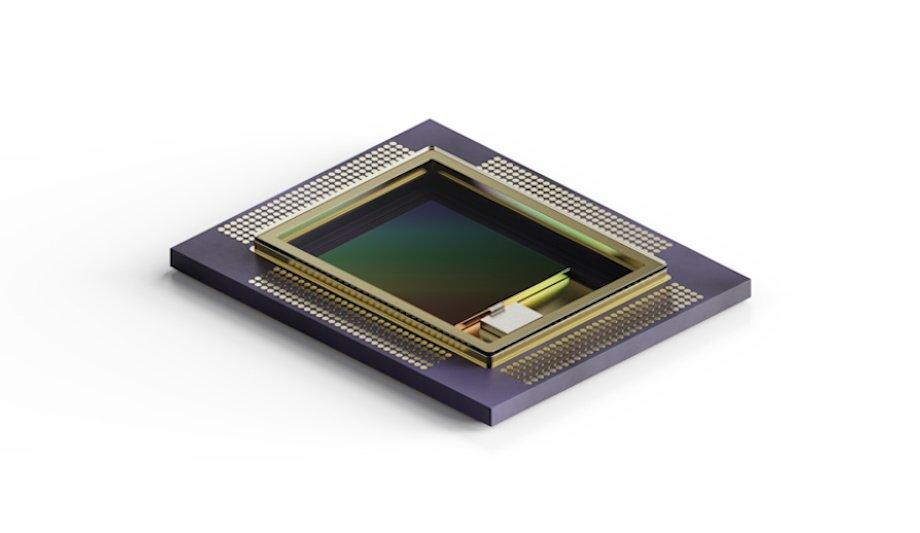
The Helium platform leverages Voyant’s proprietary Photonic Integrated Circuit (PIC), featuring a sophisticated two-dimensional photonic focal plane array with integrated 2D beam steering. This advancement discards traditional unreliable scanning techniques, offering a design devoid of moving parts.
Photonic technology advancements
This fully solid-state LiDAR benefits from a two-dimensional array of surface emitters, resulting in a compact and rugged configuration. Helium is adaptable to multi-sensor setups, facilitating wide-field short-range and narrow-field long-range sensing within a single system.
This flexibility delivers a cost-efficient solution for sophisticated perception tasks. The first Helium prototype will be demonstrated at the CES 2026 event in Las Vegas, showcasing a pivotal step in transitioning silicon-photonics LiDAR from research to widespread application.
Industry demand for Helium
Innovative platform extends the technological groundwork established by Voyant's Carbon™ line
According to Voyant CEO Clément Nouvel, “Helium represents the next step in our mission to deliver the most affordable high-performance LiDAR sensor ever. Industrial and consumer markets demand sensors that are small, cost-efficient, and highly reliable. Helium provides all that while delivering performance that unlocks new classes of intelligent machines.”
This innovative platform extends the technological groundwork established by Voyant's Carbon™ line, incorporating full two-dimensional beam steering into a silicon-photonics framework for the first time, resulting in a precise 4D sensor aligned with industry safety and dependability standards.
Features and benefits
The Helium platform boasts a variety of key features including solid-state design, high-resolution FPA architecture ranging from 12,000 to over 100,000 pixels, and software-defined LiDAR (SDL) for dynamic scan patterns.
Its ultra-compact size, weighing less than 150 grams and less than 50 cubic centimetres in volume, makes it suitable for drones, robots, and compact industrial systems. Moreover, it offers an estimated 20 times improvement in mean time between failures (MTBF) over conventional Time-of-Flight (ToF) LiDAR systems.
Tailoring LiDAR for diverse uses
Voyant plans to bring its technology to broader markets by offering OEMs the option
Helium provides numerous field-of-view and range configurations, scalable from core modules to complete sensors. Built on a two-dimensional surface-emitting photonic array with integrated electronics and a fixed lens, it offers a sturdy module suited for embedded applications.
The platform's modular nature allows for tailored solutions in various applications, such as material handling systems, smart infrastructure, and edge-compute platforms. Voyant plans to bring its technology to broader markets by offering OEMs the option to integrate Voyant’s sensing technology directly into their systems.
Early engagement opportunities
Voyant is launching an early access program for select OEMs and automation partners, providing the opportunity to collaborate with Voyant's engineering teams.
Collaborators will have the chance to customise chip resolutions, fields of view, module setups, multi-sensor architectures, and explore software-defined scanning capabilities. This initiative underscores Voyant's commitment to advancing a modular LiDAR platform for broader adoption in various sectors.
Voyant Photonics, the pioneer in chip-scale frequency-modulated continuous-wave (FMCW) LiDAR, now announced its Helium™ Platform of fully solid-state LiDAR sensors and modules.
The solution is built on a silicon photonics chip, enabling a breakthrough architecture designed to deliver unprecedented reliability, integration, and performance for industrial automation, robotics, and mobile autonomy.
Voyant’s proprietary Photonic Integrated Circuit
Leveraging Voyant’s proprietary Photonic Integrated Circuit (PIC), Helium offers camera-like simplicity and unmatched flexibility. Helium uses a dense two-dimensional photonic focal plane array with fully integrated 2D on-chip beam steering — eliminating all unreliable scanning methods: MEMS, mirrors, and resulting in no moving parts.
The FMCW LiDAR chip leverages a two-dimensional array of surface emitters to create a fully solid-state LiDAR in an ultra-compact, rugged design. Helium also supports multi-sensor configurations, combining, for instance, a wide-FoV short-range and narrow-FoV long-range sensing in one system — delivering the most versatile and cost-effective LiDAR solution for advanced perception applications.
Advancing silicon-photonics LiDAR
Helium's first prototype release will be demonstrated at Voyant’s booth (LVCC, West Hall, Booth #4875) at CES 2026 in Las Vegas, January 6-9, marking a major milestone in advancing silicon-photonics LiDAR from R&D into high-volume systems that are proliferating Physical AI.
“Helium represents the next step in our mission to deliver the most affordable high performance LiDAR sensor ever,” said Voyant CEO Clément Nouvel. “Industrial and consumer markets demand sensors that are small, cost efficient, and highly reliable. Helium provides all of that while delivering performance that unlocks new classes of intelligent machines.”
A flexible platform to move solid-state LiDAR forward
Helium extends the technology foundation proven in Voyant’s Carbon™ product line, bringing full two-dimensional beam steering to a silicon-photonics platform for the first time. The result is a compact, high-precision 4D sensor that meets the highest industry standards for safety and reliability.
Key advantages include:
- True solid-state — no MEMS, polygon scanners, or rotating assemblies
- High-resolution FPA architecture spanning from 12,000 pixels to over 100,000 pixels
- Long-range FMCW performance, per-pixel radial velocity
- Software-defined LiDAR (SDL) enabling adaptive scan patterns and region of interest
- Ultra Compact Size -as small as a matchbox (<150 g mass and <50 cm³ volume), ideal for drones, mobile robots, and compact industrial systems
Legacy ToF LiDAR architectures
Field of view and range can be tailored with different lenses, and the platform scales from core module options to fully enclosed sensor. Helium is built on a 2D array of surface-emitting photonic antennas combined with a fixed lens and integrated electronics, forming a rugged module ideal for embedded perception.
With no moving parts and monolithic photonic integration, Helium offers an estimated 20× improvement in MTBF over legacy ToF LiDAR architectures —a critical reliability requirement for high-duty-cycle industrial fleets.
Engineered for scalable manufacturing
As with the Carbon family, Helium is built entirely on Voyant’s pioneering proprietary silicon-photonics platform, enabling new levels of performance and integration. This deep integration eliminates the unreliable optical alignments that limit traditional TOF LiDAR manufacturability.
Helium leverages the same mature photonics foundry ecosystem as the optical datacom industry — allowing Voyant to scale production toward semiconductor-class cost structures.
Voyant advances a modular LiDAR platform for broader adoption
Voyant established the company’s leadership in compact, cost-optimized FMCW sensing for compute-constrained platforms with its first-generation Carbon™ family, extended last week with the new Carbon 32 and Carbon 64 variants. Helium builds directly on these advances, expanding the architecture from 1D to 2D on-chip beam steering, with higher resolution and a fully solid-state scan engine.
Voyant now enables OEMs to integrate its sensing technology directly into their machines by offering module-only access along with full design-in support. This allows partners to build customised, high-performance sensor solutions tailored to their exact requirements
Helium sensors and modules
Helium sensors and modules will be available with multiple resolution and range configurations, supporting a wide choice of field-of-view options—from ultra-wide coverage approaching 180° down to narrower, long-range targeting optics.
These modular variants enable OEMs and developers to select and integrate lenses that best suit their application, allowing LiDAR architectures to be tailored for mobile robots, material-handling systems, smart infrastructure, and emerging edge-compute platforms.
Early Access Program
Voyant is opening early access to Helium for select OEMs and automation partners.
Early collaborators will engage directly with Voyant’s engineering teams to explore custom chip resolution, FoVs, module configurations, multi-sensor fusion architectures, and software-defined scanning features.