Security access systems - Round table discussions
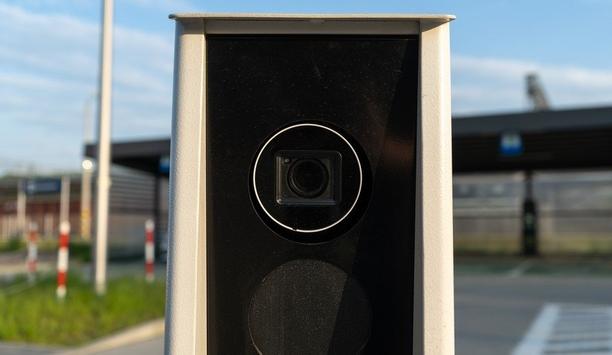
In the United States, they are called licence plate recognition (LPR) systems. In Europe, the more common term is automated licence number-plate recognition (ANPR). In either case, the systems provide capabilities that can benefit a range of applications from schools to municipalities to parking lots. Newer technologies can even identify vehicle colour, type, make and model. We asked this week’s Expert Panel Roundtable: What's new with licence plate recognition (LPR) and/or automated numbe...

Headlines of violence in our schools are a reminder of the need to keep educational institutions safe. In fact, if there is a positive aspect to the constant bombardment of headlines, it is that it keeps our attention perpetually focused on how to improve school security. But what is the role of physical security systems? As the new school year begins, we asked this week’s Expert Panel Roundtable: Are schools safer because of physical security systems? Why or why not?

As physical security technologies become more complex, it is incumbent on the dealer/integrator to have the skills and expertise needed to ensure that a system operates smoothly. The value of integrators increasingly rests on the skill sets they bring to bear when installing a system. If the skills are missing, there is a problem. We asked this week’s Expert Panel Roundtable: What missing skills among security integrators can cause problems for customers?

Driving the smart homes market is the convenience of simple technology solutions. Almost every home now has a “smart speaker” that makes it easier than ever for homeowners to interface and control their technology. But where does security fit into the new landscape of smart home systems? We asked this week’s Expert Panel Roundtable: What’s new in smart homes and residential security systems?

Historically, the emphasis of security systems has been on reactivity, whether it’s providing video evidence of an incident or data to support a resulting investigation. Reactivity is core to impactful security, but increasingly, systems are also seeking to be more proactive. A proactive system seeks to prevent events from happening in the first place, thus mitigating the harm to an organisation, and making the need for a reactive response moot. We asked this week’s Expert Panel Roun...

The role of the integrator/installer in the physical security marketplace is shifting as technologies evolve and applications expand. Integrators are being faced with a need to augment their expertise both in a wider range of systems and deeper into the specifics of each increasingly complex technology. At the end of the day, it falls to the integrator/installer to ensure a system performs as promised, however much a consultant or even a manufacturer might be involved in the process. We asked th...

Deployed across a wide range of devices, the Internet of Things (IoT) collects data to help business owners make decisions on a macro scale as well as at a granular level. The IoT is a network of physical devices embedded with sensors, software, and network connectivity that allows them to collect and share data. We called on this week's Expert Panel Roundtable to comment on the intersection of the IoT and physical security. We asked: How is the Internet of Things (IoT) increasing the effectiven...

Analogue video cameras are still used in a variety of applications, primarily because yesterday’s robust and flexible technology is still functioning today, although it has been years, or even decades, since the initial installation. In many cases, this past generation of security cameras is still reliable and effective. Embracing an installed base of analogue cameras is often the most cost-effective approach when updating or expanding a surveillance system. But what about the futur...

Time flies in the busy world of security, so it’s no surprise that the midpoint of 2023 comes before know it. Let’s pause after the first half of the year to look ahead at what can expect during the second half (Hint: It’s all about AI). We asked this week’s Expert Panel Roundtable: What will likely be the most important technology development in the security marketplace in the second half of 2023?

A sad irony in the physical security industry has been the lax attention paid historically to the cybersecurity elements of our industry’s systems. However, the picture has improved starkly in recent years as manufacturers have stepped up to meet the cybersecurity challenges and awareness of the issue has become much higher. We asked this week’s Expert Panel Roundtable: What's new in cybersecurity for physical security systems?

Integrators and installers are on the front line of creating most security systems. They are also usually the first point of contact if there is a problem with the system. In general practice, many end users deal with integrators and seldom if ever speak to the manufacturer. Should it be that way? We asked this week’s Expert Panel Roundtable: Why does a manufacturer need a direct relationship with an end user?

Every security system is unique, of course. Specific to each installation are the problems the customer and the integrator may experience along their journey. However, given the installation of hundreds of physical security systems, there are commonalities that occur. We asked this week’s Expert Panel Roundtable: What are the major pain points when installing a physical security system?

Biometrics is both a mature technology in the physical security world and an innovation perpetually on the cutting edge. Biometric technologies received a boost during the COVID pandemic when “touchless” became a buzzword with particular relevancy to the world of biometrics. Higher security needs, such as “two-factor authentication,” are also driving demand for biometric products. We asked this week’s Expert Panel Roundtable: What are the latest technology trends in...

Some products may become obsolete faster than others, while some may have a longer life span due to ongoing innovation and demand. Technology and security threats are continuously evolving, and older security systems may no longer be effective in protecting against the latest threats. Additionally, older systems may have outdated technology, making them more vulnerable. We asked this week’s Expert Panel Roundtable: Given rapid technology development, are the lifecycles of security sy...

Some systems and assets are so vital that their incapacity or destruction would have a debilitating impact on security, economic security, public health or safety, or any combination of those factors. This so-called critical infrastructure has historically faced many complex threats. In 2023, we can add growing concerns about cybersecurity to the mix. We asked this week’s Expert Panel Roundtable: What is the largest risk to critical infrastructure in 2023? How can we address it?

There’s always more to talk about in our Expert Panel Roundtable discussions, and we appreciate the variety of opinionated responses offered throughout the year. Looking back at 2022, we found several random and uncategorised Expert Panel responses that were not previously published. We have rescued these responses from our cutting-room floor and present them here in the interest of generating even more discussion.

A multi-factor authentication is a layered approach that requires users to provide two or more verification factors, such as credentials, to gain access to data and applications. If one of the credentials is compromised, the thinking goes, an unauthorised user will still be unable to meet the second authentication requirement and will be denied access to a targeted physical space, computing device, network, or database. Cybersecurity applications have long embraced the idea of MFA, which is also...

With 2023 well underway, it’s a good time to look back on what we learned in the tumultuous previous year. In the security marketplace, there was no shortage of technology developments and a few challenges that kept 2022 interesting, to say the least. But what can we learn from the past? We asked this week’s Expert Panel Roundtable: What changes had the biggest impact on the security marketplace in 2022?

Some trends in the security marketplace continue for several years, while others come and go quickly and are soon forgotten. Scrutinising a trend’s expected lifespan can help predict its impact on the marketplace. Trends that evaporate seemingly overnight are not useful for the greater good, and they can also distract customers from more enduring subjects. Unfortunately, sometimes hype is just hype. We asked this week’s Expert Panel Roundtable: Which new security trend do you think w...

From lodging to food service to event planning to tourism, the hospitality market faces a large and growing range of security threats and challenges. Given the competitiveness of the market and the heightened flow of information about customer satisfaction via social media, there is more at stake than ever as hospitality professionals seek to ensure the safety and security of guests. We asked this week's Expert Panel Roundtable: What security challenges are impacting the hospitality market of to...

For decades now, usernames and passwords have been a critical, and highly visible, element in data protection and cybersecurity. However, the use of passwords is a far-from-perfect approach to protecting access to computer systems. Nowadays, newer, more sophisticated forms of user identification and authentication have emerged on the scene. We asked this week’s Expert Panel Roundtable: Is the password on the brink of extinction in physical security? Why or why not?

Connectivity is literally the difference between products operating individually and those combined into a more powerful system. Many of the devices that connect today’s security products reflect mature technologies that have been proven over time. However, innovation is also driving the need for new approaches to connectivity and networking. We asked this week’s Expert Panel Roundtable: What are the new developments in networking and connectivity for security?

Machine learning refers to the evolving ability of computer systems to learn and adapt without following explicit instructions. It essentially involves the use of algorithms and statistical models to analyse and draw conclusions from patterns in data. In the security industry, when it comes to buzzwords, artificial intelligence (AI) has a higher profile than the more specific related term, although machine learning is a better description of tools that are gaining popularity in physical security...

Obtaining needed funding for security technology improvements often requires going to senior management with a hat in hand. But requests for more security funding from the C-suite may fall on deaf ears unless a security professional can make a compelling case for the needed expenditures. It starts with learning to speak in terms that resonate with upper management and also involves carefully analysing the benefits of security investments to the broader enterprise. We asked this week’s Expe...

Integration of access control and video has been a reality for decades. The combination of our industry’s dominant technologies provides a one-two punch when it comes to maximising the security benefits of a system. Access control tracks ‘events,’ while video provides visibility into those events. But the benefits of integrating video and access control are far from static. Rather, today’s systems are becoming even more valuable as they incorporate elements such as artifi...

Cloud systems faced early resistance from physical security end users concerned about a perceived lack of control of data that ‘leaves’ their premises. More recently, mass adoption of cloud systems reflects widespread confidence in these systems to protect the data they handle. However, there are physical security professionals who remain concerned about cloud-based systems from the perspective of cybersecurity. We asked this week’s Expert Panel Roundtable: How can the industry...

Who needs cards when everyone has a smartphone? That’s the key question underlying the access control industry’s transition to mobile credentials. But the transition is easier said than done, and mobile credentialing, for all its advantages, also has limitations, which further innovation continues to address. Wider acceptance comes next, driven by use cases in various vertical markets. We asked this week’s Expert Panel Roundtable: What are the latest developments in mobile acce...

Generally speaking, security becomes a topic of conversation among the general public only after something bad has happened. The context in these situations is: What went wrong? Largely absent from awareness by the public at large is how often things go right; that is, how often security systems work as intended to avoid expensive or even deadly consequences. We asked this week’s Expert Panel Roundtable: How can the industry communicate the value of security to the public?

With fewer employees working in the office, and more of them working from home, it is no longer necessary for each employee to have their ‘own’ desk. Rather, desks may be used by various people at different times, as needed on an ad hoc basis. This arrangement, known as ‘hot desking,’ maximises space efficiency and reduces unneeded office space. We asked this week’s Expert Panel Roundtable: What will be the impact of ‘hot desking’ on the security marketp...

PropTech (property technology) is a term that describes electronic tools used in the real estate industry. It’s a buzzword that has made its way into the physical security industry, often in connection with access control. For the latest insights on the trends of security in PropTech, we asked this week’s Expert Panel Roundtable: What is the role of security as property technology (PropTech) transforms the real estate market?

Technology's role in securing banks and financial institutions
Download
Security technologies promote real-time awareness in K-12 schools
Download
Integrated systems enable critical and compliant security for transportation
Download
Modernising physical access control
Download
Access. Intrusion. One estate.
Download
