Security access systems - Round table discussions
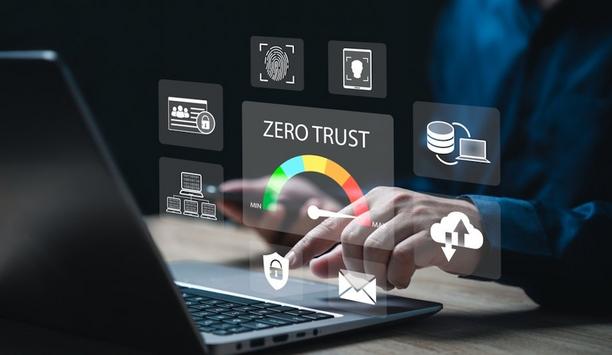
Traditional security models protected a perimeter like a castle moat, assuming anyone inside was safe. Zero trust removes that implicit trust entirely, recognising that threats can exist both outside and inside a facility. Zero trust is a routine and accepted concept in cybersecurity. Given the importance of information technology and the increasing convergence of physical and logical security, the tenet is becoming a dominant principle in physical security, too. We asked our Expert Panel Roundt...
False alarms are the security industry's oldest and most persistent challenge. Industry estimates suggest that as many as 95% to 98% of security system activations are non-emergencies. The high rate stems from a combination of human behaviour, environmental triggers, and technical limitations. However, newer technologies are finally addressing the challenge of false alarms. We asked our Expert Panel Roundtable: What are the new solutions to security's oldest challenge, reducing false alarms?

Emphasising proactive rather than reactive security shifts the focus from dealing with crises and damage control to prevention. Advantages of a proactive approach include cost efficiency, better business continuity, and fewer crises that draw attention away from strategic improvements. Staying ahead of threats is a core mission of the security department, and technology has evolved to enable security professionals to deliver on that mission better than ever. We asked our Expert Panel Roundtable:...

Future-proofing your skillset is about embracing continuous learning and developing a versatile set of competencies that remain valuable regardless of technological shifts or industry changes. In the security marketplace, it is not about predicting the exact jobs of the future, but rather equipping yourself to adapt and thrive in the uncertain security landscape. But where to begin? The emerging technology shifts in the security industry provide clues, such as the growing importance of cybersecu...

Access control, video surveillance, and intrusion detection systems evolved largely independently in the physical security industry. Integrating those systems to the benefit of an enterprise's overall security has traditionally fallen on security integrators working in cooperation with manufacturers. However, today's market has also evolved to include companies that provide "unified platforms,” bringing together various disparate security systems and functions under a single, centralised...

In the past, security installers and integrators were used almost exclusively to install hardware. However, the role is changing and expanding along with the technologies used in the physical security industry. Nowadays, an installer or systems integrator is much more likely to use a strategic, IT-centric, and data-driven approach. To gain additional insights, we asked our Expert Panel Roundtable: How is the role of the security installer/integrator changing?

In the physical security marketplace, artificial intelligence (AI) has evolved beyond the novelty phase. The emphasis has now shifted to the more practical aspects of implementing AI technology. That a system implements AI is no longer impressive in and of itself. The question becomes: What can this AI system do for me? How can it improve my physical security stance? We asked our Expert Panel Roundtable: How is artificial intelligence (AI) transforming physical security?
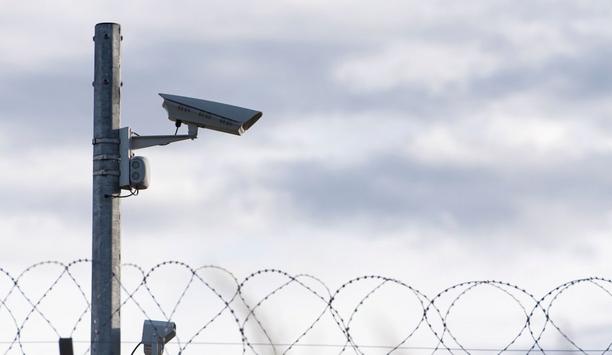
Physical security technologies are a prominent tool used by correctional facilities to provide a safe, secure, and controlled environment for staff, inmates, and the wider community. Among several functions, security technologies are used to prevent unauthorised access, to detect contraband, to monitor inmate movements and activities, and to protect staff. For security technology manufacturers, integrators and consultants, the corrections market presents distinctive challenges. We asked our Expe...

As cutting-edge trends go, convergence has been around for at least two decades. The meaning has shifted over the years, and if anything, the idea of convergence has gotten even more aspirational. Unfortunately, the widespread use of the term has also paradoxically undermined its meaning and power. However, today's concept of convergence has matured to provide new levels of benefit for security professionals. We asked our Expert Panel Roundtable: How has the meaning of “convergence”...

Trust is the foundation of successful relationships between buyers and sellers in the security marketplace. Trust facilitates collaboration, reduces risk, improves decision-making, and ultimately drives business growth and profitability. Transactions often involve significant investments, and trust minimises the perceived risk for buyers, making them more likely to commit to a purchase. Our Expert Panellists weigh in on the subject of trust in response to this week’s Roundtable: A security...

By all accounts, technology development is moving at a rapid pace in today's markets, including the physical security industry. However, market uptake of the newest technologies may lag, whether because of a lack of clear communication or not enough education of potential customers. We asked this week's Expert Panel Roundtable: How can the industry do a better job of promoting emerging technologies in physical security environments?

Port forwarding is a networking technique that allows incoming traffic on a specific port number to be redirected to a particular device or application on a local network. Open ports on the network expose an IP video system to the internet. This makes it a potential target for malicious cyberattacks. In the physical security industry, the elimination of port forwarding is seen as a basic and manageable precaution to shore up cybersecurity. We asked this week's Expert Panel Roundtable: What are t...

The hospitality industry drives economic growth and development by creating jobs, generating revenue, and initiating a ripple effect to improve profitability throughout the supply chain. The hospitality industry includes a vast number of small businesses, including hotels and restaurants. But what are the security challenges of these businesses, and how is the security marketplace serving those needs? We asked this week's Expert Panel Roundtable: How can technology address the security challenge...

Retaining top talent is a route to bring innovative ideas and creative solutions to a company. Talent drives product development, improves processes, and helps businesses stay ahead of the competition. In essence, retaining top talent is essential for businesses to remain competitive, innovative, and successful. Unfortunately, staffing shortages are a reality for many corporate players in the security industry, as well as throughout the business community. We asked this week's Expert Panelists:...

A software platform designed to centralise and manage various physical security systems within an organisation used to be called a PSIM (physical security information management) system. Generally speaking, however, the PSIM term has fallen out of favour because the systems were seen as expensive and difficult to manage. The phrase has been replaced by command-and-control, referring to software that combines access control, video surveillance, intrusion detection, and other systems into a unifie...

Direct costs such as purchase price and maintenance are important elements in the total cost of ownership (TCO). However, there are others. Elements such as opportunity costs of lost revenue or hidden costs of energy consumption and environmental consequences can also impact the measure of TCO. Costs of training, integration, support, and scalability can also be examined. Considering the security industry impact of TCO, we asked this week's Expert Panel Roundtable: How does/should total cost of...

By linking human resource (HR) systems to physical security, access control systems can automatically update permissions based on employee changes, such as promotions, terminations, or department transfers. In fact, connecting HR and information technology (IT) systems to physical security can provide many significant benefits in terms of access control, incident response, compliance, cost savings, and employee experience. We asked this week’s Expert Panel Roundtable: How can organisations...
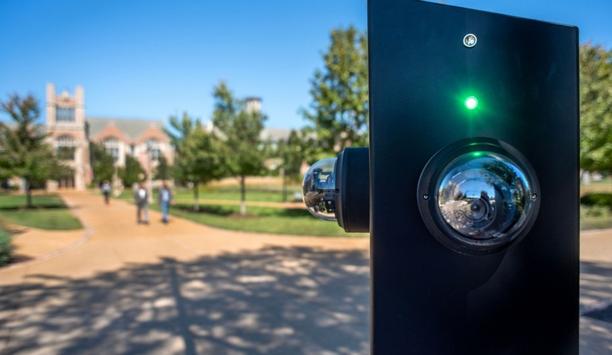
College campuses are meant to be places of learning, growth, and community. Fostering such an environment requires the deployment of policies and technologies that ensure safety and security. Considering the growing role of security technology in the higher education market, we asked this week’s Expert Panel Roundtable: What are the new applications for security technology in the college and university markets?
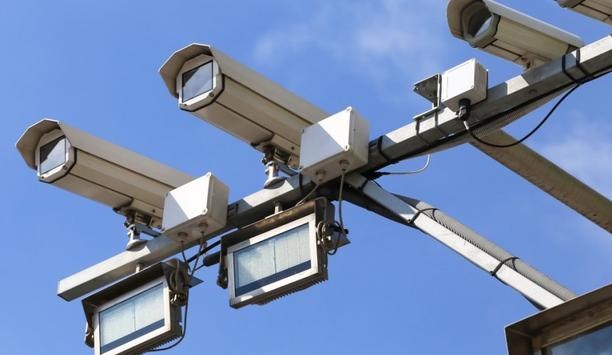
Transportation enables the movement of goods and people, facilitates trade and commerce, and is crucial for businesses to operate and expand. Security technology plays a major role both in protecting today's various transportation systems and increasingly to make them more efficient. We asked this week's Expert Panel Roundtable: What’s new in technology serving the transportation market?

Factors such as stable demand and large contracts make the government market particularly enticing for security companies and professionals. However, entering and thriving in the government market presents a number of challenges. We asked this week's Expert Panel Roundtable: What are the unique aspects of the government market, and how should the industry adapt?

The design of buildings encompasses many elements, from the practical to the aesthetic. Well-designed buildings should be functional, and they can also be beautiful and inspiring. But can security systems and building design coexist and complement each other? We asked this week’s Expert Panel Roundtable: How does building design impact physical security systems -- and vice versa?

The economic fallout of the COVID-19 epidemic was felt in supply chain disruptions, higher prices, and shortages of certain goods. The physical security industry was not spared, although the epidemic also presented opportunities for security companies. Changing access control trends triggered by the pandemic are still reverberating throughout the industry, for example. Four years later, the impact of the pandemic is still being felt in the security market, lingering like the symptoms of "long CO...

The security industry offers a vast array of technologies and vendors. This can be overwhelming for end users, who depend on security integrators for guidance and service. But how well do security integrators provide end users with what they need? We asked this week’s Expert Panel Roundtable: What are the biggest challenges that end users face when working with integrators?

Technology offers a range of tools to bolster security at public events, including before, during, and after. This year, the 2024 Summer Olympics in Paris will draw the attention of the world, requiring the best protection available for the venues, the athletes, and the attendees. Other happenings such as the FIFA World Cup, the Super Bowl, the Tour de France, and the U.S. NBA Finals are momentous events that challenge security and law enforcement personnel to keep them safe. We asked this...

Technological leaps in the last several decades have revolutionised biometrics. The technologies are constantly evolving, spanning facial recognition to iris scanning to fingerprints, to provide new levels of security and convenience. Biometrics are everywhere, from smartphones to border control, constantly evolving to meet the needs of our increasingly digital world. They are also more accurate and easier to use than ever. We asked this week's Expert Panel Roundtable: What’s new with biom...

In the complex world of physical security systems, standards can enable disparate systems to be combined to function together as a cohesive whole. Standards help to ensure that all the “pieces” fit together to create a clear, unified picture. More broadly speaking, standards also play a role in ensuring best practices are deployed in a range of security-related situations. We asked this week’s Expert Panel Roundtable: Which standards have had the greatest positive impact...

There is a complex and interdependent relationship between security and productivity. Good security is needed to make productivity possible, but security measures could, in some instances, hinder workplace efficiency. New technologies are enabling security systems to have a more profound and positive impact on productivity by yielding better intelligence to guide the improvement of workplace practices. Multiple systems that work together, rather than separately, improve the productivity of secur...

Security systems are often seen as an investment, but usually not one that pays dividends. However, newer technologies are enabling end users to extend their efforts to cost-justify a security system beyond the mirage of “measuring what didn’t happen.” Nowadays, security systems provide quantifiable benefits that yield a return on customers’ investments. We asked this week’s Expert Panel Roundtable: How can security systems maximize return on investment (ROI)?

For many years, security systems produced their share of "data exhaust." Every access control action and each video image became a data point to be stored in perpetuity, with no practical way to use the data. More recently, systems have been developed to enable organizations to analyze data from sensors and other connected devices to gain valuable insights into how their systems are being used, to identify potential vulnerabilities; and even to provide insights into broader enterprise operations...

An organisation’s security director manages a staff of security personnel, implements and enforces security policies and procedures, and generally ensures the safety of personnel and visitors to the organisation’s premises. Over the years, the role of security director has expanded to include new disciplines such as cybersecurity. More and more, security directors are also taking a “seat at the table” as integral and critical members of a company’s management team....

Technology's role in securing banks and financial institutions
Download
Security technologies promote real-time awareness in K-12 schools
Download
Integrated systems enable critical and compliant security for transportation
Download
Modernising physical access control
Download
Access. Intrusion. One estate.
Download
