OSDP

The Security Industry Association (SIA) is proud to announce a new partnership with AMAG Technology to enhance education on the Open Supervised Device Protocol (OSDP), an access control communications standard designed to improve security, system efficiency and interoperability across security products. With OSDP rapidly becoming the industry standard among developers, expertise in designing, specifying and configuring OSDP systems is increasingly essential for integrators, government and corpo...

HID, a worldwide pioneer in trusted identity and physical access control solutions, has launched HID Signo Décor in response to a request that architects, specifiers and integrators have repeatedly raised: a Signo-grade reader built for high-design spaces, without a compromise on the security behind it. The Signo Décor Reader 30 model mounts flush on European- and China-style back boxes and sits behind a robust glass face, rated IK10 for impact resistance and IP65 for indoor and o...

Safetrust is demonstrating Aliro card and mobile credentials working side by side at Global Security Exchange (GSX) 2026, along with live Access Control Emulation (ACE), the Neural Adapter, and Badgeless Access powered by facial authentication. The company is exhibiting at booth 3545 at the Georgia World Congress Center in Atlanta, GA, September 14 – 16. Safetrust will also present a featured education session during the event: One Credential, Any Reader: How the Aliro Standar...

Modern buildings are placing ever-increasing demands on door communication systems. Property owners, operators, and residents require intelligent solutions that accommodate different user groups, support flexible access methods, and meet high standards for security, connectivity, and integration. With the new D22x series, DoorBird introduces a new generation of IP video door intercoms. Developed based on specific customer requirements, the series combines cutting-edge technology, exceptional fl...

Nedap is proud to introduce uPASS Go: the next generation reader in long-range vehicle access control. As the latest addition to Nedap’s esteemed uPASS product line, uPASS Go establishes a new standard in managing vehicle entry for basic gates, like car parks, gated communities, and staff parking zones. Designed to blend significant commercial appeal with the latest technological advancements, uPASS Go transforms the landscape of vehicle access control to be smarter, more secure, and exce...

Integrated access control and security manufacturer TDSi by Hirsch has released GARDiS version 3.3, a major update for its powerful access control software designed to make access control and integrated security management easier to use, easier to administer and more intuitive for security teams. Key additions include Ajax Cloud intruder integration, basic intruder panel connection on the GARDiS controller, simplified credential types, and enhancements to security controls and data governance....
News

The Security Industry Association (SIA) announced a major milestone in its SIA OSDP Verified initiative—that over 200 device models have been named OSDP Verified through the comprehensive programme, which validates device conformance to the SIA Open Supervised Device Protocol (OSDP) standard. About SIA OSDP SIA OSDP is an access control communications protocol standard maintained by SIA to improve interoperability, add advanced functionalities and support an AES-128 encryption for security. Already in use by many leading manufacturers, the standard offers compliance with access control installations that require advanced security or are used in government per FIPS 201-3. Products that are OSDP Verified are displayed in the OSDP Verified Product List and can use the SIA OSDP Verified mark in their product marketing materials. With this milestone, security integrators, specifiers and practitioners now have a wider array of OSDP offerings to recommend, and buyers have the confidence products from the SIA OSDP Verified list have been third-party tested and perform within the requirements of the OSDP standard. Representing countries “Since its launch in April 2020, the SIA OSDP Verified programme has tested and validated 222 products from 32 companies and brands—substantial progress in six years, highlighting the market need and the programme’s success,” said Cameron Walker-Miller, director of standards and technology at SIA. “The programme now has representation in nine countries across North America, Europe, Asia and the Middle East, and we’re seeing growing enthusiasm across domestic and international participation.” OSDP Verified product list and programme As of July 2026, 46 access control units and 9 peripheral devices have been recognized as OSDP Verified. In addition to the growth of the OSDP Verified product list and international adoption, IDmachines has been renewed as SIA’s testing provider for the OSDP Verified programme. The establishment of the SIA OSDP Verified programme was a response to the growing adoption of OSDP in the industry to provide an authoritative source of OSDP solutions and the market confusion for nonverified claims of product compliance with the OSDP standard. By becoming OSDP Verified and displaying the SIA OSDP Verified mark on their products, access control manufacturers can instill confidence in their customers that their devices have gone through rigorous testing as required by the OSDP standard. Benefits of SIA OSDP Verified Benefits of becoming SIA OSDP Verified include an authoritative listing of OSDP solutions; a consultative process that provides vendors with implementation and remediation guidance; a lightweight, nonpunitive programme with no annual membership fees; and continuous access to open-source testing tools and community feedback that promotes device conformance through the product life cycle.

Inner Range has released Integriti V26.0, the latest evolution of its flagship unified security platform. This release introduces a range of new capabilities designed to improve operational efficiency, strengthen security, and expand integration across access control, biometrics, and license plate recognition (LPR). Integriti V26.0 brings a major upgrade to how users interact with access control at the door level. With OSDP Reader Text Support, operators can display real-time, contextual messages directly on supported readers. This moves beyond traditional LED and audible feedback, providing clearer and more meaningful information at the point of entry. This allows sites to: Communicate door status clearly, including locked, unlocked, or override states Deliver safety messaging during lockdown or emergency events Provide customised, site-specific instructions to users This enhancement transforms the reader into a communication point, improving clarity and usability for everyday access scenarios. Everyday access scenarios Managing visibility within a system is essential for both security and privacy. Integriti V26.0 introduces a new “Review Filters Only” operator permission model, providing more precise control over what users can view. This enables organisations to: Restrict operators to relevant activity and events, Limit exposure to sensitive or unnecessary data, Enable targeted monitoring based on roles, areas, or integrations. Stronger data control The result is a system that balances operational visibility with stronger data control. Integriti V26.0 continues to strengthen its open ecosystem with new integrations released alongside the platform. The LPR integration allows compatible cameras to send vehicle data directly into Integriti without requiring a CCTV server. This simplifies infrastructure while enabling automated vehicle access workflows. Integriti V26.0 introduces native support for Invixium biometric devices, including fingerprint and facial recognition. This enables: Seamless integration with existing access control systems Automatic syncing of users and credentials Support for biometric-based access alongside existing card credentials Secure identity verification These integrations provide more flexible and secure identity verification options across a wide range of environments. Invixium Biometric Readers are available from Wesco globally. Integriti V26.0 expands its role within smart buildings through support for the Schindler PORT Lift Integration (API v1.0). This enables: Greater visibility of lift and floor states Advanced logic for floor access and routing Builds on Inner Range's established Schindler integration By integrating more deeply with building systems, Integriti becomes a central point for managing both security and movement within a facility. Range of platform improvements A range of platform improvements ensures Integriti V26.0 continues to meet the demands of large-scale deployments. Enhancements include: Support for Microsoft SQL Server 2025 Improved performance when processing large datasets Faster responsiveness across enterprise environments Expanded REST API v2 capabilities for deeper data access These updates ensure consistent performance as systems scale in size and complexity. Modernised user experience Integriti V26.0 introduces a refreshed web client theme aligned with the broader Inner Range product portfolio. This delivers: A more consistent user interface across platforms Improved usability for operators Reduced onboarding and training time Security and Reliability at Every Release Protecting system integrity As with every version, Integriti V26.0 includes important security updates and vulnerability patches to protect system integrity and customer environments - reinforcing Inner Range’s commitment to the Integriti platform. Integriti V26.0 introduces a series of improvements that enhance how security systems are managed, experienced, and scaled. Key outcomes include: Smarter interaction at the door with dynamic messaging Stronger security through granular permissions and biometrics Expanded integrations across LPR, biometrics, and building systems Improved performance for enterprise-scale deployments

If users are running Access It! today, they have already made a real investment — in Mercury panels, in wiring, in workflows the operators know cold. The question isn't whether biometric authentication is worth adding. It's whether adding it means starting over. The ASSA Control iD integration brings facial recognition and multi-factor authentication into Access It! through the Mercury controllers that users are already running. No new panels. No rewiring. No new system for the team to learn. Multi-factor authentication Cards get shared. PINs get guessed. Badges get left in cars. Facial recognition closes that gap — it verifies the person, not just the credential they're carrying. For access points where speed and certainty both matter, that's a meaningful upgrade over card-only authentication. The objection most security teams raise next is predictable: does this mean replacing what they have? It doesn't. That's the design principle behind this integration, not a footnote to it. Card-only authentication The architecture is deliberately simple, and that's the point. A Control iD face reader performs the facial recognition and captures the presented credential. The credential number is sent to the Mercury controller, over Wiegand or OSDP, whichever users are already using. Access It! remains the system of record. It applies access rules, schedules, and anti-passback, and logs every event exactly as it would for a card swipe. The net result: biometric authentication at the edge, with no system redesign. The Mercury controllers, wiring, and Access It! workflows — unchanged. The reader does new work; nothing else has to. Four authentication modes Four ways to authenticate, one system managing all of them. Different doors carry different risk. The integration supports four authentication modes, and users choose which applies where: Face only: the fastest path through the door, built for speed at access points where a quick, frictionless walk-through is the priority. Face + Card adds a second factor for higher-security doors. Works with physical cards and mobile credentials over NFC or BLE. Face + PIN: a third option for areas where users want elevated assurance without issuing a new credential type. QR Code: built for temporary or visitor access, where supported by the reader. Every mode reports back through Access It! the same way a card read would. The operators don't learn a second system, they keep using the one they already know. What changes for the security team and what doesn't. This is where the integration earns its place, not in the feature list but in what it leaves alone. What changes: Facial recognition processing happens at the reader itself, so the time between presentation and decision stays fast. Identity verification is backed by Control iD Vision AI with liveness detection, built to tell a real face from a photo or a video. A double-tap on the reader can trigger configured actions, mirroring the double-card behaviour the team already uses. Provisioning and deprovisioning follow Access It! automatically: assign someone a Control iD-mapped access level and they're in; remove that access, or remove them from the host system, and they're out. Records stay synchronized automatically, with face photo sync available as an optional, separately controlled setting. What doesn't change: Access decisions, schedules, and event logging all stay in Access It!. Administration stays in the Access It! desktop client — no separate database, no second login. The operators' monitoring workflow is exactly what it was yesterday. Application data and biometric data are encrypted in transit, and the system is designed for always-on, 24/7 operation, which matters because access control doesn't get a maintenance window. Identity certainty matters Facial recognition earns its place fastest in environments where identity certainty matters and foot traffic is constant: corporate offices, data centers, healthcare facilities, and education campuses. Anywhere a card alone isn't quite enough and anywhere “replace the whole system” was never going to be the answer the budget or the operations team wanted to hear. What users need to get started Access It! version: 12.4 or higher Controllers: Existing Mercury-based panels: MP, LP, and EP series are supported. No controller, panel, or wiring changes required. Readers: Control iD iDFace biometric readers. Validated models are the IDFACE MAX and IDFACE PRO. Communication: Wiegand or OSDP between reader and controller. OSDP (version 2.2) is required if users want door-status indication at the reader. Capacity: No limit on the number of Control iD readers a system can support. Licensing: Control iD is licensed per reader.

Axis Communications, a pioneer in network video, has announced a series of new security innovations designed to increase deployment flexibility, enhance edge intelligence, and scale modern systems. These technologies reflect the growing convergence of physical security and IT, and reinforce Axis commitment to solutions that seamlessly connect devices, business intelligence and insights across organisations. The cutting-edge AXIS TP3604-E Private Cellular Back Box enables high-performance IP cameras to operate without traditional wired infrastructure. It connects compatible cameras directly to an enterprise Private Cellular Network (PCN), allowing integrators to rapidly deploy cameras wherever PCN coverage and AC power are available. PCN security architecture Coverage can range from a few hundred metres to several kilometres per base station, and the PCN security architecture – including SIM-based device authentication, strong encryption and controlled device provisioning – helps to further protect data and communications. The AXIS TP3604-E is expected to launch in August 2026 with availability in select EMEA countries. The high-speed AXIS P1486-LE Global Shutter Camera, the first of its kind in the video surveillance industry, sets a new standard for capturing critical detail. Using an advanced CMOS global shutter, it delivers distortion-free images of fast-moving objects, eliminating motion blur and rolling shutter artifacts to support accurate identification and forensic analysis. Advanced edge analytics Continuous and strobing IR illumination ensures clear capture of vehicles and license plates even in challenging lighting conditions. Powered by the ARTPEC-9 system-on-chip, the camera supports advanced edge analytics for real-time processing and intelligent insights directly on the device, reducing server load. The AXIS P1486-LE Global Shutter Camera will be available through Axis distribution channels from June 2026. Complementing Axis new global shutter camera is AXIS License Plate Verifier, an edge-based analytics application that provides license plate recognition for both vehicle access control and free-flow traffic scenarios. Developed by FF Group, whose advanced LPR analytics are now part of Axis, the Verifier powers automated allowlists and blocklists that can trigger actions such as opening gates or barriers, while logged events support efficient search and review. The latest version of AXIS License Plate Verifier is currently available to license or for free 60-day trial at axis.com Enabling precise monitoring Axis thermal portfolio expands with two new offerings designed to enhance situational awareness and enable proactive monitoring. The AXIS Q2802-E Bispectral Camera pairs a high-resolution 640x480 thermal sensor with a 4K visual sensor in a single device, enabling long-range detection, remote temperature monitoring, and a thermal-visual image fusion which overlays critical thermal data onto the visual stream. For more discreet deployments, the AXIS F2180-TE Thermal Sensor provides spot temperature readings and deviation alerts when integrated with AXIS F91 main units, enabling precise monitoring in sensitive or space-constrained environments. The AXIS Q2802-E Bispectral Camera and the AXIS F2180-TE Thermal Sensor will be available through Axis distribution channels Q2 2026. Wide-area surveillance New additions to the Axis panoramic camera lineup, the M4337/38 PLVE and the AXIS M4347/48 PLVE Panoramic Cameras, redefine wide-area surveillance with unparalleled detail and versatility. Available in 6 MP and 12 MP models, these true 360° cameras feature built-in IR for clear images in total darkness. The AXIS M4347/48 adds integrated microphones for audio streaming and analytics. Powered by the latest ARTPEC-9 chip, these cameras support advanced edge analytics and offer robust designs (IP66, IK10 ratings, -40C to +50C temperature range) suited for demanding indoor and outdoor installations. The new AXIS M43 Series will be available through Axis distribution channels Q2 2026. Axis door controllers Axis access control portfolio expands with two new IP readers (the AXIS A4610 and AXIS A4611 Network Reader with keypad) and three new OSDP readers (the AXIS A4030-E, AXIS A4130-E, and AXIS A4131-E with keypad) that integrate with Axis door controllers and elevate security and simplify management for scalable, IP-based access control systems. Secure, flexible, and able to be remotely managed, these new readers are built for durability and versatility, with select models offering a complete IP-powered interface for any door as part of an open, end-to-end access control solution. The latest Axis door readers are available now through Axis distribution channels.

Axis Communications, the industry pioneer in network video, announces a series of new security innovations designed to increase deployment flexibility, enhance edge intelligence, and scale modern systems. Together, these technologies reflect the growing convergence of physical security and IT, enabling organisations to unify video, sensors, and analytics within a single intelligent infrastructure. Headlining this year’s lineup is a cutting-edge private cellular solution, alongside a high-speed global shutter camera, advancements in thermal imaging and new panoramic cameras offering 360° views. The portfolio also features an expanded range of network door readers for IP-based access control, as well as intelligent edge-based license plate recognition. These solutions reinforce Axis’ commitment to delivering solutions that seamlessly connect devices, business intelligence and insights across organisations. New panoramic cameras "Today’s organisations demand solutions that can adapt to their evolving operational needs,” said Fredrik Nilsson, Vice President, Americas, Axis Communications. “Our latest innovations—including private cellular connectivity, advanced thermal imaging, and powerful AI solutions like our newly enhanced edge-based LPR—are engineered to deliver that agility. Unifying these open technologies allows customers to maximise value by turning video, sensors and analytics into actionable insights across their operations. These solutions also enable the deployment of secure and scalable infrastructure exactly where and when it’s needed most.” Greater deployment flexibility The AXIS TP3604-E Private Cellular Back Box enables high-performance IP cameras to operate without traditional wired infrastructure, providing greater deployment flexibility. It connects compatible AXIS P14 and AXIS P32 cameras directly to an enterprise Private Cellular Network (PCN), eliminating the need for costly trenching and complex cabling. As a result, integrators can rapidly deploy cameras wherever PCN coverage and AC power are available, bypassing the limitations of Wi-Fi or public cellular networks while delivering fast, reliable connectivity through a dedicated private network. This opens new possibilities for surveillance in remote or infrastructure-limited environments and provides a scalable foundation for expanding surveillance systems and integrating additional IoT devices. Depending on the cell configuration and deployment environment, coverage can range from a few hundred meters to several kilometers per base station. High-speed environments Additionally, the security architecture of private cellular networks—including SIM-based device authentication, strong encryption and controlled device provisioning—helps to further protect data and communications. The AXIS TP3604-E is expected to launch in the U.S. in August 2026, with availability in select EMEA countries. The AXIS P1486-LE Global Shutter Camera, the first of its kind in the video surveillance industry, sets a new standard for capturing critical detail in high-speed environments. Using advanced CMOS global shutter technology, it delivers distortion-free images of fast-moving objects, eliminating motion blur and rolling shutter artifacts to support accurate identification and forensic analysis. Its built-in continuous and strobing IR illumination ensures clear capture of vehicles and license plates even in challenging lighting conditions. Real-time vehicle identification Powered by the ARTPEC-9 system-on-chip, the camera supports advanced edge analytics for real-time processing and intelligent insights directly on the device, reducing server load. Engineered for continuous operation, it is purpose-built for demanding applications such as traffic monitoring, logistics hubs, manufacturing lines, and other high-speed environments where precision is critical. The AXIS P1486-LE Global Shutter Camera will be available through Axis distribution channels June 2026. Complementing Axis’ new global shutter camera in high-speed environments and challenging traffic conditions is AXIS License Plate Verifier, an edge-based analytics application that provides license plate recognition for both vehicle access control and free-flow traffic scenarios. Running directly on compatible Axis cameras, the solution enables real-time vehicle identification without the need for dedicated servers. Developed by FF Group, whose advanced LPR analytics are now part of Axis, the Verifier leverages this technology to power automated allowlists and blocklists that can trigger actions such as opening gates or barriers, while logged events support efficient search and review. Enhancing situational awareness The latest version of AXIS License Plate Verifier is currently available to license or for free 60-day trial at axis.com. Axis is expanding its thermal portfolio with two new offerings—the AXIS Q2802-E Bispectral Camera and the AXIS F2180-TE Thermal Sensor—designed to enhance situational awareness and enable proactive monitoring. By combining thermal and visual imaging in a single device, the Q2802-E enables operators to merge detection, verification, and environmental monitoring into one intelligent sensor platform. Remote temperature monitoring The AXIS Q2802-E Bispectral Camera pairs a high-resolution 640x480 thermal sensor with a 4K visual sensor in a single device, enabling long-range detection and remote temperature monitoring. Its thermal-visual image fusion overlays critical thermal data onto the visual stream, improving scene interpretation and enabling precise alerts and temperature-based alarms. Built-in cybersecurity with Axis Edge Vault helps protect device integrity and sensitive data. The camera is well suited for applications such as perimeter protection, critical infrastructure monitoring, and operational efficiency. For more discreet deployments, the AXIS F2180-TE Thermal Sensor provides spot temperature readings and deviation alerts when integrated with AXIS F91 main units, enabling precise monitoring in sensitive or space-constrained environments. The AXIS Q2802-E Bispectral Camera and the AXIS F2180-TE Thermal Sensor will be available through Axis distribution channels Q2 2026. Reducing installation complexity New additions to the panoramic camera lineup, the M4337/38 PLVE and the AXIS M4347/48 PLVE Panoramic Cameras, redefine wide-area surveillance with unparalleled detail and versatility. Available in 6 MP and 12 MP models, these true 360° cameras feature built-in IR for clear images in total darkness, and the AXIS M4347/48 adds integrated microphones for audio streaming and analytics. Powered by the latest ARTPEC-9 chip, these cameras support advanced edge analytics and offer robust designs (IP66, IK10 ratings, -40C to +50C temperature range) suited for demanding indoor and outdoor installations. This series provides a single-camera solution for expansive coverage, reducing installation complexity and cost while maximising situational awareness. The new AXIS M43 Series will be available through Axis distribution channels Q2 2026. IP-based access control systems On the access control side, Axis is expanding its portfolio with two new IP readers and three new OSDP readers that elevate security and simplify management for scalable, IP-based access control systems. These readers seamlessly integrate with Axis door controllers, offering robust interoperability and advanced cybersecurity. The AXIS A4030-E, AXIS A4130-E, and AXIS A4131-E with keypad OSDP readers and the AXIS A4610 and AXIS A4611 Network Reader with keypad IP readers introduce unrivaled protection through EAL6+ Certified Secure Elements and transparent mode for secure end-to-end encryption, safeguarding sensitive access control data. Flexible authentication options include intuitive touch keypads for two-factor authentication and broad RFID card compatibility. Remote management via AXIS Camera Station Secure Entry allows for effortless configuration and updates. IP-powered interface Built for durability and versatility, these readers feature high IP and IK ratings for reliable performance in diverse environments, with select models offering a complete IP-powered interface for any door as part of an open, end-to-end access control solution. The portfolio of Axis readers extends the flexibility and cybersecurity protections expected in modern IT environments for any organisation looking to migrate toward unified, IP-based security architectures. The latest Axis door readers are currently available through Axis distribution channels. Axis Communications will demo these new solutions at ISC West, booth #14051, at the Venetian Expo in Las Vegas, March 25 – 27.

The Security Industry Association (SIA) has announced the 2026 winners of the SIA New Products and Solutions (NPS) Awards, the flagship awards program presented in partnership with ISC West recognising innovative security products, services and solutions. Top among the winners, who were recognised March 25 during an award ceremony on the Bridge Stage on the ISC West show floor, was Ones Technology, receiving the 2026 Best New Product Award. Extensive industry experience Since its inception in 1979, SIA NPS has been the security industry’s premier product awards program. New products are reviewed by a panel of judges with extensive industry experience, and in 2025, following significant deliberations, the 38 judges presented awards for technologies covering 23 product and service categories, as well as the prestigious Best New Product and Judges’ Choice awards. The 2026 SIA NPS Awards entries will be on display through Friday, March 27, in the SIA NPS Display Area on the ISC West show floor. Ones Technology received the Best New Product honour for its BioAffix Secure I/O Distributor product, submitted in the Access Control Software, Hardware, Devices & Peripherals—Wired category. Critical infrastructure environments “BioAffix Secure I/O DistributorV2 eliminates cascading electrical failures within access control panels through 20 independently protected outputs and native OSDP alarm integration,” said Ones Technology. “Unlike traditional power systems, it embeds supervised containment directly into the access control communication layer, reducing complexity while transforming power continuity into security continuity for critical infrastructure environments.” The prestigious Judges’ Choice Award was presented to EyePop.ai Incorporated for the EyePop.ai Platform product, submitted in the Video Analytics category. “EyePop.ai enables developers to build and deploy custom computer vision solutions easily,” said EyePop.ai. “Deploy in the cloud or on-prem on images or video—EyePop.ai is the most efficient solution to leverage cutting-edge capability.” Physical security technology “This year’s SIA NPS program has had another successful year with innovative new products and solutions presented to our judging panels,” said Christine Bergeron, chair of the SIA NPS Awards Committee and senior director of global physical security technology at Visa. “Thank you to the presenters who shared their detailed products and solutions and to our expert judges and committee members for your dedication to the program and lending your expertise and valuable time to contribute to a successful 2026 SIA NPS program.” Security industry overall Additionally, Honeywell received the 2026 NPS Merit Award, which recognises an individual or company who, through their support of the SIA NPS Awards, demonstrates a commitment to the vision and mission of the program, contributes to its success and promotes the advancement of SIA and the security industry overall. “SIA applauds all the awardees in this year’s SIA NPS Awards, and in particular Ones Technology and EyePop.ai, whose offerings impressed our judges and earned the Best New Product and Judges’ Choice honours, as well as SIA NPA Merit Award winner Honeywell,” said SIA CEO Don Erickson. “The NPS program highlights the most innovative security products available today, and it remains the most trusted awards program for presenting new security technology solutions in large part due to the support, expertise and extensive consideration of our judges.” Innovative security products The 2026 NPS award winners are: Best New Product Award - Winner: Ones Technology—BioAffix Secure I/O Distributor Judges’ Choice Award - Winner: EyePop.ai Incorporated—EyePop.ai Platform SIA NPS Merit Award - Winner: Honeywell Category Awards Access Control Hardware, Devices and Peripherals—Wired - Winner: Allegion—AdaptivIQ Technology Access Control Devices and Peripherals Hardware—Wireless - Winner: Centrios—The Centrios Exit Trim Biometrics - Winner: ROC—ROC Access Face1 Honourable Mention: Ones Technology, RealSense and IDmachines—BioAffix Vision Platform Commercial Monitoring Solutions - Winner: Robotic Assistance Devices (RAD) in Collaboration With Immix—SARA Alive Operating Inside Immix Communications and Networking Solutions - Winner: LifeSafety Power—NetLink Connect NLC and NXB Network Connectivity Modules Honourable Mention: Altronix—NetWaySP4TCW53 Convergence and Integration Solutions - Winner: AMAG Technology and SwiftConnect—Symmetry CONNECT 2.0, Networked by SwiftConnect Countermeasures to Drone and Robot Threats - Winner: Spotter Global—GAX500-3D Powered by Compact Holographic 3D Radar Technology Design, Diagnostic and Installation Tools - Winner: Vaidio—Vaidio 9.3 Camera Agent Drone and Robot Solutions for Security - Winner: FieldAI—Field Foundation Models for Security and Patrol Emergency and Mass Communication Systems - Winner: Telecor—eWear Fire/Life Safety - Winner: Potter Electric Signal Company—The PotterNet-FOW Floor Overview Window Identification Management and Credentialing (Nonbiometric) - Winner: Secure Passage—Truman Identities by Secure Passage Honourable Mention: Ones Technology—BioAffix NextBadge Intrusion Detection and Prevention Solutions (Physical)—Wired or Wireless - Winner: FiberRanger—FR300 Redundant System Key/Equipment Assets Management Solutions - Winner: LEAF Community—LEAF Verified Lock and Key Solutions - Winner: CyberLock—CyberKey Blue 4 Managed Services - Winner: EyeOTmonitor—ImageAssure Mobile Solutions - Winner: Bearing—Physical Security Operations—Guard Force Management Threat Detection and Response Solutions - Winner: Koshee Security—Koshee Protect Honourable Mention: Ambient.ai—Ambient Pulsar Threat/Risk Management Software Applications - Winner: Restrata—Rosa: resilienceOS’ AI Assistant for Operational Resilience Honourable Mention: Paramify—Paramify Video Analytics - Winner: EyePop.ai Incorporated—EyePop.ai Platform Honourable Mention: Brivo—Eeva Video Surveillance Cameras - Winner: Honeywell—Bi-Spectrum Thermal Camera Series Video Surveillance Data Storage - Winner: March Networks—Long Term Cloud Storage Video Surveillance Management Systems - Winner: Lumana—AI Video Security Platform

Expert commentary
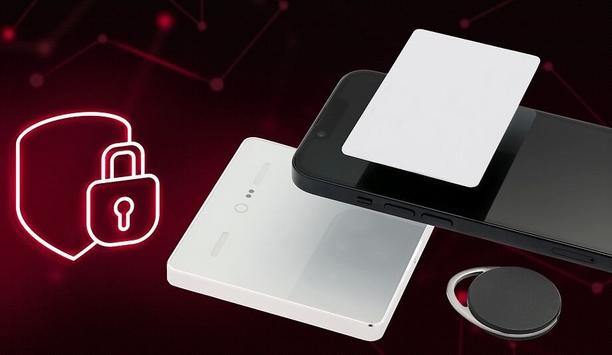
In logistics hubs, production facilities and distribution centres, the access control system is invisible—until it isn't. For decades, the 125 kHz card has been the workhorse of industrial credentialing: inexpensive, reliable and universally understood. It does exactly what it has always done. That consistency has served many organisations well, even as security needs and credential From authentication to smart buildings, gain expert insights about unified access. The same card technology that opened the warehouse gate in 2005 is opening it today. And while operations teams have upgraded conveyors, ERP systems and warehouse management platforms, the front door has often remained on technology selected for an earlier era. Major operational event Why? It is rarely about a lack of awareness. More often, organisations are balancing cost, time and operational risk. In a facility that never stops, a full systemwide upgrade can feel less like a routine project and more like a major operational event. The path forward is continuous modernisation: deploying an agile access layer that adapts to new security requirements and credential technologies over time, rather than replacing everything at once. Universal reader technology makes that possible, without the “Big Bang” shutdown. Why legacy systems can benefit from modernisation The 125 kHz card (also named proximity, prox or low-frequency) helped set a practical standard for convenience and broad compatibility, but many organisations are now evaluating where its security model can be improved by newer options: Increased cryptographic protection. Traditional low-frequency credentials transmit a fixed identifier, which can make them harder to align with today’s expectations for encrypted and dynamic authentication. Increased credential validation. Traditional proximity systems do not provide the kind of mutual authentication or challenge‑response mechanisms that are increasingly common in newer credential platforms. Better protection from duplication/cloning. Because the credential model is comparatively simple, 125 kHz cards present fewer barriers to duplication or cloning than modern encrypted credentials which are inherently designed to better distinguish authorised users from copied identifies. An opportunity to secure the full path. Many legacy deployments also rely on Wiegand communication between reader and controller, creating a strong case for modernisation to encrypted, supervised protocols that help protect credential data in transit. Keeping the interoperability benefit of Prox. Newer open standard provides the same interoperability benefits while addressing improved security. The opportunity for the front door At the same time, security teams face an expanding threat landscape and compliance requirements A traditional access control upgrade is not just a technology swap. It means new readers at every door, new credentials issued to every employee and contractor, platform reconfiguration and installation labor across a facility that cannot afford to stop. Against that backdrop, the rational choice is often to do nothing. At the same time, security teams face an expanding threat landscape and compliance requirements that increasingly demand encrypted credentials. And with Apple Wallet corporate badges and BLE mobile credentials moving into the mainstream, employees and contractors will soon expect to use their phone as their badge, at least as an option if not the primary means of credential presentation. Four specific friction points keep organisations locked in place long after they know they should move. The logistical bottleneck - Replacing a proximity-based system has traditionally meant doing everything at once: new readers, new credentials, new platform configuration, every employee and contractor rebadged before the cutover date. For a site running 24/7 with extensive staff and rotating contractors, that isn’t just an upgrade. It’s a logistical nightmare requiring a hard shutdown. The rebadging event alone, coordinating hundreds or thousands of people through a credential transition on a fixed timeline, can consume weeks of HR and security operations bandwidth. The Credential Soup - Most logistics organisations are not running one clean credential population. They are running three or four: legacy prox for permanent staff, a different format inherited from an acquisition, a contractor badge system managed by a third party, a mobile pilot that never fully rolled out. None of them talk to each other, and no single reader handles all of them. Frozen Infrastructure - Static readers support only the credential formats they shipped with or have limited format support for updates. When a new vulnerability is disclosed or a new mobile standard is released, the hardware has no path to adapt. The only option is physical replacement, which means another capital project, more installation labour, and the same shutdown risk all over again. The Cyber-Physical Gap - IT departments run zero-trust architectures and encrypt everything on the network. Then the same organisation unlocks its server room with a Wiegand-protocol reader transmitting credentials in plain text. The IT security perimeter ends at the network edge. The physical front door is a different conversation entirely, and often nobody's budget. The way forward: Continuous modernisation of access credentials A continuous modernisation plan is both easier and more cost-effective than a one-time “rip-and-replace” event The answer to the Big Bang problem is not a better-planned Big Bang. It is a fundamentally different approach to access infrastructure that treats modernisation as an ongoing capability rather than a one-time event. A continuous modernisation plan is both easier and more cost-effective than a one-time “rip-and-replace” event. It significantly lowers the labour and logistical costs of rebadging the entire organisation at once and eliminates the need for forced downtime entirely. Instead, organisations upgrade incrementally (by site, by department, or as credentials expire), keeping operations running and spreading costs over time. And with future-proof universal reader technology, the reader stops being a fixed asset and becomes a platform that continues to evolve as needs change. Start with a universal infrastructure The foundation of continuous modernisation is a universal reader that can handle whatever credentials are already in the building (legacy proximity, modern smart cards, mobile credentials) while remaining ready for whatever comes next. As access technologies continue to evolve, support for additional credential formats and security approaches can be added through firmware updates rather than hardware replacement, ensuring a secure and future-proof access system. The burden can further be eased by the use of a universal credential that can support existing formats along with new formats, enabling the credentials to work on existing readers as well as new readers. Let old and new credentials coexist Legacy 125 kHz cards continue to function in parallel until the organisation is ready to retire them With a multi-technology reader in place, the rebadging process becomes a rolling transition rather than a synchronised event. New employees get modern credentials from day one. Existing staff transition as badges are renewed or departments are prioritised. Legacy 125 kHz cards continue to function in parallel until the organisation is ready to retire them. Eventually, 125 kHz support or insecure credential support can be switched off, cleanly and deliberately, via a remote firmware update. That means no forced downtime, and no mass confusion at the turnstiles. This applies equally to secure migration to either modern symmetric credentials (such as HID Seos or LEAF) or emerging asymmetric credentials (such as PKOC, Aliro or LEAF Verified). Secure the whole chain, not just the card Upgrading credentials without addressing the communication layer is only half the job. Moving from Wiegand to OSDP Secure Channel (a bidirectional, AES-128 encrypted protocol) closes the replay attack vulnerability and adds tamper detection between reader and controller. Modern credentials and a secure communication layer together protect the entire authentication chain, from the card or smartphone all the way to the access control platform. This becomes critical when the reader is handling the decryption of a secure credential and then communicating to the panel in clear text. OSDP encrypts this last step of communication, while also offering industry best practices for managing reader devices. Choose infrastructure that doesn't choose for you Interoperability is not just a convenience feature. It is a strategic asset Interoperability is not just a convenience feature. It is a strategic asset. A facility running universal reader infrastructure compatible with most transponder technologies and credential formats (physical and mobile) is insulated from vendor lock-in and the next credential transition. Universal readers also act as merger-and-acquisition insurance: when a company acquires a facility running a different badge system or a contractor arrives with an unfamiliar card format, existing readers can be configured to accept the new credentials from day one. As access technologies and credential standards continue to evolve, organisations with adaptable reader infrastructure will absorb that shift as a firmware update. Those without it will face another capital project. A market in motion: beyond legacy credentials Emerging open standards (which reduce vendor dependency) and widely adopted proprietary platforms are both moving the market toward stronger cryptography. These credentials can be delivered on physical smart cards, mobile devices or both. Organisations selecting reader infrastructure today should ensure it is prepared to support this transition without requiring a hardware swap. Several initiatives are gaining significant traction: LEAF Identity: An interoperable credential framework built on strong symmetric encryption, already deployed across a meaningful number of installations and a proven replacement path for legacy proximity systems LEAF Verified: A next‑generation physical access credential platform built on NXP’s MIFARE DUOX that uses public‑key cryptography to eliminate traditional shared key management and enable interoperable, vendor‑neutral access control. PKOC (Public Key Open Credential): An open, vendor-agnostic credential specification from the Physical Security Interoperability Alliance using asymmetric public key cryptography, in which the private key never leaves the device and a derivative of the public key is the credential Aliro: An open mobile-first credential standard released in February 2026 by the Connectivity Standards Alliance (CSA), the organisation behind the Matter smart home standard. Backed by Apple, Google, Samsung, and 220+ industry members providing native wallet, offline device support and mailbox features on top of asymmetric public key cryptography. HID Seos: A widely deployed proprietary credential platform that continues to drive responsible, large-scale secure symmetric-based encrypted deployments across small to enterprise environments for both card and mobile deployment, including wallet. Security that scales The same principles apply equally to a single site or a logistics operator running 5,000 employees The same principles apply equally to a single site or a logistics operator running 5,000 employees across a dozen sites. Because no single cutover date is required, a large organisation can sequence the migration by site, by department or by credential expiry cycle. The operational risk that makes a traditional upgrade unthinkable at scale becomes manageable when the transition is invisible to the people walking through the doors. The pressure to act is reaching a tipping point. Apple Wallet corporate badges and BLE mobile credentials are arriving in earnest in 2026, as well as asymmetric smart card options. These technologies are rapidly moving from isolated pilots into mainstream enterprise deployment across logistics, manufacturing and production environments. Evolve security infrastructure Organisations that have already invested in universal reader and credential infrastructure that is firmware-updateable and mobile-ready will absorb that shift without a second thought. Those that haven't will face another rip-and-replace decision just as the mobile credential wave hits. Organisations that have already invested in universal reader and credential infrastructure Continuous modernisation is not a one-time project. It is a permanent capability: the ability to evolve security infrastructure at the organisation's own pace, without forced downtime, without mass rebadging events, and without being held hostage to the next credential transition. Organisations that build that capability today are not just solving a security problem. They are future-proofing the way their facilities move. Universal access from ELATEC ELATEC's TWN4 universal readers are built on an agnostic design strategy: multi-technology, multi-frequency, and software-configurable, so organisations are not locked into a single credential technology or vendor. Key capabilities across the TWN4 family: Support for 100+ physical and mobile credentials and 60+ transponder technologies RFID, NFC, and BLE in a single reader platform Software-configurable via the ELATEC DevPack: credential formats, encryption settings, and security protocols can be updated remotely without hardware replacement Supports backward and forward compatibility as new standards emerge Available in a range of form factors for door access, desktop enrollment, OEM integration, and industrial applications

The sheer volume of smart locks, lock management systems, connected readers and an increasing array of Internet of Things (IoT) devices complicates the issuance and management of certificates that are foundational to establishing trust between a device and the credential used to access it. That’s why more companies are turning to PKIaaS for IoT devices. But there’s another reason to consider PKIaaS: the rise of quantum computing. Secure digital communications Gartner predicts that the pace of quantum computing will render asymmetric cryptography systems PKI certificates form the backbone of secure digital communications, but Gartner predicts that the pace of quantum computing will render asymmetric cryptography systems unsafe by 2029 and could render all current cryptography unsafe by 2034. As with any software implementation, there are pitfalls to avoid, including vendors that use proprietary technology that’s incompatible with other systems and “gotcha” pricing tactics where a slight increase in certificate usage triggers a massive increase in pricing. However, the time to implement PKIaaS is now. Physical security faces growing cyber threats Although ransomware attacks directly on computing infrastructure dominate business headlines, physical security systems are also under threat. An HID survey of over 1,200 security professionals, end-users and executives shows that 75% reported threats to their physical security systems in the past year, as these systems are more tightly integrated with company IT networks. Until recently, most physical access control systems (PACS) were proprietary and worked only on the specific systems they were designed to interact with. However, the movement toward open supervised device protocol (OSDP) revolutionised the field, allowing companies to integrate and control devices from different vendors while improving compatibility and security. PACS and IoT devices PKIaaS makes sense as the number of digital certificates needed to power PACS and IoT devices As a result, 40% of companies plan to either update or change access control systems in the next year, with 21% emphasising the need for open standards like OSDP to both improve interoperability and future-proof their systems. When asked about reasons for a proposed upgrade, more than half cited convenience, while another 40% sought to improve their overall security posture. PKIaaS makes sense as the number of digital certificates needed to power PACS and IoT devices continues to increase, promoting security and reducing manual processes related to tracking certificates. Regulatory compliance demands automation and agility Companies also face increased regulatory pressures regarding technology in general — and certificates in particular. The European Union’s Cyber Resilience Act sets mandatory cybersecurity standards for manufacturers and retailers, covering the planning, design, development and maintenance of products throughout the entire value chain. Certain high-risk products must undergo third-party evaluation by an authorised body before being approved for sale in the EU. EU Cybersecurity Act shows a unified certificate framework for ICT products, services and processes More specifically, the EU Cybersecurity Act establishes a unified certification framework for information and communications technology (ICT) products, services and processes. Businesses operating in the EU will benefit from a “certify once, recognised everywhere” approach, meaning that approved ICT offerings will be accepted across all EU member states. Given the global nature of PACS, these regulations likely will impact companies well beyond the EU, much like the general data protection regulation on websites has. These changes, when considered together with rapid advancements in quantum computing, underscore the need for a unified certification solution such as PKIaaS to handle increased — and increasingly complex — certificate compliance. A path to PKI modernisation Modernising PKI through a PKIaaS model doesn’t have to be difficult. With a clear and phased approach, most organisations can transition smoothly while reducing risk and improving efficiency. It starts with a quick assessment of current certificate usage to understand where certificates are issued, how they’re renewed and any gaps in coverage. From there, it's about defining what you need and selecting a trusted partner. Look for a solution that integrates well with your existing systems, supports automation and scales as your needs grow. In terms of partners, not all PKIaaS vendors are the same. Look for one with a strong security track record and predictable pricing, which will simplify both onboarding and long-term management. When it comes to vetting vendors, ask the following questions: Is the solution scalable? The trend toward future-proof installations has never been greater. As the number of certificates increases, any PKIaaS solution must be able to grow in concert. How will pricing change as certificate volume grows? Some solutions are priced in tiers by the number of certificates. If a company exceeds that maximum by even a single certificate, it owes not only the price difference between tiers, but it will also be expected to pay for that tier the following year, which can bring a significant financial surprise. How are CAs accessed and stored? Look for companies that can provide long-term offline secure storage of certificates that can also track when CA keys are accessed. What support is included in the PKIaaS? Specifically ask vendors about up-front costs for implementation and onboarding to get a real apples-to-apples comparison among partners. Step-by-step replacement of manual processes A pragmatic approach allows corps to move quickly and confidently from legacy PKI to a scalable Once a vendor in place, start with a focused rollout, e.g., automating certificate renewals for internal systems or a specific business unit. Once the pilot is complete, expand automation with a step-by-step replacement of manual processes to limit operational disruptions. Finally, as PKIaaS becomes embedded in day-to-day operations, it’s important to align it with broader security governance. Establishing regular reporting and clear policies, as well as future-proofing for quantum-safe cryptography to ensure long-term resilience and compliance without adding complexity. This phased, pragmatic approach allows organisations to move quickly and confidently from legacy PKI to a scalable, secure and future-ready solution. A necessary upgrade According to an analyst report, manual certificate management can cost organisations up to $2.5 million annually in labour and outage-related expenses. While automation reduces these costs by up to 65%, the real challenge in IoT environments lies in managing scale. With device lifecycles often spanning decades and certificate volumes reaching millions — especially across distributed, resource-constrained endpoints — manual PKI processes and legacy infrastructure simply can't keep up. The convergence of regulatory mandates, quantum computing threats and rising cyber risks to connected physical systems makes scalable, cloud-based PKIaaS not just a strategic advantage, but a foundational requirement for secure IoT deployments.

Enterprise security directors often count on an integration firm to handle jobs ranging from day-to-day activities to long-term, technology-laden projects. However, before entering a relationship, you must know what's reasonable to expect from an integrator – as not all are created equal. Here are some tips that might make the selection process easier. Completing comprehensive classwork An integrator's experience working in an enterprise environment is an obvious consideration. Ideally, that experience fits well with your business. Any enterprise experience is a plus, but local, state, and federal regulations create precise yet very different rules for securing a utility instead of a hospital. That's also true for university campuses, manufacturing facilities, and many other operations. Many manufacturers offer certifications awarded after completing comprehensive classwork and testing Look for certifications indicative of an integrator's commitment to staying on top of industry changes. Organisations such as ASIS International and the Security Industry Association offer certifications showing an integrator's team members have mastered security principles and skills. Many manufacturers offer certifications awarded after completing comprehensive classwork and testing. Also, ensure an integrator sells and services equipment that integrates with your current security systems. Using multiple systems for the same function is less efficient. Project update meetings Go beyond an integrator's slick brochures and websites to ask tough questions about previous experience. How would the integrator handle a hypothetical situation in one of your facilities? Ask the integrator if there will be one project manager for all jobs. And ensure that person handles all interactions with security subcontractors. Ask if the integrator provides regularly scheduled project update meetings. It's frustrating to wonder how your project is progressing. Ask if the integrator's team can work during the hours and days that result in the least interference to your daily operations. Ask for onsite system training to save time and eliminate travel costs. Gathering sensitive data Look for an integrator with proven experience working with an enterprise IT department A malfunctioning component may be more than an inconvenience – it may be a severe security threat. You need to know how quickly your integrator can respond when things go wrong. Ask about available service plans. And consider the embedded staff approach in which the integrator places employees on your site full time to handle day-to-day and emergency activities. Much of the security equipment – video, access control, intercoms, visitor management, and more – is wireless and dependent upon networks operated by your IT department. Network-based devices provide more opportunities for hackers to gather sensitive data or cause critical equipment to malfunction. Don't trust your security operations with an Integrator unfamiliar with at least basic cybersecurity principles. Look for an integrator with proven experience working with an enterprise IT department. At a minimum, ensure the integrator can set and change security device IP addresses and port locations. Certifications from providers such as Cisco, Microsoft, and IBM indicate an understanding of various IT technologies. Potential security partners Knowledgeable integrators work with the well-encrypted Open Supervised Data Protocol (OSDP), now an internationally recognised standard. Run from any integrator who suggests operating an access control system with used Wiegand technology offering no encryption between cards and readers. It's easy for hackers to capture data and clone a working credential. Technology moves at a rapid pace. Your modern system of a few years ago may be long-of-tooth. You need an integrator capable of bringing new and innovative ideas to the table. You want an integrator who conducts in-house testing of new products, not relying solely on a manufacturer's claims. You want an integrator capable of thinking outside the box to solve a complex security problem. These ideas are just a start in assessing an integrator's value to your enterprise operation. However, they will help you sort through potential security partners to find one that best meets your needs.
Security beat

Multiple technology trends are transforming the physical access control market. There is a fundamental shift away from physical cards and keys toward digital identities — mobile credentials, digital wallets, biometrics, and cloud-native access platforms. These next generation access solutions are radically reshaping how buildings operate, protect staff, and perform functionally. At the same time, AI and analytics solutions are being layered onto these physical access control systems to support predictive threat detection and behavioural insights. Access data itself is becoming an asset for sustainability, space optimisation, and smart building initiatives. Risk, impact operations and experience The annual HID Global Security and Identity Trends Report highlights these and other issues The annual HID Global Security and Identity Trends Report highlights these and other issues. The survey cites improving user convenience as a priority for nearly half of organisations, while 41% are focused on simplifying administration, and 28% struggle with system integration. These are not theoretical challenges, they are day‑to‑day friction points that add cost, increase risk, impact operations and experience, and, of course, must be addressed. HID Global’s commercial focus HID Global’s commercial focus is to help organisations digitise their access control — with mobile identities, biometrics, and cloud platforms — and then to use the data to deliver more value. “We are turning access control from an operational cost into a software-driven asset that improves efficiency, supports Environmental, Social, and Governance (ESG) goals and even creates new revenue opportunities,” says Steven Commander, HID Global’s Head of Consultant Relations. The impact of digital transformation Digital transformation is the method of moving access control from hardware and physical credentials Digital transformation is in the process of moving access control from hardware and physical credentials to a software-driven, integrated experience. The transformation strengthens security while also improving user convenience — transforming the “pavement to the desk” journey. HID enables this shift through mobile credentials, biometrics, cloud-native platforms, and solutions that allow third-party applications to run on door hardware. “This helps customers turn access data into operational and commercial outcomes, while also improving the overall user experience,” says Commander. Digital transformation in access control is not focused on chasing the latest trends. Rather, transformation is about turning software, data and integration into outcomes that matter to customers, says HID. “Security becomes stronger and more adaptive,” says Commander. “Operations become simpler and more cost‑effective. Experiences become seamless and consistent. Sustainability moves from ambition to action. And the financial case becomes clearer as efficiencies are banked and new value streams emerge.” The challenge of futureproofing with long lifecycles Given that physical security technologies will be in place for 15 to 20 years, it is important to plan for how systems can evolve over time. Considering how rapidly security threats, compliance standards, and user expectations change, 15 to 20 years is a long time. The decisions made at the beginning of a system’s lifecycle can either limit flexibility later (which will be costly) or enable long-term adaptability. Support for open standards such as Open Supervised Device Protocol (OSDP) is therefore important Choosing products and platforms that are open, interoperable, and designed for updates can enable future-proof projects. Support for open standards such as Open Supervised Device Protocol (OSDP) is therefore important. In addition, systems built on open controller platforms — such as Mercury — enable organisations to switch software providers or expand functionality without replacing core door hardware. Architectural openness is key to system lifecycles and maximising the return on investment (ROI) from a chosen solution. Digital credentials and mobile access Flexibility and upgradeability should also be top of mind when it comes to endpoints like access control readers. While RFID cards are still commonplace, there is a clear trend toward digital credentials and mobile access. Readers that support both allow organisations to transition at their own pace, without committing to a full system overhaul. A long system lifecycle does not mean technology should remain static. Security, particularly cybersecurity, demands more frequent updates. Technologies that support firmware upgrades in the field extend the value of a deployment while helping organisations keep pace with emerging threats. In that sense, lifecycle thinking is not just about longevity — it’s about maintaining resilience and readiness over time. Applying biometrics and mobile identities Biometrics is becoming mainstream as a credential alternative, strengthening security without adding friction Biometrics is becoming mainstream as a credential alternative, strengthening security without adding friction. Many organisations are now deploying biometrics to support fast, seamless access journeys, with adoption already around 39% in access control according to HID’s recent research. In addition, 80% of organisations surveyed expect to deploy mobile identities within the next five years. Full technology integration enables tap‑to‑access without opening an app; the user journey becomes faster, safer, and more convenient. “It is where the industry is headed and we are at the vanguard of this,” says Commander. Ongoing challenge of cybersecurity At HID Global, cybersecurity is embedded into everything, from corporate processes and development practices to the solutions they bring to market. “Our approach ensures that customers can strengthen their overall security posture, not only by deploying secure products but by benefitting from HID’s commitment to the highest industry standards,” says Commander. HID holds multiple globally recognised certifications, including ISO 27001, ISO 14298, SOC Type 2 and CSA STAR, which demonstrate their robust information security and cloud security practices. In addition, HID’s SEOS® secure chipset is independently SEAL-certified, providing one of the most advanced levels of protection available on the market today. “Ultimately, this means organisations are not just purchasing isolated secure products; they are implementing solutions developed and delivered within a comprehensive, cybersecure framework,” says Commander. “When deployed according to best practices, HID solutions enable customers to achieve the highest levels of resilience against evolving physical and cyber threats.” Developing green and sustainable solutions A huge amount of waste is generated from the manufacture of plastic RFID access cards Digital credentials align with the sustainable solutions that everyone wants. A huge amount of waste is generated from the manufacture of plastic RFID access cards. Over 550 million access cards are sold annually. This creates 2,700 tons of plastic waste and 11,400 tons of carbon, based on a PVC card weighing 5 grams. Therefore, digital credentials self-evidently reduce the reliance on plastic cards (helping reduce carbon emissions by up to 75% according to HID’s research), while leveraging access control system data supports energy optimisation by shutting down or reducing systems in unused spaces. Energy use and CO₂ emissions can be cut dramatically, showing how access systems can contribute to sustainability goals and green building certification. What is the latest in smart buildings? Smart buildings increasingly rely on mobile access control as the backbone for digital services. Real-time access data enables new services such as automated room bookings, HVAC control, lift/elevator calling, e-bike hiring, and so on. Smart buildings increasingly rely on mobile access control as the backbone for digital services The financial upside is clear; smart, digitally transformed buildings can deliver around 8% higher yields per square foot versus traditional office space. Operational savings accrue from reduced administration, the removal of card production and shipping, and lighter IT support. This creates a value cycle — better experiences drive adoption, adoption fuels monetisation, and monetisation funds further improvements. Achieving technology impact in the real world One standout project is One Bangkok – a $3.9 billion mixed used development in Thailand – which demonstrates the scale of what can be achieved when access control data is used for optimisation, particularly when it comes to monitoring facilities usage and occupier behaviours. By switching lights off or lowering the temperature in unused rooms, for example, the One Bangkok building demonstrates this potential with a 22% reduction in energy consumption, saving 17,000 MWh and 9,000 tons of CO₂ annually. Sustainability is a key factor in contributing to how properties are valued. And sustainability extends far beyond digital credentials having a lower environmental impact than plastic cards. Buildings with recognised sustainability certifications often command rental premiums of around 6%, and three‑quarters of security decision‑makers now consider environmental impact in their procurement assessments.

ISC West 2024 mirrored a vibrant industry on the precipice of accelerated change. Factors such as the cloud, artificial intelligence (AI), edge computing, and biometrics are shaping the future of the security marketplace, and they were front-and-centre at the industry’s biggest U.S. show in Las Vegas. Foot traffic was steady and impressive, including more than 29,000 security industry professionals viewing 750 exhibitors. A torrent of eager attendees crowded the lobby on the first day and could not wait for the doors to open. When they were admitted, the wealth of technological innovation and business opportunity did not disappoint. Focus on cloud systems Cloud systems were high-profile at ISC West. Camera manufacturer Axis, for example, introduced their Axis Cloud Connect at a press conference. Meanwhile, Genetec officially launched their Security Centre SaaS platform, which aims at eliminating points of friction to enable integrators to easily embrace cloud systems from quoting and ordering to provisioning and installing. Camera manufacturer Axis, for example, introduced their Axis Cloud Connect at a press conference Cloud provider Eagle Eye Networks promoted their new “Eagle Eye 911 Camera Sharing” technology under which both non-Eagle Eye Cloud VMS customers (via Eagle Eye 911 Public Safety Camera Sharing) and Eagle Eye customers can opt to share their video feeds for use by 911 operators in case of emergency. If users opt-in, 911 operators can have access to live video as an emergency unfolds. Eagle Eye Networks provides the feature by integrating with RapidSOS call centre software. Camera locations are based on geolocation coordinates, and customers can choose if they want to participate and which cameras they want to share. Biometrics in the mainstream Biometrics were well represented at ISC West, including Alcatraz AI, which introduced an outdoor version of their biometric face recognition product. The Rock X works well despite harsh lighting. Alcatraz’s products do not have to be integrated, they communicate just like a card reader using OSDP or Wiegand protocol. “At the show, customers are excited about moving to a frictionless environment and getting rid of existing credentialing,” said Tina D’Agostin, CEO and co-founder of Alcatraz. “We are making access control frictionless, secure and private. The experience can be as passive as possible – people can just walk in.” Multiple types of authentication, and the ability to detect tailgating and stream video SAFR from Real Networks also featured biometric face recognition, emphasising feature sets, convenience, and price/performance. They offer multiple types of authentication, and the ability to detect tailgating and stream video. A new device is a small mullion mount that is “approaching the price of a card reader, factoring in the need to purchase cards,” said Brad Donaldson, Vice President and General Manager. SAFR focuses on convenience: You don’t have to take out your phone to pass through a door. Enrolment is easy by incorporating existing databases, and costs are lower than competitors, said Donaldson. The system analyses multiple points on the face, turns it into data and then encrypts it, providing a “unique signature for each person.” Credentials in Apple Wallet and Google Wallet AMAG Technology announced the compatibility of credentials with the Apple Wallet and Google Wallet. The company is also embracing a new strategic direction under President David Sullivan. They launched a new website in January, are developing dynamic resources and a partner page, and they now integrate with 120 tech partners. AMAG Technology Financial Services now enables their channel partners to offer leasing and financing options to customers. The big new booth at ISC West reflected an effort to “market different and look different,” according to the company. The big new booth at ISC West reflected an effort to “market different and look different" The new Symmetry Control Room, a command-and-control system, is a relaunch of an earlier AMAG product with enhanced features. Suitable for large enterprise customers, the software enables a big video wall to display all the various systems and incorporates all the data into a single “pane of glass.” Operators can “draw a lasso” around cameras they want to display on the video wall and can follow action across multiple camera feeds. Navigating megatrends A breakfast meeting for integrators, sponsored by Assa Abloy Opening Solutions, was built around the theme “Navigating Megatrends for Sustainable Growth." The megatrends are artificial intelligence, sustainability and cybersecurity. Related to cybersecurity, there are 350 common vulnerabilities and exposures (CVE) published per week, reflecting the continuing threat to cybersecurity. Physical security has a “data lake” of information from various physical security systems that can be an attractive target for cybersecurity breaches. Data sets can be exploited and/or poisoned. The security industry needs to apply “defence in depth” to the challenges of protecting data. “The threat landscape is always changing, and security technology is an iterative process,” said Antoinette King, i-PRO’s head of cyber convergence, one of the panellists. Natural language systems Natural language systems are a newer approach making an early appearance at ISC West Natural language systems are a newer approach making an early appearance at ISC West. Brivo, for example, has an early prototype of its “natural language search capabilities” that can answer questions such as “Who is in the office?” or “Where is Bob and what has he done?” Brivo also promoted its all-in-one door station device that combines a card reader and a camera (for facial authentication) and serves as a video intercom, thus eliminating the need for multiple devices at the door. Brivo is also emphasising tailgate prevention, facial authentication, and people counting using AI at the edge. Also promoting natural language systems was Verkada, which unveiled a beta version of its AI Search feature that embraces national language capabilities. With AI Search, users will soon be able to use natural language to search for people or items. For example, a search could be “person climbing over a fence” or “person making phone call” or “person wearing football jersey.” Verkada wants to be thoughtful with the rollout and make sure effective guardrails are implemented to prevent abuse and bias. The release should happen in the coming months. Multi-family applications Allegion is promoting the XE360 hardware lock platform in various formats, including cylindrical lock, mortise lock, deadbolt and exit trim. At the show, Allegion noted an enthusiasm for multi-family applications. “We have been surprised by the people who want to add electronics and to retrofit existing multi-family facilities to compete with newer facilities,” said Henry “Butch” Holland, Allegion’s Regional Director, Channel Sales East Region. Allegion works with 60 different physical access control software providers, including familiar players such as LenelS2 and Genetec Allegion also offers an “indicator” display on its locks, showing at a glance whether a door is locked or unlocked. The “indicator” might also display “occupied” or “vacant.” Allegion works with 60 different physical access control software providers, including familiar players such as LenelS2 and Genetec. Integrator M&A trends Everon looks for acquisitions in areas where they do not currently have support for national accounts A conversation with Everon at ISC West provided insights into the accelerating trend of mergers and acquisitions among the integrator community. Everon, formerly ADT Commercial, has done six acquisitions of local integrators since they changed their name last year. In targeting companies to acquire, they look for a good company with a good reputation, and they consider how the new company’s competencies complement their own. Some M&A strategy is geographic, as Everon looks for acquisitions in areas where they do not currently have support for national accounts. They also consider density, seeking to add new acquisitions in larger markets where they don’t currently have a big market share. “A lot of investment is coming into security because it is seen by investors as recession-proof,” said Michael Kennedy, VP, Mergers and Acquisitions, for Everon. Kennedy met with 95 businesses last year for possible acquisition, and the company only finalised a handful – reflecting that Everon is selective and careful that corporate cultures are aligned. “With an acquisition, the goal is to keep every customer and every employee,” said Kennedy. Voice of the customer ISC West provides an opportunity for manufacturers to listen to the “voice of the customer;” in person, no less. “We have every kind of problem come to the booth,” commented Heather Torrey, Honeywell’s General Manager, Commercial Security, Americas. “People are passionate, interested and very specific with their questions and comments,” she said. “We are driving a complete system, but we are flexible, helping our customers to meet their needs and not try to fit every foot into the same shoe. Sometimes meeting customer needs involves working with competitors," Torrey commented. “It truly comes back to listening to the customer, not just ‘this is what we have to offer,’” she adds. ISC West provides an opportunity for manufacturers to listen to the “voice of the customer;” in person, no less. Edge applications are everywhere at ISC West, and one company is promoting a new approach to expand functionality at the edge. Camera company i-PRO advocates the use of the “Docker” platform for app development, an option they offer on their cameras. Docker “containers” package deep-learning algorithms to make it easier to embed software into edge devices. Anyone can run Docker apps on i-PRO cameras that use the powerful Ambarella chip. A Docker “swarm” can combine multiple edge devices to work together and share resources. For example, the approach can increase computing power at the edge to increase the capabilities of instant analytics. It’s faster and provides better redundancies. A “distributed computing platform” ensures less latency than communicating analytics to a central server. Unification of capabilities Johnson Controls (JCI) also promotes the trend of combining multiple systems into a single pane of glass. Their “Open Blue” platform, with a security version unveiled at the show, integrates various security systems into one, combining data and monitoring device health. Basically, the system manages all resources holistically. JCI also notes a trend toward “unification of capabilities,” e.g., combining access control and video. “The scope of security is evolving from a focus on protection to a broader focus on operations,” commented Julie M. Brandt, JCI’s President, Building Solutions North America.

Collaboration among manufacturers in the physical security industry can result in systems that are easier to install for integrators and that provide a better customer experience for end users. Illustrating the point is the recent collaboration among a turnstile technology company, a supplier of short-range wireless readers/writers, and a biometric business focused on ‘frictionless’ access control. “The more manufacturers collaborate with each other, the more benefits for end users,” says Steve Caroselli, the Chief Executive Officer (CEO) of Orion Entrance Control. Better collaboration means a better user experience We look for opportunities to collaborate and make sure the experience is above and beyond" Steve Caroselli adds, “Better collaboration means a better user experience. We look for opportunities to collaborate and make sure the experience is above and beyond.” Orion’s collaboration with ELATEC RFID Systems and SAFR touchless biometrics by RealNetworks Inc. highlights the advantages of manufacturers working together to ensure technologies operate smoothly in the real world. Taking ownership of the customer experience When Orion Entrance Control provides a SpeedGate swing-glass optical turnstile, they take full ownership of the customer’s experience. That means ensuring the turnstile application operates as it should, regardless of which component of the broader system might be at fault. To the customer experience, a card reader that doesn’t work is the equivalent of a turnstile that doesn’t work. Which component is at fault is irrelevant, and in fact, invisible, to the overall customer experience. Importance of dependable operation of turnstiles As the most visible element in many access control systems, dependable operation of turnstiles reflects positively on the manufacturer and on the entire system. Orion tests various third-party components with their turnstiles To ensure an optimum customer experience, Orion tests various third-party components with their turnstiles, in order to ensure flawless operation before a turnstile is delivered to a customer. Customers buying an Orion turnstile send the card readers they want to use to Orion’s corporate headquarters in Laconia, New Hampshire, USA, where Orion engineers ensure seamless operation. Ensuring optimum customer experience All readers are designed to be bolted to the wall rather than installed inside a turnstile In addition to scenario-based testing, readers are placed inside the turnstile for a streamline appearance, which can be a challenge given the variety of sizes and types of readers a customer might choose. All readers are designed to be bolted to the wall rather than installed inside a turnstile, which complicates adaptation efforts. In short, historically for Orion, ensuring the optimum customer experience involved extra time and effort, although obviously it was worth it. Providing flexibility for any environment Seeking to simplify the process, Orion has found an alternative to using many different types and models of card readers for its turnstiles. Deploying an RFID reader/writer from ELATEC provides flexibility to operate in a variety of card and reader environments, including almost all 125 kHz and 13.56 MHz contactless technologies. The product is compatible with low-frequency (LF), high-frequency (HF), near field communication (NFC) or Bluetooth Low Energy (BLE) signals. An integrated BLE module supports mobile ID and authentication solutions. There is an integrated antenna for LF and HF to ensure excellent contactless performance. ‘Universal’ configuration of the ELATEC reader hardware Using applicable firmware, the ‘universal’ configuration of the ELATEC reader hardware is compatible with any card system. It works with all the access control protocols, including SEOS, OSDP and other open protocols. “We can stock an open SKU and flash the firmware as per the customer requirement,” says Steve Caroselli. The small form factor (around 1 1/2 inches square) of the ELATEC module lends itself to easy installation inside the turnstile housing. Easy availability of the ELATEC readers helps Orion continue to serve customers, despite recent disruptions in the supply chain. And, ELATEC’s reader hardware has earned global certifications that enable Orion to use their products for customers around the world. Testing to ensure smooth operation ELATEC was responsive at every stage as the relationship evolved, providing sample equipment for testing Before embracing the ELATEC reader module, Orion tested it for several months to ensure compatibility with its turnstiles. ELATEC was responsive at every stage as the relationship evolved, providing sample equipment for testing and working closely with the Orion team. Everyone in the ELATEC sales and engineering team, right up the company’s C-suite, worked to support Orion during the testing phase. In the end, in addition to other advantages, ELATEC’s detection speed and read range compares favorably to competing technologies. “We move really fast as an organisation, so we are looking for other organisations that move very fast,” says Steve Caroselli, adding “We met with ELATEC one week and had the equipment for testing the next week. We like to work with companies that move fast, and they are culturally aligned with how we do business.” Orion turnstiles with ELATEC TWN4 Palon Compact panel The Orion turnstiles incorporate an ELATEC TWN4 Palon Compact panel, a versatile panel-mount reader designed for integration into third-party products and devices. It supports enhanced interfaces, especially RS-485, and reflects the advantages and integrated tool support of the ELATEC TWN4 family. Orion is implementing SAFR SCAN biometric technology using hardware and software from RealNetworks Inc. “The selection of ELATEC products allows Orion to provide their customers and partners with a flexible RFID reader solution that supports numerous credential options and virtually all transponder technologies,” said Paul Massey, the Chief Executive Officer (CEO) of ELATEC, Inc., adding “This is especially valuable in multi-tenet, multi-credential environments.” Orion works with all the various stakeholders – architects, consultants, integrators, and end users – to ensure total satisfaction with an installation. Biometric technology for ‘frictionless’ access control Orion is also implementing SAFR SCAN biometric technology into their turnstiles using hardware and software from RealNetworks Inc. The facial recognition reader technology, designed for mainstream commercial access control, provides a ‘frictionless’ experience, and allows users to pass through turnstiles at a walk. The system can authenticate up to 30 individuals per minute with 99.9% accuracy, despite varied lighting conditions. SAFR’s system provides a good user experience Orion designed a mounting system to incorporate the biometric reader into their turnstile design Orion designed a mounting system to incorporate the biometric reader into their turnstile design. SAFR’s system provides a good user experience, when it comes to enrollment. On each turnstile, the SAFR technology can operate separate from the ELATEC reader or in conjunction with it for multi-factor authentication in higher-security applications. Innovation for new applications A broad approach to the customer experience reflects Orion’s positioning as a technology company, in addition to being a manufacturer of turnstiles. Their Infinity software is the ecosystem ‘nerve centre’ platform to ensure operation and connected through a single ‘pane of glass.’ The need to protect more entrances beyond the lobby led Orion to develop its recently patented DoorGuard, a LIDAR-based solution that detects each person who passes through a doorway and prevents tailgating (like a turnstile) for applications, such as stairway doors, perimeter doors, data centres, IDF closets, etc. The software mimics the advantages of a turnstile to monitor access control and occupancy. Removing friction during installation and beyond Orion’s Constellation is a presence detection system that uses UWB (ultra-wideband) radar to sense where people are in a building for emergency response and building utilisation applications. “One of our core values is to remove friction and make customers’ lives easier,” says Steve Caroselli, adding “Our people-first philosophy is: What can we do to make your life better? We want to be systematic, and everything must be repeatable in terms of how we react and interact with customers.”
Case studies

HID, the worldwide pioneer in trusted identity solutions, announces that the University of Dundee is updating its city campus estate implementing HID® Mobile Access® and signature HID Signo™ readers throughout its buildings to guarantee it has a modern, secure and reliable access control system to allow staff and students to enter using both RFID cards and smartphones. The project will involve buying and installing new mobile-ready HID Signo readers at around 40 buildings – a staged rollout being completed over a two-year period by specialist security installer, Scottish Communications Group. HID Mobile Access licences University has purchased 10,000 HID Mobile Access licences to offer its academic community In addition, the University has purchased 10,000 HID Mobile Access licences to offer its academic community the option to use their Apple and Android smartphones for touchless entry into its facilities. “We wanted a modern system which is safe, secure and easy for everyone to use,” says Colin Stebbing, the University’s Head of Precinct Services. HID solution: future-proof equipment Stebbing added: “Complying with forthcoming legislation was also another important project requirement. With bills like Martyn’s Law soon to be enacted, ensuring the University is ready for this was important given that we have a duty to protect to ensure everyone is safe." "The HID solution enables us to not only lock down buildings immediately, but it has built-in functionality which we can leverage over time, meaning we’ve invested in ‘future proof’ equipment which will last us long term.” Ambitious development plans University of Dundee is a research institute in Scotland, noted for its academic merit in dentistry The University of Dundee is a public research university in Scotland renowned for its academic excellence in dentistry, medicine, science and engineering and life sciences. Based in the heart of the city, it is home to over 16,000 students, 3,300 staff and is ranked 33rd in the Sunday Times Good University Guide 2024. A thriving institution with ambitious development plans, it is currently building a new £40 million facility called the Innovation Hub. This will offer commercial organisations flexible laboratory, meeting and office space and, over the next 10 years, it is anticipated the Hub will help create up to 280 new high-quality jobs. New HID Signo readers The new HID Signo readers integrate with the University’s existing AEOS access control software from Nedap. Supporting both native Bluetooth® and Near Field Communication (NFC) connectivity, they allow touchless smartphone entry and are fast to install as the wiring uses common protocols like OSDP (Open Supervised Device Protocol) and Wiegand. Furthermore, existing access cards already in circulation can be used with the new HID Signo readers, thereby speeding up the rollout. RFID cards access buildings The university used to print and issue plastic RFID cards so staff and students could access buildings Historically, the University used to print and issue plastic RFID cards so staff and students could access buildings. This process was laborious and time-consuming, especially during peak times like Freshers Week, when some 2,500 – 3,000 undergraduate and postgraduate students enrol. Issuing cards was logistically complex due to the high demand and the need for thorough identity checks, which could take up to 10 minutes per card. HID Origo management software Shifting to HID Mobile Access – which utilises cloud-based HID Origo management software integrating with the AEOS system – completely changes this and delivers wireless credentialling. This significantly simplifies all the licencing, allocation of credentials, setting of building access rights, validating or revoking of IDs – all of which is now done virtually and remotely. Improve the mobile credential “Once registered by Student Services in AEOS, a student simply gets an email to their phone, they tap on a link, the app automatically uploads and a mobile credential is granted,” says Paul Brady, HID’s End User Business Manager for Physical Access Control Solutions. “Not only does this improve the overall student experience because it’s substantially quicker and more efficient, but it’s far more sustainable as you’re not issuing PVC cards anymore.” Integrate with digital campus cards While the strategy and aspiration are for the university population to shift wholesale to mobile access While the strategy and aspiration are for the university population to shift wholesale to mobile access, its approach now is to operate a dual system. “We recognise that some visitors and staff still want to use a physical pass and not all employees have a university-issued mobile credential,” explains Stebbing. “HID Signo readers allow us to run both credential types in tandem, with HID Mobile Access giving us the option to scale up to include digital wallets from Apple and Google, as well as integrate with digital campus cards should we decide to go down this route in the future.” FARGO range of ID card printers Given that RFID cards are still required now, the University of Dundee utilises its reliable FARGO DTC4500e printers to back up this transition to digital transformation. The FARGO range of ID card printers integrates easily with the AEOS software so that Student Services staff can easily issue physical IDs themselves. HID’s reputation University of Dundee utilises its FARGO DTC4500e printers to back up this shift to digital change “HID Signo readers are going in now across the main buildings, including the new Innovation Hub site,” says Stuart Leslie, Scottish Communications Group’s director. “HID’s reputation is built on reliability and security with its solutions supporting the latest encryption, communications and authentication standards. Their devices have an open architecture so they’re easy to install and integrate which reduces the cost for the university and makes time to value that much quicker.” MOTORTRBO Ion smart radios In addition, Scottish Communication Group is supplying Motorola MOTORTRBO Ion smart radios to the University’s security staff. The radios will be configured to run HID Mobile Access so they can open doors fitted with the new HID Signo readers. Because these smart radios also link to the University’s CCTV, alarm systems and CriticalArc Safezone® App, security staff need carry only a single device to fulfil their duties.

HID, the worldwide pioneer in trusted identity solutions, announces that the University of Dundee is updating its city campus estate implementing HID® Mobile Access® and signature HID Signo™ readers throughout its buildings to guarantee it has a modern, secure, and reliable access control system to allow staff and students to enter using both RFID cards and smartphones. Mobile-ready HID Signo readers The project will involve buying and installing new mobile-ready HID Signo readers at around 40 buildings – a staged rollout being completed over two years by a specialist security installer, Scottish Communications Group. In addition, the University has purchased 10,000 HID Mobile Access licences to offer its academic community the option to use their Apple and Android smartphones for touchless entry into its facilities. Safe and secure modern system “We wanted a modern system which is safe, secure, and easy for everyone to use,” says Colin Stebbing, the University’s Head of Precinct Services. “Complying with forthcoming legislation was also another important project requirement." "With bills like Martyn’s Law soon to be enacted, ensuring the University is ready for this was important given that we must protect to ensure everyone is safe. The HID solution enables us to not only lock down buildings immediately, but it has built-in functionality which we can leverage over time, meaning we’ve invested in ‘future proof’ equipment which will last us long term.” University of Dundee A thriving institution with ambitious development plans, it is currently building a new £40 million facility The University of Dundee is a public research university in Scotland renowned for its academic excellence in dentistry, medicine, science and engineering, and life sciences. Based in the heart of the city, it is home to over 16,000 students, and 3,300 staff and is ranked 33rd in the Sunday Times Good University Guide 2024. A thriving institution with ambitious development plans, it is currently building a new £40 million facility called the Innovation Hub. This will offer commercial organisations flexible laboratory, meeting, and office space and, over the next 10 years, it is anticipated the Hub will help create up to 280 new high-quality jobs. Touchless smartphone entry The new HID Signo readers integrate with the University’s existing AEOS access control software from Nedap. Supporting both native Bluetooth® and Near Field Communication (NFC) connectivity, they allow touchless smartphone entry and are fast to install as the wiring uses common protocols like OSDP [Open Supervised Device Protocol] and Wiegand. Furthermore, existing access cards already in circulation can be used with the new HID Signo readers thereby speeding up the rollout. University's challenges Historically, the University used to print and issue plastic RFID cards so staff and students could access buildings. This process was laborious and time-consuming, especially during peak times like Freshers Week when some 2,500 – 3,000 undergraduate and postgraduate students enrolled. Issuing cards was logistically complex due to the high demand and the need for thorough identity checks, which could take up to 10 minutes per card. HID Mobile Access Shifting to HID Mobile Access completely changes this and delivers wireless credentialling Shifting to HID Mobile Access – which utilises cloud-based HID Origo management software integrating with the AEOS system – completely changes this and delivers wireless credentialling. This significantly simplifies all the licencing, allocation of credentials, setting of building access rights, and validating or revoking of IDs – all of which are done virtually and remotely. Mobile credential “Once registered by Student Services in AEOS, a student simply gets an email to their phone, they tap on a link, the app automatically uploads and a mobile credential is granted,” says Paul Brady, HID’s End User Business Manager for Physical Access Control Solutions. “Not only does this improve the overall student experience because it’s substantially quicker and more efficient, but it’s far more sustainable as you’re not issuing PVC cards anymore.” Dual system approach While the strategy and aspiration are for the university population to shift wholesale to mobile access, its approach is to operate a dual system. “We recognise that some visitors and staff still want to use a physical pass and not all employees have a university-issued mobile credential,” explains Stebbing. “HID Signo readers allow us to run both credential types in tandem, with HID Mobile Access giving us the option to scale up to include digital wallets from Apple and Google, as well as integrate with digital campus cards should we decide to go down this route in the future.” FARGO DTC4500e printers FARGO range integrates easily with the AEOS software so that Student Services staff can issue physical IDs Given RFID cards are still required, the University of Dundee utilises its reliable FARGO DTC4500e printers to back up this transition to digital transformation. The FARGO range of ID card printers integrates easily with the AEOS software so that Student Services staff can easily issue physical IDs themselves. “HID Signo readers are going in now across the main buildings including the Innovation Hub site,” says Stuart Leslie, Scottish Communications Group’s director. Encryption, communications, and authentication standards “HID’s reputation is built on reliability and security with its solutions supporting the latest encryption, communications, and authentication standards." "Their devices have an open architecture so they’re easy to install and integrate which reduces the cost for the university and makes time to value that much quicker.” Motorola MOTORTRBO Ion smart radios In addition, the Scottish Communication Group is supplying Motorola MOTORTRBO Ion smart radios to the University’s security staff. The radios will be configured to run HID Mobile Access so they can open doors fitted with the new HID Signo readers. Because these smart radios also link to the University’s CCTV, alarm systems, and CriticalArc Safezone® App, security staff need to carry only a single device to fulfill their duties.

ASSA ABLOY, the pioneer in access solutions, has received approval to utilise its integrated locking solutions on U.S. federal government access control Federal Identify, Credential, and Access Management (FICAM) applications. This significant milestone was reached after a lengthy and detailed government and third-party security vulnerability and interoperability testing process. Products The following products are on the General Services Administration’s (GSA) FIPS 201 Evaluation Program Approved Product List (APL): Corbin Russwin SN Series Integrated Lock Corbin Russwin SN Series Integrated Lock With Keypad SARGENT SN Series Integrated Lock SARGENT SN Series Integrated Lock With Keypad HES KS210 Series Integrated Server Cabinet Lock Integrated access control locks Locks feature OSDP technology that allows for secure channel and serial communication between reader and PACS These integrated access control locks feature Open Supervised Device Protocol (OSDP) technology that allows for secure channel and serial communication between the reader and the Physical Access Control System (PACS). These products were tested and approved by the U.S federal government in conjunction with the LenelS2 OnGuard® access control system, including the LNL-X4420 intelligent controller with the embedded HID® pivCLASS® Authentication Module. FICAM-approved solutions “We’re excited to expand our suite of FICAM-approved solutions for OnGuard access control system customers,” says Derek Greenland, Director, Federal Government Solutions, LenelS2. “The ASSA ABLOY integrated locks for doors and server cabinets provide high-quality choices for government facilities implementing FICAM controls to protect critical assets.” Physical access control system “We are excited to be able to offer government facilities more options to expand their PACS [physical access control system],” says Jeff Huggins, Vice President of Government Programs, ASSA ABLOY Opening Solutions. “Having these specific integrated OSDP access control locks approved for applications mandated by the Homeland Security Presidential Directive 12 (HSPD-12), along with our varying wireless, WiFi, and PoE locking options, make it easier and more affordable to support the use and implementation of card reader technology deeper into each facility, even server cabinet doors."

Australian company High Frequency designed a “self-service” linen portal for a commercial laundry servicing the thriving short-stay accommodation market. Called the “Mobile Linen Hub”, this modified shipping container provides access to linen for users 24/7. After taking the linen they need, the cost is then added to their account as they exit the hub. Access control with Wiegand 125 kHz reader High Frequency’s initial prototype used a standard Wiegand 125 kHz reader to control access. Each customer’s card, upon scanning, granted entry to the Mobile Linen Hub while activating UHF readers inside. However, the prototype encountered several problems with its 125 kHz Wiegand readers. The readers’ lack of security allowed cards to be copied, and their lack of data storage prevented them from displaying why a card had been declined, for example. Reasons for denied entry Ultimately, the inflexibility of a 125 kHz reader led to confusion and a lot of support calls Customers only heard a ‘denial’ buzz and saw a red light. Meanwhile, there were multiple reasons a customer could be denied entry. Their card could be invalid, their account could be suspended from non-payment, or simply, someone else could be using the Mobile Linen Hub. Ultimately, the inflexibility of a 125 kHz reader led to confusion and a lot of support calls. MIFARE DESFire reader High Frequency solved the problem by switching to Idesco’s 8 CD 2.0 D Pin RFID display readers. “A highly secure MIFARE DESFire reader, 8 CD 2.0 D Pin instantly solved our card cloning issue, with zero impact on our solution since Idesco handles both our card encoding and reader programming," notes Isaac Hayes, High Frequency. “Our new system deployed a single Idesco reader on both sides of our Mobile Linen Hub, connected to an RS485/Ethernet converter, with our bespoke software communicating with them across OSDP," Isaac continues. Display reader solution High Frequency discovered that the OSDP standard made displaying private messages in an RFID reader possible This new display reader solution has greatly decreased support call frequency while increasing the product’s usability. Confusion surrounding denied access was also solved, with the reader displaying messages on its screen for users, such as “Access Granted”, “Access Denied, Account on Hold” and “Portal Busy, please wait before entering”. While looking for a new solution for their system, High Frequency discovered that the OSDP standard made displaying private messages in an RFID reader possible. “During my research, it became apparent that Idesco was the only reputable company with a colour display, OSDP-compatible reader”, Isaac Hayes recalls. Mobile access solutions enhancing security “Idesco 8 CD 2.0 D Pin reader is now an integral part of Mobile Linen Hub’s design, and will be included in all manufactured models for the foreseeable future," he reports. Idesco Oy is a pioneer of RFID technology, with more than 30 years of experience. Idesco RFID readers and transponders, mobile access solutions, controllers, and touch screen devices. Its products collect data and enhance security in several access control, vehicle identification, and logistics settings around the world. High Frequency specialises in helping commercial laundries around the world implement RFID in a way that provides value to their business.

Compania Naţională de Căi Ferate ‘CFR’ - SA, the state railway carrier of Romania, has invested in an integrated security and safety solution from Johnson Controls, to protect passengers travelling on a new railway link, connecting the Otopeni Henri Coandă International Airport to Bucharest Nord main railway station, in Bucharest, Romania. Securing Bucharest’s new rail link The 2.95 km rail link, which was planned to facilitate the large number of fans travelling from the international airport to attend the Bucharest-hosted EURO 2020 football matches and was completed in just 14 months, from the design stage, at a cost of approximately 120 million Euros, is now being increasingly used by business travellers and tourists, who wish to visit the city of Bucharest. The contract to design and execute the entire project was won, as part of a competitiveness tender process, by the Arcada – ISPCF – DB Engineering consortium. Alfred Net, a systems integrator that specialises in designing and implementing turnkey security, telecommunications and network solutions, was subsequently tasked to provide the new railway terminal’s safety and security systems, as well as the passenger communications and information systems. Need for a sophisticated security solution We were very pleased to have the opportunity to use our experience of providing sophisticated solutions" “We were very pleased to have the opportunity to use our experience of providing sophisticated solutions for complex and mission critical applications, in order to contribute to the success of this important project,” said Alex Vladutoiu, the Managing Director & Solutions Architect at Alfred Net. Alex Vladutoiu said, “With the new link terminating within the airport, we immediately realised that any security and safety solution that we recommended to the consortium would need to meet the demanding requirements of airport security, as well as railway- related EU regulations and directives.” Deep integration of security components He adds, “This meant that as well as being robust, ultra-reliable and cyber secure, the various component parts of the solution would need to be deeply integrated with each other, so as to provide control room operators with a high level of situational awareness, which would enable them to react quickly and effectively to any incidents.” Alex Vladutoiu further said, “With this in mind, our previous experience led us to recommend that all the security and safety products should be single sourced from the Johnson Controls’ access control, fire, intrusion and video surveillance brands, which come under its Tyco umbrella. Simply put, we knew these various brands could collectively provide us with everything needed to put together an effective solution for this project.” He adds, “Importantly, we were confident that the various products, which to a large extent are ‘plug & play’, could be easily integrated without the time-consuming process of developing new drivers and interfaces.” Tyco victor security management platform The Alfred Net design team specified the Tyco victor security management platform The Alfred Net design team specified the Tyco victor security management platform, to be at the heart of the safety and security solution. In addition to helping control room operators manage and monitor the images, captured by Tyco Illustra high-definition IP network cameras, victor’s graphical user interface (GUI) alerts operators in real time, as to any fire or intrusion events, as well as any access control activity. The design of the security and safety solution was based on a rigorous Risk Assessment Report, which took into account the worst case scenarios, in terms of the threat to the safety of passengers, disruption and the protection of assets. Unified security solution “By providing a unified solution, which can manage the combined data captured by the intrusion detection, access control, fire detection and video surveillance systems, victor offers authorised users with all the information they need, to monitor and strictly control the movement of passengers.” The products include: Video Surveillance & AI Analytics: In addition to the Tyco Illustra cameras and VideoEdge video recorders, which have been deployed to monitor the railway terminal proximity, mission critical machinery, platforms and areas open to the public, control room operators are also able to take advantage of video analytics, in order to help them quickly detect any suspicious activity or danger. Tripwire detection, for example, can generate an alert, if a passenger oversteps a platform’s safety line, while people counting analytics can alert security personnel to overcrowding. It can also be used by operations personnel to help them make best use of human resources, by having a greater understanding of which parts of the station are busy, at different times of the day. Access Control: A CEM Systems AC2000 access control software platform, together with eDCM350 OSDP protocol IP door controllers, are supporting smart card readers and encrypted cards, to limit access to sensitive areas throughout the railway station, such as communications, signalling, staff and locker rooms. As a highly scalable solution, AC2000 enabled Alfred Net to implement access control throughout expansive areas of the railway. By utilising RS485 serial communications with strong AES 128 encryption between the eDCM 350 intelligent door controllers, the OSDP readers and the smart cards, the railways is protected against the threat of controller signal cloning, as well as the threat of personnel card cloning. Fire Detection: Zettler Profile Flexible addressable panels, flame detectors and smoke sensors have been installed throughout the station terminal, to ensure mandatory compliance with EU fire regulations. Integration with the station’s PAVA system means that pre-recorded announcements are automatically broadcast, when a fire-related event occurs. Intrusion Detection: A DSC PowerSeries Neo intrusion system is providing protection for areas, which may be left unattended, such as cash handling areas, with integrated panic buttons to ensure there is a rapid reaction to any intrusion alarm. Johnson Controls and Alfred Net partnership Alfred Net worked closely with the Johnson Controls’ pre-sales team, in order to ensure the best products were specified for each location and application, and the comprehensive security and safety solution was installed, alongside the station’s iPIS communications and information software. Alex Vladutoiu said, “This was without doubt the most complex project that the client has been involved with and reflects its determination to invest in the latest technology, to ensure maximum operational efficiency and to protect its passengers and assets.” Video analytics and flame detection This has resulted in diverse solutions, such as video analytics and flame detection" He adds, “This has resulted in diverse solutions, such as video analytics and flame detection, based on video technology interacting with laser detection, RGB LED displays, digital signage, Text-to-Speech and many other state-of-the-art technologies, to deliver a highly effective total solution.” Since December 2020, when the new rail link became operational, the highly complex and integrated security and safety solution from Johnson Controls has been playing a key role, in ensuring the smooth operation of the train station and the running of 72 trains per day, (36 pairs), which arrive and depart every 20 minutes, both from and to the airport. Tyco suite of security products Alex Vladutoiu, Managing Director and Solutions Architect at Alfred Net, concludes “As a solution architect, Tyco is indeed my preferred security provider for integrated projects. As a unified solution, the Tyco suite of products are almost ‘plug and play’ and give you everything you need to build-up an integrated system, without spending additional time or money on developing other interfaces. He concludes, “We were delighted to have designed and implemented the new Otopeni Airport Railway Terminal project in less than one year and we look forward to our continued partnership with Tyco.”

The National Bank of Kuwait (NBK) is known as ‘The Bank You Know and Trust’. Kuwait’s largest financial institution, it has 68 branches in its homeland and more than 143 worldwide. When NBK moved its operations to newly built headquarters, it chose AEOS access control by Nedap to protect them. NBK also wanted to centralise its access control. Having already used AEOS in some locations for over a decade, it knew that this flexible, scalable system could help to achieve that. AEOS is implemented not only at NBK’s iconic headquarters, a building it owns and manages, but at its bank branches and data centres across Kuwait too. Adaptable, centralised control NBK was looking to update its security policies and take a centralised approach to monitor and controlling access. With facilities spread across Kuwait, it wanted to unify access control for employees across all its locations. NBK wanted its new security system to have the integration capabilities to fit into its IT ecosystem, it needed to be based on an open platform. Flexibility was also very important for NBK. It wanted to be able to address the changing needs of its security policies based on risk assessments, compliance regulations, and other potential future changes. Unified, central access AEOS made it possible for NBK to monitor and control access centrally and to manage daily operations After in-depth discussions, NBK was confident that Nedap could help it achieve its security goals. AEOS would provide all the features it needs such as map alarm handler, zoning, customised reporting, and lift integration. NBK’s future-proof AEOS system has been implemented and is helping the bank to manage daily operations. With just one server and database for all its locations spread across the country, NBK can monitor and control access centrally. OSDP integration One of the most important features NBK was looking for was OSDP integration with HID card readers. This project has set a benchmark in Kuwait because of its ability to connect with HID readers via the OSDP communication protocol due to AEOS blue controllers. Easier management AEOS’s visitor management module has also made it easy for NBK to capture visitor data by integrating with passport and national ID readers. And its security level functionality ensures visitor access is restricted to designated zones. A presence list feature helps to track and trace the location of employees or visitors inside the building. And it also generates alarms for the IT and security teams if someone tries are to access a zone they’re not authorised for. Extending use with integrations NBK’s AEOS system not only offers many valuable features and complies with all banking IT standards; it enables straightforward integration with technologies provided by other suppliers too. Destination control for passenger lifts has, for example, been integrated with AEOS. And a time attendance system has been integrated to record employees’ working hours and produce customised reports. Key benefits Flexibility and scalability to meet future needs Centralised monitoring and control saves time and increases security High levels of functionality add value and allow tailoring to specific requirements AEOS’s open platform enables integrations to extend the system’s capabilities “As we were making an investment that would be used across many sites, we wanted to be sure we selected absolutely the right system. Nedap proved that AEOS would provide not only the unification and specific features that we need, but the flexibility to make future adaptations and integrations too. Also, AEOS is cleverly designed around the people using it, so it brings value in terms of time saved and increased convenience, as well as improved security,” says Mr. Ezzat Hallal, General Manager - Engineering Services Expert technical support To ensure the system’s smooth running, Nedap has ensured the NBK security team has all the technical support they need. Not just during the implementation and post-implementation phases but for ongoing maintenance too.
Products
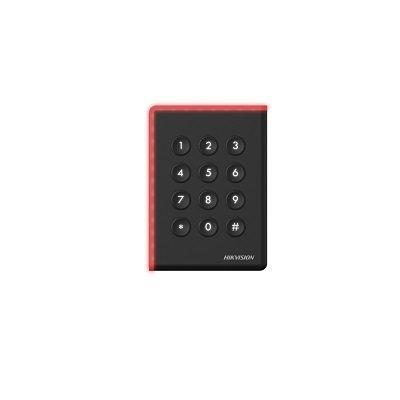
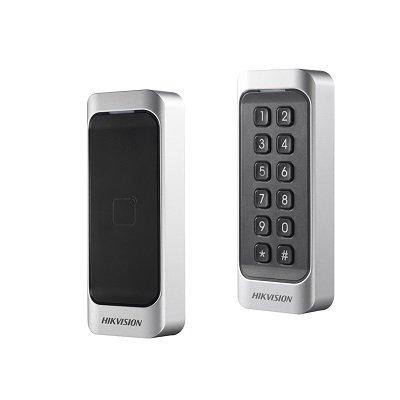
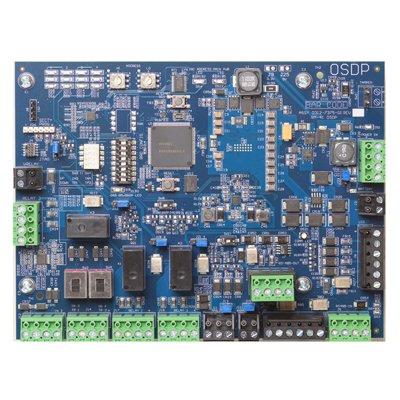

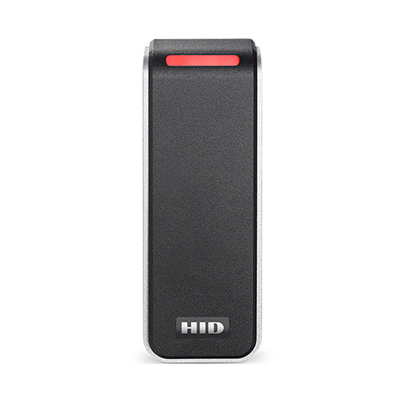

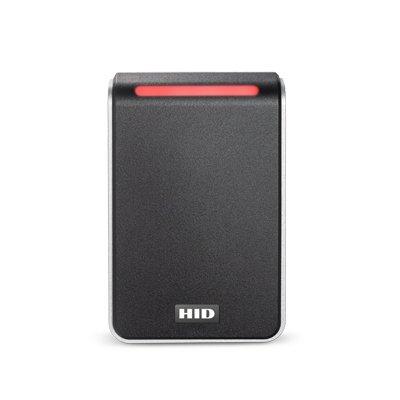
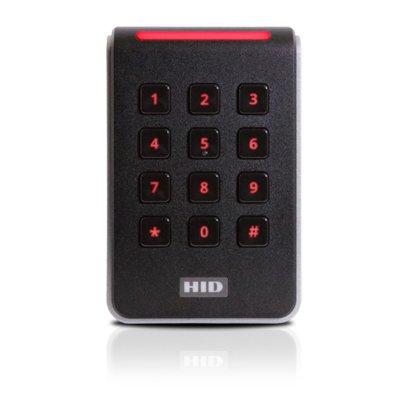
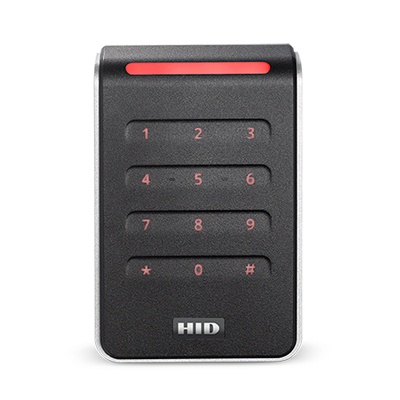
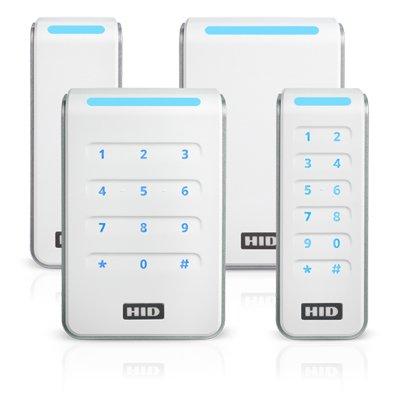
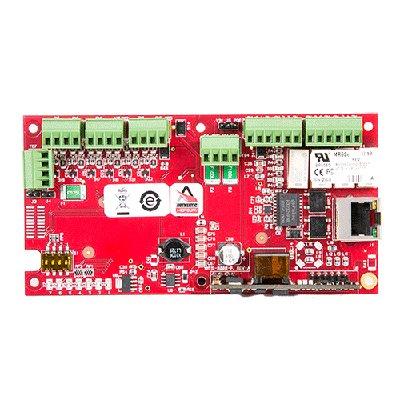
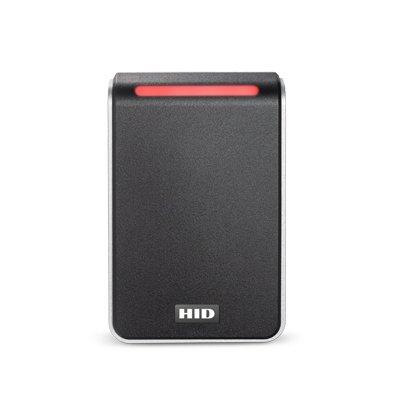


Videos


OSDP: Manufacturers & Suppliers

Technology's role in securing banks and financial institutions
Download
Security technologies promote real-time awareness in K-12 schools
Download
Integrated systems enable critical and compliant security for transportation
Download
Modernising physical access control
Download
Access. Intrusion. One estate.
Download