Identity management - Expert commentary

Over the past few years, biometrics has rapidly expanded into consumer applications, like the financial market for customer authentication, to payment services and withdrawing cash from ATMs in high-fraud markets. However, its adoption as an additional authentication factor for physical access control systems (PACS) and other enterprise applications, hasn’t been as rapid. But this is changing. Biometrics offers numerous benefits at the door and throughout the enterprise. With the advent o...
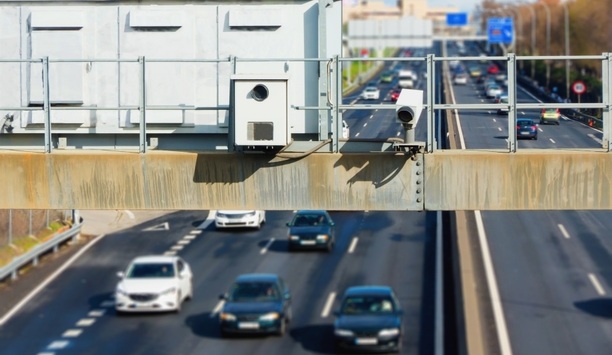
A deep native integration of Bosch cameras with software from ISS proactively catalyses the best in security and surveillance, while providing advanced intelligent video tools. ISS SecurOS provides intelligent enterprise video management solutions with emphasis on providing scalability and flexibility to meet the customer’s needs. Deeply integrating built-in video analytics from Bosch cameras improves operator efficiency and situational awareness to manage complex environments. ISS Secu...

When asked about what the market should be thinking about in 2018, I am left offering an answer that serves as an urgent call to action: prepare yourself for change! The security industry is soon likely to see a dramatic shift from the traditional segmentation of commercial and residential security. Smart phones, mobile technologies, cloud computing, and having everything provided ‘as a service’ in peoples’ lives means users of buildings have a new set of expectations. In many...

This time last year, we predicted 2017 would be the year digital identities began transforming trusted access and other interactions in physical and online environments. Continuous authentication experience Demand grew for unified identity and access management systems supporting both cards and mobile devices. Trusted identities began bridging the gap between connected workers and smart buildings. We saw new IoT use cases that employ location services technologies to create a continuous authe...

Rapid changes in the physical security market this year have largely overshadowed one arena where change has slowed down in 2017 – mergers and acquisitions (M&A). Although there were no “mega-mergers” as in years past (such as Axis-Canon and Johnson Controls-Tyco, M&A activity still made headlines last year on SourceSecurity.com. In 2017, we wrote about M&A news involving companies such as HID Global, Eagle Eye Networks, ADT, and Honeywell. ...

Biometric identification technologies today are becoming pervasive. Many smartphones offer fingerprint unlock options, and most organisations have at least considered the technology as a solution for their identification and access needs. While biometrics have dramatically improved in the past several years to deliver faster, more efficient and more secure solutions, not everyone is ready for the change. New York MTA case study But does that mean that organisations need to hold off on implemen...

2018 will start to see facial recognition and other biometrics used in a combination of ways, but I’d like to look even further into the future. I believe that facial recognition will be utilised on a large scale and that it will be very hard to enjoy the enhanced speed and simplicity of travel and financial transactions of the future without relying on biometrics. Biometric ticket and passport For example, when you travel to another country your face will be your ticket and passport.&n...

In recent years, organisations have transformed the way we prepare, respond to and manage emergency situations globally. Through the rapid uptake of new technologies, organisations can accurately account for their individuals in the event of an emergency and maintain the safety of their employees and visitors. In the event of an emergency in an organisation, an efficient and rapid evacuation is of the utmost importance, as hundreds or thousands of people need to be evacuated as quickly as possi...

The 2017 decision of the British electorate to leave the EU was a shock to many within and beyond the UK. It is one of the most significant decisions in the UK’s history. It reflects a long-running uneasiness with the land mass across the Channel, not only because of geographical separation but also because of cultural disconnection. The UK is one of few European countries not to have been occupied or oppressed since the Norman invasion of 1066, and hence has an independence of spirit whi...

Recent research shows most access control technology currently in use is not as secure or convenient as many security managers believe, according to day-to-day users of the system. In this HID Global white paper, you will discover what different companies look for in an access control system, why certain legacy access control systems may be vulnerable to attack, and why upgrading to a new access control system can result in huge benefit for enterprises and end users. Find out m...
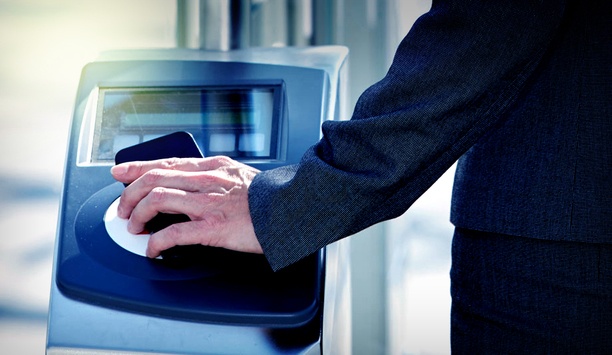
Since the introduction of smartphones with downloadable applications, vendors have been trying to replace the traditional plastic identification (ID) card with a mobile phone application. People might lose or misplace an ID card, but most people immediately recognise if they are without their mobile phone. Mobile ID badges for access control Bluetooth Low Energy iBeacon technology Technical challenges of mobile ID apps The logical extension is to replace or augment the traditional corpor...

Colleges and universities have been targeted in the last several weeks with a series of bomb threats received via campus printers and fax machines. Targeted institutions included Vanderbilt University, the University of Southern California, the University of Virginia and the University of Detroit Mercy, among others. Businesses were also among the targets. Around 100 organisations in all received print-outs, faxes or emails demanding that a $25,000 ransom be paid to a Brazilian citizen to avoi...

Manufacturers depend on consultants to get their technologies specified in customer projects. Consultants often depend on manufacturers to provide them current information about the technologies that are the building blocks of their projects. It’s a symbiotic relationship, but not always a perfect one. We recently gathered three consultants to discuss what they want from manufacturers, and a representative of HID Global to add a manufacturer’s perspective. Manufacturers also look to...

One leading company has developed an identity management system using patents that verify the identity of an applicant Most enterprises rely on background screening providers to report accurate and complete information without understanding the litigious landscape. Security executives often have little input in how background checks are performed or by what provider, as this has become the domain of human resources (HR). A growing trend finds employers and their backgroun...
![[Download] The state of physical access control: Impact on the enterprise](https://www.sourcesecurity.com/img/news/612/hid-access-2017-920.jpg)
The global market for card-based electronic access control (EAC) is projected to reach $10.1 billion by 2020 according to Global Industry Analysts. However, as credential technologies have evolved over the years, so have the ways users interact with them. Mobile credentials One of the bigger developments over the past few years has been the increased adoption of mobile credentials, which allows users to access facilities via their mobile device. To m...

Organisations are moving to align their physical and digital security initiatives, especially in today’s more connected world Organisations must address growing security threats using fewer resources in an increasingly challenging regulatory environment. They are looking to ensure data security while also protecting their facilities’ physical security. At the same time, their users are demanding more choices of smart cards, smartphones, wearables, and other mobile...

The new scanner can quickly screen large groups of people without needing them to stop or slow down Most body scanners are designed to work one person at a time, checkpoint style. QinetiQ has developed a scanner that can be used in crowded places without having to slow down or stop moving targets. The body scanner, capable of detecting hidden explosives or weapons on a person, has been demonstrated publicly in the United Kingdom for the first time. The QinetiQ SPO-NX SPO-NX...

Cloud-based solutions with mobile credentials and capabilities are simplifying multi-site management Facility managers and security operations staff are often bombarded with calls from multiple tenants, across several sites — each with unique needs — but traditionally they had no insight or control on the spot. Now, cloud-based solutions with mobile credentials and capabilities are simplifying multi-site management — enablin...

At the end of last year, we anticipated that data gathering and analysis would continue to be a strong trend, and that certainly proved to be the case in 2016. More and more organisations are seeing the value of the intelligence provided by diverse systems’ data. The number and variety of networked systems and devices – both security and non-security – continued to grow steadily in the last year, and the data these disparate sources create has proven highly...

After two decades of advances from simple visual ID badges to smart cards, standards-based access control systems and mobile ID solutions, the industry began entering its next new chapter in 2016. We began “mobilising” security to make it more pervasive and personalised, with a better user experience. We entered a new era of secure connected identities will not only make us safer but fuel innovation in how we work, shop and play. The industry began paying much closer attention to p...

The access control industry is now picking up the challenge of embracing new technologies The access control business has, over the last 10 years, completely changed its image from being a rather unattractive slow growth and conservative business to taking up a position as a fast-growing confident business. The access control industry has listened and acted on the needs of the stakeholders in the supply chain and as a result the world market for access control products and so...

Iris recognition measures the unique patterns in the coloured portion of the eye (the iris) and compares that ‘signature’ to the one on file Since the late 1990s, iris recognition technology has been used in banks and airports as a means of identity authentication. Today, its use is widespread in government facilities, schools/research centres, correctional/judicial facilities, healthcare and others. There are a number of reasons for its rising popularity, but firs...

Multi-modal biometrics refers to a technology that combines a number of biometrics working together as a multifactor solution Global terrorism is on the rise. For many years, the West felt immune to these incidents, often asserting that these were problems felt only in countries with heated conflicts, such as Syria, Iraq, Israel and Nigeria. However, recent terror attacks have taken place in both Europe and the United States: Belgium, France (Paris and Nice), Orlando, various...

Access levels of individuals based on their roles can be cross compared with their normal access patterns, it is also useful to look for anomalies in device behaviour Threats to an organisation’s physical and logical security are increasing in number and financial impact, according to several recent surveys. To combat this problem, security and IT professionals are fighting back with system upgrades and software solutions including advanced analytics. Using the analytics...

The global market for security as a service is set to grow from $921 million in 2016 to $1.49 billion by 2020 The global security as a service market is made up of video surveillance as a service (VSaaS) and access control as a service (ACaaS). With video surveillance as a service, the user pays on a yearly, quarterly or monthly basis for the ability to view live or recorded surveillance data. Using access control as a service, the customer pays a subscription to have a server...

Part 11 of our Security in Healthcare series The Joint Commission’s mission is to continuously improve health care for the public, in collaboration with other stakeholders Compliance with Joint Commission accreditation can impact hospital and healthcare safety and security decisions, and can even drive security system improvements at healthcare facilities. An independent, not-for-profit organisation, The Joint Commission accredits and certifies nearly 21...

Part 10 of our Security in Healthcare series Ensuring the safety of patients, staff and visitors is no easy task Security integration is more than a buzzword in the hospital and healthcare vertical. Increasingly, it’s a necessity. When creating a safe and secure healthcare environment, end users should look for solutions that not only drive new levels of security and business intelligence but can provide long-term value in the future. Specifically, Kevin...

The Health Insurance Portability and Accountability Act of 1996 (HIPAA) in the United States fosters health insurance coverage for workers and their families, and requires national standards for electronic health care transactions. The law’s privacy provisions include protection of information related to any individual’s health status, provision of health care, or payment for health care. There are also additional health privacy laws specific to California. Inter...
The need for security convergence and shared threat intelligence is markedly increasing “Converged security” has been a buzz phrase for more than a decade, but the industry is just now starting to reap the rewards. Converged security recognises that truly comprehensive organisational risk management involves the integration of two distinct security functions that have largely been siloed in the past: information security (network operations centre or NOC) and physi...

Part 8 of our healthcare series Hospitals are challenging environments. A hospital requires oversight 24 hours a day, seven days a week Access control in particular has advanced significantly to offer healthcare facilities the ability to control access remotely, through mobile applications, confirm identity quickly and easily and program varying levels of access for visitors, patients, doctors and staff. Hospitals are challenging environments. A hospital requires ov...

Technology's role in securing banks and financial institutions
Download
Security technologies promote real-time awareness in K-12 schools
Download
Integrated systems enable critical and compliant security for transportation
Download
Modernising physical access control
Download
Access. Intrusion. One estate.
Download
