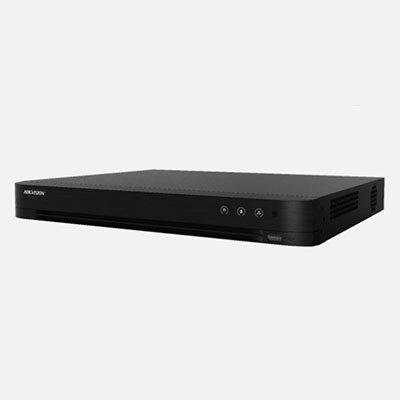
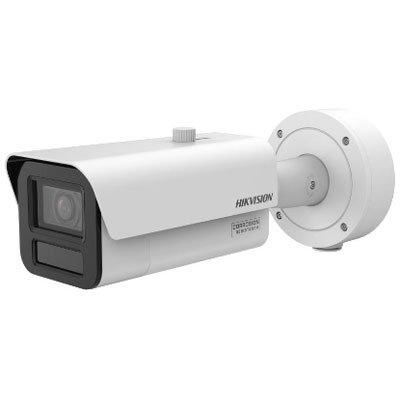
Hikvision eDVRs maximize storage efficiency and predictability
Recording high-quality video continuously for long periods of time has always been a challenge for the security industry. Hikvision’s new range of eDVRs uses Scene Adaptive Bitrate Control technology to maximize storage efficiency and capture incidents in crystal-clear detail.
Video has traditionally been a storage-intensive medium. Conventional security video applications record video at a constant bitrate even at night or when nothing much is happening. That means that a lot of storage is wasted, without delivering much value for customers.
Two attempts at making video storage more effective
The security industry has come up with various technologies and approaches to try to make video storage as efficient as possible. These include:
• Variable bitrate technology
This looks at the scene and changes the bitrate according to the complexity – and the activity level. The plus point here is that the bitrate increases, and the image quality improves, when there’s actually something happening. The bad news is that storage requirements are totally unpredictable, giving operators no indication of how long footage will be stored before it is eliminated and ‘overwritten’.
• Smart coding with a constant bitrate
This uses low, but constant, image compression to increase predictability of storage and to maximise storage efficiency. However, the bitrate is always the same, and the quality may not be good enough to take effective action in the event of an incident.
Overcoming the challenges with Hikvision
Instead of these legacy storage approaches, Hikvision is using an innovative technology called Scene Adaptive Bitrate Control to boost storage efficiency. This technology is embedded in all of Hikvision’s new eDVRs, which use eSDD storage instead of HDD drives.
To make storage as efficient as possible, the Hikvision eDVRs use variable bitrates – with more storage allocated temporarily for complex scenes. When there is nothing going on in the camera view, the bitrate is reduced dramatically, saving storage resources and extending the continuous recording time of the device.
To ensure that the storage time is as predictable as possible, the eDVRs look at bitrate trends over the previous hours and days and allocates storage resources accordingly, in a properly measured way. This means that the device uses a variable bitrate in the short term, depending on the changing security scene, but a fixed code rate is used over the longer term to ensure video images are stored for the required timeframe before they are overwritten (typically for at least 2 weeks of continual recording).
Furthermore, thanks to its exceptional storage efficiency, a 1TB eDVR can provide up to 8 weeks of storage, easily meeting customers’ storage requirements. A 1TB 4 channel model (iDS-E04HQHI-D) can store up to 4 weeks of continuously recorded footage by all channels in 1080P, while a DS-E04HGHI-E model supports up to 8 weeks of continuous recording in 1080p lite (960x1080 resolution).
As an additional benefit, the Hikvision eDVRs offer highly stable image compression with good quality for security applications, ensuring that all incidents are captured in crystal clear detail.
Real-world test results from an industrial park installation
To showcase the storage efficiency of our eDVRs, we conducted a live test at an industrial park with a 2MP eDVR model (DS-E04HQHI-B). The eDVR received four video feeds, each with a resolution of 1080 pixels and a frame rate of 15 per second.
During the test, we recorded complex scenes of our manufacturing facilities, including roadways, interior areas, entrance, and exit points. The recording bitrate automatically adjusted throughout the day and night based on the traffic and level of activity in all the covered zones.
In spite of the variable bitrate, the Hikvision eDVR was able to allocate its 439 GB of total available storage in a very stable way. In the test, the device was able to store over 13 days of continuous recording, using around 33.7 GB.
The storage utilization of the eDVR was highly stable and totally predictable, despite the varying bitrate during peak times at the manufacturing facilities.