COVID-19 - Expert commentary

Ask anyone how they are, and you will probably get the default response: “Fine.” Ask again and you will get a more truthful response. This could be anything from how things are going well, through grumbling around sports results, or more serious statements about pressure and mental health. Getting that real response is essential if you are going to make a difference in the future. For those of us involved in security and access management, pressure is almost a default state. Managin...

The UK Government has set out an ambitious ten-point plan, known as the green industrial revolution, with an aim “to forge ahead with eradicating its contribution to climate change by 2050.” This makes our government the first major economy to embrace such a legal obligation. Green recovery Acknowledging climate change and meeting net-zero is a demanding challenge especially for those affected by the pandemic. But the UK Government, with the launch of its aspiring strategy, is inve...

Prices and delivery times for essential components in CCTV systems are being driven up as demand soars from other industries. Secure Logiq’s Robin Hughes explains the current state of the market. Challenges Component shortages and supply chain challenges are a hot topic in just about every industry based on semi-conductors and silicon chips right now, and security is no exception. It’s common knowledge that the global Covid lockdown caused a shutdown in the mining of silicon and s...

COVID-19 impacted nearly every industry virtually overnight, and the security sector was no different. It challenged us, as a society, to rethink how we view security entirely, and expanded the scope of security from protecting physical and digital assets to promoting safer, healthier, and more efficient environments in every context. Now, as we progress through 2021, keeping people safe has become even more of a priority as workers begin heading back to the office. Businesses are evaluating ho...

Perimeter security is by no means a new concept. A phrase used to describe solutions with the primary purpose of limiting access to any area that is prohibited to the public at large, perimeter security has been prevalent for millennia. From Hadrian’s Wall that was built by the Roman Empire in Britain back in AD 122 to the Great Wall of China that winds almost 22,000 kilometers through the Asian country’s eastern regions, it is a concept that remains a fundamental part of global soci...

It is a truism that in the physical security industry your workforce and your reputation are the business’s largest and most important assets. Managing your workforce with empathy to ensure happy, engaged employees can be a balancing act. However, providing flexible working practices that are still profitable for your business is achievable, and something that every security business should be aiming for. SmartTask CEO, Paul Ridden discusses the hidden benefits of an engaged workforce an...

Steven Kenny, Axis Communications, looks at the benefits of physical access control systems within smart environments, and how knowledge gaps and dated methods can inhibit adoption. Physical security is becoming more dynamic and more interconnected, as it evolves. Today’s modern access control solutions are about so much more than simply opening doors, with digitalisation bringing multiple business benefits, which would simply not be possible using traditional models. Digital transformat...

As the vaccine roll-out proceeds, people across the UK are counting the days until we can get back to some kind of ‘new normal’. Just as we’ve seen in education and healthcare, the return to the workplace and other public spaces will be accompanied by enhanced sanitisation and social distancing measures. To make the return as swift and safe as possible, those of us involved with managing, building and constructing buildings should consider how we can help facilitate and suppor...

The Annual Fraud Indicator estimates that fraud costs the United Kingdom approximately £190 billion every year. The private sector is hit the hardest and loses around £140 billion a year, while the public sector loses more than £40 billion, and individuals lose roughly £7 billion. The effects of fraud can be devastating on both individuals and organisations. Companies can suffer irreversible damage to reputation and be forced to close, and individuals can experience sign...

Over the past year, companies have had to deal with the COVID-19 pandemic and how it has affected their operations. From new digital services through to security, the response to more hybrid and remote working showed some of the assumptions that we have made over the years, and it required companies to innovate and fill those gaps. Physical and IT security was no exception to this. In the rush to support home working, many IT security teams realised how much they rely on physical security to he...

The global pandemic has triggered considerable innovation and change in the video surveillance sector. Last year, organisations around the globe embraced video surveillance technologies to manage social distancing, monitor occupancy levels in internal and external settings, and enhance their return-to-work processes. Forced to reimagine nearly every facet of their operations for a new post-COVID reality, companies were quick to seize on the possibilities offered by today’s next-generation...

The transition to remote working has been a revelation for many traditional office staff, yet concerns over data security risks are rising. Mark Harper of HSM explains why businesses and their remote workers must remain vigilant when it comes to physical document security in homes. Pre-pandemic, home offices were often that neglected room in people’s homes. But now things are different. After the initial lockdown in 2020, 46.6% of UK workers did some work at home with 86% of those doing s...

Organisations faced a number of unforeseen challenges in nearly every business sector throughout 2020 – and continuing into 2021. Until now, businesses have been on the defensive, reacting to the shifting workforce and economic conditions, however, COVID-19 proved to be a catalyst for some to accelerate their long-term technology and digitalisation plans. This is now giving decision-makers the chance to take a proactive approach to mitigate current and post-pandemic risks. These long-term...

Though many office workers across the globe have found themselves working remotely for the past year, we are seeing a bit of a silver lining, as vaccine rollouts hint at a return to some pre-pandemic sense of normalcy. However, while some of us might opt for a fully-remote work life, others are anticipating a hybrid solution. Even before the pandemic, offices were taking a new, more open layout approach—moving past the days of cubicles and small office configurations. Going forward, offi...

The return to the workplace is a focal point for many in the built environment but one of the most important elements is easy to overlook. Guest services will be vital in the return to the workplace. Front-of-house teams will be responsible for welcoming building users back and reassuring them as they negotiate shared spaces in the post-Covid era. The workplace will inevitably look different after Covid. We have become more aware of our spaces, how clean they are, and what spaces building users...
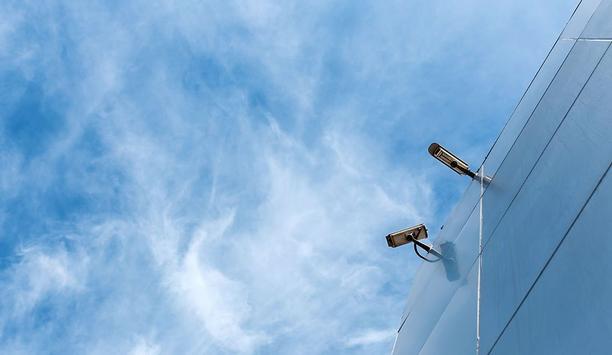
While COVID-19 caused widespread disruption and many challenges for businesses, its sudden arrival prompted some very quick decision-making around how to maintain operations. For some businesses, cloud-based video conferencing solutions provided a welcome alternative to meeting face-to-face. A year on and it seems that this sudden and mass adoption of cloud has accelerated a digital transformation process in other departments. Physical security too is increasingly moving to the cloud in the form...

What would you do if, tomorrow morning, you opened your work laptop to see a ransomware demand? “Oops: Want Your Files Back? Here’s How to Pay”. It’s a pretty terrifying prospect. In that moment, IT and senior management are rushing to restore previous versions via advanced cybersecurity – or if they can’t, they’re considering paying up. As for the rest of your company’s employees, their online training modules in how to prevent a cyber-attack or...

With pupils in the UK set to go back to school on 8 March, there are a number of safety measures schools need to implement to ensure the health and wellness of the staff, students, and school communities. The first lockdown and closure of schools brought on by the coronavirus pandemic fired a “warning shot” for education facilities managers, forcing head-teachers to re-examine school safety standards. Now that a third lockdown is here and schools have been shut down for a sec...

In the 1977 book, The Age of Uncertainty, author John Kenneth Galbraith wrote, “All of the great leaders have had one characteristic in common: it was the willingness to confront unequivocally the major anxiety of their people in their time. This, and not much else, is the essence of leadership.” Fast-forward four decades, and we are facing uncertainty like no other - anxiety levels are high, and fake news has become part of our daily lexicon. With this in mind, what can security an...
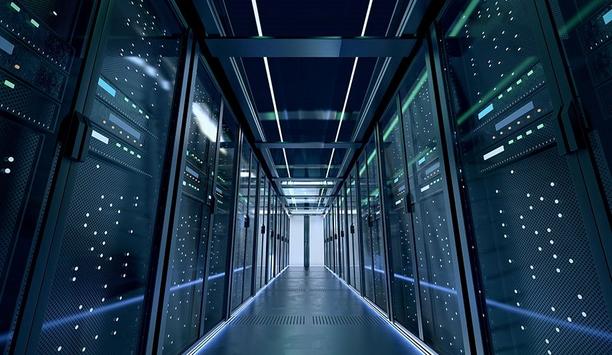
Once upon a time, providers had end-to-end control when deploying a physical security platform, which is not the case anymore when we consider the modernisation to IP. When considering the move to IP physical security, the provider needs to ensure the customer has a robust PoE backbone to connect the IP security device back to the application. Network readiness requirements have complicated IP security deployments, making it challenging for current providers while opening the door to new compet...

If you’re a security or facilities manager, you may already be aware of the quiet revolution that’s taking place across businesses and organisations up and down the country. By the end of 2020, 20% of all ID and access control systems featured mobile capability, and this is set to increase by a further 34% over the next three years. There’s no doubt that using a smartphone or mobile device in place of traditional credential and access control is a growing trend that’s o...
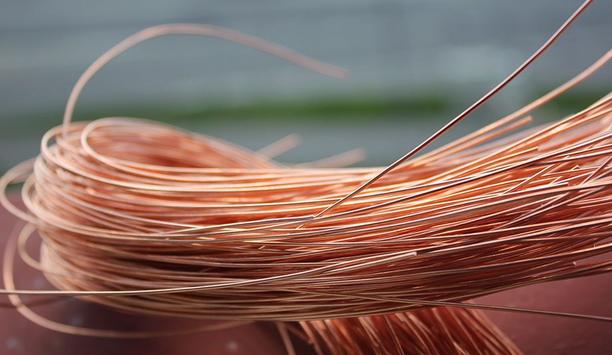
For decades, cable theft has caused disruption to infrastructure across South Africa, and an issue that permeates the whole supply chain. Here, Ian Loudon, international sales and marketing manager at remote monitoring specialist Omniflex, explains how new cable-alarm technology is making life difficult for criminals and giving hope to businesses. In November 2020, Nasdaq reported that, “When South Africa shut large parts of its economy and transport network during its COVID-19 lockdown,...

Supermarket employees have been the hidden key workers of the past year, keeping shelves stocked and queues under control as panic buying gripped the nation. As a result of being expected to enforce face covering and social distancing regulations, they also been asked to act as de-facto security guards alongside their existing duties. This is problematic as many employees have never had to deal with this kind of responsibility before, let alone received any conflict de-escalation training. In o...

The global pandemic has created a working environment filled with uncertainty and, at times, fear, as COVID-19 cases surge yet again and businesses continue to navigate a complex web of infectious disease mitigation protocols and managing the distribution of a potential vaccine. Organisations are operating in an environment where a critical event, posing significant risk to its employees and daily operations, could occur at any moment. Even with a vaccine showing light at the end of a very dark...

Several major players vigorously employ biometric recognition technologies around the globe. Governments use biometrics to control immigration, security, and create national databases of biometric profiles. Being one of the most striking examples, the Indian Aadhaar includes face photos, iris, and fingerprints of about 1.2 billion people. Financial institutions, on their part, make use of biometrics to protect transactions by confirming a client's identity, as well as develop and provide servi...

This year has brought about changes in virtually every sector. As with other frontline industries, the security sector has been tested more than those able to move entirely to remote working. While the promise of a vaccine means an end is in sight, the post-COVID era will not bring with it a return to the ‘normal’ we knew before the pandemic. Organisations have adapted, becoming more resilient and agile and this will have lasting effects. The coming months will continue to be testi...

The Security industry’s role in maintaining safe workplaces has never been more critical. Yet, individual security officers remain likely to drop shifts at the last minute and with greater frequency in the current climate, with illness, lockdown, self-isolation and home-schooling all common reasons for being off. Having a reliable bench with relief officers on hand has never been more important. Sorting drops internally (as opposed to using agency officers) is no longer nice to have to im...
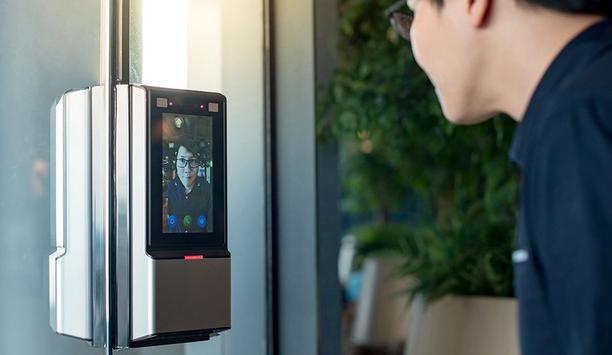
In a world forever changed by the coronavirus pandemic, companies worldwide are now expanding their concept of physical security to best safeguard their facilities and employees. Few incidents have had as much of an impact on businesses globally as the COVID-19 pandemic; much of the world is still struggling to contain COVID-19, navigating the lasting effects and exploring what the “new normal” looks like. While some organisations are still engaged primarily in “anywhere oper...

For decades, the nature of global safety has been evolving. From physical security threats like large-scale terrorist attacks and lone actor stabbings to chemical threats such as the Salisbury poisonings and even microbiological threats such as COVID-19, new challenges are constantly arising and the threat landscape we operate in today is constantly changing. Compounding the complexity of the security issues is the complexity and nature of attacks. With the economic downturn, there is the tradi...
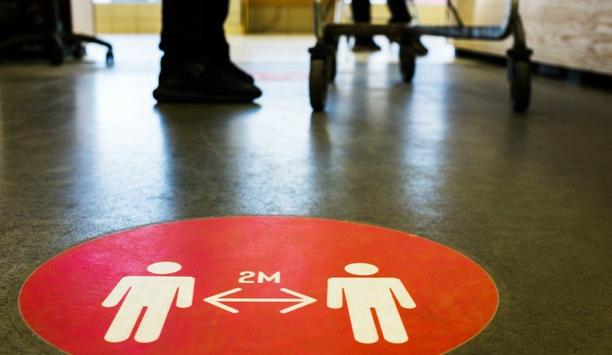
The role of physical security has expanded and grown rapidly over recent years. Below are some of our observations, particularly throughout the pandemic, and a look towards the changing times ahead. The new era of physical security The role of private security has shifted dramatically over the last decade and beyond. Historically, the focus was on protecting assets such as property and goods, but more frequently now the sector is being asked to play an even bigger role in protecting the...

Security technologies promote real-time awareness in K-12 schools
Download
Technology's role in securing banks and financial institutions
Download
Integrated systems enable critical and compliant security for transportation
Download
Modernising physical access control
Download
Access. Intrusion. One estate.
Download
