i-PRO - Experts & Thought Leaders

































Latest i-PRO news & announcements

i-PRO has been recognised by Milestone Systems. as the Innovation & AI Solution Partner of the Year for the U.S. region. The award reflects the company's commitment to AI innovation, the outstanding work of its teams, and the strength of its growing partnership with Milestone Systems. Innovations helping customers At the core of this achievement is i-PRO's AI-first portfolio, including the i-PRO Active Guard platform and strong edge analytic capabilities. Combined with a technology roadmap aligned with Milestone's vision, these innovations help customers unlock greater value from intelligent video while supporting new and evolving security use cases. Partnership As demand for AI-powered security continues to grow, the partnership between i-PRO and Milestone Systems is helping customers deploy scalable, future-ready solutions while giving channel partners a competitive advantage in opportunities where advanced analytics are a key differentiator. This award reflects the shared commitment of i-PRO and Milestone Systems to advancing the future of physical security through collaboration and technology.

i-PRO Co., Ltd., a pioneer in professional security and public safety solutions, announces the appointment of Steve Riley as President, EMEA. As i-PRO's EMEA business continues to expand, the company is adapting its regional leadership structure to support ongoing growth, navigate increasing business complexity, and ensure the organization continues to scale effectively across the region. Steve Riley will lead the overall EMEA organization, focusing on regional strategy, organizational development, governance, and business leadership. Jose Riolobos will continue to lead the commercial expansion as Vice President of Sales, EMEA, focusing on customer and partner engagement, and accelerating sales growth across the region. Open-platform technologies The appointment reflects i-PRO's continued investment in EMEA as a strategic region and its commitment to delivering AI-enabled, cybersecure, and open-platform technologies built on the quality, reliability, and innovation for which i-PRO is known. Steve joins i-PRO with more than 25 years of leadership experience across the electronic security, access control, fire safety, and technology sectors. Throughout his career, he has built and transformed international security businesses, leading commercial growth, organizational transformation, product strategy, operations, and business development across EMEA, APAC, and global markets. International security businesses He has held senior leadership positions with Stanley Security, ADT, and other leading technology organizations. Most recently, he served as Global Division Director, PAC GDX at Comelit Group, leading the company's integrated access control and security division. “EMEA is a key growth region for i-PRO, and Steve’s appointment reflects our ambition to build on the strong momentum we have already achieved. With his extensive industry experience and proven track record of leading international security businesses, Steve will further strengthen the operational capabilities of i-PRO EMEA’s business functions. Working alongside Jose and the broader team, Steve will help accelerate the organization’s growth, strengthen our regional capabilities, and support the next phase of business expansion across the region,” said Masato Nakao, CEO of i-PRO.

i-PRO Co., Ltd., a pioneer in professional security and public safety solutions, announces its Security Update initiative, a program designed to further strengthen the security, cybersecurity resilience, data integrity, and long-term trustworthiness of its advanced edge-AI camera portfolio. As security requirements continue to evolve, systems must remain reliable, trusted and resilient over time. With this initiative, i-PRO is strengthening the long-term security of its camera systems to help customers maintain confidence in the integrity of their data and prepare for future requirements. Maintaining compliance readiness The Security Update introduces a series of hardware, firmware, and architectural enhancements that reinforce i-PRO's secure-by-design approach and will be incorporared into future versions of selected camera models. As part of this initiative, i-PRO will introduce these improvements across approximately 200 existing camera models through a phased rollout of future product versions. Existing deployed cameras remain secure, supported, and unchanged. By aligning with evolving standards and regulations, including FIPS 140-3 in the United States, the European Union's Cyber Resilience Act, and Japan's JC-STAR framework, the Security Update supports organisations in maintaining compliance readiness and system reliability through a planned, phased evolution of the camera portfolio. Strengthened cryptographic protection "Security is no longer just a feature; it is a core requirement that must be maintained throughout the lifecycle of a system," said Gerard Figols, Chief Operating Officer at i-PRO. "With this Security Update initiative, we are strengthening the security of our advanced edge-AI camera systems to help protect data integrity and give customers peace of mind for the years ahead. As organisations increasingly rely on analytics and AI-driven insights, trusted data becomes more important than ever. Our goal is to help ensure the integrity of the information customers rely on, because trusted AI depends on trusted data." The Security Update incorporates these improvements across multiple layers of the system architecture. These include strengthened cryptographic protection, expanded secure boot capabilities, enhanced physical security measures, and secure communications by default. Physical security measures Together, these measures create a defence-in-depth architecture that protects devices from initial deployment through years of operation. The Security Update strengthens overall system security while preserving compatibility, support, and stability for existing deployments. As part of this phased rollout, enhanced models will gradually incorporate the Security Update during 2026 and 2027. These models will receive revised model numbers to reflect the updated security architecture while remaining compatible with existing systems and installation processes. This initiative builds on i-PRO’s long-standing approach to security, including transparent handling of vulnerabilities and clear documentation of software components. These measures help customers better understand, manage, and trust the security of their systems over time. Resist physical tampering Key enhancements of the Security Update include: Alignment with FIPS 140-3 Level 3 cryptographic requirements through the integration of enhanced Secure Element components, designed to help protect encryption keys and resist physical tampering. Expanded Secure Boot functionality to help ensure that only authenticated and trusted firmware can execute on the device, helping reduce the risk of unauthorised software running even if a device is physically accessed or compromised. HTTPS enabled by default to strengthen secure communications and simplify deployment of cybersecurity best practices. Physical security improvements, including tamper-resistant hardware enhancements such as reinforced fastening mechanisms and secure screw designs to help prevent unauthorised opening of cameras. This initiative does not update cameras already deployed and does not require replacement of existing installations. Current deployments remain secure, supported, and unchanged. The Security Update applies only to future versions of selected camera models, with no changes required to existing systems, installations, or workflows.
Insights & Opinions from thought leaders at i-PRO

If AI is the dominant buzzword in the physical security industry, it is the second letter (I for intelligence) that is having the biggest impact. Simply put, intelligence transforms computer systems, including those used for physical security, from rigid, rule-following calculators into adaptable, problem-solving partners to human operators. We asked our Expert Panel Roundtable: What is the changing role of intelligence in physical security?
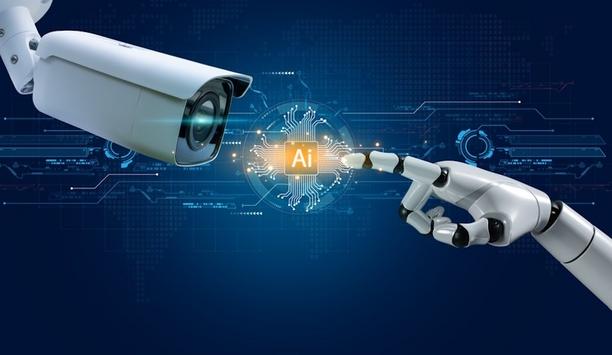
The biggest return on investment from an AI-enabled camera might have nothing to do with security. Organisations are increasingly discovering that the same cameras installed to protect people and property can also improve safety, streamline operations, automate routine workflows, and generate valuable business intelligence. Security remains the primary mission, but it is increasingly only the first customer for the intelligence these systems produce. AI-enabled cameras are rapidly becoming distributed IoT sensors that continuously observe, interpret, and describe their surroundings. Instead of simply producing video, they generate rich metadata about people, vehicles, objects, movement, and activities. That information has value far beyond surveillance. As organisations look for better ways to improve efficiency, reduce costs, enhance safety, and automate routine operations, they are discovering that the same camera installed to monitor a doorway or parking lot may also become one of the most valuable operational sensors on the network. From video to metadata For years, higher resolution dominated the conversation around video technology For years, higher resolution dominated the conversation around video technology. More pixels promised better evidence and clearer images. While image quality remains important, AI has fundamentally changed where the real value lies. Modern edge AI processes video directly inside the camera, identifying people, vehicles, objects, behaviours, and countless other attributes as events unfold. Instead of transmitting every frame for centralised analysis, the device generates lightweight metadata that describes what it sees. That metadata can be searched, filtered, shared, and consumed by other applications without requiring operators to review hours of video footage. This fundamentally changes the role of the camera. Rather than acting as a passive recorder, it becomes an intelligent sensor that continuously feeds structured information into operational workflows. Once organisations begin thinking in terms of metadata instead of video, entirely new applications emerge. Movement of critical equipment The security department may have purchased the camera, but it is increasingly supporting decisions made by operations, facilities, safety, transportation, and executive leadership. In healthcare, cameras can do far more than document incidents. AI applications can detect when someone has fallen, help staff locate misplaced wheelchairs, count ambulances arriving at emergency departments, or monitor the movement of critical equipment throughout a facility. These capabilities improve patient care while reducing the time staff spend searching for resources. AI-enabled cameras As an IoT sensor, the camera has become a shared resource across multiple departments Logistics organisations are seeing similar benefits. AI-enabled cameras can monitor for compliance issues, automate gate operations using license plate recognition, validate vehicle movements, and track pallet or trailer activity throughout a distribution center. Security remains important, but the same infrastructure also improves throughput, reduces manual processes, and provides operational visibility across the facility. Barnet Council in the United Kingdom initially modernised its video infrastructure to improve safety and security. Today, the same cameras generate people and vehicle counts that support planning decisions for parks, transportation, libraries, festivals, and other public spaces. Rather than serving only security personnel, the system supplies operational data that helps city planners make better infrastructure and investment decisions. As an IoT sensor, the camera has become a shared resource across multiple departments. Metadata is only valuable when it drives action Collecting more information just because it’s possible is not the objective. Organisations are already overwhelmed with data. The real opportunity lies in intelligent automation. The greatest operational value comes when AI-generated metadata automatically triggers meaningful workflows rather than simply identifying people or vehicles. When a person enters a restricted area after hours, a PTZ camera can automatically focus on the activity while lighting activates to deter loitering. Security personnel receive alerts only if the individual remains in the area. License plate recognition AI handles repetitive operational tasks while people remain responsible for judgment and response When a worker collapses inside a manufacturing facility, safety personnel are immediately notified while responders receive precise location information. At a logistics gate, license plate recognition can validate vehicle credentials, update operational systems, and document the transaction automatically. In each example, AI handles repetitive operational tasks while people remain responsible for judgment and response. This transition from detection to intelligent automation may ultimately deliver greater value because it focuses on outcomes rather than observations. The business case is getting stronger Perhaps the most significant consequence of this evolution is organisational rather than technical. Historically, video projects were often justified solely through security budgets. Return on investment depended largely on reducing theft, improving investigations, or strengthening compliance. Today, the value proposition reaches far beyond the security department. Facilities managers use camera data to understand occupancy and space utilisation, operations teams streamline workflows, safety officers monitor hazardous activities, transportation managers optimise vehicle movement, and executives gain measurable operational metrics that support planning and resource allocation. The same camera infrastructure can now deliver value to multiple departments, making investment decisions easier to justify while improving long-term utilisation of existing assets. Open ecosystems will determine who benefits most Metadata creates the greatest value when it flows freely between systems As cameras become operational sensors, another requirement becomes increasingly important: openness. Metadata creates the greatest value when it flows freely between systems. An AI-enabled camera may generate valuable operational information, but that information becomes significantly more useful when it integrates with video management systems, access control, public safety platforms, business intelligence software, facility management applications, or other third-party operational systems. Organisations want the flexibility to add new AI applications as needs evolve without replacing existing hardware. Developers benefit from standardised platforms that allow applications to run consistently across different environments, while integrators need the freedom to build solutions that reflect each customer's unique operational requirements rather than forcing every deployment into the same proprietary framework. Open architectures make that possible. Looking beyond security AI is expanding the role of the camera far beyond traditional security. Organisations are increasingly treating AI-enabled cameras as operational infrastructure that improves safety, streamlines workflows, and supports better decision-making across the enterprise. Every day, AI-enabled cameras observe facilities, generate metadata, automate workflows, and provide actionable information that helps organisations make faster, better decisions. Security remains the foundation, but the same intelligence now supports business operations, public safety, healthcare, logistics, transportation, and smart city initiatives. Organisations that recognise this shift early will find that one of the richest sources of operational intelligence is already installed throughout their facilities. They simply need to start thinking beyond security.

Adequate video surveillance coverage depends entirely on a facility's layout, square footage, and security goals. Historically, better coverage required more cameras, but technology innovations are changing those expectations and undermining previously held rules of thumb. We asked our Expert Panel Roundtable: Do today's video systems generally require more cameras or fewer cameras, and why?

Security technologies promote real-time awareness in K-12 schools
Download
Technology's role in securing banks and financial institutions
Download
Integrated systems enable critical and compliant security for transportation
Download
Modernising physical access control
Download
Access. Intrusion. One estate.
Download