NVIDIA - Experts & Thought Leaders










Latest NVIDIA news & announcements

During NVIDIA GTC Berlin, Absolute Security, a pioneer in Autonomous Cyber Resilience, announced it is collaborating with NVIDIA to deliver firmware-embedded security, endpoint management, and resilience solutions for advanced AI enterprise workstations. This integration will help enterprise security and IT leaders ensure their AI developers’ autonomous agents function within the boundaries of security and compliance policies, and that their devices remain defended against threats, protected from risk, and able to quickly resume operations following cyber disruptions. This innovation will be available to any OEM partner building the NVIDIA DGX Station AI Supercomputer on Linux and Windows. Every endpoint device "Global enterprises need to unlock the full power and potential of every endpoint device they have deployed, whether they be PCs in use among their workforces or advanced machines used by AI developers to shape the future of autonomous business," said Christy Wyatt, President & CEO, Absolute Security. "Our work with NVIDIA will deliver a needed breakthrough in endpoint management, security, and cyber resilience that will help customers leverage AI without sacrificing needed security and compliance controls." The Absolute Autonomous Cyber Resilience Platform will be available for OEMs to embed in enterprise NVIDIA DGX Stations through integration with the NVIDIA Open Agent Safety Platform, to secure agents from testing to deployment. Secure runtime software By sitting on top of NVIDIA OpenShell secure runtime software, Absolute will allow customers to extend the same level of management, security, compliance, and resilience embedded in 600 million endpoints to the AI machines used by enterprise developers to build and deploy autonomous agentic agents. “With NVIDIA DGX Station coming to Windows, enterprises can unlock new use cases for very large AI models, including agents that securely interact with software running on the same system,” said Chris Marriott, vice president of enterprise platforms at NVIDIA. “Our collaboration with Absolute Security will help organizations deploy and manage AI-powered workstations at scale, with the security, trust and resilience enterprise IT demands.”

DigiCert, a pioneer in intelligent trust, announces support for the NVIDIA Open Agent Safety Platform to help enterprises establish verifiable identity and authority for autonomous AI agents. At the centre of the NVIDIA Open Agent Safety Platform is NVIDIA OpenShell, an open, secure runtime that places infrastructure-level controls around autonomous agents. OpenShell permits nothing by default, enforces policy outside the agent’s process, and records every decision to allow or deny an action. Infrastructure-level controls DigiCert complements those controls with DigiCert AI Trust Manager, which helps organisations discover and manage the AI agents they own or operate, establish each agent’s verifiable identity and ownership, define what it is authorised to do, and revoke that authority with a kill switch when trust changes. Together, the technologies address two critical requirements for autonomous AI: identifying which agent is acting and controlling what an agent can do. “AI agents are starting to do real work across business systems, and that means companies need to know exactly which agent is acting, what it’s allowed to do, and when to stop it,” said Amit Sinha, CEO of DigiCert. “NVIDIA helps create the boundary around the agent. DigiCert helps establish who that agent is and what authority it has. Together, that gives enterprises a much clearer way to put autonomous AI to work with control and accountability.” Security-policy enforcement NVIDIA OpenShell lets an agent retain its reasoning and skills while every file, network, process, credential, and inference call crosses a boundary controlled by the platform. Because enforcement occurs outside the agent’s process, even a compromised agent cannot override the restrictions. NVIDIA Sentry on BlueField-4, powered by NVIDIA DOCA, adds hardware-isolated, out-of-band monitoring of agent activity and security-policy enforcement that does not depend on the host. NVIDIA Vera supplies the compute for agents’ CPU-intensive workloads. DigiCert AI Trust Manager extends the OpenShell environment with enterprise-class agent management built around identity, authority, policy, and lifecycle control. DigiCert AI Trust Manager gives each agent a DigiCert AI Passport, a portable, cryptographically signed credential that verifies an agent’s identity and connects it to an accountable owner. Policy-based “visas” define which systems, data, and actions the agent may access, as well as how long that authority lasts. Same identity provider Because the DigiCert AI Passport and its permissions travel with the agent, other systems and organisations can independently verify them without relying on the same identity provider. If an agent attempts a prohibited action, DigiCert’s automated kill switch can block it and, under policies set by the agent’s owner or passport issuer, revoke its authority at the source and quarantine it. DigiCert’s support for NVIDIA Open Agent Safety Platform is designed around four areas: Identity that policy can act on. Agents running within an OpenShell environment can be associated with an AI Passport so policies can rely on verified identity. Verification before execution. Agents, models, and MCP servers can be signed and associated with an AI Bill of Materials to help establish what is being deployed before execution. Auditable evidence. OpenShell records policy allow-and-deny decisions. DigiCert’s approach is designed to bind trusted identity and cryptographic evidence to those interactions, creating a stronger record for governance and audit. Trust across company boundaries. PKI already enables independent verification of identity across the internet. DigiCert is extending that same trust model to agents so organisations can verify AI identities even when agents interact across companies, clouds and technology environments. Providing verifiable identity The approach is designed to complement, not replace, the security controls provided by NVIDIA Open Agent Safety Platform. NVIDIA establishes and enforces the agent’s operating boundary. DigiCert provides verifiable identity and authority that can persist as the agent interacts beyond that boundary. “As agents begin interacting with other agents beyond company lines, identity cannot depend on every participant belonging to the same identity system,” Sinha said. “We need a trust model that can cross those boundaries. PKI solved that problem for the internet at scale, and we believe the same foundation has an important role to play in establishing trust for autonomous agents.” DigiCert AI Trust Manager support for NVIDIA Open Agent Safety Platform begins with NVIDIA OpenShell, with additional capabilities planned as DigiCert and NVIDIA continue to advance enterprise AI trust and agent security.

VAST Data, the AI Operating System company, announces VAST DataEnclave, the confidential AI capability of the VAST DataEngine, built on NVIDIA Confidential Computing, with the support of ecosystem partners including top AI model builders, AI clouds, AI security and AI hardware providers. By enabling deployment inside customer data centres or trusted cloud hardware, including environments where leading AI models could not previously operate, VAST Data, in collaboration with NVIDIA and partners, is bringing proprietary and open AI models across a range of modalities to the world’s most sensitive data – while giving customers control over cost, performance, model selection and data privacy, and giving model builders reach into environments they could never serve before. Highly regulated industries Across financial services, healthcare, government and other highly regulated industries, some of the world’s most valuable data remains inside tightly controlled environments where moving it to an external AI service is impractical or prohibited. That creates a fundamental challenge for AI: sensitive data often cannot move to where leading models run, while model builders cannot distribute proprietary models into infrastructure they do not trust. VAST DataEnclave extends the VAST AI Operating System to resolve this impasse with a hardware-isolated secure runtime and cryptographic attestation that verifies the environment and its enforced policy before sensitive assets, such as proprietary models and sensitive data, are decrypted and loaded into the secure enclave container for analysis, where they remain protected in CPU and GPU memory during processing. Customer data keys remain under customer control, model keys and weights remain within the model builder’s trust domain, and infrastructure operators and administrators cannot access either while they are being processed. Making secure management Looking ahead, today's announcement expands the range of advanced models organisations can deploy within their own environments, while advancing VAST's broader AI Operating System vision, in which models are managed as a logical resource alongside data rather than as applications that simply sit on top of the infrastructure. As organisations adopt ecosystems of specialised models, each fit for a different purpose, priced differently and subject to different levels of trust, the AI OS will increasingly need to pair the right model with the right task and govern those models across environments: determining where they run, what data they can access, who or what can use them and the policies under which they operate. As organisations increasingly fine-tune their own models and agents generate specialised intelligence from their interactions, model weights become a new class of enterprise intellectual property, making secure management at scale an increasingly important function of the operating system. Fine-tuned models "Models are becoming a resource the operating system has to manage, the same way it manages data," said Renen Hallak, Founder & CEO of VAST Data. "That means knowing which model fits which task, what it can see, who can use it and under what rules, and doing all of that inside the same security and operational boundaries an enterprise applies to everything else. Bringing leading AI models securely to the world's most sensitive data is where this starts. Where it leads is a world where every organisation is managing an ecosystem of fine-tuned models that represent its true intellectual property. The VAST AI Operating System is what keeps them secure, governed and useful." Conventional encryption protects model weights while they are stored and while they move across the network. Confidential computing extends encryption and protects data during execution. NVIDIA Confidential Computing, now in its third generation on Hopper, Blackwell, and Rubin platforms, ensures that sensitive data and models are only released during execution after the workload is verified and a secure enclave has been established. Trusted execution environments VAST DataEnclave uses NVIDIA Confidential Computing to create a secure container runtime and attestation service directly within the VAST DataEngine. Proprietary models execute inside secure enclaves established through CPU and GPU trusted execution environments. Key capabilities include: Hardware-Isolated Execution: Protects workloads inside confidential virtual machines and containers, using NVIDIA Confidential Computing to encrypt guest memory, GPU memory and NVLink traffic while isolating active data and models from infrastructure operators, administrators and other tenants sharing the same hardware. Verify-Before-Decrypt Attestation: Cryptographically verifies the trusted execution environment – including NVIDIA GPU attestation – before releasing decryption keys, ensuring sensitive assets are accessible only to approved workloads running in a trusted environment. Independent Key Control: Enables enterprises and model builders to maintain their respective keys within their own trust domains through Bring Your Own Key Management System (KMS) integrations so each party controls and enforces policy on its own assets. This protects an enterprise’s own fine-tuned weights, which are fast becoming critical IP, as much as a model builder’s base weights. Connected or Air-Gapped Deployment: Supports connected or fully air-gapped environments with DataEnclave deployments using attestation services built on the open CNCF Trustee stack, or in partnership with Fortanix via its Confidential AI infrastructure for fully sovereign AI. Governed and Auditable by Design: Records attestation events, key releases and enclave lifecycle actions in a tamper-proof, queryable audit trail in the VAST DataBase, providing visibility into what ran, where and under what verified policy without exposing protected data or weights. Secure Agent Sandboxes: The same DataEngine secure runtime provides isolated execution environments for AI agents through VAST AgentEngine, enforcing policy over the data, systems and tools agents can access and the actions they can take. Unlike people, agents are not accountable for their actions, so they need identity, a contained runtime and observability into when, how and why they each took action, plus auditability if something went wrong. Combining hardware isolation "Model weights are fast becoming the most valuable intellectual property in the world. Base weights define the value of frontier models, while fine-tuned weights will increasingly represent the proprietary intelligence of AI-driven enterprises," said Jeff Denworth, Co-Founder at VAST Data. "As the stakes get higher, so does the need to secure enterprise data so customers can apply the most intelligent AI models against it. Today, VAST Data - in partnership with NVIDIA - is moving the industry forward with a comprehensive approach to verifying previously untrusted computing environments and unlocking the ability to run any model against any data, anywhere." VAST DataEnclave extends confidential execution across the infrastructure where AI models and sensitive data are processed, combining hardware isolation and verifiable attestation to protect both while they are in use. Customer-controlled environments “Enterprise data is essential to accurate, usable AI – and keeping business data confidential is critical to protecting IP in the age of agents. VAST Data’s integration of NVIDIA Confidential Computing delivers protection for both enterprises and model builders, providing security, identity, permissions, governance and compliance as a foundation of the agent architecture.” – Justin Boitano, Vice President of Enterprise AI at NVIDIA. VAST is bringing together model builders, AI clouds, AI security, and infrastructure providers around a shared architecture for customer-controlled environments. Customers can now execute on their AI strategies without running into boundaries that previously cut off access to cloud-hosted models. At the same time, they can bring these newly available models within their own carefully constructed boundaries to manage cost, security, and other operational concerns. Confidential compute strategy “Nscale and VAST have worked together for years to build AI environments where enterprises and governments retain control of their data. DataEnclave takes that a step further, combining Nscale’s sovereign AI cloud infrastructure with VAST’s attestation-based architecture so frontier models and sensitive data can come together securely in a verified environment. That opens up workloads that were previously out of reach and expands what sovereign AI infrastructure can deliver.” – Tom Burke, Chief Revenue Officer, Nscale. "Customers around the world have unique regulatory and sovereignty requirements, and they are asking for AI that is encrypted end-to-end—not just at rest but in motion and during inference. Cohere has prioritised confidential compute for some time, and by working with VAST we can now bring that same level of security and governance to any data center, wherever customers choose to deploy. Together we are building a confidential compute strategy that gives customers more choice and more control, so they can run our models and the agents they build on North where their data already lives: their infrastructure, their jurisdiction, their rules." – Frank O'Dowd, Chief Revenue and Commercial Officer at Cohere. Most sensitive data “CrowdStrike SafeMind models are trained on the world’s largest pureplay cyber dataset, and that intelligence relies on the trust built around it. Defenders in regulated industries want to put these models to work against their most sensitive data, inside their own boundaries, while maintaining control of their data and protecting the models themselves. VAST’s attestation-based approach brings model weights and enterprise data together in a verified environment while keeping both protected and under their respective owners’ control. That’s what it takes to put frontier security models to work where the stakes are highest.” – Dr. Bartley Richardson, Chief AI and Autonomous Systems Officer, CrowdStrike. “The most sensitive data in the world sits in tables. Confidential computing turns trust from a promise into a proof, and that's the difference between AI that regulated industries can pilot and AI they can actually put into production. The guarantee comes from the architecture, not our word. Fundamental's Large Tabular Model, NEXUS, can run directly inside a bank's or health system's own infrastructure, in a sealed execution environment where our model and their records are exposed to neither party, working in environments we could never have reached otherwise." – Jeremy Fraenkel, CEO of Fundamental. "Video is where an enormous amount of institutional knowledge lives, and it is also the data that is hardest to move. Archives, sensor feeds and full-motion video sit in environments that are disconnected by design. TwelveLabs built our video intelligence models Marengo and Pegasus to run wherever that video already is, with no degradation in capability. With VAST DataEnclave, we can bring video intelligence into the most restricted environments while keeping our models protected and our customers' footage entirely under their control." – Jae Lee, CEO & Co-founder, TwelveLabs. Accelerated computing systems VAST DataEnclave also enables AI cloud providers worldwide to deliver attested, sovereign environments where model builders, enterprises, and governments retain control over their IP and data within their own jurisdictions. Because isolation is enforced in hardware, sovereign and regional AI clouds can establish verifiable trust without dedicating entire machines to a single tenant, and can offer the newest accelerated computing systems, such as NVIDIA Vera Rubin infrastructure, from facilities operated within national borders. This new VAST AI OS capability also provides OEMs the opportunity to deliver integrated confidential AI infrastructure that brings together trusted execution, accelerated computing and VAST-powered data infrastructure. VAST DataEnclave is being previewed today and will ship in Q1 2027 through VAST Data and participating OEM partners, including Cisco and Supermicro.
Insights & Opinions from thought leaders at NVIDIA
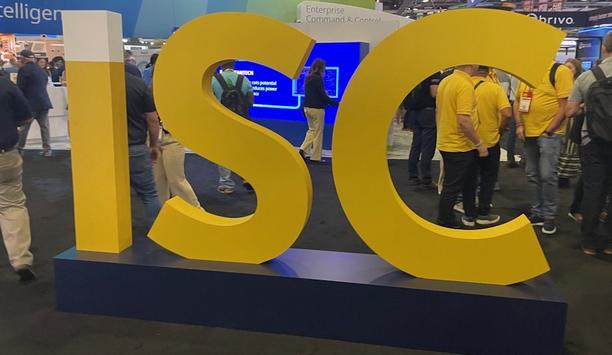
Artificial Intelligence (AI) had a major presence at the ISC West 2026 show in Las Vegas. Almost every booth offered some variation on AI and how intelligence is transforming the physical security industry. Several industry leaders led the way, showcasing how they are tackling complex security challenges with smarter, more efficient solutions. Obviously, the security industry will never be the same. Milestone Systems: Responsible AI and open platforms Milestone has declared 2026 the "year of delivery” on previously announced developments and enhancements. A standout feature is their new natural language AI search, which is being integrated across XProtect, Arcules, and Briefcam platforms to simplify how users interact with vast amounts of video data. A core pillar of their strategy is responsible AI development, which prioritises using licensed data over "scraped" data. They have introduced new anonymisation tools that protect privacy by replacing faces with AI-generated characteristics like hair color while keeping the person unrecognisable. Furthermore, Milestone is moving workloads to Linux to reduce costs, transitioning toward an app marketplace, and has partnered with NVIDIA for the "Hafnia" project to ensure high-quality data to train AI models. Ambarella: Powering the edge with AI chips With their presence at ISC West in a meeting room near the trade show floor, Ambarella is the "engine" behind many high-performance intelligent video products, specialising in low-power AI chips like the N1 and CV7 families. Their technology is moving beyond cameras, where they provide systems-on-chips [SOCs] to many manufacturers. They have expanded into "AI boxes" that can process 64+ video channels simultaneously. A standout feature is the Natural Language technology, which allows users to search for specific objects or abstract scenes using simple prompts. To address modern security concerns, Ambarella has implemented "agentic" programming for a no-code development of automated workflows and media signing to combat AI-generated deepfakes by verifying video integrity through metadata. Motorola Solutions: Simplifying intelligence Motorola Solutions shows physical security evolving into a real-time enterprise intelligence layer Motorola Solutions is prioritising user accessibility by integrating natural language processing into its system configuration. Motorola's portfolio demonstrates how physical security technology is evolving into a real-time operational intelligence layer across the enterprise. Instead of requiring custom coding, operators can now use simple commands—like asking the system to "show me when someone fell down"—to set up advanced analytics and search parameters. The company is also deploying AI agents designed to aggregate data and automatically flag safety or compliance risks, such as perimeter breaches or blocked fire exits. To ensure maximum utility of the hardware, Motorola Solutions’ system can ingest massive, complex physical manuals and automatically generate monitoring rules based on those standard operating procedures. Furthermore, Motorola is focusing on interoperability, using industry-standard interfaces to ingest data from various hardware brands and networks. This approach aims to provide operators with clear, recommended next steps during critical events, streamlining the decision-making process in high-pressure environments. i-PRO: Putting generative AI at the edge i-PRO is bringing generative AI directly to the edge with a new fisheye camera i-PRO is bringing generative AI directly to the edge with a new fisheye camera, which processes complex analytics locally rather than relying solely on the cloud. These cameras, on display at ISC West, have moved beyond simple attribute-based tracking to identify complex behaviors like aggression, fighting, and slip-and-fall incidents. By running on the latest Ambarella chips, i-PRO cameras can use generative AI to improve image quality and analyse scenes in real-time without external processing. This focus on edge-based intelligence ensures high-performance analytics are available even in environments where constant cloud connectivity might be a challenge. Brivo: The rise of agentic AI Brivo and Eagle Eye Networks have officially unified under the Brivo name, focusing on streamlining the experience for large integrators. They are pioneers in agentic AI, introducing features that allow users to talk to their mobile apps to initiate lockdowns or add users. Their Eagle Eye Video Assistant (EEVA) acts as a natural language AI agent that can monitor for specific threats, such as a brandished weapon or a specific vehicle, and automatically trigger access control responses. By treating access and video as a unified system, Brivo enables users to connect specific video skills—like detecting a red car or a brandished weapon—to automated access control actions. They are also using AI to achieve "zero-cost integration," linking disparate cloud systems using AI-generated instructions. Everon: Emphasis on video monitoring Everon is making a massive investment in active video monitoring, using AI-driven systems to deter crime even before it happens. “The market is ripe for it, and customers are demanding it,” says David Charney, Everon’s Sr. Vice President, Video Command Center. Employing virtual guards who can use voice commands, lights, and horns to "shoo away" unauthorised individuals. The company has implemented senior-level leadership that has facilitated more than 5,000 video-based apprehensions. Everon, specialising in integrated systems for multi-site businesses, uses a rigorous selection process to choose AI providers that can accurately filter alerts for specific applications, such as identifying when a fire door is blocked. As a "trusted advisor" to their 300,000 customers, the company focuses on delivering professional-level results that move beyond basic recording to proactive threat mitigation. Hanwha: New hybrid VMS combines cloud and on-prem Hanwha Vision highlighted the official public launch of Blaze, a hybrid video management system (VMS). The platform uses a hybrid architecture to manage on-premise and cloud-connected devices across multiple sites without complex port forwarding. Blaze features native AI capabilities, including semantic search that allows operators to find specific incidents using natural language queries, such as "person with a safety jacket." The AI security platform lets teams search surveillance footage the way they search Google. AI similarity detection allows operators to quickly trace a person’s movement and investigate incidents faster (useful in active shooter behavior, medical emergencies, or crowd panic scenarios, and more). The system also provides a "histogram" view of traffic patterns to help security professionals quickly identify anomalies in historical footage. OpenEye: Operational intelligence and shift to OpEx OpenEye unveiled AI-powered features such as visual chat and scene analysis OpenEye is redefining video surveillance by moving intelligence from the camera level to the cloud, significantly reducing the need for on-site server management. At ISC West, OpenEye introduced new AI-driven tools like visual chat and scene analysis. Beyond security, these tools provide valuable operational alerts, such as identifying overflowing dumpsters, dirty tables in restaurants, or vehicles blocking dock doors. The system also utilises natural language for search, allowing users to find specific attributes like "people wearing backpacks" within designated timeframes. OpenEye also highlighted an industry-wide shift toward operational expenditures (OpEx) billing models, as users increasingly prefer predictable monthly or yearly payments over large upfront capital expenditures (CapEx). This model aligns with their channel-based operations, meeting customers where they currently operate without the burden of high fees. IQSIGHT: New name, same mission for Bosch video Formerly Bosch Video, the newly named IQSIGHT seeks to maintain the “Bosch pedigree” under the new name. It’s the same engineering, manufacturing, etc. IQSIGHT also pledges to be "easier to do business with" by improving user interfaces and end-to-end user experiences. Despite the transition, the company has increased their pace of innovation and reinforced the open systems philosophy with enhanced integrations with Milestone, Genetec, and others. The major product release at the show is IVA Pro Context, which uses generative AI to provide human-level scene understanding. Through a partnership with Laelaps AI, a robotics startup, IQSIGHT is exploring autonomous dispatch and response. When a camera identifies a scene, it triggers a robot to provide a tailored response. Commercialisation is expected in 12 to 18 months. Verkada: How their system can solve a crime But how does AI operate in the real world? Verkada had a “themed” exhibit demonstrating how their system could solve a hypothetical theft at the Louvre museum in Paris. The exhibit took attendees through and showed how Verkada technologies (e.g., license plate recognition and search capabilities) could provide fast results to solve the crime. AI-powered tools, like their newest unified timeline, demonstrate value in the real world of investigations.

An attention-grabbing exhibit at GSX 2024 in Orlando involved a robot dog that could open a door. Boston Dynamics robot dog ASSA ABLOY impressed attendees with the robotics demonstration, featuring the Boston Dynamics robot dog that could open a door using either an HID credential or a mechanical grip. This innovation represents a shift toward more autonomous security solutions and is suitable for environments where human access may be limited. ASSA ABLOY impressed attendees with the Boston Dynamics robot dog Operational efficiency Eye-catching exhibits at the GSX in Orlando, showcasing the future of security technology It was one of many eye-catching exhibits at the GSX in Orlando, showcasing the future of security technology, and offering practical solutions to the industry's challenges. For security professionals, the advancements presented opportunities to enhance operational efficiency and to maintain a proactive stance in a rapidly evolving market. Control ID face identification Alongside their robot demonstration, ASSA ABLOY also highlighted the Control ID Face Identification. Access Controller, providing advanced facial recognition access control. From identity management to AI-driven surveillance systems, GSX 2024 offered a glimpse into the tools that can streamline processes, increase security, and reduce costs. Here are some other highlights. ASSA ABLOY also highlighted the Control ID Face Identification More integration with critical infrastructure A major theme at GSX 2024 was the increasing integration of security solutions with critical infrastructure. ALCEA (formerly ASSA ABLOY Critical Infrastructure) is an example. Their globalised software solution ALWIN is designed for managing access control, visitor management, and other security factors across multiple locations. ALCEA's approach involves not only internal collaborations within ASSA ABLOY but also partnerships with external organisations. An example of innovation is the Neenah Foundry lockable manhole cover, blending safety and security. Solving identity management challenges The solution simplifies onboarding and access request changes while ensuring compliance with policies Identity management continues to be a key focus in the security sector, and AMAG Technology addresses this need with its Symmetry Connect product. The solution simplifies onboarding and access request changes while ensuring compliance with policies. For professionals overseeing identity access management, Symmetry Connect provides a streamlined, automated approach, reducing human error and increasing operational efficiency. AMAG also sees a growing demand for efficient visitor management systems, especially in the post-COVID landscape. AMAG’s products cater to the need for enhanced security without overburdening staff. AI and cloud-based surveillance solutions Axis Communications highlighted its advancements in AI and cloud-based video management systems with its AXIS Camera Station Edge and Pro products. These solutions can connect seamlessly to cloud systems, providing security professionals with easy access to surveillance data anywhere. With the increasing need for centralised management, Axis’s offerings ensure that security teams can efficiently manage surveillance with minimal infrastructure. Axis also showcased its commitment to AI-driven analytics based on superior video quality. There were also networked audio solutions for public announcements and background music, among other uses. Body-worn cameras for corporate and healthcare uses Traditionally focused on law enforcement, Axon is now expanding its body-worn cameras and TASER technology into corporate, retail and healthcare environments. Their Axon Body Workforce camera is a practical solution for protecting frontline workers in high-risk environments. Axon also introduced drone-based solutions for real-time aerial awareness Axon also introduced drone-based solutions for real-time aerial awareness, a significant benefit for large campuses or remote locations. As more industries adopt corporate surveillance systems, Axon’s offerings provide flexible, scalable solutions that address the need for real-time, actionable intelligence. Cloud-based access for smart buildings Brivo’s native cloud systems and flexible credentials offer practical, future-proof security options Brivo showcased how cloud technology is revolutionising access control by offering systems that integrate seamlessly with other smart building platforms. Their open API approach enables collaboration with IT teams, bridging the gap between physical security and IT management. Brivo’s new partnership with Comcast Smart Solutions illustrates how large enterprises can implement advanced solutions, including access control while maintaining flexibility. For professionals managing complex building environments, Brivo’s native cloud systems and flexible credentials offer practical, future-proof security options. AI-powered multi-sensor camera Hanwha focused on an AI-powered multi-sensor camera, equipped with an NVIDIA processor capable of running complex analytics. In addition, Hanwha’s new AI camera technology can process multiple video streams simultaneously, either stream from its sensors or outside cameras, enabling better tracking of objects in complex environments. Their eight-channel AI Box, which converts legacy cameras into AI-enabled devices, is an attractive solution for professionals seeking to upgrade existing systems without the need for complete overhauls. For security teams looking to enhance situational awareness, Hanwha’s AI-based offerings provide advanced, scalable solutions. Workflow management and hybrid cloud security Genetec continued the theme of integrated solutions with their Operations Centre module for Security Centre, which consolidates work management into a single platform. Built on lean management principles, this system simplifies workflow for security professionals, promoting real-time collaboration across mobile and web platforms. As the industry shifts from on-premises systems to hybrid cloud solutions, Genetec’s products provide seamless transitions for organisations. Their new SaaS Security Centre also allows for natural language video searches in multiple languages, making it easier for global teams to manage operations across locations. Simplifying remote surveillance The company’s focus on scalability and efficiency is demonstrated by the “Eagle Eye Complete” subscription service Eagle Eye Networks showcased their continued international expansion, highlighting a new data centre opening in Saudi Arabia and new hiring initiatives in Australia and Europe. Their “Eagle Eye Anywhere” solar-powered camera system exemplifies the move towards flexible, easy-to-install solutions that can be deployed in remote locations. Integrators benefit from simplified maintenance through remote management, reducing the need for on-site support and ensuring operational continuity. The company’s focus on scalability and efficiency, as demonstrated by the “Eagle Eye Complete” subscription service, reflects the broader industry’s shift toward managed security services. Tailored solutions for commercial clients Everon continues its transition away from its former identity as ADT Commercial. Claiming the status of a competitive commercial integrator, Everon is reinventing itself by offering customised billing and monitoring solutions for a range of industries. Their cloud-based business intelligence platform, which combines video surveillance with data analysis, is aimed at enhancing operational awareness by detecting anomalies such as OSHA violations or retail point-of-sale exceptions. With AI-driven dashboards, clients can customise their security solutions to meet specific needs, reflecting a growing demand for tailored, data-driven security applications. Innovation through cloud and mobile LenelS2 is part of Honeywell, and they emphasised their investment in cloud and mobile solutions at GSX 2024. Their "Enterprise OnGuard Cloud" platform, launched in June 2024, is a testament to the growing demand for cloud-enabled access control systems. With the addition of NFC-enabled Blue Diamond credentials, LenelS2 is pushing towards smarter, more secure mobile access options. The strategic combination of Lenel’s solutions with Honeywell’s infrastructure offers users enhanced engineering capabilities and global reach. This reflects a broader market trend of integrating mobile devices into physical security protocols. Bringing AI to everyday security LPR system, combined with their Searchlight Cloud Analytics, offers a powerful tool for identifying security risks March Networks highlighted their new AI-driven smart search feature, designed to help security teams quickly detect operational anomalies in retail and financial environments. From identifying misplaced cash in quick-service restaurants (QSRs) to detecting "jackpotting" attacks on ATMs, their solution highlights the increasing importance of AI in enhancing both security and operational efficiency. Their Licence Plate Recognition (LPR) system, combined with their Searchlight Cloud Analytics, offers a powerful tool for identifying and responding to security risks in real-time, emphasising the practicality of AI in daily security operations. Driving sustainability in security Securitas showcased its commitment to sustainability, a growing concern for businesses across all industries. By providing CO2 data for clients and promoting digital tools like mobile credentials, Securitas is leading the charge in creating greener, more sustainable security solutions. Their focus on remote services and occupancy insights offers companies a way to reduce their environmental impact while enhancing security operations. The company’s alignment with science-based targets and circular economy practices signifies the increasing role sustainability will play in the security sector. Future lies in integration The GSX 2024 trade show revealed that the future of security lies in intelligent integration, AI-driven analytics, and cloud-based management systems. The innovations presented will help security professionals streamline their operations, enhance situational awareness, and future-proof their systems. As these technologies continue to evolve, professionals must stay informed about the latest advancements to maintain a competitive edge in the security marketplace. GSX was a great place to start. At the end of the day at GSX, it wasn’t just the robot dog that was opening doors …. to the future of security systems. {##Poll1727925373 - Of the important factors highlighted at GSX 2024, which do you consider most when adopting new security solutions?##}

The basic need for public safety is one of the biggest forces driving the adoption of smart city solutions: approaches that seek to solve urban challenges through technological means. The thinking behind these initiatives is that with enough internet connectivity and real-time data, surely environmental, social, economic, and public health issues should become more manageable. However, just adding more technology is not the whole answer. Although technology is necessary for an urban area to transition in to a safe and smart city, technology alone isn’t sufficient. Truly smart cities are savvy cities and that includes how they employ software, sensing, communications and other technologies to meet their needs. Cities need solutions that help find what you need and convert the ‘too much information’ into ‘actionable intelligence’ Some of those initiatives, however, like red light cameras or computerised flight passenger screening systems, have amounted to little more than ‘security theater’, which might waste limited resources and further delay the smart city transition due to over-hyped solutions and unrealistic projected return on investment. In other words, technology doesn’t necessarily result in more safety. But does this mean we are also more likely to quickly find what we need? Cities need solutions that help find what you need (e.g. a missing child or a suspect) and convert the ‘too much information’ into ‘actionable intelligence’. Data capture form to appear here! Better connectivity promotes safety There is a growing shift towards younger generations wanting to live in the city where they have access to public transportation, restaurants and entertainment. They also expect to live in a safer environment, and this is where the smart city approach comes into play with the introduction of WiFi in parks and public spaces, along with surveillance systems. These two solutions and services can now sit on the same network, thanks to better connectivity options and interference free solutions, such as mmWave wireless radios. Younger generations expect to live in a safer environment, and this is where the smart city approach comes into play with the introduction of WiFi in parks and public spaces, along with surveillance systems For example, Siklu Inc., a provider of mmWave wireless solutions, announces Smart City deployments based on Siklu’s broad E-band and V-band product portfolio previously reached, and now have likely surpassed, a milestone of 100 cities installed. Smart Cities, which were initially defined as municipalities connecting low data rate sensors for water, gas and more, have been evolving to demand high-capacity connectivity at gigabit-per-second speed. This high-bandwidth network infrastructure is needed to support new applications such as video security, public Wi-Fi backhaul, and private city network deployments. Linking AI and smart cities Dubai is an example of how artificial intelligence and smart city projects have become intrinsically linked. Under the leadership of His Highness Sheikh Mohammed bin Rashid al Maktoum, authorities in Dubai have set out to “make Dubai the happiest city on Earth” by adopting cutting-edge smart city initiatives. Dubai Police has launched a range of public safety initiatives including Smart Police iOS apps, traffic accident and location systems, and SOS apps for wearable devices. Dubai Police shows how artificial intelligence can power new Robocop prototypes – unarmed, life-sized patrolling robots carrying facial recognition software and automatic license plate recognition (ALPR). Authorities in Dubai have set out to “make Dubai the happiest city on Earth” by adopting cutting-edge smart city initiatives NVIDIA’s Metropolis™ intelligent video analytics platform is paving the way for the creation of AI cities. Metropolis Deep Learning makes cities safer and smarter by applying deep learning to video streams for applications such as public safety, traffic management and resource optimisation. More than 50 NVIDIA AI city partner companies are already providing products and applications that use deep learning on GPUs. “Deep learning is enabling powerful intelligent video analytics that turn anonymised video into real-time valuable insights, enhancing safety and improving lives,” said Deepu Talla, vice president and general manager of the Tegra business at NVIDIA. “The NVIDIA Metropolis platform enables customers to put AI behind every video stream to create smarter cities.” Smarter access control in cities Advanced software suites can provide access to all operations performed by users A smart city is one that uses information and communication technologies to increase operational efficiency, share information with the public and improve both the quality of government services and resident welfare. Smart access control is an important step forward in providing technologically advanced security management and access solutions to support the ambitions of smart cities and their respectively smart industries. With high volumes of people entering and exiting different areas of the city, it is important to be able to trace who has been where, when and for how long. Advanced software suites can provide access to all operations performed by users, including a complete audit trail. This information is often used by business owners or managers for audits, improvements or compliance. Read parts two and three of our Smart Cities miniseries.

Technology's role in securing banks and financial institutions
Download
Security technologies promote real-time awareness in K-12 schools
Download
Integrated systems enable critical and compliant security for transportation
Download
Modernising physical access control
Download
Access. Intrusion. One estate.
Download
