Check out our special report on casino security

How are required skillsets changing among security operators?
3 Jul 2019

Editor Introduction
People are an essential component of any physical security system. Automation hasn’t taken over completely yet! But how has innovation changed the skillsets security operators need to operate systems effectively? The two elements – technology and manpower – must operate seamlessly and hand-in-glove to ensure that modern systems live up to their full potential. We asked this week’s Expert Panel Roundtable: How does technology innovation in security systems impact the skillsets needed by security operators and officers?


Of course, operators and officers need a certain level of technical understanding, but as the industry progresses and these professionals are responsible for more and more, there needs to be a heightened awareness of potential security events as well. Even if you have the greatest, most high-tech security room in the industry, all it takes is glancing away from the monitors for a few seconds to miss something big. By becoming aware of what could go wrong, security professionals have a better understanding of what to look for. As things continue to get more complex, the operators need to be more focused and the officers need to be more knowledgeable of how to respond to a variety of event types.

As our security technology advances, there is no question that the skillset needed by security operators has evolved. While the technology itself has become more powerful, the interface is undoubtably more intuitive than ever before. With the proliferation of intelligent interconnected systems and Programmable Logic Devices (PLDs), automation has taken hold and begun to change the ways in which security operators interact with their systems. While it was once commonplace for an officer to spend hours combing through video surveillance footage to find a specific event, we can now program our systems to alert us based upon specific triggers. As these solutions begin incorporating forms of Artificial Intelligence and Deep Learning, systems can run autonomously with minimal operator input, allowing security officers to focus less on monitoring and more on proactive measures.

As security capabilities related to artificial intelligence, cloud storage and machine learning become layered into more traditional technologies like video surveillance, access control and smart lighting, the skillsets needed to run those systems and utilise the data collected will need to be updated and invested in accordingly. The question becomes how to do that while attracting new talent. These challenges come in addition to the already existing skills gap in the technical industry – it’s reported that more than two million technical roles could go unfilled due to a lack of skilled workers. To combat this, investment in workforce training parallel with the introduction of smart security solutions for your organisation will go a long way. Ensuring that smart security is viewed as an opportunity versus a threat and proactively working to develop your workforce while attracting new talent are all tactics that help align employee skillsets with security goals.

New technology advancements give security leaders the ability and power to do more with less. Advanced innovations drive the ability to fuse multiple data sources to eliminate data silos and improve speed of investigation. For example, video and transaction information can be combined to identify potential risks in a proactive manner while providing a visual representation of a transaction. Furthermore, video analytics are more mature today and provide more value in real-world deployments. Analytics solve problems at scale due to improved technology (i.e. computational processing) that can be leveraged to determine when an actual person is identified in video versus in simply detecting motion. Also, in the past, you might only be able to identify a person on a single camera due to processing limitations, but now, you can do it across many cameras simultaneously. Overall, technology is empowering security operators and officers to automate once time consuming, manual processes.

Increasingly, security systems are integrated with a widening array of IoT and analytics technologies, so security operators and officers need to be conversant in emerging technologies that may not have been on their radar five years ago. Physical security is becoming intertwined with more of the facility management functions. The good news is this technology, once in place, can greatly improve and simplify management of an environment, and offer dramatically more sophisticated means for securing people and property. Of course, this technology also depends on the collection of more data, which must be managed and stored, so understanding how to simplify that component may become a new job responsibility for some people.
Editor Summary
As technology evolves in physical security, a core contradiction is that more complex systems are often becoming easier to use. Automation is eliminating some of the mundane tasks involved in managing security systems. Technology is breaking down the silos among the departments of an enterprise, so security professionals may be exposed to a broader range of experiences. In general, there is a need for security managers and operators to keep their skillsets up to date. Ideally, professional development should occur at the same pace as technological development.
Johnson Controls, Inc. products


Johnson Controls, Inc. news
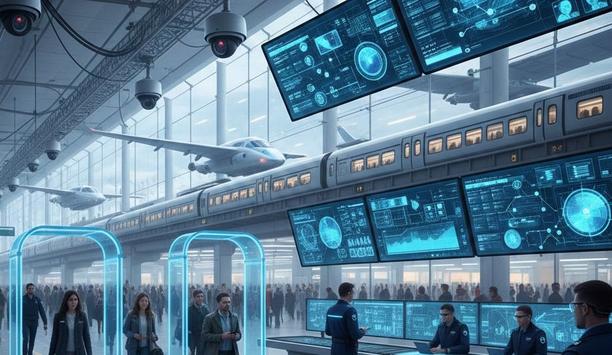
Transportation systems need robust physical security to protect human life, to ensure economic stability, and to maintain national security. Because transportation involves moving large numbers of people and critical goods across vast, often interconnected infrastructure, it presents a highly attractive target for various threats. More threats equate to a greater need for security. We asked our Expert Panel Roundtable: What are the emerging applications of physical security in the transportation...

Installing physical security systems requires integrating diverse technologies (e.g., cameras, access control, alarms) that often use different protocols and must be adapted to a building's unique physical layout and legacy infrastructure. Specialised technical expertise is required for seamless networking and proper configuration. Hopefully, no important factors are overlooked in the installation process. We asked our Expert Panel Roundtable: What is the most overlooked factor when inst...

Emphasising proactive rather than reactive security shifts the focus from dealing with crises and damage control to prevention. Advantages of a proactive approach include cost efficiency, better business continuity, and fewer crises that draw attention away from strategic improvements. Staying ahead of threats is a core mission of the security department, and technology has evolved to enable security professionals to deliver on that mission better than ever. We asked our Expert Panel Roundtable:...
Johnson Controls, Inc. case studies

Keeping beachgoers, swimmers and surfers safe is all in a day’s work for the team at South Maroubra Surf Live Saving Club, and every second counts when an incident unfolds on the water. One of the most topical issues and threats to those enjoying Australia’s world-renowned beaches is sharks, so for the surf club it made sense to look to smart, new technology to keep those who enjoy the sand and surf safe. Security technology to lifesavers "Since the club wa...

SwiftConnect, a pioneering provider of connected access enablement, is powering easy, secure, and private access using an iPhone and Apple Watch with the Johnson Controls Software House C•CURE 9000 access control system. The SwiftConnect AccessCloud platform integration with the Software House C•CURE 9000 access control system makes it possible for Software House C•CURE 9000 customers to take advantage of the employee badge in Apple Wallet for physical access. Deployments of emp...

It may sound like a small change, but installing security cameras on a property can significantly impact occupant and visitor behaviour by enabling more accountability. This is notable for environments such as K-12 schools where occupants are younger and more impulsive. Lack of visibility A public school system on the East Coast faced frequent incidents of bullying, vandalism and theft among students as well as the harassment of faculty and staff and was struggling to keep its occupants accou...
Johnson Controls, Inc. white papers

Johnson Controls, Inc. videos


Frictionless access control: 5 minutes with Rick Focke Tyco Software House

Video Surveillance Solutions: 5 Minutes with Ryan Hulse from JCI

Johnson Controls P2000 Security Management System Controls Access at RWU, Rhode Island, USA
An overview of the Johnson Controls P2000 Security Management System

Johnson Controls Company Profile

Johnson Controls Corporate Profile

Expert commentary

Security beat

Johnson Controls, Inc.
507 E Michigan Street
Milwaukee, WI 53202


