Explosives detection

Allied Universal®, a security and facility services provider, today announced it has been issued a patent covering methods used in its K9-Comply® platform, developed by its Enhanced Protection Services business unit. The proprietary compliance and documentation platform is designed to meet and exceed Transportation Security Administration (TSA) 3PK9 program requirements for air cargo canine screening processes. K-9 Comply uses a mobile workflow to record canine inspections and associate...
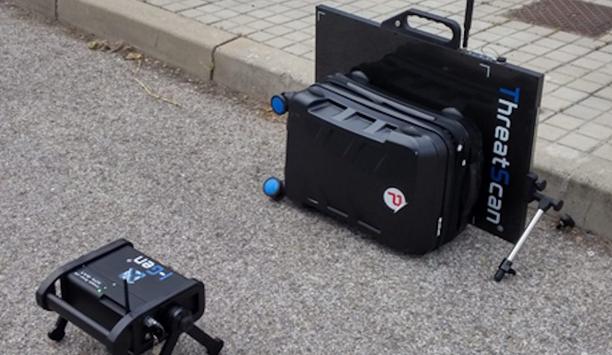
3DX-RAY, a pioneer in advanced X-ray imaging technology, is pleased to announce the successful acquisition of a significant double-digit unit contract with the esteemed Indian partner for the ThreatScan LS1 system. This innovative solution has been selected for its impressive size, ruggedness, and exceptional capability to efficiently handle Passive Infrared (PIR) devices activated by X-ray technology. EOD and security applications The ThreatScan LS1 is an advanced X-ray imaging system specif...
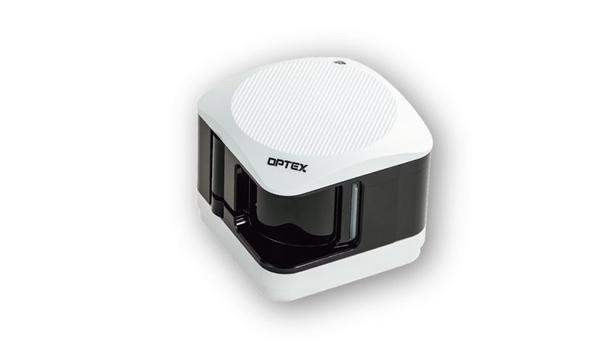
OPTEX, the renowned global sensor manufacturer, has launched the REDSCAN Lite LiDAR sensor, designed to provide extremely precise and ultra-fast, short-range detection across indoor high-security environments. As the latest addition to OPTEX’s award-winning REDSCAN LiDAR range, the REDSCAN Lite RLS-1010L has been specifically developed to provide total coverage and protect high-risk security zones and vulnerable, narrow indoor spaces that are difficult to protect with traditio...

Texas-based Garrett Metal Detectors announced that it has released new software for its premium walk-through metal detector, Paragon. This major update to Garrett’s leading-edge screening system includes several key refinements and new capabilities for the detector’s performance and operation, driven by the introduction of Garrett’s new, proprietary advanced AI security platform for metal detection using machine learning. Software update Garrett has identified five cor...

3DX-Ray announces a contract for the sale of further ThreatScan®-AS1 systems to a Middle Eastern Law Enforcement Agency. This sale is a follow-on order to multiple similar systems already in service with the agencies EOD and search teams. The 3DX-RAY ThreatScan®-AS1(ISC) is a robust amorphous silicon portable X-ray inspection system. It comprises as standard a detector panel with an imaging area of 43cm x 35cm, a new high penetration 150kV generator, and a laptop along with batteries, c...

Sweden’s Bluewater, a world-pioneering innovator of advanced water purification and beverage solutions, will showcase its groundbreaking Emergency Water Station at DSEI UK 2025, the flagship defence and security event being held at ExCeL London, 9–12 September. Visitors can find Bluewater in the Medical Hub with Promoteq, booth N2-165 (West Entrance). With over 1,600 exhibitors and 45,000 visitors, DSEI UK is the defence industry’s premier forum for global cooperation,...
News

Intellian is proud to launch the latest addition to its next generation GX range of antennas: the GX60NX, designed specifically and now type approved for use with Inmarsat’s Global Xpress Ka-band VSAT network. This 65cm terminal, the smallest in the range, completes Intellian’s GX portfolio and brings the benefits of its market pioneer NX antennas to all vessels using Inmarsat’s Fleet Xpress service for reliable, fast connectivity at sea. Versatile platform solution Thanks to its compact size and light weight, the GX60NX is ideally suited to smaller commercial vessels, where space is at a premium but the benefits offered by the latest technology are still required. The new form factor supports customers across all markets, including leisure and fishing. The Below Deck Terminal (BDT), single cable antenna connection and AptusNX control software are identical to those used for the larger GX100NX, which is already approved. This allows ship management companies and ship owners to benefit from the ability to work with a standard platform across diverse fleets. Seamless network upgrades Inmarsat’s wholesale channel will benefit from the modem and mediator being built into the BDT, simplifying installation and allowing dual antenna systems to be easily configured with just the addition of a second NX antenna and Antenna Control Unit (ACU). The GX60NX is 2.5GHz Wideband Ka ready, and the BUC is easily upgraded from 5W to 10W if increased upload performance is required. This simplicity and flexibility will allow customers to immediately take advantage of future enhancements – including increased coverage and bandwidth afforded by Inmarsat’s rapid network expansion as new satellites are launched – as well as making full use of the market-pioneer services available. Fleet xpress expansion Ronald Spithout, President, Inmarsat Maritime, said: “We are delighted that the GX60NX has been type approved and is ready for use for our channel partners with Fleet Xpress. This reinforces our close and innovative partnership with Intellian. We now have more than 9,000 vessels using the service and we are seeing an increase in demand for digital and crew services, which is why we are launching a further seven satellites in the next three years.” Innovative antenna design Intellian’s NX Series antennas share a host of features which set them apart from the competition. Designed with ease of installation in mind, the antennas come with pre-slung lifting straps in compact shipping crates, have no shipping brackets requiring removal and are terminated externally using a single coaxial cable to carry power, Tx and Rx signals, avoiding the need for the installer to remove the dome. Intellian’s innovative AptusNX software makes commissioning straightforward via a built-in wizard, and facilitates both remote and local diagnostics with health reports for the antenna systems and sensors. Future-proof antenna Eric Sung, CEO of Intellian, commented, “We’re delighted to introduce the GX60NX antenna, completing our GX NX portfolio and bringing the benefits of our future-proof, user-friendly antennas to our valued customers in the small commercial, leisure and fishing markets. The integration of our market-leading technology with Inmarsat’s global network provides a seamless route to connectivity, whatever the needs of your business.”

Detection Technology, a pioneer in X‑ray detector solutions, announces the launch of a first‑of‑its‑kind X‑Panel 2520z FOM flat panel detector designed to elevate dental imaging. This trend‑setting 25 cm x 20 cm detector is the first on the market to feature advanced IGZO‑TFT technology at this size, delivering a significantly larger field of view (FOV) and enhanced image quality compared to traditional a‑Si panels. X-Panel 2520z FOM features The X-Panel 2520z FOM sets a new benchmark in dental imaging with its advanced features: Enhanced field of view and resolution: An imaging area that is 95% larger with a resolution improvement of 30% when comparing to traditional a-Si panels, enabling the capture of full-resolution CBCT (Cone Beam Computed Tomography) scans with exceptional clarity. Accelerated imaging speed: With a frame rate of 25 fps (1x1) and 50 fps (2x2)—double that of conventional a-Si panels—this detector speeds up workflow without compromising image quality. Superior low-dose performance: The low-noise IGZO-TFT technology reduces electronic noise by approximately 50%, ensuring clearer images even at reduced radiation doses. Robust data handling: An integrated image buffer allows the entire scan to be stored in internal memory, minimising the risk of data loss during critical procedures. Compliance and sustainability: A lead-free version of the detector is available, ensuring full compliance with RoHS directives without exemptions. Diverse needs for dental imaging X-Panel 2520z FOM is created for dental CBCT imaging, offering wide imaging abilities The X-Panel 2520z FOM is designed primarily for dental CBCT imaging, offering expansive imaging capabilities. In addition to CBCT, it also provides versatility for panoramic imaging and has potential for cephalometric applications, meeting the diverse needs of dental imaging. The X‑Panel 2520z FOM is available in two variants, including a lead‑free version, ensuring full compliance with the RoHS directive without exemptions. These tailored options provide dental imaging OEMs (Original Equipment Manufacturers) with the flexibility to select the configuration that best meets their specific performance, cost, and regulatory requirements. Demand for imaging solutions "Building on the success of previous products like the X-Panel 1717z FDM, we are expanding our portfolio further to meet the growing market demand for complete and versatile imaging solutions." "The industry’s push for a larger FOV is met head-on with this new model,” says Tuomas Holma, Product Director at Detection Technology. Future of dental imaging Holma added: "Our commitment to local manufacturing and comprehensive service—across Finland and China, and a growing presence in India—ensures shorter response and delivery times, and cost-effective local product solutions, all while maintaining high standards of quality. Our strong brand image, built on high performance, reliability, and user-friendliness, makes us the preferred partner for dental imaging OEMs." Evaluation units will be available in Q2 2025. Detection Technology will showcase the X-Panel 2520z FOM and its key features at the IDS exhibition in Cologne, Germany, from March 25–29, 2025. Visit the team at stand T049 to experience the future of dental imaging firsthand.

Athena Security, a trailblazer in AI-enabled weapons detection screening technology, will introduce two innovations at ISC West 2025, in Las Vegas, Nevada, USA, on April 2, 2025. The new Telepresence Officer combines holographic technology and AI to increase security presence, and the integrated AR glasses provide real-time alerts to catch mistakes that busy or distracted officers might miss. These technologies ultimately create scalable, cost-effective and non-invasive security systems that enhance safety in public spaces, schools, hospitals, and other critical environments. Future of scalable weapons detection is virtualisation “The future of scalable weapons detection is virtualisation,” says Co-Founder and CTO of Athena Security, Chris Ciabarra, adding “By leveraging holographic technology with our security-focused AI solution, we can help organisations provide the level of weapons-detection security they need without adversely impacting their operating budget.” Telepresence Security: How it Works Telepresence technology enables professional security personnel to monitor up to four locations Utilising holographic technology, Telepresence Security Officers are projected in entryways, hallways, lobbies or auditoriums to provide a humanised, reassuring presence. The Telepresence Officers can respond to questions with pre-recorded messages or project a live security officer via hologram. Telepresence technology enables professional security personnel to monitor up to four locations, while positioned in another part of the building or remotely. Utilising Telepresence technology, security officers are able to interact with people in real time– providing assistance or directions or engaging with guests when needed. With Telepresence Officers, organisations can: Welcome visitors and answer questions with an automated message Manage visitor and pedestrian traffic flow control Respond in multiple languages via real-time translation utilising speech-to-text Manage multiple areas from one security operations centre Enhancing Security While Reducing Costs Facilities requiring multiple officers per shift at multiple locations face a significant financial burden, in addition to the challenge of finding, training and retaining security staff. Athena Security’s Telepresence technology, which operates 24/7, can help better manage staffing and security operating budgets by enabling a single officer to oversee Telepresence Officers stationed in multiple locations. At high-traffic entry points, on-site personnel and Telepresence Officers can work together to efficiently screen guests, while at lower-traffic entrances, Telepresence Officers can augment staff coverage by maintaining a visible security presence. Enhancing Efficiency With Integrated AR Alert Glasses Athena Security will also introduce its new OwlVision AR Alert GlassesAthena Security will also introduce its new OwlVision AR Alert Glasses to provide officers with instant, hands-free access to Athena’s weapons detection system alerts and or messaging. The integration of AR glasses technology will boost the attentiveness and efficiency of security officers by giving them visualised data and alerts right in their line of sight. The new augmented reality (AR) will serve as an extra layer of security that is fully integrated within Athena Security’s patented AI-powered control dashboard and X-ray technology that monitors both ferrous and non-ferrous items as part of a comprehensive concealed weapons detection system. Athena’s first-of-its-kind AR glasses integration enables: Improved officer responsiveness and effectiveness with real-time, line-of-site alerts. Enhanced time management by allowing officers to receive automated or real-time messages. Seamless, automated information retrieval with the existing Athena Weapons Detection System. Light-weight and hands-free operation which keeps officers’ hands free to perform their duties. Customisable alert settings to control the duration and visibility of alerts on the AR glasses. Athena Security Booth at ISC West 2025: To see the world’s first AI-powered end-to-end weapons detection platform featuring AI-enabled AR glasses and holographic technology, visit the Athena Security booths #31075 and #19083.

Evolv Technologies Holdings, Inc., a foremost security technology company pioneering AI-based solutions designed to help create safer experiences, announced that its Evolv Express® weapons detection systems will be deployed at entrances at T-Mobile Park, home of Major League Baseball’s Seattle Mariners, for the team’s 2025 Opening Day. The ballpark-wide deployment represents an expansion of the relationship between Evolv and the Mariners, which began with a partial Express deployment in September 2024. Evolv has been designated as the “Preferred Fan Security Screening Provider of the Seattle Mariners” as part of the new expansion. Location details T-Mobile Park, located near downtown Seattle, has a seating capacity of 47,368 and is among the largest ballparks in the Major Leagues. Since its opening in 1999, in addition to Mariners games it has hosted a diverse slate of other events, including the NHL Winter Classic and WrestleMania XIX. The Mariners are Evolv’s twelfth customer in professional baseball, joining the Boston Red Sox, Houston Astros, Minnesota Twins, New York Mets, Philadelphia Phillies, Pittsburgh Pirates, and others on Evolv’s roster. The Mariners, who are Evolv’s first pro sports customer in Washington State, also join the Moda Center in Portland, OR and 20 schools, hospitals and other facilities in the Pacific Northwest in the Evolv customer ranks. Fan-friendly secure venues “We’re very pleased to expand our relationship with Evolv,” said Trevor Gooby, Mariners Executive Vice President and Chief Operating Officer. “Our initial deployment last season demonstrated how Express can improve the fan experience by speeding up the entry process, without compromising on security. As we continue our efforts to make T-Mobile Park the most fan-friendly venue in sports, implementing this technology ballpark-wide was a natural fit.” “We’re again gratified and humbled to be entrusted with such an important role in the gameday experiences for Mariners fans,” said John Baier, Evolv’s Vice President of Sports & Entertainment. “With a full dozen pro baseball teams now on our growing sports and entertainment customer list, we’re excited for the season that lies ahead. We wish all the best to the Mariners and our other Big League baseball customers.” The Seattle Mariners will start their 2025 season on March 27 when they host the Athletics at T-Mobile Park for a 7:10 pm PT first pitch.

Like other transportation hubs, airports are prime targets for major security threats. Because of their high traffic flow and wide reach, terrorists and other mass attacks often target them. The right airport security equipment can reduce risks and improve overall safety for passengers, staff, and the surrounding community. Types of airport security equipment Airport security equipment includes perimeter barriers, parking area booths and barricades, and screening equipment. A comprehensive airport security equipment list includes bollards, gates, metal detectors, explosive detection, and X-ray machines. These devices screen passengers and luggage to detect items that could be hidden. Numerous other items should be included in a security plan, and each one has a unique purpose. Perimeter security equipment Securing the perimeter keeps unwanted people and vehicles out of restricted space. High-security sliding gates, beam barricades, and wedge barricades provide a physical barrier to limit access. Guard booths and traffic control measures help to ensure that only approved personnel enter restricted parts of the facility. The use of undercarriage lights can aid vehicle inspection for prohibited items and explosives. Fencing also reduces the risks associated with animal strikes. The Federal Aviation Administration recommends installing a 10-foot-tall fence topped with three strands of barbed wire, which is an effective height for keeping animals such as deer and coyotes off runways. Airport security equipment for parking areas Mobile barricades are vital to an airport’s security plan. They limit vehicle access and control the flow of traffic, providing security guards with a physical barrier to enhance security and reduce the risk of unintentional vehicle crashes. Traffic teeth are commonly found on airport roads with one-way traffic. They allow vehicles to move forward but not reverse or go against other traffic. Traffic teeth are also frequently used in parking garages and rental car pick-up and return areas. Pedestrian safety equipment Bollards are commonly used for controlling traffic and protecting pedestrian areas. Airports often place them along sidewalks in passenger drop-off and pick-up areas. Stanchions are also commonly used at airports to direct pedestrians. Proper signage is also crucial to ensuring pedestrian safety. Exits, gates, terminals, and parking areas should all be marked with large, clear signs. Airport screening security equipment Airports screen luggage and passengers using X-ray scanners, metal detectors, explosives trace detection systems, surveillance cameras, access control systems, and body scanners. These devices serve vital roles in a comprehensive airport security plan, helping security personnel detect threats, monitor activity, and regulate movement. In the United States, the Transportation Security Administration recommends millimeter wave devices, body scanners, and metal detectors for passengers. It has also implemented scanners that use computer tomography technology to speed up security screenings by eliminating the need for passengers to remove liquids from their carry-ons. X-ray, CT, and ETD systems help airports efficiently screen carry-on and checked luggage, reserving physical searches for situations where a specific item is suspicious. All luggage that passes these checks can be loaded onto an aircraft. Best practices for airport security equipment Airports can also adopt best practices for equipment, operational policies, and physical design, which can help improve overall security and enhance the passenger experience. Utilize dedicated lanes for passengers with security passes TSA PreCheck and Global Entry are passes that allow passengers to skip many of the pre-boarding screenings and move through security lines much faster. They are designed to make things go smoother at the airport for passengers and security staff. Airports can allow people accepted into these programs to use express security lanes that are clearly marked and separate from other screening queues. Secure aircraft parking areas Painted lines on the tarmac often indicate designated aircraft areas. If there are no markings, the airport can establish parking areas using barricades and bollards. Placing security arms and gates around these areas further limits aircraft access to people cleared to move, operate, or service them. Airport layout Airport layout can play a significant role in overall security, such as reserving the central portions of the facility as a security-restricted area or terminal accessible only to individuals who have undergone a pre-boarding screening. Physical barriers, security cameras, and alarm systems ensure restricted access to these areas. Adhering to standards appropriately but cautiously TSA allows some leniency to passengers over 75 because this population is deemed less of a threat. Airports should allow these expedited screenings to follow TSA guidelines. However, they should follow common sense and still use appropriate measures, like having older individuals go through a body scanner. Ensure safety with airport security equipment from Delta Scientific From perimeter security equipment like bollards and barricades to advanced screening systems, airports rely on a range of tools to enhance safety. Delta Scientific provides high-security solutions to meet these needs.
Evolv Technologies Holdings, Inc., a foremost security technology company pioneering AI-based solutions designed to help create safer experiences, announced that it recently entered a business partnership with Sports Illustrated Stadium, home of Major League Soccer’s New York Red Bulls. The partnership, through which Evolv has been designated as the Stadium’s “Official Fan Screening Partner,” will include deployment of Evolv Express® systems at the Stadium’s main entrances. In addition to fan screening, Express will also be used at staff and talent entries. Through the partnership, Evolv will also work with the New York Red Bulls on community activations. Expertise insight “With a continuous focus on the Fan Experience, we’re pleased to upgrade the arrival experience at Sports Illustrated Stadium with Evolv Express,” said Shaun Oliver, Vice President of Operations at Sports Illustrated Stadium. “Having seen this technology in wide use across MLS venues (and elsewhere in the New York market), we’re confident that our fans will appreciate a convenient entry process.” “It’s gratifying to continue to grow our presence in Major League Soccer,” noted John Baier, Evolv’s Vice President of Sports and Entertainment. “MLS matches have an electrifying atmosphere that only get better when the journey from ‘street to seat’ is as smooth as possible.” Evolv Express The Express units will be first commissioned for the New York Red Bulls’ 2025 season home opener on March 1. The deployment at Sports Illustrated Stadium is Evolv’s twelfth in Major League Soccer, joining Dignity Health Sports Park (Carson, CA), Lower.com Field (Columbus, OH), Mercedes-Benz Stadium (Atlanta, GA), Toyota Stadium (Frisco, TX), and others. Major League Soccer set an attendance record in 2024 and is the second-most attended soccer league in the world, trailing only the English Premier League. Evolv performs entry screening for five of the top-six teams in attendance (and eight of the top-16), and in total screened more than two million MLS fans in 2024. Evolv’s customers Sports Illustrated Stadium also joins many other high-profile venues on Evolv’s customer list in the New York metro area. Lincoln Center, the hub of the performing arts in New York City, was one of the earliest adopters of Express. Evolv Express is also a Fan Screening Provider of the New York Mets at Citi Field in Queens as well as hospitals, museums, places of worship and other venues around New York.

Expert commentary

GSX 2023 marks a poignant moment for the security industry as an increasingly complex risk landscape converges with the acceleration of technology innovation. Emerging from this environment are three key trends that will dominate the conference and the future of the security industry: (i) the adoption of AI, (ii) the use of predictive analytics, and (iii) a hybrid global and local risk management approach. As Chief Security Officer of Crisis24, a GardaWorld company, I regularly advise clients on how these trends are evolving and impacting their security and risk management approach. Here’s how we can expect to see them discussed at the show next month: Trend 1: Artificial intelligence is the new industry standard. AI is this year's buzzword. While AI is not new to the industry, this year it has become a standard to operate with AI being adopted or expanded more ubiquitously. Legacy AI-enhanced security offerings that have been years in the making are becoming more advanced and are being integrated into expert analyst teams to leverage the best of both man and machine. Limitations AI augments the data processing ability; however, human-led intelligence is still necessary AI can generate unparalleled levels of data and insights, but it also has its limitations. AI does not have the emotional intelligence that can influence decision-making. For instance, our Crisis24 analyst teams know that every one of the intelligence alerts they provide to leadership may save a life or protect a business. AI augments the data processing ability; however, human-led intelligence is still necessary to effectively elevate knowledge of those threats through an organisation to incite action. Trend 2: Predictive analytics powered by AI will transform security operations. Predictive analytics enabled by AI will allow for more precise planning and execution of true emergency management. Those living or operating in conflict zones must be ready to spring into action and predictive analytics can help better evaluate risks, threat levels, and the probability of certain events. When I served in Iraq in 2003, our greatest challenge was operating in an unpredictable environment and navigating the many unknown threats. With these large-scale threats, it was difficult to account for the vast array of variables involved and ensure that all parties were protected. Broad and instant visibility Predictive analytics provides broad and instant visibility into numerous potential outcomes, impacts, and mitigation strategies for a wide variety of threats. When dealing with risks that are constantly evolving and quickly accelerating, the insights from predictive analytics can have a direct impact on risk management, mitigation strategies, and preparedness levels. Predictive analytics can anticipate the ripple effect that threats can have on organisations, their people, and their assets and enable security teams to plan. Trend 3: Risk mitigation is increasingly both global and hyper-local. A company’s workforce is often scattered across the country or the world, working from home or on the go Remote work and a flood of 24/7 data sources have driven demand for timely, accurate, and hyper-local intelligence. Where before an organisation may have had a handful of facilities around the world where its employees gathered, now a company’s workforce is often scattered across the country or the world, working from home or on the go. Preventive mitigation steps To keep their people and assets safe, business pioneers need to know what’s happening in all corners of the globe, while also easily accessing details on what is happening at the street corner level. How a business takes care of its people, including anticipating risks and taking preventive mitigation steps as well as responding quickly in the face of threats, can directly affect its reputation. Every company is in the business of safety and security when it comes to looking after its people on a global, national, and increasingly hyper-local scale.

Most of the assumptions you’ve made about gunshot detection could be wrong. To those security professionals who stay on top of their homework, this is probably not true, but the ‘you’ in this context is directed to the collective security industry reader that, when looking into indoor gunshot detection products, sees terms like concussive force, percussion, or shockwave and wonders if these are important differentiators – or something the marketing department decided would get a reader’s attention. The truth is that all these terms, from an application standpoint, mean the same thing. Detractors of gunshot detection might question the validity of the technology since the perpetrator is already in action and shooting is in progress. Directing emergency personnel The purpose of gunshot detection is to alert with absolute certainty and as soon as possible that there is a shooting in progress, and very importantly, to identify the location of the incident. The purpose of gunshot detection is to alert with absolute certainty and as soon as possible With this information, we can guide victims away from the shooter while also directing emergency personnel to the perpetrator’s location so they can mitigate the threat. If your loved one found themselves in a work or school shooting, which would you prefer – that they hide until law enforcement arrives, or that they know a safe path for immediate evacuation? As a security operator, would you prefer to manually search camera feeds to find the shooter, or have gunshot detection instantly cue cameras to the incident location? Gunshot detection technologies When you see the value gunshot detection has to offer, the next step is gaining a deeper understanding of the technology and sifting through marketing claims to find the system that works for your application. Before jumping into the circuit boards and algorithms of modern indoor gunshot detection sensors, it helps to go back in time and learn about the genesis of gunshot detection technologies. Many sources generalise gunshot detection into two classifications: military or civilian/law enforcement application. Gunshot detection’s history tracks back to systems built in the 1990s for military applications that detected and reported on sniper fire from high calibre weapons. These systems were then made available for civilian applications in the form of city-wide applications that triangulate signals to locate gunfire in urban areas. Existing outdoor technology This feeds the collective understanding that all gunshot detection systems operate in one simplistic way Although these systems differ in how they detect, locate, and report gunfire, at their core is a reliance on acoustics (and therefore microphones) as their single mode of detection. Because these systems were essentially first to market, they are the most publicised and reported on. This feeds the collective understanding that all gunshot detection systems operate in one simplistic way; they ‘listen’ for the sound of gunshots, triangulate a location, and then produce some type of alert. Detecting a gunshot outdoors is different than detecting one indoors. Early attempts by indoor gunshot detection pioneers to use the existing outdoor technology didn’t work very well. There are several reasons for this, but they can be summarised as follows: The acoustic pattern of a gunshot indoors is different than one that is produced outdoors. Walls, furniture, and general building layout will create echoes and reverberations that combine to create a signal that is difficult to interpretate. Some outdoor systems were reliant on the shockwave of supersonic rounds outdoors. In the indoor environment, the acoustic properties of that shockwave can break down quickly, rendering the result degraded and therefore unusable as a reliable indicator of gunfire. Systems reliant upon triangulation, like the ones used in city applications, also do not work indoors because those echoes and reflections in the acoustic environment interfere with both detection and location accuracy. Indoor gunshot detection This compression continues as the bullet moves forward through the air Indoor gunshot detection requires a different approach. But before diving into the deep end of the technical pool, a few words about what happens when a gun is fired. We are all familiar with the bullet flying out of the gun part, but what else happens? When the bullet leaves the muzzle (end) of the gun, air molecules around the bullet get rapidly compressed. Just like a guitar string that has just been plucked, rapid compression or vibration moves the air molecules around it. This compression continues as the bullet moves forward through the air, but the initial, violent change is what we first capture. The gasses that are part of the gun powder burned to propel the bullet out of the gun are also released. This causes a ‘flash’ which can been recorded as part of the visible and infrared (IR) spectrum. Indoor gunshot detection requires a different approach Sound pressure sensor The talk of 'rapid vibrating or compression of air molecules’ is where confusion can begin. Why? Because this same property can be measured in different ways. One way is acoustical – a microphone recording the ‘bang’. Another way is through pressure. But wait a minute – if we remember our high school physics, a sound wave is the same as a pressure wave! Simply stated, a microphone is a pressure sensor - usually tuned to capture very small changes - and a sound pressure sensor is just a clunky microphone. As humans, we forget that sound – like the loud bang of a firearm – is just our way of describing a very distinct change in the vibrations of air molecules around us. Air pressure sensors Gunshot detection devices use sensors to detect a change in the compression of air molecules Gunshot detection devices use sensors to detect a change in the compression of air molecules. Manufacturers can say that they use different types of sensors – microphones, air pressure sensors, concussive force sensors, shockwave sensors, etc. – but these devices are all measuring the same thing. The primary difference between different sensors is how sensitive to disruption they are, which is usually a function of cost, and what frequency or range of disruption they are designed to look for. Some manufacturers claim to capture the ‘shockwave’ of a bullet. Shockwave is a rather loose term, but the manufacturer is usually referring to a special pressure wave in the air that is created when an object travels faster than the speed of the sound. An object passing through the sound barrier will make a loud noise – or large, fast pressure change – but again, the sensor is simply capturing a change in the compression of air molecules. Serving particular market At first, the idea of using a bullet’s speed – and therefore shockwave - as an inexpensive mechanism for capturing and verifying that a gunshot has occurred may seem interesting. But be careful of products that promote shockwave as their principal factor of gunshot detection. Many types of bullets – a 45 calibre pistol for example – do not create a shockwave when fired, meaning these types of gunshots fired in your building will be excluded from detection. Manufacturers all take different approaches to serving a particular market. In the world of security, one would hope that all products deliver exactly as advertised. Unfortunately, a sensor that is calibrated to one range of sound or pressure can inadvertently register other, unwanted sounds. Different building configurations A nail gun or balloon popping will trip a sensor calibrated to listen for the frequency A nail gun or balloon popping will trip a sensor calibrated to listen for the frequency – or vibrational – range of most gunshots. Sensors can be pre-programmed with a library of gunshot-like sounds, but this requires the sensor to analyse the signal it just captured, creating a delay in alert times. A study done by Florida Atlantic University’s College of Engineering and Computer Science recently concluded that ‘most gunshot detection systems cannot tell the difference between a gunshot and a plastic bag popping’ – and this points to why consumers believe that gunshot detection systems are unreliable. Also, as we learned above, different building configurations will create different signal characteristics. Is there a library of gunshots signals for all possible building or room configurations? Single sensor approach As a way to reduce costs, some manufacturers offer a single measurement sensor for both indoor and outdoor applications, but this approach requires extensive calibration for two different environments, meaning that accuracy inevitability suffers. As a way to reduce costs, some manufacturers offer a single measurement sensor Define your expectations accordingly because the single sensor approach is limited. The level of accuracy will be low, and you will experience false alerts, creating a need for an additional layer of verification that further delays notification. In the physics lesson above, we mentioned that there was a second characteristic of a gunshot – the release of light – or more accurately, heat – from the infrared (IR) spectrum. To avoid the problem of concussive force/shockwave/microphone sensors capturing signals that are not gunshots, a second sensor dedicated to measuring the IR signal emitted by a bullet leaving a gun is added. Generate false alerts Just like online banking services enforce two-factor authentication to ensure authenticity, gunshot detectors can use two sensors measuring the two different characteristics of a gunshot to deliver the highest level of accuracy. And since the speed of light and the speed of sound are different, programming can be employed to further validate that the signal received was truly a gunshot and not a similar-sounding non-ballistic event, like a nail gun. From an accuracy standpoint, single measurement sensors perform worse than a dual-sensor in all cases and are significantly more likely to generate false alerts. The only benefit of a single-sensor shot detection system is that they may be cheaper to purchase in terms of upfront costs. But those savings will quickly be erased by the cost of avoidable business disruptions due to a higher false alert rate. Normal hospital services Schools are probably the hardest to estimate as intangible costs like staff/student wellbeing In manufacturing, warehousing, or transportation environment your accounting department can easily calculate how much a one-hour shutdown of work will cost the organisation if a false alert causes an interruption in operations. In industries like healthcare, calculating the cost of a false alert is a little more complicated, but one study determined that cancelling normal hospital services for just one day can cost approximately $978,418.00. Schools are probably the hardest to estimate as intangible costs like staff/student wellbeing and law enforcement-related activities do not lend themselves to a straightforward financial calculus. Single measurement sensors However, when investigating indoor gunshot detection systems, the following top five questions should be asked of each vendor you contact: Does the system use Single Factor or Dual Factor sensor verification to reduce false alerts? The definition of Dual Factor, in this case, is that both factors are required to produce a gunshot alert. Remember that merely adding more single measurement sensors to a product will not reduce false alerts. Does the manufacturer have an independent, third-party verification of their product? If so, what were the testing parameters? Look for gunshots occluded (facing away) from the sensor, types of noises tested including firearms and false alert tools used, sensor distance from the gunshot, and the validity of the testing agency as a trusted, impartial operation. Real-world testing is also extremely valuable, meaning in a customer’s installed environment, outside of the gun range. If the single factor sensor is advertised to work both indoors and outdoors, how does the device technology compensate for these two different environments? Does the manufacturer’s solution require a human to validate that the signal received was a gunshot? Systems that require human verification will considerably slow down the speed at which Law Enforcement is contacted and, because of normal human behaviors during periods of stress, can also lead to inaccurate information being communicated to first responders. Is the manufacturer an expert in gunshot detection or did they just add a microphone to a product and bundle it with other types of sensors like smoke detection, aggression, vaping, glass breaking, etc.? These all-in-one sensors are currently common as manufacturers attempt to test the market’s appetite for gunshot detection. False gunshot alert There are currently no regulatory bodies monitoring gunshot detection manufacturers and their claims Gunshot detection does not have to be complicated, but when an emerging technology begins to gain traction in the marketplace, it is important to follow the science and keep learning. There are currently no regulatory bodies monitoring gunshot detection manufacturers and their claims, so doing your due diligence is key with this technology. Talk to your business leaders about the impact a false gunshot alert could have on the organisation from a risk standpoint. Seek to understand the underlying technology of any shot detection system you are considering and look for two factors of gunshot authentication. Hopefully, this technology primer on gunshot detection helps integrators and end-users understand the underlying technology so they can find the most effective solution for their facilities. Bill Aheimer, Principal of Security DNA, is co-author of this article.

According to the reports of not-for-profit organisation Gun Violence Archive, the year 2018 has seen 323 mass shooting incidents as of November 28 in the United States. This number is 346 for the year 2017 and 382 for 2016 (more statistics are available here), with “mass shooting” defined as cases where four or more people are shot or killed in the same time period and location. While definitions of mass shooting vary with organisations in the US, the count of over 300 incidents per year, or about once per day on average, is simply alarming. It raises public safety concerns, ignites debates and protests, which in turn lead to public unrest and potentially more violence, and increases costs for governments from the regional to federal level. Most importantly, the loss of lives demands not only improvement in post-incident handling and investigation, but also new prevention technologies. Gunshot detection solutions AI weapon detection offers a more efficient alternative to prevent active shooting There are several gunshot detection solutions in the security market, commonly used by law enforcement agencies to detect and locate gun fires. These systems function based on acoustic recordings and analyses and often in combination with signals detected by sensors of the optical flash and shockwave when a gun is fired. However, gunshot detection by nature dictates that the law enforcement can only react to a shooting incident that has occurred. With fast action, law enforcement can prevent the incident from escalating, but lives that are lost cannot be recovered. With the development of artificial intelligence in object recognition, AI weapon detection offers a more efficient alternative to prevent active shooting: AI can visually detect guns based on their shapes before they are fired. The AI is trained to recognise firearms in different shapes, sizes, colours, and at different angles in videos, so that the AI weapon detector can be deployed with existing cameras systems, analyse the video feeds, and instantly notify security staff when a gun is spotted. Comparison of the advantages for law enforcement and public security agencies Legacy gunshot detection using sensors AI weapon detection Reactive measure: detect after guns have been fired Proactive measure: detect before guns are fired Time to action: within 1 second Time to action: within 1 second Unable to provide visual data about shooter(s) Can provide data about shooter(s) based on the camera recording: clothing, luggage (backpack, handbag, etc.), facial features, vehicle Unable to track the location of the shooter(s) before and after shooting because of the lack of sound Can track the shooter(s) using AI Person & Vehicle Tracking, AI Face Recognition, and AI License Plate Recognition False detection caused by similar sound such as fireworks and cars backfiring Minimal to no false detection, as AI can distinguish different types of handguns and rifles from normal objects (umbrella, cellphone, etc.) Require physical deployment of gunshot detection sensors Can be used with existing camera systems, do not require special hardware Complicated to deploy, require highly trained professional Easy to deploy as an add-on to existing video surveillance system - Can integrate with gun-shot detection to create a “double knock” audio and video active shooter alert system Gun-shot detection advantages In addition to advantages for law enforcement and public security agencies, this type of visual-based pre-incident detector has three-fold advantages for the public: Save lives by spotting the shooter before the shooting event. Minimise the chaos entailing an incident: panic and chaos caused by a shooting incident often adds to injury, as people run, fall, trample on others… With an AI weapon detector, when a gun is spotted, the system sends an alert to security staff, who can quickly control the situation in an organised manner and apprehend the intending shooter. Can be added as a SaaS (Security as a Service) component to small business and home surveillance systems, e.g., intrusion detection alerts (home invasion incidents with firearms number over 2500 per year nationwide). For a complete active shooter detection system, video-based AI detector can operate in conjunction with gunshot detectors for enhanced security. Traditional X-ray based weapon detection or metal detection entrance systems are complicated and expensive; with AI video technology, active shooter detection system can be cost-effective, and after all, what price tag can one put on a life? Written by Paul Sun and Mai Truong, IronYun
Security beat

Companies at GSX 2023 emphasised new ways that technologies such as artificial intelligence (AI) and the cloud can address long-standing issues in the security market. Among the exhibitors at the event in Dallas were companies seeking creative ways to apply technology, lower costs, and make the world a safer place. Reflecting on the exhibition, here are some additional takeaways. Expanding AI at the edge i-PRO is a company reflecting the continued expansion of edge AI capability in the security market. Today, more than half of the company’s lineup supports AI at the edge so the customer has a wide choice of form factors when seeking to leverage the feature set. AI processing relay, extended warranty i-PRO is increasing their warranty period from 5 to 7 years, which could be a lifetime warranty in some cases I-PRO also has an “AI processing relay” device that accepts non-AI video streams and applies edge analytics. AI has progressed from a high-end technology to a feature available in a variety of cameras at different price points. i-PRO is also increasing its warranty period from 5 to 7 years, which could be a lifetime warranty in some cases depending on a customer’s refresh schedule and lifecycle management. Active Guard, MonitorCast The company’s video management system (Video Insight) is continuing to build new features including “Active Guard,” an integrated metadata sorter. Their access control platform, MonitorCast, is a Mercury-based solution that is tightly integrated with Video Insight. Their embedded recorders now have PoE built in. “We can move at a faster pace to fill out our product line since leaving Panasonic,” says Adam Lowenstein, Director of Product Management. “We can focus our business on adapting to the market.” Emphasis on retail and other verticals Shoplifting is a timely issue, and retail is a vertical market that got a lot of attention at GSX 2023. “We see a lot of retailers who are primarily interested in protecting employee safety, but also assets,” says Brandon Davito, Verkada’s SVP of Product and Operations. “Shrinkage is a CEO-level priority.” “Retailers are getting more engaged with security posture, instead of letting perpetrators walk,” Davito adds. Intrusion detection Verkada has an intrusion product that will notify a central station if there is an alarm On the alarm side, Verkada has an intrusion product that will notify a central station if there is an alarm, and operators can review videos to confirm the alarm. Other capabilities seeking to discourage trespassers include sirens, strobes, and “talkdown” capabilities. International expansion Verkada continues to expand internationally with 16 offices in all, including Sydney, Tokyo, and London. The core value proposition is to enable customers to manage their onsite infrastructure more simply, including new elements such as PTZ cameras, intercoms, and visitor management. Verkada emphasises ease of use, including a mobile application to allow access to be managed across the user base. Forging partnerships “We are committed to the channel and industry, and we continue to build relationships and expand our reach,” says Davito. Among the industry relationships is a new partnership with Convergint, which was hinted at during the show and announced later the same day. They are also expanding their partnerships with Schlage, Allegion, and ASSA ABLOY. Working with other verticals They offer new features for K -12 schools, and a new alarm platform is easier to deploy and manage Verkada has also found success across multiple other verticals, notably healthcare, where they integrate with an electronic medical records system. They offer new features for K-12 schools, and a new alarm platform is easier to deploy and manage. They are integrating wireless locks to secure interior doors in schools, looking to secure the perimeter, and installing guest management systems. Transitioning the mid-market to the cloud Salient is squarely focused on the “mid-market,” a large swath of systems somewhere between small businesses and enterprise-level systems. Pure cloud systems are not as attractive to this market, which has a built-out infrastructure of on-premise systems. Adding a camera to an existing system is easier and less expensive than tying it to the cloud. Benefits of cloud It’s a market that may not be ready for the pure cloud, but there are benefits to be realised from adding a cloud element to existing systems. “We are continuing to augment our premise-based solutions with added cloud capabilities and flexibility,” says Sanjay Challa, Salient’s Chief Product Officer. The feedback Salient hears from their customers is “I want to own my data.” The hybrid cloud approach offers the right mix of control, flexibility, and unit economics. Cloud add-on capabilities We want to provide the flexibility for customers to go full-cloud as it becomes more economically attractive" Cloud add-on capabilities include bringing more intelligence about system operation to the user via the cloud. Over time, Salient expects to sell more cloud-centric offerings based on feedback from integrators and customers. “We want to provide the flexibility for customers to go full-cloud as it becomes more economically attractive over time,” says Challa. Vaidio AI technology Salient seeks to be a transition pioneer to help customers realise the path to the cloud. Their approach is “crawl, walk, run,” and helping customers make the transition at each stage. Salient has added AI to its product offering, incorporating Vaidio AI technology from IronYun into a powerful suite and broad array of on-premise analytics, which are gaining traction. The seamless approach makes it easy for customers to embrace AI analytics, although Salient remains broadly committed to open systems. Addressing ‘soft’ features for integrators AMAG is in the process of enhancing its product line with the next generation of access control panels. However, “product” is just part of the new developments at AMAG. In addition to “hard” features (such as products), the company is looking to improve its “soft” features, too; that is, how they work with the integrator channel. Integrator channel Rebuilding a process to make your organisation more efficient, is relatively easy; it just takes a lot of persistence" “We have the depth of our legacy customer base we can learn from, we just need to close the feedback loop quicker,” says Kyle Gordon, AMAG’s Executive Vice President of Global Sales, Marketing, and commercial Excellence, who acknowledges the value of reinstating face-to-face meetings after COVID. “We are laser-focused on nurturing our integrator channel,” he says. “Developing new features takes time, but rebuilding a process to make your organisation more efficient, that’s relatively easy; it just takes a lot of persistence,” says Gordon. More cohesive internal communication is another useful tool, he says. Disrupting the cloud based on price Wasabi is working to make cloud applications less expensive by offering a “disruptive” price on cloud storage, $6.99 per terabyte per month (80% less than hyperscalers). Contending “hyperscalers” like AWS are charging too much for cloud storage, Wasabi is using its own intellectual property and server equipment co-located in data centres around the world. Wasabi sells “hot cloud storage,” which refers to the fact that they only have one tier of storage and data is always accessible. In contrast, a company such as AWS might charge an “egress fee” for access to data stored in a “colder” tier. Cloud storage “We saw that several video surveillance companies had not yet adopted cloud storage, and we saw an opportunity to make it easy to use,” said Drew Schlussel, Wasabi’s Senior Director of Product Marketing. “We just install a little bit of software that allows them to store data in the cloud and bring it back from the cloud.” Performance, protection (cybersecurity), and price Wasabi works with integrators, resellers, and distributors and also integrates with VMS companies Wasabi works with integrators, resellers, and distributors and also integrates with VMS companies such as Genetec and Milestone. Emphasising performance, protection (cybersecurity), and price, their data centres are certified to SOC 2 and ISO 27001 standards. Faster throughput for weapons detection Xtract One is a young company focusing on weapons detection in a time of accelerated concern about gun issues post-COVID. Founded in Canada and based on technology developed at McMaster University, Xtract One has found a niche in providing weapons detection at stadiums and arenas. These customers already have budgets, and it is easy to shift the money to a newer, faster technology. Madison Square Garden in New York City is among its customers. Cost savings solution Xtract One can increase throughput to 30 to 50 people per entrance per minute (compared to 5 to 6 people per minute when using metal detectors). The solution doesn’t require anyone to empty their pockets and the system alarms on items beyond guns and knives. Using Xtract One allows customers to reduce the number of screening lanes and security staff, providing additional cost savings, all while getting fans through the screening process in half the time. Purpose-built sensors The system uses purpose-built sensors looking for specific characteristics, such as reflective and density properties In addition to stadiums and arenas, Xtract One, formerly Patriot One, is also getting “inbound” interest from schools, hospitals, manufacturers, and other verticals that makeup 50% of their business. “We’re on a rocket ride, mainly because the weapons issues are not going away,” says Peter Evans, CEO and Director at Xtract One. The system uses purpose-built sensors looking for specific characteristics, such as reflective and density properties, all correlated by an AI engine. Providing early warning of violence ZeroEyes is another company focused on weapons detection. Their AI gun detection system works with video images to identify if someone is “brandishing” (carrying) a weapon. In other words, the system does not detect concealed weapons. Identifying someone carrying a weapon provides early warning of a possible violent act. Increased response with AI-enables images Images are identified by AI and sent to a monitoring centre where a human confirms the image before contacting first responders. Knowing the location of a shooter enables staff to lock entry points, move people to safety, and direct first responders. The company was founded to leverage existing camera views to stop mass shootings and gun violence by reducing response times.

During the Parkland, Florida, school shooting in 2018, the shooter was caught on a security camera pulling his rifle out of a duffle bag in the staircase 15 seconds before discharging the first round. However, the School Resource Officer didn’t enter the building because he wasn’t confident about the situation, and the Coral Springs Police Department had no idea what the shooter even looked like until 7 minutes and 30 seconds after the first round was fired. If the video system had included technology to recognise the gun threat in real time, alerts could have been sent to the security team. An announcement could have been made right away for all students and faculty in Building 12 to barricade their doors, and law enforcement could have responded a lot faster to a real-time feed of timely and accurate information. Automatically recognising gun threats Actuate offers such a technology, which the company says enables existing security cameras to automatically recognise gun threats and notify security in real-time. The technology is centred around a convolutional neural network (CNN) that aims to replicate how a human brain would process information. This neural network is trained to recognise what hands holding a firearm look like from hundreds of thousands of images in a proprietary data set. The technology is centred around a CNN that aims to replicate how a human brain would process information Over time, the system is able to mathematically calculate what a gun threat in a security camera feed looks like with a high degree of accuracy (well over 99% detection accuracy within the first 5 seconds), according to Actuate. “Active shooter situations are often marred by chaos and confusion,” says Sonny Tai, Chief Executive Officer of Actuate. “People are in fight-or-flight response and prioritise immediate survival instead of reaching for their phones and calling 911. When the 911 calls are made, callers often provide delayed, conflicting, and inaccurate information, inhibiting law enforcement’s ability to respond.” Enhances law enforcement response Tai says Actuate helps to clear up that chaos and confusion. He says: “It provides visual intelligence of the location of the shooter, what they look like, what direction they’re heading, and what they’re armed with. This real-time information enhances law enforcement response and enables building occupants to make critical decisions that maximise survivability." AI methods including deep learning enable high levels of accuracy in detecting weapons in real-time camera footage Tai is a Marine Corps veteran and a social entrepreneur who co-founded Actuate with the mission of addressing America’s gun violence epidemic. The start of the company stems from Tai’s upbringing in South Africa, where gun violence rates are some of the highest in the world. Growing up, several of his family friends were personally impacted, resulting in a lifelong passion for the issue of gun violence. In early 2018, Tai interviewed dozens of law enforcement leaders across the country and found that their biggest challenge in gun violence response was the lack of timely and accurate information. Actuate mitigates that challenge and enables both first responders and security staff to respond more rapidly, he says. More than 99% accuracy in detecting weapons Actuate's solution is completely AI-based, says Ben Ziomek, Chief Product Officer. AI methods including deep learning enable high levels of accuracy in detecting weapons in real-time camera footage. “Legacy, non-AI based solutions generally rely on older methods like motion detection, which is not reliable in differentiating between objects such as phones and firearms,” says Ziomek. “Our AI solution lets us achieve more than 99% accuracy in detecting weapons with an exceptionally low false-positive rate.” Ziomek runs engineering, data science, and operations for Actuate. Before joining the firm, he led teams of AI engineers and data scientists at Microsoft, leveraging AI to identify high-potential startups globally. Actuate is a software-only solution that plugs into existing security camera hardware and software, including video management systems (VMS). Existing capabilities of a customer’s VMS does initial, basic analysis and then routes the remaining video to Actuate’s processing units for AI analysis. Alerts can then be sent back however a customer wants, including through a VMS. Actuate can also feed information into a PSIM or command-and-control system if requested by a customer. Equipping customers with AI tools As an early-stage company, Actuate is pursuing customers through multiple routes, including directly to end-users and via security integrators, distributors, and dealers. They are currently deployed at diverse customer sites including schools, office buildings, industrial facilities, and public buildings, says Ziomek. Our current focus for the company is to get our technology into the hands of as many customers as possible “Our current focus for the company is to get our technology into the hands of as many customers as possible,” says Ziomek. “We are working closely with customers across segments and industries to equip them with the tools they need to make their spaces safer. We’re currently working on educating the market on our offerings, as this technology is very new to many security organisations.” There are no privacy or compliance concerns because Actuate stores no customer data until a weapon is detected, and even then the data is not cross-indexed with any sensitive information, says Ziomek.

According to the reports of not-for-profit organisation Gun Violence Archive, the year 2018 saw 323 mass shooting incidents as of November. This number is 346 for the year 2017 and 382 for 2016, with ‘mass shooting’ defined as cases where four or more people are shot or killed in the same time period and location. A variety of gunfire detection solutions and other technology approaches seek to address the problem. ShotSpotter SiteSecure and ShotSpotter SecureCampus provide critical outdoor infrastructure protection against active shooter attacks. SiteSecure delivers critical information such as the number of shots fired, a detailed map of the airport or transportation facility, with the shooting location clearly identified. SiteSecure also provides law enforcement and transportation facility management with real-time information that can be useful to identify and address false alarms and reduce mass panic. Gunfire detection and precise shooter location ShotSpotter SecureCampus is a gunfire detection system designed to provide outdoor coverage at university and school campuses. Designed for college campuses and K-12 schools, SST SecureCampus provides gunfire detection, precise location, and number of shooters to first responders and school personnel, enabling faster response to an incident. Designed for college campuses and K-12 schools, ShotSpotter SecureCampus provides gunfire detection Data capture form to appear here! Gunshot detection can offer tremendous benefits in mitigating active shooting incidents occurring in a public facility or commercial environment. Data shows that active shooter attacks often begin outside a building and then progress indoors. Thus, the first line of defence for security professionals lies outside a facility, in a zone of protection surrounding it or comprising the entire outdoor area of a larger facility of many buildings. Audio solutions for perimeter security Video cameras are effective surveillance tools in the event of a shooting incident, but they are not able to capture everything. Deploying audio solutions can automatically flag incidents not caught on camera, as well as alert central station guards of what surveillance zones need to be closely monitored. Audio analytics solutions for aggression and gunshot detection are some of the best security tools in the security market when it comes to detection, intervention and deterrence. They are the next generation of monitoring; equipping security teams with critical information and enhancing perimeter security. End users can identify high-risk situations in real-time and prevent acts of physical aggression before they happen Aggression detectors are capable of accurately recognising duress in a person’s voice. The software automatically and objectively detects the presence of rising human aggression, anger or fear, and subsequently warns staff by a visual alert or alarm trigger. As a result, end users can identify high-risk situations in real-time and prevent acts of physical aggression before they happen. Artificial intelligence to detect weapons A gunshot detector recognises firearm discharge from various firearms in different settings. Within seconds of a gunshot, the software accurately classifies and triggers an immediate notification through a designated VMS. Security staff can then verify the alert, effectively reducing the reaction time of first responders. With the development of artificial intelligence (AI) in object recognition, AI weapons detection offers an efficient alternative to gunshot detection to prevent active shooting: AI can visually detect guns based on their shapes before they are fired. The AI is trained to recognise firearms in different shapes, sizes, colours, and at different angles in videos, so that the AI weapon detector can be deployed with existing camera systems, analyse the video feeds, and instantly notify security staff when a gun is spotted. Audio analytics, processed inside a video camera, are another approach that can quickly pinpoint zones that security staff should focus on, which can dramatically shorten response times to incidents. Audio-derived data also provides a secondary layer of verification that an event is taking place which can help prioritise responses from police and emergency personnel. Detecting audio levels and alerting operators The first job of a well-configured camera or camera/mic pair is to detect sounds of interest while rejecting ancillary sounds and noise below a preset threshold. Each camera must be custom-configured for its particular environment to detect audio levels which exceed a user-defined level. Since audio levels are typically greater in abnormal situations, any audio levels exceeding the baseline set levels are detected as being a potential security event. Operators can be notified of abnormal situations via event signals allowing the operator to take suitable measures Operators can be notified of any abnormal situations via event signals allowing the operator to take suitable measures. Finding a baseline of background noise and setting an appropriate threshold level is the first step. Well configured audio analytics can deliver critical information about a security event, accelerating response times and providing timely details beyond video-only surveillance. Analytics take privacy concerns out of the equation and allow installers and end users to use camera audio responsibly. Hanwha Techwin's audio source classification technology, available in its X Series cameras, features three customisable settings for category, noise cancellation and detection level for optimum performance in a variety of installation environments.
Case studies

Smiths Detection, a pioneer in threat detection and security screening technologies, announces that its industry-pioneer 3D X-ray scanner, the HI-SCAN 6040 CTiX, has been deployed by London Heathrow Airport as part of a £1bn technology upgrade to become the largest airport to fully revolutionize the security screening process. Smiths Detection’s technology will create a smoother, faster experience for travellers by allowing them to leave liquids and electronic devices in their hand luggage while passing through airport security. Security screening technology As part of the upgrade that Heathrow describes as a ‘major milestone’, Smiths Detection’s next-generation computed tomography (CT) security screening technology has been rolled out across all passenger terminals, cutting queues and reducing stress for the millions of passengers who use the airport annually. What this means for passengers: Liquids up to 2 litres remain in cabin bags Electronic devices, including laptops and tablets, stay in bags Fewer tray steps and a smoother, faster journey through security Game-changing development Heathrow’s full rollout of advanced CT scanners from Smiths Detection marks a game-changing development for travellers while also enhancing passenger safety. With C3 compliance, the highest performance standard for explosives detection systems for cabin baggage, Heathrow now delivers greater security performance while significantly improving passenger flow and convenience. Central to this transformation is the HI-SCAN 6040 CTiX scanner. Combining high-resolution volumetric imaging with powerful automatic threat recognition, the technology offers security teams clear, detailed views of bag contents and helps reduce manual checks, enhancing throughput without compromising safety. Improving operational performance “We are proud to support Heathrow’s journey toward modernised screening with the HI SCAN 6040 CTiX, building on a relationship that has spanned many years,” said Andy Evripides, Head of Market UK and Ireland. “Achieving C3 compliance is a shared milestone that demonstrates our joint focus on strong security, operational efficiency, and an improved passenger experience.” Heathrow’s full deployment of CT technology is part of its broader investment in innovation and infrastructure, designed to meet stringent regulatory standards, improve operational performance and reinforce its status as a global aviation leader. Heathrow originally selected Smiths Detection to supply its HI-SCAN 6040 CTiX in March 2021.

ZeroEyes, the creators of the first AI-based gun detection video analytics platform to earn the full U.S. Department of Homeland Security SAFETY Act Designation, announced that its proactive AI gun detection and intelligent situational awareness software has been deployed by Kanawha County Schools (KCS) to help protect students, staff, and visitors from gun-related threats. With the help of IT services and solutions provider Advantage Technology, KCS is the first district in West Virginia to deploy ZeroEyes, joining hundreds of K-12 schools nationwide already protected by the technology. Largest public school district KCS serves a number of communities in Kanawha County, with its central office located in Charleston, West Virginia. It is the largest public school district in the state, serving more than 22,000 students and 6,000 staff members across 62 buildings, including 34 elementary schools, 10 middle schools, and 8 high schools, as well as the Ben Franklin Career Center, the Carver Career and Technical Education Center, and Chandler Academy. With a footprint that spans urban, suburban, and rural communities, the district provides a world-class education that prepares all students to be college- and career-ready. Layered safety strategy Kanawha County Schools has added ZeroEyes to its layered safety strategy, which also includes Verkada cameras Guided by its belief that every child can achieve, and that safe, caring schools are essential to student success, Kanawha County Schools has added ZeroEyes to its layered safety strategy, which also includes Verkada cameras, an integrated emergency mapping system, and much more. "A neighbouring district deployed a different AI gun detection system and was so overwhelmed by false positives that staff ultimately ignored the alarms,” said Director of Security, Bryan Carper, adding “ZeroEyes’ operation centre is full of military and law enforcement experts who rapidly verify every detection to eliminate these false alerts. That ‘human-in-the-loop’ aspect is very important to us.” ZeroEyes' AI gun detection ZeroEyes' AI gun detection and intelligent situational awareness software layers onto existing digital security cameras. If a gun is identified, images are instantly shared with the ZeroEyes Operations Center (ZOC), the industry's only U.S.-based, fully in-house operation centre, which is staffed 24/7/365 by specially trained U.S. military and law enforcement veterans. If these experts determine the threat is valid, they dispatch alerts and actionable intelligence — including visual description, gun type, and last known location — to local law enforcement and school administration as quickly as 3 to 5 seconds from detection. Proactive school safety “Advantage Technology is proud to partner with ZeroEyes in delivering a cutting-edge AI gun detection system for Kanawha County Schools, reinforcing our shared commitment to proactive school safety. We’re always looking for the most effective, forward-thinking solutions to protect our students and staff,” said Jonah Adkins, School Safety Consultant for Advantage Technology. Jonah Adkins adds, “ZeroEyes brings a level of precision and reliability that aligns perfectly with our mission. At Advantage, we continually strive to bring the best technologies to the table — solutions that not only meet our customers’ needs but exceed their expectations.” “Kanawha County Schools is setting the standard for school safety in West Virginia,” said Mike Lahiff, CEO and Co-Founder of ZeroEyes, adding “By embracing innovative solutions like ZeroEyes, they’re showing what’s possible statewide.”

School administrators are turning to an innovative, multi-sensor technology to prevent incidents of violence and to proactively address the rise in vaping and e-cigarette use among students on school grounds, which creates new fire and life safety risks on campus and contributes to disrupting a safe learning environment for students. Enhanced Detection for Hard-to-Access Areas A growing number of K-12 school districts are working with trusted security integrators to install these intelligent sensors to help regulate difficult to monitor areas in school buildings, like restrooms and locker rooms, where vaping commonly occurs. The tamper-resistant devices can detect a range of conditions, including vaping with tobacco and marijuana (THC), loud or aggressive noises, or gunshots with alerts that are time-stamped to provide real-time notification. These all-in one, smart sensors can: Learn the environment to differentiate between tobacco vaping, vaping with THC and intentionally masking or covering up vaping with aerosols. Detect gunshots and identify the location using two-factor authentication. Notify administrators when specific key words or loud, aggressive noises are detected. Monitor indoor air quality for high CO2 levels to help reduce the spread of disease by ensuring proper indoor air filtering. Detect chemical spills and hazardous gases in science labs or maintenance/utility areas and provide emergency alerts. Custom applications are also available to send notifications when lights or noises are detected in unauthorized areas after-hours or to manage HVAC energy costs. Multi-Sensor Technology in Action The first week after installing the devices at one high school in Chickasha, Oklahoma, sensors picked up loud noises indicating a fight or aggressive behavior coming from a student bathroom. When school officials investigated, they discovered a student forcibly pulling the towel dispenser off the wall in the restroom and using the space behind it to conceal a drop point for illegal substances. The force of pulling the towel rack off the wall triggered the sensors to send an alert and launched immediate action by school administrators. "This system has gone way beyond expectation for not only preventing vaping but deterring crime and other disruptive behavior so we can keep our schools safe and create a positive learning environment for students," said Dan Turner, Executive Director of Operations for Chickasha, Oklahoma Public Schools. Additional Benefits and Applications This multi-sensor technology goes far beyond vaping detection to: Provide comprehensive air quality monitoring to reduce the spread of contagions and enhance building safety and health awareness. Help detect and deter disruptive behavior like bullying, vandalism, and trespassing to keep schools safe and ensure a positive learning environment for students. Integrate with a school's video management system to achieve added layers of security and visibility across campus facilities. COVID Mitigation Funding Available federal COVID-19 rescue and relief funding may be applied to help supplement the cost of these types of systems at middle and high schools. School districts have successfully accessed Elementary and Secondary School Emergency Relief (ESSER) funding to deploy these types of systems by referencing an August 2020 Stanford University study showing teens and young adults who vape have a 20% greater chance of contracting COVID-19. Want to Learn More? Partner With Them Trust the specialized teams at Everon to be your One Ideal Partner for a full range of solutions, including multi-sensor technology, mass notification systems, access control, video surveillance and more to help create safer schools where students can learn, educators can teach, and risks can be identified and addressed proactively. For schools and state and local government buildings, we understand that obtaining the best-in-class security, fire and life safety solutions at the best value is paramount to maintaining budget costs. As a member of the nation's top cooperative purchasing organisations, they'll benefit from substantial cost savings by leveraging their pre-negotiated contract vehicles to optimise the purchase process, all while staying on budget.
ZeroEyes, the creators of the only AI-based gun detection video analytics platform that holds the U.S. Department of Homeland Security SAFETY Act Designation, announced that its proactive gun detection and intelligent situational awareness solution will be deployed at Canyon Hills Community Church to protect its congregation against gun-related threats. Canyon Hills Community Church Located in the suburbs thirty minutes north of Seattle, Canyon Hills Community Church is a non-denominational, elder-led, bible-teaching church founded in 1995. Since then, it has grown to host over 4,000 people each weekend and several hundred during the week for bible study and youth groups. Gun violence incidents Canyon Hills Community Church has expanded its security strategy to include ZeroEyes’ proactive solution According to the United States Justice Department, 17.3% of all hate crimes were motivated by bias against religion. Furthermore, data from The ZeroEyes Gun Violence Research Center indicates that of analysed incidents involving religious organisations, 38% of shooters had no affiliation with the place of worship. As it continues to grow, Canyon Hills Community Church has expanded its security strategy to include ZeroEyes’ proactive solution. This decision reflects the church's philosophy that while the building serves as a place of worship, the true priority is the safety and well-being of its people. Prioritising safety “Our commitment to creating a secure environment for worship and fellowship has never been stronger,” said Jon Huff, Operations Director at Canyon Hills Community Church. Jon Huff adds, “As protectors of our flock, we’ve always prioritised the safety of our community. With ZeroEyes, we are equipped to not only react to potential threats but to prevent them, helping to ensure peace of mind for everyone who walks through our doors.” AI gun detection If a gun is identified, images are instantly shared with the ZeroEyes Operations Center, staffed 24/7/365 ZeroEyes’ AI gun detection and intelligent situational awareness software layers onto existing digital security cameras. If a gun is identified, images are instantly shared with the ZeroEyes Operations Center (ZOC), staffed 24/7/365 by specially trained U.S. military and law enforcement veterans. If these experts determine that the threat is valid, they dispatch alerts and actionable intelligence including visual description, gun type, and last known location to local law enforcement and church staff as quickly as 3 to 5 seconds from detection. Proactive security technology "At a time when places of worship are experiencing increased hostility and threats, Canyon Hills Community Church is setting a standard for others to follow," said Mike Lahiff, CEO of ZeroEyes. Mike Lahiff adds, "We're honoured to be the first proactive security technology they've adopted, and we commend them for their efforts to ensure a safe environment for their members."
ZeroEyes, the creators of the only AI-based gun detection video analytics platform that holds the US Department of Homeland Security SAFETY Act Designation announced that Park City School District (PCSD) of Summit County, Utah has deployed its proactive gun detection and intelligent situational awareness solution to mitigate gun-related violence. Park City School District (PCSD) Nestled within the mountains of the year-round resort town, PCSD encompasses four elementary schools, a middle school, a junior high, a high school, and a learning centre. The district educates nearly 5,000 students annually and boasts a graduation rate in the top 1 percent of the nation. Intelligent situational awareness software AI gun detection and intelligent situational awareness software is layered on existing digital security cameras PCSD is highly focused on student safety, collaborating with the Summit County Sheriff's Department and the Park City Police Department to deploy advanced electronic, physical, and procedural security measures. ZeroEyes' AI gun detection and intelligent situational awareness software is layered on existing digital security cameras at all eight student-occupied PCSD buildings. ZeroEyes Operations Centre If a gun is identified, images will instantly be shared with the ZeroEyes Operations Centre (ZOC), staffed 24/7/365 by specially trained U.S. military and law enforcement veterans. If these experts determine that the threat is valid, they will dispatch alerts and actionable intelligence, including visual description, gun type, and last known location, to local staff and first responders in as fast as 3 to 5 seconds from detection. AI algorithms The platform does not store personal or biometric data or conduct any kind of facial recognition The company's AI algorithms only search for guns, not faces or bodies. Until a gun is identified, the monitoring screens in the ZOC stay blank; the ZeroEyes Operations team does not see a live feed from any cameras. Further, the platform does not store personal or biometric data or conduct any kind of facial recognition. Gun-related violence “We hold a deep commitment to safeguarding our students and staff, and ZeroEyes is a compassionate ally in our mission,” said Michael Tanner, COO of Park City School District. He adds, “By addressing the concerns of gun-related violence while also respecting the need for privacy, this solution allows us to provide a secure yet welcoming campus environment.” Proactive safety measures “Between its collaboration with local law enforcement and the deployment of proactive safety measures throughout its schools, Park City School District has shown that it is on the cutting edge of security,” said Mike Lahiff, CEO, and Co-Founder of ZeroEyes, adding “We are proud to work alongside this dedicated leadership team to protect students and staff against gun-related threats.” Park City School District was introduced to ZeroEyes through the company’s exclusive Utah reselling partner Aegix, a provider of industry-pioneering resources, technology, equipment, and training for first responders.
ZeroEyes, the creators of the only AI-based gun detection video analytics platform that holds the U.S. Department of Homeland Security SAFETY Act Designation, announced that its proactive gun detection and intelligent situational awareness solution has been deployed by Michigan’s Pontiac School District (PSD) to protect students and faculty against gun-related threats. Pontiac School District (PSD) PSD includes nine schools and takes pride in offering its students work-based learning opportunities in industries such as Health Sciences, Business/Finance, and Hospitality/Tourism. The district is also at the forefront of security innovation, adding ZeroEyes to a multi-layered approach that includes a visitor check-in system, smart sensors, and video management software, among others, to provide a safe and secure educational environment. Enhance security and safety “At Pontiac, we've dedicated significant resources to fostering opportunities for students, and we've witnessed the positive impact rippling throughout our community,” said Dr. Kimberly Leverette, Interim Superintendent of Pontiac School District. Dr. Kimberly Leverette adds, “Our mission is to cultivate our schools as safe havens, and with ZeroEyes, we can enhance security and safety both during and after school hours.” AI gun detection and intelligent situational awareness software If a gun is identified, images are instantly shared with the ZOC, staffed 24/7/365 by specially trained U.S. military ZeroEyes' AI gun detection and intelligent situational awareness software layers onto existing digital security cameras. If a gun is identified, images are instantly shared with the ZeroEyes Operations Centre (ZOC), staffed 24/7/365 by specially trained U.S. military and law enforcement veterans. If these experts determine that the threat is valid, they dispatch alerts and actionable intelligence including visual description, gun type, and last known location to local law enforcement and PSD staff as quickly as 3 to 5 seconds from detection. Gun-related violence “In the past few years, the state of Michigan has experienced great hardship when it comes to gun-related violence,” said Mike Lahiff, CEO of ZeroEyes. He adds, “Pontiac School District continues to show its dedication to safety and eye for innovation with its deployment of ZeroEyes.”
Round table discussion

The holiday season is marked by festive spirit and family celebrations, but it is also the busiest time of year for retailers. Busy shoppers willing to spend money are an upside to the holiday shopping season, and many businesses depend on the holiday rush as a critical element to having a successful year. A downside of a busy holiday season is an increase in retail security threats including shoplifting. We asked this week’s Expert Panel Roundtable: How can technology address loss prevention challenges during the holiday shopping season?

Cost is a reality to be managed. No matter how powerful or desirable a technology may be to a customer, the sale often comes down to the basic question: Can I afford it? And affordability extends not just to the purchase price, but to the cost of technology over its lifespan. In addition to advances in technology capabilities, the security industry has also achieved inroads to make its offerings more worth the cost. We asked this week’s Expert Panel Roundtable: What is the physical security industry doing to make more affordable and cost-effective technology solutions for end users?

The new school year is a good time to reflect on the role of security in protecting our schools. From video to access control to some newer technologies, our Expert Panel Roundtable found plenty to talk about when we asked this week’s question: How does security technology make our schools safer?




Technology's role in securing banks and financial institutions
Download
Security technologies promote real-time awareness in K-12 schools
Download
Integrated systems enable critical and compliant security for transportation
Download
Modernising physical access control
Download
Access. Intrusion. One estate.
Download