Security cameras - Expert commentary

While COVID-19 caused widespread disruption and many challenges for businesses, its sudden arrival prompted some very quick decision-making around how to maintain operations. For some businesses, cloud-based video conferencing solutions provided a welcome alternative to meeting face-to-face. A year on and it seems that this sudden and mass adoption of cloud has accelerated a digital transformation process in other departments. Physical security too is increasingly moving to the cloud in the form...

With pupils in the UK set to go back to school on 8 March, there are a number of safety measures schools need to implement to ensure the health and wellness of the staff, students, and school communities. The first lockdown and closure of schools brought on by the coronavirus pandemic fired a “warning shot” for education facilities managers, forcing head-teachers to re-examine school safety standards. Now that a third lockdown is here and schools have been shut down for a sec...

In the 1977 book, The Age of Uncertainty, author John Kenneth Galbraith wrote, “All of the great leaders have had one characteristic in common: it was the willingness to confront unequivocally the major anxiety of their people in their time. This, and not much else, is the essence of leadership.” Fast-forward four decades, and we are facing uncertainty like no other - anxiety levels are high, and fake news has become part of our daily lexicon. With this in mind, what can security an...
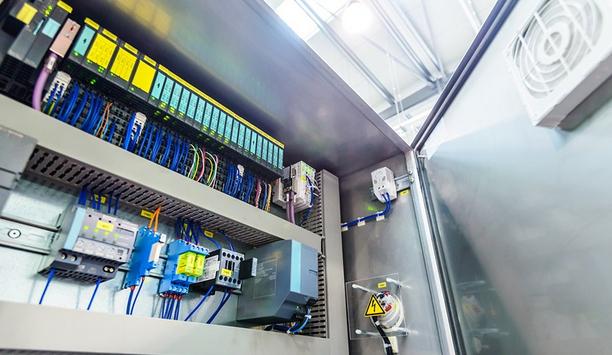
Enclosures containing electronics, communications or cabling infrastructure offer a simple attack point for cyber breaches and an opportunity for a physical attack on the hardware. Yet, many of these assets are housed within enclosures that provide minimal security features to offer a deterrent to any would-be attacker. This has always just been a pet hate. Walking down the high street of a town anywhere in the United Kingdom, you can often see open street communication cabinets. You can actual...
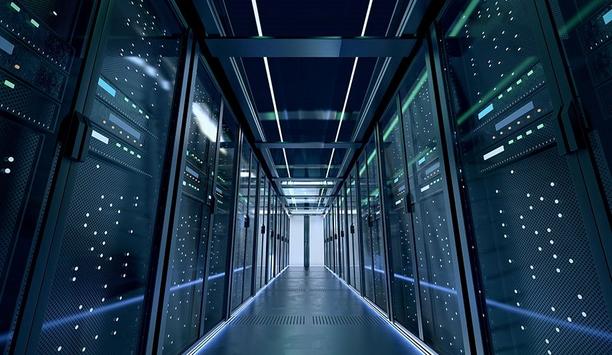
Once upon a time, providers had end-to-end control when deploying a physical security platform, which is not the case anymore when we consider the modernisation to IP. When considering the move to IP physical security, the provider needs to ensure the customer has a robust PoE backbone to connect the IP security device back to the application. Network readiness requirements have complicated IP security deployments, making it challenging for current providers while opening the door to new compet...

We encounter AI with increasing frequency, both online and in the media. AI has penetrated deep into various aspects of our lives, from TV sets that improve picture quality using AI, or air conditioners with automatic temperature and humidity control, to investment management services that predict return rates. AI technology first appeared in the 1950s and was briefly revived in the 1980s before falling off the radar. In the late 2000s, AI re-emerged and went on to become a key technology and d...

For decades, cable theft has caused disruption to infrastructure across South Africa, and an issue that permeates the whole supply chain. Here, Ian Loudon, international sales and marketing manager at remote monitoring specialist Omniflex, explains how new cable-alarm technology is making life difficult for criminals and giving hope to businesses. In November 2020, Nasdaq reported that, “When South Africa shut large parts of its economy and transport network during its COVID-19 lockdown,...

Supermarket employees have been the hidden key workers of the past year, keeping shelves stocked and queues under control as panic buying gripped the nation. As a result of being expected to enforce face covering and social distancing regulations, they also been asked to act as de-facto security guards alongside their existing duties. This is problematic as many employees have never had to deal with this kind of responsibility before, let alone received any conflict de-escalation training. In o...

The sound of sirens in the distance is commonplace, nowadays. Whether related to a medical emergency or everyday crimes, such as theft, property crimes, and so on, we’re all accustomed to hearing these sirens by now. It is worth noting that many incidents that police respond to take place at night. According to a recent report by the Sleep Judge, more than half of murders, manslaughter, sexual assaults, robberies, aggravated assaults and motor vehicle thefts happen long after the sun has...

While the application of facial recognition within both public and private spheres continues to draw criticism from those who see it as a threat to civil rights, this technology has become extremely commonplace in the lives of iPhone users. It is so prevalent, in fact, that by 2024 it is predicted that 90% of smartphones will use biometric facial recognition hardware. CCTV surveillance cameras Similarly, CCTV is a well-established security measure that many of us are familiar with, wheth...

Since the start of the pandemic, almost a quarter of UK businesses have been forced to temporarily close, pause trading, or work remotely, with very little notice. Now nearing the 12th month of the crisis, the country is currently enduring its third national lockdown, with an unspecified timeframe. Most workers are being urged to remain at home and only venture out for essential travel. This means a huge number of premises across the board, from recreational venues such as theatres, pubs and le...

Like most industries, the fields of security, access and safety have been transformed by technology, with AI-driven automation presenting a clear opportunity for players seeking growth and leadership when it comes to innovation. In this respect, these markets know exactly what they want. They require solutions that accurately (without false or negative positives) classify and track people and/or vehicles as well as the precise location and interactions between those objects. They want to have a...

Urban populations are expanding rapidly around the globe, with an expected growth of 1.56 billion by 2040. As the number of people living and working in cities continues to grow, the ability to keep everyone safe is an increasing challenge. However, technology companies are developing products and solutions with these futuristic cities in mind, as the reality is closer than you may think. Solutions that can help to watch over public places and share data insights with city workers and officials...

Several major players vigorously employ biometric recognition technologies around the globe. Governments use biometrics to control immigration, security, and create national databases of biometric profiles. Being one of the most striking examples, the Indian Aadhaar includes face photos, iris, and fingerprints of about 1.2 billion people. Financial institutions, on their part, make use of biometrics to protect transactions by confirming a client's identity, as well as develop and provide servi...
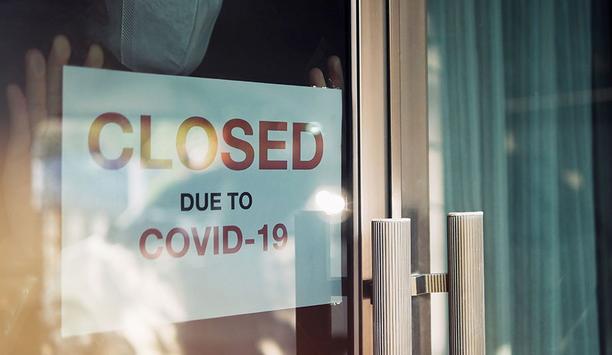
It's a very common purchase for people to seek a smart security camera to remotely link them to their home whilst at work. Now the emphasis has shifted, with a lot more people working from home, business owners should consider a surveillance device to deter would-be thieves, protecting valuable equipment crucial for businesses to operate successfully. A robust security camera setup can aid existing security staff, and give business owners peace of mind out of h...

As the multi-billion-dollar market for artificial-intelligence-based video analytics continues to grow, so does the number of video analytics solution providers. In Q3 of 2018, Stockholm-based consulting company Memoori identified 128 active companies in the supply chain for AI video analytics [i]. This list is far from exhaustive, considering how analytics has been gaining interest and becoming mainstream in 2020, with users expecting more accurate alerts based on object detection instead of m...
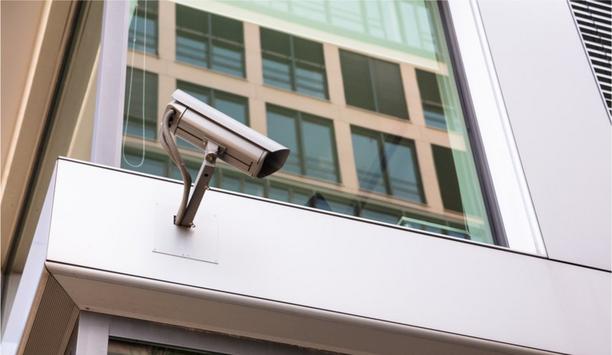
Security and surveillance applications require accurate, scalable, and cost-effective solutions. However, traditional security technologies pose many risks and challenges including frequent false alarms and high costs—both for system installation and ongoing maintenance. Because of the shortcomings of these technologies, many organisations have adopted 3D LiDAR-based security solutions to improve reliability, reduce false alarms, and streamline their operations. Integrated with cameras a...

The only constant theme for video technology is its constant evolution. Over the last 40 years, cameras have gone from limited view, constantly monitored rarities to being one of the most populous Internet of Things (IoT) devices with a global reach. Fixed cameras with limited fields of view have been augmented with panoramic cameras with 180- and 360-degree viewing capabilities at ultra-high resolutions in the 4K and 8K ranges, a far cry from the grainy, monochrome viewing of the past. Threa...

Technology has played a vital role in how businesses have enabled their employees to work productively from home during the COVID-19 pandemic. For those of us who can do our jobs from home you only have to look at the ‘Zoom Boom’ to see how much our working lives have changed compared to the beginning of the year. Despite the fact that those companies that can are now productively and efficiently operating remotely, the country is now facing the next challenge in this crisis: how to...

News reports and opinion columns about face recognition are appearing everyday. To some of us, the term sounds overly intrusive. It even makes people shrink back into their seats or shake their head in disgust, picturing a present-day dystopia. Yet to others, face recognition presents technology-enabled realistic opportunities to fight, and win, the battle against crime. What are the facts about face recognition? Which side is right? Well, there is no definitive answer because, as with all powe...

Security managers, installers and integrators look into a wide variety of factors when selecting a remote video monitoring receiving centre to provide continued real-time surveillance of their sites. But there’s one factor which isn’t often taken into consideration, when it really should be. That’s the welfare of the CCTV operators who are tasked with responding to alarms and ensuring on-site incidents are dealt with appropriately. The fact is, in most UK monitoring centres th...

Imagine a home surveillance camera monitoring an elderly parent and anticipating potential concerns while respecting their privacy. Imagine another camera predicting a home burglary based on suspicious behaviors, allowing time to notify the homeowner who can in turn notify the police before the event occurs—or an entire network of cameras working together to keep an eye on neighborhood safety. Artificial Intelligence vision chips A new gen of AI vision chips are pushing advanced capabili...

Today, the world is connected like never before. Your watch is connected to your phone, which is connected to your tablet and so on. As we’ve begun to embrace this ‘smart’ lifestyle, what we’re really embracing is the integration of systems. Why do we connect our devices? The simplest answer is that it makes life easier. But, if that’s the case, why stop at our own personal devices? Connection, when applied to a business’ operations, is no different: it lowe...

Rodrigue Zbinden, CEO at Morphean, discusses the business benefits from merging video surveillance and access control technologies as demand for ACaaS grows. The big question facing businesses today is how they will use the data that they possess to unlock new forms of value using emerging technologies such as the cloud, predictive analytics and artificial intelligence. Some data is better utilised than others: financial services were quick to recognise the competitive advantages in exploiting...

There’s a lot of hype around the term ‘digital transformation.’ For some, it’s the integration of digital technology into everyday tasks. For others, it’s the incorporation of innovative processes aimed at making business optimisation easier. In most cases, digital transformation will fundamentally change how an organisation operates and delivers value to its customers. And within the security realm, the age of digital transformation is most certainly upon us. Tech...

The healthcare sector is a crucial part of a functioning society as it provides life-saving care and reassurance to the population. A key part of ensuring the professionals in this industry have the best work environment is the ongoing security of the facilities. Overcoming environmental challenges Hospitals are challenging environments for security integrators. There is little room for mistakes because staff, patients and assets cannot be compromised. Medical centres and their facilities can...
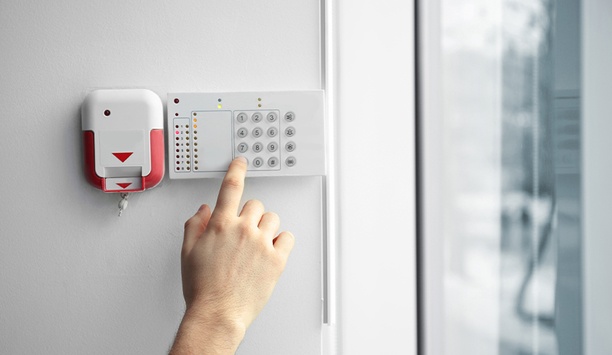
Across the country, law enforcement officers are finding it increasingly difficult to respond to the near overwhelming number of calls coming from security alarms. Police departments commonly define a false alarm as a call, which upon investigation, shows no evidence of criminal activity, such as broken windows, forced doors, items missing, or people injured. While false alarms bog down police, they can also negatively impact customers and integrators. End users can expect hefty fines for fals...

In my coverage of China Tariffs impacting the security industry over four recent articles, products on the tariff schedules routinely integrated into security solutions included burglar and fire alarm control and transmission panels, video surveillance lenses, HDTV cameras used for broadcast use cases and fiber optic media converters. The general ‘callout’ of ADP (Automatic Data Processing) devices and peripherals technically includes servers, workstations and microcomputers, all o...

The security marketplace is talking about a lot of different subjects. Our website’s Expert Panel Roundtable discussions in 2018 reflected some of the “hot topics” in the industry. The very most-clicked-on Expert Panel Roundtable discussion in 2018 was about privacy issues and GDPR’s impact on physical security systems. Other hot topics that made the Top-10 list of roundtable discussions included obstacles to adoption of mobile credentials, what’s new “...

Governments and corporations face crisis events every day. An active shooter terrorises a campus. A cyber extortionist holds a city for ransom. A hurricane washes away a key manufacturing facility. Not all critical events rise to the level of these catastrophic emergencies, but a late or inadequate response to even a minor incident can put people, operations and reputations at risk. Effective response plan In 2015, for example, the City of Boston experienced several record-breaking snowstorms...

Security technologies promote real-time awareness in K-12 schools
Download
Technology's role in securing banks and financial institutions
Download
Integrated systems enable critical and compliant security for transportation
Download
Modernising physical access control
Download
Access. Intrusion. One estate.
Download
