Security software - Round table discussions

The cloud fundamentally changes how organisations acquire and use technology, offering a powerful mix of financial, operational, and strategic advantages that traditional on-premises infrastructure cannot match. Specific to physical security systems, there are additional advantages transforming how technologies and systems are delivered to customers. We asked our Expert Panel Roundtable: Which factors are driving the deployment of cloud-based systems in physical security?

Future-proofing your skillset is about embracing continuous learning and developing a versatile set of competencies that remain valuable regardless of technological shifts or industry changes. In the security marketplace, it is not about predicting the exact jobs of the future, but rather equipping yourself to adapt and thrive in the uncertain security landscape. But where to begin? The emerging technology shifts in the security industry provide clues, such as the growing importance of cybersecu...

Access control, video surveillance, and intrusion detection systems evolved largely independently in the physical security industry. Integrating those systems to the benefit of an enterprise's overall security has traditionally fallen on security integrators working in cooperation with manufacturers. However, today's market has also evolved to include companies that provide "unified platforms,” bringing together various disparate security systems and functions under a single, centralised...

In the physical security marketplace, artificial intelligence (AI) has evolved beyond the novelty phase. The emphasis has now shifted to the more practical aspects of implementing AI technology. That a system implements AI is no longer impressive in and of itself. The question becomes: What can this AI system do for me? How can it improve my physical security stance? We asked our Expert Panel Roundtable: How is artificial intelligence (AI) transforming physical security?

In many cases, architectural design and layout dictate optimal placement of security devices like cameras, access control readers, and sensors. Poor design can lead to blind spots, reduced coverage, and ineffective surveillance. However, planning that involves all the various stakeholders can maximise both security and design elements. We asked this week’s Expert Panel Roundtable: When are building design and physical security systems complementary? When are they at odds?
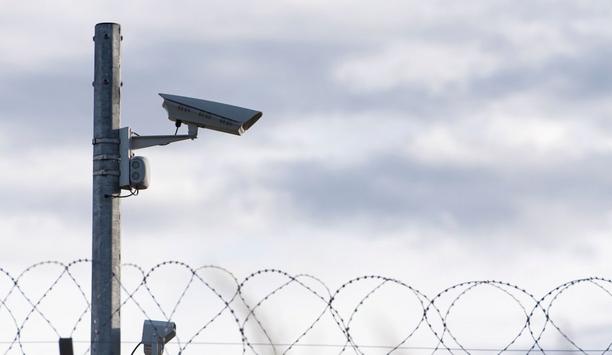
Physical security technologies are a prominent tool used by correctional facilities to provide a safe, secure, and controlled environment for staff, inmates, and the wider community. Among several functions, security technologies are used to prevent unauthorised access, to detect contraband, to monitor inmate movements and activities, and to protect staff. For security technology manufacturers, integrators and consultants, the corrections market presents distinctive challenges. We asked our Expe...

If recent physical security events are a guide, the topic of artificial intelligence (AI) will be everywhere at the upcoming ISC West 2025 exhibition in Las Vegas. Cybersecurity solutions are another core focus at today's physical security events, and ISC West will likely follow the trend. Attendees will also be looking for advancements in access control systems, including biometric technologies and integrated security platforms, among other hot topics. We asked our Expert Panel Roundtable: What...

2024 was a year of significant challenges and remarkable progress in a world that is more interconnected than ever. Global collaboration continues to point the way toward continuing progress in multiple industries, including physical security. In 2024, technology continued to transform the way we connect and cooperate, driven by new technologies such as artificial intelligence (AI) and blockchain. We asked our Expert Panel Roundtable: How did the security marketplace “change for the better...

Trust is the foundation of successful relationships between buyers and sellers in the security marketplace. Trust facilitates collaboration, reduces risk, improves decision-making, and ultimately drives business growth and profitability. Transactions often involve significant investments, and trust minimises the perceived risk for buyers, making them more likely to commit to a purchase. Our Expert Panellists weigh in on the subject of trust in response to this week’s Roundtable: A security...

By all accounts, technology development is moving at a rapid pace in today's markets, including the physical security industry. However, market uptake of the newest technologies may lag, whether because of a lack of clear communication or not enough education of potential customers. We asked this week's Expert Panel Roundtable: How can the industry do a better job of promoting emerging technologies in physical security environments?

The hospitality industry drives economic growth and development by creating jobs, generating revenue, and initiating a ripple effect to improve profitability throughout the supply chain. The hospitality industry includes a vast number of small businesses, including hotels and restaurants. But what are the security challenges of these businesses, and how is the security marketplace serving those needs? We asked this week's Expert Panel Roundtable: How can technology address the security challenge...

Retaining top talent is a route to bring innovative ideas and creative solutions to a company. Talent drives product development, improves processes, and helps businesses stay ahead of the competition. In essence, retaining top talent is essential for businesses to remain competitive, innovative, and successful. Unfortunately, staffing shortages are a reality for many corporate players in the security industry, as well as throughout the business community. We asked this week's Expert Panelists:...

Direct costs such as purchase price and maintenance are important elements in the total cost of ownership (TCO). However, there are others. Elements such as opportunity costs of lost revenue or hidden costs of energy consumption and environmental consequences can also impact the measure of TCO. Costs of training, integration, support, and scalability can also be examined. Considering the security industry impact of TCO, we asked this week's Expert Panel Roundtable: How does/should total cost of...

By linking human resource (HR) systems to physical security, access control systems can automatically update permissions based on employee changes, such as promotions, terminations, or department transfers. In fact, connecting HR and information technology (IT) systems to physical security can provide many significant benefits in terms of access control, incident response, compliance, cost savings, and employee experience. We asked this week’s Expert Panel Roundtable: How can organisations...
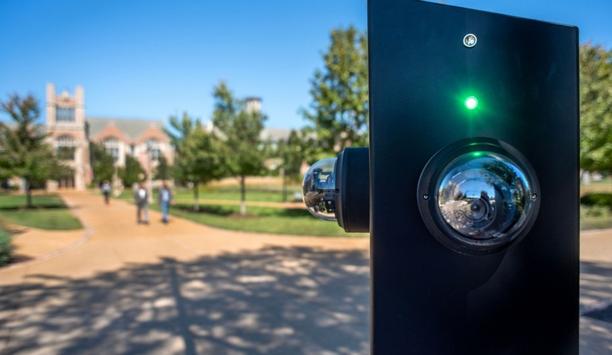
College campuses are meant to be places of learning, growth, and community. Fostering such an environment requires the deployment of policies and technologies that ensure safety and security. Considering the growing role of security technology in the higher education market, we asked this week’s Expert Panel Roundtable: What are the new applications for security technology in the college and university markets?
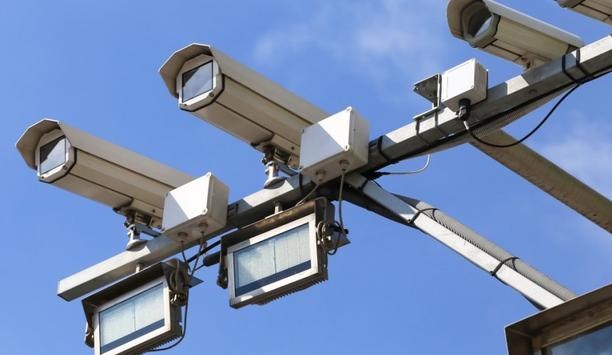
Transportation enables the movement of goods and people, facilitates trade and commerce, and is crucial for businesses to operate and expand. Security technology plays a major role both in protecting today's various transportation systems and increasingly to make them more efficient. We asked this week's Expert Panel Roundtable: What’s new in technology serving the transportation market?

Audio might detect sounds like breaking glass or footsteps before a person even enters the field-of-view of a video camera. Audio also helps to provide context: Someone running in a video image might be suspicious, but the situation is different if they are yelling for help. Furthermore, audio enables operators to talk remotely to people on site, which can deter crime, de-escalate situations, or gather information. And yet, optimising audio is often an overlooked aspect of physical security syst...

Factors such as stable demand and large contracts make the government market particularly enticing for security companies and professionals. However, entering and thriving in the government market presents a number of challenges. We asked this week's Expert Panel Roundtable: What are the unique aspects of the government market, and how should the industry adapt?

When it comes to protecting the environment, the security industry has historically been perched on the sidelines. For instance, the amount of electricity that physical security systems use is minimal when compared to the total energy usage in a typical building. However, as awareness of environmental issues has surged, and as some of the "low-hanging fruit" has been harvested, attention has come back to opportunities for additional, if small, savings. The lifecycles of security products are als...

Technological leaps in the last several decades have revolutionised biometrics. The technologies are constantly evolving, spanning facial recognition to iris scanning to fingerprints, to provide new levels of security and convenience. Biometrics are everywhere, from smartphones to border control, constantly evolving to meet the needs of our increasingly digital world. They are also more accurate and easier to use than ever. We asked this week's Expert Panel Roundtable: What’s new with biom...

In the complex world of physical security systems, standards can enable disparate systems to be combined to function together as a cohesive whole. Standards help to ensure that all the “pieces” fit together to create a clear, unified picture. More broadly speaking, standards also play a role in ensuring best practices are deployed in a range of security-related situations. We asked this week’s Expert Panel Roundtable: Which standards have had the greatest positive impact...

There is a complex and interdependent relationship between security and productivity. Good security is needed to make productivity possible, but security measures could, in some instances, hinder workplace efficiency. New technologies are enabling security systems to have a more profound and positive impact on productivity by yielding better intelligence to guide the improvement of workplace practices. Multiple systems that work together, rather than separately, improve the productivity of secur...
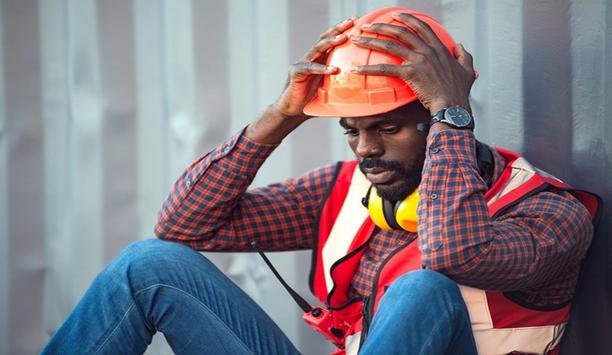
There is safety in numbers, or so the expression goes. Generally speaking, several employees working together tend to be safer than a single employee working alone. Even so, some environments require that workers complete their jobs alone, thus presenting a unique combination of security vulnerabilities. The U.S. Occupational Safety and Health Administration (OSHA) defines a lone worker as “an employee working alone, such as in a confined space or isolated location.” We asked this we...
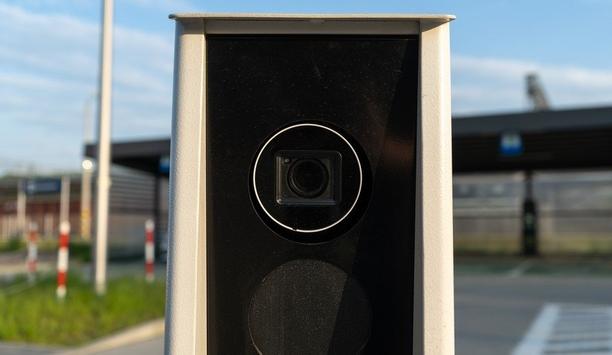
In the United States, they are called licence plate recognition (LPR) systems. In Europe, the more common term is automated licence number-plate recognition (ANPR). In either case, the systems provide capabilities that can benefit a range of applications from schools to municipalities to parking lots. Newer technologies can even identify vehicle colour, type, make and model. We asked this week’s Expert Panel Roundtable: What's new with licence plate recognition (LPR) and/or automated numbe...

Video storage has come a long way since rooms full of VCRs stored video from an entire system of cameras. Video storage equates to data storage, and there are multiple options ranging from hard disk storage to the cloud to storage on each individual camera using SD cards. Increasingly, cloud-based storage is an attractive option to store video footage conveniently and safely. We asked this week’s Expert Panel Roundtable: How is expansion of video storage capabilities impacting the security...

Headlines of violence in our schools are a reminder of the need to keep educational institutions safe. In fact, if there is a positive aspect to the constant bombardment of headlines, it is that it keeps our attention perpetually focused on how to improve school security. But what is the role of physical security systems? As the new school year begins, we asked this week’s Expert Panel Roundtable: Are schools safer because of physical security systems? Why or why not?

As physical security technologies become more complex, it is incumbent on the dealer/integrator to have the skills and expertise needed to ensure that a system operates smoothly. The value of integrators increasingly rests on the skill sets they bring to bear when installing a system. If the skills are missing, there is a problem. We asked this week’s Expert Panel Roundtable: What missing skills among security integrators can cause problems for customers?

Driving the smart homes market is the convenience of simple technology solutions. Almost every home now has a “smart speaker” that makes it easier than ever for homeowners to interface and control their technology. But where does security fit into the new landscape of smart home systems? We asked this week’s Expert Panel Roundtable: What’s new in smart homes and residential security systems?

Historically, the emphasis of security systems has been on reactivity, whether it’s providing video evidence of an incident or data to support a resulting investigation. Reactivity is core to impactful security, but increasingly, systems are also seeking to be more proactive. A proactive system seeks to prevent events from happening in the first place, thus mitigating the harm to an organisation, and making the need for a reactive response moot. We asked this week’s Expert Panel Roun...

The role of the integrator/installer in the physical security marketplace is shifting as technologies evolve and applications expand. Integrators are being faced with a need to augment their expertise both in a wider range of systems and deeper into the specifics of each increasingly complex technology. At the end of the day, it falls to the integrator/installer to ensure a system performs as promised, however much a consultant or even a manufacturer might be involved in the process. We asked th...

Technology's role in securing banks and financial institutions
Download
Security technologies promote real-time awareness in K-12 schools
Download
Integrated systems enable critical and compliant security for transportation
Download
Modernising physical access control
Download
Access. Intrusion. One estate.
Download
