Radio frequency Identification - Round table discussions

Like other disciplines in the world of corporate security, executive protection is evolving from reactive to proactive. Unlike reactive bodyguards, modern executive protection professionals use a proactive approach focused on risk mitigation, advance planning, and threat intelligence to prevent incidents before they happen. What is the role of technology? We asked our Expert Panel Roundtable: How can physical security technology promote better executive protection?

Adequate video surveillance coverage depends entirely on a facility's layout, square footage, and security goals. Historically, better coverage required more cameras, but technology innovations are changing those expectations and undermining previously held rules of thumb. We asked our Expert Panel Roundtable: Do today's video systems generally require more cameras or fewer cameras, and why?

At mid-year 2026, the broader economy tells a story of resilience under pressure. Conflict in the Middle East has triggered a shock to the energy supply, driving oil prices up and reigniting global inflation. However, a total downturn has been averted. Exceptional, historic levels of business investment and data centre construction are providing a firm floor for growth, offsetting cooler consumer spending and keeping labour markets fundamentally stable. But how are changing economics impacting t...

In the simplest terms, technology modernisation accelerates when older systems become too expensive to maintain or fail to support modern standards. Market competition pushes businesses to update their technologies to meet rising customer demands. Additionally, the rapid shift toward cloud-based infrastructures and artificial intelligence creates a fear of missing out, forcing companies to adapt or risk irrelevance. Focusing on the physical security market, we asked our Expert Panel Roundtable:...
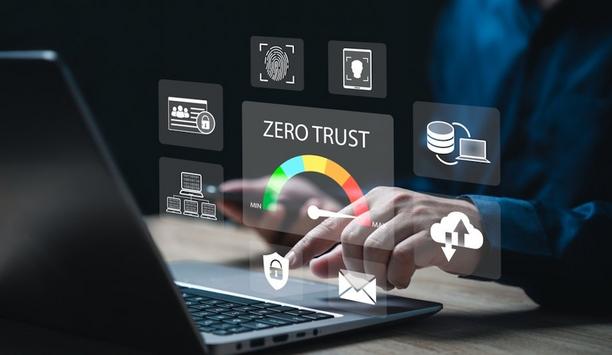
Traditional security models protected a perimeter like a castle moat, assuming anyone inside was safe. Zero trust removes that implicit trust entirely, recognising that threats can exist both outside and inside a facility. Zero trust is a routine and accepted concept in cybersecurity. Given the importance of information technology and the increasing convergence of physical and logical security, the tenet is becoming a dominant principle in physical security, too. We asked our Expert Panel Roundt...

Artificial intelligence (AI) transforms physical security from a passive, reactive function into an autonomous, proactive one. Rather than just alerting human guards after an event, new systems driven by intelligent agents analyse, decide, and act in real time—handling routine deterrence, investigating anomalies, and reducing alarm fatigue. We asked our Expert Panel Roundtable: What is agentive (or agentic) AI and how is it changing physical security?
False alarms are the security industry's oldest and most persistent challenge. Industry estimates suggest that as many as 95% to 98% of security system activations are non-emergencies. The high rate stems from a combination of human behaviour, environmental triggers, and technical limitations. However, newer technologies are finally addressing the challenge of false alarms. We asked our Expert Panel Roundtable: What are the new solutions to security's oldest challenge, reducing false alarms?
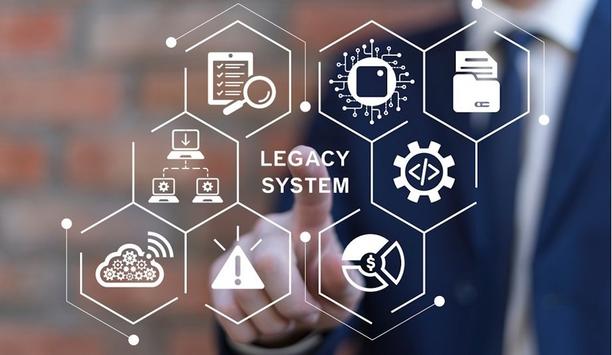
Modernising a legacy physical security system requires a transition from isolated, hardware-dependent silos to an integrated, data-driven ecosystem. This transition involves shifting toward open architecture and encrypted communication to ensure long-term scalability and resilience. Other elements to facilitate upgrading a legacy system include leveraging cloud and hybrid topologies and ultimately moving toward more predictive analytics. Our Expert Panelists offer plenty of ideas for making the...

ISC West (International Security Conference & Exposition), March 25–27, 2026, at The Venetian Expo in Las Vegas, is widely regarded as the most important event in the security industry. The yearly exhibition serves as the primary launchpad for new technology and as the central meeting point for global security professionals. We asked our Expert Panel Roundtable: What will be the big topics of discussion at ISC West 2026?

When working in the technology marketplace, it’s always good to expect the unexpected. Increasingly, readiness to anticipate and embrace uncertainty is the baseline for survival in the world of technology. If we in the physical security industry know anything, it is that technology is in a state of perpetual disruption. Therefore, looking ahead to the next 12 months, surprises are inevitable. We turn to our Expert Panel Roundtable for guidance, asking our panelists: What will be the bigges...

Physical security innovation is accelerating due to the convergence of AI-driven automation and IoT connectivity. The trend makes you wonder: How far will physical security technologies evolve in the next decade? Already, modern systems are shifting from reactive recording to proactive prevention via real-time analytics. Additionally, the need for hybrid cloud scalability and integration with IT infrastructure is driving rapid hardware-to-software modernisation. We asked our Expert Panel Roundta...

In the past, security installers and integrators were used almost exclusively to install hardware. However, the role is changing and expanding along with the technologies used in the physical security industry. Nowadays, an installer or systems integrator is much more likely to use a strategic, IT-centric, and data-driven approach. To gain additional insights, we asked our Expert Panel Roundtable: How is the role of the security installer/integrator changing?

Suddenly, artificial intelligence (AI) is everywhere. The smart technology brings a range of benefits to our lives, from streamlining everyday tasks to making scientific breakthroughs. The advantages of AI and machine learning (ML) also include automating repetitive tasks, analysing vast amounts of data, and minimising human error. But how do these benefits apply to the physical security industry, and is there a downside? We asked this week’s Expert Panel Roundtable: What are the benefits,...

Technological leaps in the last several decades have revolutionised biometrics. The technologies are constantly evolving, spanning facial recognition to iris scanning to fingerprints, to provide new levels of security and convenience. Biometrics are everywhere, from smartphones to border control, constantly evolving to meet the needs of our increasingly digital world. They are also more accurate and easier to use than ever. We asked this week's Expert Panel Roundtable: What’s new with biom...

Video storage has come a long way since rooms full of VCRs stored video from an entire system of cameras. Video storage equates to data storage, and there are multiple options ranging from hard disk storage to the cloud to storage on each individual camera using SD cards. Increasingly, cloud-based storage is an attractive option to store video footage conveniently and safely. We asked this week’s Expert Panel Roundtable: How is expansion of video storage capabilities impacting the security...

Headlines of violence in our schools are a reminder of the need to keep educational institutions safe. In fact, if there is a positive aspect to the constant bombardment of headlines, it is that it keeps our attention perpetually focused on how to improve school security. But what is the role of physical security systems? As the new school year begins, we asked this week’s Expert Panel Roundtable: Are schools safer because of physical security systems? Why or why not?

As physical security technologies become more complex, it is incumbent on the dealer/integrator to have the skills and expertise needed to ensure that a system operates smoothly. The value of integrators increasingly rests on the skill sets they bring to bear when installing a system. If the skills are missing, there is a problem. We asked this week’s Expert Panel Roundtable: What missing skills among security integrators can cause problems for customers?

Driving the smart homes market is the convenience of simple technology solutions. Almost every home now has a “smart speaker” that makes it easier than ever for homeowners to interface and control their technology. But where does security fit into the new landscape of smart home systems? We asked this week’s Expert Panel Roundtable: What’s new in smart homes and residential security systems?

Historically, the emphasis of security systems has been on reactivity, whether it’s providing video evidence of an incident or data to support a resulting investigation. Reactivity is core to impactful security, but increasingly, systems are also seeking to be more proactive. A proactive system seeks to prevent events from happening in the first place, thus mitigating the harm to an organisation, and making the need for a reactive response moot. We asked this week’s Expert Panel Roun...

The role of the integrator/installer in the physical security marketplace is shifting as technologies evolve and applications expand. Integrators are being faced with a need to augment their expertise both in a wider range of systems and deeper into the specifics of each increasingly complex technology. At the end of the day, it falls to the integrator/installer to ensure a system performs as promised, however much a consultant or even a manufacturer might be involved in the process. We asked th...

Deployed across a wide range of devices, the Internet of Things (IoT) collects data to help business owners make decisions on a macro scale as well as at a granular level. The IoT is a network of physical devices embedded with sensors, software, and network connectivity that allows them to collect and share data. We called on this week's Expert Panel Roundtable to comment on the intersection of the IoT and physical security. We asked: How is the Internet of Things (IoT) increasing the effectiven...

Analogue video cameras are still used in a variety of applications, primarily because yesterday’s robust and flexible technology is still functioning today, although it has been years, or even decades, since the initial installation. In many cases, this past generation of security cameras is still reliable and effective. Embracing an installed base of analogue cameras is often the most cost-effective approach when updating or expanding a surveillance system. But what about the futur...

Sharing data between security and building management devices can provide a route to maximise building usage and minimise costs. In today's Internet of Things (IoT) environment, tying together a variety of systems is easier than ever. For an update, we asked this week's Expert Panel Roundtable: What are the benefits of integrating security technology with building management systems (BMS)?

Time flies in the busy world of security, so it’s no surprise that the midpoint of 2023 comes before know it. Let’s pause after the first half of the year to look ahead at what can expect during the second half (Hint: It’s all about AI). We asked this week’s Expert Panel Roundtable: What will likely be the most important technology development in the security marketplace in the second half of 2023?

Risk is a core concept in the practice of physical security. However, the risk is not always assessed effectively. Ideally, an organisation's appetite for risk guides its security strategy and action planning to the minutest detail, including buying decisions for security equipment and systems. We asked this week's Expert Panel Roundtable: How does the concept of risk influence buying decisions in the security market?

A sad irony in the physical security industry has been the lax attention paid historically to the cybersecurity elements of our industry’s systems. However, the picture has improved starkly in recent years as manufacturers have stepped up to meet the cybersecurity challenges and awareness of the issue has become much higher. We asked this week’s Expert Panel Roundtable: What's new in cybersecurity for physical security systems?

Environmental, social, and corporate governance (ESG) standards in the broader marketplace reflect a growing recognition that business needs to lead the way in addressing a range of environmental and social issues. Environmental concerns, especially as they impact climate change, are a familiar facet of business life. In addition, social concerns include human rights and equity; basically, an organisation's relationships with people. Governance refers to the structure of rules, practices, and pr...

Every security system is unique, of course. Specific to each installation are the problems the customer and the integrator may experience along their journey. However, given the installation of hundreds of physical security systems, there are commonalities that occur. We asked this week’s Expert Panel Roundtable: What are the major pain points when installing a physical security system?

The return of trade shows has been an invigorating development for the security market. The morning-after reviews of this year's shows could not have been more positive. Everyone in the industry seemed to revel in the excitement and momentum as the shows decisively proclaimed: 'We're back.' Continuing that momentum into the future will depend on how well the shows adapt to changing industry trends and repeatedly reinvent themselves to be better every year. Adding feedback from GSX to our earlier...

Faces captured by video cameras could be perceived as an invasion of privacy, as could images captured through residential windows or that involve private or proprietary information. Fortunately, modern video systems incorporate technological features that help avoid an inadvertent invasion of privacy, while preserving any data that may be needed by authorized persons. For the latest commentary, we turn to our Expert Panel Roundtable with this week’s question: What new features of video sy...

Technology's role in securing banks and financial institutions
Download
Security technologies promote real-time awareness in K-12 schools
Download
Integrated systems enable critical and compliant security for transportation
Download
Modernising physical access control
Download
Access. Intrusion. One estate.
Download
