Verkada Inc. - Experts & Thought Leaders
































Latest Verkada Inc. news & announcements

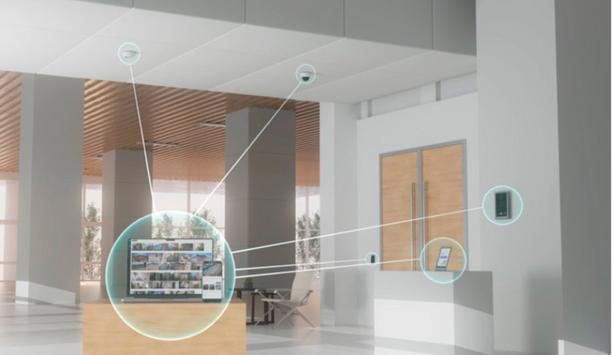
Verkada, a pioneer in physical security and operations, announces that the Miami Dolphins and Hard Rock Stadium adopted its platform to enhance fan safety and security. Hard Rock Stadium's new Verkada deployment unifies video security, access control, guest management, intercoms and alarms into a single, cloud-based platform that enables its team to streamline security operations at the scale and speed that the 65,585-seat venue demands. "As a world-class venue hosting global events year-round, we prioritise solutions that align with the scale and pace of our operations," said Sameer Istafa, Chief Technology Officer for the Miami Dolphins and Hard Rock Stadium. "Verkada's unified platform provides a seamless, connected operating environment that supports our focus on delivering a consistent, elevated experience for our fans at every event." Resource-intensive maintenance costs Verkada's unified platform gives Hard Rock Stadium's team: Faster response during high-pressure moments. Activity-based detection and intelligent alerts provide teams with greater visibility into activity across Hard Rock Stadium, enabling faster, more informed responses when needed. Proactive perimeter coverage. Advanced detection tools enable Hard Rock Stadium to take a proactive approach to monitoring the stadium's exterior and surrounding areas, flagging unusual activity before it escalates. Streamlined access across a large campus. Verkada's cloud-managed access credentials replace physical keys and disconnected badge systems. With all door events logged, Verkada's platform can flag anomalies. Flexibility across a wide range of events. In addition to the Miami Dolphins, Hard Rock Stadium hosts college football games, concerts, and other global events – and each event has a different footprint and different security needs. Verkada enables the Hard Rock Stadium team to tailor protocols event-by-event without new infrastructure. Lower infrastructure costs. Moving onto Verkada's cloud-based platform is expected to save Hard Rock Stadium on time- and resource-intensive maintenance costs, with new features delivered automatically through software updates. Insight into operational efficiency. Visual intelligence from Verkada's platform provides insight into occupancy trends that can enable operations teams to reduce bottlenecks and adjust staffing in real-time. World-class experience "Hard Rock Stadium can swing from hundreds of employees and vendors on a weekday to more than 65,000 fans in a matter of hours," said Filip Kaliszan, co-founder and CEO of Verkada. "Verkada is built to handle this kind of complexity, with one unified platform that keeps pace with an operation that never stays still. We're proud to provide solutions that help keep fans, athletes and entertainers who visit Hard Rock Stadium safe – and to give the team behind these legendary events the tools they need to keep delivering a world-class experience." Video security infrastructure Hard Rock Stadium worked with Castaway Technology and Security (CTS) to support its Verkada deployment and implementation across the campus. CTS used Verkada's Command Connector to bring Hard Rock Stadium's existing video security infrastructure into the new platform during the migration period, ensuring a smooth transition and letting security teams work from Verkada's platform from day one. "Hard Rock Stadium is a marquee venue that demands a security infrastructure to match. Our goal was to help them transition to a more agile and integrated ecosystem. With Verkada, we were able to deliver a truly end-to-end solution that eliminates technical friction, allowing the security team to focus entirely on maintaining a safe, premier experience for every fan," said Craig Bruce, co-founder at CTS.

Verkada, a pioneer in AI-powered physical security and operations, shared the results of its 2026 State of Cloud Physical Security report. Based on a survey of more than 2,700 IT and physical security leaders across 10 global markets, the findings reveal a growing gap between organisations with on-premise physical security systems and those with cloud-based systems. Organisations with cloud-based physical security are using AI at 2.6 times the rate of those with on-premise systems. While 39% of organisations are still piloting AI features today, as the share of AI adoption increases, the gaps are poised to grow between organisations that modernise their infrastructure and those that don't. Improving broader safety Leaders recognise the importance of this shift: among organisations that aren't yet fully cloud-managed, 94% are planning a transition or already in one. Other key findings include: AI adoption in physical security is widespread, but rolling out in a phased approach. 80% of leaders say they are engaged with AI in physical security, but 39% report that they are still piloting it and 41% report they are actively using it. Organisations find value from video security investments across other operational use cases. Most organisations report they use or plan to use video security to improve broader safety and operations within their organisation, including for workplace health and safety compliance, operational efficiency, and space utilisation.

Verkada, a pioneer in AI-powered physical security and operations, announces a collaboration with NVIDIA to accelerate the development and deployment of physical AI across the built environment. NVIDIA also joins as a new investor in Verkada, following a strategic investment from Alphabet’s CapitalG at the end of last year. Verkada is applying AI to transform how schools, hospitals, retailers, manufacturers, and other organisations turn real-world operational data into actionable intelligence — helping keep people and places safe. Augment training datasets “Verkada has been building and deploying Physical AI before the term existed. With our footprint of more than 2.4 million devices across 170 countries and 30,000 organisations, we’ve proven that the built environment is one of the largest beneficiaries of AI," said Filip Kaliszan, co-founder and CEO of Verkada. "Working with NVIDIA supercharges what we've spent nearly a decade building: AI that keeps students safe in schools, protects workers on factory floors, helps retailers prevent theft, and enables organisations to operate more efficiently." Verkada is strengthening the models and data flywheel underpinning its intelligent video analytics through its collaboration with NVIDIA, advancing AI-powered video search, multimodal embeddings and vector retrieval for next-generation semantic search, and synthetic data generation to augment training datasets and improve accuracy. Accelerated model training By leveraging NVIDIA Cosmos world foundation models and NVIDIA Physical AI Data Factory, Verkada has accelerated model training and inference across its rapidly expanding global footprint on NVIDIA accelerated computing. Since the collaboration began, Verkada has improved the mean average precision (mAP) of its AI-powered search by 68% for spatial-temporal understanding, delivering faster, more accurate, and more robust search capabilities. Verkada is also developing a multi-model search agent architecture and exploring reasoning models to address complex, unstructured real-world scenarios — from identifying health and safety incidents on a manufacturing floor to detecting shrinkage in retail environments. The collaborative effort reflects Verkada’s broader focus on bringing more capable, context-aware AI to make built environments resilient and safe.
Insights & Opinions from thought leaders at Verkada Inc.

A system's lifecycle is the journey it takes from planning and design through to decommissioning. Considering the entire lifecycle of a system can encourage integrators and end users to embrace higher-quality technologies with an eye toward maximising their value over time rather than focusing on lower-priced equipment. For additional insights, we asked our Expert Panel Roundtable: How does consideration of system lifecycles impact the choice of physical security technologies?

The Internet of Things (IoT) is having a profound impact on businesses across various industries, including security. In physical security as in other business environments, the IoT is changing how systems operate, interact, and create value. In the process, the IoT is driving efficiency, reducing costs, and opening up new avenues for innovation and growth. We asked our Expert Panel Roundtable: How is the Internet of Things (IoT) transforming how security systems are deployed?

Access control, video surveillance, and intrusion detection systems evolved largely independently in the physical security industry. Integrating those systems to the benefit of an enterprise's overall security has traditionally fallen on security integrators working in cooperation with manufacturers. However, today's market has also evolved to include companies that provide "unified platforms,” bringing together various disparate security systems and functions under a single, centralised management interface. We asked our Expert Panel Roundtable: What are the advantages of installing physical security systems as a unified platform?

Technology's role in securing banks and financial institutions
Download
Security technologies promote real-time awareness in K-12 schools
Download
Integrated systems enable critical and compliant security for transportation
Download
Modernising physical access control
Download
Access. Intrusion. One estate.
Download


