SBD - Experts & Thought Leaders

Latest Secured by Design (SBD) news & announcements

DeterTech, a pioneer in intruder detection and identification, is proud to announce the immediate availability of SmartSpray® for rental or purchase. It is considered a game-changer in tackling retail crime as it enables police to forensically link masked offenders back to the scene of their crime, even weeks after they’ve left the store. Effective CCTV storage Retail crime is at its highest level on record, with over 2,000 incidents of violence and abuse per day Retail crime is at its highest level on record, with over 2,000 incidents of violence and abuse per day, reported in the British Retail Consortium’s Annual Crime Survey. A key factor is perpetrators’ feeling emboldened that they can anonymously steal, assault and abuse staff, and escape before security or police can intervene. While in-store CCTV can be effective, it is easily defeated by the most organised and violent offenders who choose to obscure their faces. SmartSpray system The SmartSpray system can be deployed standalone or integrated with the existing security system. When triggered, it releases a precise spray of SmartWater®, a forensic liquid that contains a code unique to each specific store. This glows under UV light and remains on skin and clothing for weeks, allowing police to identify suspects and pursue convictions. DeterTech’s forensic scientists DeterTech’s forensic scientists supply analysis and testimony in support of a belief DeterTech’s forensic scientists provide analysis and testimony in support of a conviction to the police and courts free of charge. Furthermore, they need only a speck smaller than the full stop at the end of this sentence to conclusively link an individual back to the scene of their crime. SmartSpray installation and servicing SmartSpray is immediately available for rental or purchase on flexible terms, including installation and servicing. DeterTech has also committed to providing unlimited refills free of charge following any activation for which a crime reference number is supplied. It is hoped this will further incentivise retailers to report all incidents to the police so that the true scale of retail crime can be nationally recognised. Cutting-edge solutions DeterTech has also committed to providing total refills free of charge BT is one of the first retailers to have deployed SmartSpray in selected stores. Richie Iwanoff, Corporate Investigations Team Manager, BT, says: “The well-being of our staff and customers is our number one priority." "We’re proud to be using cutting-edge solutions to keep them safe at all times. I sleep easier knowing criminals will think twice before targeting us”. DeterTech with businesses and communities Gary Higgins, Director of Security and Risk, DeterTech, adds: “SmartSpray has been very well received by both retailers and the police who recognise it will deter offences and help put violent criminals behind bars. It supports our purpose here at DeterTech of working with businesses and communities every day to provide greater peace of mind.” Hazel Goss, Development Officer, Secured by Design, concludes, “This is exactly the kind of collaboration we want to see from retailers, security providers, and law enforcement. Enhancing the police’s chances of unmasking offenders is vital in combating retail crime, which is sadly soaring across the country.”

2N, the global pioneer in internet-enabled intercoms and access control systems, has announced that all of its intercoms and access unit readers have become Secured by Design (SBD) accredited. UK police initiative SBD is the flagship UK police initiative to help ‘design out’ crime through high-quality, innovative products and processes. To achieve SBD status, 2N’s intercoms and access unit readers (the 2N® Access Unit 2.0 and the 2N® Access Unit M), had to adhere to rigorous test standards required by the police which assessed their resistance to forced entry. When installed along with the 2N Security Relay, all of these products have the right to carry the SBD logo. Reduced burglary rates Office for National Statistics published crime figures for England and Wales for the year up to June 2022 The announcement comes on the back of the Office for National Statistics publishing crime figures for England and Wales for the year up to June 2022. The data was encouraging when it came to burglary rates were down 28% compared with the year leading up to the start of the pandemic but warned against complacency, concluding that it was “too early to say whether these decreases represent a change in long-term trends”. SBD standards SBD standards have a tangible impact in terms of protecting against crime. In West Yorkshire, for example, research demonstrated that newly-built developments built to SBD standards were up to 75% less likely to be burgled. In Glasgow, a separate study concluded that refurbished developments employing SBD principles were up to 63% less likely to experience crime. 2N will showcase its newly-certified products at the London Build 2022 Expo, the UK's construction show, which will take place in Olympia London on 16-17 November. SBD accredited products We are very proud that our intercoms and access unit readers are now SBD accredited" Michael Nicholson, 2N’s Business Development Manager for the UK & Ireland, said, “We are very proud that our intercoms and access unit readers are now SBD accredited." He adds, "Our products are being incorporated into more big projects in the UK; Sópers House, just outside London, and Burlington House in central Manchester are recent examples and SBD certification is being requested more often, both in commercial and residential buildings." Access control Michael Nicholson adds, "It’s an objective guarantee that our products meet the highest security standards, and it will be a big advantage as we continue to grow our business in the UK.” Lyn Poole, Development Officer at Police Crime Prevention Initiative Secured by Design, said, “Access control in residential or commercial buildings needs to be fit for purpose and the fact that 2N’s products have been independently tested and certified within doorsets to police-recognised standards will help their customers feel more confident about their safety within their building when these products are installed.”

Videx has enhanced two of its door entry and access control systems, adding a new remote relay module to its 4G GSM offering and the VX2300 door entry video intercom. Art.2813 relay module The new remote relays create a more robust and secure entry system enabling all door and gate control to be isolated away from the entrance panel in a secure location. Additionally, the relays can be used for extra services such as triggering additional doors or gates, activating security lighting, or other functions requiring a relay for triggering purposes. The Art.2813 relay module is available for the Videx GSM range of systems and the Art.2313 is available for the VX2300 2 wire video system. These new relays complement the remote relays already available for the VX2200 system (Art.2213) and the IPURE IP range (Art.2505). Secured by Design initiative The modules strengthen systems versatility and ability to meet a wide range of entry requirements" Rhys McNichol, Project Manager at Videx UK, said, “The new relays make two of our most popular entry systems even more secure and enable them to be used for properties and buildings where a high level of security is required." Rhys McNichol adds, "The modules are essential for Secured by Design, the official police security initiative that works to improve the security of buildings and their immediate surroundings to provide safe places to live, work, shop, and visit. The modules are a great addition to both systems, strengthening their versatility and ability to meet a wide range of entry requirements.” Inputs and outputs The Art.2813 for the GSM range of intercom systems comes in a wall mountable small ABS plastic enclosure, powered from 12Vdc, and includes a 3A dry contact change over relay output and two additional auxiliary outputs to control up to three outputs per module. All three outputs can be individually programmed to operate from 1 to 63 seconds or in latch/toggle format. Additionally, there is a push-to-exit input included for the main relay. The module can be addressed from 0 to 63 seconds and connects to the GSM system via RS485. Proximity door reader and unique ID Addressing the module as a unique ID will allow that module to be used for additional doors, and gates Addressing the module with the same address as an intercom panel, proximity door reader or coded keypad will enable the module to mirror that module's outputs. Addressing the module as a unique ID will allow that module to be used for additional doors, and gates that do not have a keypad, proximity reader, or intercom. Outputs can then be triggered via the Videx GSM apps available free from the Apple App Store and Google Play Store or via text message. VX2300 two-wire video systems and kits The Art.2313 for the VX2300 two-wire video systems and kits comes in a DIN mount box which can also be directly wall mounted and is powered from the bus. It includes two 5A dry contact change over relays which can be individually controlled. The relay operating times can be programmed from 2 – 32 seconds and the module can be addressed from 1-15 relating to the door ID the relay is mirroring. All four relay options are ideal for high-security applications that require Secured By Design adding an extra layer of security and peace of mind to door entry and access control solutions.
Insights & Opinions from thought leaders at SBD
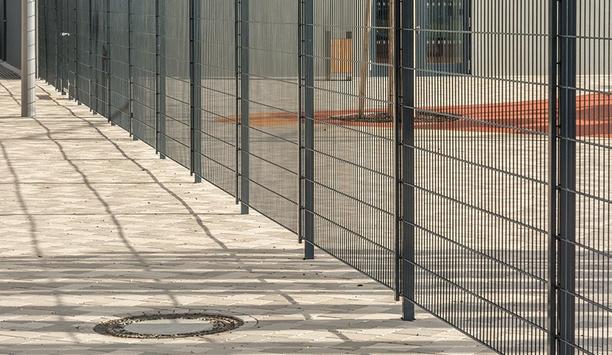
Schools were never designed and built with social distancing in mind. So it’s perhaps not surprising that as children returned to schools for the autumn term this year, the prospect of outdoor classes and assemblies was mooted in the media and by the Government. Many in the education sector are making the case that, should there be further COVID-19 outbreaks, in the coming months, it would be better to utilise outside space, rather than resort to closing schools. In the COVID-19 era, head teachers are considering taking learning and large gatherings, such as assemblies outdoors, when possible. Managing ‘class bubbles’, hygiene and ventilation While Dr. Yvonne Doyle, the Medical Director of Public Health England (PHE) has publicly reassured parents that schools are not the ‘drivers’ or ‘hubs’ of COVID-19-19 infection in communities, there is a lot of pressure on school leaders to manage ‘class bubbles’, extra cleaning and hygiene, ventilation, and COVID-19 testing, to protect families and staff. It’s a logical step to switch, in certain circumstances, to outdoor activities where fresh air is on tap, and social distancing is far easier to manage. Specially built outdoor classrooms Across the school and nursery sector, there’s ongoing investment in specially built outdoor classrooms Across the school and nursery sector, there’s ongoing investment in specially built outdoor classrooms, which had been growing in popularity, even before the pandemic. These facilities offer numerous benefits as an extension of existing learning spaces and provide children the opportunity for hands-on learning, beyond a stuffy classroom. However, if outdoor spaces are routinely called upon as part of COVID-19 contingency planning, how can schools ensure that their outdoor classrooms and wider areas are secure, robust, and fit for purpose? When specifying outdoor classrooms and learning spaces, it’s essential to take into account the well-being of the students and staff, who will use them, noise pollution and acoustics. Most importantly, education managers need to ensure the surrounding area is secured and adequately protected from threats, including terrorism. Perimeter security measures for schools How can schools and nurseries secure their perimeters, so that outdoor learning is totally safe for all? A starting point is to seek out architects and suppliers, who have a good understanding of security standards. Worryingly, Jacksons Fencing’s research recently found that only one-third of architects are seeing both LPS 1175 and the UK police initiative, Secured by Design (SBD) physical security standards, specified for schools. This highlights a lost opportunity for architects to propose solutions that are appropriate to the level of risk and needs of the school, without turning the site into an unwelcoming fortress. Helping schools identify specific security needs Head teachers would be wise to work with architects, who not only know the latest security standards inside and out, but are also are willing to play a more advisory role, helping the school identify exactly what is needed. Head teachers should prioritise solutions appropriate to their site’s specific risks It’s also vital that architects don’t simply replace existing fencing and gates, with the same security systems that have been in place for years. Instead, they will need to meet changing needs and risks. Our research finds that teachers often report issues, with the school perimeter and gates, from being climbed over (28%) and causing injury, to gates not locking properly (10%). Head teachers should prioritise solutions appropriate to their site’s specific risks, which sometimes require altering of existing measures. School fencing is an important aspect of any education site. As well as defining its boundary and making a visual distinction between public and private property, the fencing and gates that surround and secure a school, will typically meet a wide variety of other important criteria, including preventing unauthorised entry to the grounds, protecting pupils, staff, and visitors from accidents and injury, deterring theft and anti-social behaviour, and reducing the risk of malicious damage, and acts of terrorism. Welded mesh panels for perimeter fencing Popular options for schools include welded mesh panels for perimeter fencing or sports areas, and railing systems to act as demarcation, in order to control foot and car traffic. Within the outlying boundary, barriers, bollards and parking posts will keep pedestrians, and vehicles safe from each other, while timber fencing and gates can be designed to control the flow of people, around the grounds and reduce the areas, where students can be hidden from view. Automated gates and access control Perimeter fencing must be complemented with safe entrances and exits for vehicles and pedestrians. Every school has unique entry-control requirements, determined by factors, such as size, location and the local environment. These needs influence the decisions you make, when preparing technical specifications for school security gates. Do you require gates to be steel or timber, manual or automated, single or double leaf? Specialist suppliers will be in the best position to offer inputs on school gates, which typically need to offer solid security and durability, with a welcoming aesthetic. Specifying access control system When specifying a school access system, it’s important to consider the areas of the school When specifying a school access system, it’s important to consider the areas of the school, such as sports fields, car parks, and children’s play and learning areas, and whether it requires playground segregation. Selected gates should meet the design of the fencing, to create a secure perimeter with no weak points, with automated gates conforming to all current safety regulations. . Noise pollution can be a problem as well, including noise coming in or leaving the school in residential areas. If more teaching is to be carried out outside, it’s worth considering acoustic barriers to reduce noise in and around the school. Timber acoustic barriers for security and privacy Timber acoustic barriers offer security and privacy, and can reduce noise levels, by as much as 32 decibels (in laboratory conditions), so are ideal for city centre schools or those located close to busy highways. There are many ways to build an outdoor classroom. Timber products can help to create a welcoming environment, such as wooden shelters, pergolas, fencing, and decking. Always check that high quality timber, ideally guaranteed for 25 years against rot and insect attack, is being used to provide an attractive, cost-effective, safe and sustainable solution, for all weather conditions. DBS approved installers And of course, installers must be DBS approved, so that they can install outdoor classrooms, during school holidays, or within term time, with minimal disruption. The COVID-19 pandemic had a huge impact on schools and learning. While nobody wants to think of fresh outbreaks of the infection, or any other virus, installing an outdoor classroom made from high-quality, long-lasting materials is a great way to future-proof school learning and ensure safety, and preparedness. Putting extra thought and care into the security angle will provide schools with decades of protection against a host of unforeseen events.

The impact of the COVID-19 pandemic has accentuated our digital dependency, on a global scale. Data centres have become even more critical to modern society. The processing and storage of information underpin the economy, characterised by a consistent increase in the volume of data and applications, and reliance upon the internet and IT services. Data centres classed as CNI As such, they are now classed as Critical National Infrastructure (CNI) and sit under the protection of the National Cyber Security Centre (NCSC), and the Centre for the Protection of National Infrastructure (CPNI). As land continues to surge in value, data centre operators are often limited for choice, on where they place their sites and are increasingly forced to consider developed areas, close to other infrastructures, such as housing or industrial sites. Complex security needs One misconception when it comes to data centres is that physical security is straightforward One misconception when it comes to data centres is that physical security is straightforward. However, in practice, things are far more complex. On top of protecting the external perimeter, thought must also be given to factors, such as access control, hostile vehicle mitigation (HVM), protecting power infrastructure, as well as standby generators and localising security devices to operate independently of the main data centre. Face value How a site looks is more important than you may think. Specify security that appears too hostile risks blatantly advertising that you’re protecting a valuable target, ironically making it more interesting to opportunistic intruders. The heightened security that we recommend to clients for these types of sites, include 4 m high-security fences, coils of razor wire, CCTV, and floodlighting. When used together in an integrated approach, it’s easy to see how they make the site appear hostile against its surroundings. However, it must appear secure enough to give the client peace of mind that the site is adequately protected. Getting the balance right is crucial. So, how do you balance security, acoustics and aesthetics harmoniously? Security comes first These are essential facilities and as a result, they require appropriate security investment. Cutting corners leads to a greater long-term expense and increases the likelihood of highly disruptive attacks. Checkpoints Fortunately, guidance is available through independent accreditations and certifications, such as the Loss Prevention Certification Board’s (LPCB) LPS 1175 ratings, the PAS 68 HVM rating, CPNI approval, and the police initiative - Secured by Design (SBD). Thorough technical evaluation and quality audit These bodies employ thorough technical evaluation work and rigorous quality audit processes to ensure products deliver proven levels of protection. With untested security measures, you will not know whether a product works until an attack occurs. Specifying products accredited by established bodies removes this concern. High maintenance Simply installing security measures and hoping for the best will not guarantee 24/7 protection. Just as you would keep computer software and hardware updated, to provide the best level of protection for the data, physical security also needs to be well-maintained, in order to ensure it is providing optimum performance. Importance of testing physical security parameters Inspecting the fence line may seem obvious and straightforward, but it needs to be done regularly. From our experience, this is something that is frequently overlooked. The research we conducted revealed that 63% of companies never test their physical security. They should check the perimeter on both sides and look for any attempted breaches. Foliage, weather conditions or topography changes can also affect security integrity. Companies should also check all fixtures and fittings, looking for damage and corrosion, and clear any litter and debris away. Accessibility When considering access control, speed gates offer an excellent solution for data centres. How quickly a gate can open and close is essential, especially when access to the site is restricted. The consequences of access control equipment failing can be extremely serious, far over a minor irritation or inconvenience. Vehicle and pedestrian barriers, especially if automated, require special attention to maintain effective security and efficiency. Volume control Data centres don’t generally make the best neighbours. The noise created from their 24-hour operation can be considerable. HVAC systems, event-triggered security and fire alarms, HV substations, and vehicle traffic can quickly become unbearable for residents. Secure and soundproof perimeter As well as having excellent noise-reducing properties, timber is also a robust material for security fencing So, how do you create a secure and soundproof perimeter? Fortunately, through LPS 1175 certification and CPNI approval, it is possible to combine high-security performance and up to 28dB of noise reduction capabilities. As well as having excellent noise-reducing properties, timber is also a robust material for security fencing. Seamlessly locking thick timber boards create a flat face, making climbing difficult and the solid boards prevent lines of sight into the facility. For extra protection, steel mesh can either be added to one side of the fence or sandwiched between the timber boards, making it extremely difficult to break through. A fair façade A high-security timber fence can be both, aesthetically pleasing and disguise its security credentials. Its pleasant natural façade provides a foil to the stern steel bars and mesh, often seen with other high-security solutions. Of course, it’s still important that fencing serves its primary purposes, so make sure you refer to certifications, to establish a product’s security and acoustic performance. Better protected The value of data cannot be overstated. A breach can have severe consequences for public safety and the economy, leading to serious national security implications. Countering varied security threats Data centres are faced with an incredibly diverse range of threats, including activism, sabotage, trespass, and terrorism on a daily basis. It’s no wonder the government has taken an active role in assisting with their protection through the medium of the CPNI and NCSC. By working with government bodies such as the CPNI and certification boards like the LPCB, specifiers can access a vault of useful knowledge and advice. This will guide them to effective and quality products that are appropriate for their specific site in question, ensuring it’s kept safe and secure.

One system, one card
Download
Enhancing physical access control using a self-service model
Download
Aligning physical and cyber defence for total protection
Download
Understanding AI-powered video analytics
Download
How to implement a physical security strategy with privacy in mind
Download

