Microsoft Corporation - Experts & Thought Leaders




























Latest Microsoft Corporation news & announcements

Northwave Cyber Security, a Managed Security Service Provider, proudly announces its membership in the Microsoft Intelligent Security Association (MISA). MISA is an ecosystem of independent software vendors and managed security service providers that have integrated with Microsoft Security to better defend against a world of increasing cybersecurity threats. With this membership Northwave continues to strive for excellence in protecting the digital journey of their customers. The membership also underlines the quality of service that Northwave has provided for almost 20 years. Managed security service Northwave’s managed services include monitoring using Microsoft’s security information and event management (SIEM), i.e., Microsoft Sentinel, and both Microsoft’s extended detection and response (XDR) solution, i.e., Microsoft Defender XDR and Microsoft Defender for Cloud. “We are glad to join the Microsoft Intelligent Security Association, and we will use this collaboration with Microsoft to build our capabilities and quality even further. This membership shows our commitment to the safe digital journey of our customers and the ever-evolving fight against cyberthreats,” says Christiaan Ottow, CTO at Northwave. Trusted security vendors Maria Thomson, Director, Microsoft Intelligent Security Association said, “The Microsoft Intelligent Security Association has grown into a vibrant ecosystem comprised of the most reliable and trusted security vendors across the globe. Our members, like Northwave, share Microsoft’s commitment to collaboration within the cybersecurity community to improve our customers’ ability to predict, detect, and respond to security threats faster.” “We are excited about the opportunities this collaboration brings and are confident that together, we will achieve remarkable success. We look forward to embarking on this journey and realising our shared vision.”

Nutanix, a hybrid cloud pioneer and AI innovator, announces support for the general availability of Microsoft Azure Virtual Desktop (AVD) Hybrid with Nutanix AHV, giving organisations greater choice over where their virtual desktops and data run. This will enable organisations to run Azure Virtual Desktop session hosts on-premises while continuing to use Microsoft’s cloud-based control plane for identity, access and session brokering. Nutanix has been involved in the Azure Virtual Desktop Hybrid initiative from the outset as a launch ecosystem partner, helping bring Azure Virtual Desktop Hybrid support to the Nutanix AHV hypervisor. Retaining greater control This hybrid deployment model is designed for organisations that want to modernise desktop delivery while retaining greater control over their infrastructure and data. It is particularly relevant across regulated industries where data residency, digital sovereignty, security, latency, performance and infrastructure economics can influence where workloads need to run. With Azure Virtual Desktop Hybrid on Nutanix, the Azure Virtual Desktop control plane remains in Azure while session hosts run on Nutanix AHV in the customer’s data center. Azure Arc connects those session hosts into the Azure environment, helping preserve the Azure-based identity, policy and management experience. Users can authenticate through Microsoft Entra ID, while organisations retain control over areas such as VM capacity, lifecycle management, networking, storage, disaster recovery and automation on AHV. Reducing operational effort Organisations can also choose how they want to operate the environment. Teams with established scripting and automation skills can use Nutanix APIs and tools to manage Azure Virtual Desktop Hybrid directly, while organisations looking to reduce operational effort can use Nerdio Manager to automate and centralise tasks such as VM provisioning, lifecycle management, power management, image and patch updates, policy management and autoscaling. Key capabilities include: Running Azure Virtual Desktop session hosts on premises on Nutanix AHV while retaining Microsoft’s Azure-based Azure Virtual Desktop control plane. Supporting data residency and digital sovereignty objectives by keeping desktops and data within customer-controlled environments. Using Azure Arc and Microsoft Entra ID to maintain a consistent identity, policy and management experience across the hybrid environment. Supporting Windows Server multi-session and Windows 11 Enterprise single-session, with Windows 11 multi-session remaining exclusive to Azure and Azure Local. Giving IT teams a choice between API-driven management and automated orchestration with Nerdio Manager. Helping organisations balance cloud innovation with existing infrastructure investments, operational control, performance requirements and cost considerations. Preserving existing investments "Customer choice and flexibility are at the core of Azure Virtual Desktop Hybrid. Nutanix's support helps organisations extend the benefits of Azure Virtual Desktop to environments that align with their operational and business requirements, enabling a smoother path to modernisation while preserving existing investments,” said Bhavya Chopra, Partner Director, Product Management, Microsoft. “The value for customers is straightforward. They no longer have to choose between using Azure Virtual Desktop and maintaining control over where their desktops run. If compliance, data sovereignty, latency or cost means those workloads need to stay on premises, they can run them on Nutanix AHV while still using Microsoft’s Azure Virtual Desktop services. It gives IT teams a more practical way to modernise without forcing every workload into the same model,” said Tarkan Maner, President at Nutanix.

Commvault, a pioneer in unified resilience at enterprise scale, announces a strategic partnership with Microsoft that underscores the importance of AI and cyber resilience as enterprises accelerate their move to the cloud, rapidly scale AI utilisation, and face increasingly complex data security threats. Through this partnership, Microsoft will offer Commvault’s extensive AI and cyber resilience technologies as a native ISV service on Microsoft Azure. This will give Azure customers the ability to discover, provision, and seamlessly integrate Commvault’s trusted resilience capabilities directly from the Azure cloud platform. Azure cloud platform These capabilities can be used to help enterprises rapidly recover and restore data, applications, and identities if systems are compromised by attacks, outages, or human error. This collaboration will provide a unified experience across procurement, onboarding, and operations, eliminating the need for separate infrastructure, manual integrations, or external tooling for Commvault customers. “For over 25 years, we’ve partnered with Microsoft and now we’re taking that collaboration to the next level,” said Sanjay Mirchandani, President and CEO, Commvault. “Many of our customers rely on Microsoft Azure to scale their business in the cloud, use AI, optimise operations, and bring ideas to life. With this joint commitment, we can also make best-in-class resilience plug-and-play for Microsoft customers.” More seamless experience Girish Bablani, President of Azure Core at Microsoft, said, “Customers rely on Azure as a resilient foundation for their cloud and AI workloads. Supporting Commvault natively gives them more choice in how they protect and recover their data, with a more seamless experience inside Azure.” Banks, retailers, healthcare providers, and other large enterprises are under mounting pressure to simultaneously modernise infrastructure, manage escalating cyber risks, and support AI-driven transformation. Boards and executive teams are increasingly prioritising resilience as a core requirement for digital and AI initiatives. Aligning resilience investments This strategic partnership and native service on Azure are designed to address these needs and deliver key benefits to joint customers: Enable resilient AI adoption: Deliver integrated recovery and resilience capabilities that are well-suited for AI-driven workflows on Azure, helping organisations innovate faster while maintaining data security, trust, and recoverability. Deliver a seamless native Azure experience: With Commvault native on the Azure cloud platform, customers will be able to deploy and manage Commvault’s resilience capabilities alongside their existing Azure services through a consistent, integrated experience. Maximise Azure investments: Customers can purchase Commvault Cloud through the Microsoft Marketplace and apply usage toward their Microsoft Azure Consumption Commitment (MACC), simplifying procurement and aligning resilience investments with broader cloud spend. Commvault and Microsoft will collaborate on joint go-to-market initiatives, including co-selling, solution development, and integrated sales motions designed to accelerate cloud journeys and customer adoption of cyber resilience on Azure. Commvault’s native ISV service on Azure is expected to enter public preview this summer.
Insights & Opinions from thought leaders at Microsoft Corporation
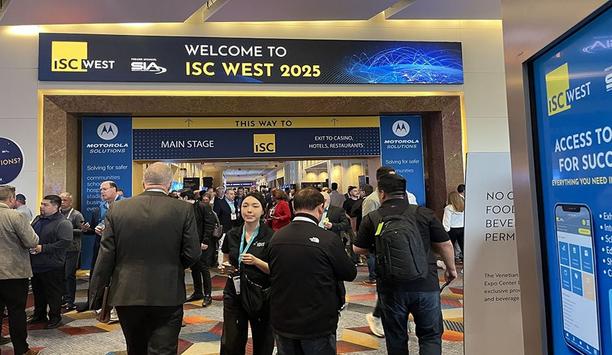
For all the emphasis on cloud systems and centralised servers at ISC West, a lot of innovation in security video systems is happening at the edge. New advancements inside video cameras are boosting capabilities at the edge, from advancements in processing power to artificial intelligence (AI) and machine learning (ML) algorithms that can now be deployed directly on the cameras or edge devices. Advancements in AI algorithms The progress of video systems becoming smarter at the edge is driven by the need for real-time insights, lower latency, bandwidth efficiency, enhanced privacy, and improved reliability. Advancements in edge computing hardware and AI algorithms are enabling a range of intelligent video applications across various industries, including physical security. Smarter functionality at the edge is a benefit of new computer systems-on-chips (SoCs) that are driving new heights of performance for today’s cameras. Axis Communications’ ARTPEC-9 Axis Communications’ new ARTPEC-9 SoC offers advanced video compression to reduce bandwidth Axis Communication’s new ARTPEC-9 system-on-chip (SoC) offers advanced video compression to reduce bandwidth and storage needs. With a low bitrate, the SoC helps deliver high-quality imaging with outstanding forensic detail. ARTPEC-9 also offers enhanced deep learning capabilities to allow users to leverage the latest video analytics and accelerate the implementation of AI technology. Axis maintains control over all aspects of the chip’s development to ensure high quality and cybersecurity. Among the benefits of ARTPEC-9 are better AI and deep learning, better image quality, better cybersecurity, and AV1 license-free video compression (see below). Hanwha Vision’s Wisenet 9 Hanwha Vision has launched Wisenet 9, its most advanced AI-powered System on Chip (SoC). Wisenet 9’s enhanced edge AI capabilities increase performance as the volume and complexity of security threats demand real-time, accurate analysis. By elevating edge-device performance, AI empowers systems to quickly analyse vast amounts of video data and discern crucial patterns and anomalies. A key differentiator driving Wisenet 9 is deployment of two Neural Processing Units (NPUs), which improve performance three-fold compared to Wisenet 7, the previous SoC generation. While one NPU handles image processing, the other focuses on object detection and advanced analytics. This dual NPU concept was introduced to ensure video quality and analytics have independent resources, thus preventing one function from impacting the performance of the other. The latest from Ambarella Ambarella is a supplier of edge AI systems-on-chips to multiple video camera manufacturers Off the ISC West trade show floor in a nearby meeting room, semiconductor company Ambarella demonstrated how it will continue to push the envelope of what is possible with generative AI at the edge. Ambarella is a supplier of edge AI systems-on-chips to multiple video camera manufacturers and recently achieved the milestone of 30 million cumulative units shipped. The demonstrations highlight Ambarella’s ability to enable scalable, high-performance reasoning and vision AI applications across its ultra-efficient, edge-inference CVflow 3.0 AI SoC portfolio. The company’s DeepSeek GenAI models run on three different price/performance levels of its SoC portfolio. In addition to advancements in GenAI processing at the edge, Ambarella integrates image processing, encoding and system-level functions into all its AI SoCs. New standard for video encoding: AV1 AV1 compression is a next-generation video coding technology that offers significant improvements in compression efficiency and video quality, especially at lower bitrates. Its royalty-free nature positions it as a crucial codec for the future of internet video. AV1 compression is a next-generation video coding technology. Axis Communication’s ARTPEC-9 chip now supports the AV1 video encoding standard. By embracing this standard, which is new to the physical security market although it was introduced in 2018, Axis sets the stage for AV1 compression to eventually become the industry standard, replacing H.264 and H.265. Network video transmission AV1 is an open-source, license-free coding format designed mainly for efficient network video transmission AV1 is an open-source, license-free coding format designed specifically for efficient network video transmission. It delivers high-quality video at low bitrates, reducing bandwidth consumption and storage costs. The codec was developed by the Alliance for Open Media (AOM), a nonprofit organisation founded in 2015 by Google, Intel, Amazon, Microsoft, Netflix, and Mozilla (among others), to provide open-standard, next-gen video coding technology. AV1 is ideal for cloud solutions—making streaming applications more robust, scalable, and capable of delivering real-time insights. Now the ARTPEC-9 chipset brings these benefits to the surveillance industry, and AV1 is currently supported by AXIS Camera Station. Providers of major video management solutions (VMS) such as Genetec and Milestone will be adding support for AV1, with further developments already underway. More intelligence at the edge Intelligence inside video cameras comes from the processing power and algorithms that enable them to perform tasks beyond simply capturing and recording images. This "intelligence" allows cameras to analyse the video stream in real-time, identify objects, detect events, and make decisions or provide alerts based on what they "see." New and improved SoCs are driving performance improvements at the edge. The increasing power of embedded processors and advancements in AI are continuously expanding the capabilities of intelligent video cameras.
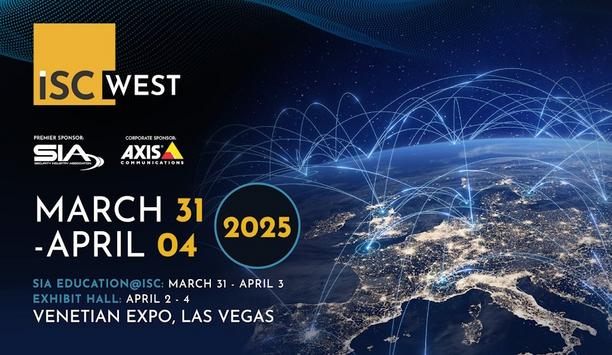
As the pioneering security event in the United States, ISC West is truly the global focal point for bringing together professionals across the physical and cybersecurity landscape. The event seeks to showcase innovation in security technology, nurture professional development, and explore the security implications of today’s connected world. Future of security With the growth of cybersecurity programming and the established Cybersecurity & Connected Internet of Things (IoT) pavilion, ISC West is addressing the future of security head-on. “As the lines between the digital and physical worlds blur, collaboration and shared learning among defenders have never been more critical,” says Mary Beth Shaughnessy, Event Vice President at RX USA, who oversees all aspects of the ISC brand. Shaughnessy previews what’s new at ISC West 2025 and shares other insights in our interview. Q: For long-time attendees at ISC West, what will be the biggest surprise at the 2025 show? Shaughnessy: Long-time attendees know to expect top-tier educational content through the SIA Education@ISC West program (produced by the Security Industry Association (SIA)) in addition to cutting-edge security innovations showcased by 700+ exhibitors. New this year is our focus on technology, training, and education around cyber-physical threats. In today’s connected world, physical and cybersecurity defenders must take a unified, holistic approach to protecting their people, assets, and data. ISC West serves as a bridge between those two worlds, helping organisations tackle the complex security landscape. Q: Presenting a high-profile music concert as part of ISC West is a fun value-add for attendees. Describe how this feature has been embraced by longtime attendees, and the plans for 2025. Shaughnessy: We’re thrilled to announce that the legendary Gin Blossoms will headline the ISC West Concert, sponsored by Wavelynx. This tradition began last year and became a celebrated highlight, offering professionals a chance to unwind and connect with colleagues and peers after a productive day on the show floor. When choosing a performer, we focus on acts that resonate across generations, making the experience both entertaining and memorable for our diverse audience. We are excited to continue this fun and exciting event and networking opportunity. Q: In the past, the education program at ISC West has been seen as secondary to the Expo event. How have you sought to increase the profile of the education program, and what new features will attract more attendees in 2025? Shaughnessy: We’ve expanded the SIA Education@ISC programming from three to four days, now beginning two days before the expo hall opens. These dedicated education days ensure professionals can engage in thoughtful discussions and gain actionable insights without overlapping with the Expo. This year, we’re proud to partner with RSA to introduce a new “IT for Security Professionals” track while also offering our core tracks, including AI & Digital Transformation, Critical Infrastructure & Data Protection, Cybersecurity & IT, InfraGard National Members Alliance @ ISC, and Video Surveillance. We will also be welcoming powerful keynote speakers — Rachel Wilson, Director of Cybersecurity, Morgan Stanley Wealth Management; Will Bernhjelm, Vice President of Security, Mall of America; and Kate Maxwell, Chief Technology Officer, Worldwide Defense & Intelligence, Microsoft. Q: What else is “new” at ISC West in 2025? Shaughnessy: Our educational programming has grown significantly — this year’s SIA Education@ISC program is our most extensive yet, offering more than 115 sessions led by over 200 distinguished experts. With broader and deeper topics, the program emphasises the critical convergence of cyber and physical security, providing unparalleled insights for today’s security professionals. We are also significantly ramping up our cybersecurity offerings and expect to have more than 50 exhibitors in our Cybersecurity & Connected IoT pavilion with names such as Entrust and Ontic. Q: Networking is a critical aspect of ISC West. How are show organisers working to increase networking opportunities? Shaughnessy: Networking remains a top priority at ISC West, with countless opportunities to build valuable connections. Professionals can join peers at popular spots like The Bridge, The Cyber Hub, and the Career Zone (sponsored by: TEECOM). These spaces offer the chance to learn from industry experts, explore the challenges and innovations shaping the security workforce, and engage in dynamic discussions with peers. Also, returning by popular demand, the ISC West Concert, proudly sponsored by Wavelynx, delivers a vibrant evening of music and networking in a relaxed atmosphere. Together, these experiences ensure networking at ISC West is both impactful and memorable. Q: What is the biggest challenge for organisers of ISC West (and related events), and how are the organisers seeking to address the challenges? Shaughnessy: As with most events, there is a lot of pressure on organisers to ensure there’s “something for everyone,” add meaningful value, and introduce fresh, exciting features. At ISC West, we work to raise the bar each year by expanding our content with more thought pioneers, showcasing a broader range of innovative technologies, and fostering additional networking opportunities. Achieving top-quality results is no small task — it demands careful planning, collaboration, and a dedication to continuous improvement. This means actively listening to the needs of our attendees and exhibitors, staying ahead of industry trends, and ensuring we provide an experience that informs, inspires, and connects the security community.

In the competitive world of physical access control, Big Tech companies are seeking to play a larger role. Physical access competition Apple Wallet continues to stake its claim on mobile credentialing. Amazon One Enterprise is pushing a palm-based identity service. Google/Nest offers smart locks for home access control, with identity and access management provided in the Google Cloud. The entry of these big companies in the historically fragmented physical access control market is causing disruption and foreboding new levels of competition. Apple Wallet impacting credentialing trends The popularity of mobile wallets and contactless technologies in general has grown, creating more demand At Apple’s Worldwide Developer Conference in June 2021, the company announced support for home, office and hotel keys, including corporate badges and student ID cards, in Apple Wallet. Later, the company announced Hyatt as the first hotel partner to support the technology. Since then, the popularity of mobile wallets and contactless technologies in general has grown, creating more demand for a seamless solution such as Apple Wallet. Easy access In 2023, HID Global announced the availability of their employee badge in Apple Wallet, allowing staff and guests to easily access corporate spaces with their iPhone or Apple Watch, including doors, elevators, turnstiles, etc. Employees just need to hold their iPhone or Apple Watch near the reader to unlock. Factors affecting the rate of adoption However, implementing and maintaining an Apple Wallet-based access control system can incur costs for hardware updates, software licencing, and ongoing maintenance. Factors affecting the rate of adoption include the need to upgrade existing infrastructures to accommodate the technology, and the necessity for access control manufacturers to develop and implement integrations with Apple Wallet. Benefits of adoption Keys in Apple Wallet take full advantage of the privacy and security built into the iPhone and Apple Watch With larger companies leading the way, some smaller ones might take longer to catch up. There is also a need to educate building owners and administrators to see the value and benefits of switching to Apple Wallet-based access control. Convenience and greater security can accelerate adoption. Keys in Apple Wallet take full advantage of the privacy and security built into iPhone and Apple Watch. Sensitive data protection A compatible app, specific to the building’s access control system, is needed. Once added, credentials are securely stored in the iPhone's Secure Enclave, a dedicated hardware chip designed for sensitive data protection. Holding an iPhone near an NFC-enabled reader enables transmission of encrypted credentials. In addition to Near Field Communication (NFC), some systems also utilise Bluetooth Low Energy (BLE) for added security, longer read range, and hands-free unlocking. Phones need sufficient battery charge to function. Amazon One Enterprise Enables Palm-Based Biometrics In November 2023, Amazon Web Services Inc. (AWS) announced an identity service providing comprehensive and easy-to-use authentication for physical and digital access control. The system enables users to employ their palm as an access control credential, allowing organisations to provide a fast and contactless experience for employees and others to gain access to physical locations as well as digital assets. Physical and digital locations Physical locations include data centres, office and residential buildings, airports, hotels, resorts Physical locations include data centres, office and residential buildings, airports, hotels, resorts, and educational institutions. IT and security administrators can easily install Amazon One devices and manage users, devices, and software updates using AWS’s Management Console. Elimination of physical credentials An advantage of the Amazon approach is the elimination of physical credentials such as fobs and badges, and digital elements such as personal identification numbers (PINs) and passwords. AWS says security is built into every stage of the service, from multi-layered security controls in the Amazon One device, which is the same technology used in the Amazon Go retail stores, where shoppers can pay for purchases by scanning the palm of their hands. The devices combine palm and vein imagery for biometric matching and deliver an accuracy rate of 99.9999%, which exceeds the accuracy of other biometric alternatives, says the company. AI and ML The palm-recognition technology uses artificial intelligence and machine learning to create a “palm signature” that is associated with identification credentials such as a badge, employee ID or PIN. Boon Edam, a revolving door and turnstile manufacturer, offers Amazon’s palm biometric technology on its equipment, and IHG Hotels & Resorts uses the technology to provide employees a convenient way to identify themselves and gain access to software systems. Google and Nest Devices in Access Control When the Nest × Yale Lock is connected to the Nest app, a resident can unlock a door from their phone Google’s Nest devices include smart locks for home access control. The Google Nest × Yale Lock allows access control via both physical keys and passcodes accessible through the Google Home app. When the Nest × Yale Lock is connected to the Nest app, a resident can unlock a door from their phone. Passcodes can be created for family, guests, and other trusted persons. Alerts can be provided whenever someone unlocks and locks the door. When Nest “knows” a resident is away, the door can lock automatically. Voice control, Google Home app Voice control, using Google Assistant integrated with various Nest devices, enables use of voice commands to lock and unlock doors, thus adding another level of convenience. Smart home devices from various manufacturers can be controlled through the Google Home app. SMART Monitoring ADT’s Self Setup smart home security systems integrate Google Nest smart home products with ADT security and life safety technology, including SMART Monitoring technology. Microsoft Azure is another company that could impact access control. The Microsoft Azure Active Directory is an identity and access management platform that could be extended to physical access control, leveraging existing user credentials. Long-Range Impact on the Security Marketplace Big Tech companies are creating platforms for managing access control data, integrating with other security systems Increasingly, Big Tech companies are creating platforms for managing access control data, integrating with other security systems, and offering analytics for optimising security and building operations. Big Tech is also actively researching and developing new technologies for access control, such as facial recognition, voice authentication, and AI-powered anomaly detection. Access control communication and integration As their involvement in physical access control grows, Big Tech companies could potentially gain more influence in setting industry standards for access control communication and integration, similar to how they have become dominant in other areas such as mobile platforms. Given their expertise in user interface design and data analysis, Big Tech companies could help to direct how future access control systems are managed and how users interact with them, including more intuitive and user-friendly operations. Future of physical access control Existing concerns about privacy, security, and potential dominance by a few Big Tech companies could spill over into physical access control. However, traditional security companies, startups, and industry consortiums are also actively developing innovative solutions. Ultimately, the future of physical access control will likely be shaped by a combination of many different players and technologies – large and small.

Technology's role in securing banks and financial institutions
Download
Security technologies promote real-time awareness in K-12 schools
Download
Integrated systems enable critical and compliant security for transportation
Download
Modernising physical access control
Download
Access. Intrusion. One estate.
Download
