Johnson Controls, Inc. - Experts & Thought Leaders








































White papers from Johnson Controls, Inc.

Using artificial intelligence (AI) to automate physical security systems
DownloadLatest Johnson Controls, Inc. news & announcements

Johnson Controls, a global pioneer in thermal management, mission-critical building systems, energy efficiency, and decarbonisation, is returning to exhibit at Global Security Exchange (GSX) 2026 in Atlanta from Sept. 14-16. At Booth 1633, Johnson Controls will showcase new innovations and Managed Services designed to help organisations improve visibility across facilities, accelerate incident response, strengthen operational resilience and maintain continuity across increasingly connected and mission-critical environments. GSX 2026 takes place against a backdrop of digital transformation reshaping enterprise security and increasing pressure on teams to do more with limited resources. Nearly 50% of physical security teams identify AI as a key priority and 43% of organisations plan to target hybrid security architectures. Strengthening security operations To help organisations strengthen security operations and improve resilience, Johnson Controls will spotlight: exacqVision 26.2 to help security teams identify events faster, improve situational awareness and make more informed decisions through AI-driven insights Software House C•CURE IQ 3.20 to streamline security operations through enhanced workflows, insights and deployment flexibility Managed Services to augment security teams with centralised expertise, continuous monitoring and operational support Proactive Video Solutions to improve situational awareness while supporting safety, compliance and operational objectives Video management system "As physical security, building systems and digital technologies become increasingly connected, organisations need greater visibility and control across their operations," said Al Young, vice president & general manager, Security, Americas, Johnson Controls. "We are focused on delivering innovations and managed services that help customers respond faster, improve operational resilience and protect the people, facilities and critical assets they depend on every day." The newest iteration of video management system for commercial buildings, exacqVision 26.2 strengthens security intelligence and operational awareness while making AI-driven insights easier for teams to access and act upon. The update delivers a redesigned web client, providing dashboard-level insights across camera fleets, helping teams to quickly identify events, monitor facilities, and respond more effectively. Smart building requirements GSX will mark the release of Software House C•CURE IQ 3.20, an update to the modern web-based security platform that combines video management, incident response, reporting, and analytics into a single experience. This update enables custom insights based on end-user needs, creating prioritised, spatially aware, actionable insights tailored to security and smart building requirements. The update also provides the flexibility to deploy C•CURE IQ Video as an entirely standalone solution. This simplifies deployment and helps security teams investigate incidents faster, reduce operational complexity and make more informed decisions from a unified view of security operations. The company will demonstrate additional solutions at GSX 2026, including: KTES2, a next-generation smart video intercom solution to modernise tenant, visitor, and property access while leveraging the proven security of the Kantech EntraPass platform. C•CURE IQ Mobile App & C•CURE Cloud, new capabilities within the C•CURE IQ platform to enhance accessibility through a mobile interface and build cloud scalability. Illustra Multisensor Cameras, introducing three new Panoramic Camera, Multisensor Fixed, and 360 Varifocal solutions. The KT-40 Anniversary Kit, a special kit exclusively available at GSX to commemorate the 40th anniversary of the Kantech solution suite that packages controllers, readers, and credentials capabilities. Day-to-day security operations C•CURE IQ 3.20 is now available, while exacqVision 26.2 will be available later in 2026. Beyond its latest software and security platform advancements, Johnson Controls will also demonstrate service offerings that help organisations strengthen day-to-day security operations. Through Managed Services, organisations can access centralised monitoring, security expertise and operational support through a dedicated security operations centre. The offering helps customers maintain continuous coverage, improve incident response and focus internal resources on higher-value priorities. Johnson Controls will also display Proactive Video Solutions, which combine intelligent analytics with expert monitoring to help organisations identify potential risks earlier, improve situational awareness and support safer, more resilient operations across their facilities. To learn more about the latest in Johnson Controls security solutions and Managed Services suite, stop by booth 1633 at GSX 2026.
Johnson Controls, a global pioneer in thermal management, mission-critical building systems, energy efficiency and decarbonisation, announces new AI capabilities in its OpenBlue digital ecosystem to help building owners reduce energy use, automate building operations and cut operating costs. The expanded platform includes: Energy & Comfort Intelligence, an AI-enabled capability that helps optimise how air flows through buildings; an agentic AI assistant; and a new AI-native architecture where data is classified and labelled according to industry-standard models, making it easier to connect information across equipment, systems and software applications. Enhanced AI control Part of the OpenBlue digital ecosystem, Energy & Comfort Intelligence focuses on one of the biggest and often overlooked drivers of energy use in buildings: airside systems. Powered by Nantum AI, the new feature uses AI algorithms to deliver efficiency recommendations and enhanced control across these systems, including air handling units, fans and other air circulation equipment. Enhanced AI control is especially critical for industries requiring precise indoor operating conditions like life sciences, hospitals, research universities, and advanced manufacturing facilities for products such as batteries and semiconductors, where consistent temperature, pressure and humidity matter most. Data-based automated commands “The new OpenBlue Platform changes what a building can do on its own. It brings AI-driven efficiency and autonomous control across the full digital ecosystem, including airside for the first time,” said Jamie Cameron, Vice President and General Manager, OpenBlue at Johnson Controls. “Energy & Comfort Intelligence is one example: it tunes air handling continuously against real conditions, cutting energy waste while giving facility teams unprecedented control.” Financial software company DATEV, for example, implemented Energy & Comfort Intelligence and reduced airside energy use by nearly 10% on applicable equipment. The system operated autonomously, executing thousands of dynamic, data-based automated commands and decisions for each piece of equipment. As an additional benefit, the company’s facility team did not receive a single comfort complaint, demonstrating that autonomous control can achieve substantial energy savings without impacting occupant comfort. Automating routine operational tasks “OpenBlue Energy & Comfort Intelligence exceeded our expectations, and we’re excited to expand its use to more of our facilities,” said Marco Ringer, Plant Engineering Planner at DATEV. “We look forward to working with Johnson Controls to continue cutting our energy use with better control.” OpenBlue now includes OBI (short for OpenBlue Intelligence), an agentic AI assistant that proactively surfaces insights, makes recommendations and executes approved workflows, all while keeping humans in the loop. Facility teams can easily access data through text or spoken interactions across occupancy, air quality, equipment performance, energy use and more. The tool goes beyond providing data, allowing teams to automate routine operational tasks, like placing work orders and prioritising maintenance, ultimately improving productivity and speeding up response time. Multi-building campus Across OpenBlue solutions, new automated onboarding processes use sophisticated algorithms to automatically find devices and points and place them in the appropriate category, reducing implementation times by up to 95%. In complex facilities with thousands of data sources across a large building or multi-building campus, this reduces implementation times from months to days. Data is structured and assigned clear meaning, connecting raw information to specific equipment and actions to allow sophisticated connections in a variety of interfaces. The updated data foundation is AI-ready and aligned to industry-standard models for ease of integration and faster access to insights. For technical customers and partners that use their own applications for workplace convenience and sophisticated portfolio management, the new OpenBlue platform API also enables organisations to seamlessly pull data into apps they use today and leverage the vast quantities of data their buildings produce for key insights. AI-powered digital ecosystem Easier access to data can be paired seamlessly with enhanced cybersecurity features. OpenBlue Airwall offers zero-trust architecture that isolates devices through segmented networks and restricts access to critical assets, reducing the attack surface and limiting exposure to external threats. Remote users and devices are required to prove their identity before any initial connection. Once authenticated, an encrypted tunnel is created between devices to support complex, rapid building-to-building connections between individual devices rather than broad access to entire networks. When external vendors provide remote service, access is limited to only the devices and times necessary to further reduce risk. With increased implementation speeds and greater control that draws on decades of building and software expertise, the OpenBlue AI-powered digital ecosystem helps customers deliver precise control and enhanced visibility across complex facilities while cutting energy use in a time of rising energy costs. Research conducted by Forrester demonstrated that OpenBlue can deliver up to 155% ROI for customers, showcasing the impact of leveraging AI for facility operations and efficiency.

Johnson Controls, a global pioneer in thermal management, mission-critical building systems, energy efficiency and decarbonisation, introduces Metasys 16.0, the latest version of its flagship building automation system with new capabilities designed to help customers reduce downtime risk, strengthen cybersecurity and bring systems online faster across complex environments at a time when building performance is becoming essential to business outcomes. “The environments our customers operate in are more complex than ever, and expectations for performance continue to rise,” said M. Faisal Pandit, president, Building Management Systems, Johnson Controls. “Even brief disruptions can impact operations, productivity and outcomes. Customers need a building automation system that is secure, resilient, and simple to deploy and scale. With Metasys 16.0, Johnson Controls brings this together in a single platform, helping customers maintain continuous operations, reduce risk and adapt as their needs evolve.” Reliable operating environments A wave of scientific advances—from artificial intelligence to biotechnology to advanced manufacturing—is now moving rapidly into large-scale deployment. These industries require precise, reliable operating environments, elevating building performance from a supporting role to essential for business success. Thermal management is now central to how systems perform and scale, and digitally enabled life cycle services are critical to maintaining uptime, protecting high-value assets and delivering consistent outcomes. Metasys 16.0 responds to the performance needs of these high-growth industries, enabling faster deployment, more autonomous operations, and connected, resilient platforms built for environments where performance cannot fail. Peak load analytics New features include: Stronger cybersecurity: Safeguards operations with protections aligned with IEC 62443-4-2 Security Level 2, reducing risk and supporting evolving requirements. “Fast Track” upgrades cut upgrade time by up to 40% through pre-emptive system checks and accelerate adoption of the latest cybersecurity and operational enhancements. Faster integration and deployment: Connects systems more quickly across environments using an open, connected approach. Visual integration tools, including Node-RED, enable real-time data sharing and help deploy integrations up to 80% faster, reducing costs by 60% to 70% and bringing new capabilities online in days instead of months. Built-in resilience for continuous uptime: Protects uptime with built-in resilience across multiple servers so operations continue seamlessly if one server goes offline, without the need for specialised hardware or third-party software. Accelerated engineering and upgrades: Accelerates deployment and reduces disruption through standardised workflows that cut engineering and deployment time by up to 30%. Integrated energy and performance visibility: Provides real-time visibility into peak load analytics, energy use, indoor air quality, emissions and system performance in a single system, reducing configuration time and limiting the need for third-party tools. Scalability for growing environments: Scales from single buildings to campuses and portfolios, supporting up to 1,300 IP devices, 30% more than previous versions, without requiring system changes. Optimised performance and efficiency: Improves efficiency with air and water sequences aligned to ASHRAE Guideline 36, delivering more consistent performance and up to 30% energy savings. Regulatory readiness: Helps customers stay ahead of evolving requirements, including dashboards ready for Energy Performance of Buildings Directive dashboards and other emerging global standard reporting requirements with validated data and clear insights to support compliance and occupant well-being. Enabled by Johnson Controls innovation, manufacturing scale and a global 50,000-person field workforce, Metasys 16.0 helps customers create and sustain precise, resilient environments, facilitating more efficient operations, lower risk and consistent performance over time.
Insights & Opinions from thought leaders at Johnson Controls, Inc.

The security landscape is undergoing a profound transformation, as evidenced by the innovations showcased at the ISC West Expo 2026. From dismantling of silos between physical and digital security to the ongoing transition to cloud and hybrid platforms, much of the discussion on the show floor was familiar, if somehow more urgent than ever. Clearly the industry is moving toward unified, cloud-native, and highly automated ecosystems. In a series of deep-dive meetings and demonstrations at the recent show, I got a first-hand glimpse of the future of the physical security marketplace. Spoiler alert: The future is now! HID Global: Tearing down the silos HID Global is addressing the long-requested convergence of physical and digital security. Recognising that the industry has historically operated in silos, HID is now leading with a combined implementation team to leverage the power of both sides. HID is supporting the transition by combining its logical and physical security teams to help end users design secure, end-to-end journeys for their employees. By leveraging its massive existing footprint in physical access, HID is uniquely positioned to help organisations upgrade their cybersecurity posture without a total "rip and replace" of their hardware. HID is seeing a surge in demand for converged credentials that unite building access with digital identity. On the digital front, HID has implemented FIDO (Fast Identity Online) and passkeys to replace traditional passwords with more secure, biometric-backed authentication methods. Acre Security: Bridging the gap to the cloud Acre Security previewed a cloud-native video solution, reinforcing its cloud-first security strategyAcre Security is currently consolidating brands, bringing established names like Feenics and AccessIt under a single corporate umbrella. A primary theme for the company at ISC West is the migration of legacy systems to modern infrastructure. To facilitate the transition, they are launching "The Bridge," a technology designed to help on-premise customers transition to the cloud at a pace that suits their operational needs. The company is also expanding its portfolio into video. Attendees at the show received a preview of a new cloud-native video solution slated for release later this year, signaling Acre’s commitment to a holistic, cloud-first security suite. Acoem: Real-time acoustic threat detection With a 35-year foundation in vibration and acoustics—including military sniper detection—Acoem is providing gunshot detection through edge processing. Unlike systems that rely on the cloud and may suffer from latency, Acoem’s technology processes data at the sensor level for instant alerts. Their sensors are engineered for massive outdoor spaces, covering a 500-foot radius (roughly 11 football fields) and can detect high-powered rifle shots from up to half a mile away. The system provides critical intelligence by distinguishing between muzzle blasts and "mach noise" from bullet travel, delivering an audio file to the end-user that maps the location and direction of the threat. They use AI to filter out environmental false positives, such as skateboards hitting metal rails. Alarm.com: The all-in-one dealer ecosystem Beyond hardware, Alarm.com is leveraging AI to streamline the sales process Alarm.com is doubling down on "giving tools to dealers to help them be successful," with a focus on unified commercial solutions. A highlight at ISC West is their new fire communicator, which integrates fire monitoring into their single app, completing what they call the "fourth leg of the stool." The product allows fire systems to benefit from the same real-time customer engagement and push notifications that have long been available for intrusion and video. The key products, such as commercial-grade hardware, are now available for immediate purchase. Beyond hardware, Alarm.com is leveraging AI to streamline the sales process. Their new AI Proposal Builder uses customer meeting notes to automatically generate customised, value-driven sales proposals for dealers. Allegion: A global shift in credentialing Following the acquisition of ELATEC, Allegion is adopting a more global market approach and expanding its OEM business. The company is involved in the development of Aliro, the newly unveiled mobile credentialing standard. Allegion’s strategy is built on versatility: While Aliro serves the burgeoning mobile market, they also offer PKOC for plastic cards, allowing them to provide solutions regardless of the user's preferred credential type. The ELATEC acquisition has effectively filled previous gaps in their use-case portfolio, positioning them as a comprehensive provider for both physical and digital access needs. AtlasIED: Engineering for life safety Transitioning from audio to a fully automated threat detection company, AtlasIED showcased its new IPX line at ISC West. This modular platform uses a single PoE++ port to power various "plug-and-play" modules, allowing for easy system upgrades. Their gun detection technology achieves a 99% confidence rating by "stacking" AI models; it cross-references audio data with infrared signatures to detect muzzle flashes and air quality sensors for particulates. With systems already running in 80% of U.S. international airports, the company maintains 24/7 domestic engineering support to manage these "life-safety adjacent" environments. Axis Communications: Unifying connectivity Axis Communications is advancing network video with 4G/5G surveillance, reducing cabling needs Axis Communications continues to lead in network video, with a new focus on offering surveillance through 4G and 5G networks to eliminate the need for extensive cabling in long-range applications. Axis also introduced several specialised hardware pieces, including the P1486-LE global shutter camera for high-speed traffic monitoring and the Q2802-TE, which integrates thermal and visual monitoring into a single unit. To assist technicians, they launched a new installer app that uses Bluetooth for easier camera pairing and management directly from a mobile device. Axon: De-escalation through enterprise wearables Focusing on frontline safety, Axon is expanding from law enforcement into the enterprise sector with its retail and healthcare-focused body camera. Weighing only 0.25 lb, these cameras are designed to be less intimidating, using colorful designs and acting as a primary de-escalator for aggressive behavior. A clear front display signals when recording is active, striking a balance between safety and a non-intimidating appearance. These devices feature live-streaming and panic alarms that connect workers to a Global Security Operations Center (GSOC). To ensure the footage is legally viable, Axon maintains a rigorous audit trail that authenticates every action recorded. Genetec: The value of the unified platform Genetec is advocating for unified platforms that reduce the time between incident detection and resolution. They argue that AI is becoming a commodity and that the true value lies in unified platforms that reduce the time from incident to resolution. Their approach emphasises the "outcomes" customers need, such as allowing security teams to coalesce around an investigation quickly. Genetec remains a strong supporter of open systems for enterprise customers, ensuring they have the choice to integrate diverse technologies rather than being locked into a manufacturer’s “walled garden.” This flexibility is critical for high-end security environments that require tailored, responsive systems. Johnson Controls: Large-scale enterprise solutions Johnson Controls has made a significant push into the enterprise video market with C-Cure IQ, a standalone VMS designed for major hubs like airports and large campuses. Through a partnership with Scylla, they have integrated 11 advanced analytics—including facial recognition and weapons detection—directly into their cameras. They also showcased new multi-sensor panoramic cameras capable of "stitching" multiple images into a single 360-degree view. While innovating in video, Johnson Controls also confirmed modern upgrades to their intrusion line, including their legacy DSC Neo line. The new DSC PowerSeries Neo 5, a high-end residential and commercial platform, features an all-new user interface and built-in PowerG+. They have also begun shipping the IQ5 family lineup, which is powered by a Qualcomm DragonWing processor. ONVIF: Standardising the future of AI and cloud ONVIF continues to lead the charge in establishing common languages for the security industry. A major focus is their new "Cloud Profile," which enables cameras to connect directly to the cloud through a standardised protocol. They are also expanding into audio standards to ensure IP-based speakers can seamlessly connect to Video Management Systems (VMS). To combat the rise of sophisticated digital manipulation, ONVIF is developing "video signing" standards. ONVIF is actively seeking more diverse enterprise participation to help shape these emerging AI standardsThis feature protects the integrity of video for evidentiary purposes by embedding a digital signature and timestamp directly into the footage at the camera level. Additionally, the organisation has formed an AI Working Group to develop common communication methods for "AI agents" within physical security systems. ONVIF is actively seeking more diverse enterprise participation to help shape these emerging AI standards. Roberto Licari is the new ONVIF Ambassador, seeking to attract new companies (even outside the security sector) to ONVIF as they look to expand their offerings. SwiftConnect: Bridging digital and physical identity SwiftConnect is redefining access control by shifting the focus from physical cards to digital identity. As a cloud-based "connected access network," the platform bridges the gap between IT identity providers (like Okta or Azure AD) and legacy physical access control systems. At the show's Security Experience Center demonstrations, SwiftConnect showcased its ability to integrate mobile credentials within Apple and Google Wallets across multiple technology platforms. By aligning physical security with Zero Trust principles, they ensure that access is governed by the same rigorous standards as digital networks. Their software-centric approach allows for a more seamless employee experience while simplifying the management of complex, multi-site building security. This emphasises a future where the mobile device becomes the primary tool for navigating the physical workspace. Wasabi Technologies: Redefining cloud storage economics With cloud technology becoming a baseline requirement at every booth, Wasabi Technologies highlighted its "hot cloud storage" as a cost-effective alternative to major hyperscalers. Their model claims to be 80% less expensive than competitors, notably removing hidden fees. Wasabi is increasingly bundled at the "back end" of security solutions through partnerships with integrators and end users. A key feature for law enforcement and high-security sectors is their "Object Lock" capability, which ensures that video evidence remains untampered with and immutable during defined retention periods. By providing high-performance storage without the unpredictable costs typically associated with the cloud, Wasabi is positioning itself as the foundational layer for data-heavy video surveillance applications that require long-term, secure retention. Wasabi is positioning itself as the foundational layer for data-heavy video surveillance applications ZKTeco USA: Versatile and integrated access ZKTeco USA showcased a range of integrated solutions, including turnstiles, visitor management, and access control. Their Atlas access control series offers versatility, supporting everything from traditional readers and keypads to QR codes and fingerprint scanning, with the flexibility to operate on-premise or in the cloud. For tight environments, they introduced the Mars 100 turnstile, which features a compact 2x3-foot footprint. They also highlighted the Omni series, an all-in-one standalone reader-controller that manages access, intercom, and visitor functions in a single device. Innovation in portability was evident in their new walk-through metal detectors, which consist of two poles with an 8-hour battery life—ideal for schools and temporary events. While they offer their own Armatura readers, ZKTeco emphasised that their solutions can integrate with other industry leaders to fit diverse customer needs.
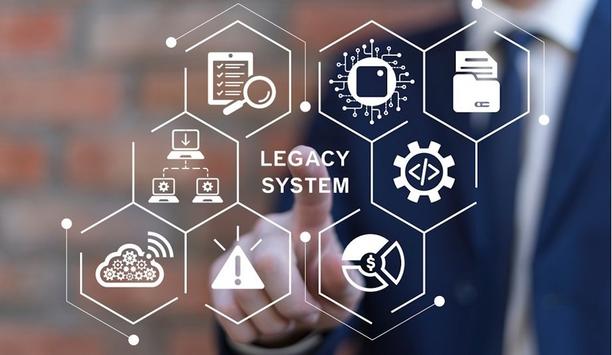
Modernising a legacy physical security system requires a transition from isolated, hardware-dependent silos to an integrated, data-driven ecosystem. This transition involves shifting toward open architecture and encrypted communication to ensure long-term scalability and resilience. Other elements to facilitate upgrading a legacy system include leveraging cloud and hybrid topologies and ultimately moving toward more predictive analytics. Our Expert Panelists offer plenty of ideas for making the transition. We asked our Expert Panel Roundtable: What are today's best practices to transform and modernise legacy systems?

ISC West (International Security Conference & Exposition), March 25–27, 2026, at The Venetian Expo in Las Vegas, is widely regarded as the most important event in the security industry. The yearly exhibition serves as the primary launchpad for new technology and as the central meeting point for global security professionals. We asked our Expert Panel Roundtable: What will be the big topics of discussion at ISC West 2026?

Technology's role in securing banks and financial institutions
Download
Security technologies promote real-time awareness in K-12 schools
Download
Integrated systems enable critical and compliant security for transportation
Download
Modernising physical access control
Download
Access. Intrusion. One estate.
Download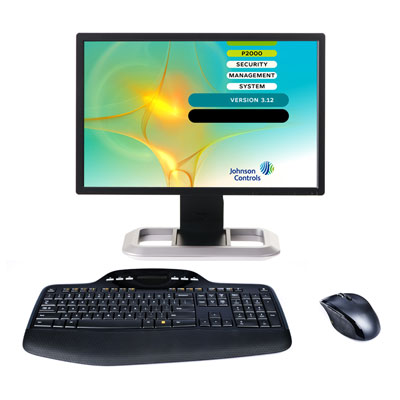
Johnson Controls P2000 security management system
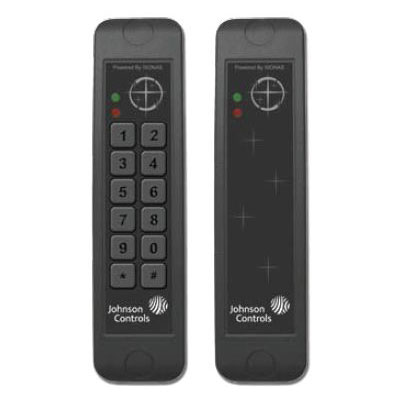
Johnson Controls PowerNet IP Reader
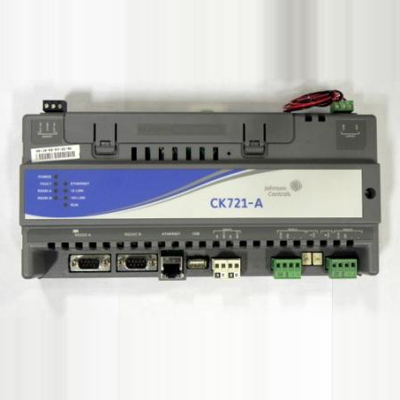
Johnson Controls Limited CK721-A network controller

