Intelligent Security Systems Ltd. - Experts & Thought Leaders

























White papers from Intelligent Security Systems Ltd.
3 ways AI can improve safety and reduce compliance costs
DownloadLatest Intelligent Security Systems Ltd. news & announcements

ISS (Intelligent Security Systems), a global provider of video intelligence and data awareness solutions, announces the deployment of its SecurOS® Soffit pedestrian safety system at First Street and Ogden Avenue in Las Vegas. The installation, facilitated in partnership with Pinnacle Consulting & Advisors, marks the first proof of concept (POC) deployment of the Soffit in the city. The pilot is part of Las Vegas' Vision Zero initiative, a data-driven policy framework aimed at eliminating traffic-related fatalities and severe injuries. Originally launched in Europe in the late 1990s, Vision Zero has continued to gain momentum in the United States, with more than 70 communities nationwide now committed to the initiative and its goal of advancing safer street design. Unnecessary light pollution The installation site sits one block from the Fremont Street Experience – one of the busiest pedestrian destinations in downtown Las Vegas, attracting more than 24 million visitors annually. The deployment was driven by the city's recognition of a persistent and disproportionate risk faced by pedestrians on its roads, particularly in high-activity areas. Unlike conventional streetlights that broadly illuminate a surrounding area, the Soffit uses advanced analytics to detect pedestrians as they approach and traverse the crosswalk, directing a dynamic LED lighting array to escort each person across the street. This targeted illumination increases driver awareness without creating glare or unnecessary light pollution – a critical consideration in a high-density urban environment like downtown Las Vegas. The system also provides static crosswalk illumination in standby mode, helping to condition drivers to the crossing's presence before active illumination engages. Providing meaningful protection "We are proud to partner with the City of Las Vegas on this important initiative," said Aluisio Figueiredo, CEO of ISS. "Pedestrian safety in high-traffic urban environments demands intelligent, purpose-built solutions. This deployment is a strong example of how AI-driven technology can address real-world infrastructure challenges, providing meaningful protection where traditional countermeasures alone may not be sufficient." This installation follows prior Soffit deployments in Dublin, Ohio, and Kodiak, Alaska, further expanding the adoption of this AI-driven pedestrian safety technology across the United States.
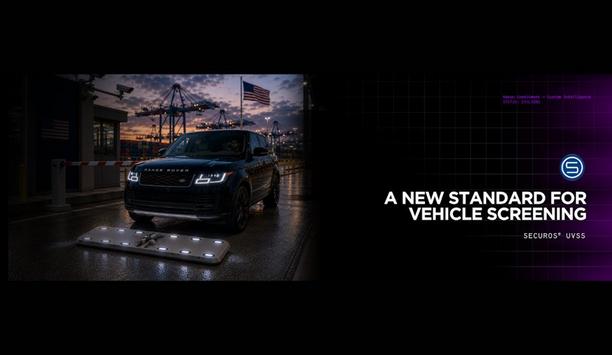
New York City’s vast public transportation network is the lifeblood of the region, serving millions of residents and visitors daily. To maintain and improve the daily commutes of riders across the system, a steady stream of innovation is required. The Transit Tech Lab, a public-private partnership created by the Metropolitan Transportation Authority (MTA) and the Partnership Fund for New York City, was established to accelerate the adoption of emerging technologies across the city’s transit systems. This initiative seeks to solve pressing challenges related to resilience, customer experience, and security. Increased operational costs For its highly competitive program, the Transit Tech Lab received 150 applications from companies around the globe. Only 18 were chosen as finalists to proceed to an eight-week proof-of-concept phase. Among this select group was Intelligent Security Systems (ISS), which was tasked with demonstrating how its technology could enhance security operations for key transit agencies, including the Port Authority of New York and New Jersey. The Challenge: Modernising Outdated Vehicle Screening Processes - Charged with protecting the city’s vital transportation hubs, the Port Authority was seeking a solution that could help them automate the vehicle screening process at one of the sites under their purview. Traditional methods of under-vehicle inspection — often involving manual checks with pole-mounted mirrors or bomb-sniffing canine units — can be slow, labour-intensive, and subject to human error or fatigue. These methods can also lead to bottlenecks, increased operational costs, and may not always provide the consistent, high-level scrutiny required. Vehicle screening challenges The Port Authority needed a solution that could not only detect potential threats with greater accuracy but also streamline the entire screening process, reducing congestion and improving operational efficiency without compromising safety. The goal was to find a technology that could provide fast, reliable, and detailed inspections while integrating into the existing security framework. “Being selected for the Transit Tech Lab initiative is a tremendous honour and a testament to our commitment to innovation and excellence,” said ISS CEO Aluisio Figueiredo. “This opportunity allowed us to demonstrate how our groundbreaking video intelligence solutions can address the unique vehicle screening challenges faced by high-security sites, enhancing both security and operational efficiency.” Automated visual inspection The Solution: Advanced Undercarriage Inspection with SecurOS® UVSS - To address these challenges, ISS proposed its SecurOS® UVSS (Under Vehicle Surveillance System) solution. For over two decades, ISS has been a pioneer in video intelligence and data awareness, holding over 30 patents and trademarks. With a global presence and a robust R&D team of over 200 engineers, ISS develops next-generation video analytics that solve complex security problems. The SecurOS® UVSS is a complete, enterprise-level solution for the automated visual inspection of vehicle undercarriages. It is designed to screen for explosives, illegal contraband, dangerous objects, and structural anomalies. The system consists of a rugged, IP68-rated scanning platform deployed on the roadway along with a powerful processing controller. Powerful processing controller As a vehicle drives over the platform, a high-resolution, area-scan machine vision camera captures detailed images of its undercarriage. The system can effectively scan vehicles moving at speeds up to 22 mph and even handles complete stops, ensuring image quality is never compromised. Patented de-warping technology corrects distortion and stitches together a complete, high-definition composite image in as little as three seconds, while the UVSS’ foreign object detection system automatically flags anomalies in the undercarriage that could pose a security risk. This image is then displayed for the operator on a user-friendly interface, alongside data from other native systems, including license plate recognition (LPR) software and optional driver-facing cameras. Forensic investigations and compliance This automated process offers significant advantages over manual inspections: Speed and Efficiency: A scan takes mere seconds, drastically reducing vehicle processing times and preventing congestion at checkpoints. Accuracy and Detail: The high-resolution camera captures clear images, allowing operators to spot anomalies that might be missed by the naked eye or a mirror. The system’s 3D-magnifier view enables detailed examination of suspicious areas, while foreign object detection highlights potential threats automatically. Consistency: The UVSS solution provides reliable, 24/7 performance, unaffected by human factors like fatigue or distraction. Data Integration: Each undercarriage image along with the respective vehicle’s colour, class, make and, model is saved and linked with license plate data, time of entry, and even the driver’s face (with optional cameras). This creates a comprehensive, searchable audit trail for forensic investigations and compliance. Simplified Installation: The UVSS does not require heavy construction to deploy and is available in several different models. An optional UVSS cleaning system that uses a dual air-fluid cleaning process to remove things like dirt, snow or ice ensures that system remains in optimal working condition, even in dusty or debris-prone environments. Average checkpoint passage times The Results: A Successful Pilot for the Port Authority - Beginning in May 2024 as part of the Transit Tech Lab’s proof-of-concept phase, the SecurOS® UVSS was used to scan the undercarriages of over 2,000 vehicles over a three-week period at the aforementioned site. The primary goal was to demonstrate how the technology could improve the existing screening process for vehicles entering the location. The results were immediate and impactful. The UVSS was integrated with the Port Authority’s security databases, helping to increase efficiencies in standard vehicle screening processes. The system provided real-time data on vehicle types, traffic flow, and average checkpoint passage times, giving the Port Authority valuable insights into its operations. Additionally, the UVSS cleaning system ensured the unit provided clear and accurate images regardless of the operating conditions. Vehicle security screening operation A senior engineer for major capital projects with the Port Authority noted the value of the pilot, stating, “ISS’ technology complemented our vehicle security screening operation, and the real-time data helped improve the visibility of several unknown everyday processing details that are super useful and present an efficiency opportunity.” The success of the initial trial led to ISS being selected to advance to the large-scale pilot phase of the initiative, further cementing the value of its technology. The application at the Port Authority site is one of many high-profile deployments for the SecurOS® UVSS. The system is trusted by governments, military organisations, and corporate enterprises around the world to protect critical infrastructure, airports, border crossings, state institutions, and public venues, like stadiums and arenas. Its proven reliability and advanced capabilities have made it a global standard for under-vehicle inspections. Robust vehicle screening process By automating the inspection process, the Port Authority was able to achieve a significantly higher level of threat detection and dramatically improve the overall efficiency of its checkpoints. The rich data provided by the UVSS has also proven instrumental in informing the Port Authority on the types of operational improvements that are needed to ensure a robust vehicle screening process at its secure facilities moving forward. “The challenge of securing a facility of this magnitude requires technology that is not only powerful but also intelligent and adaptable,” added Figueiredo. “The SecurOS® UVSS provides a scalable, integrated solution that transforms vehicle inspection from a manual chore into a streamlined, data-driven process, setting a new standard for modern security operations.”
ISS (Intelligent Security Systems), a global provider of video intelligence and data awareness solutions, announces a major update to its SecurOS® UVSS (Under-Vehicle Surveillance Solution) product line. The launch introduces four UVSS solution versions for different market segments alongside significant functional enhancements, delivering unparalleled flexibility, speed, and accuracy for undercarriage threat detection. Multiple vehicle entry points These four new UVSS versions include: SecurOS® UVSS Essential – Provides a robust and efficient solution for facilities with single-point-of-entry security. This reliable undercarriage screening tool modernises checkpoint operations by replacing traditional manual inspections with an automated "digital mirror" system. To meet evolving security needs, facilities can expand the platform with optional advanced capabilities, including unique "3D magnifying lens" functionality, automatic image comparison, visual anomaly maps, and a modern AI-driven foreign object detector. The system supports vehicle speeds up to 9 mph. SecurOS® UVSS Pro – Built for facilities that need to manage multiple vehicle entry points, the UVSS Pro leverages a distributed architecture that enables a single security team to manage and synchronise data from up to three separate checkpoints. The platform provides exceptional flexibility across various market segments, allowing organisations to pick and choose only the specific features they require. Standard capabilities include advanced 3D lens functionality, automatic comparison of undercarriage images, and the precise marking of suspicious areas. Facilities can further scale their security operations with powerful optional expansions, such as an AI-based foreign object detector, magnetic suspicious maps, the SecurOS® Motus VO21 driver camera featuring the SecurOS® FaceX facial recognition module, and an automated platform cleaning system. The UVSS Pro also integrates easily with third-party systems, supports failover clustering and one-to-one failover, and accurately screens vehicles traveling at speeds up to 22 mph. SecurOS® UVSS Elite – Designed for large-scale, high-security operations where speed and system resilience are critical, the UVSS Elite provides rapid screening capabilities without sacrificing detail. With support for an unlimited number of checkpoints and failover clustering, it ensures uninterrupted operation 24/7 at vehicle speeds up to 30 mph. It provides comprehensive, all-inclusive functionality that builds upon the robust capabilities of the SecurOS® UVSS Pro to effectively serve the most demanding market segments. Facilities can further enhance their security infrastructure with optional additions, including the aforementioned SecurOS® Motus VO21 driver camera, SecurOS® FaceX software, and automated UVSS cleaning system. SecurOS® UVSS Mobile – Provides a highly portable screening solution designed for quick transport and rapid deployment. Housed in durable cases, its compact design allows your team to easily relocate and set up advanced security checkpoints wherever they are needed most. It provides the same high-resolution imaging and AI-powered analytics as their fixed solutions, making it ideal for temporary checkpoints. Critical functional enhancements Additionally, ISS has introduced critical functional enhancements across the entire UVSS platform. The system boasts a drastic increase in processing speed, reaching up to 1,000 frames per second. This processing power, combined with new stitching algorithms, produces exceptional stitched imagery quality. End users will also benefit from increased vehicle throughput speeds of up to 30 mph (50 km/h), significantly reducing bottlenecks during inspections. Furthermore, an enhanced AI engine dramatically improves the detection of foreign objects. The updated system now supports new universal business processes at checkpoints and delivers enhanced enterprise functionality specifically tailored for corporate clients. Most demanding security environments "We are constantly pushing the boundaries of what our technology can do to enhance safety and security," said Aluisio Figueiredo, CEO of ISS. "These updates to the SecurOS® UVSS are a direct result of our commitment to innovation, delivering tangible benefits to our customers by enabling faster, more accurate, and more reliable vehicle inspections in the most demanding security environments." In conjunction with these product updates, ISS is launching a new dedicated UVSS website.
Insights & Opinions from thought leaders at Intelligent Security Systems Ltd.

In the field of access control, face recognition has come a long way. Once considered too slow to authenticate people's identities and credentials in high traffic conditions, face recognition technology has evolved to become one of the quickest, most effective access control identity authentication solutions across all industries. Advancements in artificial intelligence and advanced neural network (ANN) technology from industry leaders like Intel have improved the accuracy and efficiency of face recognition. However, another reason the technology is gaining traction is due to the swiftly rising demand for touchless access control solutions that can help mitigate the spread of disease in public spaces. Effective for high volumes Face recognition eliminates security risks and is also virtually impossible to counterfeit Modern face recognition technology meets all the criteria for becoming the go-to solution for frictionless access control. It provides an accurate, non-invasive means of authenticating people's identities in high-traffic areas, including multi-tenant office buildings, industrial sites, and factories where multiple shifts per day are common. Typical electronic access control systems rely on people providing physical credentials, such as proximity cards, key fobs, or Bluetooth-enabled mobile phones, all of which can be misplaced, lost, or stolen. Face recognition eliminates these security risks and is also virtually impossible to counterfeit. Affordable biometric option Although there are other biometric tools available, face recognition offers significant advantages. Some technologies use hand geometry or iris scans, for example, but these options are generally slower and more expensive. This makes face recognition a natural application for day-to-day access control activities, including chronicling time and attendance for large workforces at construction sites, warehouses, and agricultural and mining operations. In addition to verifying personal credentials, face recognition can also identify whether an individual is wearing a facial covering in compliance with government or corporate mandates regarding health safety protocols. Beyond securing physical locations, face recognition can also be used to manage access to computers, as well as specialised equipment and devices. Overcoming challenges with AI So how did face recognition become so reliable when the technology was once dogged by many challenges, including difficulties with camera angles, certain types of facial expressions, and diverse lighting conditions? Thanks to the emergence of so-called "convolutional" neural network-based algorithms, engineers have been able to overcome these roadblocks. SecurOS FaceX face recognition solution FaceX is powered by neural networks and machine learning which makes it capable of authenticating a wide range of faces One joint effort between New Jersey-based Intelligent Security Systems (ISS) and tech giant Intel has created the SecurOS FaceX face recognition solution. FaceX is powered by neural networks and machine learning which makes it capable of authenticating a wide range of faces and facial expressions, including those captured under changing light, at different resolution levels, and varying distances from the video camera. Secure video management system A common face recognition system deployment begins with IP video cameras that feed footage into a secure video management system connected to a video archive. When the software initially enrolls a person’s face, it creates a "digital descriptor" that is stored as a numeric code that will forever be associated with one identity. The system encrypts and stores these numeric codes in a SQL database. For the sake of convenience and cost savings, the video server CPU performs all neural network processes without requiring any special GPU cards. Unique digital identifiers The next step involves correlating faces captured in a video recording with their unique digital descriptors on file. The system can compare newly captured images against large databases of known individuals or faces captured from video streams. Face recognition technology can provide multi-factor authentication, searching watchlists for specific types of features, such as age, hair colour, gender, ethnicity, facial hair, glasses, headwear, and other identifying characteristics including bald spots. Robust encryption SED-compatible drives rely on dedicated chips that encrypt data with AES-128 or AES-256 To support privacy concerns, the entire system features an encrypted and secure login process that prevents unauthorized access to both the database and the archive. An additional layer of encryption is available through the use of Self-Encrypting Drives (SEDs) that hold video recordings and metadata. SED-compatible drives rely on dedicated chips that encrypt data with AES-128 or AES-256 (short for Advanced Encryption Standard). Anti-spoofing safeguards How do face recognition systems handle people who try to trick the system by wearing a costume mask or holding up a picture to hide their faces? FaceX from ISS, for example, includes anti-spoofing capabilities that essentially check for the "liveliness" of a given face. The algorithm can easily flag the flat, two-dimensional nature of a face mask, printed photo, or image on a mobile phone and issue a "spoof" alarm. Increased speed of entry Incorporating facial recognition into existing access control systems is straightforward and cost-effective Incorporating facial recognition into existing access control systems is straightforward and cost-effective. Systems can operate with off-the-shelf security cameras and computers. Users can also leverage existing infrastructure to maintain building aesthetics. A face recognition system can complete the process of detection and recognition in an instant, opening a door or turnstile in less than 500ms. Such efficiency can eliminate hours associated with security personnel checking and managing credentials manually. A vital tool Modern face recognition solutions are infinitely scalable to accommodate global enterprises. As a result, face recognition as a credential is increasingly being implemented for a wide range of applications that transcend traditional access control and physical security to include health safety and workforce management. All these capabilities make face recognition a natural, frictionless solution for managing access control, both in terms of performance and cost.

We are living in the age of Big Data, and businesses are inundated with large volumes of data every day. Success depends on capturing, analysing and ultimately transforming that data into information and intelligence that can be used to improve the business. So, it is with today's physical access control and video systems, too, which also generate unprecedented levels of data. But how can we make the data useful to end users and how can they realise its full value? We asked this week's Expert Panel Roundtable: Relating to physical security systems, what is the value of data and how can that value be measured?

Technology's role in securing banks and financial institutions
Download
Security technologies promote real-time awareness in K-12 schools
Download
Integrated systems enable critical and compliant security for transportation
Download
Modernising physical access control
Download
Access. Intrusion. One estate.
Download
