Hirsch / IDENTIVE - Experts & Thought Leaders




Latest Hirsch / IDENTIVE news & announcements

Hirsch, a pioneer in enterprise security solutions, announces its participation in International Security Expo 2026, taking place 29–30 September at Olympia, London. Visitors can find the Hirsch team at Stand D90 throughout the two-day event. Hirsch will be showcasing its full range of Perimeter, Intrusion, Video, and Access Solutions, alongside its Velocity Central Command + Control platform, bringing together every layer of security into one connected, intelligent system, from edge to core. Modernising legacy systems The stand will highlight how Hirsch's enterprise platforms and NPSA-accredited solutions can help organisations modernise legacy systems, unify security across multiple sites, and build more resilient, scalable security strategies, with solutions designed to meet the demands of enterprise, high security, and Critical National Infrastructure (CNI) environments. As Hirsch and TDSi continue to move closer together, this year's stand will also feature TDSi's GARDiS solution under the Hirsch name, reflecting the growing integration between the two companies and their shared commitment to delivering unified, end-to-end security solutions for customers. End-to-end security solutions Commenting on the event, Adam O'Reilly, Perimeter Director at Hirsch UK, said: "International Security Expo is always a fantastic opportunity to connect with the security community, and this year is particularly exciting for us. We're bringing our full solutions portfolio to Stand D90 so visitors can see first-hand how these technologies work together to deliver smarter, more resilient security.” “It's also a significant moment as we welcome TDSi's GARDiS solution to the stand under the Hirsch name, marking another step forward as our two companies continue to align. I'd encourage anyone attending the show to come and visit the team, we're looking forward to some great conversations." ISE attendees can visit Hirsch at Stand D90 on 29–30 September at Olympia, London, to see the company's edge-to-core security solutions in action, explore how its enterprise, high security, and CNI-ready technologies can strengthen their security strategy.

Hirsch UK is proud to announce the successful integration of its advanced perimeter security technologies with Genetec™ Security Center, giving Genetec customers a powerful new way to address complex perimeter protection challenges through a unified security platform. For organisations already using Genetec™ Security Center, the integration provides a practical route to enhancing existing security infrastructure with Hirsch UK’s proven high-security perimeter solutions. By bringing specialist perimeter intrusion detection and physical security technologies into the Genetec ecosystem, customers can improve perimeter visibility, strengthen alarm verification, accelerate response times, and reduce operational complexity. Dual detection technologies The integration is enabled through SecureBus integration technology and allows customers to manage and monitor a comprehensive range of Hirsch UK perimeter protection systems directly within Genetec™ Security Center. This helps security teams bring perimeter events into a single, intuitive interface, supporting greater situational awareness and a more coordinated response to potential threats. The integration includes support for Hirsch UK’s flagship perimeter technologies, including FenceSecure PIDS, PulseSecure electric fencing, and HatchSecure hatch detection systems. The platform also supports infrared beams, fibre optic perimeter intrusion detection systems, and dual detection technologies, creating a scalable and adaptable perimeter security solution for critical infrastructure, commercial estates, and high-security environments. Consolidating perimeter detection As a global leader in high-security access control, video intelligence, perimeter protection, and identity authentication, Hirsch helps organisations around the world protect people, secure critical assets, manage risk, streamline operations, and maintain compliance in mission-critical environments. This integration further highlights Hirsch UK’s strength in the high-security perimeter market and its commitment to delivering interoperable solutions that work within customers’ existing security ecosystems. For Genetec customers, the integration offers a clear path to improving existing systems without introducing unnecessary fragmentation. By consolidating perimeter detection and security management into one unified platform, organisations can move away from isolated perimeter systems and give operators the tools they need to manage, monitor, and verify perimeter threats more effectively. Managing complex perimeters Adam O’Reilly, Perimeter Director at Hirsch UK, commented: “This integration with Genetec represents an important milestone for Hirsch UK and our customers. Many organisations already rely on Genetec™ Security Center as a core part of their security operations. By integrating Hirsch UK’s high-security perimeter technologies directly into that environment, we are giving customers a powerful way to strengthen perimeter protection while keeping operations simple, unified, and highly effective.” Nicholas Smith, Regional Sales Director, UK & Ireland at Genetec added “Across the UK and Ireland, enterprise security teams are rapidly modernising their estates. They are moving away from isolated, legacy infrastructure toward highly integrated, data-driven security ecosystems. This new collaboration represents a major leap forward for organisations managing complex perimeters and high-assurance facilities. Operators can now manage, monitor, and verify perimeter threats on a single, intuitive geographic map. This eliminates the blind spots and high false-alarm rates that so often plague standalone systems.” Mission-critical environments Ionatan Lavric, Perimeter Technical Director at Hirsch UK, concluded: “Our focus has always been on developing high-performance perimeter detection technologies that can integrate seamlessly within wider security ecosystems. Working alongside Genetec allows us to offer customers greater flexibility, scalability, and control over their perimeter security infrastructure. This integration ensures that critical detection events are delivered quickly and accurately, helping security teams respond more effectively to potential threats.” The partnership highlights Hirsch UK’s continued investment in innovation, open-platform integration, and future-ready security ecosystems. It also reinforces Hirsch’s position as a trusted global provider of high-security perimeter technologies for organisations operating in demanding and mission-critical environments.

Hirsch UK and TDSi by Hirsch announced that they are exhibiting at The Security Event 2026, taking place at the NEC Birmingham from 28th–30th April. Exhibiting on Stand 5/G60, Hirsch will showcase its latest innovations in high-security perimeter protection, enterprise-grade access control, and unified video and security management, with TDSi by Hirsch also present, demonstrating its powerful SMB-focused solutions. Delivering a layered security approach This year’s presence will centre on Hirsch’s ability to deliver a truly unified and layered security approach, combining award-winning, NPSA-accredited perimeter solutions with advanced access control and video intelligence. Visitors will be able to experience live demonstrations of HatchSecure, Maxiris and TriSecure, all designed to protect critical infrastructure and high-security environments with intelligent, resilient perimeter defence. Velocity Solutions At the core of the stand will be Hirsch’s Velocity Solutions, with Velocity Access Control providing enterprise-scale security management, alongside Velocity Vision, delivering fully integrated video capability. These solutions are brought together through Velocity Central, enabling organisations to manage access, video, intrusion and perimeter security from a single, unified platform. Showcasing innovations Alongside these high-security and enterprise solutions, TDSi by Hirsch will showcase the latest innovations in its GARDiS Integrated Access Control platform, designed specifically for SMB and mid-market applications. Visitors will be able to explore how GARDiS delivers powerful yet intuitive access management, and see first-hand the new GARDiS Mobile App, offering greater flexibility, convenience and control for users on the move. The joint presence of Hirsch UK and TDSi by Hirsch highlights the strength of a combined portfolio that scales from SMB environments through to the most demanding critical infrastructure applications, all underpinned by a unified approach to security. Security offering Richard Huison, Managing Director of Hirsch UK, commented: “The Security Event is a key opportunity for us to demonstrate how Hirsch and TDSi by Hirsch together deliver a complete, scalable security offering. From NPSA-accredited perimeter protection through to enterprise access control with Velocity and flexible GARDiS solutions for SMB, we’re helping organisations take a more unified and intelligent approach to security. We’re also excited to showcase the latest developments, including the new GARDiS Mobile App and the continued evolution of Velocity Central.” Visitors to Stand 5/G60 will have the opportunity to see these solutions in action, speak with product experts, and explore how integrated security can enhance resilience, simplify operations and future-proof their infrastructure.
Insights & Opinions from thought leaders at Hirsch / IDENTIVE

Big news on the mergers and acquisitions (M&A) front is closing out 2024, a year in which several shifts changed the face of the physical security manufacturer community. Announced in December, German giant Bosch Group is selling its Building Technologies division’s product business for security and communications technology to the European investment firm Triton. Bosch division selling to Triton The transaction encompasses three business units – Video, Access and Intrusion, and Communication – and thus the entire product business of Bosch Building Technologies that was offered for sale. All 4,300 associates employed in these units at more than 90 locations worldwide will be taken over. The transaction reflects a growing confidence in the security market among private equity companies such as Triton, Becklar, and Volaris. Sharing best practices Acre Security and Bosch will remain independent, standalone companies under Triton’s ownership Acre Security, previously acquired by Triton, has benefited from Triton’s strategic guidance and expertise, according to the company, which is confident Bosch will experience the same level of support and opportunity to thrive. Acre Security and Bosch will remain independent, standalone companies under Triton’s ownership, but will benefit from the potential to collaborate and share best practices as part of the broader Triton portfolio. Resideo acquires Snap One Earlier in 2024, there were other large M&A transactions. In the spring, Resideo Technologies, Inc., a manufacturer and distributor of technology-driven products and solutions, agreed to acquire Snap One Holdings Corp., a provider of smart-living products, services, and software to professional integrators. The transaction is valued at $1.4 billion, inclusive of net debt. Upon closing, Snap One becomes part of Resideo's ADI Global Distribution business. Honeywell buys Carrier’s Access Solutions In late 2023, Honeywell announced plans to enhance and strengthen its building automation capabilities with the acquisition of Carrier Global Corporation’s Global Access Solutions business for $4.95 billion, in an all-cash transaction. The acquisition, which played out through 2024, includes both hardware and software solutions, adding three respected brands to Honeywell’s portfolio with a focus on life safety and digital access solutions. Acquired brands include LenelS2, commercial and enterprise access solutions; Onity electronic locks; and Supra cloud-based electronic real estate lock boxes. Hirsch reemerges as an iconic brand The Identiv sale was originally announced in April, subject to regulatory approval Identiv announced plans to sell its physical security business and assets to Vitaprotech, the security solutions provider that also acquired British manufacturer, TDSI, in 2019. The Identiv sale was originally announced in April, subject to regulatory approval. As a result of the sale, Hirsch, a global security technology pioneer advancing physical security, video intelligence, cybersecurity, and digital identification solutions, announces the relaunch of its iconic brand and strengthened focus on the industry’s most complete high-security, end-to-end platform. Ease of use security solutions The move seeks to reposition Hirsch as the global pioneer in physical security, video intelligence, and identity solutions, protecting everything from small enterprises to critical national infrastructure. With a 43-year-strong foundation in the industry, Hirsch’s mission has always been empowering a secure, connected world, combining government-grade high security with ease of use. Milestone and Arcules unite Effective July 1, 2024, global video technology company Milestone Systems announced its merger with the cloud-based video surveillance solutions provider, Arcules. Both companies are owned by Japanese multinational Canon Inc. Based in Irvine, Calif., Arcules was spun off from Milestone in 2017. The merger brings together Milestone and Arcules’ best-in-class capabilities within video management software (VMS), video analytics, and video surveillance as a service (VSaaS), providing a complete video technology offering. More M&A stories in 2024 In other M&A moves in 2024, cloud-based workforce management software provider Synerion USA Inc. acquired cloud-based video surveillance and access control solutions platform Qumulex Inc. Also, the global pioneer in airspace awareness and security, Dedrone, became part of the public safety and technology company Axon. The acquisition unites two companies with a shared mission to improve public safety and national security by staying ahead of persistent and escalating threats, enabling faster, more effective responses and ultimately protecting more lives in more places.

XML, API and web server offer the ability for interoperability between proprietary software Today's facility executive wants to purchase systems and components from various manufacturers and have those components work together as one system. They want "open systems" that allow the manufacturers to offer new features and add value without locking the owner into a single vendor's proprietary protocols. In short, they want Interoperability.Hirsch Electronics examines the technologies that are now being embraced that allow information to be shared between different manufacturers' proprietary application software. These technologies are available to both the application software supplier and to the IT department that provides the information infrastructure to the enterprise. Suppliers who create these technologies to make it easy for their system to interface and interoperate with another's, add value to the enterprise. These technologies are the API, XML, and web servers. Let's take an example of a building with an existing XML-enabled access control system. In a standalone mode, a reader transaction might provide the following data for other building and business systems in the enterprise. datadatadatadatadatadatadata However, the facilities department wants to use entry/exit reader information from the anti-pass back program to provide better modulation of outside air. Also, a presidential task force is being established to evaluate actual building occupancy patterns of both employees and visitors to reduce cost by setting better working hours and sharing resources among telecommuters. They want to include information indicating which zone the occupant is travelling from and to. This could easily be added (eXtended) by including two new elements in the XML message as follows: datadatadatadatadatadatadatadatadatadata Only the access control system that implemented the anti-pass back control with occupancy counting, the HVAC system, and the presidential task force database application using this information would need to be aware of the "From" and "To" elements added to the XML message. Other non-target applications could retain their legacy interfaces. XML extensibility allows tremendous modifications without incurring any of the re-development costs associated with traditional binary interface protocols.Transformation of data using XMLOne of the advantages of XML is that any software developer can define their own tags. However, this can also be a problem if two developers use different tags to mean the same thing. For instance one manufacturer might use the tag "" and another might use the tag "".Fortunately, there are two solutions. One is the development of industry standards (addressed later). The other solution is to utilize XML's ability to support "Transformations." XML transforms can be used today while formal industry standards are in development.XSLT (eXtensible Style sheet Language Transformations), which is also conveniently written in XML, provides a way to "map" or create a template that cross-references one developer's conventions to another's. So, if one manufacturer calls an entryway a and another calls it a , the XSLT transform would make the differences transparent when the two applications exchange data. eXtensible Markup Language (XML) is fast becoming the worldwide standard for exchanging data XML standards for building systems interoperabilityToday, just about every industry is forming working groups, technical committees, etc. to develop the XML conventions to make it easy to use XML to exchange their industry specific data. Significant standards activity is occurring in the oBIX (Open Buildings Interface Exchange) technical committee of OASIS (Organization for the Advancement of Structured Information Standards). CABA (Continental Automated Buildings Association) served as an incubator for oBIX before it affiliated with OASIS for a closer association with the IT industry. The ASHRAE (American Society for Heating Refrigeration and Air conditioning Engineers) Standing Standard Project Committee 135, is actively developing an XML interface for their Data Communication Protocol for Building Automation and Control Networks (BACnet). SIA (the Security Industry Association) is also actively developing standards for interoperability.While official standards for each industry will take time to develop, many vendors will start using the preliminary templates and constructs proposed from the committee work prior to that. The demand is high, the benefit is great, and changes are easy to make. It's eXtensible. Interoperability allows disparate systems to work together to deliver application solutions not possible with separate, proprietary offerings. Also of note, Microsoft is spending billions of dollars annually on XML and web services because of the business opportunities these tools open up. Their Office 2003 package stores data natively in XML, and Internet Explorer is XML enabled.Many software companies are developing new applications, including shareware and freeware, to simplify creating and using XML documents.The interoperability visionCustomers are now free to choose individual building control systems. As long as they choose systems that are truly open - like those based on XML and APIs with SDKs and professional services available - they will enjoy interfaces that are flexible, customer controlled, and yield a strong ROI.In the not-so-distant future, end-users and systems integrators will be able to obtain off-the- shelf interoperability applications for specific manufacturers. Those applications will provide standard templates and mapping tools to join the silos of information that exist among the various systems within the enterprise. New solutions will emerge that result from interoperability among two or more applications.Key terms defined Users want to purchase componentsfrom various manufacturers and have them work together as one system Application Programming InterfaceAn Application Programming Interface - or API - is essentially a set of conventions that allows a third party application to interoperate with the target application. The third party program need not know the details or native programming concepts of the target application.Without an API, it can be virtually impossible for programmers or developers to create an interface that connects to or controls any aspect of the target application. With an API, interoperability is readily available to skilled developers to the extent the manufacturer exposes their functionality. The responsibility for providing an API belongs with the application software vendor.The Software Development Kit Ideally, a third party programmer or the end user can develop interfaces to a target application without dependence on the supplier. It is incumbent on the application software supplier to provide documentation and sample code to facilitate development of interfaces by others. The API, the documentation, and the sample code collectively make up a Software Development Kit (SDK). Without an SDK, an API can be difficult or impossible to implement. eXtensible Markup LanguageeXtensible Markup Language (XML) is fast becoming the worldwide standard for exchanging data because it is human readable, self describing, flexible, platform-independent and widely supported.XML is a simple, very flexible text format derived from a language originally designed to meet the challenges of large-scale electronic publishing. It is written in plain text, usually English, making it easy to read, understand, and implement. XML is also a data format. Like other common data formats (such as CSV, .dbf, .mdb, etc.), XML can be used in programs for calculations, sorts, queries, reports, displays, mergers of data, et cetera. One of the advantages of XML is that any software developer can define their own tags XML is not a programming language, per se. Nor is it a protocol. By itself, it does nothing. However, when data is stored and communicated in XML's text based format, programmers gain a powerful tool for the development of interoperability between applications. Binary Protocols vs. XMLToday, most controllers communicate with devices or other controllers using a binary protocol. So, integration between two vendors means one has to acquire the binary protocol of the other and adapt to their proprietary, ever-changing rules. Industry standard protocols have overcome this problem to some extent.Binary protocols (based on ones and zeros) have been around for decades. Although computers still talk in ones and zeroes, the gigabit Ethernet speeds available today make it practical to use human readable XML text for intranet and machine-to-machine (M2M) communications of data. After all, the Internet is built upon TCP/IP using HyperText Transport Protocol (HTTP), which is optimized for "text."More importantly, binary protocols are not extensible. Once a binary protocol is established, it is not easily changed. Whether to describe the data on the magnetic stripe of your credit card or to define communications between controllers, a change would probably mean reissuing all credit cards, and updating or replacing controllers. With XML, another "element" can be added as easily as another item can be added to an outline in a Word document.Hirsch Electronics

Security technologies promote real-time awareness in K-12 schools
Download
Technology's role in securing banks and financial institutions
Download
Integrated systems enable critical and compliant security for transportation
Download
Modernising physical access control
Download
Access. Intrusion. One estate.
Download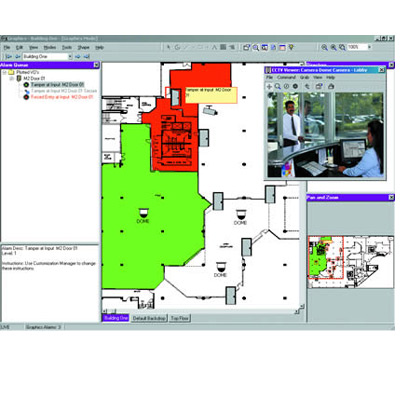
Hirsch's Velocity Security Management System on show at ISC West
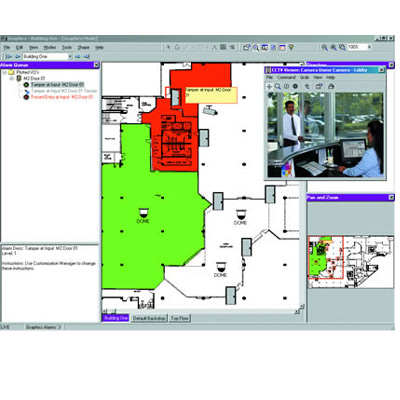
Hirsch's Velocity Security Management System
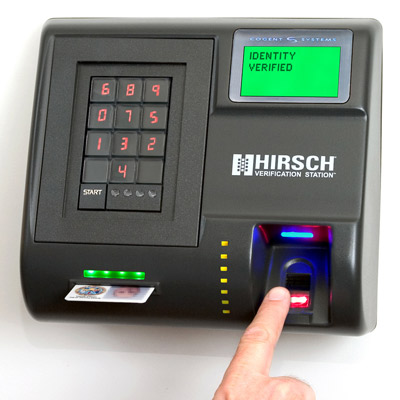
Hirsch Verification Station, model RUU

