Hikvision - Experts & Thought Leaders





White papers from Hikvision

Minimizing storage, maximizing focus
Download
Elevating security through multi-sensing solutions and large-scale AI
Download
The role of artificial intelligence to transform video imaging
Download
Hikvision DarkFighter Technology for high-quality images at night
Download
Hikvision Anti-IR Reflection Dome Camera
Download
Hikvision H.264+ encoding technology
Download
ROI (Region of Interest) - Encoding Technology V0.5
Download
Hikvision Advanced Image Processing - Noise Reduction
Download
Understanding Digital Defog Technology
Download
H.264/AVC - Encode Technology V0.8.0
Download
Latest Hikvision news & announcements

In a move to modernise campus operations and create a smoother experience for students and staff, Peru’s National Agrarian University has deployed a comprehensive Hikvision smart campus solution. From streamlined access to safer transportation, the university is building a safer, connected and efficient campus environment. Universidad Nacional Agraria La Molina (National Agrarian University) is one of Peru's most respected academic institutions. Its 102-hectare campus operates more like a small city than a traditional university, serving eight faculties, around 8,000 students, and about 600 teachers every day. Large campus area As campus activity continued to grow, the university wanted a more modern and efficient way to manage daily operations. Previously, visitor and vehicle access relied heavily on manual checks and handwritten records. The university also wanted better visibility over campus bus operations and more effective support for security teams patrolling the large campus area. Their goals included: Streamlining pedestrian and vehicle access Equipping patrol teams with mobile tools to enable them to respond to incidents faster Enhancing safety and visibility across campus bus operations Centralising management through a single unified platform Smart campus solution To achieve these, the university worked with system integrator Consorcio Valtar Security y Serinfortel to deploy a unified Hikvision smart campus solution. To improve pedestrian access, the university installed 18 Hikvision Pro Swing Barriers (DS-K3B530X) and 28 Face Recognition Terminals (DS-K5671-ZV) at the main and side entrances. The solution helps students and staff move through gates quickly while improving entry management. The facial recognition terminals support recognition speeds of less than 0.2 seconds per user and accuracy rates above 99%. Anti-tailgating functions, which prevent people slipping in behind others, helps ensure only authorised individuals can enter. LED indicators, meanwhile, provide visual indicators guide people through the turnstiles in order to avoid bottlenecks. Reducing manual paperwork To further streamline visitor handling, the university deployed a Visitor Terminal (DS-K5032-D) together with an Enrolment Station (DS-K1F600U-D6E-F) at the main entrance. The dual-screen visitor terminal supports paperless registration, helping security staff process guests more efficiently while reducing manual paperwork. At the same time, the enrolment station simplifies face enrolment and user management through an easy-to-use touch-screen interface. For vehicle access, Hikvision deployed 6 ANPR Cameras (DS-TCG406-E(S)) together with 6 Barrier Gates (DS-TMG520-H/B) at two campus entrances. The system automatically recognises license plates and manages vehicle access in real time, helping reduce waiting times and improve traffic flow. Staff vehicles can be pre-registered through the university’s app, allowing smoother entry during peak hours. Adjustable barrier speeds and multiple anti-hitting protection mechanisms also help improve operational safety. To further improve the driver experience, LED Screens (DS-TVL224-4-5Y) display welcome messages and vehicle information in real time. Maintaining daily operations Because of the campus’s large size, motorcycle patrol teams play an important role in maintaining daily operations and responding quickly across different areas. To support these teams, the university has deployed 10 Hikvision Ultra Series Body Cameras (DS-MH2311) together with 2 Dock Stations (DS-MDS001). Several features make this solution particularly suitable for mobile patrol work: Clear 2 MP video recording with a wide 129° horizontal field of view Up to 8 hours of recording with a removable 3,300 mAh battery Wireless connectivity for improved communication Real-time positioning support through GPS Centralised charging, storage, and evidence upload through dock stations Professional campus operations The cameras are mainly used during routine motorcycle patrols and when responding to incidents on campus. Recorded footage helps clearly document security procedures and provides reliable records of how situations were handled, supporting transparent and professional campus operations. The university has also upgraded safety across its fleet of 11 campus buses with Hikvision onboard solutions. Each bus is equipped with: Mobile Dome Cameras (DS-2XM6726G1-IM/ND) and Mobile Network Cameras (DS-2XM6522G1-ID): These provide real-time HD video coverage inside and outside the buses, helping operators monitor passenger boarding, alighting, and road conditions clearly. DSM Camera (AE-VC1B1I-ISF(RJ45)): This improves driving safety by detecting critical safety indicators such as fatigue, distractions, and smoking. When potential risks are identified, alerts are immediately issued to the driver, helping encourage safer driving practices during daily routes. Touch Monitor (AE-MW1203): Drivers can view live camera feeds through the monitor. The display automatically switches to relevant views when doors open or when reversing, helping drivers monitor passenger movement and blind spots more effectively. Alarm Button (DS-1530HMI(AE)(O-NEU)): It allows drivers to immediately notify the control center for rapid assistance in emergency situations. Mobile NVR (AE-MN5043(1T/SSD)(RJ45)(O-STD)): This records and stores video while also supporting GPS positioning, geofencing, and route monitoring through Google Maps integration. Campus bus management Every solution, from access control and patrol operations to campus bus management, is centrally managed through HikCentral Professional. From this single platform, the university can: Monitor access events in real time Manage user permissions and visitor records Track campus buses through GIS-based maps Receive centralised alarms and event notifications Coordinate faster responses across campus Daily campus operations According to the university, the solution has significantly improved operational visibility and coordination across the campus. “With Hikvision’s smart campus solution, we now have a much more efficient and connected way to manage daily campus operations,” says Joseph Jimy Ordóñez Blanco, General Coordinator of the University’s Security Unit. “From access management to transportation safety, the platform gives our teams better visibility, faster response capabilities, and greater confidence in maintaining a safe environment for students and staff.”

In order to turn its auditorium into a multi-purpose venue, and to improve the general visual experience, Dubai's GEMS Modern Academy replaced their legacy projection system with a massive LED wall from Hikvision. The renovated auditorium has become a popular venue for students, staff, and the community. Challenge: Turning the school auditorium into a multi-purpose performance venue. With the numerous approaches to the entertainment available, and with audiences' surging demand for rich, high-quality content display and immersive sound and video. As a result, venues such as showrooms, studios, auditoriums, and lecture halls are dabbling in a host of new technologies and applications to achieve the ‘wow factor’ audiences are looking for. Visual display systems GEMS Modern Academy is one of these venues. Offering Curriculum to children from kindergarten to grade 12, GEMS is one of the top ten schools in Dubai. Its large auditorium holds 500 seats for school events and can be rented out for private events on weekends. Originally, the auditorium had a large projection screen on the stage to display presentations, images, and videos. However, every element in the environment could take away from the image quality, from sunlight coming in through windows to the whiteness of the screen, the distance from the projector, the age of the system, and more. Offering Curriculum to children from kindergarten to grade 12, GEMS is one of the top ten schools in Dubai Ritesh Dhanak, Head of the IT team at GEMS Modern Academy said, "The projector system was not good enough with the ambient lighting. In order to create a better experience in our auditorium, and to pave the way for it to become a community hub, we need to do a complete upgrade to our live audio, stage lighting and visual display systems.” Remarkably refined images To achieve this, Mr. Dhanak worked with Almoe AV Systems, a renowned distributor and solutions provider of professional audio visual & IT products in the UAE. Almoe helped the school to upgrade the auditorium's touch control systems, matrix switchers, stage lighting, and speaker systems. For the most crucial part of the solution – the visuals – they worked with Hikvision to install a new LED display. The solution: A massive Hikvision LED wall and movable LED side-walls. LED displays offer many advantages, including flexibility and modularity. Therefore, the school decided to install a massive LED screen at a width of 12.48 metres, a height of 4.86 metres, and a pixel pitch of 2.5 mm at the centre of the auditorium stage. The massive LED wall is made up of nine pieces of P2.5 Fine Pixel Pitch LED Display Units (DS-D4425FI-CAF). The wall delivers an outstanding colour gamut and contrast ratio to create remarkably refined images. Massive centre screen The two side-screens are used as backdrops, and can be easily removed when they are not needed For the setup, GEMS Modern Academy preferred to make the two sides of the screen removable to ensure flexibility on the stage, as well as to have multiple videos broadcasted on the screens simultaneously. Four smaller side-screens were designed to be 2 metres wide and 5 metres high, with a pixel pitch of 2.9 mm. They were installed on the two sides of the massive centre screen. Each side-wall was composed of four P2.9 Indoor Rental LED Displays (DS-D4429RI-CAF). The two side-screens are used as backdrops, and can be easily removed when they are not needed. The LED walls are managed using Hikvision’s Video Wall Controller (DS-C10S-S11T), which supports up to 3840 x 2160 resolution at 30 Hz from multiple signal sources (VGA, DVI, HDMI, SDI, YpbPr, DP, and HDBaseT). This enables the school faculty to easily manage multiple video and audio inputs and outputs. Excellent visual experience The benefits: Excellent visual experience for audiences makes the auditorium a popular venue for students, staff, and the community. Hikvision's LED wall has vastly improved the visual performance of lectures and events held at the auditorium. With an extremely bright and clear image displayed, the screen loses none of its sharpness, colour, or coherence, even when viewed at an angle or when the auditorium is brightly lit. The LED wall provides high-quality visuals, and is perfect for our large auditorium" "The LED wall provides high-quality visuals, and is perfect for our large auditorium," said Mr. Dhanak, adding "Unlike with the old system, we don't have to dim the lights in the auditorium during lectures, presentations, or live performance, and this allows students to take notes, remain more attentive and, for remote viewers joining via web conferencing, see the auditorium clearly." Ambient lighting conditions In the end, the video wall displays excellent visuals, adapts to ambient lighting conditions, and offers unique flexibility with the removable side-walls. As a result, Hikvision's LED display solution has turned the auditorium into a venue that fits all kinds of events. Since the LED screens have been installed, the school has hosted a large number of events at the auditorium, such as school lectures, stage plays, and musical performance. In addition, the venue has also been rented out for many private events such as public presentations and speeches. Impressively, the venue has also been used to host a TED Talk, one of the most popular lecture platforms in the world. Mr. Dhanak concluded, "With a large multi-purpose auditorium providing such excellent visual experience to the audience, events at GEMS Modern Academy are now on a different level and our auditorium is a much sought after event space in the community."

With millions in inventory, car dealerships can’t take any risks with their security, but manual security patrols significantly increase operating costs. To address this challenge, Hungarian car dealership, CarNet FOR-TOP Ltd. has implemented an innovative, AI-powered perimeter protection solution from Hikvision. This supports far more efficient remote security monitoring, while also automating car-rental processes for further cost savings – all adding up to 100% ROI in under eight months. Asset protection and automation Car dealerships and car rental companies often hold millions of dollars in assets, including vehicles, tools, and buildings. As a result, these kinds of businesses often need large security teams on site 24x7 to manage and monitor their operations. The challenges of manual security processes and staffing costs are very familiar to CarNet FOR-TOP Ltd The challenges of manual security processes and staffing costs are very familiar to CarNet FOR-TOP Ltd., which is the official dealership and service centre for Ford and Peugeot in the country. The company, which operates four sites in the Győr, Sopron and Tatabánya regions of Hungary, and employs more than 100 people, holds millions of dollars-worth of vehicle stock, and also offers vehicle rental services. Enhanced site security and efficiency To maximise site security and to increase efficiency, CarNet FOR-TOP Ltd. needed new systems to improve and automate its security monitoring operations. Additionally, the company wanted to automate checks on rental cars being returned by customers to reduce reliance on manual processes and to reduce staffing requirements and associated costs. Smart video technology from Hikvision To automate and improve site security and rental car checks, CarNet FOR-TOP Ltd. worked with local security partner, Derik Hungária Kft (Derik Group) to implement a smart video solution from Hikvision. The video solution incorporates Hikvision AcuSense fixed bullet cameras and an AcuSense Network Video Recorder (NVR), Hikvision DS-7732NXI-I4/4S, which automate monitoring of the site perimeter. These AI-powered products trigger ‘line crossing’ alerts, when unauthorised people enter the CarNet FOR-TOP Ltd. site. In such cases, an alarm is sent to remote security staff at the Derik Group operating centre, and guards are dispatched to the site immediately. Hikvision AcuSense cameras are equipped with DarkFighter technology Hikvision AcuSense cameras equipped with DarkFighter technology The Hikvision AcuSense cameras are equipped with DarkFighter technology, which enables crystal-clear video imaging, even in very-low light conditions, or at night. This ensures that security breaches are captured on camera in vivid detail – supporting investigations and providing evidence for later use. As well as protecting the site perimeter, the Hikvision solution also helps automate and streamline CarNet FOR-TOP Ltd.’s car rental processes – including vehicle collection and drop-off. This is achieved with Hikvision video intercoms, which are used by operators who tell customers how and where to pick up and drop off their rental cars. Hikvision high-resolution Fixed Mini Bullet cameras and other Fixed Bullet cameras positioned at different angles are then used to check that vehicles being returned by customers are undamaged. Efficiency gains and rapid ROI CarNet FOR-TOP Ltd. has eliminated the need for on-site security staff, significantly improving operating efficiency Thanks to the Hikvision smart video solution, CarNet FOR-TOP Ltd. has eliminated the need for on-site security staff, significantly improving operating efficiency. What's more, the company has increased site security with the ability to detect, verify, and respond to security threats in real time. With far fewer false alarms, security costs have also fallen significantly, and security teams at the operating center can focus more of their effort on responding to real security threats. Finally, Hikvision provided excellent technical and local language support for the Derik Group, throughout the CarNet FOR-TOP Ltd. installation, ensuring that all project quality, cost, and time KPIs were met. Cost-effective and high performance remote security Imre Mózes, the Chief Executive Officer (CEO) of CarNet FOR-TOP Ltd., said “Our intention with this project was to transition from manual, on-site security monitoring to far more efficient, cost-effective, remote security.” Imre Mózes adds, “The Hikvision solution, with its automated "line-crossing" detection, has helped us achieve our efficiency goals. Not only that, but we have also automated our car rental processes with Hikvision, which has enabled us to achieve even greater efficiency gains.” Delivering major cost and time savings, CarNet FOR-TOP Ltd.'s smart video solution is expected to pay for itself in just six to eight months. Based on this outstanding ROI projection, CarNet FOR-TOP Ltd. has decided to implement similar remote security solutions from Hikvision across all four of its sites in Győr, Sopron, and Tatabánya.
Insights & Opinions from thought leaders at Hikvision

Can we finally relax a little and announce that the pandemic is nearing an end? With all the false starts and stops, it’s understandable if uncertainty continues to be the dominant force. The apprehension that ruled at every stage continues even as the pandemic (hopefully) ends. But what about ‘the new normal?’ How will the industry need to reinvent itself in the post-pandemic world? We asked this week’s Expert Panel Roundtable: As the industry transitions back to in-person meetings, what will be the ‘new normal?’
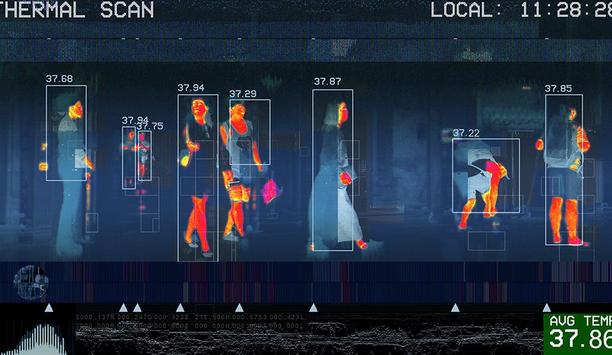
Thermal cameras can be used for rapid and safe initial temperature screening of staff, visitors and customers. Used the right way, the cameras can help prevent unnecessary spread of viruses like the novel coronavirus. During the global pandemic, use of thermal cameras has increased, but they have not always been used correctly, and therefore, not effectively. Hikvision’s temperature screening thermal products are currently assisting users in initial temperature screening across the global market. During 2020, demand increased in most markets, and the company highly recommends that Hikvision’s thermographic cameras be used in accordance with local laws and regulations. Limitations of the technology include throughput and the impact of ambient conditions. Detect viruses and fever Hikvision releases a video that illustrates how skin temperature measurements are normalised within minutes Thermal cameras cannot detect viruses and fever and should only be used as a first line of screening before using secondary measures to confirm, says Stefan Li, Thermal Product Director at Hikvision. “We also believe it is important for businesses and authorities to use [thermal cameras] alongside a full programme of additional health and safety procedures, which includes handwashing, regular disinfection of surfaces, wearing protective clothing such as masks, and social distancing.” Hikvision has released a video that illustrates how skin temperature measurements are normalised within minutes after someone emerges from the cold. Mr. Li says the video demonstrates the accuracy of forehead measurement under difficult circumstances when people come inside from a cold outdoor environment. Temperature screening facilities “There have been some claims that measuring the forehead temperature is not as accurate as measuring the inner canthus, and we believe this video demonstrates the accuracy of forehead measurement very well,” he says. “We also illustrate how the skin temperature will experience a process of recovery (warming up), no matter if it is measured by a thermal camera or a thermometer.” Mr. Li adds that people should wait five minutes in such circumstances before starting a temperature measurement. “We hope that stakeholders who are involved in the design of temperature screening facilities and associated health and safety procedures will recognise how important it is to consider the skin temperature recovery time, and that forehead measurement can provide accurate test results,” says Mr. Li. Thermal imaging manufacturers The algorithm is based on a large number of test results to obtain a value that tends to be dynamically balanced The temperature measurement principle of thermal imaging is to detect the heat radiation emitted by the human body. The detected heat value often does not reflect the true internal body temperature of an individual. Furthermore, the temperature varies among different parts of the human, such as the forehead, ears, underarms, etc. A temperature compensation algorithm can be used to adjust the measured skin temperature to align with the internal body temperature. The algorithm is based on a large number of test results to obtain a value that tends to be dynamically balanced. At present, thermal imaging manufacturers in the market, and even forehead thermometer manufacturers, have developed their own algorithms to map the skin temperature measured by the camera to the internal body temperature, so as to compensate the skin temperature to the internal body temperature. Thermal cameras This is also why Hikvision recommends that the "actual body temperature" should be checked with a secondary device for confirmation. The calibration work for a thermal camera is completed in the production process at the factory, including calibration of reference values and detection point and so on. At the same time, the equipment parameters should be adjusted before on-site use to ensure accurate temperature reads. Hikvision does not deny the accuracy of temperature measurement at the inner canthus but prefers forehead temperature measurement and algorithms based on actual use scenarios, says Mr. Li. A large amount of test data and practical results indicates that the forehead is a correct and easy-to-use temperature measurement area, says the company. There are advantages and disadvantages of choosing different facial areas for temperature measurement. Default compensation temperature Two main approaches direct the measurement area and how compensation algorithms are applied: Forehead area + default forehead compensation algorithm value Upper half face (forehead + canthus) + default inner canthus compensation algorithm value. Both methods deploy compensation algorithms, but the default compensation temperature of the inner canthus will be less than the default compensation temperature of the forehead, generally speaking. The reason is that the temperature of the inner canthus of most people is higher than their forehead, so the temperature compensation is relatively low (i.e., closer to the actual temperature inside the body.) Upper face area Hikvision found that selecting the upper face area plus the default compensation value for the inner canthus resulted in situations when the calculated temperature is lower than the actual temperature. For the Hikvision solution, the forehead is a relatively obvious and easy-to-capture area on an entire face Mr. Li explains: “The reason is that when the camera cannot capture the position of the inner canthus (for example, when a person is walking, or the face is not facing the camera), the camera will automatically capture the temperature of the forehead. Then the result that appears is the sum of the forehead temperature plus the default compensation temperature of the inner canthus, which is lower than the actual temperature of the person being measured. Therefore, errors are prone to occur.” Thermal imaging products But for the Hikvision solution, the forehead is a relatively obvious and easy-to-capture area on an entire face. Also, the default forehead compensation temperature is based on rigorous testing and can also correctly mimic the actual temperature of the person being measured, says Mr. Li. After many test comparisons, considering that the results of forehead temperature measurement are relatively more stable, and in order to avoid the false results from inner canthus temperature measurement, Hikvision chose the forehead temperature measurement approach. “We look forward to bringing thermal imaging products from a niche market where there is a relatively high-end industry application to a mass market and serving more users,” says Mr. Li. Facial recognition terminals Additional application parameters can maximise effectiveness of thermal cameras for measuring body temperature: Positioning and height - All cameras must be mounted appropriately to avoid loss of accuracy and performance. The installation height of each camera must be adjusted according to camera resolution and focal length, and stable installation is needed to avoid errors caused by shaking. Ensuring a ‘one-direction path’ - The detection area must ensure that cameras capture the full faces of all those passing by or stopping, and obstacles should be avoided in the field of view, such as glass doors that block the camera. Adequate start-up and usage - A waiting time of more than 90 minutes is required for preheating, after the initial start-up. Before conducting a thermal scan, people should be given three to five minutes to allow their body temperature to stabilise. When Hikvision MinMoe facial recognition terminals are used, people must stand at a fixed distance, pass one by one, make a short stop, and face the camera directly. Hikvision cameras support efficient group screening, but one-by-one screening is suggested for more accurate results, says Mr. Li. Unstable environmental condition An unstable environmental condition may affect the accuracy of thermal camera systems Environmental factors can impact the accuracy of thermal cameras, and the idea of using a black body is to provide the camera with a reference point that has a stable temperature. The black body is heated to a specific temperature and helps the thermal camera to know how much error is caused by environmental factors in the room, and how the camera should calibrate itself in real time to improve its accuracy. A black body can help increase the temperature measurement accuracy, and the most common improvement is from ±0.5 degrees to ±0.3 degrees. However, it also increases the cost of the installation. In some markets, customers may require black bodies in order to comply with regulatory accuracy requirements. An unstable environmental condition may affect the accuracy of thermal camera systems for measuring temperature. Medical temperature measurement Therefore, Hikvision suggests that the ambient conditions should be met for installation and use. First of all, users should avoid installing devices in hot or changeable environments. All cameras require indoor environments with calm air, consistent temperature and no direct sunlight. Installation should also be avoided in semi-open locations that may be prone to changes in ambient conditions, such as doorways, and there should be enough stable, visible light. All devices should be installed to avoid backlighting, high temperature targets, and reflections in the field of view as far as possible. “We often see the misconception that thermal cameras can replace medical temperature measurement equipment, which is not the case,” says Mr. Li. Rapid preliminary screening “Temperature screening thermographic cameras are designed for the detection of skin-surface temperatures, and the measurement should be conducted to achieve rapid preliminary screening in public areas. It is really important that actual core body temperatures are measured subsequently with clinical measurement devices.”

As the media often reports, the world of cybersecurity can be seen like the ‘Wild West’. There’s now a wide range of Internet of Things (IoT) devices connected to the web, making this a hot topic. Among these devices are security cameras. IoT devices are computers that use software that makes them vulnerable. As the famous cybersecurity evangelist Mikko Hypponen says, "If a device is smart, it's vulnerable!" Hypponen is right. On a daily basis, new vulnerabilities are found in software, regardless of the manufacturer. In 2019, more than 12,000 vulnerabilities worldwide were made public and reported as a CVE (Common Vulnerability and Exposure) in the National Vulnerability Database (NVD). Unfortunately, vulnerabilities are a given. What really matters is how a company deals with and resolves vulnerabilities. Cybersecurity vulnerabilities Awareness of cybersecurity vulnerabilities is vitally important Awareness of cybersecurity vulnerabilities is vitally important to protect you, your business and the Internet, but it’s also important to understand that a vulnerability is not synonymous with “backdoor”, and is not necessarily indicative of “cheap quality.” But there are companies out there that are embedding safeguards into their development processes to reduce the risks. You could see them as ‘Sheriffs’, taking steps to make this Wild West a little safer. Why Hikvision chooses ‘Secure-by-Design’ Security cameras, like all other IoT devices, are vulnerable to cyberattacks. Fortunately, manufacturers of IoT devices can significantly reduce these vulnerabilities during the production of devices, using a process called ‘Secure-by-Design’. Implementation of Secure-by-Design requires a commitment on the part of the manufacturer’s management team and a serious investment in resources and technology, which can result in a longer production process and a higher cost of the IoT device. Cost is often the reason why some IoT device manufacturers do not use Secure-by-Design (and are indeed cheaper). Hikvision is a producer of IoT devices that takes security and privacy very seriously and has implemented Secure-by-Design in its production process. Management supports this process and has even set up a dedicated internal cybersecurity structure charged with product cybersecurity. This group is also the central point of contact for all other cybersecurity matters. The Hikvision Security Development Life Cycle (HSDLC) is an essential part of Hikvision's cybersecurity program. Cybersecurity checks take place at every stage of product development — from concept to delivery. Cybersecurity checks take place at every stage of product development For example, product testing takes place during the verification phase, the company also regularly invites well-known security companies and public testing platforms to conduct penetrating testing. Does this mean that all Hikvision products are immune to hacking? No, that guarantee cannot be given, but the HSDLC is a testament to a manufacturer that makes every effort to produce products that are as cyber secure as possible. Source code transparcency centre In addition to the Secure-by-Design process, Hikvision opened a Source Code Transparency Center (SCTC) lab in California in 2018, being the industry’s first-of-its-kind lab to open such a centre. At this centre, U.S., Canadian government and law enforcement agencies can view and evaluate the source code of Hikvision IoT devices (IP cameras and network video recorders). It’s important to emphasise that no product is 100 percent secure. Hikvision has a Vulnerability Management Program in place when a vulnerability is discovered in a product. To date, vulnerabilities that have been reported to Hikvision and/or made publicly known, have been patched in the latest Hikvision firmware, and are readily available on the Hikvision website. In addition, Hikvision is a CVE CNA, and has committed to continuing to work with third-party white-hat hackers and security researchers, to find, patch and publicly release updates to products in a timely manner. These vulnerabilities are collected in the National Vulnerability Database (NVD) and are public. Hikvision recommends that customers who are interested in purchasing security cameras inquire about a manufacturer’s cybersecurity practices and if they have an established Vulnerability Management Program. Cybersecurity questions to consider The cybersecurity of IoT devices is a topic that needs to be addressed in a serious way and it should play an essential role in the product development process, beginning at the concept phase of an IoT product. This requires time, investment and knowledge. Consider the following questions: Do I trust the manufacturer of a low-cost security camera? Does this manufacturer have a dedicated cybersecurity organisation? How does this manufacturer handle vulnerabilities? These are the questions that everyone should ask themselves when making a purchase, be it a camera or any other IoT product. There is no absolute 100% guarantee of security, but Hikvision has industry-leading practices to ensure the cybersecurity for its cameras. Cooperation, with its customers, installers, distributers and partners, and full transparency are key elements to successfully secure IoT devices. When you read cybersecurity news, we invite you to look beyond the headlines, and really get to know the companies that produce the IoT devices. Before you buy a security camera or any IoT device, check out the manufacturer’s cybersecurity practices, look for a company with a robust vulnerability management program, a company that aligns itself with Secure-by-Design and Privacy-by-Design and a company that employs cybersecurity professionals who are ready and eager to answer your questions. Remember, there are Sheriffs out there, as well as bandits.

Strategic approaches to protecting healthcare clinics
Download
Technology's role in securing banks and financial institutions
Download
Security technologies promote real-time awareness in K-12 schools
Download
Integrated systems enable critical and compliant security for transportation
Download
Modernising physical access control
Download
