
Access control specialist TDSi has completed a wide range of installations in educational buildings worldwide. The company's systems have been developed to deliver powerful access control, as well as full integration capabilities both with other building management systems and a wide range of proprietary software used in the education sector.
The company has worked with a number of universities in the UK, including the University of the West of England (UWE), where it has been supplying a range of infrared readers for over a decade.
In the 1990s, it was recognised whilst there were various elements of access control across the University's various campuses, the overall approach was rather piecemeal, with no central control or coordination. Following the viewing of a number of TDSi reference sites, the University considered a variety of access control options. Ultimately TDSi's Infrared (IR) readers were specified - based on their ability to deliver a cost effective, robust solution to meet an extremely high-use and demanding environment.
Initially the system was trialled in just one block of the University's Frenchay Campus. However, following the completion of a highly successful trial, and with other Deans of Faculty recognising the benefits of professional, coordinated site security, installation spread to other buildings and, over a period of time, other campuses.
The readers are now in operation throughout five separate sites across Bristol and Gloucestershire - all of which are run from a central server, managed at Frenchay.
TDSi's IR reader technology is based on infrared light which passes directly through each individual Microcard®. A unique security code is contained in each card, fixed at the point of manufacture, ensuring that its identity can never be altered.
The inherent nature of the IR technology guarantees complete reliability - cards are read first time, every time. Given such a hard working environment, the fact that the readers are housed in elegant, highly durable metal enclosures, proved to be an additional factor in the university's decision.
The system has developed to such an extent that it is now one of the largest installations in the UK, covering over 600 doors and with in excess of 35,000 graduate and postgraduate students and staff records held on the secure central database.
Looking to the future, subsequent phases will see the introduction of TDSi's dual technology infrared cards, which will incorporate the Mifare® Classic chip, allowing card holders to take advantage of a range of additional features such as cashless vending, library, and photocopying services and transport - all operations managed from just a single card.
The company has worked with a number of universities in the UK, including the University of the West of England (UWE), where it has been supplying a range of infrared readers for over a decade.
In the 1990s, it was recognised whilst there were various elements of access control across the University's various campuses, the overall approach was rather piecemeal, with no central control or coordination. Following the viewing of a number of TDSi reference sites, the University considered a variety of access control options. Ultimately TDSi's Infrared (IR) readers were specified - based on their ability to deliver a cost effective, robust solution to meet an extremely high-use and demanding environment.
Initially the system was trialled in just one block of the University's Frenchay Campus. However, following the completion of a highly successful trial, and with other Deans of Faculty recognising the benefits of professional, coordinated site security, installation spread to other buildings and, over a period of time, other campuses.
The readers are now in operation throughout five separate sites across Bristol and Gloucestershire - all of which are run from a central server, managed at Frenchay.
TDSi's IR reader technology is based on infrared light which passes directly through each individual Microcard®. A unique security code is contained in each card, fixed at the point of manufacture, ensuring that its identity can never be altered.
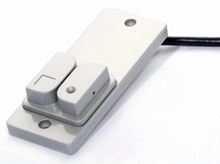 |
| TDSi were chosen based on their ability to deliver a cost effective robust solution |
The system has developed to such an extent that it is now one of the largest installations in the UK, covering over 600 doors and with in excess of 35,000 graduate and postgraduate students and staff records held on the secure central database.
Looking to the future, subsequent phases will see the introduction of TDSi's dual technology infrared cards, which will incorporate the Mifare® Classic chip, allowing card holders to take advantage of a range of additional features such as cashless vending, library, and photocopying services and transport - all operations managed from just a single card.







