Data Security - Round table discussions

Emphasising proactive rather than reactive security shifts the focus from dealing with crises and damage control to prevention. Advantages of a proactive approach include cost efficiency, better business continuity, and fewer crises that draw attention away from strategic improvements. Staying ahead of threats is a core mission of the security department, and technology has evolved to enable security professionals to deliver on that mission better than ever. We asked our Expert Panel Roundtable:...

Data overload is real. Sometimes it seems we are bombarded by the sheer volume, velocity, and variety of data available in our personal lives, and in our work lives. The solution is to figure out how to make sense of the data and transform it into real information we can use. In the case of physical security systems, new opportunities are emerging every day to utilise data to make our businesses safer and better managed. We asked our Expert Panel Roundtable: What is the expanding role of...

New technology advancements significantly increase efficiency and productivity in any industry, including physical security. Enhanced innovation both creates new products and services and improves existing products, all for the benefit of security manufacturers, integrators, and end users. Companies that embrace new technology stay ahead of the curve and gain a significant competitive advantage. In addition, they can differentiate themselves in the marketplace. We asked this week's Expert Panel...

2025 is likely to see further advancements in artificial intelligence, with potential impacts on various aspects of society, including the security industry. The new year will also require security professionals to adapt to changing market conditions and develop contingency plans for unforeseen events. Industry changes will accelerate and challenge everyone in the security market to keep up. Making specific predictions for the new year can be a struggle, but we asked our Expert Panel Roundtable:...

Technology automates tasks, streamlines processes, and improves efficiency in various fields, including physical security. But the success of today’s latest technologies depends on our ability to use them responsibly and efficiently. Optimising our industry’s use of technology requires that the industry’s workforce have the needed skills to operate the latest equipment. We asked this week’s Expert Panel Roundtable: How does technology innovation in security systems impact...

The hospitality industry drives economic growth and development by creating jobs, generating revenue, and initiating a ripple effect to improve profitability throughout the supply chain. The hospitality industry includes a vast number of small businesses, including hotels and restaurants. But what are the security challenges of these businesses, and how is the security marketplace serving those needs? We asked this week's Expert Panel Roundtable: How can technology address the security challenge...

The Internet of Things (IoT) has revolutionised many industries, including physical security. By connecting physical devices to the internet, IoT technology offers significant enhancements to security systems. Benefits include real-time monitoring, remote access, and the utility of new devices such as temperature and humidity sensors. At the same time, IoT devices come with challenges, including greater cybersecurity vulnerability. We asked this week's Expert Panel Roundtable: How is the Interne...

Migrating to the Cloud can be a cultural shift for some organisations, especially when it comes to physical security systems. Challenges such as concerns about data security and compliance, cost management, and a skills gap can make adopting the Cloud seem onerous. But the benefits are there, aren't they? We asked this week's Expert Panel Roundtable: Will the impact of the Cloud on physical security integrators be net-positive or net-negative?

The economic fallout of the COVID-19 epidemic was felt in supply chain disruptions, higher prices, and shortages of certain goods. The physical security industry was not spared, although the epidemic also presented opportunities for security companies. Changing access control trends triggered by the pandemic are still reverberating throughout the industry, for example. Four years later, the impact of the pandemic is still being felt in the security market, lingering like the symptoms of "long CO...

When it comes to preventing theft and ensuring overall safety, technology offers a robust toolkit for retail stores to enhance security in several ways. From intelligent surveillance systems to RFID tags used to avoid shoplifting, today’s retail and loss prevention strategies are more effective than ever. Beyond security, the newer technologies can also provide benefits related to merchandising, inventory control, customer service, and the list goes on. The combination of abundant data and...

Technology can be a powerful tool, but it can also be misused. Ethical principles help ensure that technology is used in a way that minimises risks and avoids causing harm to people or society. Issues could include factors such as data privacy and algorithmic bias of certain technologies. As the security industry embraces advanced and evolving technologies, we asked this week’s Expert Panel Roundtable: What are the biggest ethical considerations of using emerging technologies in physical s...

By all reports we have heard, 2024 is rushing by at a rapid pace. Many of us are just now catching our breaths after the busy holiday season, even though spring is practically here. Having had a healthy taste of 2024 already, our Expert Panel Roundtable is eager to weigh in on what lies ahead for the rest of the year to come. We asked this week’s panel: What large trends are driving growth in the physical security industry in the year ahead?

Edge devices play an important role in the Internet of Things (IoT) by enabling real-time data analysis, faster decision-making, and improved operational efficiency across various industries. In the physical security industry, applying artificial intelligence (AI) capabilities to edge devices expands the possibilities, and edge devices offer complementary functionality to support movement to the cloud. We asked this week’s Expert Panel Roundtable: What are the latest developments for edge...

With the new year well underway, 2023 seems almost like a distant memory. However, a bit of distance might be just the thing to enable us to examine the impact of the year 2023 on the physical security marketplace. We asked this week’s Expert Panel Roundtable: What factors had the biggest impact on the security marketplace in 2023?

Protecting access control data is a core concept when it comes to safeguarding information assets, maintaining trust, and ensuring smooth operations. Guarding access to data also ensures compliance with regulations, prevents accidental misuse, and streamlines workflows. We asked this week’s Expert Panel Roundtable: What safeguards are in place to avoid unauthorised retrieval of access control data?

Machine learning (ML) is a field within Artificial Intelligence (AI) and one of the more common buzzwords in the physical security market. ML focuses on building computer systems that can learn and improve on their own, without being explicitly programmed for every scenario. Machine learning is poised to revolutionise physical security by offering a more proactive, data-driven approach to securing people and assets. We asked this week’s Expert Panel Roundtable: What is Machine Learning (ML...

Ideally, every new product or technology serves a need in the market, but not all new products are created equal. The impact of some new technologies is so profound that they make us rethink our preconceptions and may create a total transition in the broader market. These are the technologies we call “game changers” because they prompt a significant shift in the current manner of doing or thinking about security. We asked this week’s Expert Panel Roundtable: What current techno...

Security systems are often seen as an investment, but usually not one that pays dividends. However, newer technologies are enabling end users to extend their efforts to cost-justify a security system beyond the mirage of “measuring what didn’t happen.” Nowadays, security systems provide quantifiable benefits that yield a return on customers’ investments. We asked this week’s Expert Panel Roundtable: How can security systems maximize return on investment (ROI)?

For many years, security systems produced their share of "data exhaust." Every access control action and each video image became a data point to be stored in perpetuity, with no practical way to use the data. More recently, systems have been developed to enable organizations to analyze data from sensors and other connected devices to gain valuable insights into how their systems are being used, to identify potential vulnerabilities; and even to provide insights into broader enterprise operations...

Cloud implementations enable organisations to slash IT costs, boost performance, increase efficiency, and provide flexibility in a variety of applications. Cloud computing is a great way to store and access data from anywhere in the world, as long as you have an internet connection. In the case of video management, Video Surveillance as a Service (VSaaS) systems are becoming more popular, both as a means of managing costs and to deliver expectations of accessing video from any device anywhere in...

There is safety in numbers, or so the expression goes. Generally speaking, several employees working together tend to be safer than a single employee working alone. Even so, some environments require that workers complete their jobs alone, thus presenting a unique combination of security vulnerabilities. The U.S. Occupational Safety and Health Administration (OSHA) defines a lone worker as “an employee working alone, such as in a confined space or isolated location.” We asked this we...
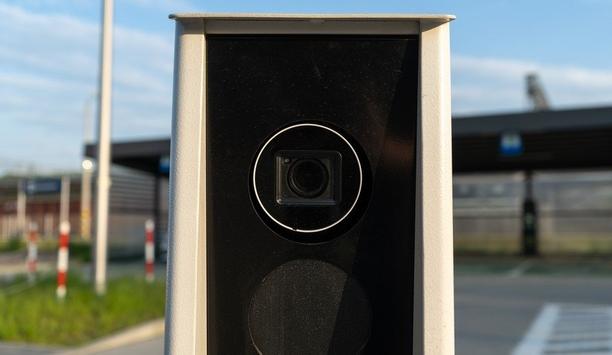
In the United States, they are called licence plate recognition (LPR) systems. In Europe, the more common term is automated licence number-plate recognition (ANPR). In either case, the systems provide capabilities that can benefit a range of applications from schools to municipalities to parking lots. Newer technologies can even identify vehicle colour, type, make and model. We asked this week’s Expert Panel Roundtable: What's new with licence plate recognition (LPR) and/or automated numbe...

Headlines of violence in our schools are a reminder of the need to keep educational institutions safe. In fact, if there is a positive aspect to the constant bombardment of headlines, it is that it keeps our attention perpetually focused on how to improve school security. But what is the role of physical security systems? As the new school year begins, we asked this week’s Expert Panel Roundtable: Are schools safer because of physical security systems? Why or why not?

As physical security technologies become more complex, it is incumbent on the dealer/integrator to have the skills and expertise needed to ensure that a system operates smoothly. The value of integrators increasingly rests on the skill sets they bring to bear when installing a system. If the skills are missing, there is a problem. We asked this week’s Expert Panel Roundtable: What missing skills among security integrators can cause problems for customers?

Driving the smart homes market is the convenience of simple technology solutions. Almost every home now has a “smart speaker” that makes it easier than ever for homeowners to interface and control their technology. But where does security fit into the new landscape of smart home systems? We asked this week’s Expert Panel Roundtable: What’s new in smart homes and residential security systems?

Historically, the emphasis of security systems has been on reactivity, whether it’s providing video evidence of an incident or data to support a resulting investigation. Reactivity is core to impactful security, but increasingly, systems are also seeking to be more proactive. A proactive system seeks to prevent events from happening in the first place, thus mitigating the harm to an organisation, and making the need for a reactive response moot. We asked this week’s Expert Panel Roun...

The role of the integrator/installer in the physical security marketplace is shifting as technologies evolve and applications expand. Integrators are being faced with a need to augment their expertise both in a wider range of systems and deeper into the specifics of each increasingly complex technology. At the end of the day, it falls to the integrator/installer to ensure a system performs as promised, however much a consultant or even a manufacturer might be involved in the process. We asked th...

Deployed across a wide range of devices, the Internet of Things (IoT) collects data to help business owners make decisions on a macro scale as well as at a granular level. The IoT is a network of physical devices embedded with sensors, software, and network connectivity that allows them to collect and share data. We called on this week's Expert Panel Roundtable to comment on the intersection of the IoT and physical security. We asked: How is the Internet of Things (IoT) increasing the effectiven...

Analogue video cameras are still used in a variety of applications, primarily because yesterday’s robust and flexible technology is still functioning today, although it has been years, or even decades, since the initial installation. In many cases, this past generation of security cameras is still reliable and effective. Embracing an installed base of analogue cameras is often the most cost-effective approach when updating or expanding a surveillance system. But what about the futur...

Sharing data between security and building management devices can provide a route to maximise building usage and minimise costs. In today's Internet of Things (IoT) environment, tying together a variety of systems is easier than ever. For an update, we asked this week's Expert Panel Roundtable: What are the benefits of integrating security technology with building management systems (BMS)?

Technology's role in securing banks and financial institutions
Download
Security technologies promote real-time awareness in K-12 schools
Download
Integrated systems enable critical and compliant security for transportation
Download
Modernising physical access control
Download
Access. Intrusion. One estate.
Download
