Lumidigm - Experts & Thought Leaders



Latest Lumidigm news & announcements

The Invixium biometric readers combine sophisticated matching algorithm at 10,000 matches per second Laidlaw Security Systems’ commitment to innovation and quality has been demonstrated yet again with the announcement that it is fully integrating Invixium biometric readers into its products. Invixium, a world-class manufacturer of next-generation biometric products, is a system that is based on smart innovations and functionality. Cutting-edge technology This cutting-edge technology will be included in Laidlaw’s security portfolio of products, enabling customers to benefit from a seamless, fully integrated system that provides some of the highest levels of protection in a wide range of applications. Stuart Griffiths, Laidlaw Security Systems’ UK Sales Director, said: “This is an exciting development for Laidlaw. By integrating technology from Invixium, one of the world’s leading manufacturers of premium biometric systems, into our security systems, we are able to offer our customers robust, future-proof products of the highest quality.” “We pride ourselves at being at the forefront of innovation when it comes to our security systems and partnering with Invixium will undoubtedly give us the edge. Its revolutionary technology is the perfect complement to our product portfolio.” Orbis door controller "By integrating technologyfrom Invixium into our security systems, we are able to offerour customers robust, future-proof products of the highest quality" Invixium is integrated into Orbis, Laidlaw’s ground-breaking, licence-free software that offers unparalleled features for any access system. Orbis also includes premium features, including alarm processing, card format decoding, and device management as standard. The Orbis door controller, the world’s first native PoE/PoE+ BACnet access control unit, is also available from Laidlaw.The Invixium biometric readers combine sophisticated matching algorithm at 10,000 matches per second along with multispectral fingerprint sensor technology supplied by Lumidigm, which maximises performance and return superior quality images. The sensors detect the subsurface fingerprint, which increases biometric performance and enhances the throughput and accuracy of any application, even for the 2-5% of the population who have problem fingerprints that fail to enrol on conventional sensors. The result is close to zero failure to enrol rates.In addition to being the first biometric product developed on the Android platform, Invixium products are equipped with industry-leading trusted technologies. These include capacitive touchscreen LCD with antimicrobial Corning Gorilla Glass, presence detection, IP65 rating, power over Ethernet (PoE), and HID’s iCLASS SE card reader, making them the most modern and exquisitely designed biometric offerings on the market today.“Biometric access control is the future,” says Shiraz Kapadia, CEO and President of Invixium. “In addition to incorporating various technologies and feverish focus on quality, we give paramount importance to design and usability. We are delighted with Laidlaw’s decision to incorporate our innovative biometric products into its Orbis software platform, providing a great opportunity for its customers to upgrade existing installations with biometric access control seamlessly.”

EMARNAT (Mexico Government institution, Secretariat of Environment and Natural Resources) Mexico's environment ministry is charged with the mission of protecting, restoring, and conserving the ecosystems, natural resources, assets and environmental services of Mexico with the goal of fostering sustainable development. DR Security is a company highly recognised in the field of solutions, integrations and services in the field of security technology, concentrating on new technologies, achieving and maintaining the highest quality. It is always maintaining an ethical interaction between customers, companies and employees within it. Solution offices SEMARNAT has 40 branches and 2000 employees nationally. The principal office is located in Mexico City that manages 40 branches in other cities. And more than 2000 users need to access their different branch buildings everyday, so there are two identification modes required on the integrated system consisting of the visitor only with card identification mode and employee with card and FP identification mode. Every two OA1000 Mercury Pro controls one Single Lane Flap Barrier. When employees punch card and place the FP to get access granted, the single lane flap barrier will open. OA1000 Mercury Pro with FP identification function increases the security level, and makes it the ideal choice to build intelligent and secure Access Control Application System. Anviz OA1000 Mercury Pro DR Security integrated Anviz OA1000 Mercury Pro after strict testing and evaluation with ANVIZ R&D professional support team. Due to its highest quality and performance of OA1000 Mercury Pro with very fast, accurate verification of fingerprint and Mifare card, also high quality Mercury Sensor from Lumidigm USA, finally they chose this solution as the best solution. OA1000 Mercury Pro is one of Anviz fingerprint flagship models, based on the Linux operating system, with features of dual-core high-speed CPU; large memory support; and 1: 30000 matching high speed in less than 0.5 seconds. Multiple communication modes are available: TCP/IP, WIFI & 3G optional. Its built-in webserver allows fast, easy access to the device settings and record searching. Benefits of the Anviz solution After the installation of OA1000 Mercury Pro integrated with the single lane flap barrier, Mexico government SEMARNAT had received users’ positive feedback and realised real-time monitoring the employees or visitors’ entry/exit buildings, improved office security level, saved labour cost to maximum. Meanwhile, other institutions of Mexico government are interested in this and wish to apply this security system.

A highlight of initiative is HID’s latest mobility solutions unveiled at ISC West, including goID platform, Mobile Access enhancements, & more HID Global®, a worldwide leader in secure identity solutions, has introduced a mobility initiative that includes solutions, services, investments and alliances that expand the capabilities of trusted IDs on mobile devices across a growing range of access control, authentication and Internet of Things (IoT) applications. A highlight of the initiative is the company’s latest mobility solutions unveiled at ISC West 2016, including the new HID goID™ platform for mobile IDs which makes it possible to carry a driver license and other citizen IDs on smartphones, and new enhancements to HID Mobile Access® that now enable the use of smartwatches and tablets, in addition to smartphones, for secure access to buildings. “The HID Global mobility initiative dramatically elevates how users regard security by enabling them to confidently connect to and use more applications, on the go, than ever before, with a single, trusted ID that can be carried on a smart device,” said Stefan Widing, President and CEO of HID Global. “During the past several years, we’ve led the market in taking the first steps to turn smartphones into ID cards, keys and computer logon tools, with rapid growth in enterprise adoption of HID Mobile Access this year. Now, HID Global is driving advancements that will usher in an era of connected and trusted identities that become the heart of a more secure digital lifestyle built around the convenience and ubiquity of our ever-present mobile devices.” HID Global’s growing mobility offering is aimed at driving new levels of convenience and empowerment to transform the user experience in today’s increasingly connected, mobile-first world. New solutions launched at ISC West as part of the mobility initiative include: HID goID™ Platform for Mobile IDs: An important step toward making the vision of mobile citizen IDs a reality, the HID goID™ platform for mobile IDs enables federal, state and local government agencies to issue credentials over the air to citizens’ smartphones for driver’s licenses, passports, social security cards and other national ID documents. It also makes it possible for a smartphone to serve as an all-in-one secure credential and ID reader, providing the choice to eliminate ID readers at border crossings and other locations. New HID Mobile Access capabilities, including support for Apple Watch, Android Wear and tablets: New capabilities provide smart device choice, beyond the smartphone, to open doors and gates. New HID Mobile Access Portal and App software developer kits (SDKs) enable partners and end-users to create innovative, customised mobile access solutions that can be fully integrated into their back-end systems. New services to meet compliance, security and risk management needs: HID Professional Services™ provide customers with the technical expertise to design and implement mobile access and strong authentication solutions for secure access to data, cloud-based applications and web services. "The HID Global mobility initiative dramatically elevates how users regard security by enabling them to confidently connect to and use more applications, on the go, than ever before, with a single, trusted ID that can be carried on a smart device" says Stefan Widing, President and CEO, HID Global Over the past 18 months, HID Global has steadily integrated mobility into the security experience through numerous new solutions and services, strategic partnerships and investments. As the company’s mobility initiative has expanded and accelerated, it has: Improved the convenience of enterprise strong authentication: ActivID® Tap Authentication for Microsoft enables users to simply tap their smart card to laptops, tablets, phones and other NFC-enabled devices for easy and convenient access to Office365 and other cloud apps and web-based services. Created a better and more secure banking experience: Mobile Push notifications for ActivID® Trusted Transactions eliminate the hassle of PINs, passwords and authentication challenge questions by turning the smartphone into a security token. Enabled new IoT applications: HID Trusted Tag® Services have added trust to NFC transactions, enabling IoT applications that would otherwise be vulnerable to risk or simply not possible. Security guards and other “lone workers” can verify they are where they are supposed to be on their rounds. Strengthened HID Global’s mobility portfolio through strategic partnerships and acquisitions: Partnerships with Samsung, NXP and other industry-leading companies to forward the adoption of mobile solutions. HID Global’s Lumidigm® acquisition expanded its biometrics capabilities, and the acquisition of Quantum Secure provides the ability to automate access control by adding an integrated physical security policy platform for managing secure identities, compliance and operational analytics across multiple sites and systems. Forrester Research said in its 2016 Mobile Predictions report that mobile devices will become users’ go-to technology, and mobile will act as a catalyst to transform businesses in the Age of the Customer. The firm also said in its 2015 Mobile Security Playbook that security leaders are struggling to accommodate a mobile mind shift in the enterprise and must balance security and privacy concerns with the importance of user experience and the business objectives of the enterprise. HID Global’s mobility solutions are powered by the company’s award-winning Seos® technology, which adds trust to identities, so users can confidently embrace and use new applications that simplify and enrich their lives. As the underlying technology for solutions leveraged by enterprises, banks, hospitals, universities and other organisations, Seos is also used by HID Global’s parent company ASSA ABLOY in the successful Starwood Keyless entry program, where hotel guests around the world open guest rooms with their smartphones. Live demonstrations at ISC West 2016 in Booth #11063 Visit HID Global’s booth for a wide range of mobility demonstrations, along with the company’s broad portfolio of solutions for creating, managing and using secure identities.
Insights & Opinions from thought leaders at Lumidigm

There are many new technologies at ISC West this year. There are also some tried-and-true solutions on display. More mature products have the benefit of being fully vetted and battle-tested, which may make them a more comfortable choice for security customers. I had a couple of discussions on Day 2 of the show about the advantages, and possible drawbacks, of new products. “To a security director, when you say ‘new,’ he translates that into ‘risk,’” says Bill Spence, VP of Sales, U.S., Canada and Western Europe for HID Global’s Lumidigm biometrics brand. “Anytime you say new, there is a probability of risk. The key is to educate. Education quantifies risk, and an educated customer can make an intelligent decision about risk versus reward.” “We have to take customers from where they are to help them understand new technologies,” says Spence. “We must give them a bridge to that understanding, and education is the bridge.” Lumidigm biometrics integrations An app provides graphics that take installers step-by-step through the installation process HID Global is incorporating Lumidigm biometrics into the new iClass SE RB25F fingerprint reader being highlighted at the show. Two-factor authentication can use either a card or mobile credential along with biometrics; there is no latency; and templates can be stored on a card. Another new offering at the HID Global booth is an augmented reality tool to simplify installation of newer systems that incorporate the more secure OSDP protocol. An app provides graphics that take installers step-by-step through the installation process. Also highlighted at the HID Global booth — and at the booths of turnstile manufacturers throughout the show — are embedded readers that provide tested and certified mobile access control for turnstiles. IClass SE technology is embedded in the iRox-T Turnstile Reader from Essex Electronics. Innovative security technologies There’s a delicate balance at any trade show between creating excitement about new products and educating customers to be comfortable with new technologies. There is some of both at ISC West 2019. In the future, hardware will be a delivery device, not the core of systems “We are on the cusp of change in the industry, and it’s closer than ever,” says Jennifer Doctor, Johnson Controls’ Senior Director, Project Management - Intrusion. “We will see the impact of promised technologies that will come from other industries, such as artificial intelligence. The very definition of security is changing. We are an industry that needs to be risk-averse, and we need to prove out the technology. There is innovation, but we just need to make sure technologies are what the market wants and expects.” “In the future, hardware will be a delivery device, not the core of systems, which will come from intelligence in the software and from services,” she adds. “The products we deliver will enable that.” Have 30 percent of service companies in the U.S. security market jumped into the cloud? PowerSeries Pro intrusion portfolio Johnson Controls is highlighting the commercial PowerSeries Pro intrusion portfolio, which features PowerG encrypted technology that enables wireless systems that are cyber-secure. The cloud is coming on strong, and one company finding success in cloud systems is Eagle Eye Networks, which has seen 93% compounded annual growth over the past three years. Economies of scale have enabled them to lower subscription prices by 35%, with an extra 10% decrease for customers that pay annually. Ken Francis, President of Eagle Eye Networks, says they are signing up 50 new dealers a month for the cloud video offering. Francis estimates that 30 percent of service companies in the U.S. security market have jumped into the cloud “It’s really heating up,” says Francis. “The general cloud is driving increases in the surveillance cloud.” Jumping to cloud Embracing the cloud and recurring monthly revenue (RMR) requires that dealers transform their businesses to ensure success. Francis says dealers should dedicate sales resources to cloud offerings rather than expect everyone to sell the cloud, and there should be a base commission plan on RMR services in lieu of upfront project fees. March Networks is also showing integration of video with the Shopify cloud-based point-of-sale (POS) system “Talk to professionals about your cash flow and understand how to capitalise on financing partners to ensure cash flow while investing in the RMR stream,” he adds. “And look for ways to reduce your costs to serve the customer base as your RMR increases.” For example, use of remote site diagnostics, configuration and support can avoid the need for expensive “truck rolls” that can undermine profitability. Francis estimates that 30 percent of service companies in the U.S. security market have jumped into the cloud. Alarm companies, which are accustomed to the RMR model, are generally ahead of the curve, while traditional security integrators are lagging. “It’s a requirement to change or die,” he notes. Insight hosted managed service Also, in the area of managed services, March Networks is highlighting its Insight hosted managed service that can provide instant information on video systems located at remote sites, including visibility into firmware versions, camera warranty information, and cybersecurity status of systems. The ability to dive deeply into system status empowers a new recurring revenue stream for integrators. Color-coded icons summarise system status and show pending issues and clicking on the icons provides detailed workflow information. The system can also be offered for smaller systems such as those at convenience stores and quick-serve restaurants. March Networks is also showing integration of video with the Shopify cloud-based point-of-sale (POS) system. The integration enables managers to evaluate POS information, especially anomalies, to determine possible employee theft and other shrinkage issues.

Biometric solutions are replacing PINs at physical ATMs and providing a more fool-proof form of identification for banking security Biometrics is seeing especially rapid adoption rates throughout the worldwide banking infrastructure, particularly at the ATM and teller counter, says Phil Scarfo, VP worldwide marketing, biometrics, HID Global. “There are also opportunities for biometrics to improve security by enabling transaction-based authentication for online and mobile banking”, he says. Apart from the usual video security and CCTV solutions that are being widely used, biometric authentication ensures enhanced protection for banks. Interoperable biometric authentication devices for payments & mobile banking Popular use cases include a) PIN replacement at physical ATMs; b) proof-of-presence (such as pension benefit distribution) that requires liveness detection; c) more easily authenticating multiple transactions during a single ATM session; d) incorporating biometric information directly into a smart device; and e) the ability to leverage investments in biometric enrolment databases across multiple applications. An example of the latter is when fingerprint authentication on mobile devices used for payments and secure mobile banking is also used in conjunction with enrolled information for authentication at an ATM. The availability of interoperable authentication devices would permit cross-bank usage and pave the way for many new applications in the future. When multi-spectral fingerprint technology is combined with a trusted biometric authenticator, it can enable new user experiences that are highly inclusive, non-intrusive and secure, says Scarfo. In one example, a financial institution has enabled customers to enjoy card-less processing, which improves security by eliminating the need for PINs while offering the convenience of making their finger the only required personal “key” or “wallet” for accessing cash and conducting other transactions at an ATM. Users simply enter their account number and confirm the transaction with a fingerprint. The bank that took this to market established a competitive advantage over its peers who did not offer the service, which resulted in the successful acquisition of new customers who made the switch specifically for this reason. Biometric solutions on smart devices combine security and convenience for theuser, removing the need for bank cards to make cash transactions Biometrics identity-proofing reduces risk of fraud & identity theft Scarfo says many countries use biometrics to strengthen the chain of trust across many different types of transactions – from banking to citizen ID applications like pension delivery and public healthcare services. By enrolling a citizen’s fingerprints and then creating an ecosystem in which these transactions are strongly tied to that individual’s biometrics, the potential for fraud and identity theft approaches zero, says Scarfo, and the process is simple and convenient for users. The biometric for identity-proofing each transaction must interoperate with trusted devices at each verification point (including PCI-compliance readers and mobile devices bound to their owners), and there must be adequate liveness detection and identity proofing across all transactions. Scarfo says HID Global’s Lumidigm biometric authenticator exemplifies this approach for creating a device-independent, trusted physical identity verification process. It connects to an institution’s systems through a cryptographically secure channel protected by hardware tamper detection and response, establishing trust between devices and the institution’s systems independent of intermediate systems and networks. The device performs a finger scan with best-in-class liveness detection to ensure the person transacting is the one that enrolled the fingerprint. Extending this concept, if a card, smartphone, PID pad, or other form of authentication is then presented for authentication, each is also confirmed by the biometric to ensure true identity verification was performed in a trusted manner.

2014 was a year for eye-popping merger and acquisition (M&A) activity in the security space. The big deals of the year included some of the largest names in the industry. One name is larger than any in the security market – Google, which made not one but two acquisitions this year that could impact the future security market. It was also the year that a smaller player in the video camera market (although a huge familiar brand overall) bought a large, open systems VMS company (to almost everyone’s surprise). There was major activity on both sides of the Atlantic, impacting a wide range of industry sectors, from video to access control to home security. It was a year for acquisition and reinvention, for mergers and management refocus. And it was the year that Samsung stopped owning Samsung Techwin. Let’s take a look at the Top 10 M&A stories of 2014 … 1. Canon Acquires Milestone When Canon, a fairly small player in the video surveillance market, announced plans for its European subsidiary to buy open systems company Milestone Systems, it sent shock waves through the market. Obviously Canon is signalling its intent to become a larger player in surveillance, but what does the move mean for the long-term viability of Milestone’s open systems approach? Can an open systems company be owned by a camera company and keep its business approach intact? Yes, according to the Milestone announcement: “Canon respects how we built our business with our partners and supports our strategy of providing open platform solutions.” 2. Vanderbilt Acquires Siemens' Security Products Siemens’ Security Products is well known in Europe, including familiar and established brands such as Bewator and Cotag in access control and Alarmcom and Europlex in the intrusion alarm sector. But who is Vanderbilt Industries? It's a fairly new U.S. company created around the acquisition in 2012 of the Schlage Security Management Systems (SMS) access control product line from Ingersoll Rand. The Siemens acquisition makes them instantly a global player. The move expands the global reach of Vanderbilt’s parent company, ACRE Ltd., and greatly enhances its technology capabilities and product portfolio. 3. Avigilon Acquires VideoIQ 2014 began with news that HD surveillance company Avigilon Corp. had agreed to buy video analytics company VideoIQ for cash consideration of $32 million. Avigilon moved quickly to incorporate VideoIQ's technology into its product line, highlighting video analytics (including the Rialto analytics appliances) along with other technologies at ISC West, IFSEC and trade shows throughout the year. Avigilon is positioning its "adaptive" analytics as a way to simplify total system operation, delivering only the information an end user needs rather than a flood of video images. 2014 saw major activity on both sides of the Atlantic, impacting a wide range of industry sectors, from video to access control to home security 4. HID Global Acquires Lumidigm HID Global is an undisputed worldwide leader in secure identity solutions, so it was big news when HID acquired a biometrics company in February. More accustomed to interfacing with biometrics technologies than owning them, HID’s acquisition of Lumidigm reflects a high level of confidence in the company’s multispectral imaging technology, which uses multiple light spectrums and advanced polarisation techniques to extract unique fingerprint characteristics from both the surface and subsurface of the skin. The system can authenticate identities with a high degree of certainty (and even in non-ideal environments where fingers can get dirty or greasy.) 5. Vicon and IQinVision Merge Vicon Industries and IQinVision announced a merger agreement in the spring to create a global provider of integrated solutions to the video security market. Vicon has long been known for designing and producing (mostly proprietary) video security and surveillance systems. IQinVision designs and produces high performance HD megapixel IP cameras. There are high hopes for the combined company, including continuing a camera line branded IQinVision and transitioning to an open systems approach with an emphasis on extracting business information from video streams. 6. Anixter Acquires Tri-Ed It was a milestone for Anixter International, the largest acquisition in the global distributor’s 57-year history. When Anixter bought Tri-Ed for $420 million, the acquiring company emphasised the opportunity to accelerate implementation of IP video and access control by the new Tri-Ed customer base, previously more focused on analogue. Tri-Ed, independent distributor of security and low-voltage technology products, sells 110,000 different products to 2,000 active dealers and integrators through 61 branches and two technical sales centres located throughout North America. Anixter is a global distributor of communications and security products, electrical and electronic wire and cable, fasteners and other small components. 7. Google Acquires Nest Labs It makes headlines when Google does anything, and Google’s entry into the home systems market is no different. Therefore, everyone noticed when Google acquired Nest Labs, a designer and manufacturer of sensor-driven, Wi-Fi-enabled, self-learning, programmable thermostats and smoke detectors. Many observers saw the $3.2 billion transaction as providing a critical foothold into the home systems market. Announced in January and closed the following month, the acquisition set the stage for another acquisition that would serve as further evidence of Google’s intent to be a dominant player in the home systems market ... The big deals of 2014 included some of the largest names in the industry 8. Nest Labs Acquires Dropcam Google-owned Nest Labs, Inc announced that it had entered into an agreement to buy Dropcam for $555 million in cash, subject to adjustments. DropCam provides do-it-yourself IP video cameras for the home environment – and another foothold for Google. 9. Kaba Holding Acquires Keyscan Emblematic of the continuing consolidation in the access control market was acquisition of Keyscan Inc., a Canadian provider of networked access control solutions, by Kaba Holding AG, based in Switzerland. The Keyscan brand presence will be maintained, operating as a separate division of Kaba’s ADS Americas Group. 10. Hanhwa To Buy Largest Interest in Samsung Techwin When Samsung sells its interest in Samsung Techwin, it’s bound to be news, even as the company’s management insists everything is business as usual. It was just a stock transaction (they say), and Samsung Techwin (which was always separate from the larger Samsung Electronics) will continue on its successful course in the video surveillance market. Korean conglomerate Hanwha Holdings announced in late November its 32.4 percent ownership in the video surveillance company (as part of a larger sale of Samsung Techwin’s defence and chemical affiliates). What about the Samsung name? Management assures the market the valuable and well-known brand will remain intact. See the full coverage of 2014/2015 Review and Forecast articles here

Technology's role in securing banks and financial institutions
Download
Security technologies promote real-time awareness in K-12 schools
Download
Integrated systems enable critical and compliant security for transportation
Download
Modernising physical access control
Download
Access. Intrusion. One estate.
Download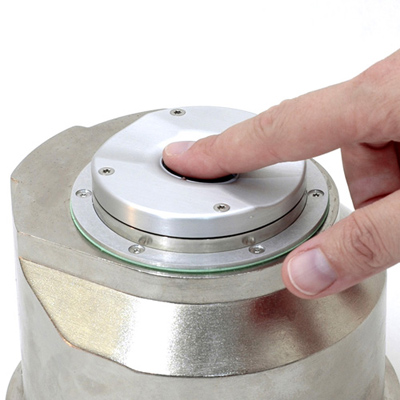
New Lumidigm® J110 fingerprint sensors work in the real world

