FGH Security Ltd. - Experts & Thought Leaders



Latest FGH Security Ltd. news & announcements

The newly formed Security Guarding Leadership Group (S12) met with Security Minister - Dan Jarvis MBE for the first time at the International Security Expo, Olympia London, and announced Paul Evans (CEO, Carlisle Security) and Peter Harrison (FGH Security) as Chair and Deputy Chair of the Group, which brings together a diverse team of elected leaders from across the security industry. The Group will regularly engage directly with the Minister, Homeland Security and the Security Industry Authority (SIA), offering a voice and insight from all areas of the industry. Its mission is to raise industry standards, help shape policy, accelerate the implementation of critical legislation and ensure that a diverse range of voices are heard to inform future decisions. Implementation of critical legislation Members range from the largest national providers to small and medium independent firms plus representation from industry trade associations. Each member is a senior security executive and will serve a minimum two-year term within the Group, meeting at least once a month. Each S12 member will lead on at least one industry initiative and seek to create enlarged sub-working groups from the widest possible reach into the industry. Transparent records of their objectives and actions will be found on the newly created website. Highest professional standards The S12 will meet with the Security Minister and engage with the SIA on a regular basis The S12 will meet with the Security Minister and engage with the SIA on a regular basis to drive the highest professional standards, drawing on industry wide data, and insights from trade associations, as well as supporting with the establishment of the Security Skills Academy. During his speech at the International Security Expo, Security Minister, Dan Jarvis, said: “I am very pleased to announce the formation of the S12, a new industry-led initiative to bring together various parts of the private security industry to be able to speak to Government with one voice.” He adds, “Earlier this morning we had a good and constructive meeting with the elected leaders who make up the S12. I was able to listen to what they had to say about how we can organise to improve standards within the security industry. I am keen for the government and for the SIA to work closely with them.” Enhancing public protection Paul Evans, Chair, Security Guarding Leadership Group (S12), said: “This Group has been built on the principles of inclusive representation, accountability and action. We recognise this is a critical time for our industry and the sense of collaboration has never felt stronger. However, we also face rising threat levels and there are still unfortunately reports of malpractice and shortcuts being taken which simply will not stand up against new legislation.” He adds, “A core part of our mission is to equip security professionals with tools and training that reflect the changing landscape and to improve standards that will further enhance public protection. With the support of the Security Minister, we look forward to making a lasting difference and making the country a safer place for all.”

The highly anticipated 2025 UK Outstanding Security Performance Awards (OSPAs) took place last night (20th February) at the Royal Lancaster Hotel in London, bringing together a distinguished gathering of professionals from across the UK security sector. This prestigious event once again showcased the outstanding contributions of individuals and organisations dedicated to security excellence. Opportunity for buyers and suppliers Once again, NSI-certified companies were well represented among those recognised, securing notable victories across multiple categories and demonstrating their ongoing commitment to the highest industry standards. The OSPAs are designed to be independent and inclusive, providing an opportunity for both buyers and suppliers to be acknowledged for their impact on the industry. Extensive research into key factors NSI-certified companies had an unique version, with 27 finalists securing 83 nominations The awards criteria are based on extensive research into the key factors that define outstanding performance, ensuring a rigorous and transparent judging process. NSI-certified companies delivered an impressive performance, with 27 finalists securing 83 nominations. Four NSI-approved companies achieved success across eight categories, further reinforcing their reputation as industry pioneers. NSI-certified winners of the 2025 The NSI-certified winners of the 2025 UK OSPAs are Outstanding Contract Security Manager/Director: Alex Philiotis – First Response Group Outstanding Security Team: Crime & Intelligence Team – Coop & Mitie Security Outstanding Customer Service Initiative: Here East Safety Customer Service Initiative – CIS Security Outstanding Security Training Initiative: London Bridge City Security Training Initiative – CIS Security Outstanding Event Security Team: Hyde Park Winter Wonderland Team – FGH Security Outstanding Young Security Professional: Tom Marsh - FGH Security Outstanding Equality, Diversity and Inclusion Initiative: CIS Security Outstanding Security Sustainability Award: CIS Security and ESG Strategy Advancing industry standards Richard Fogelman, NSI Chief Executive, commented: "As one of the most prestigious events in the security calendar, the UK OSPAs play a pivotal role in recognising the outstanding commitment, professionalism and innovation that drive our industry forward." "This year’s winners and finalists exemplify excellence, demonstrating their dedication to advancing industry standards." Security and fire safety providers Fogelman added: "It was a privilege to see so many NSI-certified companies celebrated for their exceptional contributions to safeguarding businesses, public sector services and wider communities. Their achievements reflect a strong commitment to raising the bar in security. Congratulations to all.” NSI is committed to setting the benchmark for excellence, helping security and fire safety providers uphold the highest industry standards.

London’s iconic Shakespeare’s Underglobe Theatre set the stage for the much-anticipated Women in Security Awards 2024. With places booked months in advance, the event was filled, bringing together outstanding women from diverse roles across the security sector. Talent and dedication Organised annually by Professional Security magazine in collaboration with patron Una Riley, the Women in Security Awards are widely regarded as a prestigious platform celebrating the achievements, contributions, and exceptional leadership of women in the field. 2024’s ceremony was no exception, showcasing the extraordinary talent and dedication that women bring to the wider world of security. Celebrating achivements Once again, the National Security Inspectorate (NSI), the UK's premier certification body for security and fire safety providers, was a proud sponsor of the awards. NSI extends its congratulations to all of the winners and finalists. In particular, NSI is proud to celebrate the achievements of those representing NSI-approved companies, who were recognised in four of the five award categories: Security Manager Amy Stanley – FGH Security (Winner) Frontline Christyll-Ann Bryans – CIS Security (Finalist) Lisa Newton – Sodexo (Finalist) Business Manager Sophie Harper-Booth – City Group Security (Finalist) Technical Hannah Powell – ASEL (Finalist) NSI congratulations also go to Lynda Moore, who was honoured with the Baroness Ruth Henig Award. Strength of women Commenting on the evening’s success, NSI Chief Executive Richard Fogelman said, "It is an absolute privilege to support the Women in Security Awards, an event that continually recognises the incredible contributions women make to our industry." "These awards not only shine a spotlight on their professional excellence but also serve as an inspirational example for the next generation. At NSI, we are committed to fostering diversity and supporting the achievements of all security professionals, and tonight’s celebration is a testament to the strength of women helping to shape the future of this vital sector."
Insights & Opinions from thought leaders at FGH Security Ltd.
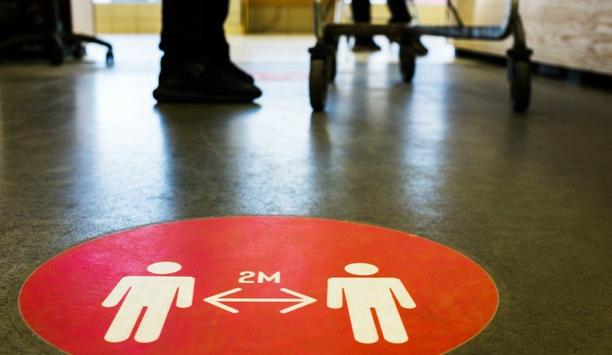
The role of physical security has expanded and grown rapidly over recent years. Below are some of our observations, particularly throughout the pandemic, and a look towards the changing times ahead. The new era of physical security The role of private security has shifted dramatically over the last decade and beyond. Historically, the focus was on protecting assets such as property and goods, but more frequently now the sector is being asked to play an even bigger role in protecting the public from physical danger. During the current coronavirus pandemic this has increased to high profile marshalling in city centres and public areas to ensure social distancing is in place, as well as managing people and traffic through COVID-19 Testing Sites. The role of private security has shifted dramatically over the last decade and beyond As these responsibilities have changed so to have the expectations on the industry, which are now wide ranging. However, this is not a new phenomenon, as we have seen how this has specifically impacted on the role of door supervisors in recent years. Whereas this primarily used to be focused on protecting the venues themselves, this role has now expanded with the same door supervisors finding themselves responsible for areas beyond merely the front entrance. Not only are they fulfilling the traditional role, but they are increasingly relied upon to provide welfare and support far beyond the traditional remit. Credit needs to be given to the industry and those within it who have driven these changes, particularly with regards to what can be termed ‘safeguarding’. Whilst mandatory SIA licence training includes specific guidance and instruction for 'safeguarding', or how to help vulnerable people, it was instigated by the industry itself. As a result, now the person being refused entry to a venue due (for whatever the reason), now finds themselves often being helped by the door supervisor, for example, by arranging a taxi for them, rather than allowing a young and/or vulnerable person - perhaps separated from their friends, to wander off alone into the night. Pandemic constraints Throughout the pandemic, security operatives are being deployed to provide a positive physical presence to support and instil the importance of social distancing, mask wearing and to ensure the safety of the public. Who would have thought that in 2020 it would be commonplace to see the vast majority of supermarkets, large and small, with an obvious security presence! Filling a void (changing responsibilities) Alongside this, and for some time increasingly private security has been asked to fill a vacuum created by greater demands on policing and consequently they have naturally moved towards contributing to what can be termed 'place management'. The latter was a concept that primarily came about as efforts increased to 'revive' towns and city centres where a safe, welcoming, inclusionary environment was seen as critical to attracting a wider demographic, rather than the dominant economy being centred around night-life, which was seen as the domain of the 'young'. You may have read about efforts to diminish the distinction between the day, evening and night-time economies and replicate what was happening in the large out of town ‘retail’ centres e.g. the Trafford Centre in Manchester. There you can shop, eat, drink, watch a film, bowl almost at any time in the day. Towns and cities have increasingly tried to replicate this, for example asking other venues, such as museums to stay open longer. Responsibilities have also shifted towards enforcing legislation when appropriate, particularly at a local level Consequently, with greater expectations placed on private security operatives today, as well as their traditional role of protecting property and people, their skill set is extending to include a greater emphasis on customer service and being well voiced in welfare issues. Also, responsibilities have also shifted towards enforcing legislation when appropriate, particularly at a local level, which is further evidence of security operatives increasingly taking on duties and responsibilities which have previously always been in the remit of the police or other enforcement personnel. Framework schemes to facilitate this have transited online, and been under public scrutiny, most notably the Community Safety Accreditation Scheme (CSAS). CSAS allows Police Chief Constables to 'allocate' powers to accredited security providers operating in their geographical regions, which whilst it has been in existence for many years isn’t probably widely known about beyond the industry itself. Training must meet the need This leads to the question of training: we need to talk about training and what’s necessary in this new era of security, in line with the increased expectations and responsibilities of the security operative. Where does the role of private security start and stop? All regulated security operatives have been given specific training to gain their SIA licence, and many companies operating in the field of large-scale crowd management offer their own bespoke learning and development. Such training can include: Stages and pits (area found in front of the stage) Externals (often outside the footprint of the licensed venues) Directional stewards Roaming response operatives With such courses being optional and unregulated, how do we create an adequate baseline skills base? Whilst some of this training can be accredited and/or included in recognised qualifications it can be the case that security providers have developed their own ‘guidance’, which for some companies is used to respond to emerging risks. The industry being asked to be integral to the pandemic response is an example of where companies are putting together guidance, which may be based on emerging central Government thinking. The science of large-scale events Over the years we have seen a real boom in events. Specifically, large scale (50,000+) music events are no longer restricted to festivals and have been seen as a lucrative source of income, for example, the use of football stadia in the closed season, to maximise year round usage. For example, a number of years ago Manchester City Football Club staged the return of Take That resulting in a wider demographic attending events, from your older fan, probably with children the same age as they were when they last saw them live, to young children attending their first live music event and everybody in between. Safely managing these types of 'diverse' event and crowd management has become a science in its own right with many considerations including crowd dynamics, crowd behaviour, ingress and egress planning, transport plans and of course, contingency planning for the unexpected. Maintaining public safety – applying the science Consequently, if the overarching aim for any pandemic response is public safety, then the objective for the security industry should mirror this, aiming to maintain complete safety for the public. If the overarching aim for any pandemic response is public safety, then the objective for the security industry should mirror this This should always include managing the flow of people in highly charged environments, now with the added consideration of social distancing in what are worrying times for the average person on the street. Private security has a pivotal role to play as social conventions are rebuilt and the world grasps its new normal. Where you want to gain compliance by cooperation then it needs to be certain that the security operatives are: "the right people, in the right place, at the right time, doing the right things and working alongside the right partners". We believe that this can only be achieved by applying science to these situations, a skill that that is second nature to those who routinely deliver effective security. We need to clarify the role of manned security providers covering the limitations and extent of their responsibilities. This needs to be unanimous across the licensing bodies, employers and public in order for operatives to fulfil the role and an industry benchmark set. Security firms are not the police, BUT it is important to note that their role is integral to keeping people safe.

CSR applies to the security industry in many different ways and can be practised by small or large businesses What exactly is Corporate Social Responsibility (CSR) and how does it apply to the security industry? Let’s look at how two very different companies – Axis Communications and FGH Security – each put CSR at the heart of their operations. Corporate Social Responsibility means different things to different people, and is often used as a catchall for one or more policy areas such as environmental sustainability, philanthropy, integrity and transparency, ethical business and employee welfare. CSR even has an international standard to provide guidelines for its followers – ISO 26000. Its goal is to contribute to global sustainable development by encouraging business and other organisations to practice social responsibility to improve their impact on their workers, natural environments and communities. CSR applies to the security industry in many different ways and can be practised by small or large businesses, and by both suppliers of electronic security products and services and guarding companies. Here we look at two security businesses that put CSR at the heart of what they do. Axis Communications’ CSR strategy Network video manufacturer Axis Communications, based in Lund, Sweden, focuses on four areas when it comes to what it terms sustainability: environmental considerations; social responsibility; economic responsibility; and business ethics. The company’s activities cover these areas: Employee welfare: Axis works for increased equality and diversity within the business, following national laws where it operates and imposes the same demands on partners and suppliers. Philanthropy (giving): Axis employees, for example, were involved in a year-long project to set up a computer classroom at a girls’ secondary school in rural Tanzania. Environmental: The most important areas for the company are product material and product energy performance, carbon footprint and supplier environmental performance. For example, 70 percent of Axis products are now PVC-free and the company has also reduced the amount of packaging used. Local communities: Axis has been involved in a scheme which, among other things, offers trainee positions to refugees who have obtained a residence permit in Sweden. Several regional offices engage in volunteer work, one example being working with housing projects for “socially exposed” people in the United States. Integrity and transparency: Axis is listed on the Nasdaq Stockholm Exchange and abides by the Swedish Code of Corporate Governance, with its sustainability reporting carried out in accordance with GRI G4 guidelines. Ethical business: The company says it has zero tolerance of corruption, with almost all employees signed up to an agreement where they undertake not to accept bribes or participate in corruption. Anti-corruption training is also part of the introductory programme for new employees. “Axis aims to make sustainability an integrated part of its business strategy and operations, where continuous improvements are made at all levels,” says Per Björkdahl, Director of Business Development. The company’s sustainability strategy supports and embraces the 10 principles of the UN Global Compact. As in other industries, sustainability in the security industry is growing to become more and more important Green design and impact on society Some CSR activities are closely aligned with the company’s operations, such as the Green Design Evaluation Form, which is used to make product development focus on environmental aspects. Other activities go beyond apparent company interests – for example, providing security cameras to a rhino sanctuary in South Africa to help prevent poaching. “Of course, customers are increasingly demanding that we take responsibility not just for our products and services, but also for issues relating to the environment and business ethics,” says Björkdahl. “A corporate culture that promotes sustainability also helps us attract and retain the best employees. But most of all, Axis is a part of society and it’s important that we also take responsibility for the development of our society.” “As in other industries, sustainability in the security industry is growing to become more and more important. The security industry is growing, and we therefore need to take more responsibility for our impact on our society. There are no reasons why anyone should not be engaged!” Integrating CSR policies with regular activities But practising CSR is not just for large organisations. UK-based guarding and event management company FGH Security has integrated its CSR policies – such as managing its carbon footprint – with its day-to-day activities. The firm, which is completing its ISO 14001 application, aims to go carbon-neutral in 2017 by planting around 4,000 trees on its customers’ sites. It is also working hard to go paperless and to run greener vehicles, though the lack of charging points is hampering progress on this front. "The security industry is growing,and we therefore need to takemore responsibility for our impacton our society. There are noreasons why anyone should notbe engaged!" Staff welfare is also high on the agenda at FGH Security. For example, the company provides meals for all its staff when working at festivals. Any employee who wants to take part in any sport receives sponsorship of £100 to get started, and all staff take part in personal development. In addition, all managers receive a paid day per year to work in a similar role as a volunteer at a charity. “This benefits the charity primarily, but managers come back with fresh ideas on how they can work better,” explains Peter Harrison, Managing Director at FGH. The company and its employees take part in many other fundraising and charitable activities, such as providing stewards free of charge to the local CancerCare charity. FGH Security’s 10 CSR beliefs “We have ten company beliefs; they are on the wall in every office, in our marketing material and an important part of how we operate,” says Harrison. “Although we have a CSR policy for the purposes of tenders, in practice we felt CSR is something that has to run through the organisation and not sit to one side, as many policies do.” The ten beliefs are: Quality people in quality places Take a long-term view and act sustainably Seek inspiration from outside the industry Reputation is our most valued asset Our business relationships are like partnerships Everyone takes part in personal development Be the benchmark for others and set new norms of behaviour Give all our people the chance to train to the next level Find new ways of giving back to society Look after our people and they will look after our customers There are various other schemes and one-off gifts for employees. “People want to work for companies like ours and people like doing business with us. More than anything, the company shareholders like to help other people and society in general. We think if every company could do a little bit more then we feel the world could be such a better place.” Save

Technology's role in securing banks and financial institutions
Download
Security technologies promote real-time awareness in K-12 schools
Download
Integrated systems enable critical and compliant security for transportation
Download
Modernising physical access control
Download
Access. Intrusion. One estate.
Download
