ELATEC USA - Experts & Thought Leaders


White papers from ELATEC USA

Where do we go from prox?
Download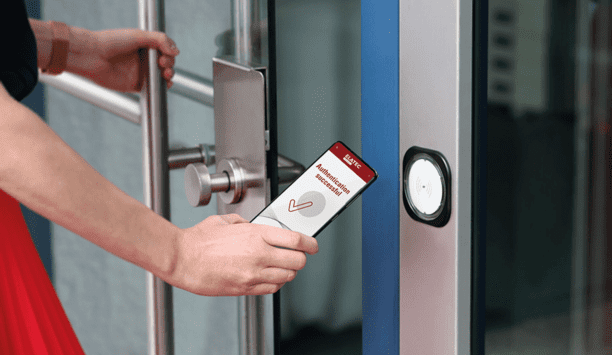
Physical access control
Download
Machine Operator Authentication
Download
RFID for GMP/GLP environments
Download
A guide to specifying RFID readers
Download
Attention OEMs: 5 ways RFID readers can secure your markets
Download
11 considerations for embedded system RFID readers
Download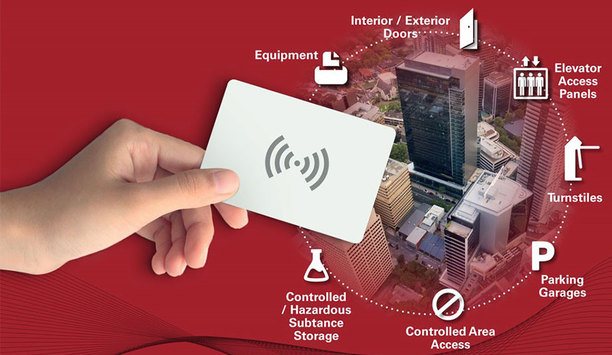
RFID and smartphone readers in physical access control
Download
Latest ELATEC USA news & announcements

ELATEC Inc., a world pioneer in the development and manufacture of innovative RFID and mobile credential readers, announced that Chris Randall has joined ELATEC as senior business development outreach manager based in Scottsdale, Ariz. Chris brings a wealth of experience and a proven track record in strategic planning, brand management, and lead generation within the security and technology sectors. In his new role, Randall will spearhead the company's go-to-market strategy, focusing on developing and implementing business development strategies to achieve growth objectives within the physical and logical access control OEM hardware markets. He will be responsible for identifying and prioritising potential OEM partners, generating and qualifying leads, and pioneering the pre-sales process to secure new partnerships. Randall's extensive background Randall's extensive background includes roles as a business development manager at JCI Randall's extensive background includes roles as business development manager at Johnson Controls (JCI) Security Products, director of sales - Americas at AMAG Technologies Inc., and regional sales manager at various pioneering companies. His experience in building and maintaining strong relationships with key clients and stakeholders, coupled with his strategic thinking and effective communication skills, make him an invaluable addition to the ELATEC team. Sarah Bowling, vice president of sales, business development, and marketing at ELATEC Inc., expressed enthusiasm about the new appointment: "We are excited to have someone of Chris’ calibre pioneering our business development outreach. His extensive experience and impressive network will undoubtedly drive ELATEC's continued success."

ELATEC Inc., a world-renowned developer and manufacturer of innovative RFID products, announced the appointment of Sarah Bowling as the VP of Business Development and Marketing. Bowling will play a pivotal role in driving the company's growth strategy by aggressively expanding its customer base in the Americas. Bowling's primary objective As ELATEC focuses on adding new customers to sustain its growth trajectory, Bowling's primary objective will be to collaborate with the territory sales team. She will assist in target account identification, develop customer-specific engagement plans, and guide the team through initial opportunity engagements. Bowling will leverage her extensive experience in direct key account sales, marketing, and business development in physical access security, mobile credentials, and cloud-based video surveillance markets. Bowling's work experience Bowling has demonstrated a keen ability to improve market reach and exposure With an impressive career spanning senior management and VP-level roles at prominent companies such as Tyco Security, WaveLynx, Eagle Eye Networks, Zerv, and SAFR, Bowling brings a wealth of experience to ELATEC. Her expertise includes building enterprise client bases, creating custom pricing packages, and developing solutions for clients across various verticals. Notably, Bowling has demonstrated a keen ability to improve market reach and exposure through effective marketing management. Business development and marketing efforts "Please join me in welcoming Sarah to the ELATEC team," said Paul Massey, CEO of ELATEC Inc., adding "We are excited to have someone of Sarah's caliber pioneering our business development and marketing efforts. Her extensive experience and impressive network will undoubtedly drive ELATEC's continued success." Bowling currently divides her time between Los Angeles, California, and Vancouver, Canada, and will report directly to Paul Massey.

Zenitel, a provider of intelligent communication solutions, announced the launch of two new door entry intercoms: the Turbine Extended Intercoms TEIV1+ and the TEIV4+. The new products display Zenitel's commitment to providing convenient and secure entry via best-in-class audio and video performance with hassle-free access control. New door entry intercoms "'Secure, Convenient Access' is the key message behind the product launch. We are excited to provide security system integrators and building owners with these new door entry intercoms,” says Peter McKeag, Product Manager for Zenitel. Peter McKeag adds, “Our goal is to help them simplify and secure their access control solutions. We also want to provide them with the freedom to select third-party accessories to meet their project's requirements.” TEIV1+, TEIV4+ The TEIV4+ is designed to provide convenient access with a card reader of the user’s choice The TEIV1+ is designed to simplify a visitor’s experience with PIN-based access control and easy-to-use scroll and direct calls. The TEIV4+ is designed to provide convenient access with a card reader of the user’s choice. With the TEIV4+ it is also possible to house access control card readers like HID & Elatec, removing the need for separate card reader mounting products. Audio and Active Noise Reduction features Extending on Zenitel’s world-renowned Turbine platform, both new intercoms are engineered to provide the best audio and video communication performance tailored to every environment. Zenitel’s solutions deliver the best audio technology, with Automatic Volume Control, Acoustic Echo Cancellation, and Active Noise Reduction features. HD video quality This new range further expands its feature set with a wide-angle lens and exceptional low-light performance while maintaining HD video quality. As always, Zenitel products are engineered to provide high availability, even in the most demanding environments. They are backed by Zenitel’s promise of long-lifetime components, up-to-date technologies, and long-term technical support of systems and devices.
Insights & Opinions from thought leaders at ELATEC USA

2025 was another impactful year for mergers and acquisitions (M&As) in the security industry, which is undergoing an enormous transformation as global pioneers prioritise specialised technology to drive future growth. The year 2025 has been defined by massive corporate reorganisations, most notably Honeywell and Resideo spinning off core divisions to unlock shareholder value. Simultaneously, an aggressive wave of mergers and acquisitions is reshaping the landscape, with giants like ASSA ABLOY and Motorola Solutions absorbing innovators in AI-driven surveillance, cloud-native access control, and identity management. From residential security shifts to critical infrastructure enhancements, this article will summarise how these strategic moves signal a decisive industry pivot toward integrated and intelligent security ecosystems. Resideo to spin off ADI business Resideo Technologies, Inc. announced its intention to separate its ADI Global Distribution business from its Products & Solutions (P&S) business via a tax-free spin-off to shareholders. The separation is expected to be completed in the second half of 2026. P&S will continue as Resideo, a building products manufacturer of residential controls The goal is to unlock value, enhance operational performance, and improve strategic flexibility for both entities. After the separation, P&S will continue as Resideo, a building products manufacturer of residential controls and sensing solutions. ADI will become an independent public company and remain a global wholesale distributor of low-voltage products, including security and audio-visual solutions. Honeywell separates into three companies There are big changes pending at Honeywell, another global security industry company. Honeywell announced plans to separate its Automation and Aerospace businesses into two independent, publicly traded companies following a comprehensive portfolio evaluation. Combined with the previously announced spin-off of Advanced Materials, this strategy will create three distinct industry pioneers. The Automation and Aerospace separation is targeted for completion in the second half of 2026 as a tax-free transaction for shareholders. The largest portion of Honeywell’s traditional security business (cameras, access control, and fire safety) sits within the Building Automation segment of the new Honeywell Automation company. This unit includes products from recent major acquisitions, such as LenelS2. SimpliSafe’s new chapter SimpliSafe has agreed to be acquired by private equity firm GTCR from Hellman & Friedman SimpliSafe has agreed to be acquired by private equity firm GTCR from Hellman & Friedman, another private equity firm. As the third largest U.S. residential security provider, SimpliSafe will continue under the leadership of the current CEO, while its founders remain significant investors. GTCR, an experienced security industry investor, intends to support the company’s expansion and continued innovation in AI-powered, DIY home protection. This marks a new chapter in SimpliSafe’s mission to provide professional monitoring without long-term contracts. SimpliSafe is GTCR’s fifth investment in the security alarm industry, including prior investments in residential-focused security companies SecurityLink and Protection1, along with commercial-focused security companies HSM and Everon. Motorola grows technology portfolio Motorola Solutions grew its portfolio through acquisitions in 2025. The industry giant strategically expanded its safety and security ecosystem through the acquisition of four specialised technology firms. The company acquired Blue Eye to integrate AI-driven remote video monitoring and 24/7 security operations into its threat detection workflows. To support frontline workers, Motorola added Theatro’s voice-powered communication platform, which complements existing mobile and video technologies. Motorola further bolster its public safety capabilities with the acquisition of RapidDeploy, a cloud-native Next Generation 911 provider that offers real-time caller mapping and data analytics to accelerate emergency responses. Motorola also agreed to acquire InVisit to enhance its Avigilon Alta suite with cloud-based visitor management, streamlining guest registration and blocklist screening for enterprise security. These acquisitions aim to unify detection, communication, and response across various sectors, including retail, healthcare, and critical infrastructure. Allied sells majority stake in AMAG Allied Universal sold a majority stake in AMAG Technology to Shore Rock Partners In December, Allied Universal sold a majority stake in AMAG Technology to Shore Rock Partners. Shore Rock is a growth investor focused on critical infrastructure, with strategic backing from BellTower Partners. Allied Universal will retain a significant minority share. The sale is intended to allow 54-year-old AMAG, which provides integrated access control, identity, guest, and video management solutions, to operate independently from Allied Universal's services-based model for long-term growth. Shore Rock's plan is to invest in advancing AMAG's product line and customer relationships. With this transaction, David Sullivan, AMAG's President, will become CEO. Everon acquires ADT multifamily segment Commercial security provider Everon announced in September that it had entered into a definitive agreement to acquire the business-to-business (B2B) multifamily segment from ADT. This acquisition is a strategic extension that expands Everon's reach in the valuable multifamily market. It will allow the company to offer a more comprehensive portfolio of tailored solutions, including access control, video surveillance, and self-guided tour capabilities. Everon's CEO states that the deal enables them to help property owners and managers increase net operating income and improve operational efficiency. Dormakaba acquires TANlock and Avant-Garde Dormakaba, a global provider of access solutions, acquired TANlock GmbH in July Dormakaba, a global provider of access solutions, acquired TANlock GmbH in July. TANlock is a German firm specialising in innovative high-security access solutions for data centers and other critical infrastructure. The acquisition strengthens Dormakaba’s presence in the data center market. TANlock's intelligent system provides enhanced server cabinet security using electromechanical rack locks and various authentication modules. This solution is scalable, future-proof, and can be integrated into existing IT infrastructures for both retrofits and new installations. Dormakaba also agreed to acquire Indiana-based Avant-Garde Systems Inc. to strengthen its North American entrance control portfolio. This move bolsters Dormakaba’s presence in high-growth sectors like airports and data centers. Acre acquires REKS for AI Recent M&A activity also reflects the growing importance of artificial intelligence. For example, Acre Security acquired REKS, a purpose-built generative AI solution designed to transform access control, allowing professionals to use natural language queries for instant data insights. Integrated into Acre’s cloud-native ecosystem, this AI-powered platform prioritises data privacy while streamlining operations. Led by a new AI Development Team, Acre plans to expand these capabilities into intrusion detection and visitor management. Two acquisitions for Allegion Global security provider Allegion, through one of its subsidiaries, completed the acquisition of ELATEC Global security provider Allegion, through one of its subsidiaries, completed the acquisition of ELATEC, a manufacturer of security and access technology, specialising in RFID credentials and readers solutions designed in Germany and sold globally. ELATEC’s portfolio of readers leverages their internally developed software stack and ensures compatibility with nearly 100 credential types, making the company a pioneer in interoperability, which aligns well with Allegion’s partner-of-choice strategy. Allegion, also through one of its subsidiaries, acquired Brisant Secure Limited, a security hardware provider in the United Kingdom. Senstar acquires Blickfeld for LiDAR sensors Senstar Technologies Corporation has agreed to acquire Blickfeld, a specialist in 3D LiDAR sensors and software. Expected to close in Q1 2026, the acquisition integrates Blickfeld’s hardware into Senstar’s advanced security ecosystem. This strategic move expands Senstar’s addressable market into volume monitoring and traffic applications while enhancing its AI-powered situational awareness capabilities. Following the transaction, Blickfeld will operate largely independently as a subsidiary. ASSA ABLOY continues acquisition spree Global giant ASSA ABLOY was probably the most active company in the M&A market in 2025 Global giant ASSA ABLOY was probably the most active company in the M&A market in 2025, demonstrating aggressive market growth, strategically reinforcing its core business, and expanding its technological footprint across the global security marketplace. The acquisitions delivered on the company's strategy to strengthen its position in mature markets by integrating complementary products and solutions. A major theme for ASSA ABLOY was the enhancement of the door and perimeter security portfolio, particularly in the Americas. This effort included acquiring US-based Metal Products Inc. (MPI) for custom-made hollow metal doors and frames and International Door Products (IDP) for fire-rated steel door frames, both in the fall. Earlier in the year, ASSA ABLOY gained a stronger presence in Central Canada with the addition of Wallace & Wallace and Wallace Perimeter Security, a manufacturer, distributor, and installer of perimeter fencing, door, and gate solutions. The Entrance Systems Division also saw expansion with the acquisition of Belgium’s Kingspan Door Components, a manufacturer of sectional door panels. Furthermore, Door System, a Danish manufacturer of high-quality fire-rated doors, was signed for acquisition in the spring. Cloud-based platform ASSA ABLOY also made significant moves in electronic and access control solutions. Early 2025 saw two key acquisitions: Uhlmann & Zacher, a German supplier of access control handles and knobs, and InVue, a US-based provider of connected asset protection and access control solutions. Reinforcing this segment, SiteOwl, a pioneering cloud-based platform for physical security lifecycle management, was acquired in the summer. The spring acquisition of Pedestal PRO, a US manufacturer of access control pedestals and mounting solutions, further strengthens the electromechanical offerings in the Americas. ASSA ABLOY bolstered its capabilities in remote care technology with Germany’s TeleAlarm Group in late spring. HID Global expands in 2025 HID Global, a subsidiary of ASSA ABLOY, was also active on the M&A front in 2025 HID Global, a subsidiary of ASSA ABLOY, was also active on the M&A front in 2025, aggressively driving the convergence of physical and digital identity solutions and signaling a clear roadmap for security professionals. HID's move to purchase Vancouver-based IDmelon, announced in the autumn of 2025, targets the critical need for robust logical access control. IDmelon’s proprietary software platform transforms everyday identifiers, including existing physical credentials, smartphones, or biometrics, directly into enterprise-level FIDO (Fast IDentity Online) security keys. This approach streamlines an organisation’s transition to phishing-resistant, passwordless multi-factor authentication (MFA) and minimises the need for disruptive changes by integrating physical and digital access into a single, cohesive solution. Safer patient experience Separate from its focus on digital access, HID also bolstered its Identification Technologies Business Area by acquiring the Calmell Group. Calmell is a long-established manufacturer specialising in smart cards, smart paper, and magnetic tickets for the public transportation sector. This addition is expected to expand HID’s footprint and relevance in global public transportation ecosystems, allowing the Barcelona-headquartered firm to leverage HID’s core expertise in digital credentials to drive future-proof solutions for seamless mobility. Also, HID acquired Intelligent Observation to expand its Healthcare Real-Time Location Systems (RTLS) portfolio. Intelligent Observation provides a platform to reduce hospital-acquired infections (HAIs) by tracking hand hygiene compliance. The system uses wearable Near-Field Magnetic Induction (NFMI) devices and a cloud-based SaaS dashboard. This technology records and reports if healthcare workers sanitize appropriately, providing granular compliance data to administrators to enable a safer patient experience.

Physical security is essential for a modern production facility, users don’t want just anyone entering the building or accessing secure areas. But what about production machinery? Machine authentication is often a missing link in the security plan for manufacturers. Why machine authentication? Most manufacturers have made significant investments in physical access control (PAC) for production facilities. Few shops currently hand out physical keys to employees or leave the building unlocked during production hours. For all but the smallest shops, front-door access typically involves individual radio-frequency identification (RFID) badges that enable tracking of who is coming and going and at what times. Use of physical keys, password login It is simply assumed that anyone who has access to the factory floor has the knowledge, authority, and training But when it comes to production machinery, many manufacturers still rely on physical keys, password login on the human-machine interface (HMI), or a shared PIN to unlock machine access. In some shops, machines may not be secured at all, it is simply assumed that anyone who has access to the factory floor has the knowledge, authority, and training to use the machines responsibly. However, this is not necessarily a good assumption, especially in a larger manufacturing plant where many people can access the production floor. Valuable and sensitive equipment CNC machines, robotic welders, process equipment, and other production machinery can cost anywhere from $5,000 to half a million or more, depending on their size and function. They also have significant safety risks for untrained users and may hold valuable and sensitive IP (such as customer design specs or batch recipes). User authentication Authenticating users at the machine level closes an important security loophole and makes plants safer and more productive. Machine authentication prevents untrained or unauthorised users from accessing production machinery. The right authentication system also allows access levels to be tailored for different users based on training credentials, job roles, or even projects. Machine authentication benefits A strong machine authentication solution provides several benefits for manufacturers: Minimises unplanned downtime and expensive damage to machines caused by untrained operators. Enables tracking of production outcomes by machine operator for better quality control and troubleshooting. Protects company and client IP held on the machine by preventing unauthorised access to machine controls and memory. Enhances plant safety and compliance by limiting machine access to operators with the appropriate credentials. Reduces the risk of deliberate sabotage by unauthorised operators, including damage to machines and production facilities and data theft or corruption. Mark Merino, the Director of the Digital Factory Group for Polaris Automation, explains, “Machine authentication allows us to identify which people are logged into different pieces of equipment and make sure they are trained appropriately for the machine and have the right clearances for the data they are trying to access.” Choosing the right machine authentication solution Access control for production machinery can be accomplished by various means, including password and PIN systems, physical keys or fobs, RFID badges, or smartphone-based mobile credentialing systems. The best machine authentication system will: Be highly reliable and secure to protect the machine from unauthorised access. Enable identification of individual operators and tracking of who has used the machines, at what times, and for what projects. Allow access levels to be differentiated by the user. Be easy to implement and administer. Discourage sharing or cloning of credentials. RFID readers An RFID reader can be easily connected to or integrated with the HMI for the machine In most manufacturing environments, the simplest solution for machine authentication is the RFID badge employees already carry for building entry. An RFID reader can be easily connected to or integrated with the HMI for the machine. All users must do to authenticate themselves is swipe their badge over the reader to unlock machine controls. RFID benefits RFID provides multiple benefits for end users, IT, and managers: It leverages technology already widely used, so users do not have to carry a separate key or fob to access machine controls. It is more secure and easier to manage than a password system, as passwords are frequently forgotten, shared, or hacked. Unlike shared PINs, physical keys, or fobs, user authentication via an ID badge enables accurate identification of who is logging into the machine. Users are much less likely to share their picture ID badge (which is often also linked to HR functions such as time and attendance) than a machine password, PIN, or key. If an ID badge is lost or stolen, or an employee leaves the company, IT can easily disable access to the card. RFID credentials are very difficult to hack or clone. Transmission between the reader and card can be encrypted for added security. Unlike biometric options, RFID is highly reliable even in hot, dirty, or humid environments and does not require workers to remove gloves, safety goggles, or masks. Getting started with machine authentication Machine authentication starts with selecting the right RFID reader. A universal RFID reader supports easy implementation, integration with other building systems, and scaling. A universal reader also provides flexibility for the future in case companies want to change transponder technologies or allow for user authentication using mobile credentials on a smartphone. IIoT model User authentication must be designed within the context of the wider security ecosystem of the plant To ensure the security of production machinery, user authentication must be designed within the context of the wider security ecosystem of the plant. Modern production machines are increasingly networked and connected in an “Industrial Internet of Things” (IIoT) model. That means machines are not only vulnerable themselves but are also endpoints in the broader IT landscape of the plant. Machine authentication systems must incorporate best practices for endpoint security, such as those outlined by ISO (International Organisation for Standardisation), NIST (National Institute of Standards and Technology), and other industry organisations. Best practices: The reader installation should be tamper-proofed to prevent physical disruption of the authentication system. Use an encryption standard suitable for the security level of the application. Encryption prevents data interception or card cloning. If higher security is desired, RFID can be implemented as part of a multi-factor authentication system along with biometrics and/or a password or PIN. The authentication system should support different access levels for different users or classes of users. A role-based permission system allows for different levels of access for line operators, supervisors, IT, and maintenance, for example. For maximum safety and security, individual users should only have the minimum access required to do their jobs. With secure machine authentication, manufacturers can protect people, production equipment, and IP, while enabling smooth operations. It all starts with an authentication system that supports reliable and secure operator identification at the machine level.

PKOC stands for Public Key Open Credential. It is a new standard that will meet a 30-year industry challenge and strip away much of the complexity and cost involved in protecting and administering credentials for access control. It could also accelerate the transition from cards to mobile access control. PKOC is a standards-based mobile credential that is essentially free, vendor-agnostic, and interoperable across multiple devices and systems. It is a highly secure access credential that can live on a mobile phone, in a plastic access card, or in any device capable of generating a public-private key pair. Access control systems PKOC is the newest standard of the Physical Security Interoperability Alliance (PSIA), a tax-exempt organisation created to define, recommend, and promote standards for IP-enabled security devices and systems. PSIA introduced the Physical Logical Access Interoperability (PLAI) specification in 2013 to normalise identity data across disparate physical access control systems. The PKOC specification was introduced in 2021. We’re convinced this is the future A challenge for PSIA in promoting the PKOC mobile credential is to explain it quickly and in layman’s terms “We see the benefit of implementing the PKOC technology and doing it well,” says Sam Siegel, Senior Field Applications Engineer for ELATEC, a manufacturer of credential-agnostic readers/writers. “We wanted to get involved and join the discussion.” ELATEC has been participating in PSIA for more than a year. “This is a better way to do things,” says Siegel. “The PSIA, myself included, are convinced this is the future. The challenge is to get enough people to understand that it is a seismic shift away from what has been in place for so long.” A challenge for PSIA in promoting the PKOC mobile credential is to explain it quickly and in layman’s terms. The explanation spans the concept of public key infrastructure (PKI) and the difference between symmetrical and asymmetrical digital keys. Protecting symmetrical keys A symmetrical key system, which has been used historically in the access control market, involves the use of a single proprietary digital key to both encrypt and decrypt information. This means that digital public keys must be incorporated into each access control reader in the form of a module or a license, which the reader uses to read any compatible cards. Protecting symmetrical keys has been an expensive technology challenge the access control world The need to share these digital keys (in effect, the ability to read every compatible card) securely among access control manufacturers, integrators and end users involves extra administration and costs to ensure the security of the system. Protecting symmetrical keys has been an expensive technology challenge the access control world has borne for decades. The use of proprietary keys also promotes dependence on a single manufacturer or vendor to expand the ecosystem. The use of asymmetrical keys takes away these challenges. Advantages of using asymmetrical key pairs PKOC embraces the principle of PKI (public key infrastructure), a two-key asymmetrical system used to ensure confidentiality and encryption. In effect, there are two digital "keys," one public and one private, that are used to encrypt and decrypt information, in this case, a credential for an access control system. The secure credential standard is generated independently of a third-party credential issuer. It is generated within the device. In the access control scenario, the smartphone generates a key pair in the secure element of the phone, including a private key, which is stored on the smartphone, and a public key, which serves as the user’s ID number in the access control system. Sharing the public key is not a security risk because it is worthless without the private key that is locked away on the smartphone. PKOC-enabled smartphone The smartphone must contain the private key in order to interface with the access control system When a PKOC-enabled smartphone approaches a PKOC-enabled reader, the reader sends a one-time random number (a ‘nonce’) to the smartphone, which then encrypts it using the private key, and sends it along with the public key back to the reader. The reader uses the public key to decrypt the random number, which confirms the authorised access associated with the smartphone. The signals are sent via Bluetooth Low Energy (BLE). Importantly, the private key never leaves the smartphone and is never shared with any other elements of the access control system. Therefore, there are no administrative or technical costs associated with protecting it. The smartphone must contain the private key in order to interface with the access control system using the public key. Mobile credentialing system For ELATEC, embracing PKOC provides a new way to highlight the company’s value proposition and promote it to a new group of companies; i.e., those who adopt the PKOC approach to mobile credentialing. The ‘universal’ configuration of the ELATEC reader hardware is credential-agnostic “PKOC serves as a great way to show off our value and what we do best,” says Siegel. ELATEC provides credential readers/writers that operate in a variety of card and reader environments, incorporating an integrated BLE module to support mobile ID and authentication solutions, including PKOC. Using applicable firmware, the ‘universal’ configuration of the ELATEC reader hardware is credential-agnostic and so compatible with any RFID card or mobile credentialing system, all in a small form factor (around 1 1/2 inches square). How readers and smartphones interact The PKOC standard addresses the variables of how the reader and the smartphone share information. Currently, the PKOC standard addresses communication via BLE, but the principle is the same for systems using near-field communication (NFC), ultra-wideband (UWB), or any future protocols. PKOC also defines how device manufacturers can enable devices (readers, locks, control panels, biometric devices, etc.) to securely consume the credential for authentication and access. PKOC can be used with smart cards as well as with smartphones. In the case of a smart card, the public and private keys are contained on the smart card, which communicates via NFC with the reader. The encryption/decryption scenario is exactly the same. PKOC enables users to ‘bring your own credential’ (BYOC). Public key number ELATEC is proud to have played an instrumental role with the PSIA in the implementation of PKOC" BLE offers a broader read range than NFC; the read range can be managed using software and/or by signalling intent or two-factor authentication. Because private keys remain secure inside a smartphone, they do not have to be incorporated into a digital wallet for security purposes, although they could be incorporated for matters of convenience. To simplify administration, the public key number can be used as a badge number. If badge numbers have already been assigned, a column could be added to the database to associate badge numbers with public key numbers. “ELATEC is proud to have played an instrumental role with the PSIA in the implementation of PKOC,” said Paul Massey, CEO of ELATEC, Inc. “End-users should not be limited in their solution mix to one or two vendors due to their proprietary technology. PKOC now provides the ideal combination of security, convenience, interoperability, and cost for industry participants, by industry participants.” ‘Experience PSIA’ will promote PKOC at ISC West ISC West participants include PSIM manufacturer Advancis Software and Services The flexibility of PKOC will be on display at ISC West 2023, where ‘Experience PSIA’ will register attendees and provide them with a PKOC credential that can be used with a variety of readers throughout the show. Also showcasing the PLAI standard, PSIA’s presence at ISC West will include ELATEC along with several other vendors/manufacturers. A special PSIA event will be held from 5:30 to 7:30 p.m. on March 29 at the Venetian Ball Room B&C in Las Vegas. ISC West participants include PSIM manufacturer Advancis Software and Services, which acquired Cruatech software in 2012; and Idemia, specialising in identity-related security services including facial recognition and other biometrics. Integrated security systems Also involved are Johnson Controls (JCI), an integrated security systems provider that offers a range of security products and services; and Siemens, which offers its own range of security solutions and systems. Other participants include Last Lock, which has a unique spin on internet-enabled locks; while SAFR from Real Networks offers accurate, fast, unbiased face recognition and additional computer vision features, and Sentry Enterprises provides the SentryCard biometric platform for a privacy-centric, proof-of-identity solution. Finally, rfIDEAS manufactures credential readers.

Technology's role in securing banks and financial institutions
Download
Security technologies promote real-time awareness in K-12 schools
Download
Integrated systems enable critical and compliant security for transportation
Download
Modernising physical access control
Download
Access. Intrusion. One estate.
Download
