Brivo Inc. - Experts & Thought Leaders












White papers from Brivo Inc.

Managing security in the age of boundaryless working
Download
The top 4 reasons to upgrade physical security with the Cloud
Download
Access control: The enterprise buyer's guide
Download
Effectively branding a multifamily property
Download
Integrating control access and security
Download
Identity and access management
Download
Securing care closer to patients
Download
Access management in higher education
Download
The welcoming workplace
Download
Access and security in the age of hybrid working
Download
Latest Brivo Inc. news & announcements

Brivo, the AI innovator and pioneer in cloud-native physical security, announces the Schlage® XE360™ Series with RealSync™ lock is available within the Brivo Security Suite, delivering continuous, 24/7 Wi-Fi connectivity across all commercial doors at up to 70% lower cost per door than traditional hardwired systems. Historically, bringing electronic access control to secondary or interior openings—which account for approximately 75% of doors in a typical facility—has been cost-prohibitive due to extensive cabling, external power supplies, door controllers, and labour. Traditional hardwired systems Unlike conventional wireless locks that rely on periodic, scheduled "check-ins" or proprietary gateways, the Schlage® XE360™ Series with RealSync™ maintains a continuous cloud connection using existing building Wi-Fi infrastructure. Remote commands and access updates execute in less than 10 seconds. Benefits of Brivo - Schlage® XE360™ Series with RealSync™ integration include: True 24/7 Persistent Connectivity: Delivers instant remote lock and unlock execution, on-demand audit logs, and immediate door event alerts (such as forced or propped doors) without waiting for interval syncs. Streamlined Infrastructure: Connects directly over existing Wi-Fi networks, eliminating the need for dedicated control panels, proprietary wireless gateways, or expensive wiring runs. Up to 70% Cost Savings Per Door: Reduces upfront capital costs and installation complexity, making full-facility access control for every door economically viable. FleX Module™ Architecture: Easily upgrade existing doors from offline to real-time online locks by replacing the internal module rather than the entire lockset. Industry-Pioneering Battery Performance: Full year of battery life on standard AA batteries while remaining continuously connected to the network. Unified Security Operations: Centralises management of perimeter hardwired openings, interior wireless doors, video intelligence, and visitor management within a single Brivo Security Suite interface. Critical interior openings “For decades, security managers have had to compromise on which doors to secure because traditional hardwired access control simply didn't scale across an entire facility,” said Steve Van Till, Founder and President of Brivo. “The Schlage® XE360™ Series with RealSync™ integrated with the Brivo Security Suite eliminates the cost and infrastructure, making real-time visibility and policy enforcement achievable for every single door opening.” The integration empowers security integrators to approach facility security holistically, transitioning clients away from securing only primary entrances toward securing all critical interior openings—such as IT closets, administrative offices, and utility spaces. Major operational advancement Mike Ridgeway, Business Development Manager for Action Security Group Inc., an Alberta, Canada-based security integrator serving commercial and institutional organisations across Western Canada through its Accesio division, calls the Brivo-Schlage® XE360™ integration “a major operational advancement for both integrators and facility managers.” Adds Ridgeway, “The Schlage® XE360™ Series with RealSync™ gives us a new way to extend enterprise access control to more openings without the infrastructure and complexity traditionally required. For Action Security Group and our customers, it means faster deployment, greater flexibility, and a scalable path to bring more of the facility into the Brivo ecosystem with real-time visibility and control.” Available now, the Brivo integration with Schlage® XE360™ Series with RealSync™ will be exhibited along with other Brivo Security Suite products and features at the GSX show in Atlanta Sept. 14-16. Attendees are invited to stop by the Brivo booth 3525 to see a demonstration and meet with a Brivo expert.

Amthal has partnered with Brivo, expanding its integrated security portfolio with an AI-powered, cloud-native physical security platform designed to support organisations adopting more connected approaches to estate management. The Brivo Security Suite brings together access control, video intelligence, visitor management, and intrusion detection in a single environment, enabling organisations to manage multiple security functions in real time through a centralised platform. Individual operational requirements The addition complements Amthal’s existing security technologies and strengthens its ability to deliver integrated security solutions tailored to individual operational requirements. By bringing systems together through a top-layer single-site application, organisations can gain greater visibility while simplifying day-to-day administration. “Amthal has the right experience and expertise to maximize the value of cloud-native security technology for its customers,” said Rishi Lodhia, Managing Director EMEA at Brivo. “From initial design through installation to maintenance and monitoring, Amthal understands how to align the Brivo solution with the unique needs of each customer to provide a scalable, future-proof solution that delivers value from day one.” Public sector environments Brivo joins a portfolio of security technologies offered by Amthal across commercial, residential and public sector environments, broadening the range of integrated security solutions available. Brivo’s platform incorporates AI to help security teams identify events, monitor activity, and gain operational insight across multiple sites. It provides flexibility in how systems are procured, supporting both capital expenditure and subscription-based operational expenditure models to align with different organisational and financial requirements. Jamie Allam, CEO of Amthal Group Companies, concluded: “Adding Brivo broadens the range of technologies available to our customers and strengthens our ability to deliver integrated security. Alongside its technical capabilities, the platform offers flexibility in how organisations choose to position and procure their security systems, making it a valuable addition for our customers to benefit. We’re pleased to be working with Brivo and look forward to supporting future projects together.”

Brivo, the AI innovator and global pioneer in cloud-native physical security, announces it has joined the Secure Building Council (SBC) and that Brivo Founder and President Steve Van Till has been appointed to the SBC Advisory Board. SBC is a non-profit dedicated to creating more secure, resilient, and intelligent built environments. Its SHIELD Certification program is the first AI-powered building security certification. Encompassing security design, technology implementation, operations, compliance, and liability, the certification delivers essential guidance for owners and architects to protect people and assets. Critical enterprise priority “The Secure Building Council aims to do for physical security what LEED did for sustainability,” said Van Till. “By creating a credible, outcome-based certification, they are providing a framework that building owners actually want.” “Throughout his career, Steve Van Till has pioneered the move to cloud-native, data-driven security,” said Paula Balmori, SBC President. “We are honoured to have Steve join the SBC Advisory Board. His vision aligns with SBC's core mission: elevating security to a critical enterprise priority.” “Brivo appreciates SBC’s commitment to a unified and proactive approach to security,” said Dean Drako, CEO of Brivo. “We’re pleased to join leading security and business experts in building defined metrics that improve safety standards for buildings around the world.”
Insights & Opinions from thought leaders at Brivo Inc.
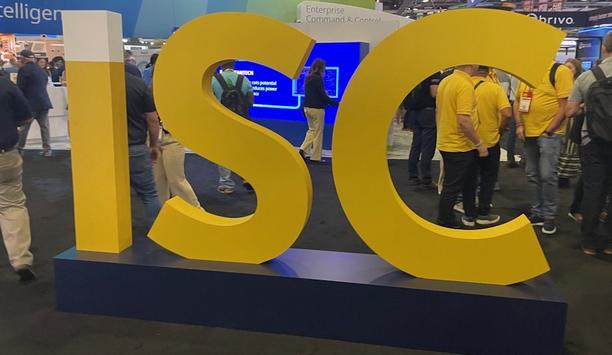
Artificial Intelligence (AI) had a major presence at the ISC West 2026 show in Las Vegas. Almost every booth offered some variation on AI and how intelligence is transforming the physical security industry. Several industry leaders led the way, showcasing how they are tackling complex security challenges with smarter, more efficient solutions. Obviously, the security industry will never be the same. Milestone Systems: Responsible AI and open platforms Milestone has declared 2026 the "year of delivery” on previously announced developments and enhancements. A standout feature is their new natural language AI search, which is being integrated across XProtect, Arcules, and Briefcam platforms to simplify how users interact with vast amounts of video data. A core pillar of their strategy is responsible AI development, which prioritises using licensed data over "scraped" data. They have introduced new anonymisation tools that protect privacy by replacing faces with AI-generated characteristics like hair color while keeping the person unrecognisable. Furthermore, Milestone is moving workloads to Linux to reduce costs, transitioning toward an app marketplace, and has partnered with NVIDIA for the "Hafnia" project to ensure high-quality data to train AI models. Ambarella: Powering the edge with AI chips With their presence at ISC West in a meeting room near the trade show floor, Ambarella is the "engine" behind many high-performance intelligent video products, specialising in low-power AI chips like the N1 and CV7 families. Their technology is moving beyond cameras, where they provide systems-on-chips [SOCs] to many manufacturers. They have expanded into "AI boxes" that can process 64+ video channels simultaneously. A standout feature is the Natural Language technology, which allows users to search for specific objects or abstract scenes using simple prompts. To address modern security concerns, Ambarella has implemented "agentic" programming for a no-code development of automated workflows and media signing to combat AI-generated deepfakes by verifying video integrity through metadata. Motorola Solutions: Simplifying intelligence Motorola Solutions shows physical security evolving into a real-time enterprise intelligence layer Motorola Solutions is prioritising user accessibility by integrating natural language processing into its system configuration. Motorola's portfolio demonstrates how physical security technology is evolving into a real-time operational intelligence layer across the enterprise. Instead of requiring custom coding, operators can now use simple commands—like asking the system to "show me when someone fell down"—to set up advanced analytics and search parameters. The company is also deploying AI agents designed to aggregate data and automatically flag safety or compliance risks, such as perimeter breaches or blocked fire exits. To ensure maximum utility of the hardware, Motorola Solutions’ system can ingest massive, complex physical manuals and automatically generate monitoring rules based on those standard operating procedures. Furthermore, Motorola is focusing on interoperability, using industry-standard interfaces to ingest data from various hardware brands and networks. This approach aims to provide operators with clear, recommended next steps during critical events, streamlining the decision-making process in high-pressure environments. i-PRO: Putting generative AI at the edge i-PRO is bringing generative AI directly to the edge with a new fisheye camera i-PRO is bringing generative AI directly to the edge with a new fisheye camera, which processes complex analytics locally rather than relying solely on the cloud. These cameras, on display at ISC West, have moved beyond simple attribute-based tracking to identify complex behaviors like aggression, fighting, and slip-and-fall incidents. By running on the latest Ambarella chips, i-PRO cameras can use generative AI to improve image quality and analyse scenes in real-time without external processing. This focus on edge-based intelligence ensures high-performance analytics are available even in environments where constant cloud connectivity might be a challenge. Brivo: The rise of agentic AI Brivo and Eagle Eye Networks have officially unified under the Brivo name, focusing on streamlining the experience for large integrators. They are pioneers in agentic AI, introducing features that allow users to talk to their mobile apps to initiate lockdowns or add users. Their Eagle Eye Video Assistant (EEVA) acts as a natural language AI agent that can monitor for specific threats, such as a brandished weapon or a specific vehicle, and automatically trigger access control responses. By treating access and video as a unified system, Brivo enables users to connect specific video skills—like detecting a red car or a brandished weapon—to automated access control actions. They are also using AI to achieve "zero-cost integration," linking disparate cloud systems using AI-generated instructions. Everon: Emphasis on video monitoring Everon is making a massive investment in active video monitoring, using AI-driven systems to deter crime even before it happens. “The market is ripe for it, and customers are demanding it,” says David Charney, Everon’s Sr. Vice President, Video Command Center. Employing virtual guards who can use voice commands, lights, and horns to "shoo away" unauthorised individuals. The company has implemented senior-level leadership that has facilitated more than 5,000 video-based apprehensions. Everon, specialising in integrated systems for multi-site businesses, uses a rigorous selection process to choose AI providers that can accurately filter alerts for specific applications, such as identifying when a fire door is blocked. As a "trusted advisor" to their 300,000 customers, the company focuses on delivering professional-level results that move beyond basic recording to proactive threat mitigation. Hanwha: New hybrid VMS combines cloud and on-prem Hanwha Vision highlighted the official public launch of Blaze, a hybrid video management system (VMS). The platform uses a hybrid architecture to manage on-premise and cloud-connected devices across multiple sites without complex port forwarding. Blaze features native AI capabilities, including semantic search that allows operators to find specific incidents using natural language queries, such as "person with a safety jacket." The AI security platform lets teams search surveillance footage the way they search Google. AI similarity detection allows operators to quickly trace a person’s movement and investigate incidents faster (useful in active shooter behavior, medical emergencies, or crowd panic scenarios, and more). The system also provides a "histogram" view of traffic patterns to help security professionals quickly identify anomalies in historical footage. OpenEye: Operational intelligence and shift to OpEx OpenEye unveiled AI-powered features such as visual chat and scene analysis OpenEye is redefining video surveillance by moving intelligence from the camera level to the cloud, significantly reducing the need for on-site server management. At ISC West, OpenEye introduced new AI-driven tools like visual chat and scene analysis. Beyond security, these tools provide valuable operational alerts, such as identifying overflowing dumpsters, dirty tables in restaurants, or vehicles blocking dock doors. The system also utilises natural language for search, allowing users to find specific attributes like "people wearing backpacks" within designated timeframes. OpenEye also highlighted an industry-wide shift toward operational expenditures (OpEx) billing models, as users increasingly prefer predictable monthly or yearly payments over large upfront capital expenditures (CapEx). This model aligns with their channel-based operations, meeting customers where they currently operate without the burden of high fees. IQSIGHT: New name, same mission for Bosch video Formerly Bosch Video, the newly named IQSIGHT seeks to maintain the “Bosch pedigree” under the new name. It’s the same engineering, manufacturing, etc. IQSIGHT also pledges to be "easier to do business with" by improving user interfaces and end-to-end user experiences. Despite the transition, the company has increased their pace of innovation and reinforced the open systems philosophy with enhanced integrations with Milestone, Genetec, and others. The major product release at the show is IVA Pro Context, which uses generative AI to provide human-level scene understanding. Through a partnership with Laelaps AI, a robotics startup, IQSIGHT is exploring autonomous dispatch and response. When a camera identifies a scene, it triggers a robot to provide a tailored response. Commercialisation is expected in 12 to 18 months. Verkada: How their system can solve a crime But how does AI operate in the real world? Verkada had a “themed” exhibit demonstrating how their system could solve a hypothetical theft at the Louvre museum in Paris. The exhibit took attendees through and showed how Verkada technologies (e.g., license plate recognition and search capabilities) could provide fast results to solve the crime. AI-powered tools, like their newest unified timeline, demonstrate value in the real world of investigations.

ISC West (International Security Conference & Exposition), March 25–27, 2026, at The Venetian Expo in Las Vegas, is widely regarded as the most important event in the security industry. The yearly exhibition serves as the primary launchpad for new technology and as the central meeting point for global security professionals. We asked our Expert Panel Roundtable: What will be the big topics of discussion at ISC West 2026?
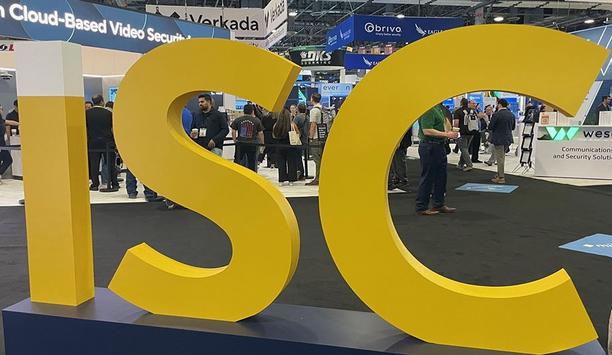
ISC West 2025 in Las Vegas showcased the latest advancements in security technology, offering security professionals a glimpse into the future of the industry. This year's expo highlighted the growing influence of artificial intelligence (AI), cloud computing, and enhanced integration. The pioneering comprehensive and converged security event attracted nearly 29,000 industry professionals to the Venetian Convention Centre. Integration into unified platforms Several companies emphasised the importance of cloud-based solutions and the integration of diverse security components into unified platforms. For example, Brivo's Security Suite provides “everything in one platform” – not just access control. Customers only pay for what they use because the system is flexible and scalable from a single door to enterprise level applications. Brivo’s suite includes video, but the system can also tie in with third-party “partners.” Genetec's Security Centre allows for more frequent updates through the cloud. Milestone is undergoing a two-year transition to bring its Xprotect system into the future by incorporating Arcules and Briefcam into a video-as-a service product. Suprema introduced BioStar X, which integrates access control and video analytics into a single platform. AI and mobile credentials Axis Communications’ Cloud Connect product announced three new partnerships at ISC West 2025 Axis Communications’ Cloud Connect product announced three new partnerships at ISC West – Eagle Eye Networks, SecuriThings, and Wesco. They join the three partners announced during the first year of Axis Cloud Connect – Genetec, Kone (elevators) and Milestone. AI and mobile credentials were still hot topics at ISC West 2025, but the conversation has evolved beyond amazement at the technologies’ capabilities and now centres on more practical aspects. From the theoretical to the practical “AI and mobility are still the ‘flavors de jour,’ but messages are evolving to manifest AI for better outcomes,” says Heather Torrey, General Manager, Commercial Security, Americas, for Honeywell Building Automation. The company has reframed its security portfolio to be very building- and business-focused, continuing to grow and evolve after the recent acquisition of LenelS2. “From the theoretical to the practical, we want customers to be part of the conversation so we can deliver AI that is meaningful to them, focusing on what’s most important,” says Torrey. Under Honeywell’s new ownership structure, “each part of the business can be more focused on customers’ needs,” she says. Honeywell continues its journey around mobile access and credentialing and migrating to cloud solutions. Innovations in Access Control Gallagher’s new Quickswitch access control board simplifies the migration from legacy systems Access control remains a critical component of security systems, and ISC West 2025 showcased several innovations in this area. Acre is releasing “Gallery,” its version of the App Store for access control. DormaKaba is launching the Keyscan KC Series door controller with TCP/IP connectivity and enhanced features. Gallagher’s new Quickswitch access control board simplifies the migration from legacy systems. Johnson Controls highlighted its C-Cure command centre and C-Cure IQ web client, offering a unified approach to access control and video. Hardware integrations for security panels For service provider Alarm.com, hardware products prepare a path to greater customer experiences, says Abe Kinney, Alarm.com’s Director, Product Management, who oversees hardware integrations for security panels, sensors, video, etc., and drives new product development. “We are looking to bridge the physical world to digital world,” he says. “We want to bring an advantage to our dealers that they can bring to customers.” Because Alarm.com’s customers pay a monthly fee, the products must be durable and economical, says Kinney. “It should work with no need for truck rolls.” The importance of longevity and flexibility Products are evaluated based on features, price, and ease of installation Products are evaluated based on features, price, and ease of installation. In particular, longevity is important for the Alarm.com’s pro channel. There is also a growing emphasis on deterrence industrywide. Says Kinney: “We recognise that detection is part of it, but we need to prevent problems from happening in the first place. And the industry is re-evaluating.” When it comes to cloud intelligence, Eagle Eye Networks puts the emphasis on flexibility. They offer AI that can perform anywhere on the system infrastructure, on the camera, on their on-site bridge device, or in the cloud. They support their own AI and also any AI product from a third party. “We focus on what customers want from the data AI detects,” says Hans Kahler, Eagle Eye Networks’ Chief Operating Officer. Integration with other systems A timely alert from gun detection could save a life, but AI can also generate information that might be used and analysed later, such as point-of-sale information, dwell time, foot traffic, etc. “What people want is the ability to work with the data for business intelligence,” says Kahler. Integration with other systems provides new opportunities for customers: For example, a licence plate reader at a restaurant drive-thru could trigger customisation of the menu board digital signage based on the customer’s previous buying pattern. Relentless Innovation Assa Abloy handles more than 40 million SKUs for all its various brands, faked in 28 factories in the US Assa Abloy handles more than 40 million stock keeping units (SKUs) for all its various brands manufactured in 28 factories in the United States. Merely complying with regulations such as the “Buy American Act” is a monumental effort considering the massive product line, attendees heard at Assa Abloy’s Annual ISC West Breakfast focusing on compliance challenges in the security market. Meanwhile, back at the trade show booth, Assa Abloy focused on “relentless innovation” in every corner of its product line. Assa Abloy’s message: Innovation in security does not have to be about AI or automation. In fact, inventive approaches to products come in all shapes and sizes and at every level of the product portfolio, and innovation is happening faster than ever. For example, the Safebolt product from Securitech, a brand recently acquired by Assa Abloy, can quickly lock down existing doors with the press of a red button on a cylindrical or mortise lock. Temporary Systems to Secure Events Securing events is the focus of Allied Universal's Unified Command Solutions, which specialises in setting up temporary security systems for conventions, trade shows, festivals, construction sites, parades, and other events. They can add technology to situations where previously mostly security officers were used, providing safety/security and enabling more efficient event operation. “We can put cameras anywhere, whether they need power or not, use cell service or WiFi, a localised network or the internet, or whatever,” says Andrew LaMadrid, VP, Sales for Allied Universal's Unified Command Solutions. Event operation and management IDIS came to ISC West looking to leverage new products that they did not promote in the past The focus is on easy implementation, flexibility, and fast setup and removal. “We look for a solution to solve each customer’s pain points,” says LaMadrid. They specialise in setting up and deploying surveillance cameras for safety/security and for event operation and management. Mobile surveillance is a relatively new “piece of our puzzle” when it comes to protecting high-profile events. “People are excited about what we can offer that’s new,” says LaMadrid. Unified Command Solutions has been around for about 12 years and was acquired by Allied Universal last summer. IDIS came to ISC West looking to leverage new products that they did not promote in the past, and visitors were very interested in those solutions, says Scott Switzer, IDIS CEO. “The progression of our product line has been tremendous,” he says. Last year, the IDIS booth offered only basic analytics, but this year they had 30 different advanced analytics including gun and aggression detection using the advanced solution “IDIS Vaidio AI.” What Makes You Different? The most common question IDIS hears at their trade show booth is: “What makes you different?” The answer: They offer an end-to-end solution, including cameras; they manage, control, design from end-to-end; and there is no need for multiple integrations. The time needed to install an IDIS system is significantly less because of the simplicity. “We have customers we have supported and grown together for over 20 years,” says Switzer. The company previously deployed IDIS cameras under the Costar brand before the Korean IDIS brand was introduced into the U.S. (IDIS purchased Costar and changed the name to IDIS America.) “This has been a tremendous show for us; we are looking to build our momentum and let more people know about IDIS,” says Switzer. Managing real AI at the edge The depth of their metadata enables new applications, whether for security or business operations Based in Prague, Czech Republic, and with U.S. offices in Pennsylvania, FF Group provides licence plate recognition for harsh environments. Using Axis cameras, they offer “managed real AI at the edge,” selling through a nationwide distributed network, says Alex Osypov, CEO and Founder of FF Group. Markets include parking lots, cities/municipalities, police, government, water systems, etc. The depth of their metadata enables new applications, whether for security or business operations. They are looking to combine and correlate data including LIDAR, RADAR, etc. to exploit the advantages of “data fusion.” Osypov says: “The market is growing because we are involving other adjacent markets.” Unified platforms and advanced tools Several companies are focusing on enhancing security operations centres (SOCs) by providing unified platforms and advanced tools. Axon’s Fusus system “layers” onto existing infrastructure, tying together various sensors into a single interface for real-time monitoring and information sharing. Increasingly, enterprises have invested in a lot of technologies – ac, video, asset trackers – but none of it talks together. Fusus ties all the systems together so that operators no longer have to look at 10 different screens. Rather, there is a “single pane of glass” that shows everything and facilitates sharing of information with law enforcement. Motorola also showcased its Security Operations Centre, which integrates hardware, software, smart sensors, communication radios, and broadband devices to streamline incident management.

Technology's role in securing banks and financial institutions
Download
Security technologies promote real-time awareness in K-12 schools
Download
Integrated systems enable critical and compliant security for transportation
Download
Modernising physical access control
Download
Access. Intrusion. One estate.
Download