Amazon Web Services - Experts & Thought Leaders


Latest Amazon Web Services news & announcements

March Networks®, a global pioneer in intelligent video surveillance, announces an expansion of its long-standing collaboration with Amazon Web Services (AWS), helping customers reduce long-term video storage costs by up to 80% over 5-years, by deepening its use of Amazon S3 Vectors and Amazon S3 Glacier to advance both video intelligence and cloud storage. Building on insights and discussions following AWS re:Invent 2025, March Networks is advancing its cloud strategy to bring together fast, scalable video search with cost-efficient long-term video storage. Reducing the cost and operational burden March Networks has relied on AWS for years to deliver secure, scalable solutions across its portfolio. Now, the platform uses Amazon S3 Vectors to power AI Smart Search, enabling natural language search across millions of video images, while Amazon Glacier supports a tiered cloud storage model built for high-volume video archives and long-term retention. By combining Amazon S3 Vectors with S3 Glacier-backed storage, March Networks helps customers find critical video evidence faster, while significantly reducing the cost and operational burden of storing video for compliance, investigations, and liability protection. This approach is already being adopted by large, multi-site enterprises with extensive video retention requirements. Long-term video retention requirements “Our customers need simpler, more cost-effective ways to meet long-term video retention requirements without compromising security and compliance – and we’ve just solved that problem,” said Peter Strom, President & CEO of March Networks. “By combining Amazon S3 Vectors for rapid video intelligence with S3 Glacier for cost-effective long-term storage, our partnership with AWS delivers a cloud model that simplifies infrastructure, scales instantly, and lowers total cost of ownership.” Expanded relationship with AWS Through its expanded relationship with AWS, March Networks delivers: Faster video investigations using natural-language search powered by Amazon S3 Vectors. Up to 80% lower video storage cost over five years using Amazon S3 Glacier-backed tiered retention. Enterprise-grade durability and resiliency through AWS-managed infrastructure. Instant scalability with no on-premises hardware to deploy or maintain. Hybrid flexibility for customers transitioning to the cloud at their own pace. The continued work with AWS also supports March Networks’ broader initiatives, including the adoption of AWS analytics, Amazon Bedrock to support advanced AI-driven services, and enterprise-grade reporting environments to help customers unlock greater value from their video data.

ZBeta, a pioneer in delivering comprehensive physical security consulting services, now announced that senior executives Conal O’Doherty and Jesse “JJ” Knutson have been named principals of the firm. In their respective roles as Chief Growth Officer and Chief Operating Officer, Conal and JJ have been instrumental in shaping ZBeta’s identity by elevating the brand, enriching the client experience, advancing corporate strategy, strengthening operational performance, and unlocking new growth opportunities. As principals, they will continue to work alongside CEO Zack Brunette to chart the firm’s strategic trajectory, guide operational priorities, and advance the evolution of the organisation. Transforming the security function ZBeta has long centered its work on the belief that strong security programs should function as seamlessly as great design, reducing friction while enabling organisations to operate at their highest potential. The appointment of JJ and Conal as principals further strengthens this approach and further aligns the firm’s leadership around a shared commitment to transforming the security function into a model of organisational excellence. ZBeta’s leadership team ZBeta’s leadership team boasts a long history of developing security and business consulting programs that meet client needs while enhancing how organisations operate. Over the years, they’ve worked with Fortune 50 organisations like Amazon, Microsoft, Wells Fargo and other well-regarded organisations to create solutions that blend strategy and innovation with practical know-how and world-class delivery. This has shaped the firm into a trusted partner for global security pioneers seeking clarity and confidence in a landscape that grows increasingly complex each day. Prior roles of JJ As Chief Operating Officer, JJ has provided clear direction and operational leadership across ZBeta’s consulting, design, and engineering practices. With more than 25 years of experience spanning systems integration, manufacturing, engineering, and high-level security program design, he has led the development of advanced solutions for environments including corporate security operations centres, data centres, financial institutions, critical infrastructure, and complex network architectures. His direct approach, combined with in-depth technical expertise, has significantly contributed to ZBeta’s reputation for precision and dependability. ZBeta’s success collaboration “ZBeta’s success has always come from a combination of great people, strong collaboration, and a commitment to doing things the right way,” JJ said. “Becoming a principal is an honour, and it reinforces how dedicated we are to helping clients build smarter, more resilient security programs. I’m looking forward to what we can accomplish together in this next chapter.” ZBeta’s strategic direction Conal has been a steady influence on ZBeta’s strategic direction — from corporate strategy and development of the brand to how it approaches it’s Talent and Culture model and how it supports clients and attracts new ones. Throughout his career, he’s helped strengthen organisational performance, build high performance and motivated teams, and create cultures rooted in trust and accountability. His ability to build genuine, long-lasting relationships has been a major driver of ZBeta’s growth and its focus on delivering meaningful, people-first results. ZBeta's enhanced leadership structure “I’m proud of what we’ve built at ZBeta, but even more inspired by where we’re going,” Conal said. “For us, it has always been about attracting the very best talent in the industry and enabling them to do their best work with the best clients and that will continue to be our focus as we move forward. I’m truly grateful for this opportunity to join forces with Zack and JJ and for the trust our clients place in us, and I’m excited to continue strengthening those relationships as we grow together.” With this enhanced leadership structure, ZBeta is reinforcing its long-term vision: to redefine how the security function is designed, implemented, and experienced. ZBeta’s evolution “Conal and JJ have been instrumental in guiding ZBeta’s evolution,” Zack said. “Bringing them on board as principles honours the leadership they’ve shown and solidifies the direction we’re heading." "Their ability to pair strategic insight with client empathy is rare, and it’s at the heart of how we help organisations succeed. I’m looking forward to what the three of us can achieve together as we move into the next evolution of our business.”

Teleport is excited to announce it has been named the winner of Rising Star Partner of the Year, recognising Teleport as a top Amazon Web Services (AWS) Partner that has seen significant YoY growth in its technology business. Announced during the Partner Awards Gala at AWS re:Invent 2025, the Geographic and Global AWS Partner Awards recognise a wide range of AWS Partners that have embraced specialisation, innovation, and cooperation over the past year. Geo and Global AWS Partner Awards recognise partners whose business models continue to evolve and thrive on AWS as they support their customers. Infrastructure identity approach “To be recognised as a Rising Star Partner of the Year is a testimony to Teleport’s continuous growth and our company vision for securing infrastructure at scale,” said Ev Kontsevoy, CEO at Teleport. “By unifying trusted identities for humans, machines, and AI, teams can secure access across multi-cloud and AI-native environments at massive scale. This infrastructure identity approach, which includes deep integration with AWS, strengthens infrastructure resiliency and reduces complexity, enabling customers to accelerate their pace of innovation.” Geography and Global AWS Partner Awards The Geography and Global AWS Partner Awards included a self-nomination process across several award categories, awarded at both the geographic and global levels. All AWS Partners were invited to participate and submit a nomination. Award submissions were reviewed by a third-party, Canalys, and selected with special emphasis placed on customer success use cases. Data-driven award categories In addition, there were several data-driven award categories, which were evaluated by a unique set of metrics that helped measure AWS Partners’ performance over the past year. Canalys audited the datasets used to ensure that all measurements and calculations were objective and accurate. Finalists represented the top three-ranked AWS Partners across each category. The AWS Partner Network (APN) is a global program focused on helping partners innovate, accelerate their journey to the cloud, and take full advantage of the breadth and depth of AWS.
Insights & Opinions from thought leaders at Amazon Web Services
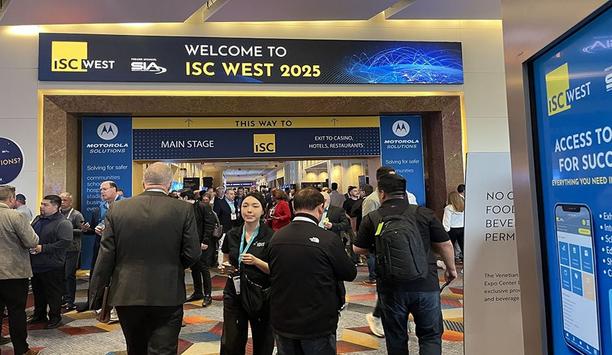
For all the emphasis on cloud systems and centralised servers at ISC West, a lot of innovation in security video systems is happening at the edge. New advancements inside video cameras are boosting capabilities at the edge, from advancements in processing power to artificial intelligence (AI) and machine learning (ML) algorithms that can now be deployed directly on the cameras or edge devices. Advancements in AI algorithms The progress of video systems becoming smarter at the edge is driven by the need for real-time insights, lower latency, bandwidth efficiency, enhanced privacy, and improved reliability. Advancements in edge computing hardware and AI algorithms are enabling a range of intelligent video applications across various industries, including physical security. Smarter functionality at the edge is a benefit of new computer systems-on-chips (SoCs) that are driving new heights of performance for today’s cameras. Axis Communications’ ARTPEC-9 Axis Communications’ new ARTPEC-9 SoC offers advanced video compression to reduce bandwidth Axis Communication’s new ARTPEC-9 system-on-chip (SoC) offers advanced video compression to reduce bandwidth and storage needs. With a low bitrate, the SoC helps deliver high-quality imaging with outstanding forensic detail. ARTPEC-9 also offers enhanced deep learning capabilities to allow users to leverage the latest video analytics and accelerate the implementation of AI technology. Axis maintains control over all aspects of the chip’s development to ensure high quality and cybersecurity. Among the benefits of ARTPEC-9 are better AI and deep learning, better image quality, better cybersecurity, and AV1 license-free video compression (see below). Hanwha Vision’s Wisenet 9 Hanwha Vision has launched Wisenet 9, its most advanced AI-powered System on Chip (SoC). Wisenet 9’s enhanced edge AI capabilities increase performance as the volume and complexity of security threats demand real-time, accurate analysis. By elevating edge-device performance, AI empowers systems to quickly analyse vast amounts of video data and discern crucial patterns and anomalies. A key differentiator driving Wisenet 9 is deployment of two Neural Processing Units (NPUs), which improve performance three-fold compared to Wisenet 7, the previous SoC generation. While one NPU handles image processing, the other focuses on object detection and advanced analytics. This dual NPU concept was introduced to ensure video quality and analytics have independent resources, thus preventing one function from impacting the performance of the other. The latest from Ambarella Ambarella is a supplier of edge AI systems-on-chips to multiple video camera manufacturers Off the ISC West trade show floor in a nearby meeting room, semiconductor company Ambarella demonstrated how it will continue to push the envelope of what is possible with generative AI at the edge. Ambarella is a supplier of edge AI systems-on-chips to multiple video camera manufacturers and recently achieved the milestone of 30 million cumulative units shipped. The demonstrations highlight Ambarella’s ability to enable scalable, high-performance reasoning and vision AI applications across its ultra-efficient, edge-inference CVflow 3.0 AI SoC portfolio. The company’s DeepSeek GenAI models run on three different price/performance levels of its SoC portfolio. In addition to advancements in GenAI processing at the edge, Ambarella integrates image processing, encoding and system-level functions into all its AI SoCs. New standard for video encoding: AV1 AV1 compression is a next-generation video coding technology that offers significant improvements in compression efficiency and video quality, especially at lower bitrates. Its royalty-free nature positions it as a crucial codec for the future of internet video. AV1 compression is a next-generation video coding technology. Axis Communication’s ARTPEC-9 chip now supports the AV1 video encoding standard. By embracing this standard, which is new to the physical security market although it was introduced in 2018, Axis sets the stage for AV1 compression to eventually become the industry standard, replacing H.264 and H.265. Network video transmission AV1 is an open-source, license-free coding format designed mainly for efficient network video transmission AV1 is an open-source, license-free coding format designed specifically for efficient network video transmission. It delivers high-quality video at low bitrates, reducing bandwidth consumption and storage costs. The codec was developed by the Alliance for Open Media (AOM), a nonprofit organisation founded in 2015 by Google, Intel, Amazon, Microsoft, Netflix, and Mozilla (among others), to provide open-standard, next-gen video coding technology. AV1 is ideal for cloud solutions—making streaming applications more robust, scalable, and capable of delivering real-time insights. Now the ARTPEC-9 chipset brings these benefits to the surveillance industry, and AV1 is currently supported by AXIS Camera Station. Providers of major video management solutions (VMS) such as Genetec and Milestone will be adding support for AV1, with further developments already underway. More intelligence at the edge Intelligence inside video cameras comes from the processing power and algorithms that enable them to perform tasks beyond simply capturing and recording images. This "intelligence" allows cameras to analyse the video stream in real-time, identify objects, detect events, and make decisions or provide alerts based on what they "see." New and improved SoCs are driving performance improvements at the edge. The increasing power of embedded processors and advancements in AI are continuously expanding the capabilities of intelligent video cameras.

Retailers now often find themself in a precarious situation. Profit margins are being squeezed by widespread shoplifting: The Council on Criminal Justice reports that between the first half of 2023 and the first half of 2024, shoplifting reports increased by 24%. Meanwhile, the strategies used by shops to deal with this situation are alienating consumers and affecting total sales. Andy Jassy, the CEO of Amazon, stated during an earnings call that customers are now purchasing more pharmaceuticals from Amazon in response to other retailers locking their cabinets. Media reports This crisis impacts not only the large chains—more than 7,100 retail stores were closed in the U.S. in 2024, a 69% increase from the previous year—but also small, local businesses, whose profit margins are even narrower. Media reports out of Los Angeles show that small businesses in regions with greater shoplifting rates are more likely to close, and small business owners' job satisfaction and general well-being are negatively impacted by the fear of crime. How to safeguard staff and inventory Unchecked retail theft demoralises staff and makes the store less attractive to customers This is obviously not a sustainable situation. In addition to lowering revenue, unchecked retail theft demoralises staff and makes the store less attractive to customers. Unfortunately, making customers wait in line to enter a store or locking up toothpaste and deodorant only makes the customer relationship worse. Retailers need to figure out how to safeguard staff and inventory without alienating their customer base—and they need to figure it out fast. Advanced video security A new tool has come to the forefront of this fight: advanced video security. Of course, video surveillance has been used in stores for many years. However, the technology currently being used to reduce retail theft is very different from the outdated analog video systems of the past. With features like cloud-based flexibility and AI-enhanced analytics, this new generation of video surveillance systems has all the advantages of modern technological advancements, while also providing businesses with a competitive edge in the fight against retail theft. Security's new AI video standard Workers are constantly rushing from aisle to aisle in an effort to satisfy eager consumers Although the typical chain pharmacy may appear straightforward to the customer, retailers are aware of how intricate these spaces are. Hundreds or even thousands of shoppers may come and go on any given day, with a larger volume during busy seasons like holidays or special promotional events. It's common for shoppers to pick up merchandise and put it down in another part of the store, often far away from its original location. Meanwhile, workers are constantly rushing from aisle to aisle in an effort to satisfy eager consumers, particularly during these busy seasons. How much can recorded videos reveal in a busy Using traditional CCTV, managers and security teams can monitor some of this activity, but their viewpoint of events will always be incomplete. There is a limit to how much recorded videos can reveal in busy, fast-paced customer situations, and even the largest chain stores lack the staff and resources to continuously sort and evaluate all of the data they collect. When more customers are in the store for a special event, there’s also naturally a higher risk of theft. New generation of video security Using machine learning algorithms trained on large amounts of retail-specific data The new generation of video security aims to provide retailers with comprehensive intelligence that covers all aspects of their operations. Using machine learning algorithms trained on large amounts of retail-specific data, they are focused on predictive actions and can recognise problematic behaviour in real time from raw video footage. AI-powered surveillance For example, if someone entered a store with empty bags but bypassed the cashier and started heading to the exit with a full bag, AI could predict a potential theft before it happens. Instead of just recording the theft, security action could be triggered in the moment. AI-powered surveillance is like an all-seeing security officer, quickly analysing the thousands of variables at play and spotting the warning signs of a possible crime before it happens. This is especially crucial during the holidays and busy shopping periods. Security personnel required to monitor cameras Imagine a chain store with 500 locations and 32 cameras each: that’s 1,600 cameras Cameras with AI can also alert human security personnel of events that would have otherwise been missed. Imagine a chain store with 500 locations and 32 cameras each: that’s 1,600 cameras. Now just imagine the number of security personnel required to monitor all of those cameras – when it comes down to it, traditional security is a numbers game. AI is the differentiator here that will allow retailers to win this game. VSaaS: A new tool to Deter Theft The emergence of Video Surveillance as a Service (VSaaS), a surprisingly under-discussed aspect of the broader SaaS revolution, is an important part of video security’s evolution. VSaaS solutions are especially helpful for chains that require a high level of centralisation and coordination across hundreds or even thousands of locations. In addition to offering action alerts at the shop level, VSaaS offers comprehensive security systems accessible from any location. This gives corporate headquarters access to complete, aggregated insights on all aspects of business operations. Identify the best ways to deploy staff Retail operators are constantly in a state of triage, rushing to identify the best ways to deploy staff This is significant in part because of the importance that social engineering and store layout have in preventing theft. Stores are frequently more busy during specific hours than others, and consumers may congregate in particular areas of the store while others are comparatively empty. Retail operators are constantly in a state of triage, rushing to identify the best ways to deploy staff and organise inventory while accounting for all of these variables. Cloud-based VSaaS solutions Cloud-based VSaaS solutions help streamline this process by eliminating uncertainty, highlighting blind spots and bottlenecks, and informing retailers of what truly works. Another regrettable reality is that employees frequently steal from businesses they work at. Here, too, VSaaS solutions—when combined with sophisticated, integrated access controls—are essential. AI analytics technology Implementation and deployment of VSaaS is also easier and less costly than CCTV Implementation and deployment of VSaaS is also easier and less costly than CCTV. When new AI analytic updates become available, the client software and hardware don’t need to be upgraded, and the onsite technology and cameras also don’t need to be replaced. The AI analytics technology is upgraded in the cloud, enabling faster deployment and implementation of new technology. New VSaaS solutions Theft will always occur at some level; it's just a part of doing business. However, the growth in shoplifting that retailers have experienced in recent years is unacceptable, and if these figures keep rising, the consequences will be disastrous. In a time of dire need for retail, new VSaaS solutions have come to the forefront and are already turning the tide.

In the competitive world of physical access control, Big Tech companies are seeking to play a larger role. Physical access competition Apple Wallet continues to stake its claim on mobile credentialing. Amazon One Enterprise is pushing a palm-based identity service. Google/Nest offers smart locks for home access control, with identity and access management provided in the Google Cloud. The entry of these big companies in the historically fragmented physical access control market is causing disruption and foreboding new levels of competition. Apple Wallet impacting credentialing trends The popularity of mobile wallets and contactless technologies in general has grown, creating more demand At Apple’s Worldwide Developer Conference in June 2021, the company announced support for home, office and hotel keys, including corporate badges and student ID cards, in Apple Wallet. Later, the company announced Hyatt as the first hotel partner to support the technology. Since then, the popularity of mobile wallets and contactless technologies in general has grown, creating more demand for a seamless solution such as Apple Wallet. Easy access In 2023, HID Global announced the availability of their employee badge in Apple Wallet, allowing staff and guests to easily access corporate spaces with their iPhone or Apple Watch, including doors, elevators, turnstiles, etc. Employees just need to hold their iPhone or Apple Watch near the reader to unlock. Factors affecting the rate of adoption However, implementing and maintaining an Apple Wallet-based access control system can incur costs for hardware updates, software licencing, and ongoing maintenance. Factors affecting the rate of adoption include the need to upgrade existing infrastructures to accommodate the technology, and the necessity for access control manufacturers to develop and implement integrations with Apple Wallet. Benefits of adoption Keys in Apple Wallet take full advantage of the privacy and security built into the iPhone and Apple Watch With larger companies leading the way, some smaller ones might take longer to catch up. There is also a need to educate building owners and administrators to see the value and benefits of switching to Apple Wallet-based access control. Convenience and greater security can accelerate adoption. Keys in Apple Wallet take full advantage of the privacy and security built into iPhone and Apple Watch. Sensitive data protection A compatible app, specific to the building’s access control system, is needed. Once added, credentials are securely stored in the iPhone's Secure Enclave, a dedicated hardware chip designed for sensitive data protection. Holding an iPhone near an NFC-enabled reader enables transmission of encrypted credentials. In addition to Near Field Communication (NFC), some systems also utilise Bluetooth Low Energy (BLE) for added security, longer read range, and hands-free unlocking. Phones need sufficient battery charge to function. Amazon One Enterprise Enables Palm-Based Biometrics In November 2023, Amazon Web Services Inc. (AWS) announced an identity service providing comprehensive and easy-to-use authentication for physical and digital access control. The system enables users to employ their palm as an access control credential, allowing organisations to provide a fast and contactless experience for employees and others to gain access to physical locations as well as digital assets. Physical and digital locations Physical locations include data centres, office and residential buildings, airports, hotels, resorts Physical locations include data centres, office and residential buildings, airports, hotels, resorts, and educational institutions. IT and security administrators can easily install Amazon One devices and manage users, devices, and software updates using AWS’s Management Console. Elimination of physical credentials An advantage of the Amazon approach is the elimination of physical credentials such as fobs and badges, and digital elements such as personal identification numbers (PINs) and passwords. AWS says security is built into every stage of the service, from multi-layered security controls in the Amazon One device, which is the same technology used in the Amazon Go retail stores, where shoppers can pay for purchases by scanning the palm of their hands. The devices combine palm and vein imagery for biometric matching and deliver an accuracy rate of 99.9999%, which exceeds the accuracy of other biometric alternatives, says the company. AI and ML The palm-recognition technology uses artificial intelligence and machine learning to create a “palm signature” that is associated with identification credentials such as a badge, employee ID or PIN. Boon Edam, a revolving door and turnstile manufacturer, offers Amazon’s palm biometric technology on its equipment, and IHG Hotels & Resorts uses the technology to provide employees a convenient way to identify themselves and gain access to software systems. Google and Nest Devices in Access Control When the Nest × Yale Lock is connected to the Nest app, a resident can unlock a door from their phone Google’s Nest devices include smart locks for home access control. The Google Nest × Yale Lock allows access control via both physical keys and passcodes accessible through the Google Home app. When the Nest × Yale Lock is connected to the Nest app, a resident can unlock a door from their phone. Passcodes can be created for family, guests, and other trusted persons. Alerts can be provided whenever someone unlocks and locks the door. When Nest “knows” a resident is away, the door can lock automatically. Voice control, Google Home app Voice control, using Google Assistant integrated with various Nest devices, enables use of voice commands to lock and unlock doors, thus adding another level of convenience. Smart home devices from various manufacturers can be controlled through the Google Home app. SMART Monitoring ADT’s Self Setup smart home security systems integrate Google Nest smart home products with ADT security and life safety technology, including SMART Monitoring technology. Microsoft Azure is another company that could impact access control. The Microsoft Azure Active Directory is an identity and access management platform that could be extended to physical access control, leveraging existing user credentials. Long-Range Impact on the Security Marketplace Big Tech companies are creating platforms for managing access control data, integrating with other security systems Increasingly, Big Tech companies are creating platforms for managing access control data, integrating with other security systems, and offering analytics for optimising security and building operations. Big Tech is also actively researching and developing new technologies for access control, such as facial recognition, voice authentication, and AI-powered anomaly detection. Access control communication and integration As their involvement in physical access control grows, Big Tech companies could potentially gain more influence in setting industry standards for access control communication and integration, similar to how they have become dominant in other areas such as mobile platforms. Given their expertise in user interface design and data analysis, Big Tech companies could help to direct how future access control systems are managed and how users interact with them, including more intuitive and user-friendly operations. Future of physical access control Existing concerns about privacy, security, and potential dominance by a few Big Tech companies could spill over into physical access control. However, traditional security companies, startups, and industry consortiums are also actively developing innovative solutions. Ultimately, the future of physical access control will likely be shaped by a combination of many different players and technologies – large and small.

Technology's role in securing banks and financial institutions
Download
Security technologies promote real-time awareness in K-12 schools
Download
Integrated systems enable critical and compliant security for transportation
Download
Modernising physical access control
Download
Access. Intrusion. One estate.
Download
