
The challenge
Health care organisations the world over are working to make their systems more efficient. In Kenya, the National Hospital Insurance Fund (NHIF) prints member ID cards in-house to reduce fraud and improve patient satisfaction.
The NHIF is a government health care organisation covering Kenyans for their in-patient medical needs. Workers earning more than a defined amount must contribute to the fund through payroll deductions. Membership is voluntary for self-employed workers. The fund then pays hospital benefits to members and their declared dependants out of the contributions received. According to the NHIF Web site, the organisation "operates under the social principle that the rich should support the poor, the healthy should support the sick and the young should support the old."
An upgrade to their card system began in 2003, when NHIF administrators decided to add a magnetic stripe to their members' ID cards. Previously, members received manila cards with stamps affixed to them containing member information. "During the formative years, we collected photos and merged them into our database," said Gilbert Kamau, NHIF System Analyst Programmer. "Through this process, we learned the intricacies involved in collecting photos, enhancing database security and much, much more." A change to a more efficient process was needed.
Solution found
In 2006, the NHIF began using a Fargo DTC500 Series Direct-to-Card Printer/Encoder to produce member ID cards. NHIF administrators scanned a member's photo, merged it into the badging software and printed it in a span of two minutes, according to Kamau. "This has helped our organisation save on merging and printing time."
"We made the change because we felt that to give hospitals better service we had to make information readily available to them by connecting them to our database," said Kamau. "We also wanted a faster printer with a laminator to help us achieve our targets."
"The first savings was that of not having to reprint manila cards every year," Kamau added. The new plastic ID cards are more durable. "Also, we used to print stamps to affix to the manila cards. These have been replaced by the magnetic stripe, which displays the contribution status of the member when the card is read by a card reader. The new cards contain less information than before, because the rest of the information is available in the database via the card readers. Since the card readers also display the ID cardholder's photo, we are able to identify the member and his or her dependants."
"With the introduction of a photo in the database, it is impossible for fraudsters to print forged membership cards" |
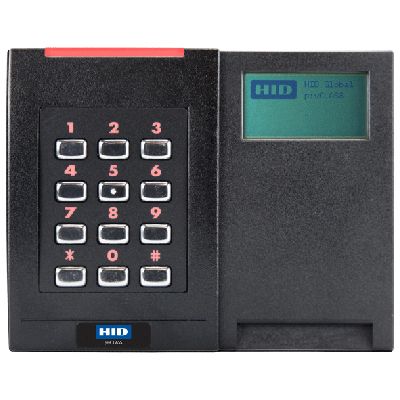
The NHIF initially purchased two card readers, but by the end of 2007, it will install 480 readers in all of its accredited hospitals. "With this rollout, we will have established the largest hospital network across Kenya," said Kamau.
Results
Because the affiliated hospitals can now connect directly to the NHIF database, they are able to access contribution information from members, check the eligibility of a member and confirm the member's dependants online, as well. With this information, they can make an instant decision about whether or not the member is eligible for benefits, thus reducing inappropriate claims. The same information used by the NHIF to analyse the claim for payment is now available to hospitals even before they file the claim.
Previously, a member would present a claim to the NHIF for processing, but since his or her dependants were not in the database, the claim might have been rejected. With the introduction of details and photos about dependents, the ratio of rejections to claims has gone down, providing better service to the members, according to Kamau. Because the NHIF can easily identify members and their dependants, the incidence of fraud has also gone down. "With the introduction of a photo in the database, it is impossible for fraudsters to print forged membership cards," Kamau said. "That enhances security."
The cards are printed at the NHIF headquarters in Nairobi. For now, the magnetic stripe is adequate technology, according to Kamau, but he said he is pleased that the Fargo printer has the capability of printing smart cards when the NHIF is ready to add that level of security.
"We have implemented one of the largest ID systems in Kenya," he said proudly. "The process is now more efficient since we have fewer claims being rejected and member details are being scrutinised more than before. NHIF has benefited immensely from this technology."