Biometric Security

Gallagher Security's High Sec T30 Keypad Reader has achieved approval under the UK National Protective Security Authority's (NPSA) Readers and Keypads standard, further strengthening Gallagher’s suite of NPSA-approved solutions for high-security environments. The approval reinforces Gallagher's commitment to developing security technologies that meet some of the world's most rigorous physical and cybersecurity standards, while expanding the company's trusted high-security offering for cus...

Arctic Wolf®, the cybersecurity and AI company, today at its 2026 Security Operations Summit introduced Aurora Adaptive Threat Protection, a next-generation endpoint security solution designed to unlock AI-powered, intent-based detection to identify, disrupt, and reverse ransomware, credential theft, and other evasive attacks earlier in the attack chain. Aurora Adaptive Threat Protection introduces a new approach to endpoint security built for today's AI threat landscape. As AI enables atta...
Arctic Wolf®, the cybersecurity and AI company, today at the 2026 Security Operations Summit announced SwarmView™, a new capability that brings the power of the Swarm of Experts™ directly to customers, providing unprecedented visibility into how the Aurora Agentic SOC® investigates, validates, and responds to modern threats at machine speed. By providing a direct view into how AI agents and human experts work together throughout every investigation, SwarmView gives organisati...
Arctic Wolf®, the cybersecurity and AI company, announces at the 2026 Security Operations Summit new capabilities in the Aurora® Superintelligence Platform that help organisations gain visibility into AI adoption, access security insights faster, and extend protection across customers’ rapidly expanding attack surfaces. As AI adoption accelerates across the enterprise, organisations face a growing challenge that they cannot secure what they cannot see. Employees are rapidly embrac...

Echo, which delivers frontier-hardened software across the enterprise software supply chain, launches Echo Frontier, a new offering designed to protect organizations from frontier AI vulnerabilities, zero-days uncovered by LLMs, before public vulnerability disclosure. Frontier AI models are rapidly advancing vulnerability discovery and exploitation, and that power is moving beyond tightly controlled environments with clear security guardrails. According to Anthropic research published Sept. 29,...

Gunnebo Entrance Control is at SKYDD 2026 to showcase its latest pedestrian entrance security technologies and explore how different approaches to entrance control can support the needs of smart buildings. Visitors to stand A18:33 at Nordic’s leading trade fair for security will be able to see the SpeedStile FLs UC, SpeedStile FP Glide and NexGate, with each offering a different approach to managing pedestrian movement and controlling access. Tailored to specific requirements “Cho...
News

Colt Technology Services (Colt), the digital infrastructure company, announces it is the first European-based provider to integrate its last-mile connectivity services with the Equinix Fabric Marketplace. Fabric Marketplace simplifies access to services across the world’s largest digital business ecosystem. It gives enterprises a single destination to quickly discover, learn about and connect with service providers that can enhance their distributed networking deployments for multicloud and AI workloads. Scalable network infrastructure The enhanced collaboration combines Colt's extensive global network footprint with the power of Equinix Fabric®, enabling businesses and enterprises to establish high-performance, secure connectivity from third-party locations, including office buildings and data centres, directly into Equinix facilities. Designed to eliminate traditional procurement and deployment complexities, the integration gives enterprises faster access to the scalable network infrastructure required to support cloud-first strategies, data-intensive workloads and AI-driven growth., enabling businesses and enterprises to establish high-performance, secure connectivity from third-party locations, including office buildings and data centres, directly into Equinix facilities. Designed to eliminate traditional procurement and deployment complexities, the integration gives enterprises faster access to the scalable network infrastructure required to support cloud-first strategies, data-intensive workloads and AI-driven growth. Last-mile connectivity services As organisations continue to accelerate digital transformation initiatives and to invest in AI, network complexity is becoming a growing barrier to growth. Enterprises often need to engage infrastructure and connectivity providers separately, creating operational friction that can slow deployment, increase costs and delay innovation. By bringing Colt's last-mile connectivity services into the Fabric Marketplace, this partnership is removing that complexity. It simplifies how organisations across Europe and Asia discover, procure and deploy connectivity services. Through the Fabric Marketplace experience, customers can instantly identify available Colt services, access pricing information, request quotes and submit order requests without navigating multiple providers, systems or procurement processes. Creating operational friction Laura Farina, Executive Vice President Enterprise, Colt Technology Services, said: “Infrastructure should enable growth, not slow it down. As enterprises race to harness AI and unlock the value of their data, they need connectivity that is simple, agile and available on demand. By extending our partnership with Equinix and bringing Colt's last-mile services into the Fabric Marketplace, we're removing friction from the connectivity journey and making it easier for customers to build the digital foundations they need to compete and grow.” Joe Scattareggia, President, Infrastructure, Colt Technology Services, said: “As investment in AI infrastructure accelerates, connectivity has become a critical factor in how quickly cloud platforms can scale. This collaboration gives hyperscalers and neocloud providers a faster path to the network reach, capacity and interconnection they need to expand their footprint, support growing workloads and meet customer demand.” Data-intensive workloads Johan Arts, Senior Vice President of Sales, Equinix said, “The value of any digital ecosystem is the ability to bring the right partners together in one place. By integrating Colt's last-mile connectivity services into Fabric Marketplace, we're making it easier for customers to discover, procure and deploy the services they need while reducing the operational complexity traditionally associated with connectivity.” “Digital infrastructure is increasingly defined by the ecosystems it connects,” added Johan Arts. “By bringing Colt's last-mile connectivity services into Fabric Marketplace, we are making it simpler for enterprises to discover, evaluate and procure the connectivity they need to support distributed applications, data-intensive workloads and AI initiatives. Together with Colt, we're helping customers accelerate deployment while reducing the operational complexity traditionally associated with connectivity procurement.” The launch further strengthens Colt's Network-as-a-Service (NaaS) strategy and expands its visibility across the Equinix ecosystem. Equinix Fabric serves a global customer community of more than 4,000 organisations, creating new opportunities for businesses to access on demand connectivity through a trusted and highly interconnected digital infrastructure platform.

Teledyne Gas and Flame Detection, a portfolio of safety instrument businesses of Teledyne Technologies Incorporated, today unveiled its new-generation FREEDOM range of gas detectors. The series is designed for industrial sites where gas detection technologies must demonstrate reliable monitoring with minimal maintenance requirements. Available in three models - FREEDOM GP, XP and Xi - the range provides detection solutions for applications spanning oil and gas, general industry, utilities, water treatment, laboratories and hazardous environments among others. Built around a common electronic architecture, the new FREEDOM series is designed to simplify servicing and standardize components - and reduce TCO across the product lifecycle. Demanding operating conditions “FREEDOM represents a step forward in providing customers with a gas detection solution that is both more intuitive and serviceable, as well as more cost-effective,” said Régis Prévost, Product Line Manager, Teledyne Gas and Flame Detection. “By combining a common platform with intelligent connectivity and features such as cartridge replacement under power in a hazardous area, without compromising certification compliance, we’re helping users maintain safety and operational continuity while reducing the demands of routine maintenance.” With a broad selection of detection technologies and designs that withstand demanding operating conditions, the FREEDOM family is able to deliver user-friendly, reliable gas detection across diverse industrial environments. Functional safety requirements The FREEDOM Xi model, for example, is built to allow uninterrupted operation and optimal detection in the harshest domains. Another model, FREEDOM XP, is engineered for explosive atmospheres, meeting stringent performance and functional safety requirements that include SIL2/SC3 High Demand certification. A key feature arrives courtesy of Teledyne Gas and Flame SYNC (GF Sync), a dedicated Bluetooth app that enables users to configure, calibrate and diagnose FREEDOM gas detectors directly from a mobile device. The app also supports automatic certificate generation, simplifying compliance and reporting while providing convenient access to essential functions. Across the range, multicolour displays and peripheral LEDs provide clear visual indications of normal operation, faults and alarms, making detector status easier to identify at a glance.

Atos, a pioneer of AI-powered digital transformation, announces that it is expanding its longstanding partnership with Fortinet, a global cybersecurity pioneer, from a country-led to a global engagement model. The agreement will help organisations strengthen security across hybrid and multi-cloud environments worldwide through a unified framework including reselling and managed cybersecurity services. It will also align joint business development, customer engagement, service delivery and competitive commercial terms globally to address organisations’ growing cybersecurity challenges. Clients contend with escalating cyber threats and ransomware attacks, increasingly complex digital environments, expanding digital transformation programs, stricter regulatory requirements and a persistent shortage of cybersecurity skills. The strengthened Atos Fortinet partnership will combine advanced security technologies with managed security capabilities on a global scale. Consistent services worldwide Through integrated solutions and consistent services worldwide, the partnership will enable organisations to enhance protection and visibility across cloud and on-premises environments, simplify security operations, accelerate threat detection and remediation, and gain the scalability and flexibility required to pursue their digital transformation securely. Fortinet’s advanced cybersecurity technologies and engagement support across geographies and Atos’ extensive expertise in managed security services, consulting and integration, as well as its global delivery capabilities and network of Security Operations Centers, will provide organisations with more innovative and scalable services to strengthen cyber resilience and support secure digital transformation, with a direct impact on operational efficiency. Over the years, Atos and Fortinet joint offering embraced customers’ ongoing challenges, allowing them to benefit from Atos’ cybersecurity services embedding Fortinet’s latest technologies. Spanning network security Günter Koinegg, global head of cybersecurity services, Atos, said: “Our expanded partnership with Fortinet aligns with our strategy to harness leading technology ecosystems to deliver integrated, outcome-driven solutions for our clients. By combining Fortinet’s advanced cybersecurity technologies with Atos’ consulting, integration and managed security expertise, we can provide consistent and scalable protection across hybrid and multi-cloud environments and help clients address the security challenges in the AI era.” Thomas Desrues, SVP channel sales international, Fortinet, said: “Elevating our long-standing partnership from a country-led model to a globally coordinated alliance builds on the strong complementarity between Atos’ expertise in digital transformation, systems integration, and managed security, and Fortinet’s leadership in cybersecurity innovation focusing on Secure Networking, Unified SASE and AI-Driven Security Operations. Through a unique combination of global scale, shared innovation, and local expertise, we provide the AI-Native Security Fabric organisations need to strengthen cyber resilience and navigate the growing demands for sovereignty, high performance, and security in AI environments.” This strengthened framework complements Atos’ existing offerings spanning network security, SOC services, Zero Trust, cloud security and SASE architecture (Secure Access Service Edge), as well as cyber resilience.

Blackline Safety Corp., a pioneer in connected safety technology, has announced that its G8 safety wearable has won a 2026 Firehouse Innovation Award, marking the company's second consecutive win following last year's recognition of its EXO 8 area monitor. The Firehouse Innovation Awards recognise breakthrough technologies that advance firefighting and emergency response capabilities. G8 was selected for its ability to “improve situational awareness and support safer decision-making during complex incidents.” Real-time communication G8 and its supporting software, Blackline Live, combine advanced gas detection, lone worker protection, real-time communication and live field data. Unlike traditional gas detectors that only sound an alarm locally, G8 gives command teams live gas readings, alerts, and precise firefighter location so they can coordinate a faster response and keep their crews and communities safe. That connected visibility is already making a difference for fire departments using Blackline technology. "It's G8’s remote capability — I now have alerts set to my phone, so when my guys go into an LEL environment or any type of high alarm, I immediately get notified," said Travis Rebello, Hazardous Materials Coordinator and Firefighter, New Bedford Fire Department, Massachusetts. "And I'm on the phone with my dispatcher. What are they into? Do they need assistance? For situational awareness and firefighter safety, this has greatly increased our capability." Fire-hazmat customer base The award comes amid growing adoption of Blackline's connected safety technology by fire and hazmat organisations worldwide. In April, the company reported 42% growth in its fire-hazmat customer base. G8 and Blackline Live have also earned two 2026 Occupational Health & Safety (OH&S) Industrial Hygiene Awards in the IoT Connected Devices and Software categories, respectively. For Rebello, whose two sons are also firefighters, the value of connected safety is deeply personal. "Both of my sons work fire. One works on the fire department with me, and one works in the next town over, so it's not just my guys, my kids are here. I trust him with Blackline," he said.

NETSCOUT® SYSTEMS, INC. released its first half 2026 Distributed denial-of-service (DDoS) Threat Intelligence Report, revealing a significant shift in how attacks are launched and sourced. With more than 9.1 million DDoS attacks recorded globally by NETSCOUT between January and June 2026, the report highlights that DDoS risk is growing along three axes: the volume of traffic that must be inspected, the number of places where mitigation must be deployed, and the share of attacks that disrupt service without ever saturating a link. “The 1,286 percent rise in attacks clearing 1Tbps or 1Gpps means high-capacity events are no longer anomalies; they are routine,” stated Hardik Modi, VP Engineering, DDoS solutions, and ASERT Threat Intelligence Team, NETSCOUT. “With the proliferation of residential proxies and short, rate-based attacks from DDoS-for-hire platforms, traditional coarse network controls are insufficient. Providers and enterprises alike need finer-grained, selective mitigation and increased scrubbing capacity at network edges to combat these qualitative shifts in attack sophistication.” Expanding operational risk Key findings include: Massive attacks on a global scale – NETSCOUT ATLAS recorded more than 9.1 million DDoS attacks across 209 countries and territories, underscoring the expanding operational risk to enterprises and providers Surge in high-impact capacity – attacks exceeding 1Tbps or 1Gpps increased 1,286 percent year-over-year, suggesting defenders must continue to prepare for greater attack intensity IPv6 crossed the terabit threshold – NETSCOUT observed its first IPv6 attack exceeding 1Tbps, while active mitigation of IPv6 attacks rose by more than 300 percent year-over-year even as IPv6’s share of attacks remained roughly flat, illustrating the need for robust IPv6 protection Pressure on carrier mitigation – direct-path methods accounted for 64 percent of observed attacks and gained share for a third consecutive half-year, while carpet-bombing grew from 3.97 percent to 4.54 percent of attacks, and outbound attacks clearing 1Tbps/1Gpps caused operational impacts. Dedicated mitigation capacity remains the selective layer that providers need to intelligently filter malicious traffic DDoS-for-hire and attack economics – attacks lasting one minute or less have roughly doubled as a share since 2H 2023, stressing connection tables, application backends, and resolvers, suggesting DDoS-for-hire platforms are shortening the path to attack Residential proxy supply chain – by pairing residential proxy network tracking with DDoS telemetry, NETSCOUT ASERT identified residential proxy sources participating in DDoS attacks, highlighting that attack traffic can originate from harder-to-distinguish consumer IP addresses Composite peak values NETSCOUT maps the DDoS landscape through passive, active, and reactive vantage points, providing unparalleled visibility into global attack trends. For more than 15 years, NETSCOUT has delivered trusted, consistent DDoS Intelligence based exclusively on directly observed, verifiable attack traffic. NETSCOUT does not aggregate multiple alerts or geographically distributed events into composite peak values, which ensures accuracy, repeatability, and true comparability across reporting periods. Peak metrics reflect single-second maximum bits-per-second (bps) and packets-per-second (pps) rates measured at defined mitigation and monitoring points. Overwhelm critical services NETSCOUT protects two-thirds of the routed IPv4 space, securing network edges that carried global peak traffic of over 800 Tbps. It monitors tens of thousands of daily DDoS attacks by tracking multiple botnets and DDoS-for-hire services that leverage millions of abused or compromised devices. NETSCOUT ARBOR Cloud, backed by ATLAS visibility and dedicated DDoS mitigation capacity, complements on-premises defences and helps organisations absorb large, distributed attacks before they overwhelm critical services. These findings show why DDoS resilience now depends on more than stopping the largest attack. Organisations need to recognise changing attack sources and methods, mitigate both inbound and outbound attacks, apply precise protection where services are exposed, and draw on cloud capacity when attacks exceed local defences. NETSCOUT combines directly observed ATLAS intelligence with on-premises and cloud-delivered mitigation to help customers protect service availability and sustain the digital operations their businesses depend on.

DigiFlight, Inc., a provider of aerospace, cybersecurity, engineering, and training solutions for government and commercial organisations, announces that industry veteran Melody Berry has joined the company as manager of cybersecurity and compliance. She will support the cybersecurity, assessment, and compliance programs of DigiFlight and its affiliated cybersecurity company, Camelot Secure, helping manage requirements across multiple industry frameworks, National Institute of Standards and Technology (NIST) standards, and Department of Defense contract requirements. Conducting mock assessments In addition, Berry will lead Cybersecurity Maturity Model Certification (CMMC) readiness engagements for DigiFlight and Camelot Secure customers, providing CMMC third-party assessment organisation (C3PAO) audit support and conducting mock assessments to help organisations prepare for CMMC self-attestation and third-party assessments. “CMMC and cybersecurity compliance have become increasingly important requirements for organisations supporting the Department of Defense, and our customers need experienced professionals who understand both the technical requirements and the realities of preparing for an assessment,” said Stan Oliver, CEO of DigiFlight and Camelot Secure. “Melody brings extensive hands-on experience in cybersecurity program management, CMMC assessments and federal compliance. Her ability to translate complex requirements into practical steps customers can take to improve security and reduce risk makes her an important addition to the DigiFlight and Camelot Secure teams.” Industry cybersecurity frameworks Berry brings vast experience implementing, managing, and evaluating enterprise cybersecurity and technology programs, with a particular focus on reducing vulnerabilities, managing risk, and helping organisations comply with federal and industry cybersecurity frameworks. Prior to joining DigiFlight and Camelot Secure, Berry served as a lead CMMC assessor with CyberRx, a CMMC C3PAO, where she managed and conducted CMMC 2.0 mock and Level 2 assessments, coordinated assessment activities with customers, managed service providers and assessment teams, and prepared assessment documentation for submission to the Department of Defense. Manage cybersecurity strategy Her previous cybersecurity leadership experience includes serving as deputy chief information security officer for Alion Science & Technology, where she helped manage cybersecurity strategy, risk management, security operations, and federal regulatory compliance for a $1 billion federal contractor. She also served as an enterprise division IT security officer at the National Institute of Standards and Technology and as a senior cybersecurity consultant at Booz Allen Hamilton, supporting government organisations including NIST, the Department of State, the Defense Information Systems Agency, the National Security Agency, Social Security Administration and Internal Revenue Service. Federal regulatory compliance “DigiFlight has a strong understanding of the cybersecurity and compliance challenges facing organisations supporting the defence industrial base,” Berry said. “I’m excited to work directly with customers to make CMMC readiness more manageable, strengthen their cybersecurity programs, and help them move into assessments with greater confidence. I also look forward to supporting the broader DigiFlight and Camelot Secure security and compliance programs.” Berry holds Certified Information Systems Security Professional (CISSP), Project Management Professional (PMP), CMMC Certified Professional (CCP) and CMMC Certified Assessor (CCA) credentials and has achieved lead CCA status. She earned a Bachelor of Science in cybersecurity from the University of Maryland University College, now University of Maryland Global Campus.

Expert commentary

One of the best business lessons I learned didn’t come from business journals or the boardroom. It came from a biography: Steve Jobs by Walter Isaacson. If you haven’t read it, you should! The book covers the full arc of Jobs’ career, and while many of the most talked about lessons center on his entrepreneurship, perfectionism, and brand building, the one that has stayed with me is his philosophy of design. Digital music player market I don’t mean design in the sense of aesthetics, although Apple certainly became famous for that. I mean design as an understanding of how people interact with technology. Examples of Jobs’ design philosophy appear throughout the book, but the chapters about the birth of the iPod are particularly compelling. If you’re too young to remember the era of downloading songs from Napster and loading them onto MP3 players, here’s the context. By the early 2000s, Apple was entering a crowded digital music player market. Companies like Sony, Creative and Rio had already introduced devices that were packed with technical innovation, and they were growing in popularity among college students, commuters, and early adopters who preferred the solid state devices over larger, glitchy portable CD players. Yet Jobs believed the entire MP3 player category possessed a fundamental flaw: all the products were too complicated. More intuitive experience In envisioning the iPod, Jobs became obsessed with creating a more intuitive experience Actually, Jobs used more blunt language. He said they all “were deeply flawed.” They held only a handful of songs, and users struggled with frustrating menu trees to access their most basic functions. As for the software managing the devices’ music libraries? To quote the book, “Only a genius could figure out half of their features.” Jobs saw something the existing manufacturers didn’t. Their MP3 players weren’t offering the one thing that consumers wanted the most, an easier way to listen to music. In envisioning the iPod, Jobs became obsessed with creating a more intuitive experience. He challenged his team to eliminate unnecessary complexity and established a simple rule for the user interface: if a person wanted a song or a function, they should be able to get there in no more than three clicks. Incredibly sophisticated technology The result was a product that felt completely different to use. Apple took an incredibly sophisticated technology and made it approachable. The complexity didn’t disappear; it was just moved behind the curtain where the user didn’t have to think about it. Despite being a late entrant to the MP3 industry, Apple quickly became the dominant manufacturer in the category because of the iPod’s unmatched usability. Plenty of successful companies cared about usability, but Jobs made simplicity a strategic priority. While competitors were adding features and complexity, Apple was asking, “How do we make this easier?” Twenty years later, I still think that’s one of the most important questions any technology company can ask, and one that is shaping the next generation of security technology. Stronger security practices Making a system more secure meant adding steps, procedures, and user responsibilities Which brings me to where I spend most of my time these days: Identity verification. For years, the security industry viewed convenience and security as competing priorities. Making a system more secure meant adding steps, procedures, and user responsibilities. What’s exciting about modern biometrics is that we’re increasingly able to improve both simultaneously. In many ways, we’re applying Jobs’ three click philosophy to identity verification, reducing the interaction required from the user without compromising the strength of the underlying security. And by reducing friction, organisations can implement more frequent identity verification that supports stronger security practices. Biometric authentication experience The simplicity of the biometric authentication experience can make people underestimate the sophistication of the technology behind it. Just as iPod users didn’t have to think about file formats, manually transferring songs to their device, or navigating cumbersome menus, users of modern biometric systems don’t have to think about how their faces, palms, or fingerprints are converted into encrypted, mathematical templates that cannot be reverse engineered. Or how the system verifies that a live person, not a photo, is standing in front of it. Or how AI quietly adjusts for the naturally occurring, gradual changes in a person’s appearance, whether from age, lifestyle, or a few extra pounds. Interacting with a biometric identity solution is like listening to music on an iPod or today, an iPhone. You don’t even think about the incredible technology working in the background that makes the experience possible. For example, with facial authentication, the most frictionless form of identity verification, you look at a reader without even stopping. In a fraction of a second, the system accurately matches you to your digital identity with a false match rate as low as 1 in 10 billion! I consider that more like a ‘zero click’ solution. Providing better protection The challenge for manufacturers will be resisting the temptation to make them more complicated As our industry embraces AI, we can expect to see a new generation of products that can automate more tasks, synthesise more data, and deliver more functionality than ever before. The challenge for manufacturers will be resisting the temptation to make them more complicated. Product teams should take a page from Jobs’ playbook. Instead of focusing on what the latest technology makes possible, they should be asking, “What do our customers genuinely want? And how can we use technology to make that experience better? Easier? Simpler? As effortless as using your face to access your phone?” That’s the lesson of the iPod, and why a guy who never developed a security product has provided one of the most important lessons for our industry. Companies that build products people want to use will also be creating solutions that are adopted more broadly, used more consistently, and ultimately provide better protection.

There was a time when physical security and cybersecurity occupied two very different worlds. One was concerned with the nuts and bolts of locks, doors and perimeter protection. The other focused on networks, software and digital threats. Today’s modern access control systems – used in everything from offices and hotels to hospitals and data centres – combine the two, fusing mechanical engineering and cloud platforms. That means that a door is no longer simply a physical barrier. Instead, it’s a connected endpoint within a much wider digital ecosystem. And it’s changing expectations across the industry. Increasingly, developers, architects and operators are turning their backs on separate products in favour of integrated access solutions that combine doors, locks, access controls, environmental monitoring and digital management into a single, connected system. A new connected approach to security This change is part of a wider shift in the way that security itself is perceived This change is part of a wider shift in the way that security itself is perceived. Traditionally, physical security was about keeping unauthorised people out. Today, it’s about making sure the right people have the freedom to move within a restricted space. That is particularly important in places such as hospitals, data centres and other critical infrastructure, where security helps protect essential services while minimising disruption. And it’s why our Research & Security Center (R&S) in Berlin, Germany, brings together both disciplines under one roof. Their job is to test products against both physical attacks and cyber threats. Employing unconventional tactics Sometimes, that means employing unconventional tactics, such as using professional lockpickers to test the security and resilience of new physical products. While modern locks are still based on mechanical engineering, they are more advanced than they look. Improvements in design, materials, and manufacturing mean they are stronger, more reliable, and harder to tamper with. But there’s more to locks than just security. Some systems can even use the motion of inserting and turning a key to generate a small amount of electrical energy, which provides energy to power extra functions without wiring or batteries. This means they are not just standalone locks but can also be used as part of wider digital access systems. Bridging physical and digital security For instance, great strides have been made recently in terms of biometric authentication However, as everyone knows, digital systems have their own security risks, especially now that artificial intelligence (AI) is part of the emerging threat. This means the cybersecurity team needs to ensure that systems are robust enough to withstand a wide range of risks – from attempts to breach access platforms to phishing attacks – as well as other tactics designed to exploit human behaviour. It’s here that researchers adopt a ‘hacker’s mindset’ to keep systems safe. And that means continuously testing, probing, and strengthening systems to identify vulnerabilities against existing real-world threats while also anticipating what might be around the corner. Mobile-based access control systems For instance, great strides have been made recently in terms of biometric authentication, including facial recognition and fingerprint scanning. Similarly, smartphones are increasingly being used to secure credentials for mobile-based access control systems. But improvements in technology also come with their own risks. For instance, For instance, AI-generated deepfake videos and voices are becoming more convincing, making it easier to trick people into giving access, sharing information or approving actions they should not. And as I alluded to earlier, criminals are now using AI and automated tools to identify weaknesses and exploit them much faster than before, sometimes with little or no human involvement. But it’s also true that it’s being used to bolster defences. Work is currently underway to use AI to analyse data in real time to identify unusual entry times, identify multiple failed authentication attempts, or spot any other anomalies that might suggest someone is trying to gain entry illegally. Modern access control Cloud-based platforms allow security teams to issue and revoke credentials remotely Increasingly, the value of modern access control lies not just in the hardware, but in the software that sits behind it. Cloud-based platforms allow security teams to issue and revoke credentials remotely, monitor activity across multiple sites and respond quickly to emerging threats. This makes security a real-time, always-on, continuously managed service rather than a collection of standalone products installed and largely forgotten about. The importance of regulation and compliance This is something that policymakers are aware of. In the European Union, for example, the EU’s NIS2 Directive relates to cybersecurity protecting network and information systems and significantly broadens both the scope and the obligations for compliance. It also takes an “all-hazard” approach to security, which means protecting not just digital networks and systems, but also the physical environments in which they operate. Similarly, the EU’s Cyber Resilience Act is designed to ensure that all digital products are safe from cyber threats. Its goal is to ensure that connected devices and software are built, updated, and maintained with security in mind, helping protect users in an increasingly connected world. And by introducing clearer requirements and standards, the CRA will help consumers and organisations identify products with strong security features and configure them more securely from the outset. Security by design Security can no longer be treated as something that is bolted on at the end of the development process In both cases, it is incumbent on vendors not only to meet or exceed these rules and regulations but also to keep customers, the wider industry, and other stakeholders informed about developments. For me, these regulations also reflect a broader shift in thinking. Security can no longer be treated as something that is bolted on at the end of the development process or addressed only after a vulnerability has been identified. Instead, it needs to be considered from the very beginning and maintained throughout a product's lifecycle. For manufacturers, that means continuously assessing risks, testing products against emerging threats and ensuring they remain resilient as technology and the threat landscape evolve. As I said at the beginning, the reason is simple. Today's buildings are no longer just bricks and mortar. They are connected environments where doors, locks, cameras, sensors and access control systems increasingly communicate with one another and with cloud-based platforms. You might want to think about that the next time you walk into a secure building.

When news broke that a Renoir painting had been stolen from an exhibition in the south of France, days after 600 diamonds were taken from a museum in Vienna, few in the art or security worlds would have been surprised. Europol had recently published “Changing Tactics, Changing Targets: The Evolving Nature of Museum Heists,” highlighting criminals’ growing focus on high-value objects and their increasing use of force. The latest theft also echoes the Louvre heist almost a year ago, both in how quickly it unfolded and in the security lessons it exposes. When every second counts Both French museum thefts happened in broad daylight. Both were fast. CCTV from the Renoir museum shows the perpetrators cutting through the perimeter fence early in the morning. Police were reportedly on site within five minutes of the alarm being raised. It still wasn’t fast enough. That matters. For many museums and galleries, simply building higher walls or stronger fences isn’t an option As criminals become bolder, custodians of national treasures and high-value objects need to rethink where protection begins. For many museums and galleries, simply building higher walls or stronger fences isn’t an option. These buildings are often architectural landmarks and public spaces. Turning them into fortresses defeats the point. But there is another lever security teams can pull: earlier detection. A few extra seconds of warning could give on-site security or nearby police the time they need to intervene before a work of art disappears. Forget the Hollywood lasers The cover of Europol’s museum heist report shows a criminal wielding a mallet in front of artefacts protected by red laser beams. It is the kind of security system made famous by films including “Entrapment,” “Ocean’s Twelve” and “The Thomas Crown Affair.” Virtual perimeters aren’t science fiction. But the technology available today looks very different. Museums and galleries need stronger protection without compromising their architecture or the visitor experience. One technology attracting attention is LiDAR, a spatial sensing system that uses lasers to understand what is happening within a physical environment An invisible perimeter The technology sends out laser pulses and takes millions of spatial measurements every second LiDAR is already used in environments ranging from railway stations and prisons to electricity substations. Its appeal lies in its accuracy and flexibility. It can operate indoors and outdoors, integrate with existing cameras, alarms and sensors and strengthen security without major physical alterations to a site. The technology sends out laser pulses and takes millions of spatial measurements every second, building a three-dimensional picture of its surroundings. Security teams can use that data to create virtual zones around a building, room or individual exhibit. Those zones can be changed as the site changes. Three-dimensional picture A museum perimeter, for example, might remain protected around the clock. A gallery being prepared for a new exhibition could be temporarily excluded while authorised staff work inside it. Once the zone becomes active again, an intrusion can trigger an immediate alert. The same principle can work while a museum is open. If someone gets too close to an exhibit, crowds begin to form or a person remains in a sensitive area, the system can alert staff or bring up feeds from relevant cameras. That means security teams can focus their attention where it is needed instead of relying on someone to spot every incident across banks of CCTV screens. Seeing what cameras can miss During an attempted robbery, LiDAR can identify the location and movement of people and vehicles During an attempted robbery, LiDAR can identify the location and movement of people and vehicles, including their direction and speed. It also has a significant advantage over conventional CCTV: it does not depend on external light. Detection can continue in bright daylight or complete darkness. That makes the perimeter less about a physical barrier and more about knowing, instantly, when someone crosses a line they shouldn’t. Security before the doors even open The technology can do more than detect intruders. Walk-through simulations allow teams to move through a virtual version of a site much as they would navigate an open-world computer game. Before an exhibition changes, teams can test how a new layout could affect visitor movement, identify blind spots and bottlenecks and assess evacuation routes. That gives security teams the chance to find problems before visitors arrive, not after something goes wrong. Protect the art, not the fortress Museums and galleries face a fundamental tension: make art and culture accessible while protecting objects that can be culturally irreplaceable and financially priceless. The answer cannot simply be more barriers. The next generation of museum security needs to detect threats sooner without getting between visitors and the works they came to see. The strongest perimeter may be the one nobody notices.
Security beat

Deploying artificial intelligence (AI) tools should be seen as a business initiative rather than a technology initiative, says Martin Soukup, CTO of Solink, a cloud-based video security and data intelligence platform. The approach makes a difference that plays out in practical terms. A technology initiative is tactical and solution-oriented, often solving an isolated problem within a single department's silo. In other words, it might solve just a security problem. In contrast, a business initiative is cross-disciplinary, driven by executive leadership to impact the entire organisation in a measurable way. “Viewing AI tools as a business initiative ensures they adapt to multiple departmental needs and drive high-level strategic growth rather than just fixing a localised technical issue,” says Soukup. AI platform combines video and business systems Demonstrating the value of embracing AI as a business initiative is Solink’s new video intelligence platform Demonstrating the value of embracing AI as a business initiative is Solink’s new video intelligence platform that combines video with business systems to detect threats and send real-time alerts. The capabilities are designed to help security teams operate smarter and more efficiently, supporting the next generation of lean, intelligence-driven security operations centers (SOCs). And benefits of the platform extend beyond security to include other parts of the business. “At the end of the day, video cameras only tell part of the story, much like looking at a 2D shape,” says Soukup. “They capture dimensions and colors, but only from a single perspective, even with powerful AI analysis providing traffic metrics, wait times, product interaction, and compliance logs. The addition of operational data, such as inventory, shipping, labor, and sales data, fills out that shape into 3D, adding critical context.” For example, while a camera simply shows three people standing in a line, and AI data flags that those individuals have been waiting for over five minutes, operational data lets you know also that a cashier has not checked into their shift yet. Combining these data streams gives businesses full situational awareness, turning passive observation into immediate, contextual intervention. AI agents handle repetitive tasks The Solink platform uses AI Agents, which are software that operates autonomously to handle manual, repetitive, or high-volume tasks based on specific instructions and tools. For Solink users, AI Agents unify their existing camera and data source investments into a single automated workflow. “AI Agents transform Solink from a security tool into an operational investment that benefits all departments,” says Soukup. “Modern operational leaders are turning to AI to scale productivity without increasing overhead.” Integrating business intelligence Operations checks compliance, loss prevention investigates theft, and security assesses threats Customers already use Solink to centralise video, integrate business intelligence, and trigger real-world responses like real-world alerts, two-way communication, or smart locks. AI Agents tie these pieces together, analyse the data and identify what matters most, and then take action either without human intervention or with humans in the loop. Businesses currently watch video manually across separate workflows. Operations checks compliance, loss prevention investigates theft, and security assesses threats. However, a human must always watch the footage to get results. Solink AI Agents automate this entire workflow. If an operational event can be seen on camera and matters to the business, a Solink Agent can be integrated to automatically review, assess, and trigger the next step in the workflow across hundreds or thousands of locations simultaneously. Calling all stakeholders to the discussion When discussing applications, stakeholders should include revenue and marketing officers, compliance officers, and line-of-business executives. Agents leverage existing infrastructure by adding an intelligent automation layer that drives efficiency and grows revenue across the entire organisation without large capital investment. Solink AI Agents will not replace employees; they empower lean teams to maximise their existing resources. Job descriptions will shift toward human-in-the-loop workflows where humans and machines collaborate. The AI Agent handles the high volume, filtering out noise and processing data at scale. Human employees set up and guide the Agents, give feedback to improve performance over time, and step in to make final decisions, managing the nuanced situations that require critical thinking, empathy, and deep context. Passive data visualisation In contrast, a Solink AI Agent is deployed with a clear mandate for a specific task, deliverable, or outcome Given the convergence of physical and digital security, AI Agents, not dashboards, are the right unit of enterprise AI deployment. Dashboards typically aggregate data without evaluating the context or importance of the source. Data looks identical whether it comes from 10 sources or 100. In contrast, a Solink AI Agent is deployed with a clear mandate for a specific task, deliverable, or outcome. This approach shifts the focus from passive data visualisation to active intent, creating a direct path of accountability and clear attribution for business results. With dashboards, everyone can see the problem, but nobody owns it. An agent with a mandate either did the job or it did not, and you can audit exactly what it saw and why it acted or did not. Overcoming obstacles to deploy AI agents The primary obstacles to integrating AI Agents into the physical security workflow are change management, building trust, and system interoperability. Physical security requires absolute reliability, which demands rigorous initial configuration to establish trust. Furthermore, Agents are only as effective as the data they can access. Overcoming these hurdles requires comprehensive team training, shifting organisational mindsets, and ensuring seamless integration with existing tools so the Agents have the full context needed to execute tasks accurately and integrate with human workflows seamlessly. Addressing common security challenges Several use cases are driving the deployment of AI Agents among Solink's customers Several use cases are driving the deployment of AI Agents among Solink's customers. Overnight guarding, loss prevention, and store readiness will be the first wave of use cases. These are proven, high-frequency scenarios in which Solink provides pre-built template Agents to address common security challenges out of the box. The second wave of use cases will include highly customisable occupancy tracking, health and safety, and food quality. Pre-built template Agents are coming for these next. In addition, custom, niche operational use cases can be tailored to a specific business environment. Just like hiring a specialised contractor, companies can deploy custom Agents to tackle unique operational challenges rapidly across all locations. Measuring the effectiveness of AI agents The effectiveness of AI Agents can be measured by multiple factors. Core Accuracy, and consistency and accuracy of detections and automated outputs. Business Outcomes delivered, such as reduced inventory loss, reduced fraud, and faster incident resolution. Financial Impact, measured through recovered budget, reduced operational overhead, and increased per-store conversion. There is a perception that AI Agents possess predictive or flawless capabilities, like stopping crime before it happens or operating perfectly in dark, chaotic environments. Not true, says Soukup. AI cannot understand ambiguous requests like "look for suspicious activity." Success requires explicit parameters, tools, and skills, defining what is acceptable, what is unauthorised, and how to handle the gray areas. Another misconception is that Agents need a fundamentally different security model than people. “I run security for this company as well as engineering, and I hold our own Agents to the same standard I would hold a third-party vendor,” says Soukup. “That means least privilege, full audit trails, anomaly detection, random audits, and no action they can't explain after the fact.”
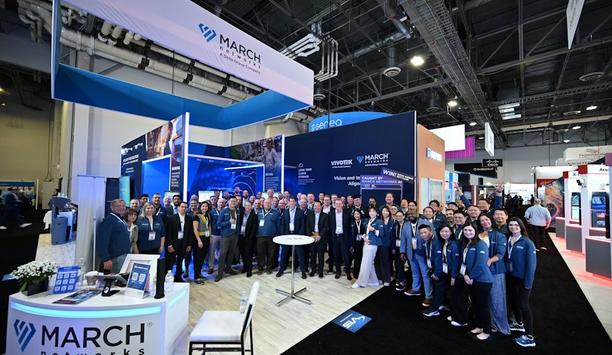
Combining VIVOTEK’s branded video security business with March Networks paves the way for the combined brands to meet customers’ increasing appetite for integrated solutions rather than individual components. The merger brings VIVOTEK's branded video security business together under one operating structure with March Networks’ enterprise-grade video surveillance, AI analytics, and cloud-managed security solutions. Customers now have access to a broader, more integrated portfolio spanning enterprise video management, advanced cameras, edge artificial intelligence (AI), cloud services, recording platforms, and business intelligence, says Net Payne, Chief Sales & Marketing Officer at March Networks and VIVOTEK. Distinct product strategies Given the combined companies, product development, sales, marketing, and customer support can move in step rather than in parallel. March Networks and VIVOTEK were already both part of the Delta Electronics family, but they previously operated as separate businesses with distinct product strategies, teams, and routes to market. March Networks and VIVOTEK announced the merger of their branded video security businesses last spring following Delta Electronics' acquisition of remaining VIVOTEK shares. “Aligning our complementary capabilities lets us innovate faster, simplify engagement, and respond more quickly to a market moving toward AI, cloud and intelligent video,” says Payne. This merger reflects a broader shift across the physical security industry, adds Payne. “Customers no longer see video purely as a tool for reviewing incidents after the fact,” he says. “They expect it to help identify risks earlier, simplify investigations, improve operations, and support better decisions across the organisation.” Cloud video management Meeting customer expectations requires more than bolting AI features onto existing systems Meeting customer expectations requires more than bolting AI features onto existing systems. Rather, it requires cameras, edge intelligence, recording, software, cloud services, and business data working together as one coordinated platform. “By bringing March Networks and VIVOTEK together, we combine deep expertise across the full video technology stack while preserving the relationships, sector knowledge and customer focus both companies have built over many years,” says Payne. “Our goal is to make intelligent video more integrated, scalable, and practical for customers and partners worldwide.” Both entities bring strengths to the combined companies. March Networks brings experience in enterprise software, cloud video management and large-scale deployments; while VIVOTEK brings strength in imaging, camera technology and edge intelligence. Together they seek to ensure more choice when designing systems, a clearer path for future expansion, and technologies that work together more effectively without compromising the reliability, cybersecurity, and support customers expect from both companies. Advantages for channel partners Channel partners gain a broader portfolio to address a wider range of customer requirements, combining components as each deployment demands. Channel partners also benefit from expanded geographic reach, deeper technical expertise, and greater investment in training and enablement. “Importantly, this is designed to be a seamless transition,” says Payne. “Partners keep working with the teams and relationships they already know, while gaining access to new capabilities and certification opportunities. Over time, that alignment should make it easier to design, deploy and support complete solutions.” Because they are established and respected brands, March Networks and VIVOTEK branding will continue to be used. Rebranding is not a goal, and neither identity is being replaced by the other. Coordinated decision-making “The immediate priority is organisational alignment by making it easier for customers and partners to benefit from the combined portfolio,” says Payne. Product branding will continue to reflect the relevant portfolio and market context. As product roadmaps become more closely coordinated, customers can expect greater interoperability and a more cohesive experience, says Payne. Any future branding changes will be managed carefully and communicated clearly. Combining the businesses reduces duplication and enables coordinated decision-making across product strategy, engineering, sales, marketing, operations, and customer support. “Instead of developing capabilities independently, teams can share their expertise, align roadmaps, and direct investment to where it has the greatest customer impact,” says Payne. Combining specialised knowledge globally The combined organisation operates across six continents and more than 75 countries The combined organisation includes more than 300 research and development (R&D) engineers across four Centres of Excellence in Canada, Taiwan, Italy and Poland, thus bringing together a substantial base of specialist knowledge. The unified network also sharpens the ability to prioritise global opportunities, respond to regional needs and bring innovations to market faster. The combined organisation operates across six continents and more than 75 countries, supported by more than 1,100 certified channel partners. That footprint provides greater capacity to support multinational customers while staying responsive to local market needs. Looking ahead, future growth will increasingly come from helping customers turn video into useful, actionable intelligence. “The market is moving beyond conventional surveillance toward solutions combining AI, cloud services, edge processing, video management and operational data — and our new structure brings these together as one connected solution rather than several isolated technologies,” says Payne. Broader technical expertise There will also be closer collaboration among specialists in imaging, hardware, software, analytics, and cloud, which is important given how much customer infrastructure, regulatory, and deployment requirements vary. The companies can support cloud, hybrid, and on-premise environments, giving organisations a practical path toward more intelligent video. More choice comes from bringing together complementary technologies across product groups. Greater scale is achieved through a larger engineering organisation, broader technical expertise and more capacity to invest in innovation. Challenges for the industry at large Looking to the future for the industry at large, the greatest challenge will be managing the rapid growth of AI Looking to the future for the industry at large, the greatest challenge will be managing the rapid growth of AI responsibly, securely and at scale, says Payne. Video systems will generate more data and automate more decisions, but organisations must be able to trust how that intelligence is created, protected, and applied, he adds. “Cybersecurity, privacy, data sovereignty, system interoperability and AI accuracy are more important than ever,” says Payne. Addressing these elements requires expertise across the entire technology stack: from camera and edge processing to recording, cloud infrastructure, video management and analytics. “Together, March Networks and VIVOTEK can coordinate development across all these layers, giving customers flexible architectures that balance innovation with security, transparency and operational control,” says Payne.

IQSIGHT seeks to bring visual intelligence to environments where clarity, reliability, and trust matter the most, says CEO Sabrina Stainburn. Formerly Bosch Video Systems, IQSIGHT is an intelligence-first video security company, combining more than 60 years of engineering expertise with real-time intelligence to help organisations see clearly, act confidently, and improve outcomes in environments when every second matters. While the brand is new, the technology, reliability, and trust behind it are familiar— the products still carry the Bosch name, and the engineering teams remain the same to ensure the continuation of the Bosch legacy. As a result, customers can expect the same standards they rely on today. Embracing emerging technologies IQSIGHT is embracing emerging technologies. “We are applying AI where it delivers value by helping systems understand what is happening and surface the events and patterns that matter most—so customers can detect risk earlier, make faster decisions, and operate with confidence,” says Stainburn. With intelligence at the edge, the cameras act as sensors to secure premises, make buildings safer, and monitor perimeters — without requiring a cloud connection. Edge-based AI also supports integration into existing systems to add visual intelligence without a rip-and-replace — such as adding cameras with visual gun detection outside of entrances or supplementing systems with the ability to detect clothing colour and other attributes. IQSIGHT combines the Bosch video portfolio with new AI-enabled capabilities AI-enabled capabilities IQSIGHT combines the Bosch video portfolio with new AI-enabled capabilities designed to remove blind spots IQSIGHT combines the Bosch video portfolio with new AI-enabled capabilities designed to remove blind spots and support earlier, better-informed decisions. The portfolio continues to include intelligent cameras, such as the FLEXIDOME, AUTODOME, DINION, and MIC models, AI-enabled Intelligent Video Analytics Pro (IVA Pro) offerings, and recording and video management solutions, such as BVMS software. This year, the portfolio will also expand with technologies and solutions built on IQSIGHT’s new intelligence-first platform. Vertical markets that are core to the strategy include government, critical infrastructure, education, and smart cities, all industries closely connected with safety, continuity, and operational performance. In these environments, visual intelligence helps organisations address practical challenges — securing perimeters, enhancing safety, and improving traffic flow — so they can operate securely and efficiently. Visual intelligence helps organisations address practical challenges Operating securely and efficiently “Reliability is essential in these industries, and our cameras are engineered to Bosch quality standards and designed to perform in demanding conditions, including extreme weather, while delivering dependable video and accurate analytics where it matters most,” says Stainburn. “These strengths make our video solutions ideal for any industry where security must be uncompromised.” IQSIGHT evolves from the sale of Bosch’s security and communications technology product business to European investment firm Triton on June 30, 2025. The product brands for video systems, access control, intrusion systems, and communications systems united under the roof of the new company Keenfinity Group. New organisational structure The Keenfinity Group now operates as a holding company consisting of four businesses In late 2025, Keenfinity Group introduced a new organisational structure designed to unlock the next chapter of growth and innovation. The Keenfinity Group now operates as a holding company consisting of four businesses, including the video systems business now called IQSIGHT. Bosch has a long history of partnerships and integrations, and partnerships will remain essential to how IQSIGHT delivers value and flexibility for customers. “We work closely with technology partners to ensure customers can use visual intelligence within the platforms and architectures that best fit their operations,” says Stainburn. Secure-by-design approach Deep integrations include VMS platforms, such as Genetec and Milestone, thus enabling real-time insights across on-premise and cloud environments. This approach gives customers choice — without compromising performance, security, or reliability, according to IQSIGHT. “Continually strengthening our existing partnerships is vital, and we regularly add capabilities to these integrations to deliver new features to enhance security and safety for customers,” says Stainburn. “Cybersecurity is not a feature for us — it’s a foundation,” Stainburn emphasises. “As video systems become more connected and intelligence moves closer to the edge, trust must be designed in from the start. We take a secure-by-design approach across our hardware, software, and integrations. That means protecting data at every stage — from capture to analysis to delivery.” Combining sight and intelligence Just as important, the company works closely with partners and customers to ensure systems fit into their broader security and IT strategies. “When organisations rely on video to make critical decisions, security and reliability must be non-negotiable,” says Stainburn. Stainburn sees video as evolving from traditional surveillance into “visual intelligence” — moving from simply recording events to understanding what is happening in real time. By combining sight and intelligence, organisations can see patterns, giving them the power to predict events that may happen. Proactively addressing risks Stainburn sees video as evolving from traditional surveillance into “visual intelligence” Traditionally, video security was based on video surveillance — an investigative tool for users to review what has already happened. With AI, users can take a different approach — looking at patterns to better secure their premises and have the foresight to intervene before incidents escalate. AI helps systems understand what is happening in a scene, enabling them to discern between a person standing at a train platform and an individual vandalising a train platform, someone holding a power drill versus someone holding a gun. “This level of visual intelligence brings clarity to unfolding events to assist users in proactively addressing risks,” says Stainburn. AI-enabled video systems With foresight, end users can prevent those events from occurring or other issues from escalating. The ability to discern patterns can also influence decisions around safety, resource use, and the customer experience, says Stainburn. “While security will always remain core, we expect visual intelligence to play an increasingly important role in improving operational efficiency across many environments over the next five years.” Not all AI-enabled video systems are equal. Edge, cloud, and GenAI-based tools have different strengths and selecting one approach over another depends on the application or the problem customers need to solve. IQSIGHT works closely with integrators and end users to understand the challenges they are addressing and to provide guidance on the best AI approach to reduce risks, lower response times, and improve operations. Proof of concept projects are important to demonstrating performance in the real world. That’s where IQSIGHT gains an advantage with solutions that deliver reliable results even in challenging conditions, says Stainburn.
Case studies

Genetec Inc., the pioneer in enterprise physical security software, announces that the City of Carmel, Indiana, has deployed Genetec™ Security Center to unify security and operational systems across more than 40 municipal sites, helping city departments coordinate resources, improve emergency response, and manage day-to-day operations more efficiently. Carmel’s public safety teams use Security Center to monitor video, alarms, emergency calls, response vehicles, and IoT sensors through an interactive city map. First responders can access the same information from mobile devices, helping teams coordinate resources and respond more efficiently when incidents occur. Direct first responders That coordination proved especially valuable when a rare tornado struck Carmel. Using Security Center, city teams quickly mapped the storm’s path and assessed its impact across the community. They identified the hardest-hit areas and used that information to direct first responders, utility crews, and public works resources where they were needed most. “By bringing all our departments onto one city-wide platform, we’ve reduced complexity. The result is better decisions for our community, higher response efficiency, and more cost-effective operations that benefit our residents,” said Morgan Rinehart, Network Architect at the City of Carmel. Making informed decisions Beyond public safety, Carmel is using Security Center to support services across the community. With information from multiple systems available through a unified platform, departments can better understand conditions across the city and make informed decisions about how to deploy resources. For example: Engineering and street teams can monitor road conditions, coordinate snow removal, and manage traffic during construction detours without sending personnel into the field to assess conditions Parks teams can monitor crowd levels, facility usage, and safety across the city’s waterpark and trails Public events teams can monitor pedestrian traffic in community plazas and during gatherings The unified platform also gives Carmel’s IT team a centralised view of system health. Teams can monitor device status, identify potential vulnerabilities, review cybersecurity information, and manage firmware and software updates from one platform, helping the city manage its growing number of connected devices. Providing additional flexibility Carmel is also taking a hybrid approach to its security infrastructure, with the cloud-based Security Center SaaS platform providing additional flexibility when temporary projects or large events require expanded video coverage. The city can deploy mobile cameras and connect with systems operated by local schools, sports organisations, and critical infrastructure partners. Looking ahead, Carmel plans to continue expanding the platform as its smart city initiatives evolve. This includes connecting more systems and community partners. By building on an open platform, the city can add new capabilities as its needs change while maintaining a consistent approach to security and operations.

The Sanoat Qurilish Bank (SQB) in Uzbekistan enhanced its security and operations with Dahua’s integrated solution, combining ANPR, under-vehicle scanning, facial recognition, and DSS Pro for centralised management. This improved inspection accuracy, strengthened access control, and enabled faster, more efficient security responses. Overview - SQB is one of Uzbekistan’s key financial institutions, required a stronger, more intelligent security infrastructure to protect its facilities, personnel, visitors, and vehicle entry points. As a banking environment with high daily traffic and strict security requirements, SQB needed a solution that could reduce operational risks, improve inspection accuracy, and unify fragmented security systems under one centralised platform. Key financial institutions Challenges - The bank encountered several key challenges in its existing operations and security systems. Vehicle inspection at entry and exit points was not comprehensive enough, creating potential risks from unauthorised or hazardous vehicles. Manual inspection processes also increased operating costs and were vulnerable to human error. At the same time, visitor control needed improvement, as internal visitors could access important office areas without strict management. The bank’s existing security systems, including CCTV, access control, and under-vehicle scanning, came from different brands, making unified management difficult. Meeting rooms also suffered from low efficiency due to traditional presentation and note-taking methods. Smart security solution Solutions - To address these needs, Dahua provided an integrated smart security solution covering vehicle inspection, personnel access, visitor management, conference room modernisation, and centralised system control. At vehicle entrances, Dahua deployed bollards, under-vehicle scanning systems, ANPR cameras, and gate barriers to support comprehensive vehicle checks and maintain visual records for future audits. This helped improve perimeter security while making inspections smoother and more traceable. For personnel and visitor management, Dahua introduced access control, visitor management, elevator control systems, and facial recognition technology in key areas. These systems enabled accurate identity verification and stricter access permissions, helping SQB protect sensitive office spaces and improve overall site security. Reduced equipment maintenance Dahua also upgraded the bank’s meeting environment with integrated conference room equipment, including electronic whiteboards, lifting screens, and audio and video recording capabilities. This created a cleaner, more efficient meeting space, reduced equipment maintenance complexity, and made meeting content easier to record and trace. A major highlight of the project was the deployment of Dahua DSS Pro, which integrated CCTV, access control systems, and UVSS into one unified management platform. By connecting multiple subsystems, DSS Pro enabled security guards to monitor devices centrally, identify abnormal events faster, and respond more efficiently. Efficient daily operations Results - As a result of successfully implementing Dahua’s Integrated Smart Security Solution, SQB strengthened its physical security, improved vehicle and personnel management, reduced dependence on manual inspection, and achieved more efficient daily operations. The project also demonstrated the value of Dahua’s integrated security ecosystem, combining smart devices, AI-enabled identification, and centralised platform management to meet the demanding security needs of the banking sector.

At the Toronto Zoo, every person on site – whether that’s a keeper, security officer, scientist, or volunteer - shares one vision: create a world where people, wildlife, and wild spaces thrive. Thirty minutes from downtown Toronto lies a 500-acre campus that is home to over 2000 animals across 200 species. Welcoming 1.3 million guests each year, Toronto Zoo is a world-class operation on a mission to connect people, animals, conservation science, and traditional knowledge to fight extinction. When Toronto Zoo Supervisor of Health & Safety Services, Graham Birtles, set out to modernise the Zoo’s legacy access and alarm infrastructure, he discovered that the partner he already trusted for animal enclosure fencing was the same one now leading the way in physical security and access control. World-class operation The Toronto Zoo opened in 1974 with a goal that extended well beyond exhibition. Today, its work spans conservation science, breeding programs for endangered species, community education, and climate advocacy. Its Guardians of Wild program extends that belief outward, inviting staff, guests, and partner organisations to champion wildlife beyond the Zoo’s borders: in policy, community relations, and corporate engagement. “My everyday is somebody else’s once-in-a-lifetime experience,” says Graham. “We want every person who comes through these gates to leave understanding what the Toronto Zoo is about, and what they can personally do to make a change.” Delivering that experience safely for guests, staff, and the animals themselves demanded a security platform fit for the job. Rapid emergency response Before Gallagher Security, the Zoo’s access control and alarm infrastructure had not kept pace with the scale of operations. Mobile alerting was unavailable to officers in the field, credentialling hundreds of seasonal staff required plastic cards that were slow to issue and difficult to track, and there was no integration with the Zoo’s video management system to support rapid emergency response. There was also a unique challenge facing the Zoo team: the electric perimeter fencing around animal enclosures - the secondary layer of protection between the animals and the wider Zoo environment - operated as an entirely separate system, disconnected from the broader infrastructure. Following an animal containment incident that was escalated to security leadership, the need to bridge those two systems became urgent. Graham found the solution at a security trade show, when his integrator walked him toward a familiar orange booth. Higher voltage requirements “I said, I already know Gallagher. They’re my fence people. They’ve been taking care of our fencing systems for over 50 years at the Toronto Zoo.” What Graham didn’t yet know was that Gallagher also delivered enterprise-grade physical security, making Toronto Zoo’s path to world-class operations clear. Working together, Gallagher Security and Gallagher Animal Management designed and implemented an integration between Gallagher Command Centre and the Zoo’s Animal Management energiser systems, enabling real-time communication between animal fencing infrastructure and the security platform for the first time. Higher voltage requirements The implementation required calibration for significantly higher voltage requirements than traditional smaller animal environments, ensuring safe and effective management across large species habitats. The Zoo team worked closely with Gallagher’s experts to configure their setup, and the solution is now fully operational within the orangutan habitat. “Now we can see the voltage of our fences at all times,” says Graham. “We can send alerts to our wildlife care team the moment something touches the hot wire so we can make sure the animals are safe.” When an alert is triggered, integrated CCTV allows the wildlife care team to immediately verify the event and assess the situation before responding; a critical functionality for animal safety. The Zoo’s security needs extend well beyond its animal habitats, and the Gallagher platform has delivered. Persistent administrative challenges Mobile Credentials have addressed one of the most persistent administrative challenges on site. With hundreds of contractors and seasonal catering staff requiring access at any given time, the previous reliance on plastic cards was slow and difficult to manage. Now, time-limited mobile credentials are issued on sign-in and revoked automatically on sign-out, removing the risk of residual access. For officers in the field, Gallagher Mobile Connect removed the need to return to base to manage alarms. Officers maintain full situational awareness from their vehicles around the clock, long after the central control center closes. Further integration with 27 Axis intercoms in high-risk spaces - housing venomous snakes, spiders, and other dangerous species - ensure staff working alone in those environments are never out of reach. Restricting workshop equipment “We can monitor alarms throughout the Zoo; not just for traditional break-and-enter or door-open scenarios. We are monitoring life-safety systems, fire systems, animal conditions, and more,” says Graham. What has distinguished the Toronto Zoo’s deployment is not any single feature, but the broad range of problems the Gallagher platform has been called on to solve. New challenges from across the organisation are allowing Graham and his team to unlock more value from their security system. Whether it is monitoring environmental conditions within animal habitats, restricting workshop equipment to trained operators, or ensuring staff cannot access sensitive areas until their training is verified, the answer has consistently been found within the same platform. Conventional vendor relationship “I like that I can call on the Gallagher team and they will work with us to find a solution,” says Graham. “Gallagher has become a house brand here at the Toronto Zoo. It’s integrated with everything we do,” Graham Birtles, Supervisor of Health & Safety Service. The Zoo’s collaboration with Gallagher has not been a conventional vendor relationship. Graham describes it as a convergence of purpose. “When we partner with organisations such as Gallagher, they become Guardians of Wild,” he says. “Because they help me and the Toronto Zoo accomplish our mission.” The Gallagher platform will play a central role in the Zoo’s next chapter. A new Community Conservation Centre, developed with a local university, will soon bring classrooms, laboratories, and a new otter river habitat into a shared community space; with Command Centre managing access for students, professors, and visiting groups. “Gallagher understands our mission,” says Graham. “They are very helpful, and everything they have put in place for us has worked. The flexibility has been fantastic.” This installation was deployed in partnership with Met-Scan Canada Ltd

Milestone Systems, a provider of open platform video management software (VMS), is helping Columbia Borough, Pennsylvania, strengthen public safety through a community-wide video security system built on Milestone XProtect® VMS. For more than 16 years, Columbia has worked with Lancaster-area security integrator App-Techs to develop and expand a distributed wireless video network serving its downtown, public buildings, parks, and other borough facilities. Today, the system supports roughly 83 camera feeds, including 4K multi-lens and PTZ cameras, primarily from iPro. Traditional wired infrastructure Located along the Susquehanna River in Lancaster County, Columbia is a historic borough of roughly 10,000 residents. As the community worked to revitalise its downtown and attract new businesses, borough leaders wanted safety and security to support that broader effort. Traditional wired infrastructure was impractical across Columbia’s geographically varied environment, requiring App-Techs to engineer a distributed wireless architecture. XProtect provides the video management foundation, with dedicated servers located in the municipal building and a remote park office. Officers can also access live camera feeds from laptops in patrol vehicles, while mobile access extends video to personnel during community events. Immediately dispatched officers Columbia’s dispatchers are the primary day-to-day operators of XProtect, monitoring cameras, and supporting officers in the field. In one incident, a dispatcher spotted someone breaking into a vending machine outside a laundromat and immediately dispatched officers. “Our staff member observed someone breaking into a vending machine just outside that building and was able to dispatch officers to the scene,” said Jack Brommer, Columbia Borough Police Department Chief. “Officers apprehended the individual, and it turns out this was a serial thief who had been breaking into vending machines across the tri-county area. So that single arrest helped resolve a number of thefts across multiple counties. That’s just the kind of impact this technology can have on a community.” Large community events The system also supports holding cells and interview rooms inside the police station, where microphones are integrated with cameras, as well as large community events. During Columbia’s annual “Thunder on the River” antique car show, Emergency Management personnel used the community camera network to support proactive monitoring and rapid response across the event. Over time, Columbia’s video system has supported faster incident response, stronger evidence for prosecution and greater situational awareness for dispatchers and police officers. Borough leaders also use signage in parks and public areas to make camera coverage visible as a deterrent. Gunshot-detection technologies “The data that I can point to is that we are trending downward, probably for the last five, six years, as far as call volume and crime trends. Those numbers have been very positive,” added Brommer. Looking ahead, Columbia plans to expand its use of video analytics, including object-search capabilities that can help investigators filter video by vehicle type, colour, and other attributes. The borough is also exploring emerging gunshot-detection technologies to further improve situational awareness.

Genetec Inc, the pioneer in enterprise physical security software, announces Cairo Bank has successfully deployed the Genetec Security Center platform transforming how the financial institution monitors, manages, and optimises operations across one of Egypt’s largest branch networks. Cairo Bank is one of the largest and oldest financial institutions in Egypt, serving over three million customers through more than 230 branches. The security advancement was driven by new regulatory requirements from the Central Bank of Egypt, alongside Cairo Bank’s broader digital transformation agenda aligned with Egypt Vision 2030. Beyond compliance, the bank needed a scalable operational intelligence foundation to strengthen oversight, improve customer experience, and support long-term expansion and financial inclusion. Necessary operational foundation The implementation unifies video surveillance, access control, and intrusion detection into a single platform, allowing operators to centrally manage more than 6,000 cameras across 122 active branches, with deployment across the full network nearing completion. The platform provides the necessary operational foundation for a centralised Command and Control Room, where operators can monitor branch activity, coordinate response, and support decision-making across the institution. The system also separates operational responsibilities. IT and security teams can monitor device health and system status without accessing sensitive video feeds, supporting strict data governance and privacy requirements. “Unification and scalability were just the starting points. From day one, I knew we wanted functionalities that add value to all aspects of our operations. Security Center delivered everything we wanted in one easy-to-use solution,” said Major General Hesham Tawfiq, Head of Security at Cairo Bank. Enhancing operational consistency Beyond traditional surveillance, the platform introduces automation and analytics capabilities that support both security and operational decision-making across its branch network. These capabilities are now embedded across the entire branch network, helping Cairo Bank strengthen compliance reporting, improve risk detection, and enhance operational consistency at scale. The platform also provides insights into branch activity patterns, customer flow, and operational trends, extending the value of security data beyond incident monitoring while keeping governance and operational control central to the deployment. Existing infrastructure investments Security Center’s open architecture allowed Cairo Bank to integrate best-of-breed hardware while preserving existing infrastructure investments. It also enables the bank to add technologies and expand the deployment over time without standardising on a single hardware provider. “We are honoured to work with a forward-thinking institution like Cairo Bank that continuously seeks new ways to leverage technology,” said Firas Jadalla, Regional Director, Middle East & Africa at Genetec Inc. “By unifying systems, the bank is building a consistent operational foundation for its branch network, allowing it to respond to changing regulatory and operational requirements while retaining control over how its environment evolves.” Providing technical support Integrated Technics, the systems integrator responsible for delivering the project, led the proof of concept, system design and implementation. The company continues to provide technical support and system optimisation as the deployment expands. “The Command and Control Room gives Cairo Bank a real-time operational hub built on Security Center, bringing video surveillance, access control and intrusion detection into a single interface. This enables operators to monitor activity across the branch network, coordinate responses and make faster, more informed decisions,” said Walid Alagamy, CEO of Integrated Technics.

Introduction - Lightkeepers of Henry County is a grassroots nonprofit organisation based in New Castle, Indiana. It began informally in 2020 with a community vigil, where organisers realised that local residents wanted more activities centred on culture, diversity, and understanding. Lightkeepers became a registered 501(c)(3) nonprofit in 2023 and soon afterward acquired its own building. Guided by its core values of equity, education, diversity, and empathy, Lightkeepers aims to provide a safe place where everyone in the community feels appreciated and has a sense of belonging. Its programs focus on marginalised communities, including low-income residents, people with disabilities, and the LGBTQIA+ community. The organisation hosted the first Juneteenth celebration in Henry County, organises New Castle Pride, and runs food and blanket drives, festivals, and community meetings. Following historic flooding in the area, it is also hosting home damage assessments for affected residents. Limited police patrols The challenge - Lightkeepers is based in the former Westminster Community Center, a two-story cement building that has long been a staple of the neighbourhood. Over the years, it has served as an elementary school, a community center with after-school programs and classrooms, and most recently a food pantry. The building includes a large gym, several ground-floor rooms, an upstairs kitchen, classroom area, and offices, and an attached garage. Before Lightkeepers took it over, the building had been largely vacant, opening for only a few hours, two days a week, for food distribution. It is located in a low-income area with limited police patrols, and the parking lot was so poorly lit that the team repaired the light themselves. A city park directly behind the building had become a meeting place for illegal and unsafe activity. Limited police patrols Today, the building is in use throughout the day. With no set opening hours, it hosts fundraisers, community meetings, training sessions, birthday parties, and baby showers, with anywhere from four to more than 120 people inside at any one time. Festivals and other events also take place in the parking lot. During summer 2026, Lightkeepers partnered with fellow nonprofit Live Coalition to run the Hangout Hub, a weekday program offering activities and free meals for children aged 10 and over. Lightkeepers needed a way to protect the building and its contents, and to keep children and visitors safe while they were on-site. Board members, who often come and go outside of normal hours, needed to see what was happening in the building and parking lot before arriving or leaving. As an older building with boiler heating, the property was also at risk from problems that could go unnoticed when nobody was there. “After we acquired the building, we knew that we would need to be able to watch what we had, because of the neighbourhood it’s in. We definitely needed some sort of security, and we wanted safety for the kids in the gym,” says Mary Nicholson Tait, President, Lightkeepers of Henry County. Monitored intrusion detection The solution -Lightkeepers worked with 3xLOGIC and SONITROL to install video surveillance and monitored intrusion detection across the building, parking lot, and perimeter. The system was completed in 2024. A mix of 3xLOGIC indoor and outdoor cameras watches the building inside and out. A 360-degree camera mounted in the center of the gym ceiling gives full visibility of the space, while a camera in the entrance lobby covers the main entry point. Outside, cameras cover each side of the building, including edge-based deep learning cameras that, if required, can detect people and vehicles and identify details such as vehicle make, model, and colour. Deep learning analytics A 3xLOGIC VISIX 5MP InterACT camera on the front of the building overlooks the parking lot. The camera combines high-quality video with edge-based deep learning analytics and built-in deterrence features, including sirens, white or red and blue lights, two-way audio for talk-down, and custom messaging. Its analytics can detect loitering, intrusion, and vehicles in prohibited areas, with real-time alerts allowing potential incidents to be addressed early. SONITROL’s patented audio intrusion sensors inside the building provide 24/7 monitored intrusion detection. When a sensor is triggered, SONITROL operators can listen in to verify activity and dispatch police when required. Allowing potential incidents Mary can view live footage remotely using the 3xLOGIC mobile app on her phone and access the cameras from a desktop workstation in her office at the building. The SONITROL app, meanwhile, may be used on-site to arm and disarm the alarm system. “I’ve got the desktop set up in my office at the building, so if we have activities in the gym, we don’t have to go down and see what’s going on. We can just click on the camera and see what’s happening,” explains Mary. Monitored intrusion detection Results gained - Since installation, Lightkeepers can see what’s going on at the building from anywhere. Mary regularly uses the mobile app to keep an eye on the parking lot, and because the team does not keep regular business hours, board members can check the cameras before heading out to their cars at night. “We’ve got a lot of women on our board, and we’re over there at all hours. It’s nice for everybody to be able to see what they’re about to walk into before they leave the building,” says Mary. Late one Sunday night, an intruder forced their way in through the gym door. SONITROL’s monitored intrusion detection picked up the activity, operators called Mary, and police were dispatched. Officers were at the building before Mary, who lives five minutes away, could get there. The intruder fled without taking anything. Low winter temperatures In another incident, during unusually low winter temperatures, copper pipes in the building burst. SONITROL’s sensors detected the noise and alerted the team, and Mary checked the lobby camera on the 3xLOGIC mobile app, where she saw water coming out of the room. This meant the team could get someone to the building quickly and limit the damage. No repainting or structural repairs were needed, and no fittings needed to be thrown away. “Had it not been for the security system, we would not have known about the flooding. I was able to look from my app and see there was water, and we were able to get over there and take care of the problem. It saved us a lot of money in repairs and made a huge difference,” explains Mary. Deter nuisance activity The cameras, the repaired light, and the extra activity on-site have helped deter nuisance activity in the wider area, so the park behind the building is now somewhere local children can play. Residents across the street have welcomed the cameras, reporting fewer people coming into their yards and a decrease in illegal activity. “We were afraid they were going to be so mad at us because there were cameras over here. It was completely the opposite. The neighbours were really happy that they could see the cameras, because it provided safety for their properties. They actually thanked us,” Mary concludes. Additional camera coverage Future plans - Lightkeepers is preparing to partner with the Boys and Girls Club to deliver after-school programs from the building, to bring more young people on-site regularly. The organisation is also working with its integrator to assess additional camera coverage and to make full use of the InterACT camera’s siren, talk-down, and custom alarm features to actively deter unwanted activity in the parking lot.
Products
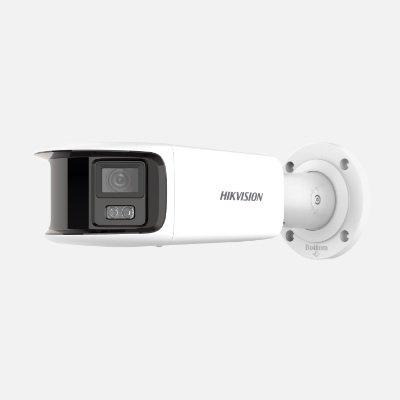


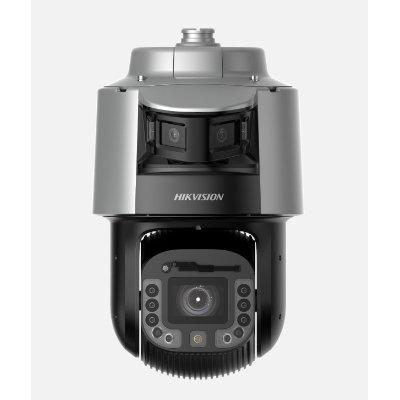
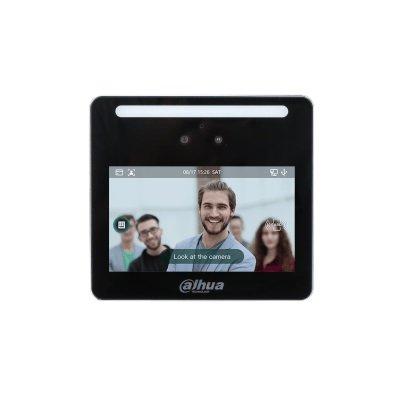
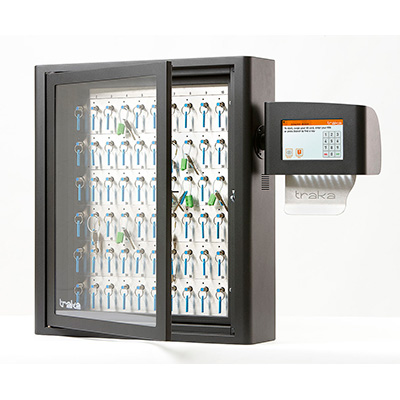

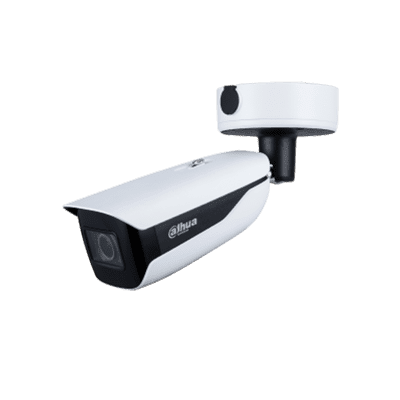
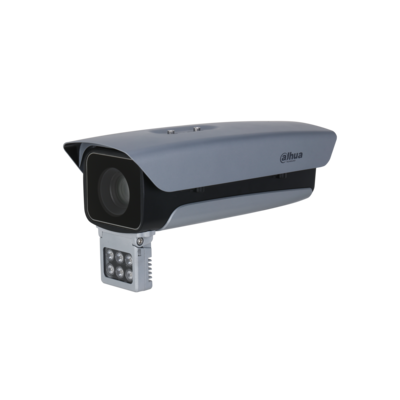


Round table discussion

Critical national infrastructure encompasses sectors such as energy, utilities, healthcare, and data centers – environments that underpin economic stability and public safety. With so much at stake, the importance of effective security systems is that much higher. We asked our Expert Panel Roundtable: What are the unique aspects of the critical infrastructure market, and how should the security industry adapt?

Biometrics today provide better security and frictionless user experiences. Biometric identifiers like fingerprints, facial recognition, and iris scans are unique and difficult to forge. They eliminate the vulnerabilities of traditional authentication and streamline secure access control. Identity verification reliably protects sensitive digital information and physical entry. We asked our Expert Panel Roundtable: How is the role of biometrics evolving in physical access control?

Like other disciplines in the world of corporate security, executive protection is evolving from reactive to proactive. Unlike reactive bodyguards, modern executive protection professionals use a proactive approach focused on risk mitigation, advance planning, and threat intelligence to prevent incidents before they happen. What is the role of technology? We asked our Expert Panel Roundtable: How can physical security technology promote better executive protection?
White papers

Technology's role in securing banks and financial institutions
Download
Integrated systems enable critical and compliant security for transportation
Download
Modernising physical access control
Download
Access. Intrusion. One estate.
Download
Minimizing storage, maximizing focus
Download
Securing the modern data centre
Download
Security technologies promote real-time awareness in K-12 schools
Download
An end user's guide to physical security for data centres
Download
Hospital safety in a high risk world
Download
How digital transformation is delivering new opportunity
Download
Where do we go from prox?
Download
The user-centric security revolution
Download
Read this before you sign off on a weapons detection system
Download
One system, one card
Download
Aligning physical and cyber defence for total protection
Download

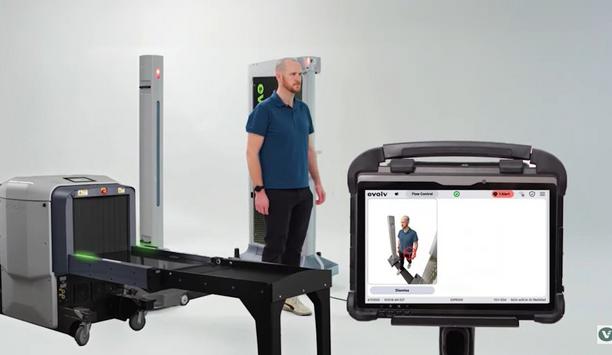

Technology's role in securing banks and financial institutions
Download
Security technologies promote real-time awareness in K-12 schools
Download
Integrated systems enable critical and compliant security for transportation
Download
Modernising physical access control
Download
Access. Intrusion. One estate.
Download