Visitor management systems

Verkada, a pioneer in AI-powered physical security technology, announces the promotion of Carlos Rocha to lead its Latin American (LATAM) business as Country Manager as the company expands to meet accelerating demand for AI-powered physical security solutions in the region. Based in Mexico City, Rocha will lead Verkada's go-to-market strategy, sales operations, and partner development across LATAM. The company has grown rapidly in the past year in partnership with its network of more than 400 p...
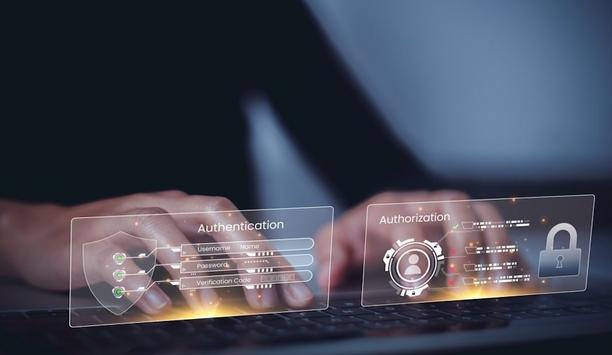
For years, physical security and cybersecurity evolved on parallel tracks. One team managed doors, badges and cameras, while the other handled network access, authentication and logical assets. The systems rarely shared information and, in many organisations, they still do not. That separation is becoming harder to defend now that employees move continuously between physical and logical environments throughout the workday. A single person may badge into a building, access cloud applications, re...

Suprema, a global pioneer in AI-powered access control and security solutions, announced the launch of XPass Q2, an intelligent QR/RFID reader designed for facilities managing high volumes of diverse users across visitor, membership, and ticketing environments. About XPass Q2 QR codes have become the standard credential for visitors and ticket holders whether printed or presented on mobile. XPass Q2 is built around this reality, combining native QR and barcode authentication with RFID card and...

Athena Security announced that it will showcase its unified entryway security platform at ISC West, highlighting how an integrated Hospital Visitor management system and concealed weapons detection systems can work together to help hospitals, schools, and public venues strengthen entryway security while preparing for emerging legislative requirements such as California’s Assembly Bill 2975. Single coordinated platform As organisations face growing pressure to protect staff and visitors w...

Demand for data centres is growing at a remarkable rate. Data’s strategic importance, for both commercial and non-commercial organisations, makes physical security fundamental at these sites. In addition, national and regional regulations place ever more stringent requirements on in-house and co-location operators to take a secure approach to data management and protection. Data’s sensitive nature also brings data centres within the scope of the EU’s NIS2 and Cyber Resilience...

Accredit Solutions announces the launch of Accredit Visit, a purpose-built visitor and contractor management system designed to extend the operational control of high-stakes events into everyday stadium and venue visitor management. On match days, stadiums maintain rigorous security perimeters. Yet for the remaining 300+ days of the year, many still rely on manual processes or paper logs to manage site access. Accredit Visitor addresses this operational blind spot by applying consistent, event-...
News

Despite rising violence in U.S. healthcare settings, many hospitals still rely on manual, paper-based systems to identify potentially dangerous individuals, creating serious gaps in both physical security and reporting data. To close this gap, Athena Security, Inc., has launched an automated BOLO (Be On the Lookout) / Person of Interest system engineered to instantly recognise high-risk individuals and deliver real-time alerts to hospital security teams. Much needed innovation “This is exactly the kind of innovation hospitals need in an era where threats can escalate in seconds,” says Lisa Falzone, Co-Founder and President of Athena Security. “Our BOLO / POI technology eliminates the vulnerabilities of outdated methods and gives security teams a real-time advantage that saves lives and reduces administrative burden.” Challenges Hospitals depend heavily on documentation-heavy processes that slow response times and overwhelm security personnel. According to a 2025 overview of hospital security guard duties, officers are responsible for detailed incident reports and daily activity logs documenting patrols, visitor access, suspicious behavior, and unusual events—making documentation a routine and time-intensive part of every shift. A 2022 peer-reviewed study on hospital workplace-violence reporting further found that many violent incidents go unreported or only partially reported because the process requires busy staff—including security and managers—to manually complete incident reports, resulting in inconsistent or incomplete safety data. These gaps are especially concerning as threats continue to escalate. The U.S. Bureau of Labor Statistics reports that healthcare workers experience workplace violence at five times the rate of workers in all other industries, placing immense pressure on hospital security teams who must accurately identify high-risk individuals the moment they enter the facility. Solution Athena Security’s automated BOLO / Person of Interest technology directly addresses this challenge by replacing outdated paper logs, binders, and memory-based identification with real-time driver’s license scanning. Integrated seamlessly with Athena’s Visitor Management System (VMS), the solution enables hospitals to automatically flag dangerous or restricted individuals upon entry and immediately notify security teams, access control staff, and clinical leadership. The system performs real-time checks against both internal BOLO lists and relevant external databases, providing proactive visibility without disrupting normal visitor flow. Accurate record keeping Athena’s BOLO / Person of Interest technology is consistent with U.S. Department of Homeland Security (DHS) Best Practice 15.4.5, which calls for implementing credentialing programs to manage building access and maintain accurate records of authorised individuals. By replacing manual data entry with driver’s license scanning, the system eliminates common human errors and creates accurate, digitised visitor records. Key capabilities of Athena’s BOLO / POI system Instant identification of dangerous, banned, or restricted individuals Immediate creation and deployment of new BOLO alerts that are automatically pushed across all hospital locations Real-time alerts across the hospital’s security and operations ecosystem Automated, consistent documentation of POI events without manual reporting Contextual alerts that include officer-entered notes such as prior behavior or safety concerns, enabling more informed response decisions Faster response times during escalating threats Enhanced visitor management and access control across ED, maternity, behavioral health, and restricted clinical areas Offline functionality that allows BOLO searches and alerts to continue even if network connectivity is temporarily lost Automation “Paper lists and manual reporting simply cannot keep pace with modern threats,” states Chris Ciabarra, Co-Founder and CTO of Athena Security. “Violent incidents in hospitals are under-reported largely because teams are overwhelmed by documentation requirements. Automating identification, alerting, and documentation in real time gives hospitals a chance to respond in the way threats actually occur—suddenly and without warning.”
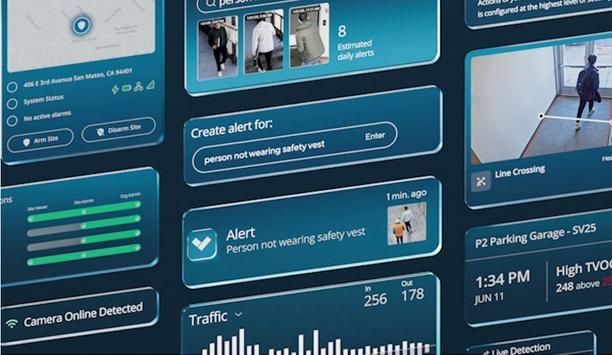
Verkada, a pioneer in AI-powered physical security technology, announced CapitalG is pioneering an investment at a $5.8 billion valuation - an increase of $1.3 billion since the announcement of its Series E in February. The investment will accelerate Verkada's AI capabilities and may also enable liquidity for employees, and comes as the company surpasses $1 billion in annualised bookings. AI-powered transformation "AI is fundamentally transforming how organisations protect people and places, and we're leading that transformation," said Filip Kaliszan, Co-Founder and CEO of Verkada. "Today, more than 2 million Verkada devices are online across 171 countries actively turning data into actionable intelligence that makes security and operations faster, smarter, and more efficient. As we continue building this platform for the long term, we want to give the brilliant team driving this AI-powered transformation the chance to realise some of the value they've created and earned today." How organisations protect people and infrastructure The $1 billion milestone reflects the massive market opportunity Verkada is capturing in enterprise physical security, but also underscores something much bigger: the trust, feedback, and partnership of the company's more than 30,000 customers across the world. "Verkada is fundamentally reshaping the future of physical security," said Derek Zanutto, general partner, CapitalG. "By infusing AI-driven intelligence into an industry long constrained by legacy, fragmented systems, Verkada has transformed security from a static cost centre into a dynamic source of operational insights and efficiency." "Few companies become as mission-critical as Verkada has for its customers — from Fortune 500 enterprises to schools and hospitals — embedding themselves into the daily fabric of how organisations protect people and infrastructure. Filip and his team have built a category-defining platform with unmistakeable product-market fit, and we're proud to back them as they scale their global footprint and extend their lead in this rapidly expanding market." New AI features and platform updates In September, Verkada introduced more than 60 new AI features and platform updates that signal the next chapter of disruption and innovation for the business: powering the entire workflow of security operators with agentic tools like AI-Powered Unified Timeline and Operator View. The customers who have joined Verkada on this journey have deployed over 2 million devices across 171 countries, with impact that is scaling rapidly: Verkada safely checks in 2 million visitors each month, powers 8 million door locks daily, and facilitates 3 intercom calls per second. "Our work is just getting started," added Kaliszan. "We're grateful to our team, our customers, and our investors for believing in this mission – and we're excited for the next chapter of growth."

DNAKE, the global provider of SIP intercom products and solutions, announces that its SIP intercom is compatible with Milesight AI Network Cameras to create a secure, affordable, and easy-to-manage video communication and surveillance solution. Overview For both residential and commercial premises, IP intercom can offer improved convenience by remote unlocking of doors for known visitors. Combining audio analytics with the video surveillance system can further support security by detecting incidents and triggering actions. DNAKE SIP intercom has the advantage of integrating with the SIP intercom. When integrated with Milesight AI Network Cameras, a more efficient and convenient security solution can be built to check the live view from AI network cameras through the DNAKE indoor monitor. Solution features Up to 8 network cameras can be connected to the DNAKE intercom system. The user can install the camera anywhere in and out of the house, and then check the live views by DNAKE indoor monitor anytime. When there is a visitor, the user can not only see and talk to the visitor in front of the door station but also watch what’s happening in front of the network camera through the indoor monitor, all at the same time. The network cameras can be used to watch perimeters, storefronts, parking lots, and rooftops all at once to realise real-time monitoring and prevent crime before it happens. The integration between the DNAKE intercom and Milesight network camera helps the operators improve control over home security and building entrances and increase the security level of premises.

Third Millennium, a provider of access control solutions and part of HID, announces the launch of new RXQR and RXQRK readers — multi-technology access-control devices that integrate high-security RFID card and QR code credentials into a single, elegant unit. Designed to simplify visitor and contractor management, and support both legacy and modern communication protocols, the RXQR range is part of Third Millennium’s RX Series, delivering an advanced yet cost-effective solution for today’s evolving access control environments. High security RFID card reading The RXQR combines high security RFID card reading and QR code scanning in one compact device. The RXQRK adds a keypad option for organisations requiring an additional layer of authentication using PIN verification for out-of-hours or high-security access. “QR codes have existed for decades, but their role in access control has accelerated dramatically since the COVID-19 pandemic,” explains Steve Greenaway, Third Millennium’s Business Development Manager. “As many organisations have reduced or eliminated staffed reception areas all together, QR code-based access has become a practical, contact-free and far more economical way to manage entry.” Access-control systems Traditionally, organisations would have required two separate readers on turnstiles or walls at every entry point: one for staff RFID access cards and another for visitor QR codes. This meant dual installation costs, separate cabling and double the maintenance burden. The RXQR range eliminates this duplication entirely. A single reader now handles both card and QR scanning — transmitting data through the same door controller ports to access-control systems, with both models supporting Clock and Data, Wiegand and OSDP (Open Supervised Device Protocol) connectivity. Proprietary access control systems “It’s a simple concept offering huge efficiency and financial gains,” says Greenaway. “You’re halving the number of devices, halving the installation work and simplifying ongoing maintenance. And obviously saving money since you no longer need two readers at every door.” In addition to its integrated QR capability, the RXQR readers support a full range of high-frequency card technologies including: MIFARE® Classic, MIFARE® DESFire® and LEGIC technologies. This makes them fully interoperable with modern access control systems that support open standard smartcards, with DESFire and LEGIC technologies providing the latest advanced cryptographic security comparable to proprietary access control systems. “Third Millennium has always been about openness and interoperability,” adds Greenaway. “By supporting both MIFARE and LEGIC technologies along with Clock and Data, Wiegand and OSDP, the RXQR readers let customers work within their existing infrastructure, without door controllers having to be changed which just adds extra cost.” Beyond its technical performance, the RXQR range continues Third Millennium’s commitment to elegant design and feature blue LED lights on each unit. Multi-tenanted buildings The RXQRK model integrates a keypad to support two-factor authentication (card + PIN). During normal office hours, users simply present a card or QR credential. Outside those hours or in high-security areas, a PIN is required for additional verification — ensuring lost or stolen cards cannot be misused after hours. This makes the RXQRK ideal for multi-tenanted buildings, data centres and facilities with layered security policies. “While mobile credentials continue to gain traction, QR codes remain the simplest and most cost-efficient option for contractors and visitors,” explains Greenaway. “Unlike app-based credentials which have a licence cost, QR codes can be produced and managed by many enterprise access control systems. Offering temporary access, they’re virtually free to issue, disposable and don’t require visitors or contractors to download an app or create an account either.”

ZKTeco USA, a major provider of biometric verification and access control technology, announced the company will be highlighting its full portfolio of access control solutions ranging from its multi-tech standalone readers, metal detectors, optical turnstiles, Torus key cabinets, visitor management, and new scalable cloud-based access control software - Cielo365 at GSX 2025 (booth #3047) in New Orleans September 29th – October 1st. The company’s newly released cloud-based access control software platform, Cielo365 will be on display and enables customers to easily transition from an on-premise solution to a cloud-based system. Cielo365 The new software supports legacy ZKTeco devices and is compatible with existing access control hardware The new software supports legacy ZKTeco devices and is compatible with existing access control hardware including Omni Series standalone readers, Pro Series panels, and SpeedFace. Cielo365 has a new mobile app available that offers users remote management capabilities that include opening and closing doors, adding/removing users, viewing sites, reporting, and real-time notifications. “We are excited to personally meet with our customers and offer one on one live demonstrations of our forward-thinking access control solutions at GSX,” states Manish Dalal, President at ZKTeco USA, adding “We pride ourselves on providing greater choice to customers looking to elevate their security by offering flexible, cost-effective solutions to control access and monitor their locations globally.” Live demonstrations Attendees will be able to view live demonstrations at booth #3047 of ZKTeco’s wide array of products including standalone biometric readers, such as the Omni Series (Omni 20 and 30), EP Series, SpeedFace Series (SF1008-WP, SF1005V) along with the AtlasCloud access control hardware and software solutions. The Omni standalone reader controller is the perfect solution for end users looking for one access control system that can do it all. Omni 30 standalone reader control The Omni 30 standalone reader control can also act as an intercom with SIP based-calling The Omni 30 standalone reader control can also act as an intercom with SIP based-calling that includes one-way video and two-way audio communication in addition to offering access control and visitor management. It easily integrates with Cielo365 and Torus key cabinets creating a seamless user experience. Both the Omni 30 and The Omni 20, multi-biometric readers offer versatility and are one of the most rugged and reliable door readers on the market. Combining palm and face authentication empowers end users to better protect their assets and premises with precision, efficiency, and reliability – all from one device. In addition, ZKTeco continues to raise the bar in seamless integrations and offers customers the ability to integrate Cielo365 with Hanwha Vision’s and Digital Watchdog’s video surveillance cameras. FMD Pro 2.0 ferrous metal detector The FMD Pro 2.0 ferrous metal detector, a lightweight state-of-the-art security screening solution designed to detect metallic objects carried or concealed by perpetrators, will be showcased at the ZKTeco booth. In addition, ZKTeco’s optical turnstiles (MARS S100, SBTL7000/7200, and SBTL 8000/8200 will be highlighted. Both the FMD Pro 2.0 and optical turnstiles offer a 5-year warranty; making it an easy choice for customers. ZKTeco’s Visitor Management Solution - MySmartGuard+ will also be on display and designed to streamline the visitor screening process. The cloud-based software platform creates pre-scheduled appointments where visitors receive text messages with a QR code to gain access. Visitor management system Visitors can pre-register off site with the self-registration feature to save time or check in manually. The visitor management system also offers delivery assistance for packages by notifying employees when a package is dropped off. ZKTeco USA understands the needs of the market and is redefining the access control industry with disruptive technology. Visit booth #3047 at GSX to see the latest in access control hardware and software and learn more about how its standalone readers can be used as an intercom and integrated with visitor management, biometrics & video surveillance systems. ZKTeco USA offers everything needed to streamline an organisation's access control, whether it’s across a single facility or multiple sites.

Property managers and residents face mounting challenges in multi-site security management, remote access control, communication gaps, and balancing modern convenience with budget constraints. Cloud-based solutions are revolutionising how residential properties address these universal pain points. Sarah’s phone buzzed at 2 AM. As the property manager for three residential complexes across different cities, she’d grown accustomed to late-night emergencies. This time, it was a locked-out tenant at the downtown apartment building—and Sarah was 50 miles away at home. Meanwhile, across town, the Chen family was dealing with their own frustration: their 8-year-old son had forgotten his key again, and they were tired of constantly worrying about missed visitor calls while at work. Convenience and security These scenarios play out thousands of times daily across apartment buildings. Whether one is a property manager juggling multiple sites or a resident seeking convenience and security, certain pain points seem universal. This blog will explore the worries plaguing both sides, and discover how modern cloud-based management solutions are transforming residential property operations. Property manager’s dilemma Traditional systems require expensive on-site servers for each location, dedicated IT staff, and complex VPN setups Managing multiple residential properties can often feel like playing three-dimensional chess blindfolded. Traditional systems require expensive on-site servers for each location, dedicated IT staff, and complex VPN setups. There are also significant challenges to working remotely. Property managers often need the flexibility to work from anywhere, yet most conventional access control and video intercom systems chain them to physical locations. Emergencies, especially, don’t wait for business hours, and tenants expect immediate responses regardless of time or location. Resident’s reality The same limitations are felt by many residents who have become used to the convenience of modern technologies. Every resident, after all, has experienced that sinking feeling of patting empty pockets while standing at their apartment door. Equally frustrating is missing important calls. Whether it’s a food delivery, emergency services, or a family visiting unexpectedly, conventional intercom systems tie communication to physical presence. Despite these increasing expectations, not every resident has the same budget or renovation flexibility. Smartphone integration The ‘one-size-fits-all’ approach of many systems often leaves some people unsatisfied Young professionals, for example, might prioritise smartphone integration over traditional wall-mounted units, while families with elderly members may prefer more familiar, traditional interfaces. The ‘one-size-fits-all’ approach of many systems often leaves some people unsatisfied. Installation concerns add another layer of complexity. Many residents hesitate to damage finished walls for hardwired systems, especially in rental properties where modifications may violate lease agreements. Cloud-based solution Modern cloud-based management platforms like Hikvision’s Hik-Connect 6 address these challenges with unified, scalable solutions that serve both property managers and residents effectively. Streamlined multi-site operations Instead of maintaining separate servers and IT infrastructure for each property, cloud-based systems centralise management through a single platform. Property managers can monitor multiple residential complexes, create site hierarchies, and handle visitor access from anywhere with internet connectivity. The cost savings are immediate and substantial. Elimination of on-site servers, reduced IT maintenance, and simplified deployment processes translate to better profit margins and more resources for tenant services. Remote management empowers virtual concierge services Cloud-based platforms enable property managers to function as virtual concierge services. They can receive and handle calls from any location through a mobile app. Advanced features, such as temporary PIN codes and QR code access, allow proactive visitor management. Rather than reactive problem-solving, managers can create seamless experiences for expected visitors while maintaining security protocols. Such systems enable property managers to create temporary credentials in advance for scheduled visitors and vehicles—visitors can enter using PIN codes or by scanning QR codes, while visitor vehicles can be automatically recognised by ANPR cameras at entry points, providing both convenience and security. Customised camera resource management Different residents receive tailored monitoring permissions based on their location and needs. For instance, residents in Unit 1, Floor 1 can access different video footage for preview and playback compared to residents in Unit 2, Floor 2. This granular approach ensures that each unit’s residents have appropriate monitoring privileges aligned with their specific security requirements and building layout. System reliability and stability assurance The most robust configurations utilise wired connections between indoor stations and door stations via Ethernet cables, with a PoE power supply for both indoor stations and doorbells. The entire intercom system operates on UPS backup power, ensuring uninterrupted service even during power outages. Door stations with 4G routers maintain cloud connectivity and direct-to-app communication, minimising maintenance requirements and system downtime. Flexible resident solutions Modern systems accommodate different resident preferences and budgets. Tech-savvy residents can manage everything through smartphone apps—receiving calls, viewing common area cameras, and controlling access—without wall modifications. Traditional families, meanwhile, can continue using familiar indoor stations while benefiting from cloud connectivity. Enhanced security and accountability Cloud-based systems provide comprehensive logging and forensic capabilities that traditional systems simply cannot match. Every call, access event, and system interaction creates a digital record accessible for security investigations or operational analysis. This transparency benefits everyone: property managers gain valuable insights into usage patterns and security trends, while residents enjoy the peace of mind from knowing their building’s security systems are both modern and accountable. Unified management Cloud-based systems and AI-driven automation are at the forefront of these changes As residential properties evolve toward smart building status, the divide between property manager needs and resident expectations continues to narrow. Cloud-based systems and AI-driven automation are at the forefront of these changes, with technology adoption standing out among the defining property management trends of 2025. Cloud-based management platforms such as Hikvision’s Hik-Connect 6 represent more than technological upgrades—they’re operational philosophies that prioritise flexibility, efficiency, and user experience. Modern convenience For property managers tired of juggling multiple systems and for residents seeking modern convenience without security compromises, unified cloud-based management offers a path forward that serves everyone’s interests. The global property management software market—valued at $5.51 billion in 2023—is expected to grow at 8.9% annually through to 2030, driven largely by increased demand for cloud-based Software-as-a-Service solutions. Hikvision’s Hik-Connect 6 Solutions like Hikvision’s Hik-Connect 6 enable property management organisations and apartment developments to protect residents and assets at scale through comprehensive cloud-based security management. The question isn’t whether to adopt these solutions, but how quickly you can implement them to stay competitive in an increasingly connected world.

Expert commentary

As the backbone of community welfare, healthcare facilities cater to crucial public needs from emergency care to specialised medical treatments, and due to its position as a significant facet of the world's critical infrastructure, the healthcare sector faces a multitude of challenges in ensuring patient and visitor security, managing high traffic, and safeguarding sensitive data. Medical sites, such as large hospitals and urgent care clinics, see a wide variety of patients, medical staff, administrative teams, and visitors throughout the day. In addition to protecting patients, visitors, and staff, healthcare environments must protect medical and patient data, ensure immediate response to urgent medical events, and maintain 24/7 operations. Security challenges Cloud-based solutions have made their mark on healthcare security, offering unparalleled scalability Addressing the security challenges presented by 24/7 availability and high patient and visitor traffic calls for a merging of technology, processes, and security strategies that go beyond what a typical security infrastructure would look like. Cloud-based solutions have made their mark on healthcare security, offering unparalleled scalability, accessibility, and integration capabilities. These advancements address the multifaceted demands of healthcare organisations, ensuring seamless around-the-clock operations while prioritising patient care and safety. Enhancing operational efficiency to save lives Cloud-based access control solutions have revolutionised how healthcare security professionals approach collaboration within medical facilities. These solutions offer unparalleled accessibility and insight into patient and visitor security information and access logs, improving coordination among security teams and leading to more accurate monitoring and response to developing medical events. By managing and operating access control solutions via the cloud, healthcare facilities can implement effective physical security measures while ensuring seamless collaboration among staff to deliver the highest medical care possible to patients across facilities. Physical access controls Cloud-based access control systems allow users to securely access and manage physical access controls Cloud-based access control systems allow multiple users to securely access and manage physical access controls and visitor management data simultaneously, enabling them to keep track of patient movements as they are transferred throughout the facility or between different facilities. For larger hospitals or medical campuses with multiple facilities hosting access controls via the cloud empowers users with the ability to find patients and patient data in an instant, as well as opening the door to collaborate with teams separated by long distances, ensuring all team members have access to the information they need to continue saving lives. Scaling the way to top-notch care Healthcare institutions are constantly growing and changing in response to evolving industry regulations and standards, and the access control solutions these organisations rely on should be able to scale to meet their changing needs. To ensure their access control systems can keep up with these growing demands, healthcare security professionals can invest in access control solutions hosted in the cloud to avoid the tedious hardware constraints that come with traditional on-premises solutions. Cloud solutions offer significant levels of scalability, enabling healthcare organisations to adjust their storage requirements and computing resources based on changing requirements on the fly. This capability for flexibility ensures users can manage large amounts of data without significant upfront investments in hardware. Cloud-based access control solutions Cloud-based access control solutions provide healthcare organisations with the flexibility they need to expand their access In addition to compliance with changing regulations, cloud-based access control solutions provide healthcare organisations with the flexibility they need to expand their access control platform across a growing campus or multiple buildings. Larger healthcare facilities typically consist of multiple sites of varying sizes across diverse landscapes, each with distinctive security needs. Systems hosted in the cloud provide scalability and flexibility for user organisations, allowing security teams to modify or expand upon their security infrastructure as needed without spending on costly new hardware. This adaptability is crucial for helping address varying risks over multiple sites, providing security personnel the flexibility they need to ensure patient safety over long distances. Ease of use for security teams To truly understand the value of a cloud-based access control system, healthcare security professionals must consider the long-term savings and ROI these solutions provide by bolstering operational efficiencies and enabling unprecedented scalability. These systems ensure compliance with changing standards and deliver a simplified user experience across platforms, prioritising security and ease of use for security teams across the healthcare sector.

It’s no secret that the data security sector is constantly changing. It has an annual CGR of about 12.3%. Future trends in data security Much of this has to do with the rise of cybercrime in recent years, with reports showing that cyberattacks happen as often as every 39 seconds. To combat the growing rate of cybercrime, data security has been on the rise. As we journey further into this era, it becomes evident that a spectrum of significant trends is molding the future of data security. This exploration delves into a selection of these trends, unraveling their importance and the potential implications they carry 1. AI security tools will increase Artificial Intelligence is also being used in the development of smart attacks and malware The introduction of Artificial Intelligence in the data security industry brought significant changes, especially in cybersecurity. AI has been the golden standard for face detection, natural language processing, automated threat detection, and automated security systems. Additionally, Artificial Intelligence is also being used in the development of smart attacks and malware, bypassing even the latest security protocols in data control. And as time progresses, AI security tools will flourish and dominate the scene. Let’s take a more in-depth look at three of the top AI security tools. Targeted attack analysis tool Manufacturers utilise targeted attack analysis tools to uncover targeted and stealthy attacks. Artificial Intelligence can be applied to the program’s capabilities, processes, and knowledge. For instance, Symantec launched this tool to combat the Dragon 2.0 attack in 2022. The phishing attack reprimanded multiple energy companies while trying to gain access to their operational networks. Targeted Attack Analysis Tools can analyse incidents and look for similarities from previous situations. They also help detect suspicious activities and collect all the necessary data to determine whether a specific action is malicious. Intercept X tool Results from the Intercept X Tool feature high accuracy and a low false positive rate Sophos, a British security hardware and software company, launched the Intercept X Tool. It engages a neural network that records and analyses data like a human brain. Sophos’ Intercept X Tool can extract features from a single file and perform a deep analysis. It detects malicious activities within 20 milliseconds. Plus, it’s also trained to work on bi-directional sharing and real-world feedback of threat intelligence. Results from the Intercept X Tool feature high accuracy and a low false positive rate. IBM Watson Technology IBM’s QRadar Advisor uses IBM Watson Technology, a unique AI tool for fighting cyber attacks. Artificial Intelligence can auto-investigate activities and indicators for potential exploitation or compromise. With cognitive reasoning, IBM Watson Technology can present critical insights to accelerate the response cycle. Security analysts can utilise this technology to search for threat incidents, reducing the risk of letting them fly under the radar. 2. Blockchain as a security solution It guarantees no points of failure or hackable entrances that can expose datasets inside the system Blockchain is a type of distributed ledger technology (DLT) that aims to establish trust within an untrusting ecosystem. Today it’s one of the most robust cybersecurity technologies in the industry. Blockchain utilises a decentralised ledger system, but your team members can still gain access to transparent information in the cloud. Members can also record, pass along, and view necessary transactional data in the blockchain. The entire blockchain process maintains data integrity within the system while establishing trust among team members. It guarantees no points of failure or hackable entrances that can expose datasets inside the system. Cybersecurity, biometrics Cybersecurity primarily benefits from these features because blockchain can create a secure and robust wall between data and hackers. On top of that, blockchain ledgers can include biometrics like fingerprints and retina scans. These prevent hackers from accessing any private data. Because blockchain is decentralised, it also limits hackable data. Together with the technology’s record-keeping system, each node is provided insight into data manipulation exposing real-time cybercrime attempts. 3. Increased and widened access control Without access control, expect your company to be open to security issues, including theft, data loss, and breach of data Access control is critical in data security. More than a valuable security tool, business leaders can use access control to regulate people accessing any given resource. A company with an IT security setting can control who has the liberty to edit certain files. One of the primary goals of access control is to minimise threats or attacks to organisations and businesses to keep people and data secure. Without access control, expect your company to be open to security issues, including theft, data loss, and breach of data protection laws. Benefits The benefits of increased and widened access control include: Identifying who can access and control your data at specific time intervals. Protecting data from overwriting, accidental deletion, and malicious intent. User permissions that can be readily changed. Compliance and regulation with data privacy laws. Central management of access to data through a reporting portal or a dashboard. Multi-factor authentication Access control comes in various types and systems, so it’s critical to know the features of what you’re looking for. The most common type is multi-factor authentication or MFA. It involves multiple steps before logging in, requiring the user to enter other relevant information besides the password. Some other examples of information include biometrics, answering a security question, or entering a code sent to the user’s email address. Two-factor authentication, role-based access control Two-factor authentication further prevents unauthorised entries that can result in unnecessary data possession Two-factor authentication further prevents unauthorised entries that can result in unnecessary data possession. Another type of access control is role-based access control. In this setup, only one individual can set up access guidelines and grant permissions to specific team members within an organisation. 4. Greater use of the zero-trust security model The zero-trust security model is a framework that requires every user within and outside the organisation to undergo authentication, authorisation, and validation. These are all essential to ensure proper security configuration before access is granted to the company’s applications and data. A zero-trust model assumes that anyone can cause data breaches and that a traditional network edge is not taken into effect. Moreover, it addresses the following modern-day challenges: Hybrid cloud environments. Security of remote workers. Ransomware threats. This framework utilises the combination of multiple advanced technologies, including: A risk-based multi-factor authentication. Endpoint security. Identity protection. Cloud workload technology. The zero-trust model uses all these innovative tools for system identification, user verification, access consideration, and system security maintenance. Constant validation and monitoring Enforcing strict policies and compliance with data privacy laws are also essential Additionally, it also considers data encryption, email security, and asset verification before establishing connections with applications. The architecture of a zero-trust framework requires constant validation and monitoring of the users and the devices they are using. Enforcing strict policies and compliance with data privacy laws are also essential. More importantly, the zero trust architecture requires all organisations to be aware of all their available services and accounts to gain complete control of data handling and manipulation. 5. Increased privacy regulations Privacy regulations and policies guide organisations in proper data control, handling, and security. These policies guide organisations in proper data control, handling, and security. As a responsible business owner, you must comply with these regulations to avoid legal issues. With cybersecurity attacks becoming common, expect increased and stricter privacy regulations to be released in the next few years. While current policies are still taken into effect, various modifications and adjustments will occur to compete with the rising numbers of data breaches, thefts, data loss, and more. California Privacy Rights Act (CPRA) Currently, the California Privacy Rights Act (CPRA) is the most comprehensive legislation on state data privacy. It only started to take effect on January 1, 2023. The CPRA introduces the following principles: Broad individual consumer rights. Significant duties of people who need to collect sensitive and personal information. Additional definitions of data privacy and security. An individual’s duties include releasing information about data collection to concerned data subjects and proper access, correction, and deletion of information. Final thoughts 2023 is a big year for data security. Trends such as increased adoption of zero-trust policies, a greater reliance on AI security tools, and the implementation of blockchain as a security solution are all things we expect to see shortly. Staying up-to-date with these trends is important for keeping your business current and ensuring that you’re adhering to new and changing regulations. Doing so can give you an edge over the competition and keep you out of legal hot water.

Daniel May of Consort reviews the integration of access control systems in healthcare settings, outlining the benefits and key considerations decision-makers must make throughout product specifications. From patient safety and traversal to the protection of sensitive data and pharmaceuticals, healthcare environments are faced with several operational challenges. And where security remains at the forefront of decision-making, modern access control systems may often hold the answers. Physical security systems Hospitals in particular have developed into multi-faceted spaces that house hundreds to thousands of patients, staff and visitors at any one time. In England for example, research has found in the three months leading to June 2023, an average of 44,626 people visited major hospital A&E departments each day, with over 16 million attendances typically recorded over the course of a year-not to mention an additional nine million logged at other minor units. For any building, this level of sustained footfall can request severe security difficulties For any building, this level of sustained footfall can invite severe security tests. With that, the need to deploy effective physical security systems in healthcare is clear. And so, as access control continues to become more readily adopted and new products enter the market, decision-makers are reminded to consider the requirements of their building, ensuring they select the solutions most suited to their settings and budget. Security controlled Patient safety will always remain the top priority in healthcare settings, and where matters of health and social care come into question, a diverse set of professional regulatory bodies are tasked with setting and maintaining high standards. When it comes to healthcare premises specifically, patient security and perimeter security often come hand in hand and are amongst the most pressing of challenges that decision-makers must face. To help address operational planning and potential design concerns in the NHS, the Health Building Note (HBN), provides general design guidance for healthcare buildings under HBN 00-01-citing the use of access control measures as a way of maintaining security and protecting the safety of patients, staff and visitors. Use of access control Hospital buildings control varied levels of access for a number of security purposes Hospital buildings, for example, must control varied levels of access for a number of operational and security purposes. Routine scenarios exist where vulnerable patients are under monitoring and thus refrained from exiting the premises for their own safety, while at the same time, permitted staff must be able to reach their patients and medicines when required. For this, the use of access control is key. Equally, access credentials can also help management teams keep track of those who may be entering or exiting rooms with equipment and pharmaceutical supplies, deterring any unwanted visitors and opportunists in the process. Incorporation of access control systems On a similar note, regulations have set a minimum standard for how personal data should be stored and managed in healthcare environments, giving decision-makers an added responsibility to regulate staff-controlled areas with patient medical records. While instances of personal data breaches are rare, healthcare facilities and professionals are at legal risk should confidential data be found misused or missing. As such, the incorporation of access control systems has become essential in keeping data storage areas secure, with intuitive online systems capable of permitting access to staff with the correct credentials while simultaneously tracking who has requested clearance at digital entry points. HBN guidance Healthcare experts are better fitted to control the sheer volume of people entering and exiting To function effectively, healthcare facilities must always be perceived as safe places by the people who reside within them, and as HBN guidance implies, a unified physical security system can help address key safety and security concerns while enhancing patient and staff experience. Opportunely, access control systems are more accessible and adaptable than ever and combine several technologies such as mechanical locks and automatic doors with electronic access credentials in the form of smartphone apps, badge readers and biometric scanners. By integrating these systems into the building’s existing infrastructure, healthcare professionals are better equipped to control the sheer volume of people entering and exiting the premises without impairing the general flow of movement and coordination around the facility. Better by design Despite the clear benefits offered to healthcare facilities, there are a number of considerations to be mindful of when choosing an access control solution. Poorly implemented systems can have an adverse effect on security and functionality - quickly costing healthcare organisations time and budget to rectify and replace the inadequate products that don’t meet the building’s requirements. For that reason, decision-makers and design teams are reminded that there is no single solution that fits all healthcare buildings. As such, it’s crucial for decision-makers to understand the systems that are being put in place throughout each of the touchpoints in their facility. Clear collaboration is required during periods of specification, where together, teams can ensure the selected product works on all angles, from meeting fire safety and sustainability standards to aesthetics and scalability. Modern access control products Scalability is a key area that decision-makers must review when selecting access control systemsFrequently overlooked, scalability is a key area that decision-makers must review when selecting access control systems. Such is their diverse nature; healthcare facilities can often change and develop as years go by, and by selecting a system that facilitates growth, such as a cloud-based solution-security and efficiency is long-established. While modern access control products are known for seamless integration, there are some systems that may restrict the ability to use different vendors throughout the remainder of the building’s infrastructure. This, in effect, causes a monopolisation of products throughout the estate, which can have an adverse effect on growth by increasing costs and reducing the levels of service associated with the security system already in place. Improve security and safety A scalable and reliable access control system will continue to improve security and safety by adapting to a building’s new requirements-and all while having minimal impact on its operational network. And so, while technology will no doubt continue to influence and transform the access control market, healthcare facilities and their professionals must continue to remain educated on their own systems, ensuring they have the best options in place to keep their patients, staff and visitors safe and secure for years to come.
Security beat

Companies at GSX 2023 emphasised new ways that technologies such as artificial intelligence (AI) and the cloud can address long-standing issues in the security market. Among the exhibitors at the event in Dallas were companies seeking creative ways to apply technology, lower costs, and make the world a safer place. Reflecting on the exhibition, here are some additional takeaways. Expanding AI at the edge i-PRO is a company reflecting the continued expansion of edge AI capability in the security market. Today, more than half of the company’s lineup supports AI at the edge so the customer has a wide choice of form factors when seeking to leverage the feature set. AI processing relay, extended warranty i-PRO is increasing their warranty period from 5 to 7 years, which could be a lifetime warranty in some cases I-PRO also has an “AI processing relay” device that accepts non-AI video streams and applies edge analytics. AI has progressed from a high-end technology to a feature available in a variety of cameras at different price points. i-PRO is also increasing its warranty period from 5 to 7 years, which could be a lifetime warranty in some cases depending on a customer’s refresh schedule and lifecycle management. Active Guard, MonitorCast The company’s video management system (Video Insight) is continuing to build new features including “Active Guard,” an integrated metadata sorter. Their access control platform, MonitorCast, is a Mercury-based solution that is tightly integrated with Video Insight. Their embedded recorders now have PoE built in. “We can move at a faster pace to fill out our product line since leaving Panasonic,” says Adam Lowenstein, Director of Product Management. “We can focus our business on adapting to the market.” Emphasis on retail and other verticals Shoplifting is a timely issue, and retail is a vertical market that got a lot of attention at GSX 2023. “We see a lot of retailers who are primarily interested in protecting employee safety, but also assets,” says Brandon Davito, Verkada’s SVP of Product and Operations. “Shrinkage is a CEO-level priority.” “Retailers are getting more engaged with security posture, instead of letting perpetrators walk,” Davito adds. Intrusion detection Verkada has an intrusion product that will notify a central station if there is an alarm On the alarm side, Verkada has an intrusion product that will notify a central station if there is an alarm, and operators can review videos to confirm the alarm. Other capabilities seeking to discourage trespassers include sirens, strobes, and “talkdown” capabilities. International expansion Verkada continues to expand internationally with 16 offices in all, including Sydney, Tokyo, and London. The core value proposition is to enable customers to manage their onsite infrastructure more simply, including new elements such as PTZ cameras, intercoms, and visitor management. Verkada emphasises ease of use, including a mobile application to allow access to be managed across the user base. Forging partnerships “We are committed to the channel and industry, and we continue to build relationships and expand our reach,” says Davito. Among the industry relationships is a new partnership with Convergint, which was hinted at during the show and announced later the same day. They are also expanding their partnerships with Schlage, Allegion, and ASSA ABLOY. Working with other verticals They offer new features for K -12 schools, and a new alarm platform is easier to deploy and manage Verkada has also found success across multiple other verticals, notably healthcare, where they integrate with an electronic medical records system. They offer new features for K-12 schools, and a new alarm platform is easier to deploy and manage. They are integrating wireless locks to secure interior doors in schools, looking to secure the perimeter, and installing guest management systems. Transitioning the mid-market to the cloud Salient is squarely focused on the “mid-market,” a large swath of systems somewhere between small businesses and enterprise-level systems. Pure cloud systems are not as attractive to this market, which has a built-out infrastructure of on-premise systems. Adding a camera to an existing system is easier and less expensive than tying it to the cloud. Benefits of cloud It’s a market that may not be ready for the pure cloud, but there are benefits to be realised from adding a cloud element to existing systems. “We are continuing to augment our premise-based solutions with added cloud capabilities and flexibility,” says Sanjay Challa, Salient’s Chief Product Officer. The feedback Salient hears from their customers is “I want to own my data.” The hybrid cloud approach offers the right mix of control, flexibility, and unit economics. Cloud add-on capabilities We want to provide the flexibility for customers to go full-cloud as it becomes more economically attractive" Cloud add-on capabilities include bringing more intelligence about system operation to the user via the cloud. Over time, Salient expects to sell more cloud-centric offerings based on feedback from integrators and customers. “We want to provide the flexibility for customers to go full-cloud as it becomes more economically attractive over time,” says Challa. Vaidio AI technology Salient seeks to be a transition pioneer to help customers realise the path to the cloud. Their approach is “crawl, walk, run,” and helping customers make the transition at each stage. Salient has added AI to its product offering, incorporating Vaidio AI technology from IronYun into a powerful suite and broad array of on-premise analytics, which are gaining traction. The seamless approach makes it easy for customers to embrace AI analytics, although Salient remains broadly committed to open systems. Addressing ‘soft’ features for integrators AMAG is in the process of enhancing its product line with the next generation of access control panels. However, “product” is just part of the new developments at AMAG. In addition to “hard” features (such as products), the company is looking to improve its “soft” features, too; that is, how they work with the integrator channel. Integrator channel Rebuilding a process to make your organisation more efficient, is relatively easy; it just takes a lot of persistence" “We have the depth of our legacy customer base we can learn from, we just need to close the feedback loop quicker,” says Kyle Gordon, AMAG’s Executive Vice President of Global Sales, Marketing, and commercial Excellence, who acknowledges the value of reinstating face-to-face meetings after COVID. “We are laser-focused on nurturing our integrator channel,” he says. “Developing new features takes time, but rebuilding a process to make your organisation more efficient, that’s relatively easy; it just takes a lot of persistence,” says Gordon. More cohesive internal communication is another useful tool, he says. Disrupting the cloud based on price Wasabi is working to make cloud applications less expensive by offering a “disruptive” price on cloud storage, $6.99 per terabyte per month (80% less than hyperscalers). Contending “hyperscalers” like AWS are charging too much for cloud storage, Wasabi is using its own intellectual property and server equipment co-located in data centres around the world. Wasabi sells “hot cloud storage,” which refers to the fact that they only have one tier of storage and data is always accessible. In contrast, a company such as AWS might charge an “egress fee” for access to data stored in a “colder” tier. Cloud storage “We saw that several video surveillance companies had not yet adopted cloud storage, and we saw an opportunity to make it easy to use,” said Drew Schlussel, Wasabi’s Senior Director of Product Marketing. “We just install a little bit of software that allows them to store data in the cloud and bring it back from the cloud.” Performance, protection (cybersecurity), and price Wasabi works with integrators, resellers, and distributors and also integrates with VMS companies Wasabi works with integrators, resellers, and distributors and also integrates with VMS companies such as Genetec and Milestone. Emphasising performance, protection (cybersecurity), and price, their data centres are certified to SOC 2 and ISO 27001 standards. Faster throughput for weapons detection Xtract One is a young company focusing on weapons detection in a time of accelerated concern about gun issues post-COVID. Founded in Canada and based on technology developed at McMaster University, Xtract One has found a niche in providing weapons detection at stadiums and arenas. These customers already have budgets, and it is easy to shift the money to a newer, faster technology. Madison Square Garden in New York City is among its customers. Cost savings solution Xtract One can increase throughput to 30 to 50 people per entrance per minute (compared to 5 to 6 people per minute when using metal detectors). The solution doesn’t require anyone to empty their pockets and the system alarms on items beyond guns and knives. Using Xtract One allows customers to reduce the number of screening lanes and security staff, providing additional cost savings, all while getting fans through the screening process in half the time. Purpose-built sensors The system uses purpose-built sensors looking for specific characteristics, such as reflective and density properties In addition to stadiums and arenas, Xtract One, formerly Patriot One, is also getting “inbound” interest from schools, hospitals, manufacturers, and other verticals that makeup 50% of their business. “We’re on a rocket ride, mainly because the weapons issues are not going away,” says Peter Evans, CEO and Director at Xtract One. The system uses purpose-built sensors looking for specific characteristics, such as reflective and density properties, all correlated by an AI engine. Providing early warning of violence ZeroEyes is another company focused on weapons detection. Their AI gun detection system works with video images to identify if someone is “brandishing” (carrying) a weapon. In other words, the system does not detect concealed weapons. Identifying someone carrying a weapon provides early warning of a possible violent act. Increased response with AI-enables images Images are identified by AI and sent to a monitoring centre where a human confirms the image before contacting first responders. Knowing the location of a shooter enables staff to lock entry points, move people to safety, and direct first responders. The company was founded to leverage existing camera views to stop mass shootings and gun violence by reducing response times.

Casinos offer several attractive applications for LiDAR, including security and business intelligence. Using laser sensors, the technology can replace the use of surveillance cameras. For casino security, LiDAR can track player movement and provides complete coverage and accuracy that have not been achievable by surveillance cameras. Massive coverage areas can save on costs of sensor deployment versus other technologies. LiDAR and its applications LiDAR is a method for determining ranges by targeting an object with a laser and measuring the time for the reflected light to return to the receiver. LiDAR sensors emit pulsed light waves into a surrounding environment, and the pulses bounce off surrounding objects and return to the sensor. The sensor uses the time it took for each pulse to return to the sensor to calculate the distance it travelled. LiDAR is commonly used in markets such as robotics, terrestrial mapping, autonomous vehicles, and Industrial IoT (Internet of Things). Today, casinos offer a lucrative emerging market for technology. LiDAR tracking enables casino operators to understand the guest path, journey, queue time, count Crowd management LiDAR can contribute to a casino’s guest experience by counting people at doors or in sections of the gaming floor to provide intelligence about crowd size to track occupancy. LiDAR tracking enables casino operators to understand the guest path, journey, queue time, count, and other statistical information by comparing previous time frames to current occupancy levels. This approach allows them to understand digital media advertisement and experience placement. Aid in advertisement “Inside a casino, sensors are deployed like surveillance cameras,” says Gerald Becker, VP of Market Development & Alliances, Quanergy. “But instead of security, they are used to provide anonymous tracking of all people walking through the gaming floor. We can get centimetre-level accuracy of location, direction, and speed of the guests. With this data, we can access the guest journey from the path, dwell count, and several other analytics that provides intelligence to operations and marketing to make better decisions on product placement or advertisement.” Quanergy Quanergy is a U.S.-based company that manufactures its hardware in the USA and develops its 3D perception software in-house. Quanergy has various integrations to third-party technology platforms such as video management systems (VMSs) in security and analytics for operational and business intelligence. Perimeter security Sensors can be mounted to a hotel to monitor for potential objects being thrown off the hotel LiDAR is deployed in both exterior and interior applications. For the exterior of a casino or resort, sensors can be mounted to a hotel to monitor for potential objects being thrown off the hotel, or people in areas where they should not be. For example, they can sense and prevent entrance to rooftops or private areas that are not open to the public. Some clients install sensors throughout the perimeter of private property to safeguard executives and/or a VIP’s place of residence. Flow tracking and queuing capabilities Tracking crowd size can initiate digital signage or other digital experiences throughout the property to route guests to other destinations at the property. It can also help with queue analysis at the reservation/check-in desk or other areas where guests line up to tell operations to open another line to maintain the flow of guests passing. Flow tracking and queuing capabilities help casino operators to understand which games groups of customers frequent and allow for the optimisation of customer routing for increased interaction and playtime on the casino floor, quickly impacting the financial performance and return of the casino. No privacy concerns LiDAR provides a point cloud; its millions of little points in a 3D space create the silhouettes of moving or fixed objects The main hurdle right now is market adoption. LiDAR is an emerging technology that is not so widely known for these new use cases, says Becker. “It will take a little bit of time to educate the market on the vast capabilities that can now be realised in 3D beyond traditional IoT sensors that are available now,” he comments. One benefit of LiDAR is that it poses no risk of personally identifiable information (PII) and therefore no privacy concerns. No PII is captured with the technology. Cameras can capture images and transmit them over the network to other applications. However, LiDAR provides a point cloud; its millions of little points in a 3D space create the silhouettes of moving or fixed objects. IoT security strategy There is a lot of interest from surveillance and security to include marketing and operations, says Becker. “LiDAR will become a part of the IoT security strategy for countless casinos soon. It will be common practice to see LiDAR sensors deployed to augment existing security systems and provide more coverage.” Also, the intelligence gained with the accuracy of tracking guests anonymously provides peace of mind to the visitors that they are not being singled out or uniquely tracked but provides valuable data to the casinos that they have not been able to capture before. “This will help them maximise their operations and strategy for years to come,” says Becker.

Newer facial recognition systems are scalable and provide more accurate results, and the end-user selects the parameters of system performance to suit their own application needs. “We have developed algorithms that can be optimised in various compute environments, whether in a small chip inside an edge device or on a large server device,” says Ido Amidi, Oosto’s Vice President of Products and Business Development. “It all depends on client needs. We can do it all without giving up performance. There is no significant loss in performance across various platforms.” The system’s “containerised environment” operates efficiently in a customer’s IT architecture. Facial recognition implementation Oosto, formerly AnyVision, was founded in 2016 based on deep learning research into facial recognition. The focus has been on how to use face recognition to identify people in real-world scenarios. Products began coming to market in 2017, targeting verticals that involve a need to identify “bad actors” or very important people (VIPs). The implementation of the technology involves the software operating in an on-premise appliance or server The most common implementation of the technology currently involves the software operating in an on-premise appliance or server, with inputs coming from cameras at the edge and outputs going to a network video recorder or access control system. As concepts of the Internet of Things (IoT) trickle down into the security marketplace, edge-based deployments will become more common, supplying real-time actionable information, and avoiding a flood of unstructured video data. Ethical recognition Oosto helps users deploy, set up, and calibrate the system; then, it is managed by the customer based on their needs. Privacy features are built into the system, part of the company’s commitment to “ethical” facial recognition. The technology, in general, has changed a lot since early implementations a decade or so ago failed to perform as promised. Expanded capabilities are fueled by developments in deep learning. Privacy features Facial recognition can help end-users identify people of interest but is specifically designed not to violate anyone’s privacy. There are no databases or watch lists involved; the user typically compiles their selection of “bad actors” against which facial recognition algorithms can be compared. While Oosto provides a valuable tool, the end-user customer decides how to deploy that tool in their business, says Amidi. Oosto's “liveness detection” deploys algorithms to analyse images from video and/or 3-D cameras Liveness detection Recently, Oosto has adapted the approach to provide access control; too, including “liveness detection” that deploys algorithms to analyse images from video and/or 3-D cameras to ensure a presented face is not a printed image or mask. Their latest software release is a single platform aimed at recognising and providing insights into how people behave in physical spaces. New functionality includes the ability to detect unknown individuals entering restricted areas. Neural net algorithm Improved facial recognition functions well even for those wearing masks. A new neural net algorithm improves accuracy when identifying those wearing masks and the system can alert if a person is not wearing a mask (to aid compliance). Expanded video forensics features, designed to expedite investigations, include an ability to do in-depth searches on captured video related to body attributes, colour of clothing, etc. Recognition algorithms How well can Oosto recognise a face among 20 different people on a casino floor? It all depends on variables, such as the number of people, lighting, and angle of view, image quality, and even networking issues. Recognition algorithms are “trained” using data collected from real-world use cases; training takes place in the lab environment. The system can adapt to various lighting conditions, such as in a glass-enclosed lobby in the morning versus in the afternoon. As people enter an area, they may be looking down at their smartphones, for instance, which would mean some of their faces would not be in view. Such variables impact accuracy. Test requirements of a system apply to each specific customer and can be adjusted and tweaked as needed Customisable system Each customer must decide their parameters regarding how to best use the system, with the fewest acceptable number of false alerts, in real-time, and using existing infrastructure. Test requirements of a system apply to each specific customer and the system’s sensitivity and other operational factors can be adjusted and tweaked as needed, including at any time after a system has been installed. Meeting specified application “No customer is alike, so the needs of each customer’s system are unique,” says Amidi. For example, some situations might have a higher tolerance for false alarms, such as when there is an operator available who can make the final decision on whether a face matches. In other situations, such as when there is a missing child, false alerts are a bigger problem, and rapid response is especially of the essence. “What we give customers out of the box applies to any scenario, and customers can tweak the system with the click of a button to meet a specific application,” says Amidi. “We empower our customers to understand the pros and cons so they can react in real-time.” Identity management Oosto can help to enhance the customer experience by identifying important customers Oosto sells through systems integrators and has a partnership program with more than 150 integrators worldwide certified to manage and install systems. Oosto targets Fortune 500-size companies in financial services, gaming, and retail. The system helps to create a safe environment that is devoid of any “bad actors.” Alternatively, Oosto can help to enhance the customer experience by identifying important customers that warrant special treatment. The system also can provide an alert if any unauthorised person enters a restricted zone; that is, anyone who is not an employee, a registered visitor, or a contractor. Understanding technology In many parts of the world, facial recognition is widely accepted and used for applications such as payment and access control. Anxiety about technology, especially in the United States, is based on a lack of understanding. The public needs to “be better educated” on the subject, and Amidi expects the technology to become more socially accepted over time. “It’s a tool, and it needs to be supervised,” says Amidi. “From a technology perspective, we trust the accuracy. It just needs to be better explained.”
Case studies
ZeroEyes, creators of the multi-analytics weapons detection and threat intelligence platform, announces that its proactive AI gun detection and intelligent situational awareness software has been renewed by Central Valley School District in Beaver County, Pennsylvania after a successful first year of deployment. Serving four schools across Beaver County, Pennsylvania, including a primary center, elementary school, middle school, and high school, the district supports approximately 2,200 students and 200 faculty and staff. ZeroEyes has been integrated across all facilities as part of the district’s commitment to maintaining a safe, secure, and welcoming learning environment. Welcoming learning environment “The safety of our students and staff will always be our top priority,” said Brian Dolph, Safety & Security Director for the Central Valley School District. “By implementing ZeroEyes technology, Central Valley School District is taking a proactive step to enhance campus security and provide real-time detection of potential firearm threats, helping ensure that our schools remain safe places for teaching, learning, and growth. ZeroEyes has been a valued partner, delivering continuous monitoring and an added level of assurance in our campus security efforts.” Central Valley School District’s deployment is part of a broader, layered approach to safety that includes closed-circuit cameras, a visitor management system, ALICE-trained staff, regular district-wide safety drills, and school resource officers in all buildings. The district also conducts coordinated active shooter drills each summer in partnership with Beaver County Emergency Services and works closely with local communities, including Monaca Borough and Central Township, to support campus safety efforts. Situational awareness software ZeroEyes’ AI gun detection and intelligent situational awareness software layers onto existing digital security cameras. If a gun is identified, images are instantly shared with the ZeroEyes Operations Center (ZOC), the industry’s only U.S.-based, fully in-house operations centre staffed 24/7/365 by specially trained U.S. military and law enforcement veterans. If the threat is determined to be valid, alerts and actionable intelligence — including visual description, gun type, and last known location — are dispatched to law enforcement and school officials, often in a matter of seconds from the moment a gun is detected. “Central Valley School District has taken a thoughtful and proactive approach to campus safety,” said Mike Lahiff, CEO and co-founder of ZeroEyes. “By continuing to invest in real-time intelligence and working closely with trusted partners, the district is strengthening its ability to respond quickly to potential threats while maintaining a safe and supportive learning environment.”

Visitor management systems can be an important component of a comprehensive security program and may help organisations manage facility access and visitor tracking as part of their overall security strategy. They also play an important role in delivering a seamless visitor experience and optimising front desk operations by streamlining check-ins and reducing administrative burdens. Many organisations have visitor management procedures in place that require a receptionist or other employee to keep written logs or manually check in visitors, which takes time and resources away from the day-to-day business. Implementing visitor management systems can be a major task for organisations – and finding a solution that can integrate with existing systems is vital. Keeping track of appointments Visitor management systems allow a business to centralise and automate their visitor-related processes including pre-registering guests, providing QR code or mobile credentials for building access and check-in, and notifying hosts automatically when guests arrive. Everon was approached by a long-standing customer in the professional lawn care industry, with over 10,000 employees in locations across North America, to upgrade their visitor management system. The customer relocated to new headquarters and sought to upgrade from written logs to a more efficient means of keeping track of appointments. Workplace experience platform Everon worked closely with Sharry, a cloud-based smart access and workplace experience platform that provides workplace managers and security teams with reliable, easy-to-deploy access control solutions. Sharry offers a highly customisable visitor management solution that can be tailored to each client’s specific requirements. In this case, the client was looking for a way to ensure an automated yet secure operation of their new reception area without the need for on-site front desk staff. Temporary access credential The customer was clear in their request that they did not want visitors to download an extra app to check in to the facility, so Sharry provided software that the customer could use on their existing compatible hardware such as iPad tablets – eliminating the need for large purchases of additional hardware. The Sharry system is designed to provide visitors with an efficient check-in process. Once an appointment is confirmed, the host can send a standard calendar invitation via Outlook, while the Sharry system automatically issues a guest pass email to the visitor. This email includes meeting details, directions to the facility, and a QR code that serves as a temporary access credential. Upon arrival in the lobby, the visitor can use the QR code to unlock the doors, as the system is fully integrated with the customer’s existing Brivo access control infrastructure. The host is then notified in real time that their guest has arrived. Additional features for consideration For walk-in guests without prior registration, a self-service kiosk app on a tablet at the reception is available for a smooth check-in. The system automatically verifies each guest against a do-not-admit list and simultaneously notifies the host that a visitor has arrived to see them. The host is then responsible for escorting the guest from the lobby. While not utilised in this particular deployment, Sharry’s robust visitor management system offers a wide array of additional features for consideration, such as automated parking reservations for guests, visitor ID scanning, or the management of visitor agreements. Reinforcing brand consistency Since Sharry visitor management is delivered as a white-labeled solution, it fully incorporates the customer’s brand identity across various outputs and touchpoints. Guest pass emails are not sent under the Sharry name but are instead issued on behalf of the client, reinforcing brand consistency. Similarly, the kiosk app reflects the client’s branding, contributing to a cohesive and professional visitor experience from the moment a guest is invited to a meeting. The delivered solution also includes the Insights analytics tool, offering a clear view of visitor flow by identifying peak days and times and forecasting visits for the coming times. It can automatically generate and send data reports to support management decisions. Separate access control system This project was unique – the customer had already worked with Everon in implementing a separate access control system, Brivo, before the inclusion and integration of the Sharry system. Support from both the Brivo and Sharry teams were excellent, working closely with Everon technicians to ensure that the integration process went smoothly. “The Sharry team were ready to jump in and help at any time to provide a seamless experience,” said Richard Kensky, Project Manager at Everon, “Considering that the customer had not worked with the technology of this kind before, it was important that both teams were hands on every step of the way.” Integrated visitor management system “Although this was not a typical use case for our integrated visitor management system, the project confirmed the flexibility and robustness of our system to adapt to the evolving needs of enterprise clients and office buildings,” said Michal Čeřovský, COO and co-founder at Sharry. “Thanks to smooth cooperation with Everon and their hands-on approach as a trusted partner for the client, the implementation of the integrated solution—from kickoff to full deployment—was completed in just three weeks.” The implemented visitor management solution demonstrated strong capabilities in deployment speed, cost management, and access control features, while supporting the client's security, efficiency, and compliance objectives. Modern access control technology has never been more convenient.

Having an emergency response plan is essential for businesses of all sizes, across every industry. But in energy facilities, particularly those dealing with hazardous or explosive materials, it becomes a crucial, and often strictly regulated life safety requirement. In an emergency, not only is it critical to identify where all employees are located, but also that any visitors, contractors, or vendor partners are all accounted for and safely evacuated. When an alarm sounds, duty of care requirements and regulatory requirements dictate that companies have protocols in place to effectively respond to an emergency and know precisely who is on-site and that everyone can exit as quickly and safely as possible. Equally important is making sure that everyone at the facility is aware of and follows emergency guidelines. Challenge According to data compiled in the 2021 Guide to the Business of Chemistry from the American Chemistry Council, “Facilities in Texas and Louisiana produce 80 percent of the nation’s primary petrochemical supply, and Texas chemical production tops the nation by far, with chemical shipments valued at $117.5 billion, representing a major portion of the region’s economy, but also the potential for significant security risks and challenges.” Some petrochemical plants use a traditional, paper-based mustering solution for emergency response scenarios. These manual methods of notifying, mustering, and accounting for personnel can result in costly, potentially dangerous inefficiencies during an emergency. Site access control and visitor management processes are also typically stand-alone and do not communicate with each other, which forces manual processes to log and reconcile individuals when mustering during an emergency response evacuation or a required emergency drill. To do this, chemical plant security staff typically prints the logs from on-site access control and visitor management systems, then crosses off the names of individuals from the lists when they are accounted for manually. Each list is reconciled on its own and by hand. This outdated process can take hours to complete and holds a potentially high risk of error. Solution Everon is working with various Houston area petrochemical plants to update their emergency notification systems with innovative, cost-effective solutions. According to these customers, Everon provides comprehensive solutions to fit their needs, and maintains a level of professionalism and dedication to service excellence that other companies too often fail to meet. One solution Everon has proposed to combat this problem across chemical plant facilities consists of three integrated technologies that include: Cloud-Based Access Control: An access control system that is cloud-based may be easier to implement and have a lower cost of entry. This system provides a log of all badged personnel on site to the mustering system for accounting of personnel during an emergency. Visitor Management System: This system allows visitors to pre-register and be managed electronically when they come to the plant while providing visibility in case of an emergency. Mustering Software and Card Readers: These provide seamless management of emergency events, including electronic mustering, unit accountability, and ERT readiness. Access control logs from the cloud-based system With this solution, access control logs from the cloud-based system and visitor management logs can automatically tell plant operations how many people are on-site through the mustering software. A number of portable mustering units were commissioned with card readers, which allow for quick and easy confirmation of badge reads from fixed muster locations. In addition, warning lights and speakers were also added at plant entrances to alert personnel to emergency events. The mustering system’s mustering software takes the information directly from the access control and visitor management logs and communicates directly with the plant operators. This allows them to manage the entire emergency using the software, starting with an accurate count of who is in the plant and then quickly and easily managing individuals as they safely exit. Emergency response events can be initiated with the click of a button and significantly improve the amount of time needed to accurately count the number of people evacuating the plant. Installations are consistently performed with personal safety in mind. Everon believes that no work is worth doing if it’s not done safely and in full compliance with governing regulations and standards. No recordable injuries or lost-time events were recorded during any of the projects completed by Everon at any Houston area petrochemical plants. Results According to one client, "Our previous method of pen and paper was very inefficient and antiquated. Everon's solution with our emergency response protocol gives us the cutting edge in technology. Not only does it allow us to become well-organised and systematic, but safer." Emergency response drills at each petrochemical plant are now completed in minutes, not hours, and emergency responders receive visual confirmation when everyone is confirmed as safe. The plants consider having digital reports of employees that are on- and off-site at the plant a major bonus, along with the ability to deploy mass notifications between the plant and local communities. Said another client, "We are extremely satisfied with our choice of Everon as our life safety partner and are currently working with them to update analog cameras in our plant, as well as advance our infrastructure to bring other innovative security, health and operational monitoring technology solutions to our facility."

Visitor management systems can be an important component of a comprehensive security program and may help organisations manage facility access and visitor tracking as part of their overall security strategy. They also play an important role in delivering a seamless visitor experience and optimising front desk operations by streamlining check-ins and reducing administrative burdens. Many organisations have visitor management procedures in place that require a receptionist or other employee to keep written logs or manually check in visitors, which takes time and resources away from the day-to-day business. Implementing visitor management systems can be a major task for organisations – and finding a solution that can integrate with existing systems is vital. Visitor management system Visitor management systems allow a business to centralise and automate their visitor-related processes, including pre-registering guests, providing QR codes or mobile credentials for building access and check-in, and notifying hosts automatically when guests arrive. Everon was approached by a long-standing customer in the professional lawn care industry, with over 10,000 employees in locations across North America, to upgrade their visitor management system. The customer relocated to the new headquarters and sought to upgrade from written logs to a more efficient means of keeping track of appointments. Solution Everon worked closely with Sharry, a cloud-based smart access and workplace experience platform that provides workplace managers and security teams with reliable, easy-to-deploy access control solutions. Sharry offers a highly customisable visitor management solution that can be tailored to each client’s specific requirements. In this case, the client was looking for a way to ensure an automated yet secure operation of their new reception area without the need for on-site front desk staff. The customer was clear in their request that they did not want visitors to download an extra app to check in to the facility, so Sharry provided software that the customer could use on their existing compatible hardware such as iPad tablets – eliminating the need for large purchases of additional hardware. Sharry system The Sharry system is designed to provide visitors with an efficient check-in process. Once an appointment is confirmed, the host can send a standard calendar invitation via Outlook, while the Sharry system automatically issues a guest pass email to the visitor. This email includes meeting details, directions to the facility, and a QR code that serves as a temporary access credential. Upon arrival in the lobby, the visitor can use the QR code to unlock the doors, as the system is fully integrated with the customer’s existing Brivo access control infrastructure. The host is then notified in real time that their guest has arrived. Sharry’s robust visitor management system For walk-in guests without prior registration, a self-service kiosk app on a tablet at the reception is available for a smooth check-in. The system automatically verifies each guest against a do-not-admit list and simultaneously notifies the host that a visitor has arrived to see them. The host is then responsible for escorting the guest from the lobby. While not utilised in this particular deployment, Sharry’s robust visitor management system offers a wide array of additional features for consideration, such as automated parking reservations for guests, visitor ID scanning, or the management of visitor agreements. Kiosk app reflects the client’s branding Since Sharry's visitor management is delivered as a white-labeled solution, it fully incorporates the customer’s brand identity across various outputs and touchpoints. Guest pass emails are not sent under the Sharry name but are instead issued on behalf of the client, reinforcing brand consistency. Similarly, the kiosk app reflects the client’s branding, contributing to a cohesive and professional visitor experience from the moment a guest is invited to a meeting. The delivered solution also includes the Insights analytics tool, offering a clear view of visitor flow by identifying peak days and times and forecasting visits for the coming times. It can automatically generate and send data reports to support management decisions. Results This project was unique – the customer had already worked with Everon in implementing a separate access control system, Brivo, before the inclusion and integration of the Sharry system. Support from both the Brivo and Sharry teams were excellent, working closely with Everon technicians to ensure that the integration process went smoothly. “The Sharry team were ready to jump in and help at any time to provide a seamless experience,” said Richard Kensky, Project Manager at Everon, “Considering that the customer had not worked with the technology of this kind before, it was important that both teams were hands on every step of the way.” “Although this was not a typical use case for our integrated visitor management system, the project confirmed the flexibility and robustness of our system to adapt to the evolving needs of enterprise clients and office buildings,” said Michal Čeřovský, COO and co-founder at Sharry. “Thanks to smooth cooperation with Everon and their hands-on approach as a trusted partner for the client, the implementation of the integrated solution—from kickoff to full deployment—was completed in just three weeks.” Fully integrated visitor management solution The implemented visitor management solution demonstrated strong capabilities in deployment speed, cost management, and access control features, while supporting the client's security, efficiency, and compliance objectives. Modern access control technology has never been more convenient. Transform the way the organisation manages visitors. Discover how Everon can help deploy a fully integrated visitor management solution that streamlines check-ins, strengthens access control, and delivers a seamless guest experience.

Mall of America®, the largest shopping and entertainment complex in North America, announced an expansion of its ongoing partnership with Axis Communications to deploy cutting-edge car-counting video analytics across more than a dozen locations. With this expansion, Mall of America (MOA) has boosted operational efficiency, improved safety and security, and enabled more informed decision-making around employee scheduling and streamlining transportation for large events. AI-enabled video analytics Mall was able to meet its needs for a reliable, accurate, and scalable key to support its security Standing at 5.6 million square feet and home to more than 500 retailers, restaurants, and more, MOA hosts more than 300 events each year, and has more than 32 million visitors annually from around the globe. Scheduling those events, ranging from a concert to a massive outdoor food festival, requires careful planning to ensure the Mall can support parking operations and provide safety and security to those in attendance. By expanding its surveillance system and investing in AI-enabled video analytics with Axis Communications, the Mall was able to meet its requirements for a reliable, accurate, and scalable solution to support its 24/7 security and safety operations. Accuracy and reliability "We needed technology that could keep pace with our evolving needs and make sure our security team could focus on the highest-priority tasks,” said Aaron Nielsen, Vice President of Information Technology at MOA. “Our previous solution struggled with the unpredictable Midwestern weather, including snow, rain, and cold, all impacting accuracy and reliability. Car counting is one of the most important operational metrics we have." Micro-level scheduling for vendors The success of the initial test led MOA to rapidly expand the implementation to more than a dozen locations Nielsen added: "Implementing a system that delivers accurate data allows us to quickly scale from one location to more than a dozen additional locations throughout the Mall, providing efficiency and invaluable information for our team.” The success of the initial test led MOA to rapidly expand the implementation to more than a dozen locations. The car-counting data now drives macro-level decisions about Mall hours and event planning, as well as micro-level scheduling for vendors and staff, empowering operational agility across the organisation. State-of-the-art expansion With this state-of-the-art expansion, MOA can: Deploy Solutions Anywhere: A trial began with an Axis camera deployed in a particularly challenging location—on a light pole isolated from the building. Despite difficult access to power and data, the trial system proved over 99% accurate. After minor adjustments, the performance improved even further. Drive Decisions with Analytics: By deploying AI-enabled line-crossing analytics at the edge, MOA benefits from a more rugged, scalable, and cost-effective approach to decision-making, powered by the business intelligence these devices gather. This is especially useful in locations where the Mall entrance meets busy intersections, as the line-crossing technology can precisely draw the distinction between a car entering the Mall versus one that is merely passing by. Create a Smarter Security Strategy: Beyond parking intelligence, Axis’ technology supports the Mall’s broader security strategy. Cameras and Axis network speakers installed in restricted areas detect and deter unauthorised access in real-time, and alerts are immediately sent to the Mall’s central dispatch centre. Prioritize Employee Safety: With unpredictable Minnesota winters, keeping employees and customers safe was key to this technology deployment. With this new system, adjustments to the devices are intuitive, and what used to require ladders, lifts, and multiple people can now be done from a desktop. Non-technical team members can review audits, make changes, and immediately analyse results from a safe location. Experiential retail and entertainment MOA is exploring additional possibilities as it continues aligning resources for future phases of the project “Mall of America presented us with a challenge that required not just technology, but collaboration, trust, and innovation,” said James Stark, Segment Development Manager, Retail at Axis Communications. “We’re honoured to be part of their forward-looking approach to safety and operational intelligence. As Mall of America continues to lead the way in experiential retail and entertainment, we remain committed to delivering the reliability, flexibility, and insight-driven technology that their dynamic environment demands.” Advanced capabilities Looking ahead, MOA is exploring additional possibilities as it continues aligning resources for future phases of the project. From advanced capabilities like people counting and licence plate recognition to leveraging line analytics to better understand visitor trends—such as distinguishing hotel guests from shopping centre visitors—the potential for smarter, more efficient operations is there.

Seamless ASSA ABLOY digital access is now part of the Sharry workplace experience. By connecting Sharry with ASSA ABLOY’s ARX access control solution, businesses can administer secure employee access via mobile credentials as well as visitor management, all from a single unified platform, helping to save time and costs. This new integration combines ASSA ABLOY’s digital access expertise with the convenient functionality of a Sharry workplace platform. It allows administrators to control access permissions, streamline credential management and simplify guest registration directly within Sharry's ecosystem. With Sharry and ARX, customers now have a choice of mobile credentials, supporting Wallet, NFC and BLE unlocking. Integration with the Sharry workplace platform “It is exciting that we can expand our ARX solution via integration with Sharry workplace experience platform to make day-to-day life easier for our customers,” says Matti Kuismin, VP & Head of Product Unit EAC at ASSA ABLOY Opening Solutions EMEIA. “The ARX security solution is an open platform and easy to integrate. Through integration with Sharry as a mobile-first technology, we enable easy-to-use mobile keys within Wallet – and do that with the highest security standards.” “We have already deployed the integrated solution with a customer in Scandinavia. Their employees now access their offices with the tap of a phone or smartwatch, thanks to the use of HID mobile credentials, both app- and Wallet-based.” Enhance security with integrated access management Integration with Sharry now enables skills and security chiefs to combine access and visitor management Developed from decades of access expertise and experience, ASSA ABLOY ARX combines digital access with alarm functionality, and is available for both Offline and Online (real-time) management. ARX is built on an open platform model, to connect seamlessly with a broad range of complementary business systems and software. The integration with Sharry now enables facilities and security managers to combine access and visitor management within a single solution. Sharry streamlines the process of employee onboarding (and offboarding), which is now integrated with access permission management, including the easy distribution of mobile credentials. It simplifies visitor management, saving staff time, and provides workplace analytics with a genuine ROI. ARX’s robust security infrastructure “We’re excited to expand our access control ecosystem with ASSA ABLOY ARX, a proven and trusted security solution,” says Karel Hudínek, Head of Technology Partnerships at Sharry. “This integration brings seamless credential management, automated access assignments, and an enhanced user experience to enterprises and property managers." "By combining ARX’s robust security infrastructure with Sharry’s mobile-first technology, we enable a smarter, more efficient approach to access management – one that simplifies operations while maintaining the highest security standards.” The Sharry/ARX integration is now available to all ASSA ABLOY customers in the Scandinavia region.
Products


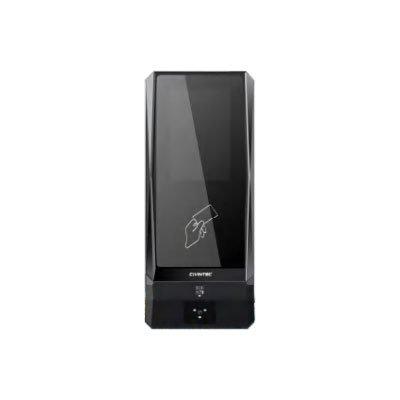


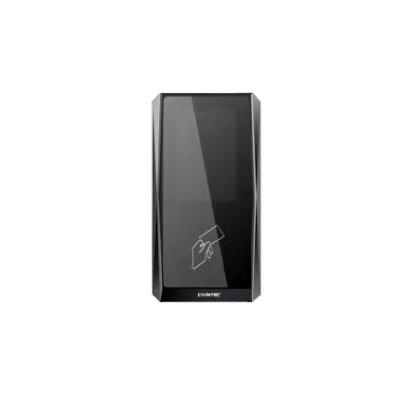

Round table discussion

Video surveillance has been a dominant factor in the casino market since the 1950s when video replaced the use of elevated walkways that allowed casino security personnel to monitor the gaming floor from above. As technology continues to evolve, we can expect to see more innovative uses of video in the casino market. Beyond video, other technologies are also transforming the casino experience. We asked this week’s Expert Panel Roundtable: How are new technologies impacting the casino surveillance and security market?

An organisation’s security director manages a staff of security personnel, implements and enforces security policies and procedures, and generally ensures the safety of personnel and visitors to the organisation’s premises. Over the years, the role of security director has expanded to include new disciplines such as cybersecurity. More and more, security directors are also taking a “seat at the table” as integral and critical members of a company’s management team. We asked this week’s Expert Panel Roundtable: How is the job of "security director" expanding, and what is the impact on technology?

There is safety in numbers, or so the expression goes. Generally speaking, several employees working together tend to be safer than a single employee working alone. Even so, some environments require that workers complete their jobs alone, thus presenting a unique combination of security vulnerabilities. The U.S. Occupational Safety and Health Administration (OSHA) defines a lone worker as “an employee working alone, such as in a confined space or isolated location.” We asked this week’s Expert Panel Roundtable: How can security technologies help to protect "lone workers?"
White papers

Guide for HAAS: New choice of SMB security system
Download
Access control: The enterprise buyer's guide
Download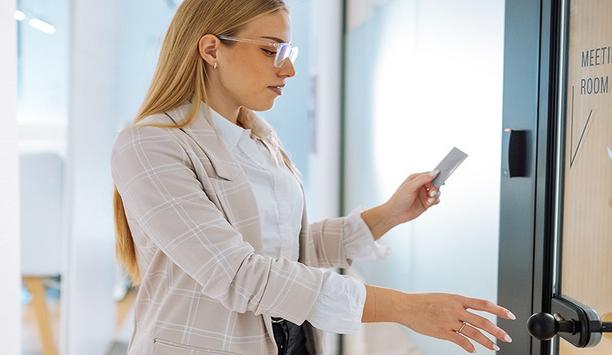
Combining access control and intercoms for better security
Download
Video technology strategies for hospitals are moving beyond security
Download
Smart surveillance in the workplace
Download
Creating a secure and positive healthcare experience
Download
Top 5 ways to ensure visitor safety and security
Download
Beyond security: access control for multi-tenant sites
Download
Financial institutions require future-ready physical security technologies
Download
Is your access control system as secure as you think?
Download
Visitor Management: A Guide to Selecting and Employing a New Solution
DownloadVideos


Visitor management systems: Manufacturers & Suppliers

Security technologies promote real-time awareness in K-12 schools
Download
Technology's role in securing banks and financial institutions
Download
Integrated systems enable critical and compliant security for transportation
Download
Modernising physical access control
Download
Access. Intrusion. One estate.
Download