Retail security



White papers

Modernising physical access control
Download
Physical access control
Download
Precision and intelligence: LiDAR's role in modern security ecosystems
Download
Verkada workplace safety survey
Download
How video technology is transforming loss prevention, operations, and customer experience in the retail sector
Download
How intelligent video is transforming banking and financial institutions
Download
Why SAAS Security Platform is more popular in American SMEs
Download
Security investments retailers should consider for their 2021 budget
Download
How end-to-end video security solutions can help your organisation with social distancing
Download
What are the security technology needs of the hotel sector?
Download
Loss prevention and beyond: How video innovation enriches retailers
Download
Case studies

DFNBG Gastro GmbH & Co. KG, operator of 48 Dunkin' branches and other catering establishments in Germany, has migrated to the MOBOTIX CLOUD for the central management of its video surveillance. DFNBG partnered with MOBOTIX Diamond Partner VALEO IT Neteye GmbH for more than ten years, who have implemented and continuously optimised secure and efficient MOBOTIX video solutions in the 48 Dunkin' branches. Data protection regulations The operation of local storage systems was proving particularly difficult in shopping centres Due to the strong growth of DFNBG, the demands on the existing video management system increased. The local storage of video data became increasingly complex - both in terms of data protection regulations and the management of access rights. The operation of local storage systems was proving particularly difficult in shopping centres. The solution: a gradual migration from local NAS storage to the data protection-compliant MOBOTIX CLOUD. Access management and GDPR: the MOBOTIX CLOUD as a solution The MOBOTIX CLOUD video surveillance-as-a-service (VSaaS) offering allows users to conveniently control their cameras via a free app. The recorded videos are stored in highly available and cyber-secure data centres located close to the user. This ensures data protection-compliant storage in accordance with the GDPR. Intelligent camera technology A key advantage of the MOBOTIX CLOUD is the combination of intelligent camera technology A key advantage of the MOBOTIX CLOUD is the combination of intelligent camera technology and a powerful cloud platform. The cameras analyse events on site and only transfer relevant data to the cloud. This minimises bandwidth requirements while maintaining the highest security standards. MOBOTIX Bridge Communication between the cameras and the cloud takes place via the MOBOTIX Bridge, a highly secure connection unit that ensures protected data transmission. The cloud solution also eliminates the need to operate separate server rooms with high security standards on site - a clear advantage for branches in shopping centres or high-traffic locations. DFNBG can control access rights Around half of the Dunkin' branches have already been converted to the MOBOTIX CLOUD Cloud data is managed directly by the users themselves. This means that companies such as DFNBG can control their access rights centrally without having to create individual solutions for each branch. “It was clear to us that the system is secure - including cyber-secure - and exceeds our requirements. But the central management of all access rights really saves us time and money,” says Harry Taubert, Construction & Development Manager at DFNBG. Around half of the Dunkin' branches have already been converted to the MOBOTIX CLOUD, and the remaining locations will follow successively. VALEO IT Neteye: MOBOTIX partner for innovative video solutions As a long-standing MOBOTIX Diamond Partner and one of the largest integrators of MOBOTIX systems in Germany, VALEO IT Neteye has been instrumental in delivering customised, future-ready surveillance solutions to DFNBG. VALEO IT Neteye also offers full-service training to DFNBG to ensure everyone stays up to date with industry changes. “We only offer our customers MOBOTIX solutions because we are absolutely convinced of the quality and durability of the products manufactured in Germany,” explains Norbert von Breidbach-Bürresheim, Managing Director of VALEO IT Neteye.

Mall of America®, the largest shopping and entertainment complex in North America, announced an expansion of its ongoing partnership with Axis Communications to deploy cutting-edge car-counting video analytics across more than a dozen locations. With this expansion, Mall of America (MOA) has boosted operational efficiency, improved safety and security, and enabled more informed decision-making around employee scheduling and streamlining transportation for large events. AI-enabled video analytics Mall was able to meet its needs for a reliable, accurate, and scalable key to support its security Standing at 5.6 million square feet and home to more than 500 retailers, restaurants, and more, MOA hosts more than 300 events each year, and has more than 32 million visitors annually from around the globe. Scheduling those events, ranging from a concert to a massive outdoor food festival, requires careful planning to ensure the Mall can support parking operations and provide safety and security to those in attendance. By expanding its surveillance system and investing in AI-enabled video analytics with Axis Communications, the Mall was able to meet its requirements for a reliable, accurate, and scalable solution to support its 24/7 security and safety operations. Accuracy and reliability "We needed technology that could keep pace with our evolving needs and make sure our security team could focus on the highest-priority tasks,” said Aaron Nielsen, Vice President of Information Technology at MOA. “Our previous solution struggled with the unpredictable Midwestern weather, including snow, rain, and cold, all impacting accuracy and reliability. Car counting is one of the most important operational metrics we have." Micro-level scheduling for vendors The success of the initial test led MOA to rapidly expand the implementation to more than a dozen locations Nielsen added: "Implementing a system that delivers accurate data allows us to quickly scale from one location to more than a dozen additional locations throughout the Mall, providing efficiency and invaluable information for our team.” The success of the initial test led MOA to rapidly expand the implementation to more than a dozen locations. The car-counting data now drives macro-level decisions about Mall hours and event planning, as well as micro-level scheduling for vendors and staff, empowering operational agility across the organisation. State-of-the-art expansion With this state-of-the-art expansion, MOA can: Deploy Solutions Anywhere: A trial began with an Axis camera deployed in a particularly challenging location—on a light pole isolated from the building. Despite difficult access to power and data, the trial system proved over 99% accurate. After minor adjustments, the performance improved even further. Drive Decisions with Analytics: By deploying AI-enabled line-crossing analytics at the edge, MOA benefits from a more rugged, scalable, and cost-effective approach to decision-making, powered by the business intelligence these devices gather. This is especially useful in locations where the Mall entrance meets busy intersections, as the line-crossing technology can precisely draw the distinction between a car entering the Mall versus one that is merely passing by. Create a Smarter Security Strategy: Beyond parking intelligence, Axis’ technology supports the Mall’s broader security strategy. Cameras and Axis network speakers installed in restricted areas detect and deter unauthorised access in real-time, and alerts are immediately sent to the Mall’s central dispatch centre. Prioritize Employee Safety: With unpredictable Minnesota winters, keeping employees and customers safe was key to this technology deployment. With this new system, adjustments to the devices are intuitive, and what used to require ladders, lifts, and multiple people can now be done from a desktop. Non-technical team members can review audits, make changes, and immediately analyse results from a safe location. Experiential retail and entertainment MOA is exploring additional possibilities as it continues aligning resources for future phases of the project “Mall of America presented us with a challenge that required not just technology, but collaboration, trust, and innovation,” said James Stark, Segment Development Manager, Retail at Axis Communications. “We’re honoured to be part of their forward-looking approach to safety and operational intelligence. As Mall of America continues to lead the way in experiential retail and entertainment, we remain committed to delivering the reliability, flexibility, and insight-driven technology that their dynamic environment demands.” Advanced capabilities Looking ahead, MOA is exploring additional possibilities as it continues aligning resources for future phases of the project. From advanced capabilities like people counting and licence plate recognition to leveraging line analytics to better understand visitor trends—such as distinguishing hotel guests from shopping centre visitors—the potential for smarter, more efficient operations is there.

Forklift collisions cost UK businesses over £100 million annually in workplace injury claims and equipment damage, according to HSE statistics. SharpEagle Technology, a globally renowned provider of industrial safety solutions, has announced a significant breakthrough in warehouse safety across the UK. Facilities that adopted SharpEagle’s Radar Blind Spot Detection System have reported up to 70% reduction in forklift-related accidents, marking a major milestone in workplace safety. The UK's blind spot crisis With over 1,300 forklift-related incidents reported to HSE each year, many involving serious injuries, UK regulators are pushing for smarter safety solutions. Traditional mirrors and cameras frequently fail in: Rainy loading docks Dusty manufacturing plants Crowded retail distribution centres Visual and audible signals The system, which uses radar sensors to monitor blind spots and detect real-time sign around forklifts The system, which uses radar sensors to monitor blind spots and detect real-time movement around forklifts, has proven to be a game changer in accident prevention. It immediately alerts operators through visual and audible signals when people or objects enter dangerous proximity zones, reducing the likelihood of collisions, especially in busy loading docks and narrow warehouse aisles. Real-time awareness "In a typical warehouse, poor visibility and human error can lead to severe accidents. Our technology gives operators real-time awareness they didn’t have before," said the UK Business Head of SharpEagle Technology, adding "The impact has been measurable. Clients report fewer incidents, improved productivity, and safer working conditions." Adoption growing across logistics The system offers cost-effective safety enhancement without the need for vehicle relief The Radar Blind Spot Detection System has quickly gained popularity among UK logistics providers, manufacturing units, and retail distribution centres — sectors where high forklift traffic and pedestrian movement often intersect. By integrating with existing forklift infrastructure, the system offers cost-effective safety enhancement without the need for vehicle replacement. It is also compatible with SharpEagle’s wider range of forklift safety solutions, including AI-based camera systems and anti-collision lights. Regulatory & insurance benefits In addition to preventing injuries, the deployment of radar-based detection systems has helped warehouses comply with UK Health and Safety Executive (HSE) guidelines. Several facilities have seen a reduction in insurance claims and premiums, along with fewer incidents of lost workdays due to injury. "Workplace safety is not just a legal requirement — it’s a business imperative. This technology ensures companies are equipped to meet the demands of a modern, high-speed supply chain without compromising on the well-being of their workforce."
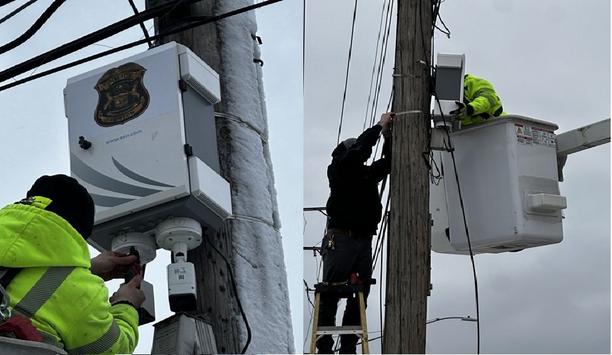
To combat persistent retail crime and deliver peace of mind to workers in the bustling North Leroy Street business district, the City of Fenton Police Department has deployed a new AI-powered video surveillance system with camera-sharing technology to accelerate response time during retail heists or other emergencies. Deter, detect, and apprehend criminals Fenton is a small city with 12,000 permanent residents, but Chief of Police Jeffery Cross estimates that 60,000 people pass through the town daily. Located off Highway US-23, it is a popular shopping and restaurant district for commuters and people from neighbouring cities. Unfortunately, retail criminals also frequent the area. The new video surveillance system is designed to deter, detect, and apprehend retail criminals. Live security camera footage Through a partnership with RapidSOS, this technology gives Fenton’s 911 dispatch professionals immediate access The new system, housed in a rugged, weatherproof cabinet and mounted on a telephone pole with two cameras, includes Eagle Eye 911 Camera Sharing technology. Through a partnership with RapidSOS, this technology gives Fenton’s 911 dispatch professionals immediate access to view live security camera footage during an emergency. “With 911 Camera Sharing, the 911 operator can see the situation unfold and give law enforcement direct, quality information and immediate feedback about what happened and the direction the suspect is headed in,” Cross explained. “That enhances safety for first responders and our community.” Smart Video Search In addition, the security cameras have built-in AI-powered Eagle Eye Smart Video Search, which enables Fenton’s authorised law enforcement officials to quickly search security camera footage for vehicles, people, or objects of interest. “With Smart Video Search you can search for a ‘person wearing a red shirt and black pants’ a ‘blue Honda truck’ or ‘person with a backpack’ and quickly find a shoplifting suspect or determine when a certain vehicle, person, or group of people entered a shopping centre parking lot, which can be critical information for law enforcement,” said Joe Bommarito of Elite Fire Safety, a division of Sciens Building Solutions. This Novi, Mich.-based security integrator is working on the project with the City of Fenton. AI-powered video surveillance “Fenton’s new system with 911 Camera Sharing and AI features such as Smart Video Search is like having a virtual patrol in the Fenton business district,” he added. “Last month the National Retail Federation reported a 93% increase in the average number of shoplifting incidents per year in 2023 versus 2019 and a 90% increase in dollar loss,” said Dean Drako, CEO of Eagle Eye Networks. “AI-powered video surveillance can now be deployed in more areas than ever, offering communities new ways to contend with rising retail crime.”
News

SAFR today announced new investigation capabilities for SAFR Guard, without the need for on-site servers. Retail security has been burdened by costly, infrastructure-heavy systems that are complex to maintain and slow to scale. SAFR Guard now changes that, combining real-time proactive alerts with new investigation capabilities, all without server bloat. With built-in privacy guardrails, it’s designed for responsible use from day one. Server-dependent infrastructure As retail crime becomes increasingly frequent and connected, traditional systems built around manual case building are struggling to keep up. Security teams are expected to act faster, manage growing operational demands, and reduce shrink, all while dealing with the costs and maintenance of server-dependent infrastructure. SAFR Guard introduces a modern approach to retail security, helping retailers move from isolated incidents to actionable patterns. By combining proactive alerts with smarter investigative insights, SAFR Guard enables teams to detect repeat activity, surface connections across events, and respond more effectively in real time. “SAFR Guard’s ability to investigate and alert on high-harm individuals is key to its success,” said Chris Ochs, Director of Product at SAFR Guard. “Early warning directly translates into safer stores,” he added. Modern retail security Unlike traditional infrastructure-heavy systems, SAFR Guard eliminates the burden of on-site servers, reducing operational complexity and cost while enabling faster deployment and easier scaling across locations. The result is a more streamlined approach to retail security, one designed to help teams focus less on managing systems and more on preventing loss. With real-time prevention, faster investigations, and infrastructure-free deployment, SAFR Guard is helping define a new standard for modern retail security.

Genetec Inc. (Genetec), the global pioneer in enterprise physical security software, announces it will showcase its latest investigation capabilities in Security Center SaaS at NRF PROTECT 2026, taking place June 8-10 at the Gaylord Texan Resort in Grapevine, Texas. At booth #1017, Genetec will demonstrate how retailers can investigate incidents that increasingly span multiple stores, systems, and camera vendors, helping security and loss prevention teams connect evidence faster across distributed locations. Recurring behaviour pattern Retail investigations often begin with limited information, such as a partial description, approximate timeframe, vehicle, or recurring behaviour pattern, and can quickly expand across stores, regions, and systems. For large retailers, disconnected tools and manual video review slow investigations. Security Center SaaS brings investigation workflows into a unified, cloud-managed physical security platform, enabling retail security, asset protection, and loss prevention teams to move from initial discovery to case resolution with greater speed and clarity. Visualising movement patterns With the new capabilities, investigators can search video across multiple locations and camera brands using natural language descriptions, including clothing brands, vehicle make and models, objects, activities, locations, or timeframes. Natural language search help teams quickly validate events, refine results, and focus on relevant activity. Investigators can also follow people and vehicles across scenes, visualise movement patterns, and better understand how incidents unfolded across locations. The platform also supports structured case-building by organising video clips, snapshots, tags, and related evidence into connected investigations with chronological storyboards. AI-assisted description summaries help teams document findings more efficiently, improve collaboration with law enforcement and internal stakeholders, and reduce time spent manually reviewing. Modernising security operations “Retailers are facing increasingly complex security challenges, from organised retail crime and shrink to in-store violence and investigations that span multiple locations,” said Scott Thomas, National Director for Signature Brands at Genetec Inc. “With the new investigation capabilities in Security Center SaaS, retailers can move faster from a partial description or initial incident report to connected evidence and actionable findings. This helps loss prevention and security teams build stronger cases, improve coordination, and resolve incidents more efficiently.” Security Center SaaS supports both cloud-based and hybrid deployments, giving retailers flexibility to modernise security operations across stores, distribution centers, and corporate locations. The platform unifies video management, access control, intrusion, automation, forensic search, and investigation workflows within a single interface.

ULTRALOQ, a best-selling smart lock brand under Xthings, a global pioneer in AIoT solutions, announced that several of its smart lock models have achieved certification for Aliro, a new open industry standard developed under the Connectivity Standards Alliance (CSA) that enables secure digital keys stored directly in smartphone wallets. The certification spans a variety of deadbolt and latch style smart locks, offering intelligent and convenient access control solutions for homeowners, property managers, and hospitality operators. These locks enable a consistent tap-to-unlock experience across supported smartphone platforms. Different platforms, different approach For homeowners, Aliro means unlocking a front door with the same tap used for payments or transit passes, with no separate app required. For property managers, facility operators, and hospitality companies, it means digital keys can be issued, updated, and revoked centrally across multiple doors and properties, using credential infrastructure already built into the smartphones residents and guests carry every day. With Aliro-enabled smart locks, users can unlock doors using compatible mobile wallet experiences, including those supported by platforms like Samsung Wallet, eliminating the need for separate lock applications or physical keys. Access control "Samsung Wallet is designed to act as a digital hub for users' belongings (payment cards, IDs, car keys, etc.). The integration with Samsung Wallet through Aliro-certified ULTRALOQ smart locks is part of this customer experience. Now, Samsung Wallet customers can activate the easy tap-to-unlock feature for convenient home access control," said Junho Hyun, Head of Wallet BD2 Group, Samsung Electronics. Features and functions Unlike proprietary smart lock ecosystems that require residents, hospitality guests, or staff to download and manage dedicated apps, Aliro-certified locks from ULTRALOQ integrate directly with wallet platforms users already have on their phones, reducing friction for operators and end users alike. In addition to Aliro certification, upcoming ULTRALOQ smart locks are also Matter-certified, enabling seamless integration across leading smart home ecosystems. Together, Matter and Aliro represent complementary layers of the connected experience. Matter ensures devices work across platforms, while Aliro enables a consistent, convenient and secure way to access them using digital keys. A universal key "With Aliro, the smartphone is becoming the universal key to the physical world," said Raj Sundar, Sr. Director of Product Management at Xthings. "What makes this shift meaningful is not just the technology, but the experience - a simple tap to unlock that works the same way across mobile devices from many different brands, while also making it easy to share and manage access." With Aliro certification, ULTRALOQ joins the first wave of smart lock manufacturers helping bring this next generation of digital access to homes and buildings worldwide. Availability Aliro-enabled ULTRALOQ smart locks will be available through ultraloq.com, select retail partners and authorised security and smart home integrators. Commercial and multifamily property operators interested in deploying Aliro-certified access control at scale should contact Xthings directly.

ABUS and 1st Call Lock and Key Shop (LKS) are celebrating over a decade’s partnership, reflecting a professional relationship built on continuity, technical development and shared standards within the security and construction sector. Established in 2004, LKS has expanded its presence in the industry over the past 20 years. Since beginning its direct partnership with ABUS in 2014, the business has placed a strong emphasis on product knowledge, structured training and the consistent application of technical expertise across its team. Key product ranges As part of the latest phase, LKS team members participated in dedicated pinning training, alongside in-depth instruction on the ABUS 83 series, helping to strengthen both hands-on capability and familiarity with key product ranges. The training programme includes participation from across LKS, with attendees representing technical, managerial, administrative, and trainee roles, including the first female benching apprentice. This cross-team involvement supports knowledge sharing and helps ensure consistent standards throughout the business. Fire door installations Says Joshua Kambo, Managing Director of Lock and Key Shop: “Our partnership with ABUS UK is built on shared values of technical excellence, product integrity and consistent service delivery. As a business specialising in security products, ironmongery and fire door installations, it is critical we work with manufacturers we can trust. Abus provides world-leading products backed by deep technical knowledge, which allows us to confidently specify and deliver fully compliant solutions across all our projects. This relationship not only supports our continued growth within the industry but also strengthens the diversity and capability of our team.” The involvement of trainee bench-locksmith Serena highlights the increasing participation of women in the trade and reflects broader efforts by both organisations to support a more inclusive and accessible industry. By creating opportunities for new talent to learn alongside experienced professionals, the partnership helps build a more diverse and sustainable skills pipeline, while also encouraging the sharing of knowledge across different experience levels. Changing customer requirements Serena Killeen, LKS Bench Locksmithing Trainee added: “I enjoy developing my skills in the master keying department at LKS, as a trainee in this industry and learning more about the industry each day, whilst representing the contribution we can make. Working with partners like ABUS allows me to gain hands-on experience and continues to build my confidence. It helps to feel supported and treated equally, and I would encourage more women to consider a practical and rewarding career path.” This approach brings together a range of perspectives and expertise across the partnership. In an industry shaped by evolving technologies and changing customer requirements, ongoing training plays a key role in maintaining technical standards and ensuring teams remain aligned in both knowledge and practice. High technical standards Colston Hendy, Technical Sales Manager at ABUS concluded: “Our long-term partnership with Lock and Key Shop is built on a shared understanding and a consistent approach to collaboration.” “This allows us to maintain high technical standards while supporting the continued development of their team. It is also encouraging to see new talent, including Serena, progressing within our industry, as diversity and inclusion are essential to innovation and long-term progress.”
Expert commentary

For businesses today, loss prevention is no longer just about safeguarding inventory from theft. While retail theft makes frequent headlines in the United States, and is indeed the leading cause of shrinkage, The National Retail Foundation (NRF) has reported that process failures, operational inefficiencies and employee theft also drive significant losses. Legacy security systems In 2022, the shrink loss is estimated to be $ 120 billion in the United States, and that’s for retail alone. Industries like hospitality, healthcare, manufacturing, and transportation all face similar challenges even though loss and inefficiency take different forms in each of these fields. As shrinks from theft and operational inefficiency have already put margins of companies under pressure, we are increasingly seeing more businesses demand AI-powered security systems with advanced video analytics, capable of addressing both security and operational inefficiencies that their legacy security systems could not. Understanding the full scope of loss Package theft is a common problem in commercial buildings, with which box detection in mailrooms Starbucks’ recent announcement of reinventing its franchise operation due to faltering sales is a great example of how operational efficiency can take a toll on business revenue. In restaurants or hotels, failing to anticipate customer flow can lead to long wait times or inefficient use of staff, frustrating guests. Take, for example, in hospitals, inefficient patient flow management can lead to overcrowded waiting areas and delays in care, compromising patient health. Similarly, in manufacturing, poorly optimised assembly lines create production bottlenecks, delaying output and raising overhead. Package theft is another common problem in commercial buildings, with which package detection in mailrooms can mitigate loss from deliveries. These invisible leaks creepingly drain profits across industries, and require future-proof solutions that not only confirm what’s already known but also provide actionable insights for improvement. Transforming security into a powerhouse for efficiency Progress continues to advance across these areas, fuelling optimism for what lies ahead. Thanks to the rise of artificial intelligence and data analytics, some security solutions are already integrated with facial recognition and licence plate detection capabilities, as well as Virtual Fences that help ensure that only authorised personnel or vehicles enter sensitive areas. This can be especially useful for manufacturing environments, where controlling access to high-risk zones and protecting valuable assets are critical. Some modern security systems can even offer more than a watchful eye, doubling as a data analytic tool beyond traditional surveillance limits. Heat mapping in security AI technology Heat mapping in security AI technology analyses ways of movement and behaviour in a retail environment Modern security systems are now capable of tracking foot traffic, analysing customer behaviour, and even identifying bottlenecks in real time by incorporating different technologies such as heatmapping, people counting and queue length monitoring for long lineups. Heat mapping in security AI technology analyses patterns of movement and behaviour in a retail environment by visually representing areas with high foot traffic. With tracking over time and identifying potential vulnerable and hot spots for potential theft and fraud, resulting in change of store layout, deploy additional resources in high traffic areas and physical security placement. Predictive security analytics AI people counting in security utilises sensors and cameras to accurately track the number of individuals entering and exiting a space in real time. This data helps businesses optimise staffing levels, enhance customer experience, and improve overall operational efficiency by aligning resources with foot traffic trends. Predictive security analytics, such as heat mapping and people counting, are not new inventions. But I believe the ability to integrate all these functionality into a single system will allow these technologies to further mature and expand their footprint in near future. Rather than relying on separate tools for each business function, businesses can now use a single, integrated system to gather actionable data while continuing to secure protection through video surveillance. You Can’t Manage What You Can’t Measure AI-powered security systems give businesses access to a wealth of data that they can use AI-powered security systems give businesses access to a wealth of data that they can use to precisely pinpoint where losses are happening. This is key to solving the problem of shrinkage, which often goes beyond simple theft. Consider the Starbucks case mentioned earlier, while Starbucks hasn't specified how it plans to achieve operational efficiency to “enhance the cafe experience”, an AI-powered security system could provide an all-encompassing solution to minimise bottlenecks during peak hours, optimise store layouts, and allocate staff more efficiently. The impact of this technology can be tremendous as it not only enhances the customer experience but also reduces inefficiencies that contribute to lost revenue. By analysing patterns, conducting Forensic Review with Smart Search to quickly locate incidents, and understanding the root causes of loss, companies can implement targeted solutions that reduce shrinkage and streamline operations. Future-proof solutions Walmart is using foot traffic analytics to predict demand and manage inventory Companies like Walmart are already using foot traffic analytics to predict demand and manage inventory. But beyond basic predictive inventory analysis and crowd control, the data gathered will have the potential to be combined with other business functions, smart energy management, pricing and marketing strategy, just to name a few. Investing in a security system that integrates AI video analytics, such as package detection, queue length monitoring, and Virtual Fences, can provide future-proof solutions that also enhance operational efficiency. Looking ahead With New York State's introduction of new Retail Security measures to encourage businesses to strengthen their security, we've seen increased interest. However, modern security systems with real-time analytics are now offering companies more than just protection—they’re providing valuable insights into operations, transforming security from a cost burden into a powerful tool for growth and efficiency. As businesses continue to adopt AI-powered security systems, it's clear that the role of security is evolving beyond traditional surveillance. These advanced systems are no longer just about protection, but help businesses grapple with increasingly complex challenges. By transforming security from a reactive expense into a proactive, data-driven asset, companies can stay ahead of the curve, managing not only what they can see, but also what they’ve been missing.

Amidst the challenges of a prevailing economic downturn, the retail sector finds itself grappling with an unparalleled rise in incidents of shoplifting, theft, and burglaries. The disconcerting scenes witnessed on London’s Oxford Street in August 2023, where crowds gathered, looting as many stores as possible, sent shockwaves across the nation’s retailers. This alarming surge in retail crime has put retailers on high alert, as they contend with a rising tide of security concerns. Shoplifting concerns Recent data from the Union of Shop Distributive and Allied Workers (USDAW), has raised alarming concerns: shoplifting rates have surged by an unprecedented 24%. In the first half of 2023 alone, there were approximately 8 million reported shoplifting incidents. With the ongoing burden of the cost of living crisis and the approaching festive season, it is expected that these figures will keep surging. Implementing robust security measures Theft and prevention strategies cost retailers approximately £2 billion in 2021/2022 While more help from the Government to support retail workers and the businesses shoplifters target is certainly needed, the implementation of robust security measures will significantly contribute to deterring these crimes from occurring in the first place. British retailers spend millions on tools to deter and catch shoplifters inside stores, from CCTV and security guards to electronic tagging and alarms. The Grocer reported that theft and prevention strategies cost retailers approximately £2 billion in 2021/2022. Despite these initial costs, other threats are at play beyond the shop floor. Break-ins by criminal gangs For many large town centre stores and supermarkets, and units in retail parks, the rear doors and delivery areas are commonly targeted by criminal gangs. It’s not uncommon for thefts to occur from pallets or cages that have been unloaded from lorries and sit waiting to be moved into the building. After-hours break-ins are a risk for all store owners too, particularly over the festive season when a lot of high-value stock has been delivered to shops and supermarkets. Addressing anti-social behaviour The additional fencing was deemed an essential measure to safeguard the community Anti-social behaviour also poses a challenge for retailers. In 2022, an Aldi based in Derby invested in security fencing to protect staff and deter loitering groups. The additional fencing was deemed an essential measure to safeguard the community, as dangerous items were frequently found outside the store, including weapons and hypodermic needles. So how do physical security solutions such as fencing and gates help better protect retail establishments such as supermarkets and edge-of-town retail park shops? Fencing and gates: a critical component of retail security 1. Risk assessment and target hardening A thorough risk assessment will identify potential weak spots that require protection. ‘Target hardening’ involves implementing physical security measures that become more robust as they approach the target. This helps deter intruders while ensuring ease of access for customers and staff. 2. Effective perimeter security Opt for difficult-to-climb security fencing that provides a robust obstacle against thieves, vandals, and intruders Selecting fencing solutions according to the potential threats, site characteristics, and topography is crucial. It is important to specify fencing that strikes a balance and maintains a welcoming appearance while safeguarding external areas of the store or warehouse from potential harm and unauthorised access. Solid fencing which provides concealment can help to conceal expensive goods and remove them as a target for opportunistic theft. Opt for difficult-to-climb security fencing that provides a robust obstacle against thieves, vandals, and intruders. I recommend selecting a sufficiently tall and robust fence such as an acoustic barrier. Its noise-reducing properties are often beneficial for these types of sites too. 3. Controlling vehicular speeds and access To enhance security, consider controlling vehicular speeds and access. One effective approach is the installation of bollards at the ends of traditional high streets. This practice is already commonplace as a means of safeguarding against hostile vehicle attacks, but it can also play a pivotal role in preventing quick getaways of vehicles involved in potential heists. Additionally, employing road blockers and sliding gates at the rear entrances of delivery areas would serve to fortify security further. These measures can help in delaying vehicles, allowing for necessary checks to be conducted. 4. Balancing security with aesthetics The presence of high-security fencing can also make a site more of a target for vandals and burglars Another challenge is avoiding creating an imposing presence, especially important for areas situated near residential communities. The presence of high-security fencing can also make a site more of a target for vandals and burglars. To minimise this risk consider specifying timber fencing and traffic barriers to secure car parks, providing both security and a welcoming atmosphere for shoppers. Taking an integrated approach Combine secure perimeter fencing with effective lighting in places with shaded areas and at doors, gates, and shop windows, alongside Perimeter Intrusion Detection Systems (PIDS), and strategically placed CCTV. These measures will hinder unauthorised entry and escape, increasing the likelihood of detection and apprehension. Prioritising employee wellbeing Installing robust security fencing, complemented by CCTV, good lighting, and guarding, creates a safe environment Installing robust security fencing, complemented by CCTV, good lighting, and guarding, creates a safe environment for employees. This not only safeguards their well-being but also provides peace of mind that they are protected effectively in the case of a burglary or crime. When selecting security products for retail sites, it is advisable to opt for items that have undergone rigorous testing and carry relevant certifications for their security level. Each component should meet industry-specific standards for its intended purpose and originate from manufacturers accredited under ISO 9001:2015. This ensures a high standard of quality and reliability in safeguarding the premises. High-quality security fencing As the cost-of-living crisis continues, crime rates increase, and the festive season approaches, the time to act and implement on-site security is now. By investing in comprehensive security measures, retailers can protect their assets, employees, and customers, ensuring a safer and more secure shopping environment for all. High-quality security fencing is also a sound investment, that requires little or no maintenance once installed. The best fencing solutions are extremely weather-resistant, and won’t suffer from rust or corrosion. With all sectors preparing to ride the rapids of recession in the coming year, improving on-site security while selecting cost-effective measures, is one surefire way to protect your people, your property, and your profits from harm.
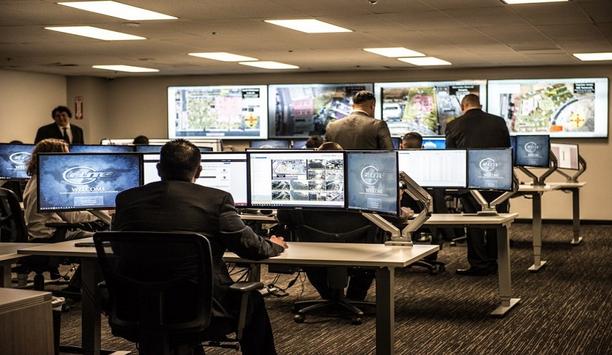
The average business owner or investor has some kind of security precaution in place, especially in the after-hours when there are fewer deterrents to inhibit criminal activity. Security guards, video surveillance systems, motion sensor lights, or even just fake cameras placed around the property are some of the common options people choose. Future of overnight security Smart business owners are starting to realise, however, that some of these traditional security measures are becoming antiquated and no longer cutting. The now and future of overnight security is in remote guarding. Pioneered by companies like Los Angeles-based Elite Interactive Solutions, which was founded back in 2007, remote guarding is revolutionising the overnight security business. Minimising criminal activity Remote guarding is fast becoming the most popular choice among commercial end-user property owners Remote guarding utilises a combination of cutting-edge technology, “digital guards,” highly trained security agents, and local law enforcement if and when necessary to minimise the potential of criminal activity. For those adequately enlightened to its overwhelmingly impressive crime prevention capabilities, remote guarding is fast becoming the most popular choice among commercial end-user property owners to secure and protect their investments. What Is remote guarding? Remote guarding is a revolutionary concept and increasing trend in security systems that utilises a combination of methods to effectively analyse potential threats to property. Cameras and/or other monitoring devices running highly advanced algorithmic software are installed in strategic areas or vulnerable places onsite and remotely located security agents are immediately notified of any activity within a designated perimeter of the property. A blend of AI, cybersecurity, and video analytics When properly deployed by an expert provider, the technology stack includes a proprietary blend of video analytics, artificial intelligence, cybersecurity, and more. Done right, “noise” is effectively filtered out, allowing agents to act on legitimate alerts and achieve zero false alarms communicated to first responders. Today, there are a lot of terms and descriptions tossed around about remote guarding, remote video, virtual guarding, etc., but those attributes must be present to represent the true definition of the offering and its many virtues. Realtime situational awareness Many systems have a two-way speaker that allows the security agent to give a verbal warning When specially trained security agents are alerted to trespassers, possible intruders, or other suspicious activity, they analyse the situation in real-time and determine the necessary level of action. Many systems have a two-way speaker that allows the security agent to give a verbal warning, known as a voice-down, to the individual(s) that they are being watched. Most perpetrators, often believing the response is emanating directly from security personnel on the property itself rather than from a remote command centre, flee immediately. However, if the threat persists, the security agent enlists local law enforcement to get on the scene. Customised remote guarding When properly deployed, remote guarding systems are also customised to specific properties. A team of consultants visits the client’s property to evaluate its vulnerabilities and where to best place cameras and/or other monitoring devices for system efficacy. Traditional security shortfalls According to Keith Bushey, a retired commander for the Los Angeles Police Department, there is much frustration between law enforcement officers and potential victims of crime due to the historically unreliable performance of traditional burglar alarm systems and central monitoring stations. He states about 90% of security-related calls are false alarms, a problem that has been well-documented through the years. Onsite challenges When a legitimate emergency does occur, the perpetrators have often already done their damage When a legitimate emergency does occur, the perpetrators have often already done their damage and/or escaped by the time law enforcement arrives. Onsite security guards are not the remedy either as they bring their own set of issues and challenges. Unexpected costs Traditional security systems can also have unexpected costs. The cost is not only in the security guards’ paycheck or the cost of the equipment itself. The cost comes when an actual incident occurs. In worst-case scenarios, the security guard(s) are injured, the business suffers inventory loss, and/or damage is sustained to the property. The medical and other costs for the security guard(s), the loss of inventory, property damage, deployment of law enforcement resources, and possible fallout of legal expenses all add up. Even in the best-case scenario, false alarm expenses incur if law enforcement is dispatched. These, among many others, are some of the primary issues that remote guarding resoundingly answers as a superior alternative. A bounty of benefits Remote guarding systems have been proven to cut costs and be more effective than traditional security systems. Even though the monthly monitoring costs of remote guarding are significantly higher than traditional intrusion detection system monitoring, the much higher effectiveness in crime reduction, elimination of false alarms, and augmenting or replacement of manned guards result in a substantially higher return on investment (ROI) to the end user. Easy tracking of threats The security cameras already have their image captured on record, making them easier to track down For example, case studies have demonstrated reduced security costs for clients by 60%, on average. These reductions have come from the costs of security staff, inventory, or property loss, plus saving money on insurance premiums and deductibles. The nature of remote guarding reduces the risk and costs of false alarms, with professional security agents able to determine an actual threat before law enforcement is called. In a rare instance when a perpetrator escapes before law enforcement arrives or can detain the individual(s), the security cameras already have their image captured on record, making them easier to track down and identify. Reduction of false alarms The significant reduction in false alarms is greatly appreciated by law enforcement, as it allows them to focus on real emergencies or crises. Better relationships are also developed between clients and law enforcement, as remote guarding systems are highly reliable in providing accurate and real-time information to officers as they approach the scene. In short, it assists law enforcement in doing their job more effectively, as well as more safely thanks to having eyewitness information before engaging in an active crime scene. Partnership When you combine the decreased cost with the increased efficiency and success rate, it is easy to see why many commercial end-user property owners across the country are making the shift to remote guarding. It’s also an outstanding opportunity for professional security dealers and integrators to partner with a remote guarding services provider to bring a superior solution to their end customers and pick up a recurring monthly revenue stream in the process.
Security beat

With the year 2025 stretched out before us, there are many techniques one could use to predict what will happen in the new year. You might analyse historical data and analyse future trends. Or you could try statistical or economic modelling. Or you could develop multiple scenarios based on various assumptions to explore potential outcomes. Or you could just check your email. At this time of year, my email is full of industry folks looking to predict what the future holds in 2025. Ranging from artificial intelligence (AI) to privacy, the retail market to drones, here is a sampling of forecasts for 2025 provided by various players in the security market, courtesy of my email messages. What’s Ahead for AI? From Faisal Pandit, VP & GM, Global Security Products, Johnson Controls (JCI): “The future of security operations includes customisable, scalable solutions where users can control if, when, and how they use AI to improve efficiency depending on the size and function of their organisation.” Says Kevin Woodworth, Vice President, Global Product Management, Intrusion, JCI: “Next year will see a growing focus from product developers on designing systems that streamline setup and configuration through increased AI integration. This reflects a broader trend of leveraging AI to simplify use and enhance adaptability as solutions evolve, rather simply employing it because it’s popular.” From Peter Evans, CEO of Xtract One Technologies: “AI algorithms will significantly advance in distinguishing between harmless, everyday items and potential threats. With this, we will see false alerts become even more rare.” Says JP Castellanos, Director of Threat Intelligence, Binary Defense: “Machine learning (ML)-powered anomaly detection will move beyond proof-of-concept to become mission-critical, enabling teams to uncover unknown threats and behavioural anomalies in real time – well before they escalate.” Evans of Xtract: “As AI becomes more advanced in threat detection, it will lead to more sophisticated protection of individual privacy. We can expect to see more AI techniques utilised for threat identification that do not capture personal data and are privacy-first.” Predictions on interoperability and compliance Woodworth of JCI: “New products added to singular systems must be interoperable. In 2025, organisations will need to embrace interoperability. AI will progress past reactive measures to achieve predictive capabilities.” Pandit of JCI: “With organisations increasing their focus on the regulatory environment, there will be an uptick in specialised certification programs to meet these needs. New security roles will emerge that will be focused on tracking and applying relevant regulatory changes.” Expanding capabilities for video cameras Woodworth of JCI: “Beyond capturing images, cameras will be able to detect potential threats and also mitigate them instantly, issuing vocal warnings, controlling access, or escalating issues without human intervention.” Looking ahead to retail developments Hansel Oh, Director of Product Marketing at Brivo: “Centralized, cloud-based security platforms will enhance credential management and monitor logistical operations to enable retailers to battle cargo theft.” Stephen Burd, Vice President, Essence Security: “With an increase in police response times, sophisticated crime, and smash and grabs, 2025 will see a huge demand for security solutions that go beyond simply notifying the police and will look to actively intervene and prevent damage or loss from occurring.” The role of drones and training Mary-Lou Smulders, CMO, Dedrone by Axon: “Drones will transition from being viewed as supplementary tools to becoming essential components of public safety operations. As departments recognise their effectiveness in various scenarios, the perception of drones will shift, and they will be integrated into core operational frameworks alongside traditional assets like patrol cars while replacing helicopters as a cost-effective and versatile alternative.” Erik Hohengasser, Electrical Technical Lead at NFPA: “As the skilled trades evolve, there will be an increasing demand for specialised and technical training. Predictive analytics, virtual simulations and hands-on experiential learning will become especially valuable due to allowing employees to gain real-world expertise in safe and controlled environments.”

Companies at GSX 2023 emphasised new ways that technologies such as artificial intelligence (AI) and the cloud can address long-standing issues in the security market. Among the exhibitors at the event in Dallas were companies seeking creative ways to apply technology, lower costs, and make the world a safer place. Reflecting on the exhibition, here are some additional takeaways. Expanding AI at the edge i-PRO is a company reflecting the continued expansion of edge AI capability in the security market. Today, more than half of the company’s lineup supports AI at the edge so the customer has a wide choice of form factors when seeking to leverage the feature set. AI processing relay, extended warranty i-PRO is increasing their warranty period from 5 to 7 years, which could be a lifetime warranty in some cases I-PRO also has an “AI processing relay” device that accepts non-AI video streams and applies edge analytics. AI has progressed from a high-end technology to a feature available in a variety of cameras at different price points. i-PRO is also increasing its warranty period from 5 to 7 years, which could be a lifetime warranty in some cases depending on a customer’s refresh schedule and lifecycle management. Active Guard, MonitorCast The company’s video management system (Video Insight) is continuing to build new features including “Active Guard,” an integrated metadata sorter. Their access control platform, MonitorCast, is a Mercury-based solution that is tightly integrated with Video Insight. Their embedded recorders now have PoE built in. “We can move at a faster pace to fill out our product line since leaving Panasonic,” says Adam Lowenstein, Director of Product Management. “We can focus our business on adapting to the market.” Emphasis on retail and other verticals Shoplifting is a timely issue, and retail is a vertical market that got a lot of attention at GSX 2023. “We see a lot of retailers who are primarily interested in protecting employee safety, but also assets,” says Brandon Davito, Verkada’s SVP of Product and Operations. “Shrinkage is a CEO-level priority.” “Retailers are getting more engaged with security posture, instead of letting perpetrators walk,” Davito adds. Intrusion detection Verkada has an intrusion product that will notify a central station if there is an alarm On the alarm side, Verkada has an intrusion product that will notify a central station if there is an alarm, and operators can review videos to confirm the alarm. Other capabilities seeking to discourage trespassers include sirens, strobes, and “talkdown” capabilities. International expansion Verkada continues to expand internationally with 16 offices in all, including Sydney, Tokyo, and London. The core value proposition is to enable customers to manage their onsite infrastructure more simply, including new elements such as PTZ cameras, intercoms, and visitor management. Verkada emphasises ease of use, including a mobile application to allow access to be managed across the user base. Forging partnerships “We are committed to the channel and industry, and we continue to build relationships and expand our reach,” says Davito. Among the industry relationships is a new partnership with Convergint, which was hinted at during the show and announced later the same day. They are also expanding their partnerships with Schlage, Allegion, and ASSA ABLOY. Working with other verticals They offer new features for K -12 schools, and a new alarm platform is easier to deploy and manage Verkada has also found success across multiple other verticals, notably healthcare, where they integrate with an electronic medical records system. They offer new features for K-12 schools, and a new alarm platform is easier to deploy and manage. They are integrating wireless locks to secure interior doors in schools, looking to secure the perimeter, and installing guest management systems. Transitioning the mid-market to the cloud Salient is squarely focused on the “mid-market,” a large swath of systems somewhere between small businesses and enterprise-level systems. Pure cloud systems are not as attractive to this market, which has a built-out infrastructure of on-premise systems. Adding a camera to an existing system is easier and less expensive than tying it to the cloud. Benefits of cloud It’s a market that may not be ready for the pure cloud, but there are benefits to be realised from adding a cloud element to existing systems. “We are continuing to augment our premise-based solutions with added cloud capabilities and flexibility,” says Sanjay Challa, Salient’s Chief Product Officer. The feedback Salient hears from their customers is “I want to own my data.” The hybrid cloud approach offers the right mix of control, flexibility, and unit economics. Cloud add-on capabilities We want to provide the flexibility for customers to go full-cloud as it becomes more economically attractive" Cloud add-on capabilities include bringing more intelligence about system operation to the user via the cloud. Over time, Salient expects to sell more cloud-centric offerings based on feedback from integrators and customers. “We want to provide the flexibility for customers to go full-cloud as it becomes more economically attractive over time,” says Challa. Vaidio AI technology Salient seeks to be a transition pioneer to help customers realise the path to the cloud. Their approach is “crawl, walk, run,” and helping customers make the transition at each stage. Salient has added AI to its product offering, incorporating Vaidio AI technology from IronYun into a powerful suite and broad array of on-premise analytics, which are gaining traction. The seamless approach makes it easy for customers to embrace AI analytics, although Salient remains broadly committed to open systems. Addressing ‘soft’ features for integrators AMAG is in the process of enhancing its product line with the next generation of access control panels. However, “product” is just part of the new developments at AMAG. In addition to “hard” features (such as products), the company is looking to improve its “soft” features, too; that is, how they work with the integrator channel. Integrator channel Rebuilding a process to make your organisation more efficient, is relatively easy; it just takes a lot of persistence" “We have the depth of our legacy customer base we can learn from, we just need to close the feedback loop quicker,” says Kyle Gordon, AMAG’s Executive Vice President of Global Sales, Marketing, and commercial Excellence, who acknowledges the value of reinstating face-to-face meetings after COVID. “We are laser-focused on nurturing our integrator channel,” he says. “Developing new features takes time, but rebuilding a process to make your organisation more efficient, that’s relatively easy; it just takes a lot of persistence,” says Gordon. More cohesive internal communication is another useful tool, he says. Disrupting the cloud based on price Wasabi is working to make cloud applications less expensive by offering a “disruptive” price on cloud storage, $6.99 per terabyte per month (80% less than hyperscalers). Contending “hyperscalers” like AWS are charging too much for cloud storage, Wasabi is using its own intellectual property and server equipment co-located in data centres around the world. Wasabi sells “hot cloud storage,” which refers to the fact that they only have one tier of storage and data is always accessible. In contrast, a company such as AWS might charge an “egress fee” for access to data stored in a “colder” tier. Cloud storage “We saw that several video surveillance companies had not yet adopted cloud storage, and we saw an opportunity to make it easy to use,” said Drew Schlussel, Wasabi’s Senior Director of Product Marketing. “We just install a little bit of software that allows them to store data in the cloud and bring it back from the cloud.” Performance, protection (cybersecurity), and price Wasabi works with integrators, resellers, and distributors and also integrates with VMS companies Wasabi works with integrators, resellers, and distributors and also integrates with VMS companies such as Genetec and Milestone. Emphasising performance, protection (cybersecurity), and price, their data centres are certified to SOC 2 and ISO 27001 standards. Faster throughput for weapons detection Xtract One is a young company focusing on weapons detection in a time of accelerated concern about gun issues post-COVID. Founded in Canada and based on technology developed at McMaster University, Xtract One has found a niche in providing weapons detection at stadiums and arenas. These customers already have budgets, and it is easy to shift the money to a newer, faster technology. Madison Square Garden in New York City is among its customers. Cost savings solution Xtract One can increase throughput to 30 to 50 people per entrance per minute (compared to 5 to 6 people per minute when using metal detectors). The solution doesn’t require anyone to empty their pockets and the system alarms on items beyond guns and knives. Using Xtract One allows customers to reduce the number of screening lanes and security staff, providing additional cost savings, all while getting fans through the screening process in half the time. Purpose-built sensors The system uses purpose-built sensors looking for specific characteristics, such as reflective and density properties In addition to stadiums and arenas, Xtract One, formerly Patriot One, is also getting “inbound” interest from schools, hospitals, manufacturers, and other verticals that makeup 50% of their business. “We’re on a rocket ride, mainly because the weapons issues are not going away,” says Peter Evans, CEO and Director at Xtract One. The system uses purpose-built sensors looking for specific characteristics, such as reflective and density properties, all correlated by an AI engine. Providing early warning of violence ZeroEyes is another company focused on weapons detection. Their AI gun detection system works with video images to identify if someone is “brandishing” (carrying) a weapon. In other words, the system does not detect concealed weapons. Identifying someone carrying a weapon provides early warning of a possible violent act. Increased response with AI-enables images Images are identified by AI and sent to a monitoring centre where a human confirms the image before contacting first responders. Knowing the location of a shooter enables staff to lock entry points, move people to safety, and direct first responders. The company was founded to leverage existing camera views to stop mass shootings and gun violence by reducing response times.

When it comes to security cameras, the end user always wants more—more resolution, more artificial intelligence (AI), and more sensors. However, the cameras themselves do not change much from generation to generation; that is, they have the same power budgets, form factors and price. To achieve “more,” the systems-on-chips (SoCs) inside the video cameras must pack more features and integrate systems that would have been separate components in the past. For an update on the latest capabilities of SoCs inside video cameras, we turned to Jérôme Gigot, Senior Director of Marketing for AIoT at Ambarella, a manufacturer of SOCs. AIoT refers to the artificial intelligence of things, the combination of AI and IoT. Author's quote “The AI performance on today’s cameras matches what was typically done on a server just a generation ago,” says Gigot. “And, doing AI on-camera provides the threefold benefits of being able to run algorithms on a higher-resolution input before the video is encoded and transferred to a server, with a faster response time, and with complete privacy.” Added features of the new SOC Ambarella expects the first cameras with the SoC to emerge on the market during early part of 2024 Ambarella’s latest System on Chip (SOC) is the CV72S, which provides 6× the AI performance of the previous generation and supports the newer transformer neural networks. Even with its extra features, the CV72S maintains the same power envelope as the previous-generation SoCs. The CV72S is now available, sampling is underway by camera manufacturers, and Ambarella expects the first cameras with the SoC to emerge on the market during the early part of 2024. Examples of the added features of the new SOC include image processing, video encoders, AI engines, de-warpers for fisheye lenses, general compute cores, along with functions such as processing multiple imagers on a single SoC, fusion among different types of sensors, and the list goes on. This article will summarise new AI capabilities based on information provided by Ambarella. AI inside the cameras Gigot says AI is by far the most in-demand feature of new security camera SoCs. Customers want to run the latest neural network architectures; run more of them in parallel to achieve more functions (e.g., identifying pedestrians while simultaneously flagging suspicious behavior); run them at higher resolutions in order to pick out objects that are farther away from the camera. And they want to do it all faster. Most AI tasks can be split between object detection, object recognition, segmentation and higher-level “scene understanding” types of functions, he says. The latest AI engines support transformer network architectures (versus currently used convolutional neural networks). With enough AI horsepower, all objects in a scene can be uniquely identified and classified with a set of attributes, tracked across time and space, and fed into higher-level AI algorithms that can detect and flag anomalies. However, everything depends on which scene is within the camera’s field of view. “It might be an easy task for a camera in an office corridor to track a person passing by every couple of minutes; while a ceiling camera in an airport might be looking at thousands of people, all constantly moving in different directions and carrying a wide variety of bags,” Gigot says. Changing the configuration of video systems Low-level AI number crunching would typically be done on camera (at the source of the data) Even with more computing capability inside the camera, central video servers still have their place in the overall AI deployment, as they can more easily aggregate and understand information across multiple cameras. Additionally, low-level AI number crunching would typically be done on camera (at the source of the data). However, the increasing performance capabilities of transformer neural network AI inside the camera will reduce the need for a central video server over time. Even so, a server could still be used for higher-level decisions and to provide a representation of the world; along with a user interface for the user to make sense of all the data. Overall, AI-enabled security cameras with transformer network-based functionality will greatly reduce the use of central servers in security systems. This trend will contribute to a reduction in the greenhouse gases produced by data centres. These server farms consume a lot of energy, due to their power-hungry GPU and CPU chips, and those server processors also need to be cooled using air conditioning that emits additional greenhouse gases. New capabilities of transformer neural networks New kinds of AI architectures are being deployed inside cameras. Newer SoCs can accommodate the latest transformer neural networks (NNs), which now outperform currently used convolutional NNs for many vision tasks. Transformer neural networks require more AI processing power to run, compared to most convolutional NNs. Transformers are great for Natural Language Processing (NLP) as they have mechanisms to “make sense” of a seemingly random arrangement of words. Those same properties, when applied to video, make transformers very efficient at understanding the world in 3D. Transformer NNs require more AI processing power to run, compared to most convolutional NNs For example, imagine a multi-imager camera where an object needs to be tracked from one camera to the next. Transformer networks are also great at focussing their attention on specific parts of the scene—just as some words are more important than others in a sentence, some parts of a scene might be more significant from a security perspective. “I believe that we are currently just scratching the surface of what can be done with transformer networks in video security applications,” says Gigot. The first use cases are mainly for object detection and recognition. However, research in neural networks is focussing on these new transformer architectures and their applications. Expanded use cases for multi-image and fisheye cameras For multi-image cameras, again, the strategy is “less is more.” For example, if you need to build a multi-imager with four 4K sensors, then, in essence, you need to have four cameras in one. That means you need four imaging pipelines, four encoders, four AI engines, and four sets of CPUs to run the higher-level software and streaming. Of course, for cost, size, and power reasons, it would be extremely inefficient to have four SoCs to do all this processing. Therefore, the latest SoCs for security need to integrate four times the performance of the last generation’s single-imager 4K cameras, in order to process four sensors on a single SoC with all the associated AI algorithms. And they need to do this within a reasonable size and power budget. The challenge is very similar for fisheye cameras, where the SoC needs to be able to accept very high-resolution sensors (i.e., 12MP, 16MP and higher), in order to be able to maintain high resolution after de-warping. Additionally, that same SoC must create all the virtual views needed to make one fisheye camera look like multiple physical cameras, and it has to do all of this while running the AI algorithms on every one of those virtual streams at high resolution. The power of ‘sensor fusion’ Sensor fusion is the ability to process multiple sensor types at the same time and correlate all that information Sensor fusion is the ability to process multiple sensor types at the same time (e.g., visual, radar, thermal and time of flight) and correlate all that information. Performing sensor fusion provides an understanding of the world that is greater than the information that could be obtained from any one sensor type in isolation. In terms of chip design, this means that SoCs must be able to interface with, and natively process, inputs from multiple sensor types. Additionally, they must have the AI and CPU performance required to do either object-level fusion (i.e., matching the different objects identified through the different sensors), or even deep-level fusion. This deep fusion takes the raw data from each sensor and runs AI on that unprocessed data. The result is machine-level insights that are richer than those provided by systems that must first go through an intermediate object representation. In other words, deep fusion eliminates the information loss that comes from preprocessing each individual sensor’s data before fusing it with the data from other sensors, which is what happens in object-level fusion. Better image quality AI can be trained to dramatically improve the quality of images captured by camera sensors in low-light conditions, as well as high dynamic range (HDR) scenes with widely contrasting dark and light areas. Typical image sensors are very noisy at night, and AI algorithms can be trained to perform excellently at removing this noise to provide a clear colour picture—even down to 0.1 lux or below. This is called neural network-based image signal processing, or AISP for short. AI can be trained to perform all these functions with much better results than traditional video methods Achieving high image quality under difficult lighting conditions is always a balance among removing noise, not introducing excessive motion blur, and recovering colours. AI can be trained to perform all these functions with much better results than traditional video processing methods can achieve. A key point for video security is that these types of AI algorithms do not “create” data, they just remove noise and clean up the signal. This process allows AI to provide clearer video, even in challenging lighting conditions. The results are better footage for the humans monitoring video security systems, as well as better input for the AI algorithms analysing those systems, particularly at night and under high dynamic range conditions. A typical example would be a camera that needs to switch to night mode (black and white) when the environmental light falls below a certain lux level. By applying these specially trained AI algorithms, that same camera would be able to stay in colour mode and at full frame rate--even at night. This has many advantages, including the ability to see much farther than a typical external illuminator would normally allow, and reduced power consumption. ‘Straight to cloud’ architecture For the cameras themselves, going to the cloud or to a video management system (VMS) might seem like it doesn’t matter, as this is all just streaming video. However, the reality is more complex; especially for cameras going directly to the cloud. When cameras stream to the cloud, there is usually a mix of local, on-camera storage and streaming, in order to save on bandwidth and cloud storage costs. To accomplish this hybrid approach, multiple video-encoding qualities/resolutions are being produced and sent to different places at the same time; and the camera’s AI algorithms are constantly running to optimise bitrates and orchestrate those different video streams. The ability to support all these different streams, in parallel, and to encode them at the lowest bitrate possible, is usually guided by AI algorithms that are constantly analyzing the video feeds. These are just some of the key components needed to accommodate this “straight to cloud” architecture. Keeping cybersecurity top-of-mind Ambarella’s SoCs always implement the latest security mechanisms, both hardware and software Ambarella’s SoCs always implement the latest security mechanisms, both in hardware and software. They accomplish this through a mix of well-known security features, such as ARM trust zones and encryption algorithms, and also by adding another layer of proprietary mechanisms with things like dynamic random access memory (DRAM) scrambling and key management policies. “We take these measures because cybersecurity is of utmost importance when you design an SoC targeted to go into millions of security cameras across the globe,” says Gigot. ‘Eyes of the world’ – and more brains Cameras are “the eyes of the world,” and visual sensors provide the largest portion of that information, by far, compared to other types of sensors. With AI, most security cameras now have a brain behind those eyes. As such, security cameras have the ability to morph from just a reactive and security-focused apparatus to a global sensing infrastructure that can do everything from regulating the AC in offices based on occupancy, to detecting forest fires before anyone sees them, to following weather and world events. AI is the essential ingredient for the innovation that is bringing all those new applications to life, and hopefully leading to a safer and better world.
Round table discussion
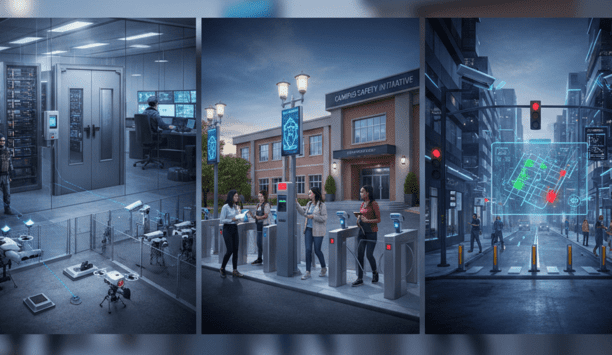
To serve various vertical markets and industries effectively, security professionals must recognise that each sector has unique assets, risks, compliance requirements, and operational needs. Instead of offering a one-size-fits-all solution, security system providers must tailor their products, services, and integration strategies to address the distinct requirements of vertical markets. We asked our Expert Panel Roundtable: Which vertical markets have the greatest growth potential for physical security systems?

Inflation, the rise in prices of goods and services over time, can result from a multitude of factors. It happens when there is more money chasing a limited supply of goods. It happens when the cost of producing and transporting goods increases. It can even happen because expectations of future inflation heighten current demand to avoid higher prices. During and after the COVID pandemic, supply chain disruptions, shifting consumer demand, and government stimulus all contributed to higher inflation throughout the broader economy, including the physical security marketplace. Energy price shocks, particularly oil price spikes in late 2021, also increased inflationary pressures. But what is the situation now? We asked this week's Expert Panel Roundtable: Has price inflation ended (or slowed down) in the security market?

Protecting access control data is a core concept when it comes to safeguarding information assets, maintaining trust, and ensuring smooth operations. Guarding access to data also ensures compliance with regulations, prevents accidental misuse, and streamlines workflows. We asked this week’s Expert Panel Roundtable: What safeguards are in place to avoid unauthorised retrieval of access control data?
Products