Remote security
Excelerate Technology Awarded a Co-funded ESA Contract to Deliver Advanced Robotic Security Solution for UK National Infrastructure Excelerate Technology has been awarded a co-funded contract by the European Space Agency Business Applications and Space Solutions (ESA BASS) program to build and demonstrate an innovative, automated robotic response system for perimeter security at a critical UK national infrastructure site. Critical national infrastructure Co-funded by ESA BASS and supported by...

Cawamo, the developer of the AI-powered VisiGuard™ intelligent remote video monitoring platform, announces that security industry veteran Scott Goldfine has joined the company as Chief Marketing Officer & Strategic Growth Advisor. As CMO, Goldfine will lead Cawamo's global marketing strategy while serving as a strategic advisor to the CEO and executive leadership team. His responsibilities include corporate marketing, global brand development, demand generation, product positioning an...

A sharp rise in the installation of electric vehicle (EV) charging points in rural and underdeveloped areas is creating a dangerous security blind spot that is being exploited by organised crime groups seeking high-value copper cabling. Rural installations of charging ports surged by 45% last year - outpacing the 35% growth seen in urban settings according to recent government data - and are essential for the UK’s 2030 infrastructure goals. However, this rapid roll-out into isolated areas...

Orion Entrance Control, Inc. announces the availability of Orion DataGuard™, the first fully automated, AI-enabled security screening room engineered specifically for modern hyperscale and enterprise data center environments. With the rapid growth of artificial intelligence driving massive increases in compute infrastructure, the demand for physical protection around sensitive server capacity has never been higher. From edge-based remote security to dark data centers and reduction in SOC...

As cable theft continues to plague rail networks, energy systems, construction and utilities sites and vacant commercial properties, First Response Group (FRG) has unveiled FRG Tremors - a breakthrough seismic detection system that senses tampering to both laid cable and cable drums in storage, and tracks stolen cable in real time, giving operators instant visibility over critical infrastructure and the means to respond immediately. FRG Tremors, exclusive to First Response Group in the UK...

Accelleron has signed an agreement with Hyundai Marine Solution (HMS), the aftermarket and digital division of shipbuilder HD Hyundai Group, to enter a strategic cooperation on digital solutions. Two Accelleron solutions will cover engine and turbocharger monitoring and optimisation. Under the partnership, the companies will seek closer integration and further efficiencies across digital tools. These include HD Hyundai Marine Solution's ship management system, Integrated Smart Ship S...
News

Suprema, a global pioneer of AI-based security solutions, announced its participation at GSX 2025, held from September 29–October 1, 2025, in New Orleans, Louisiana, U.S. At booth #1770, Suprema spotlighted BioStar Air, the first and only cloud-based access control platform designed to natively support biometric authentication. Suprema demonstrated how BioStar Air is transforming access control through three core capabilities: zero on-premises architecture, native biometric authentication, and seamless multi-site management. IT complexity and rapid deployment These features reduce IT complexity and enable rapid deployment. BioStar Air also supports a wide range of credentials, including facial authentication, RFID cards, mobile access, and QR codes. Through a single dashboard, accessible via mobile or web, administrators can manage access anytime, anywhere, for a single site or multiple international sites. Integration with third-party systems With BioStar Air, enterprises can scale across multiple sites without the burden of infrastructure costs BioStar Air is designed to address the rapidly growing demand for cloud-native, subscription-based access control in the U.S. market. Organisations, such as coworking offices, residential complexes, franchise chains, and school campuses increasingly require solutions that support scalable deployment, remote management, and stronger compliance with data protection standards. With BioStar Air, enterprises can scale across multiple sites without the burden of infrastructure costs. The platform enables reliable, fast deployment and smooth integration with third-party systems allowing organisations to expand security operations quickly and efficiently. How BioStar Air can reduce complexity “BioStar Air represents the future of access control, delivering cloud-driven security that is simple, scalable, and secure,” said Bob McKee, President of Suprema America. He adds, “At GSX 2025, we are excited to show customers how BioStar Air can reduce complexity, streamline operations, and unlock new levels of agility in security management.”

Artificial Intelligence Technology Solutions, Inc., a pioneer in AI-driven security and productivity solutions, along with its wholly owned subsidiary, Robotic Assistance Devices, Inc. (RAD), announced that it has received initial orders for one RIO™ 360 and one RIO Mini, each with a SARA™ licence, the Company’s multiple award-winning agentic AI platform, from a national heavy equipment auction operator. These first deployments will strengthen security at auction sites where valuable assets are exposed and are expected to serve as the foundation for a broader rollout across the operator’s multiple locations. RAD’s SARA platform RIO 360 and RIO Mini, both powered by RAD’s SARA platform, are designed to provide continuous monitoring This order follows a series of recent orders and deployments that demonstrate increasing demand for RAD’s mobile and stationary security solutions. RIO 360 and RIO Mini, both powered by RAD’s SARA platform, are designed to provide continuous monitoring, real-time detection, and autonomous response in environments where traditional security measures are costly or ineffective. The Company continues to see strong interest from organisations seeking to protect high-value assets and reduce reliance on conventional guard services. Unique security challenges “This order demonstrates how RAD’s solutions are being applied in industries that require protection of valuable, exposed assets,” said Mark Folmer, CPP, PSP, President of RAD. “Auction sites face unique security challenges, and we are pleased to deliver technology that addresses those needs while setting the stage for expansion.” “We are seeing momentum continue to pick up,” said Steve Reinharz, CEO/CTO and founder of AITX and RAD. “We remain focused on executing for our clients, channel partners and shareholders.” Reinforcing RAD’s trajectory With these initial deployments, RAD continues to demonstrate traction across new industries, adding to the Company’s expanding pipeline of opportunities. Management expects additional orders as the operator evaluates deployments across all of its locations, reinforcing RAD’s trajectory of recurring revenue growth. RAD's security guarding and monitoring model RAD delivers these cost savings via a suite of stationary and mobile robotic solutions that complement AITX, through its primary subsidiary, Robotic Assistance Devices, Inc. (RAD), is redefining the nearly $50 billion (US) security and guarding services industry through its broad lineup of innovative, AI-driven Solutions-as-a-Service business model. RAD solutions are specifically designed to provide cost savings to businesses of between 35%-80% when compared to the industry’s existing and costly manned security guarding and monitoring model. RAD delivers these cost savings via a suite of stationary and mobile robotic solutions that complement, and at times, directly replace the need for human personnel in environments better suited for machines. All RAD technologies, AI-based analytics and software platforms are developed in-house. Data protection and security compliance The Company’s operations and internal controls have been validated through the successful completion of its SOC 2 Type 2 audit, which is a formal, independent audit that evaluates a service organisation’s internal controls for handling customer data and determines if the controls are not only designed properly but also operating effectively to protect customer data. This audit reinforces the Company’s credibility with enterprise and government clients who require strict data protection and security compliance. Reinforce RAD’s ability Reinharz serves as chair of the SIA Autonomous Solutions Working Group and as a member of the SIA Board of Directors RAD is led by Steve Reinharz, CEO/CTO and founder of AITX and RAD, who brings decades of experience in the security services industry. Reinharz serves as chair of the Security Industry Association’s (SIA) Autonomous Solutions Working Group and as a member of the SIA Board of Directors. The RAD team also draws on extensive expertise across the sector, including Mark Folmer, CPP, PSP, President of RAD and Chair of the ASIS International North American Regional Board of Directors, Troy McCanna, former FBI Special Agent and RAD’s Chief Security Officer, and Stacy Stephens, co-founder of security robotics company Knightscope ($KSCP). Their combined backgrounds in security industry leadership, law enforcement, and robotics innovation reinforce RAD’s ability to deliver proven, practical, and disruptive solutions to its clients. Next-generation robotic product offerings RAD has a prospective sales pipeline of over 35 Fortune 500 companies and numerous other client opportunities. RAD expects to continue to attract new business as it converts its existing sales opportunities into deployed clients generating a recurring revenue stream. Each Fortune 500 client has the potential of making numerous reorders over time. RAD has a prospective sales pipeline of over 35 Fortune 500 firms and numerous other client options AITX is an innovator in the delivery of artificial intelligence-based solutions that empower organisations to gain new insight, solve complex challenges and fuel new business ideas. Through its next-generation robotic product offerings, AITX’s RAD, RAD-R, RAD-M and RAD-G companies help organisations streamline operations, increase ROI, and strengthen business. Economics of patrolling and guard services AITX technology improves the simplicity and economics of patrolling and guard services and allows experienced personnel to focus on more strategic tasks. Customers augment the capabilities of existing staff and gain higher levels of situational awareness, all at drastically reduced cost. AITX solutions are well-suited for use in multiple industries such as enterprises, government, transportation, critical infrastructure, education, and healthcare.
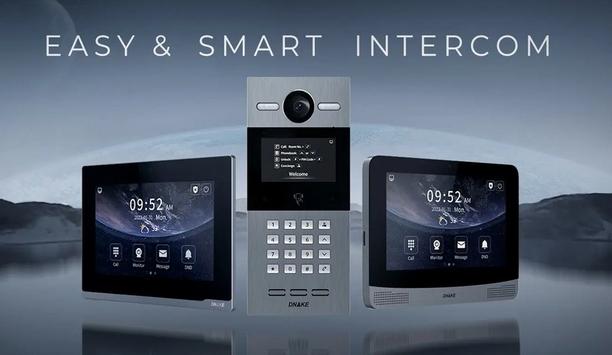
DNAKE announced its four cutting-edge and brand-new intercoms that are designed to fulfill all-scenario and smart solutions. The innovative line-up includes door station S215, and indoor monitors E416, E216, and A416, highlighting its leadership in the inspiring technology. Compatibility and interoperability Following the company’s continued investment in R&D and its in-depth understanding of smart life, DNAKE is committed to delivering the best possible products and solutions. In addition, with its broad compatibility and interoperability with major platforms, like, VMS, IP phone, PBX, home automation, and others, DNAKE’s products can be integrated into various solutions to reduce costs for installation and maintenance. DNAKE S215: SUPERIOR DOOR STATION Human-centric Design: A braille dot on button “5” of the keypad is specially designed to provide easy access Riding on the wave of smart life and empowered by DNAKE’s expertise in the intercom industry, DNAKE S215 is fully committed to offering a human-centric experience. The built-in induction loop amplifier module helps transmit clearer sounds from DNAKE intercoms to visitors with hearing aids. Moreover, a braille dot on button “5” of the keypad is specially designed to provide easy access for visually impaired visitors. These features allow those who suffer from hearing or visual impairments to communicate more easily using an intercom system in multi-tenant facilities, and medical or elder-care facilities. Multiple and Progressive Access: Easy and secure entry is indispensable from the perspective of user experience. DNAKE S215 owns multiple ways of access authentication, DNAKE Smart Life APP, PIN code, IC&ID card, and NFC, to provide reliable access control. Through flexible authentication, users can leverage the combination of various authentication approaches to satisfy different needs. Performance Significantly Improved: With a 110-degree viewing angle, the camera provides a wide viewing range and enables you to know every movement that happens at the door anytime and anywhere. The door station is IP65 rated, meaning it’s designed to withstand rain, cold, heat, snow, dust, and cleaning agents and can be installed in areas where temperatures range from -40ºF to +131 ºF (-40ºC to +55 ºC). In addition to the IP65 protection class, the video door phone is also certified IK08 for mechanical strength. With guaranteed by its IK08 certification, it can easily resist attacks by vandals. Futuristic Design with Premium Look: DNAKE S215 boasts a futuristic aesthetic that achieves clean and modern sophisticated experiences The newly launched DNAKE S215 boasts a futuristic aesthetic that achieves clean and modern sophistication experiences. Its compact size (295 x 133 x 50.2 mm for flush-mounted) fits perfectly in the small space and is well-matched for multiple scenarios. DNAKE A416: LUXURY INDOOR MONITOR Android 10.0 OS for Seamless Integration: DNAKE always keeps a close eye on industry trends and customer needs, dedicated to providing superior intercoms and solutions. Driven by its progressive and innovative spirit, DNAKE dives deep into the industry and unveils DNAKE A416 featuring an Android 10.0 OS, allowing easy installation of third-party applications, such as home automation apps, to work seamlessly with smart home devices. IPS with Crystal-clear Display: DNAKE A416’s display is just as impressive, featuring a 7-inch ultra-clean IPS display to deliver crystal-clear image quality. With the advantages of its fast response and wide viewing angle, DNAKE A416 boasts the best video quality, which is the perfect choice for any luxury residential project. Two Mounting Types to Fit the Needs: It’s become all too easy to tackle the problems and satisfy the needs with surface and desktop mountingA416 enjoys surface and desktop mounting installation methods. Surface mounting allows the monitor to be installed in nearly any room while desktop-mount provides wide applicability and agility of movement. It’s become all too easy to tackle the problems and satisfy the needs. Brand-new UI for Superior User Experience: DANKE A416’s new human-centric and minimalist UI brings a clean, inclusive UI with smoother performance. Users can reach the main functions in less than three taps. DNAKE E-SERIES: HIGH-END INDOOR MONITOR Introducing DNAKE E416: DNAKE E416 features an Android 10.0 OS, which means the installation of third-party applications is much broader and easy. With the home automation APP installed, the resident can turn on the air-conditioning, and lighting or call the lift directly from the display on their unit. Introducing DNAKE E216: When E216 works with the elevator control module, users can enjoy smart intercom and elevator control DNAKE E216 is running on Linux to apply to different scenarios. When E216 works with the elevator control module, users can enjoy smart intercom and elevator control at the same time. Brand-new UI for Superior User Experience: DANKE E-series’ new human-centric and minimalist UI brings a clean, inclusive UI with smoother performance. Users can reach the main functions in less than three taps. Two Mounting Types to Fit the Needs: E416 and E216 all own surface and desktop mounting installation methods. Surface mounting allows the monitor to be installed in nearly any room while desktop-mount provides wide applicability and agility of movement. It’s become all too easy to tackle the problems and satisfy the needs. A step ahead, never stop exploring Learn more about DNAKE and the ways the new member of the IP intercom portfolio can help a family's and business's security and communications needs. DNAKE will continue to empower the industry and accelerate its steps toward intelligence. Adhering to its commitment to Easy & Smart Intercom Solutions, DNAKE will continuously dedicate itself to creating more extraordinary products and experiences.

A well-designed commercial security system doesn’t just deter crime—it also improves operational awareness, safeguards staff, and protects business continuity. At Amax, they begin every project with a detailed consultation to assess vulnerabilities, understand the site layout, and identify the ideal combination of security solutions. Their commercial security system design services include: High-definition commercial security cameras with live and recorded footage Access control and commercial door entry systems with staff and visitor management Intruder alarms with 24/7 monitoring and police response options Fire alarm systems with smoke, heat, and gas detection Integration with existing building management and IT systems From concept to installation, Amax’s engineers ensure every component is expertly fitted, fully tested, and easy to operate. Commercial security cameras Visual surveillance remains a cornerstone of effective commercial security. Amax’s HD and IP-based commercial security cameras provide crystal-clear images, remote access, and intelligent video analytics to help users monitor and manage the premises in real time. Whether users need coverage for entrances, stock areas, perimeters, or communal spaces, their camera systems can be configured for: Motion detection and event-triggered recording Remote viewing on desktops and mobile devices Integration with access control and alarm systems Video analytics for object tracking, facial recognition, and line-crossing detection All footage is stored securely and can be accessed on demand—ideal for resolving disputes, reviewing incidents, or providing evidence if needed. Expert commercial security services & support Amax goes beyond installation—Amax provide end-to-end commercial security services to keep the system performing at its best. Their dedicated team is available for ongoing maintenance, system upgrades, troubleshooting, and rapid-response support when users need it most. Amax also offers: Regular health checks and system audits Remote monitoring through Amax’s 24/7 UK-based centre Software updates and firmware management Technical support and engineer call-outs Whether users are expanding to new premises or upgrading ageing systems, Amax is their trusted partner for reliable, professional commercial security.

In this increasingly connected world, technology has transformed the way people approach safety and security. While on-site security measures such as CCTV cameras and alarm systems have been standard practice for decades, the landscape is rapidly shifting. Central to this evolution is the increasing reliance on remotely monitored systems, which promise enhanced efficiency, coverage, and peace of mind. Traditional security systems These systems provide real-time responses to unfolding events, drastically enhancing security Traditional security systems primarily work as deterrents. They rely on the visible presence of cameras or the knowledge of an active alarm system to dissuade potential threats. However, what happens when these deterrents fail, or when a particularly brazen intruder decides to proceed regardless? This is where off-site monitoring takes the lead. By actively watching and assessing potential threats, these systems provide real-time responses to unfolding events, drastically enhancing security measures’ effectiveness. The power of real-time responses One of the major advantages of off-site monitoring is the immediacy of the response. When an alarm is triggered or suspicious activity is detected, the monitoring centre can instantly assess the situation and respond accordingly. This might involve activating on-site alarms, alerting local law enforcement, or contacting designated key holders. Statistics from the UK Home Office suggest that timely interventions can significantly deter criminal activities, making the role of real-time monitoring even more crucial. Key benefits of off-site monitoring 24/7 surveillance: Remote monitoring offers continuous coverage, ensuring security round-the-clock. This consistent monitoring means that even activities outside of business hours are under scrutiny, providing peace of mind to property owners. Cost-efficiency: Maintaining a full-time on-site security team can be expensive. Remote monitored systems offer comprehensive security at a fraction of the cost, providing both affordability and efficiency. Immediate threat assessment: Upon detecting any irregularities, off-site monitoring teams can swiftly evaluate the situation’s severity, allowing for a more informed and rapid response. Data storage and retrieval: Many remote monitoring services also offer cloud storage solutions, ensuring that recorded footage is safe, easily retrievable, and protected from potential tampering or damage at the physical location. Enhanced safety: Having security responses orchestrated from an off-site location ensures the safety of on-site staff and reduces the risk of confrontations. Integration with modern technologies These technologies can discern patterns, recognise licence plates, and even detect unusual behaviour The true potential of remote monitored systems is realised when they’re integrated with modern technologies. Advanced analytics, artificial intelligence, and machine learning algorithms can predict and identify threats more accurately. These technologies can discern patterns, recognise licence plates, and even detect unusual behaviour, making off-site monitoring even more powerful. The world of remote security is ever-evolving. As new threats emerge, so too do the technologies and strategies to counter them. For users of remote monitored systems, this means continuous upgrades and updates, ensuring that their security measures are always a step ahead of potential intruders. Shift towards off-site monitoring The shift towards off-site monitoring in security represents more than just a technological trend. It’s a response to an increasingly complex threat landscape, where the boundaries between the digital and physical worlds are blurring. By harnessing the power of remote monitored systems, businesses and homeowners alike can enjoy a level of security and peace of mind that was previously unimaginable.

Property managers and residents face mounting challenges in multi-site security management, remote access control, communication gaps, and balancing modern convenience with budget constraints. Cloud-based solutions are revolutionising how residential properties address these universal pain points. Sarah’s phone buzzed at 2 AM. As the property manager for three residential complexes across different cities, she’d grown accustomed to late-night emergencies. This time, it was a locked-out tenant at the downtown apartment building—and Sarah was 50 miles away at home. Meanwhile, across town, the Chen family was dealing with their own frustration: their 8-year-old son had forgotten his key again, and they were tired of constantly worrying about missed visitor calls while at work. Convenience and security These scenarios play out thousands of times daily across apartment buildings. Whether one is a property manager juggling multiple sites or a resident seeking convenience and security, certain pain points seem universal. This blog will explore the worries plaguing both sides, and discover how modern cloud-based management solutions are transforming residential property operations. Property manager’s dilemma Traditional systems require expensive on-site servers for each location, dedicated IT staff, and complex VPN setups Managing multiple residential properties can often feel like playing three-dimensional chess blindfolded. Traditional systems require expensive on-site servers for each location, dedicated IT staff, and complex VPN setups. There are also significant challenges to working remotely. Property managers often need the flexibility to work from anywhere, yet most conventional access control and video intercom systems chain them to physical locations. Emergencies, especially, don’t wait for business hours, and tenants expect immediate responses regardless of time or location. Resident’s reality The same limitations are felt by many residents who have become used to the convenience of modern technologies. Every resident, after all, has experienced that sinking feeling of patting empty pockets while standing at their apartment door. Equally frustrating is missing important calls. Whether it’s a food delivery, emergency services, or a family visiting unexpectedly, conventional intercom systems tie communication to physical presence. Despite these increasing expectations, not every resident has the same budget or renovation flexibility. Smartphone integration The ‘one-size-fits-all’ approach of many systems often leaves some people unsatisfied Young professionals, for example, might prioritise smartphone integration over traditional wall-mounted units, while families with elderly members may prefer more familiar, traditional interfaces. The ‘one-size-fits-all’ approach of many systems often leaves some people unsatisfied. Installation concerns add another layer of complexity. Many residents hesitate to damage finished walls for hardwired systems, especially in rental properties where modifications may violate lease agreements. Cloud-based solution Modern cloud-based management platforms like Hikvision’s Hik-Connect 6 address these challenges with unified, scalable solutions that serve both property managers and residents effectively. Streamlined multi-site operations Instead of maintaining separate servers and IT infrastructure for each property, cloud-based systems centralise management through a single platform. Property managers can monitor multiple residential complexes, create site hierarchies, and handle visitor access from anywhere with internet connectivity. The cost savings are immediate and substantial. Elimination of on-site servers, reduced IT maintenance, and simplified deployment processes translate to better profit margins and more resources for tenant services. Remote management empowers virtual concierge services Cloud-based platforms enable property managers to function as virtual concierge services. They can receive and handle calls from any location through a mobile app. Advanced features, such as temporary PIN codes and QR code access, allow proactive visitor management. Rather than reactive problem-solving, managers can create seamless experiences for expected visitors while maintaining security protocols. Such systems enable property managers to create temporary credentials in advance for scheduled visitors and vehicles—visitors can enter using PIN codes or by scanning QR codes, while visitor vehicles can be automatically recognised by ANPR cameras at entry points, providing both convenience and security. Customised camera resource management Different residents receive tailored monitoring permissions based on their location and needs. For instance, residents in Unit 1, Floor 1 can access different video footage for preview and playback compared to residents in Unit 2, Floor 2. This granular approach ensures that each unit’s residents have appropriate monitoring privileges aligned with their specific security requirements and building layout. System reliability and stability assurance The most robust configurations utilise wired connections between indoor stations and door stations via Ethernet cables, with a PoE power supply for both indoor stations and doorbells. The entire intercom system operates on UPS backup power, ensuring uninterrupted service even during power outages. Door stations with 4G routers maintain cloud connectivity and direct-to-app communication, minimising maintenance requirements and system downtime. Flexible resident solutions Modern systems accommodate different resident preferences and budgets. Tech-savvy residents can manage everything through smartphone apps—receiving calls, viewing common area cameras, and controlling access—without wall modifications. Traditional families, meanwhile, can continue using familiar indoor stations while benefiting from cloud connectivity. Enhanced security and accountability Cloud-based systems provide comprehensive logging and forensic capabilities that traditional systems simply cannot match. Every call, access event, and system interaction creates a digital record accessible for security investigations or operational analysis. This transparency benefits everyone: property managers gain valuable insights into usage patterns and security trends, while residents enjoy the peace of mind from knowing their building’s security systems are both modern and accountable. Unified management Cloud-based systems and AI-driven automation are at the forefront of these changes As residential properties evolve toward smart building status, the divide between property manager needs and resident expectations continues to narrow. Cloud-based systems and AI-driven automation are at the forefront of these changes, with technology adoption standing out among the defining property management trends of 2025. Cloud-based management platforms such as Hikvision’s Hik-Connect 6 represent more than technological upgrades—they’re operational philosophies that prioritise flexibility, efficiency, and user experience. Modern convenience For property managers tired of juggling multiple systems and for residents seeking modern convenience without security compromises, unified cloud-based management offers a path forward that serves everyone’s interests. The global property management software market—valued at $5.51 billion in 2023—is expected to grow at 8.9% annually through to 2030, driven largely by increased demand for cloud-based Software-as-a-Service solutions. Hikvision’s Hik-Connect 6 Solutions like Hikvision’s Hik-Connect 6 enable property management organisations and apartment developments to protect residents and assets at scale through comprehensive cloud-based security management. The question isn’t whether to adopt these solutions, but how quickly you can implement them to stay competitive in an increasingly connected world.

Expert commentary

These days, business is more collaborative, adaptable and connected than ever before. In addition to offering new identities and access privileges, new applications and data also increase the attack surface available to cyber criminals, hacktivists, state actors and disgruntled insiders. These new identities need to be handled carefully. CISOs must develop an identity management strategy that is consistent across on-premises, hybrid and cloud systems. Good security is built on solid identity governance and administration (IGA) principles. From ransomware to supply chain intrusions, high-profile cybersecurity events frequently take advantage of weak identity and access management procedures. The Identity Defined Security Alliance found that 84% of organisations experienced an identity-related breach during its one-year study period. Robust IGA system Consequently, organisations need to find best-of-breed solutions for each section of the fabric Some of the most well-known cyber-attacks have not been made possible by a nation-state exploiting a remote zero-day vulnerability; rather, they have been made possible by something as basic as a hacked orphaned account. This resulted in lateral movement from an insecure platform to a high-value system, illegitimate privilege escalation or unsanctioned access to a computer system. To safeguard against such attacks, organisations must be aware of who has access to their systems and apps, and guarantee that access is revoked when it is no longer required. Here, a robust IGA system is helpful. It is not the whole picture, though; IGA is part of a larger identity fabric. A report by KuppingerCole noted that “Identity Fabrics are not necessarily based on a technology, tool or cloud service, but a paradigm for architecting IAM within enterprises.” The report pointed out that the paradigm is created using several tools and services. That’s because, contrary to marketing claims, no one vendor has a platform that provides all the needed elements. Consequently, organisations need to find best-of-breed solutions for each section of the fabric. Threats to the new corporate landscape Due to their exclusion from the corporate firewall and the security culture that comes with working on-site, remote employees and third parties are desirable targets for hackers. The transition to online office suites is another vulnerability that hackers are taking advantage of–for instance, through bogus authentication login dialogues. Additionally, hackers are using technologies like machine learning and artificial intelligence to circumvent current security tactics. A cyberattack powered by AI will imitate human behaviour and develop over time. Even publicly available information might be used by this "weaponised AI" to learn how to get past a target’s defences. CISO and the business users Attackers will finally find an entryway, but firms can protect the new perimeter–their identities It's no longer possible to secure the traditional perimeter. Attackers will eventually find an entryway, but businesses can protect the new perimeter–their identities. To defeat these threats, organisations must look again at identity and access management tools and how they are weighed against the impact on the organisation. Should you mandate multi-factor authentication (MFA) more often and earlier? Should only company-owned devices have access to networks, or should access be restricted to specific business hours or regions? Should access to sensitive information and critical systems be given just temporarily or should it be offered on a task-by-task basis? Both the CISO and the business users they assist should be asking these questions. Staying ahead of threats with identity Access control limits decrease dangers but can come with a cost. If you give your users too much access, your organisation becomes susceptible; if you give them too little, productivity suffers. But there are ways to strike a balance with security, compliance and productivity. More CISOs are turning to Zero Trust–which is based on the principle of maintaining strict access controls and not trusting anyone by default–to protect their systems from new attack types. However, Zero Trust is reliant upon having a thorough and baked-in strategy that underpins it. Other actions that companies can take include implementing automation for identity management, such as automating workflows for approval. This would significantly lessen the administrative burden and friction that security solutions like multifactor authentication (MFA) or time-restricted access to critical systems have on business users. This might include restricting access to particular devices, capping access hours during the day or enforcing MFA based on user behaviour. Identity fabric: Putting it all together Make sure your identity architecture is scalable, secure, and provides a seamless user experience These are just two elements of the identity fabric approach. Most organisations today have implemented pieces of an identity fabric, which is basically an organisation’s identity and access management (IAM) infrastructure and typically includes a mix of modular IAM solutions for multi-cloud and/or hybrid environments. Now, organisations need to define, enhance and develop this infrastructure. They must also institute guiding principles for how it should operate, meet current and future business requirements as well as identity-related cybersecurity challenges. In doing so, businesses can move past identity platforms and adopt an identity fabric perspective. The key is to make identity governance the starting point of your identity fabric strategy, ensuring seamless interoperability within your identity ecosystem. Make sure your identity architecture is scalable, secure, and provides a seamless user experience. Aligning security with business Due to the increase in knowledge workers using the cloud and working remotely, attackers are focusing on this group. These employees are easier to compromise, give access to valuable data and offer more attack targets. Knowledge workers also lack an administrator’s level of security expertise. Therefore, as part of their security fabric strategy, enterprises require a scalable IGA system. It is easier to comply with security and access regulations and takes less time for IT teams to do normal administrative activities when they invest in IGA, a crucial tenet of identity security. CISOs and boards, though, are currently looking at more than identity management. IGA is at the centre of the debate about security and governance. Taking an identity fabric-based approach, with a foundation built on modern, cloud-based IGA, will safeguard identities, increase productivity, and make staff adherence to organisational procedures easier.

Amidst the challenges of a prevailing economic downturn, the retail sector finds itself grappling with an unparalleled rise in incidents of shoplifting, theft, and burglaries. The disconcerting scenes witnessed on London’s Oxford Street in August 2023, where crowds gathered, looting as many stores as possible, sent shockwaves across the nation’s retailers. This alarming surge in retail crime has put retailers on high alert, as they contend with a rising tide of security concerns. Shoplifting concerns Recent data from the Union of Shop Distributive and Allied Workers (USDAW), has raised alarming concerns: shoplifting rates have surged by an unprecedented 24%. In the first half of 2023 alone, there were approximately 8 million reported shoplifting incidents. With the ongoing burden of the cost of living crisis and the approaching festive season, it is expected that these figures will keep surging. Implementing robust security measures Theft and prevention strategies cost retailers approximately £2 billion in 2021/2022 While more help from the Government to support retail workers and the businesses shoplifters target is certainly needed, the implementation of robust security measures will significantly contribute to deterring these crimes from occurring in the first place. British retailers spend millions on tools to deter and catch shoplifters inside stores, from CCTV and security guards to electronic tagging and alarms. The Grocer reported that theft and prevention strategies cost retailers approximately £2 billion in 2021/2022. Despite these initial costs, other threats are at play beyond the shop floor. Break-ins by criminal gangs For many large town centre stores and supermarkets, and units in retail parks, the rear doors and delivery areas are commonly targeted by criminal gangs. It’s not uncommon for thefts to occur from pallets or cages that have been unloaded from lorries and sit waiting to be moved into the building. After-hours break-ins are a risk for all store owners too, particularly over the festive season when a lot of high-value stock has been delivered to shops and supermarkets. Addressing anti-social behaviour The additional fencing was deemed an essential measure to safeguard the community Anti-social behaviour also poses a challenge for retailers. In 2022, an Aldi based in Derby invested in security fencing to protect staff and deter loitering groups. The additional fencing was deemed an essential measure to safeguard the community, as dangerous items were frequently found outside the store, including weapons and hypodermic needles. So how do physical security solutions such as fencing and gates help better protect retail establishments such as supermarkets and edge-of-town retail park shops? Fencing and gates: a critical component of retail security 1. Risk assessment and target hardening A thorough risk assessment will identify potential weak spots that require protection. ‘Target hardening’ involves implementing physical security measures that become more robust as they approach the target. This helps deter intruders while ensuring ease of access for customers and staff. 2. Effective perimeter security Opt for difficult-to-climb security fencing that provides a robust obstacle against thieves, vandals, and intruders Selecting fencing solutions according to the potential threats, site characteristics, and topography is crucial. It is important to specify fencing that strikes a balance and maintains a welcoming appearance while safeguarding external areas of the store or warehouse from potential harm and unauthorised access. Solid fencing which provides concealment can help to conceal expensive goods and remove them as a target for opportunistic theft. Opt for difficult-to-climb security fencing that provides a robust obstacle against thieves, vandals, and intruders. I recommend selecting a sufficiently tall and robust fence such as an acoustic barrier. Its noise-reducing properties are often beneficial for these types of sites too. 3. Controlling vehicular speeds and access To enhance security, consider controlling vehicular speeds and access. One effective approach is the installation of bollards at the ends of traditional high streets. This practice is already commonplace as a means of safeguarding against hostile vehicle attacks, but it can also play a pivotal role in preventing quick getaways of vehicles involved in potential heists. Additionally, employing road blockers and sliding gates at the rear entrances of delivery areas would serve to fortify security further. These measures can help in delaying vehicles, allowing for necessary checks to be conducted. 4. Balancing security with aesthetics The presence of high-security fencing can also make a site more of a target for vandals and burglars Another challenge is avoiding creating an imposing presence, especially important for areas situated near residential communities. The presence of high-security fencing can also make a site more of a target for vandals and burglars. To minimise this risk consider specifying timber fencing and traffic barriers to secure car parks, providing both security and a welcoming atmosphere for shoppers. Taking an integrated approach Combine secure perimeter fencing with effective lighting in places with shaded areas and at doors, gates, and shop windows, alongside Perimeter Intrusion Detection Systems (PIDS), and strategically placed CCTV. These measures will hinder unauthorised entry and escape, increasing the likelihood of detection and apprehension. Prioritising employee wellbeing Installing robust security fencing, complemented by CCTV, good lighting, and guarding, creates a safe environment Installing robust security fencing, complemented by CCTV, good lighting, and guarding, creates a safe environment for employees. This not only safeguards their well-being but also provides peace of mind that they are protected effectively in the case of a burglary or crime. When selecting security products for retail sites, it is advisable to opt for items that have undergone rigorous testing and carry relevant certifications for their security level. Each component should meet industry-specific standards for its intended purpose and originate from manufacturers accredited under ISO 9001:2015. This ensures a high standard of quality and reliability in safeguarding the premises. High-quality security fencing As the cost-of-living crisis continues, crime rates increase, and the festive season approaches, the time to act and implement on-site security is now. By investing in comprehensive security measures, retailers can protect their assets, employees, and customers, ensuring a safer and more secure shopping environment for all. High-quality security fencing is also a sound investment, that requires little or no maintenance once installed. The best fencing solutions are extremely weather-resistant, and won’t suffer from rust or corrosion. With all sectors preparing to ride the rapids of recession in the coming year, improving on-site security while selecting cost-effective measures, is one surefire way to protect your people, your property, and your profits from harm.
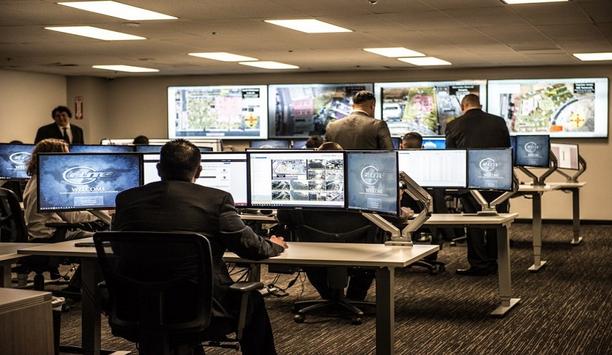
The average business owner or investor has some kind of security precaution in place, especially in the after-hours when there are fewer deterrents to inhibit criminal activity. Security guards, video surveillance systems, motion sensor lights, or even just fake cameras placed around the property are some of the common options people choose. Future of overnight security Smart business owners are starting to realise, however, that some of these traditional security measures are becoming antiquated and no longer cutting. The now and future of overnight security is in remote guarding. Pioneered by companies like Los Angeles-based Elite Interactive Solutions, which was founded back in 2007, remote guarding is revolutionising the overnight security business. Minimising criminal activity Remote guarding is fast becoming the most popular choice among commercial end-user property owners Remote guarding utilises a combination of cutting-edge technology, “digital guards,” highly trained security agents, and local law enforcement if and when necessary to minimise the potential of criminal activity. For those adequately enlightened to its overwhelmingly impressive crime prevention capabilities, remote guarding is fast becoming the most popular choice among commercial end-user property owners to secure and protect their investments. What Is remote guarding? Remote guarding is a revolutionary concept and increasing trend in security systems that utilises a combination of methods to effectively analyse potential threats to property. Cameras and/or other monitoring devices running highly advanced algorithmic software are installed in strategic areas or vulnerable places onsite and remotely located security agents are immediately notified of any activity within a designated perimeter of the property. A blend of AI, cybersecurity, and video analytics When properly deployed by an expert provider, the technology stack includes a proprietary blend of video analytics, artificial intelligence, cybersecurity, and more. Done right, “noise” is effectively filtered out, allowing agents to act on legitimate alerts and achieve zero false alarms communicated to first responders. Today, there are a lot of terms and descriptions tossed around about remote guarding, remote video, virtual guarding, etc., but those attributes must be present to represent the true definition of the offering and its many virtues. Realtime situational awareness Many systems have a two-way speaker that allows the security agent to give a verbal warning When specially trained security agents are alerted to trespassers, possible intruders, or other suspicious activity, they analyse the situation in real-time and determine the necessary level of action. Many systems have a two-way speaker that allows the security agent to give a verbal warning, known as a voice-down, to the individual(s) that they are being watched. Most perpetrators, often believing the response is emanating directly from security personnel on the property itself rather than from a remote command centre, flee immediately. However, if the threat persists, the security agent enlists local law enforcement to get on the scene. Customised remote guarding When properly deployed, remote guarding systems are also customised to specific properties. A team of consultants visits the client’s property to evaluate its vulnerabilities and where to best place cameras and/or other monitoring devices for system efficacy. Traditional security shortfalls According to Keith Bushey, a retired commander for the Los Angeles Police Department, there is much frustration between law enforcement officers and potential victims of crime due to the historically unreliable performance of traditional burglar alarm systems and central monitoring stations. He states about 90% of security-related calls are false alarms, a problem that has been well-documented through the years. Onsite challenges When a legitimate emergency does occur, the perpetrators have often already done their damage When a legitimate emergency does occur, the perpetrators have often already done their damage and/or escaped by the time law enforcement arrives. Onsite security guards are not the remedy either as they bring their own set of issues and challenges. Unexpected costs Traditional security systems can also have unexpected costs. The cost is not only in the security guards’ paycheck or the cost of the equipment itself. The cost comes when an actual incident occurs. In worst-case scenarios, the security guard(s) are injured, the business suffers inventory loss, and/or damage is sustained to the property. The medical and other costs for the security guard(s), the loss of inventory, property damage, deployment of law enforcement resources, and possible fallout of legal expenses all add up. Even in the best-case scenario, false alarm expenses incur if law enforcement is dispatched. These, among many others, are some of the primary issues that remote guarding resoundingly answers as a superior alternative. A bounty of benefits Remote guarding systems have been proven to cut costs and be more effective than traditional security systems. Even though the monthly monitoring costs of remote guarding are significantly higher than traditional intrusion detection system monitoring, the much higher effectiveness in crime reduction, elimination of false alarms, and augmenting or replacement of manned guards result in a substantially higher return on investment (ROI) to the end user. Easy tracking of threats The security cameras already have their image captured on record, making them easier to track down For example, case studies have demonstrated reduced security costs for clients by 60%, on average. These reductions have come from the costs of security staff, inventory, or property loss, plus saving money on insurance premiums and deductibles. The nature of remote guarding reduces the risk and costs of false alarms, with professional security agents able to determine an actual threat before law enforcement is called. In a rare instance when a perpetrator escapes before law enforcement arrives or can detain the individual(s), the security cameras already have their image captured on record, making them easier to track down and identify. Reduction of false alarms The significant reduction in false alarms is greatly appreciated by law enforcement, as it allows them to focus on real emergencies or crises. Better relationships are also developed between clients and law enforcement, as remote guarding systems are highly reliable in providing accurate and real-time information to officers as they approach the scene. In short, it assists law enforcement in doing their job more effectively, as well as more safely thanks to having eyewitness information before engaging in an active crime scene. Partnership When you combine the decreased cost with the increased efficiency and success rate, it is easy to see why many commercial end-user property owners across the country are making the shift to remote guarding. It’s also an outstanding opportunity for professional security dealers and integrators to partner with a remote guarding services provider to bring a superior solution to their end customers and pick up a recurring monthly revenue stream in the process.
Security beat

Security applications for drones have evolved to provide benefits such as bird's-eye views of large areas, easy access to remote locations, and rapid deployment. However, to date, most drone applications have been outdoors. Not for long. Today, indoor drones are also finding unique opportunities for enhanced surveillance, security, and operational efficiency in indoor environments such as offices, warehouses, self-storage facilities, and malls. Indoor drones can navigate complex indoor spaces, providing real-time data and monitoring without the limitations of fixed cameras. New era of autonomous robotics A significant advantage of using drones indoors, as opposed to outdoors, is their ability to operate fully autonomously, circumventing U.S. Federal Aviation Administration (FAA) regulations that restrict such autonomy in outdoor environments. A new era of autonomous robotics enables drones to work seamlessly for users without the need for specialised flight training. A single security manager can oversee multiple indoor drones simultaneously with simple map clicks or prompts. A new era of autonomous robotics enables drones to work seamlessly for users Indoor monitoring and inspection Indoor Robotics is a company seeking to revolutionise indoor monitoring and inspection through its Control Bridge platform guiding indoor drones. Since its founding in 2018, Indoor Robotics has evolved through years of market engagement and product development. After initially recognising a demand for autonomous indoor monitoring, the company found that existing hardware fell short. “However, we understood the challenges of full autonomy and knew we would solve it using drones,” says Bar Biton, Marketing Manager of Indoor Robotics. Indoor Robotics has evolved through years of market engagement and product development Hardware challenges Seven years later, with the hardware challenges addressed, the company is shifting focus to continually increasing value for security managers, especially with generative AI (artificial intelligence). In 2018, the problem was charging methods, which has been solved with ceiling docking stations and five patents. “Today it’s about making indoor environments safer and even saving lives by identifying blocked emergency exits, missing safety gear, leaks, fire hazards and more,” says Biton. While indoor navigation presents challenges—such as the unreliability of GPS and the need for precision — Indoor Robotics has dedicated significant resources to achieve centimeter-level accuracy and ensure the utmost safety, maintaining a record of zero safety incidents to date, says Biton. Indoor navigation presents challenges—such as the unreliability of GPS and the need for precision Advanced AI-driven navigation systems Navigation challenges for indoor drones include manoeuvering through confined spaces, avoiding obstacles, and maintaining stable flight in varied lighting conditions. To address these, Indoor Robotics employs advanced AI-driven navigation systems, real-time 3D mapping, and robust obstacle avoidance technologies. These solutions enable drones to adapt to dynamic environments, ensuring precise and safe navigation. Additionally, the Control Bridge platform provides real-time data and monitoring, allowing drones to adjust their routes and respond to changing conditions effectively, thus enhancing their operational reliability. Highly versatile indoor drones find applications across numerous vertical markets such as retail, logistics, healthcare, and corporate settings. Key use cases encompass security surveillance, where drones monitor premises continuously; maintenance checks, especially in hard-to-reach areas; safety inspections to comply with regulations and company policies; and emergency response to provide real-time data during incidents. In warehouses, drones efficiently inspect high shelves. Healthcare facilities and data centres use them to oversee restricted zones. Additionally, corporate offices employ drones to automate after-hours security, safety and maintenance routines. Indoor Robotics employs advanced AI-driven navigation systems, real-time 3D mapping, and robust obstacle-avoidance technologies Alerts to the remote management team One Indoor Robotics client, a global tech company, deploys drones to enhance site surveillance and operational efficiency across six offices in three countries. The drones conduct regular security patrols after-hours, monitor facility activities, and ensure compliance with safety standards. This deployment has significantly improved the overall safety and security of their offices. The drones provide real-time alerts to the remote management team, enabling prompt responses to any anomalies, such as maintenance issues or unauthorised access. “The key advantage is the unified security standard provided by our Control Bridge operating system, allowing them to oversee all their sites from one centralised platform, ensuring consistent security management across all locations,” says Biton. When indoor drones co-exist with human workers, primary challenges include ensuring safety and preventing disruptions. Drones are equipped with advanced sensors and AI-driven obstacle avoidance systems to detect and navigate effectively around people. Strict operational protocols and designated flight paths are implemented to minimise interactions. Additionally, many drone operations are scheduled for after-hours to further reduce potential disruptions. “Safety is our top priority, and we invest significant resources to ensure it,” says Biton. “We are proud to report zero safety issues to date, reflecting our commitment to maintaining a secure environment for both drones and human workers.” Deploys drones to enhance site surveillance and operational efficiency across six offices in three countries Implementation of indoor drones Indoor drones are significantly more cost-effective and affordable when compared to traditional security methods like additional cameras, sensors, manpower, and even ground robots, says Biton. They cover larger areas and provide dynamic surveillance in less time, offering real-time data collection and enhanced flexibility. Unlike cameras or ground robots, drones eliminate blind spots and adapt to environmental changes autonomously. They also offer substantial indirect savings by optimising maintenance routines, according to Indoor Robotics. For instance, a drone can instantly identify issues in hard-to-reach areas, allowing for immediate, targeted responses, instead of requiring an inspector first and then a technician, thus streamlining maintenance processes. “The biggest obstacle to greater implementation of indoor drones is education and awareness,” says Biton. “Many people are not yet exposed to the concept of autonomous indoor drones and may find it hard to believe they really work.” To overcome this, Indoor Robotics focuses on creating awareness and educating customers about the reliability and benefits of the technology. Demonstrations, case studies, and clear communication about the capabilities and safety of drones are key. By showcasing successful implementations and providing hands-on experiences, Indoor Robotics seeks to build trust and drive wider adoption of indoor drone technology in security applications. Control Bridge operating system Drones are designed with strict privacy controls and advanced AI to ensure they respect privacy norms A common misconception is that indoor drones are intrusive and pose significant privacy risks. However, drones are designed with strict privacy controls and advanced AI to ensure they respect privacy norms. They operate primarily during off-hours and are programmed to avoid sensitive areas, focusing solely on enhancing security and operational efficiency. The solution also includes rigorous data protection measures to safeguard any collected information, ensuring compliance with privacy regulations and addressing concerns effectively. Soon, automation will become integral to tasks across all facility types, from manufacturing and logistics to retail and office spaces. Using Indoor Robotics’ Control Bridge operating system, facility managers will deploy fleets of robots to identify issues, collect data, and gain insights to enhance operations, maintenance, and safety. Facilities will benefit from 24/7 AI-driven monitoring, eliminating the need for occasional surveys. Managers will receive immediate alerts for any anomalies, with preventive maintenance tasks seamlessly integrated into building management platforms, ensuring optimal performance and safety. New standards in the industry The Indoor Robotics platform-agnostic approach provides flexibility and scalability. “As we continue to evolve, we support more and more platforms, enabling our clients to tailor their indoor monitoring solutions to their specific needs,” says Biton. “We believe that the future of security lies in intelligent, automated systems that can adapt to dynamic environments and provide real-time insights,” says Biton. Indoor Robotics seeks to be at the forefront of this transformation, setting new standards in the industry and paving the way for a safer, more efficient future.

ISC West 2024 mirrored a vibrant industry on the precipice of accelerated change. Factors such as the cloud, artificial intelligence (AI), edge computing, and biometrics are shaping the future of the security marketplace, and they were front-and-centre at the industry’s biggest U.S. show in Las Vegas. Foot traffic was steady and impressive, including more than 29,000 security industry professionals viewing 750 exhibitors. A torrent of eager attendees crowded the lobby on the first day and could not wait for the doors to open. When they were admitted, the wealth of technological innovation and business opportunity did not disappoint. Focus on cloud systems Cloud systems were high-profile at ISC West. Camera manufacturer Axis, for example, introduced their Axis Cloud Connect at a press conference. Meanwhile, Genetec officially launched their Security Centre SaaS platform, which aims at eliminating points of friction to enable integrators to easily embrace cloud systems from quoting and ordering to provisioning and installing. Camera manufacturer Axis, for example, introduced their Axis Cloud Connect at a press conference Cloud provider Eagle Eye Networks promoted their new “Eagle Eye 911 Camera Sharing” technology under which both non-Eagle Eye Cloud VMS customers (via Eagle Eye 911 Public Safety Camera Sharing) and Eagle Eye customers can opt to share their video feeds for use by 911 operators in case of emergency. If users opt-in, 911 operators can have access to live video as an emergency unfolds. Eagle Eye Networks provides the feature by integrating with RapidSOS call centre software. Camera locations are based on geolocation coordinates, and customers can choose if they want to participate and which cameras they want to share. Biometrics in the mainstream Biometrics were well represented at ISC West, including Alcatraz AI, which introduced an outdoor version of their biometric face recognition product. The Rock X works well despite harsh lighting. Alcatraz’s products do not have to be integrated, they communicate just like a card reader using OSDP or Wiegand protocol. “At the show, customers are excited about moving to a frictionless environment and getting rid of existing credentialing,” said Tina D’Agostin, CEO and co-founder of Alcatraz. “We are making access control frictionless, secure and private. The experience can be as passive as possible – people can just walk in.” Multiple types of authentication, and the ability to detect tailgating and stream video SAFR from Real Networks also featured biometric face recognition, emphasising feature sets, convenience, and price/performance. They offer multiple types of authentication, and the ability to detect tailgating and stream video. A new device is a small mullion mount that is “approaching the price of a card reader, factoring in the need to purchase cards,” said Brad Donaldson, Vice President and General Manager. SAFR focuses on convenience: You don’t have to take out your phone to pass through a door. Enrolment is easy by incorporating existing databases, and costs are lower than competitors, said Donaldson. The system analyses multiple points on the face, turns it into data and then encrypts it, providing a “unique signature for each person.” Credentials in Apple Wallet and Google Wallet AMAG Technology announced the compatibility of credentials with the Apple Wallet and Google Wallet. The company is also embracing a new strategic direction under President David Sullivan. They launched a new website in January, are developing dynamic resources and a partner page, and they now integrate with 120 tech partners. AMAG Technology Financial Services now enables their channel partners to offer leasing and financing options to customers. The big new booth at ISC West reflected an effort to “market different and look different,” according to the company. The big new booth at ISC West reflected an effort to “market different and look different" The new Symmetry Control Room, a command-and-control system, is a relaunch of an earlier AMAG product with enhanced features. Suitable for large enterprise customers, the software enables a big video wall to display all the various systems and incorporates all the data into a single “pane of glass.” Operators can “draw a lasso” around cameras they want to display on the video wall and can follow action across multiple camera feeds. Navigating megatrends A breakfast meeting for integrators, sponsored by Assa Abloy Opening Solutions, was built around the theme “Navigating Megatrends for Sustainable Growth." The megatrends are artificial intelligence, sustainability and cybersecurity. Related to cybersecurity, there are 350 common vulnerabilities and exposures (CVE) published per week, reflecting the continuing threat to cybersecurity. Physical security has a “data lake” of information from various physical security systems that can be an attractive target for cybersecurity breaches. Data sets can be exploited and/or poisoned. The security industry needs to apply “defence in depth” to the challenges of protecting data. “The threat landscape is always changing, and security technology is an iterative process,” said Antoinette King, i-PRO’s head of cyber convergence, one of the panellists. Natural language systems Natural language systems are a newer approach making an early appearance at ISC West Natural language systems are a newer approach making an early appearance at ISC West. Brivo, for example, has an early prototype of its “natural language search capabilities” that can answer questions such as “Who is in the office?” or “Where is Bob and what has he done?” Brivo also promoted its all-in-one door station device that combines a card reader and a camera (for facial authentication) and serves as a video intercom, thus eliminating the need for multiple devices at the door. Brivo is also emphasising tailgate prevention, facial authentication, and people counting using AI at the edge. Also promoting natural language systems was Verkada, which unveiled a beta version of its AI Search feature that embraces national language capabilities. With AI Search, users will soon be able to use natural language to search for people or items. For example, a search could be “person climbing over a fence” or “person making phone call” or “person wearing football jersey.” Verkada wants to be thoughtful with the rollout and make sure effective guardrails are implemented to prevent abuse and bias. The release should happen in the coming months. Multi-family applications Allegion is promoting the XE360 hardware lock platform in various formats, including cylindrical lock, mortise lock, deadbolt and exit trim. At the show, Allegion noted an enthusiasm for multi-family applications. “We have been surprised by the people who want to add electronics and to retrofit existing multi-family facilities to compete with newer facilities,” said Henry “Butch” Holland, Allegion’s Regional Director, Channel Sales East Region. Allegion works with 60 different physical access control software providers, including familiar players such as LenelS2 and Genetec Allegion also offers an “indicator” display on its locks, showing at a glance whether a door is locked or unlocked. The “indicator” might also display “occupied” or “vacant.” Allegion works with 60 different physical access control software providers, including familiar players such as LenelS2 and Genetec. Integrator M&A trends Everon looks for acquisitions in areas where they do not currently have support for national accounts A conversation with Everon at ISC West provided insights into the accelerating trend of mergers and acquisitions among the integrator community. Everon, formerly ADT Commercial, has done six acquisitions of local integrators since they changed their name last year. In targeting companies to acquire, they look for a good company with a good reputation, and they consider how the new company’s competencies complement their own. Some M&A strategy is geographic, as Everon looks for acquisitions in areas where they do not currently have support for national accounts. They also consider density, seeking to add new acquisitions in larger markets where they don’t currently have a big market share. “A lot of investment is coming into security because it is seen by investors as recession-proof,” said Michael Kennedy, VP, Mergers and Acquisitions, for Everon. Kennedy met with 95 businesses last year for possible acquisition, and the company only finalised a handful – reflecting that Everon is selective and careful that corporate cultures are aligned. “With an acquisition, the goal is to keep every customer and every employee,” said Kennedy. Voice of the customer ISC West provides an opportunity for manufacturers to listen to the “voice of the customer;” in person, no less. “We have every kind of problem come to the booth,” commented Heather Torrey, Honeywell’s General Manager, Commercial Security, Americas. “People are passionate, interested and very specific with their questions and comments,” she said. “We are driving a complete system, but we are flexible, helping our customers to meet their needs and not try to fit every foot into the same shoe. Sometimes meeting customer needs involves working with competitors," Torrey commented. “It truly comes back to listening to the customer, not just ‘this is what we have to offer,’” she adds. ISC West provides an opportunity for manufacturers to listen to the “voice of the customer;” in person, no less. Edge applications are everywhere at ISC West, and one company is promoting a new approach to expand functionality at the edge. Camera company i-PRO advocates the use of the “Docker” platform for app development, an option they offer on their cameras. Docker “containers” package deep-learning algorithms to make it easier to embed software into edge devices. Anyone can run Docker apps on i-PRO cameras that use the powerful Ambarella chip. A Docker “swarm” can combine multiple edge devices to work together and share resources. For example, the approach can increase computing power at the edge to increase the capabilities of instant analytics. It’s faster and provides better redundancies. A “distributed computing platform” ensures less latency than communicating analytics to a central server. Unification of capabilities Johnson Controls (JCI) also promotes the trend of combining multiple systems into a single pane of glass. Their “Open Blue” platform, with a security version unveiled at the show, integrates various security systems into one, combining data and monitoring device health. Basically, the system manages all resources holistically. JCI also notes a trend toward “unification of capabilities,” e.g., combining access control and video. “The scope of security is evolving from a focus on protection to a broader focus on operations,” commented Julie M. Brandt, JCI’s President, Building Solutions North America.

Fueled by mounting concerns about the cybersecurity vulnerability of U.S. ports, President Joe Biden has signed an Executive Order aimed at shoring up defences against cyberattacks. Cybersecurity initiative The cybersecurity initiative marks a significant shift in policy, empowering key agencies and outlining concrete actions to bolster defences. By empowering agencies, establishing clear standards, and fostering collaboration, the initiative aims to strengthen U.S. ports against the evolving threat of cyberattacks, safeguarding the nation's maritime economy and national security. Expanded authority for DHS The proactive approach aims to prevent incidents before they occur The Executive Order grants expanded authority to the Department of Homeland Security (DHS) and the Coast Guard to address maritime cyber threats. DHS gains the power to directly tackle these challenges, while the Coast Guard receives specific tools. The Coast Guard can compel vessels and waterfront facilities to address cyber vulnerabilities that endanger safety. The proactive approach aims to prevent incidents before they occur. Real-time information sharing Reporting any cyber threats or incidents targeting ports and harbors becomes mandatory. This real-time information sharing allows for swifter response and mitigation efforts. The Coast Guard also gains the authority to restrict the movement of vessels suspected of posing cyber threats. Inspections can be conducted on vessels and facilities deemed risky. Mandatory cybersecurity standards The standardisation aims to eliminate weak links in the chain and prevent attackers from exploiting Beyond these broad powers, the Executive Order establishes foundational elements for improved cybersecurity. Mandatory cybersecurity standards will be implemented for U.S. ports' networks and systems, ensuring a baseline level of protection across the board. This standardisation aims to eliminate weak links in the chain and prevent attackers from exploiting individual vulnerabilities. Importance of collaboration and transparency Furthermore, the initiative emphasises the importance of collaboration and information sharing. Mandatory reporting of cyber incidents fosters transparency and allows government agencies and private sector partners to work together in mitigating threats. Additionally, the Executive Order encourages increased information sharing among all stakeholders, facilitating a unified response to potential attacks. Maritime Security Directive The Executive Order encourages investment in research and development for innovative cybersecurity solutions To address specific concerns, the Coast Guard will issue a Maritime Security Directive targeting operators of Chinese-manufactured ship-to-shore cranes. This directive outlines risk management strategies to address identified vulnerabilities in these critical pieces of port infrastructure. The long-term success of this initiative hinges on effective implementation. The Executive Order encourages investment in research and development for innovative cybersecurity solutions, recognising the need for continuous improvement and adaptation to evolving threats. Recognising the urgency of cyber threats The initiative has been met with widespread support from port authorities, industry stakeholders, and cybersecurity experts who recognise the urgency of addressing cyber threats. However, some concerns exist regarding the potential burden of complying with new regulations for smaller port operators. Effective communication, resource allocation, and collaboration among all stakeholders will be crucial to ensure the successful implementation of this comprehensive plan. Enhancing cybersecurity The more impactful and noteworthy piece is the associated NPRM from the U.S. Coast Guard (USCG) “This Executive Order is a positive move that will give the U.S. Coast Guard (USCG) additional authority to enhance cybersecurity within the marine transportation system and respond to cyber incidents,” comments Josh Kolleda, practice director, transport at NCC Group, a cybersecurity consulting firm. The more impactful and noteworthy piece is the associated Notice of Proposed Rulemaking (NPRM) from the U.S. Coast Guard (USCG) on “Cybersecurity in the Marine Transportation System,” adds Kolleda. Portions of the notice of proposed rulemaking (NPRM) look similar to the Transportation Security Administration (TSA) Security Directive for the rail industry and the Emergency Amendment for the aviation industry. Coordinating with TSA on lessons learned The USCG should be coordinating with TSA on lessons learned and incorporating them into additional guidance to stakeholders and processes to review plans and overall compliance, says Kolleda. “At first glance, the NPRM provides a great roadmap to increase cybersecurity posture across the various stakeholders, but it underestimates the cost to private companies in meeting the requirements, particularly in areas such as penetration testing,” says Kolleda. Cyber espionage and threats The focus is on PRC because nearly 80% of cranes operated at U.S. ports are manufactured there “It is unclear if or how the federal government will provide support for compliance efforts. As this seems to be an unfunded mandate, many private companies will opt for the bare minimum in compliance.” “Cyber espionage and threats have been reported by the Director of National Intelligence from multiple nation-states including China, Russia, and Iran,” adds Paul Kingsbury, principal security consultant & North America Maritime Lead at NCC Group. The focus here is on the People’s Republic of China (PRC) because nearly 80% of cranes operated at U.S. ports are manufactured there, he says. Destructive malware “The state-sponsored cyber actors’ goal is to disrupt critical functions by deploying destructive malware resulting in disruption to the U.S. supply chain,” says Kingsbury. “These threat actors do not only originate in China or other nation-states but also include advanced persistent threats (APTs) operated by criminal syndicates seeking financial gain from such disruptions." "The threat actors don’t care where the crane was manufactured but rather seek targets with limited protections and defences. The minimum cyber security requirements outlined within the NPRM should be adopted by all crane operators and all cranes, regardless of where they are manufactured.” PRC-manufactured cranes Kingsbury adds, “The pioneering risk outlined in the briefing is that these cranes (PRC manufactured) are controlled, serviced, and programmed from remote locations in China." "While this is a valid concern and should be assessed, there are certainly instances where PRC-manufactured cranes do not have control systems manufactured in PRC. For example, there are situations in maritime transportation system facilities where older cranes have been retrofitted with control systems of European Union or Japanese origin.” Monitoring wireless threats “The Biden Administration’s recent Executive Order is a critical step forward in protecting U.S. ports from cyberattacks and securing America’s supply chains,” says Dr. Brett Walkenhorst, CTO at Bastille, a wireless threat intelligence technology company. “To ensure proper defence against malicious actors accessing port-side networks, attention must also be paid to common wireless vulnerabilities." "Attacks leveraging Wi-Fi, Bluetooth, and IoT protocols may be used to access authorised infrastructure including IT and OT systems. Monitoring such wireless threats is an important element in a comprehensive approach to upgrading the defences of our nation’s critical infrastructure.”
Case studies

Keeping beachgoers, swimmers and surfers safe is all in a day’s work for the team at South Maroubra Surf Live Saving Club, and every second counts when an incident unfolds on the water. One of the most topical issues and threats to those enjoying Australia’s world-renowned beaches is sharks, so for the surf club it made sense to look to smart, new technology to keep those who enjoy the sand and surf safe. Security technology to lifesavers "Since the club was established in 1959, we’ve prided ourselves on looking out for people at our iconic beach. More recently, we’ve turned to security technology to support our lifesavers to do what they do best: stay alert for hazards," says Simon Torsellini, Director of Lifesaving, South Maroubra Surf Life Saving Club. He adds, "Sharks along with surf conditions represent two of our biggest national hazards on popular beaches, so it’s of critical importance to get people out of the water as quickly as possible when a circumstance evolves." Evacuation of beach users Simon Torsellini continues: "To achieve a prompt evacuation of beach users from the water, an alert system such as an audible siren is the most effective tool. To sound a siren at South Maroubra, the club relies upon a manual switch that triggers an audible alarm across the beach, better known locally as the Shark Siren." He further states, "Like many other surf lifesaving clubs, we have our club house situated back from the shoreline. What this means is that in the event of a hazard detection, a lifesaver is dispatched from the beach to the club house to activate the audible siren - losing precious moments to alert those at risk." Recent mass rescue conditions As a result of a recent mass rescue where surf needs threatened swimmers and all lifesaving resources As a result of a recent mass rescue where surf conditions threatened swimmers and all lifesaving resources were in the water, no lifesavers were available to activate the siren, and the team recognised a solution was needed. Andrew McCabe, a surf lifesaver at the club and Director Government and Defence, Pacific at Johnson Controls, spoke to Gallagher Security about a smarter way to raise the all-important shark siren. SMB solutions After initially working with the club in 2023, Gallagher Security’s Sales Solutions Engineer - NSW, Sabrish Venugopal, was pleased to work together again and find a way to further support the hardworking lifesavers and volunteers at South Maroubra Surf Life Saving Club. "Alongside our Channel Partner, Johnson Controls, we were proud to gift the club one of our Security Made Better (SMB) solutions as a joint community initiative," says Sabrish Venugopal. Next-generation cloud-based system SMB is a cloud-based security app that simplifies everyday business tasks with plenty of functionality SMB is a cloud-based security app that streamlines everyday business tasks with plenty of functionality: from managing alarms, responding to security incidents and controlling site access. The SMB app provided the club with security and access control through a next-generation cloud-based system that can be easily managed from a smartphone. Idea of using the SMB system "As a member of the club, Andrew floated the idea of using the SMB system to trigger the shark siren, in a first for Gallagher Security," says Sabrish Venugopal, adding "We joined forces and two weeks later, we had a game-changing solution for South Maroubra Surf Life Saving Club." He continues, "Now, lifesavers on surf patrol duty can launch the shark siren immediately via their smartphones if required, to help evacuate beach users from the surf faster." Key role in enhancing security efficiency Gallagher Security team genuinely enjoys engaging with end users to discuss any challenges Sabrish says the Gallagher Security team genuinely enjoys engaging with end users to discuss any challenges they may be facing, with the aim of developing tailored solutions. They also value close collaboration with channel partners like Johnson Controls, who have a deep understanding of Gallagher Security products and play a key role in enhancing security efficiency. How security solutions can make such a positive difference? Sabrish Venugopal said, "We take great pride in playing our part to support the club keep Aussies safe at the beach." He concludes, "We’re chuffed to have helped the club continue their dedicated service to keeping South Maroubra Beach safe by using Gallagher’s SMB, and to see how security solutions can make such a positive difference to our daily lives."

Genetec Inc., the global pioneer in enterprise physical security software, has announced that Binghamton University, a nationally recognised research institution and one of the four university centres of the State University of New York system (SUNY), has successfully implemented the Genetec™ Security Center platform to unify its security systems, streamline operations, and better support the safety of its expanding campus community. Binghamton University selects Genetec Spread across 930 acres with over 120 buildings and four locations, Binghamton University faced increasing challenges with its legacy security infrastructure, which consisted of siloed video, access control, intrusion detection, and mass notification systems. These disconnected technologies made it difficult for staff to respond to incidents in real-time, introduced security gaps, and required inefficient manual processes to bridge system limitations. Genetec Security Center platform Binghamton chose the Genetec Security Center platform, including Synergis™ (access control), Omnicast™ (video management), AutoVu™ (automatic license plate recognition (ALPR)), Sipelia™ (intercom), and Genetec Clearance™ (digital evidence management), to centralise its security operations. With more than 4,800 access control readers and 1,635 surveillance cameras now integrated into a single interface, the university has seen immediate improvements in both efficiency and incident response. Benefits “With Genetec, we’ve eliminated the inefficiencies of siloed systems and gained the tools to respond faster, work smarter, and plan for the future,” said Dave Martin, Assistant Director of Security Infrastructure and Support at Binghamton University. He adds, “Our teams are now equipped with real-time video analytics that enable operators to monitor unplanned gatherings and assess if the situation is a permitted activity or needs to be addressed. Most importantly, we’ve created a safer environment for our students and staff.” More security enhancements on the way Binghamton University plans to continue its security enhancements, including replacing nearly 3,000 residential hall locks with Wi-Fi-enabled, mobile-ready readers and expanding mobile credential adoption for students. The university is also evaluating drone-based emergency response, audio analytics for early threat detection, and space utilisation insights enabled by video analytics.
Founded in 2020 by a team of energy professionals in Milan, Sunprime is a fast-growing independent renewable energy producer that develops sustainable photovoltaic plants across Italy. Their focus is mainly commercial and industrial (C&I) segment, ground-mounted systems on industrial land and industrial electricity storage systems. Challenges With global initiatives toward green sustainability and carbon neutrality, the demand for photovoltaic power generation construction is growing rapidly. Sunprime's project pipeline currently consists of several projects, many of which are located in very remote and often unattended areas (e.g., Maleo, Lodi Province), making it vulnerable to thieves that steal valuable cables and panels. Securing the vast area of photovoltaic plants requires a comprehensive surveillance system that can monitor the site at all times. Solution Dahua and Sunprime enabled the project team to come up with an effective design The technical and commercial partnership between Dahua and Sunprime enabled the project team to come up with an effective design, implement cutting-edge technologies and pay great attention to the positioning of the cameras. In order to safeguard one of the client’s solar power plants covering approximately 70,000 m2, more than 1,500 hybrid cameras (thermal cameras + traditional cameras) equipped with AI algorithms were deployed around the area, actively monitoring for potential intrusion 24/7. These state-of-the-art Dahua products can stably operate even under harsh weather conditions, making them ideal for outdoor applications. They are equipped with advanced AI algorithms capable of generating accurate alarms while filtering out false positives, which makes monitoring more efficient and more convenient for the client. Dahua AirShield wireless alarm system In addition, through fibre optics, the video steam from the cameras are sent to the technical rooms in the solar park via Dahua’s industrial switches. The signals are then managed by another row of switches and finally transmitted to high-resolution recorders. The Dahua AirShield wireless alarm system was also installed in each technical room in the park, providing another level of protection for the central equipment. What’s more, all the systems of Sunprime’s solar parks are now centralised through local routers thanks to the Dahua DSS management software installed in the surveillance operations centre. Results Dahua has assisted Sunprime from pre-sale stage to the implementation of the products Sunprime’s solar power plant has witnessed how Dahua’s thermal perimeter protection solution can be utilised to safeguard its property and assets located in remote and secluded areas. In addition to early business communication, Dahua has assisted Sunprime from pre-sale stage to the implementation of the products, with plans and designs based on the actual needs of the customer. The high-quality service offered by Dahua has gained praised from the client. Dahua secured new projects “The implementation of this type of systems was made possible thanks to the support of the Dahua projects department, which assisted us from the pre-sale stage up to the implementation of the products,” says Mr. Michele Vianello, Asset Manager at Sunprime. “I take this opportunity to once again thank them for their support throughout the entire project,” he added. After the successful completion of this project on the first site, Dahua has secured new projects for another 80 sites with approximately 20 thermal imaging cameras for each site, generating a total supply of 1,600 thermal imaging cameras.

Ibstock Place School, a private London co-educational day school nestled in beautiful grounds with a mix of historic and contemporary architecture, faced several challenges. They needed to expand CCTV coverage, ensure guaranteed video retention periods for specific areas at certain times, enhance remote access and event alerting capabilities, and prepare for future analytics integration. The challenge Ibstock Place School identified several challenges with their existing system: Coverage expansion: They needed to expand security coverage across their site. Retention guarantees: Specific areas required guaranteed video retention periods at certain times. Remote access and alerts: The system needed enhanced capabilities for remote monitoring and event alerts. Future-proofing: Requirements included an open platform system with automatic updates and easy integration with third-party technologies. The solution To execute a phased migration to a cloud-based security system, SES Technologies partnered with Eagle Eye Networks to implement a comprehensive cloud solution: Advanced camera integration: New Axis four-megapixel cameras with day/night and IR capabilities were seamlessly integrated into the existing infrastructure. Cloud Video Management System: The cameras were connected to the Eagle Eye Cloud VMS for instant access to live and recorded footage. Phased transition: A carefully planned migration ensured continuity of service during the shift from on-premise to cloud-based systems. The results The implementation delivered a true cloud experience for Ibstock Place School, enabling reliable, secure monitoring of their site while meeting regulatory licencing requirements. Key outcomes included: Significant cost savings: Leveraging existing cameras helped the school achieve a 25% reduction in total cost of ownership. Optimised efficiency: Features like Eagle Eye Smart Video Search, and flexible retention times enhanced operational workflows. Compliance and security: The cloud system provided robust security measures to meet compliance standards. By transitioning to the Eagle Eye Cloud VMS with the expertise of SES Technologies, Ibstock Place School improved its security infrastructure, reduced costs, and enhanced operational efficiency all while positioning itself for future growth and technology integration. Flexible retention time Paul Doran, Facilities Manager at Ibstock Place School, said, "SES Technologies and Eagle Eye Networks have seamlessly integrated our infrastructure with advanced cloud solutions, ensuring effortless regulatory compliance." He adds, "Features like Eagle Eye Smart Video Search, and flexible retention times have enhanced operational efficiency and safety for our school community."
About a year and a half ago, Peter de Jong introduced Dahua to Fred Koks, General Manager of KITT Engineering. Since then, Dahua, KITT Engineering, and Ocean Outdoor have completed five joint projects. Follow-up appointments for the next two projects are already scheduled. Looking back "Let's see what happens" was Fred's reaction when introduced to Dahua. ''We evaluate our portfolio with suppliers every year,'' he explained. "We have to. So much is changing and new technology is developing incredibly fast. You have to keep up." He knows better than anyone how mobile the market is. "Among suppliers of LED screens, there is a constant battle for market position and new technology. We all know the big providers and the market pioneers. But it is not necessarily that they are also at the forefront of technology." Working in collaboration Erwin van Domselaar, Operations & Project Manager at Ocean Outdoor, says his company dares to blindly trust the expertise of Koks and his people when choosing a particular type of LED screen. "KITT Engineering is our technical supplier. They are very good at distinguishing good products from bad ones, and we trust them completely. When they have a product they see a future in, they discuss it with us to see if we can take on a project together with it." Shopping centre - Koperwiek In Dahua's case, that first project is a screen in a shopping centre called Koperwiek – an indoor shopping centre with more than a hundred fashion-related shops – located in Capelle aan den Ijssel. "That was a relatively small project," Erwin recalls. "The screen was not too big. But the initial learnings and experience with the screen were very good before we started. And the installation itself went off without a hitch. Exactly what we expected from this product." Shopping centre - Sterrenburg Soon, a second project was launched. This time in a shopping centre called Sterrenburg in Dordrecht. "Here, not everything went smoothly right away. Not regarding the screen, but its coincidence with the shopping centre's renovation. They had just finished." "All the walls had been neatly plastered and at that moment we asked if a new cable could be drawn. Fortunately, all this was eventually dealt with and solved in a very pleasant cooperation with the project developer, but it took some time." Pure craftsmanship The third and fourth projects are true masterpieces. In Hoofddorp, KITT Engineering installed a corner screen. "A unique screen for us," says Erwin. "It is the first screen that goes around a corner. It is half a meter that goes around the corner, fitting in super nicely with the surroundings." "On paper, a huge screen of forty square meters, but when you stand there, you don't notice it because it blends in so well with the surroundings. We are always looking for something new and surprising. And a screen that turns around the corner offers a lot of new possibilities. For example, in terms of 3D content." The screen turns around the corner Fred adds, "The screen doesn't just go around the corner, it goes around the corner seamlessly. KITT is always trying to bring novelties forward so we've had corner screens before. But that was in art projects and things like that where requirements are a lot lower." "In the process, we were able to try out various techniques and we also found out that the products we had at our disposal at that time were not one hundred percent ready." Cold corner "Then Dahua came up with a prototype, we were very pleased with the 'cold corner' as we call it. It is LED on LED, without a seam." To understand how clever this feat of engineering is, it's worth realising that the margin you have to make the image seamless is the space between two LEDs. Millimeter work, on a length of ten by five meters. Zuidplein shopping centre "The fourth project was placing a screen in the atrium of Zuidplein shopping centre in Rotterdam," Peter says. "The screen was placed against a glass elevator." "When you see that, [it is] not normal the way it came together. You don't see a cable or anything. Fantastic." Westfield Mall The fifth project collaboration between Dahua, KITT Engineering, and Ocean Outdoor is an LED display screen in Westfield Mall in the Netherlands. 24/7 remote system monitoring In addition to the regular LED screen and the driving system, a screen control and monitoring system was also developed to monitor the primary system at every point. “We want to see remotely how our assets in the country are doing," Fred explains. From the video player to dysfunctional LEDs, everything can be monitored remotely. For instance, it prevents the light intensity from being too high. Something that can have major consequences in outdoor advertising.

The Salvation Army's mission is to meet human needs wherever and whenever necessary. Their presence spans 13 Western states, plus Guam, the Marshall Islands, and Micronesia. This commitment to service is supported by local programmes that are tailored to each community’s specific needs, and technology plays a crucial role in ensuring that these operations run smoothly. Addressing security challenges As part of their long-term goal to modernise security and streamline operations, the Salvation Army Western Territory turned to Verkada to address growing security challenges across more than 700 sites in diverse urban environments. "We're in some of the most colourful neighbourhoods in every major Western city, like Watts, California, and downtown Denver," says Randy Haan, Director of IT Infrastructure. "With these locations come security challenges, and having reliable surveillance and access control is critical." Centralised command for streamlined management Many systems had unreliable access control, outdated NVRs, and scattered surveillance setups Before implementing Verkada in 2017, The Salvation Army managed disparate, localised security systems that required significant maintenance and support. Many systems had unreliable access control, outdated NVRs, and scattered surveillance setups, which resulted in time-consuming troubleshooting and poor visibility in critical moments. Cloud-based approach "When we were looking at different camera systems, Verkada's cloud-based approach stood out. We didn’t need NVRs or complex server setups—it was a no-brainer," Randy explains. "Verkada’s platform centralised everything, allowing us to manage access control and surveillance from anywhere." Simplifying day-to-day operations This centralisation not only enhanced security coverage but also simplified day-to-day operations. Joshua Brown, Endpoint Security Administrator, adds, "We used to need a large team to handle security across all our sites. Now, with Verkada, we’ve reduced the need for staffing by about 50 to 70 percent for IT support, and it’s allowed us to expand security at a much faster rate." Saving over $1.5 million with Verkada’s scalable solutions Randy attributes this significant cost reduction to the elimination of hardware maintenance Since implementing Verkada, The Salvation Army Western Territory has saved over $1.5 million. Randy attributes this significant cost reduction to the elimination of hardware maintenance, reduced staffing requirements, and minimised support needs. "We’ve gone from needing a dedicated technician at each of our 240 locations to just two people managing all 3,000 cameras across these sites," Randy notes. Management from one platform "For a nonprofit like The Salvation Army, where every dollar counts, this shift has been invaluable." Joshua also points out that the ease of managing systems from one platform has been transformative. "With Verkada, I can snapshot configurations, roll them out, and get everything up and running quickly. It’s 10 times easier than before." Expanding capabilities with Verkada's integrated system In addition to security cameras, the Salvation Army has integrated Verkada’s access control solutions across many of its locations. One recent highlight is the TD52 Intercom system, which Randy and his team highly anticipated. "We’ve been waiting for an intercom system that integrates with access control and surveillance for years," Randy says. New alarm panels "Now, with the TD52, we have seamless entry management at critical locations." Joshua is also excited about the new alarm panels being rolled out. "We’ve seen legacy systems fail repeatedly, but now we can replace those with Verkada’s alarms, which offer better value and integration across our facilities." Seamless cloud migration and Azure AD integration Verkada’s cloud-based platform has made this transition easier for its security systems The Salvation Army Western Territory has been migrating to the cloud for nearly a decade, and Verkada’s cloud-based platform has made this transition easier for their security systems. "Verkada’s integration with our Azure AD was a game changer," Randy says. One-stop-shop solution "We no longer need separate systems to manage users. Everything is streamlined, adding or removing access takes seconds, and it’s all automated with our primary directory." Joshua adds, "Before Verkada, we had sites with multiple NVRs, each with different passwords, and nobody knew how to manage them. Now, it’s all in one pane of glass, and it’s much easier to handle security across all our locations." Looking forward while expanding with confidence As The Salvation Army continues to grow and expand its operations, Randy and Joshua are confident that Verkada will remain a critical part of their infrastructure. "Why wait?" Randy advises other organisations to consider a switch to Verkada. "The initial investment may seem high, but the return on investment over time is massive. You reduce staffing needs, streamline operations, and can manage everything with just a few people." Cost-saving measures With a mission as broad and impactful as The Salvation Army's, every cost-saving measure allows them to reinvest in the communities they serve. Randy sums up, "Verkada’s solutions have been invaluable for a nonprofit like us. The cost savings and ease of management allow us to focus more on what matters: helping people."
Round table discussion

The cloud fundamentally changes how organisations acquire and use technology, offering a powerful mix of financial, operational, and strategic advantages that traditional on-premises infrastructure cannot match. Specific to physical security systems, there are additional advantages transforming how technologies and systems are delivered to customers. We asked our Expert Panel Roundtable: Which factors are driving the deployment of cloud-based systems in physical security?

The Internet of Things (IoT) is having a profound impact on businesses across various industries, including security. In physical security as in other business environments, the IoT is changing how systems operate, interact, and create value. In the process, the IoT is driving efficiency, reducing costs, and opening up new avenues for innovation and growth. We asked our Expert Panel Roundtable: How is the Internet of Things (IoT) transforming how security systems are deployed?

The Internet of Things (IoT) has revolutionised many industries, including physical security. By connecting physical devices to the internet, IoT technology offers significant enhancements to security systems. Benefits include real-time monitoring, remote access, and the utility of new devices such as temperature and humidity sensors. At the same time, IoT devices come with challenges, including greater cybersecurity vulnerability. We asked this week's Expert Panel Roundtable: How is the Internet of Things (IoT) impacting the physical security marketplace?
Products
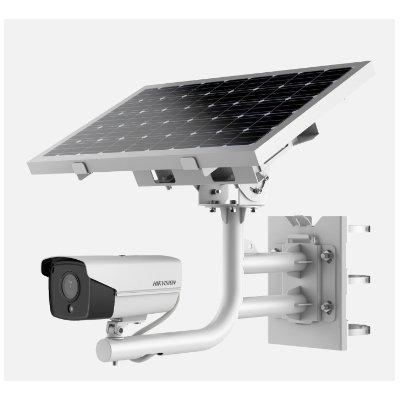

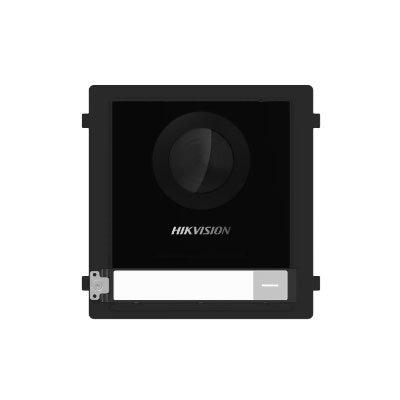
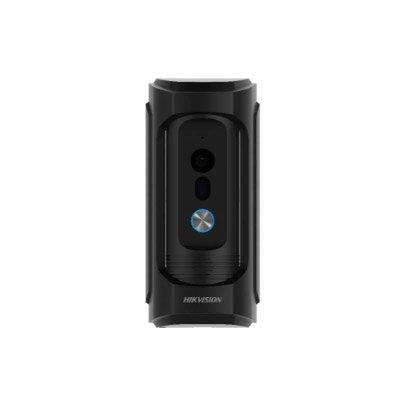
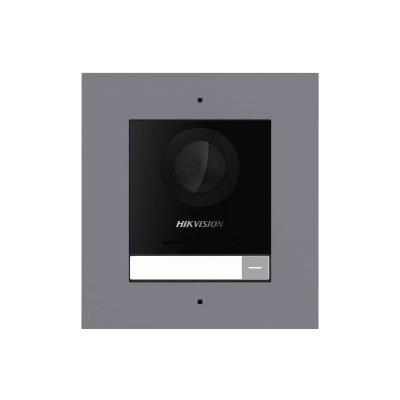
White papers

Maximising enterprise security systems in the cloud
Download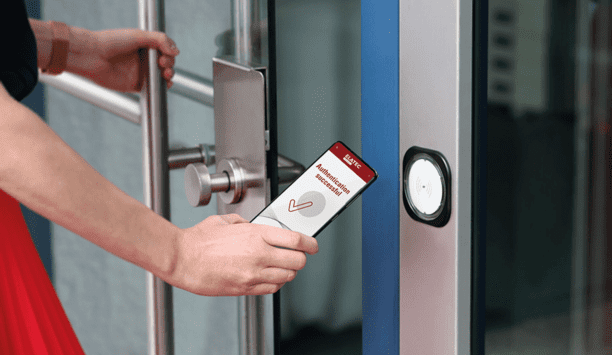
Physical access control
Download
Integrating control access and security
Download
The benefits of Edge AI + Cloud for security systems
Download
Integrated access control: reap the benefits of connected security
Download
Four areas to consider in frictionless access control
Download
Security investments retailers should consider for their 2021 budget
Download
Optimise your business with analytics and AI
Download
The healthy market for video surveillance at medical facilities
DownloadVideos


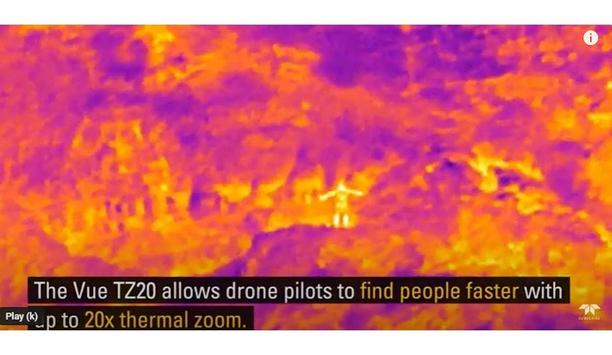

Remote security: Manufacturers & Suppliers
- ADPRO Remote security
- Climax Technology Remote security
- Vicon Remote security
- Software House Remote security
- Verkada Remote security
- Video Storage Solutions Remote security
- Bosch Remote security
- AMAG Remote security
- Senstar Remote security
- Dahua Technology Remote security
- March Networks Remote security
- CLIQ - ASSA ABLOY Remote security
- Hikvision Remote security
- Vanderbilt Remote security

Technology's role in securing banks and financial institutions
Download
Security technologies promote real-time awareness in K-12 schools
Download
Integrated systems enable critical and compliant security for transportation
Download
Modernising physical access control
Download
Access. Intrusion. One estate.
Download