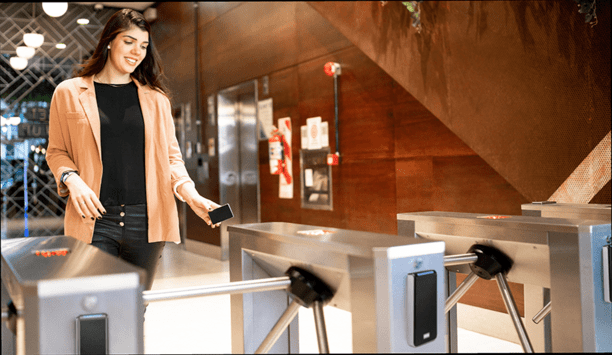
Mobile access articles

Fingerprint biometrics is hugely relevant in the current landscape. Even amidst other newer developments, fingerprint authentication provides convenience and affordability. There are talks rife about how the coronavirus pandemic has changed the outlook towards fingerprint biometrics. What is currently the most used authentication technology is being speculated to be unsafe, when compared to other touchless biometrics and that its usage in the future would decrease significantly. However, the adv...

As we enter into 2022, there is still a level of uncertainty in place. It’s unclear what the future holds, as companies around the world still contend with the COVID-19 pandemic. Remote working has been encouraged by most organisations and the move to a hybrid working system has become ‘business as usual’, for the majority of businesses. Some have reduced their office space or done away with their locations altogether. Following best security practices With all this change in...

In the new era of work, our relationship with the workplace is defined by flexibility and mobility. Employees are working across the home, office, and blended spaces more than ever before, as well as working varied hours to suit the modern work schedule. This new hybrid workforce model holds the potential for more diverse talent and better productivity, but it also comes with its challenges – one being how to ensure security, health, and safety in the workplace. Strong a...
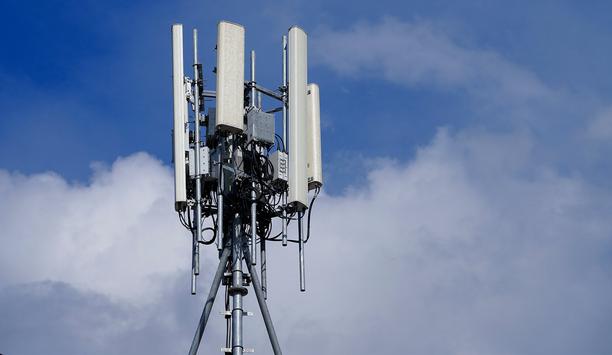
As anti-fraud company Revector marks 20 years of operating, CEO and Founder Andy Gent believes that telecommunications fraud is still not high enough on the corporate agenda for network operators – this should be a significant concern to shareholders. In 2001, Revector was launched to combat specific fraudulent activity against mobile network operators. The company’s management expected the business to have a shelf life of no more than five years – such as the belief tha...

While the foundation of autonomous retail has been built up over the past few years, it is only now that retailers are beginning to fully experiment with the technology. There were an estimated 350 stores globally in 2018 offering a fully autonomous checkout process, yet this number is forecast to increase dramatically with 10,000 stores anticipated by 2024. This acceleration in the growth of unmanned retail stores has, in part, been boosted by the COVID-19 pandemic and a demand for a more cont...

Gregor Schlechtriem has worked in the access control market for over 20 years and is now responsible for the Access & Intrusion Business Unit at Bosch Building Technologies. In this interview, the expert talks about key industry trends, the impact of the COVID-19 (Coronavirus) pandemic, technical innovations and his company’s strategy. Mr. Schlechtriem, you have many years of experience in the security technology market. What is your background and what are your responsibilities as Se...

Recent cyber-attacks have disabled and even shut down physical assets. Robust foundational security and training staff, able to recognise an attack can help mitigate the threat, as ABB’s Rob Putman explains. Edge devices and data analytics As cyber security specialists, we must navigate an ever-changing threat landscape, one that is made even more complex by the increased interconnectivity between Operational Technology (OT) and Information Technology (IT), as companies look to leverage...

The COVID-19 pandemic is only accelerating the expansion of Automation, Robotics, Machine Learning (ML) and Artificial Intelligence (AI), and changing how people live their daily lives. This expansion leads the way with technologies that are developed to solve problems, improve operations, streamline processes and assist people, to focus on learning new skills, creativity, and imagination. Transformation of the physical security industry One of the latest industries to be permanently transform...

Schools were never designed and built with social distancing in mind. So it’s perhaps not surprising that as children returned to schools for the autumn term this year, the prospect of outdoor classes and assemblies was mooted in the media and by the Government. Many in the education sector are making the case that, should there be further COVID-19 outbreaks, in the coming months, it would be better to utilise outside space, rather than resort to closing schools. In the COVID-19 era, head...

The past year has elevated consumer awareness about personal safety, from COVID-19 issues to social unrest, making safety top-of-mind and the need for personal safety solutions, even more prevalent. In addition, consumers spent more time at home, as schools closed, events were canceled and remote work increased. This prompted two major shifts that, in my opinion, most significantly opened the need for and raised the popularity of mobile safety solutions. Demand for grocery and food delivery...

Today’s organisations face numerous diverse threats to their people, places and property, sometimes simultaneously. Security leaders now know all too well how a pandemic can cripple a company’s ability to produce goods and services, or force production facilities to shut down, disrupting business continuity. For example, a category three hurricane barreling towards the Gulf of Mexico could disable the supplier’s facilities, disrupt the supply chain and put unexpected pressure o...

From analogue to digital, from stand-alone to interlinked, building systems are in a state of transition. Moreover, the rate of change shows no sign of slowing, which can make it difficult to keep up to date with all the latest developments. If asked to pinpoint the single biggest driver of this revolution, one could point out the growing clamour for platform convergence. A security guard in a building doesn’t want to use different systems to check video cameras, fire alarms or if someone...

Today, we live in a technology-obsessed age. Whichever way you look, it’s hard to avoid the increasing number applications, products and solutions that continue to redefine the boundaries of what we previously thought possible. From autonomous vehicles and edge computing to 5G and the Internet of Things, all facets of our lives are continuing to evolve, thanks to an endless stream of differentiated innovations. In this article, we’ll be focusing on the latter of these - the Internet...

Most consumers are enjoying the convenience brought by electronic locks. With the existence of electronic locks, people no longer need to be restricted by keys. There are a variety of unlocking methods and more convenient remote control unlocking options. Suppose, you are going on vacation, and with the presence of an electronic lock, you can easily enter your house with your babysitter, without a spare key. Of course, not only smart homes, but also some infrastructure and commercial buildings...

Ensuring employee health and safety remains a key priority for organisations this year, especially as we see COVID-19 cases continue to rise in different areas of the world. As an ongoing challenge, COVID-19 has shifted the priorities of many organisations. In fact, “improving health and safety for employees” is the top strategic goal this year of manufacturing and logistics organisations in the U.S. and U.K., according to research conducted by Forrester on behalf of STANLEY Securit...

Household adoption of smart home systems currently sits at 12.1% and is set to grow to 21.4% by 2025, expanding the market from US$ 78.3 billion to US$ 135 billion, in the same period. Although closely linked to the growth of connectivity technologies, including 5G, tech-savvy consumers are also recognising the benefits of next-generation security systems, to protect and secure their domestic lives. Biometric technologies are already commonplace in our smartphones, PCs and payment cards, enhan...

Access control and management of trusted identities are the building blocks of security, safety, and site management policies for many businesses and organisations. The current pandemic has compounded this with the introduction of new policies and regulations, particularly around social distancing and contact tracing. Most organisations will have some form of legacy access control in place, ranging from the most simplistic options, such as locks and keys, to technology-based systems. The issue...

Steven Kenny, Axis Communications, looks at the benefits of physical access control systems within smart environments, and how knowledge gaps and dated methods can inhibit adoption. Physical security is becoming more dynamic and more interconnected, as it evolves. Today’s modern access control solutions are about so much more than simply opening doors, with digitalisation bringing multiple business benefits, which would simply not be possible using traditional models. Digital transformat...

The 2020s will be a wireless decade in access control, says Russell Wagstaff from ASSA ABLOY Opening Solutions EMEA. He examines the trends data, and looks beyond mobile keys to brand new security roles for the smartphone. The benefits of wire-free electronic access control are well rehearsed. They are also more relevant than ever. A wireless solution gives facility managers deeper, more flexible control over who should have access, where and when, because installing, operating and integrating...

Automatic gates remain an increasingly popular security choice for family homes, business premises or public buildings – anywhere that full control over access is needed. While there is much to consider for installers when advising clients on the right solution for their property, from the size, weight and cost of a gate system, it’s useful to be aware of the latest developments in the market, as this can help to find the right option to fit their needs. The need for speed Gates c...

Display solutions play a key role in SOCs in providing the screens needed for individuals and teams to visualise and share the multiple data sources needed in an SOC today. Security Operation Centre (SOC) Every SOC has multiple sources and inputs, both physical and virtual, all of which provide numerous data points to operators, in order to provide the highest levels of physical and cyber security, including surveillance camera feeds, access control and alarm systems for physical security, as...

The Annual Fraud Indicator estimates that fraud costs the United Kingdom approximately £190 billion every year. The private sector is hit the hardest and loses around £140 billion a year, while the public sector loses more than £40 billion, and individuals lose roughly £7 billion. The effects of fraud can be devastating on both individuals and organisations. Companies can suffer irreversible damage to reputation and be forced to close, and individuals can experience sign...
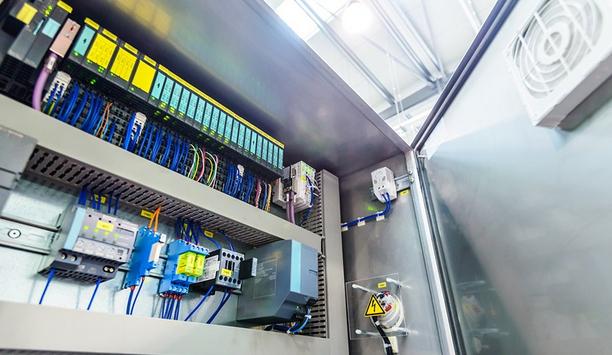
Enclosures containing electronics, communications or cabling infrastructure offer a simple attack point for cyber breaches and an opportunity for a physical attack on the hardware. Yet, many of these assets are housed within enclosures that provide minimal security features to offer a deterrent to any would-be attacker. This has always just been a pet hate. Walking down the high street of a town anywhere in the United Kingdom, you can often see open street communication cabinets. You can actual...

If you’re a security or facilities manager, you may already be aware of the quiet revolution that’s taking place across businesses and organisations up and down the country. By the end of 2020, 20% of all ID and access control systems featured mobile capability, and this is set to increase by a further 34% over the next three years. There’s no doubt that using a smartphone or mobile device in place of traditional credential and access control is a growing trend that’s o...

While the application of facial recognition within both public and private spheres continues to draw criticism from those who see it as a threat to civil rights, this technology has become extremely commonplace in the lives of iPhone users. It is so prevalent, in fact, that by 2024 it is predicted that 90% of smartphones will use biometric facial recognition hardware. CCTV surveillance cameras Similarly, CCTV is a well-established security measure that many of us are familiar with, wheth...

Urban populations are expanding rapidly around the globe, with an expected growth of 1.56 billion by 2040. As the number of people living and working in cities continues to grow, the ability to keep everyone safe is an increasing challenge. However, technology companies are developing products and solutions with these futuristic cities in mind, as the reality is closer than you may think. Solutions that can help to watch over public places and share data insights with city workers and officials...

Several major players vigorously employ biometric recognition technologies around the globe. Governments use biometrics to control immigration, security, and create national databases of biometric profiles. Being one of the most striking examples, the Indian Aadhaar includes face photos, iris, and fingerprints of about 1.2 billion people. Financial institutions, on their part, make use of biometrics to protect transactions by confirming a client's identity, as well as develop and provide servi...
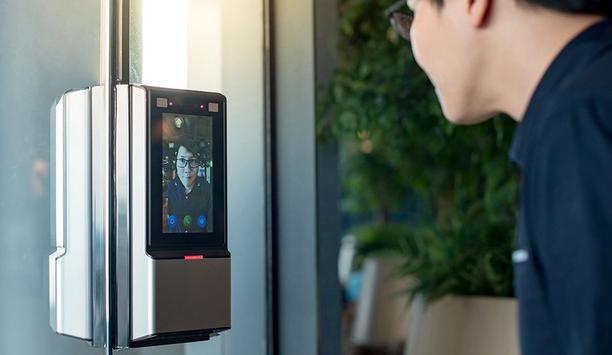
In a world forever changed by the coronavirus pandemic, companies worldwide are now expanding their concept of physical security to best safeguard their facilities and employees. Few incidents have had as much of an impact on businesses globally as the COVID-19 pandemic; much of the world is still struggling to contain COVID-19, navigating the lasting effects and exploring what the “new normal” looks like. While some organisations are still engaged primarily in “anywhere oper...
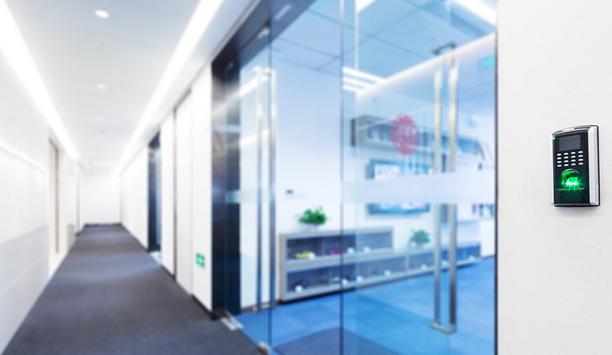
Access control and door entry is a huge responsibility, and challenge, for local authorities and housing associations UK wide. For councils, they’re accountable for the security and safety of many public facilities such as leisure centres, libraries as well as residential housing developments which are often large scale and home to hundreds of people. Housing associations manage affordable rental housing which also means they’re responsible for the appropriate access control managem...
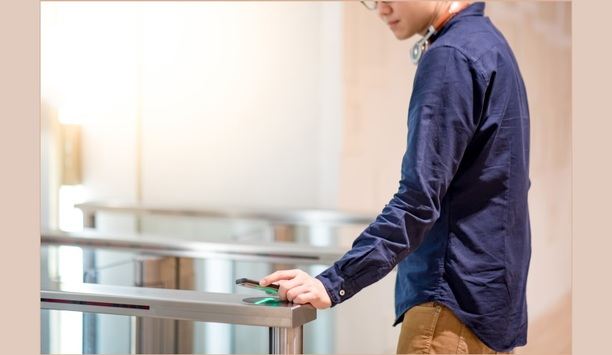
The emergence of smartphones using iOS and Android is rapidly changing the landscape of the IT industry around the world. Several industries, such as digital cameras, car navigation, MP3, and PNP, have been replaced by equivalent or even better performance using smartphones. Smartphones provide increasing portability by integrating the functions of various devices into a single unit which allows them to connect to platforms with network-based services and offer new services and conveniences that...