Institute security


Gallagher Security's High Sec T30 Keypad Reader has achieved approval under the UK National Protective Security Authority's (NPSA) Readers and Keypads standard, further strengthening Gallagher’s suite of NPSA-approved solutions for high-security environments. The approval reinforces Gallagher's commitment to developing security technologies that meet some of the world's most rigorous physical and cybersecurity standards, while expanding the company's trusted high-security offering for cus...

One of the best business lessons I learned didn’t come from business journals or the boardroom. It came from a biography: Steve Jobs by Walter Isaacson. If you haven’t read it, you should! The book covers the full arc of Jobs’ career, and while many of the most talked about lessons center on his entrepreneurship, perfectionism, and brand building, the one that has stayed with me is his philosophy of design. Digital music player market I don’t mean design in the sense o...

DigiFlight, Inc., a provider of aerospace, cybersecurity, engineering, and training solutions for government and commercial organisations, announces that industry veteran Melody Berry has joined the company as manager of cybersecurity and compliance. She will support the cybersecurity, assessment, and compliance programs of DigiFlight and its affiliated cybersecurity company, Camelot Secure, helping manage requirements across multiple industry frameworks, National Institute of Standards and Tec...

Intercede, the digital identity specialists, launches MyID® Authenticate, a FIDO passkey authentication solution that gives Governments and enterprises phishing-resistant sign-in to Windows desktops, cloud services and on-premise applications from a single platform. The solution makes its international debut tomorrow at GovWare 2026 in Singapore, 13-15 October 2026. Passwords and one-time codes are easily phished. FIDO passkeys are phishing-resistant by design: each passkey is bound to the...

Colt Technology Services, the global digital infrastructure company, announces further investment in its global network as hyperscalers, neoscalers and wholesale providers scale their AI infrastructure and drive unprecedented demand for connectivity. The investment expands Colt's reach across North America, Africa, Asia and the Middle East, strengthens its presence in key metro markets, and upgrades critical optical fibre infrastructure to support the next generation of AI-driven growth. Trans...

The increased adoption of electric vehicles (EVs) is transforming the roads, but as with any innovation, it is also creating new opportunities for criminals. Within the EU, EV sales increased 31% YoY from 2024 to 2025, spurred on by Government grants, tax and road toll exemptions, and investment in public charging infrastructure. Yet, it is this infrastructure that is increasingly targeted for its valuable equipment and components, notably copper within the charging cables. Combined with vandali...
News

A new partnership co-funded by Atos and Tech First Youth makes Futures Readiness available free of charge to up to 650,000 learners across the West Midlands. Atos, a pioneer in AI-powered digital transformation, announces a new partnership with Futures Readiness, co-funded with Tech First Youth. Futures Readiness is a holistic AI preparedness programme designed to help students and staff make sense of rapid technological change. The partnership, delivered in collaboration with BMet’s Digital Technical Excellence College, the Sir Peter Rigby Charitable Trust and the Rigby Foundation, and endorsed by Birmingham City Council, will enable schools and colleges to access the programme’s regular, real-time resources free of charge. Critically engaging content Society and the workplace are being reshaped by AI with new capabilities, risks and behaviours emerging in cycles of weeks and months. Futures Readiness is designed to help education keep up with the development of AI as responsive enrichment to the curriculum, rather than a static course or one-off intervention. Every three weeks, Futures Readiness produces interactive videos helping schools respond to live developments in AI, education, work and society. Each resource distils complex and fast-moving change into accessible, critically engaging content. Built-in pause-points, discussion prompts and reflective questions enable students and staff to interrogate the implications of what is happening rather than passively consume information about it, as well as considering what the use of AI means for learning, relationships, wellbeing and privacy. Development of AI skills The programme centres around the concept of AI Discernment, which describes the judgement to know when and how AI should be used, when it should be approached with caution, and where it shouldn’t be applied. By teaching AI literacy and critical thinking, Futures Readiness equips young people and educators to live, learn and work in a world increasingly shaped by AI. This partnership marks Atos’ third investment into the development of AI skills in the West Midlands this year. In February, Atos announced the creation of 30 apprenticeships at its Sovereign Delivery Centre on Birmingham Business Park in Solihull, which works to address the growing demand for sovereign UK-based IT delivery, agentic automation, data hosting and resiliency. Dedicated employment coach The apprentices are on AI-proofed career paths, with Atos giving them the skills and experience they need to grow alongside AI and build resilient careers that evolve with technology rather than compete with it. In March, it launched an online digital skills provision with its partner Lynx Learning, which includes courses on AI. Targeted at those in the region who are not in education, employment or training (NEET), these individuals have access to a catalogue of digital and employability courses, supported by a dedicated employment coach. Age-appropriate resources Michael Herron, Head of Atos UK&I, said: “I’m delighted to be able to support the communities we work in with AI readiness skills that help young people to thrive in a future workplace where humans and AI co-exist.” Futures Readiness already reaches tens of thousands of students and educators in Birmingham. It provides age-appropriate resources at Foundation level for Upper Key Stage 2 and Key Stage 3, and at Core level for Key Stages 4 and 5, as well as teachers and adults working in education. Schools and colleges across the West Midlands can now access Futures Readiness resources free of charge.

Cribl, the AI Platform for Telemetry, announces Cribl Detect, built on the company’s open data platform to provide a complete SIEM at up to 50% less cost than other companies. Cribl Detect gives security teams a better way to detect, investigate, and respond to threats without locking their telemetry into another monolithic, single-vendor stack. Cribl’s new platform-first approach lets customers adapt and customise their SIEM to their unique security operations. This announcement brings Cribl into the $8.2 billion SIEM market. Rules-based detection AI-generated attacks increase both the speed and sophistication of threats, putting pressure on security teams to detect and respond faster. Since Cribl Detect runs on the company’s agentic AI-powered platform, with built-in inference and an agentic runtime, it can move beyond static, rules-based detection. Intelligence from Cribl’s AI security operations center (AI SOC) capabilities helps automate detection and investigation workflows, applying analytics closer to the data to surface high-fidelity, actionable signals, reduce noise, and prioritise the threats that matter most. Together, these capabilities help security teams find blind spots and improve security outcomes. Platform-first approach For years, security teams frustrated with their SIEMs have faced two flawed options. Legacy monolithic SIEMs offer integration without choice, forcing customers into one vendor’s schema, one vendor’s pricing model, and per-gigabyte economics that turn analysis into a tax. Newer “SIEM-less” stacks assembled on general-purpose data platforms offer choice without integration. Teams get to pick their tools, but they also become the integrator, stitching together separate schemas, contracts, and pipelines themselves. Cribl Detect is designed to offer the best parts of both: the openness and customisability of a platform-first approach with the comprehensive out-of-the-box detection, investigation, and response capabilities of a purpose-built solution. This same platform approach powers Cribl’s expanding portfolio of solutions. Fast-moving AI threats “Customers don’t want the SIEM they have today, and they don’t have the resources to build the SIEM they want,” said Clint Sharp, co-founder and CEO of Cribl. “With Cribl Detect, we’ve taken a different approach that solves both problems – an out-of-the-box SIEM experience built on a highly flexible platform specifically for telemetry that allows customers to adapt, mold, and even rebuild the SIEM for their specific needs. And because the platform natively integrates inference and an agentic runtime, Cribl Detect goes beyond rigid rules to catch fast-moving AI threats." While a “do it yourself” approach to SIEM and security operations can sound appealing, enterprises are rarely prepared to build and support what they need. Cribl’s new way to SIEM offers an alternative that starts with the same telemetry organisations already access using the Cribl platform they already trust, in open formats they can control. AI security operations centre This means Cribl Detect’s alerts, investigations, and analytics can run against data wherever it resides, rather than being confined or duplicated to a monolithic, single-vendor stack. With Cribl Detect, federation allows analysts to investigate across distributed telemetry in pipelines, data lakes, object stores, and existing tools. Cribl also applies detections in-stream as telemetry moves through the pipeline, bringing security logic to the data wherever it flows, getting the right signals moving earlier, so correlation and investigation can happen faster. A key differentiator of Cribl Detect is that its detections and detection posture management (DPM), triage with AI security operations center (AI SOC), security orchestration/automation/response (SOAR), and compliance/governance capabilities all inherit access to any data available in the platform. This makes it possible to run the product without having to move historical data first. Identifying detection gaps "Cribl Detect brings together two capabilities that matter to practitioners: investigating across data they already control and identifying detection gaps, broken rules, and missing telemetry,” said Francis Odum, cybersecurity researcher at Software Analyst Cyber Research. “Building these capabilities into its existing data platform is a compelling direction for Cribl, giving security teams a path to modernise their SOC without creating another proprietary data silo.” Cribl Detect includes detection posture management that gives security teams a continuously updated view of what they are and aren’t detecting. Cribl Detect not only maps existing detections against MITRE ATT&CK techniques, surfacing coverage gaps, broken or noisy rules, and missing telemetry, but also provides recommendations and workflows for fast remediation. Automated detection techniques Alongside rules-based detections, AI SOC intelligence powers automated detection techniques that catch threats rules alone would miss. AI-driven triage, investigation, and disposition technology then helps analysts move from alert to answer faster, without manually correlating data across tools. Organisations that adopt Cribl Detect can expect lower total costs than incumbent SIEMs, since it is priced on infrastructure rather than an analysis tax. Cribl Detect is available now for Cribl.Cloud customers.
ZeroEyes, creators of the multi-analytics weapons detection and threat intelligence platform, announces a partnership with Samson Security Fire & Facilities to expand the availability of ZeroEyes’ visual threat detection capabilities across the United Kingdom. The companies will demonstrate the technology in Booth F61 at the International Security Expo, taking place 29-30 September 2026 at Olympia London. Through the partnership, Samson will offer UK organisations access to ZeroEyes’ proactive AI weapon detection and intelligent situational awareness technology, designed to identify visible firearms and knives through existing CCTV infrastructure. The platform applies analytics to live camera feeds and sends potential detections to trained human analysts for verification before issuing an alert to designated security personnel and first responders. Existing security programmes The partnership combines ZeroEyes’ threat detection technology with Samson’s UK-based security, monitoring and response capabilities. Together, the companies will help organisations add a proactive layer to their existing security programmes without requiring them to replace their current camera systems. “Samson has the experience, relationships and operational capabilities needed to bring our technology to organisations throughout the UK,” said Mike Lahiff, co-founder and CEO of ZeroEyes. “This partnership represents an important step in our international growth and advances our shared goal of helping security teams identify visible threats earlier and respond with actionable intelligence.” Firearm-detection technology ZeroEyes’ platform builds on its proven visual firearm-detection technology, which is deployed across the United States and has generated thousands of verified weapon dispatches, including dozens of alerts that have contributed to arrests. The expanded Analytics Suite adds visual knife detection, intrusion detection, left-behind-object detection, crowd formation and camera-health monitoring across an organisation’s existing camera infrastructure. Initial knife-detection deployments are producing promising, actionable results, helping security teams identify potential threats and intervene sooner. The platform also provides public-safety alerts and does not use facial recognition or behavioural tracking. Digital security cameras ZeroEyes’ software layers onto existing digital security cameras. If a gun or knife is identified, images are instantly shared with the ZeroEyes Operations Center (ZOC), the industry’s only U.S.-based, fully in-house operations centre staffed 24/7/365 by specially trained U.S. military and law enforcement veterans. If the threat is determined to be valid, alerts and actionable intelligence - including visual description, weapon type, and last known location - are dispatched to law enforcement and local security teams, often in a matter of seconds from the moment the threat is detected. Protective-security requirements “UK organisations are looking for practical ways to gain more value from their existing CCTV investments and strengthen their ability to respond to developing threats,” said Zara Richards, Principal of Samson Security Fire & Facilities. “By combining ZeroEyes’ analytics and human verification with Samson’s integrated security and response services, we can provide customers with a more complete and proactive approach to protecting people and property.” The partnership comes as UK organisations prepare for the implementation of the Terrorism (Protection of Premises) Act 2025, commonly known as Martyn’s Law. The legislation establishes preparedness and protective-security requirements for certain public premises and events. Although no single technology provides compliance on its own, human-verified threat detection can support a broader, layered approach to security, situational awareness and emergency response.

DigiCert, a pioneer in intelligent trust, announces support for the NVIDIA Open Agent Safety Platform to help enterprises establish verifiable identity and authority for autonomous AI agents. At the centre of the NVIDIA Open Agent Safety Platform is NVIDIA OpenShell, an open, secure runtime that places infrastructure-level controls around autonomous agents. OpenShell permits nothing by default, enforces policy outside the agent’s process, and records every decision to allow or deny an action. Infrastructure-level controls DigiCert complements those controls with DigiCert AI Trust Manager, which helps organisations discover and manage the AI agents they own or operate, establish each agent’s verifiable identity and ownership, define what it is authorised to do, and revoke that authority with a kill switch when trust changes. Together, the technologies address two critical requirements for autonomous AI: identifying which agent is acting and controlling what an agent can do. “AI agents are starting to do real work across business systems, and that means companies need to know exactly which agent is acting, what it’s allowed to do, and when to stop it,” said Amit Sinha, CEO of DigiCert. “NVIDIA helps create the boundary around the agent. DigiCert helps establish who that agent is and what authority it has. Together, that gives enterprises a much clearer way to put autonomous AI to work with control and accountability.” Security-policy enforcement NVIDIA OpenShell lets an agent retain its reasoning and skills while every file, network, process, credential, and inference call crosses a boundary controlled by the platform. Because enforcement occurs outside the agent’s process, even a compromised agent cannot override the restrictions. NVIDIA Sentry on BlueField-4, powered by NVIDIA DOCA, adds hardware-isolated, out-of-band monitoring of agent activity and security-policy enforcement that does not depend on the host. NVIDIA Vera supplies the compute for agents’ CPU-intensive workloads. DigiCert AI Trust Manager extends the OpenShell environment with enterprise-class agent management built around identity, authority, policy, and lifecycle control. DigiCert AI Trust Manager gives each agent a DigiCert AI Passport, a portable, cryptographically signed credential that verifies an agent’s identity and connects it to an accountable owner. Policy-based “visas” define which systems, data, and actions the agent may access, as well as how long that authority lasts. Same identity provider Because the DigiCert AI Passport and its permissions travel with the agent, other systems and organisations can independently verify them without relying on the same identity provider. If an agent attempts a prohibited action, DigiCert’s automated kill switch can block it and, under policies set by the agent’s owner or passport issuer, revoke its authority at the source and quarantine it. DigiCert’s support for NVIDIA Open Agent Safety Platform is designed around four areas: Identity that policy can act on. Agents running within an OpenShell environment can be associated with an AI Passport so policies can rely on verified identity. Verification before execution. Agents, models, and MCP servers can be signed and associated with an AI Bill of Materials to help establish what is being deployed before execution. Auditable evidence. OpenShell records policy allow-and-deny decisions. DigiCert’s approach is designed to bind trusted identity and cryptographic evidence to those interactions, creating a stronger record for governance and audit. Trust across company boundaries. PKI already enables independent verification of identity across the internet. DigiCert is extending that same trust model to agents so organisations can verify AI identities even when agents interact across companies, clouds and technology environments. Providing verifiable identity The approach is designed to complement, not replace, the security controls provided by NVIDIA Open Agent Safety Platform. NVIDIA establishes and enforces the agent’s operating boundary. DigiCert provides verifiable identity and authority that can persist as the agent interacts beyond that boundary. “As agents begin interacting with other agents beyond company lines, identity cannot depend on every participant belonging to the same identity system,” Sinha said. “We need a trust model that can cross those boundaries. PKI solved that problem for the internet at scale, and we believe the same foundation has an important role to play in establishing trust for autonomous agents.” DigiCert AI Trust Manager support for NVIDIA Open Agent Safety Platform begins with NVIDIA OpenShell, with additional capabilities planned as DigiCert and NVIDIA continue to advance enterprise AI trust and agent security.

His Excellency Mr Hiroshi Suzuki toured the fire detection manufacturer's Gillingham headquarters as part of his visit to Medway Hochiki Europe welcomed His Excellency Mr Hiroshi Suzuki, Ambassador of Japan to the United Kingdom, to its Gillingham headquarters on Thursday 24 September 2026. The Ambassador was spending the day in Medway meeting local businesses and celebrating the area's long-standing links with Japan. He was joined by the Mayor of Medway, Naushabah Khan MP and a delegation of Medway guests. Complete fire detection system The visit opened with an introduction to Hochiki's global business and European operations, given by Yuji Hayashi, Finance and Administration Director. Guests then toured the Gillingham site. The Ambassador and his First Secretary were guided in Japanese by the Hochiki team. The tour began in the training room, where guests saw a complete fire detection system with the devices Hochiki designs and manufactures highlighted. It then moved on to the production facility. During the tour, Darren Pugh, Director of Manufacturing, briefed the group on Hochiki's plans to extend its Gillingham site. Hochiki was founded in Japan in 1918 and has specialised in fire detection for more than a century. The Hochiki Group now has a global turnover of more than £400 million and more than 2,000 employees. It has six manufacturing plants, 38 sales offices and 14 subsidiaries, with manufacturing in the UK, Europe, Japan and the USA. Ongoing growth strategy Hochiki Europe has been based in Gillingham for more than 30 years. From here it supplies customers across Europe, the Middle East, Africa and the Caribbean. In September 2023 the company opened Apex House, a logistics facility in Chatham, which increased its warehousing capacity from 480 to 2,450 pallets. As part of the ongoing growth strategy, they are in the final stages of preparing a planning application for the expansion of the Gillingham facility and expect to submit to Medway Council in the coming weeks. The visit also reflected a connection between Gillingham and Japan that goes back more than 400 years. William Adams was born in Gillingham and reached Japan in 1600, becoming the first Englishman to do so. He went on to serve as an adviser to the shogun Tokugawa Ieyasu. The Medway Japan Friendship Association, whose members joined the visit, has long championed that shared history. Expansion of the Gillingham facility Katie Walker, Global HR Director at Hochiki Europe said: “It was a privilege to welcome Ambassador Suzuki to Gillingham alongside the Mayor and our partners from Medway Council. Hochiki has called Medway home for more than 30 year and our success here reflects the skill, commitment and pride of our local team. It was particularly special to share that with the Ambassador and to recognise the people who contribute so much to our business and our community, in a town with such a special place in the history between Britain and Japan. We value the support we receive from Medway Council and look forward to continuing to invest in our people and grow our presence here.” Following the tour, Ambassador Suzuki reflected "Hochiki is a fine example of the partnership between Japan and the United Kingdom. It is a Japanese company with more than a century of history, now manufacturing here in Medway and employing local people. Gillingham holds a special place in the story of our two countries as the birthplace of William Adams and it is a pleasure to see that connection continue through businesses like Hochiki. I would like to thank the Hochiki team and our friends in Medway for their warm welcome." Preparing a planning application From Hochiki, the Ambassador went on to MidKent College as he continued his tour of Medway. The full delegation included First Secretary Ms Junko Nakaji; The Worshipful the Mayor of Medway, Councillor Douglas Hamandishe; Councillor Vince Maple, Leader of Medway Council; Naushabah Khan MP, Member of Parliament for Gillingham and Rainham; Councillor Nina Gurung, Portfolio Holder for Heritage, Culture and Leisure; Councillor Harinder Mahil, Portfolio Holder for Economic and Social Regeneration and Inward Investment; and Nicolas Maclean, Honorary Life Member of the Medway Japan Friendship Association.

Omdia market share data for 2025 continues to show Milestone as the market pioneer across the EMEA region, with a 19 per cent share of a market now worth USD 573 million. Milestone Systems is the largest single provider of video management software (VMS) and Video Surveillance as a Service (VSaaS) in Europe, the Middle East and Africa (EMEA), according to 2025 market share data from technology research and advisory group, Omdia. Milestone has nearly one-fifth (19.1 per cent) of the overall EMEA market, which includes the UK and Ireland – a market-pioneer position that hasn’t altered since 2021. More informed decisions Across the EMEA region, the VMS and video surveillance as a service (VSaaS) market grew 10 per cent in 2025 to USD 573 million, and the Middle East and Eastern Europe saw particular growth. Omdia’s figures come at a time when organisations across EMEA are increasingly using video to support operational decision-making alongside security. Across traffic management, transportation, retail and manufacturing, video data is helping organisations better understand how sites and services perform and make more informed decisions. Morten Illum, Chief Revenue Officer, Milestone Systems, said: “This ranking reflects what customers across EMEA continue to look for: open, flexible video technology that gives them choice today and room to evolve tomorrow. Together with our partner community, we help customers design systems around their specific needs, while future-proofing their investment as AI and cloud technologies transform the value of video beyond security.” Strategically important markets Milestone’s leading position is built on three key offerings: Milestone XProtect® video management software, Milestone BriefCam® AI-powered analytics and Milestone Arcules® cloud VSaaS. Together, they give organisations the flexibility to deploy video on premises, in the cloud or across hybrid environments, while adding analytics without replacing existing systems. The UK and Ireland remain strategically important markets for Milestone. Earlier this year, the company opened its London Concept Centre, an interactive space where end users, integrators and partners can explore Milestone technology alongside solutions from partners including Axis, Bosch, Gallagher, Hanwha, Honeywell, i-PRO, ADI, Oprema, Zenitel and 2N before designing a system. AI anonymisation technology Martin McGrath, Sales Director for UK and Ireland at Milestone Systems, said: “The UK is a demanding market, and rightly so. Organisations increasingly expect their video systems to support business decisions as well as security needs, while continuing to adapt as their operations evolve. Our leading position across EMEA gives customers confidence that the platform they choose today will remain open, supported and continuously developed in the years ahead.” Milestone is also investing in the data foundations behind video AI through Project Hafnia, its regulatory-compliant video data library, and brighter AI anonymisation technology. Together, these initiatives are designed to give customers greater transparency into how AI models are trained.

Expert commentary

Across many sectors, AI is transitioning from an experimental process to a trusted tool, but how will construction - and architectural ironmongery specifically - balance this technological opportunity with traditional practice? Artificial intelligence was once considered the trend of tomorrow, but it’s now here, and already it’s impacting the design, specification and management of the built environment. Following a period of refined development, the technology is emerging as a valuable tool for architectural professionals, with its growing role signifying far more than a passing industry trend. Passing industry trend According to the Royal Institute of British Architects’ (RIBA) Artificial Intelligence Report 2025, 59% of architectural practices now use AI on at least some projects, an increase from 41% in 2024. Furthermore, a global survey led by the Royal Institution of Chartered Surveyors in 2025 found that 56% of investors planned to increase AI investment, suggesting that the rate of adoption will continue to accelerate over the coming years. However, whilst innovation typically creates opportunity, there are challenges to address These findings represent a cultural shift, one where AI is firmly embedding itself into workflows and influencing the decision making process. However, whilst innovation typically creates opportunity, there are challenges to address. As more professionals equip themselves with an arsenal of AI-driven tools, are we in danger of becoming overly reliant on technology? Or are those reluctant to adapt likely to be left behind? Daniel May, Director at Consort Architectural Hardware, shares insight: Repetitive administration tasks “The development of the built environment has always relied on technical precision. Specifications naturally contain large volumes of product information and technical data, with professionals managing document-heavy tasks in the form of specification writing, door scheduling and BIM coordination in order to meet project requirements and compliance obligations. All of this data must be analysed and processed accurately - often in line with demanding timescales - and it is here where AI can offer the greatest value.” “Where time was once consumed by repetitive administration tasks and information processing, professionals are now embracing AI as a means of working more efficiently. For architectural ironmongery specifically, where specification accuracy is critical, AI has the potential to support architects and specification professionals as they navigate the product selection process. As a tool, AI can streamline documentation by rapidly processing performance data and certification requirements, whilst also identifying inconsistencies and absent compliance information within schedules.” Complex project requirements “AI systems are helping professionals navigate increasingly complex project requirements quickly, accurately and consistently. As machine learning and autonomous models continue to advance, these tools may further reduce the administrative burden associated with architectural work models whilst improving accuracy and minimising the risk of human error in the process. With that said, the effectiveness of AI software is very much reliant on the quality of the information it receives.” “With the sector so deeply tied to fire safety, accessibility, security and regulatory standards, the caution around adopting AI as common practice is of course justified. Historically, much of the construction industry has been measured in its adoption of new technology, partly due to the critical nature of compliance and the significant consequences of error. Though, AI feels somewhat different because of its pace and potential, and as such, organisations must be measured in their approach to it, ensuring that professional knowledge remains central to delivering safe, efficient and compliant building projects.” The human element As industry standards and the legislation surrounding the built environment continues to evolve, so too will the methods used to achieve high level design and compliance. Seemingly, AI looks set to have an increasingly prominent role, but it should be viewed as a collaborative partner capable of enhancing professional expertise as opposed to a system that can, or should, do it all. Daniel continues: “At this stage, AI alone simply can’t understand the nuances of individual projects and that has implications for both design and compliance. This is particularly relevant in the post-Grenfell regulatory landscape, where accountability, traceability and evidence-based decision-making have become fundamental to product specification and delivery.” Building greater trust “Although AI can assist with information processing, the technology is not ultimately responsible for the decisions being made. Accountability has rightly become a major focus point in construction, and as AI continues to disrupt practices, the industry must ensure that responsibility remains clearly defined. AI-driven errors could lead to serious penalties in relation to compliance, safety and project delivery, proving human expertise remains critical.” “Moving forward, greater transparency within AI systems will be key. If professionals are able to understand how or why AI recommendations have been generated, they can assess them with confidence, building greater trust in the technology.” Architectural design solutions “When it comes to architectural design, the emotional intelligence, contextual understanding and creative balance offered by a team of professionals far outweighs the speed that AI can offer. Already, AI is being used to support visualisation and concept development for multi-layered projects in hospitality, healthcare and commercial environments to name a few, helping teams to explore ideas and communicate concepts at a quicker rate.” “However, can AI effectively develop architectural design solutions based on the bespoke requirements of a project, the operational needs of its users or even the general character of the building? Most would argue that it’s not conceivable, because AI lacks the lived experience and contextual understanding that comes from being present in the project itself.” Architectural ironmongery products “For architectural ironmongery products, professionals must regularly assess how products will function in real environments. Human intuition is impossible to replace and those informed design decisions, made by human professionals, will always be essential. Whilst some question whether AI could one day plan and deliver a project from concept to completion, perhaps the more important question should be whether future generations of professionals could lose the critical design and specification skills that are needed, should the industry become too dependent on AI.” “There is a growing sense of inevitability surrounding AI’s influence on architectural ironmongery and the wider built environment. As the industry continues to embrace this new wave of technological development, it is important to remember that innovation must complement the knowledge, judgement and accountability of the professionals who create safe and functional buildings, not replace it.”

A security camera installed today has more AI processing power than the systems that guided early autonomous vehicle prototypes. And yet the operator who mounts that camera on a wall will, in all likelihood, never use most of that capability. Industry surveys bear this out: a wide gap persists between the number of security professionals who believe AI can improve outcomes and the much smaller share who have adopted it operationally. The reason has nothing to do with the silicon and everything to do with how the industry has asked people to configure these systems. The problem is not that the industry lacks algorithms. The problem is that physical security has never found a scalable way to personalise systems for each site. The personalisation dilemma hiding in plain sight The problem is that physical security has never found a scalable way to personalise systems for each site A surveillance deployment at an airport, a retail chain, a school campus, and a logistics yard can look strikingly similar in hardware terms. Each installation uses image sensors, edge processors, network connectivity, and a management layer. What changes is what the operator cares about. At a school entrance, the priority might be perimeter approach after hours and controlled access during the day. At a loading dock, the concern is tailgating, vehicle dwell time, and safety incidents near forklifts. At an airport, the operator may need queue-flow analytics one moment, unattended-item detection the next, and then a search for a specific person of interest carrying a particular bag. At a retail store, loss prevention teams want to correlate customer flow patterns with point-of-sale data and identify suspicious behaviour near high-value merchandise. This range of needs forces a reality that the industry has acknowledged in principle but never resolved in practice: the application pool across the market is vast, yet each individual site typically requires only a narrow set of outcomes. Each deployment needs personalisation once, at commissioning, and then again whenever the environment or the risk profile shifts. The app store that never became a market For the better part of a decade, the industry’s most visible answer to the personalisation problem was the “app store” model. The logic was straightforward: curate a marketplace of trained neural network algorithms, let integrators browse a catalogue, and download the right analytic for each job. Queue counting for a passport control hall. License plate recognition for a parking structure. Occupancy monitoring for a conference room. The concept borrowed directly from the consumer smartphone approach. In practice, it never matched physical security’s purchasing and operating rhythm. A phone owner discovers and downloads new apps continuously. A physical security deployment selects one or two analytics functions at installation and rarely revisits them. Another maintenance burden A queue-counting algorithm trained on airport data is excellent at queue counting The economic incentive to maintain, curate, and update a broad catalogue across a fragmented ecosystem of camera OEMs, VMS platforms, and system integrators never materialised when the average buyer drew from only a thin slice of it. And the question of who would operate such a marketplace across that fragmented landscape was never satisfactorily answered. The deeper issue is that distribution was not the hard part. Personalisation was. A queue-counting algorithm trained on airport data is excellent at queue counting. It does not naturally become a general-purpose security tool for whatever the operator needs next. Once a model is trained for a narrow task, adaptation requires another project, another integration cycle, and another maintenance burden. AI-enabled cameras The examples that do exist are instructive. Schiphol Airport in the Netherlands has used trained camera systems for over a decade to measure queue length at passport control and alert staff when additional counters should open. Rome trailed AI-enabled cameras to track pedestrian wait times at crosswalks, measure bus queue length, and monitor parking occupancy to support active transport and reduce vehicle emissions. These are effective, well-regarded deployments. They also illustrate the limitation: each required its own trained model, its own integration effort, and its own maintenance cycle. The queue-counting camera at Schiphol cannot be redeployed to detect an abandoned bag. That is a separate algorithm, a separate procurement, and a separate project. What changes with agentic AI Applied to physical security, this translates into a simpler commissioning experience Agentic AI points to a fundamentally different approach. An agentic system can receive goals expressed in natural language, determine the appropriate actions to fulfil those goals, execute those actions using available tools, and verify the results. Applied to physical security, this translates into a simpler commissioning experience: the operator expresses intent in plain language, and the system configures itself to achieve that intent. Consider the practical implications. An installer commissioning cameras at a retail location could type or speak a set of instructions: “Alert the manager if more than five people are waiting at checkout for longer than two minutes.” A facilities director could ask the system to “Track vehicles that enter the east parking lot after 9 p.m. and flag any that remain for more than 30 minutes.” A school security coordinator might specify: “Notify campus police if anyone approaches the perimeter fence between midnight and 5 a.m.” Appropriate perception capabilities None of these instructions require the operator to select a specific analytic from a catalogue, configure a detection model, or define pixel-level zones in a complex VMS interface. The system interprets the intent, selects the appropriate perception capabilities, configures thresholds and context, and validates behaviour over time. When the operator’s needs change, a new instruction replaces the old one. The camera hardware stays the same. The AI adapts. This is the core of the shift: minimal user input, maximum flexibility, and a security system that personalises itself without requiring the operator to navigate the traditional customise-certify-deploy cycle. Vision language models make it practical A conventional neural network trained for people counting can count people The enabling technology is the vision language model, or VLM. A VLM combines visual encoders with language reasoning, allowing it to interpret images or video in the context of natural language prompts. This is a qualitative leap beyond traditional convolutional neural networks, which classify or detect predefined objects and have no mechanism for open-ended interpretation. A conventional neural network trained for people counting can count people. It cannot distinguish between a crowd of commuters exiting a train station and a crowd assembling in protest. A VLM, by integrating contextual reasoning with visual analysis, can draw inferences that a task-specific model cannot. It can assess behavioural patterns, interpret spatial relationships, and respond to queries about scenes it has never been explicitly trained to analyse. Where a neural network might register two people carrying objects, a VLM could infer whether the scene suggests travellers with luggage or workers transporting equipment, provided the visual context supports that inference. Supporting multimodal input This matters in physical security because operational questions are rarely phrased as taxonomy labels. Operators want to express outcomes. They want to say “show me anything unusual near the loading bay after hours,” and the system should be able to reason about what “unusual” means given the site context. VLMs also support multimodal input. Audio cues such as a raised voice, a scream, an alarm, or breaking glass can contribute to scene interpretation when paired with video. In security applications, where events routinely unfold across both visual and auditory channels, this capability adds a meaningful layer of situational awareness. The edge constraint that forces discipline Large language models in the cloud use hundreds of billions of parameters and consume hundreds of watts None of this works if the architecture assumes data centre conditions. Most surveillance cameras operate under strict power and thermal limits. Power over Ethernet (PoE), the standard delivery mechanism, typically provides between 15 and 30 watts depending on the PoE class, and only a fraction of that budget is available for AI processing after the sensor, ISP, video encoder, and network stack have taken their share. In many installations, the AI workload must fit within a few watts. Large language models in the cloud use hundreds of billions of parameters and consume hundreds of watts. That scale does not translate to a camera mounted on a pole or embedded in a ceiling tile. For agentic AI to work at the edge of a physical security network, the models must be compact, efficient, and designed for the purpose. Neural network acceleration This is where smaller, domain-specific VLMs become essential. Models trained on industry-relevant image and text datasets, combined with techniques such as pruning, quantisation, and parameter-efficient fine-tuning, can deliver meaningful visual reasoning within the compute and memory constraints of an edge processor. The result is a VLM that fits inside a camera’s power budget and still responds to natural language instructions with useful accuracy. Ambarella’s CVflow AI architecture, now in its third generation, was designed for this class of workload. The architecture integrates advanced neural network acceleration with high-resolution image signal processing and video encoding on a single system-on-chip, allowing cameras to run complex AI inference alongside their core imaging functions without exceeding the thermal and power boundaries that define edge deployments. The company's latest addition to its portfolio, the 4-nanometer CV7, runs CNNs and vision language models concurrently across multiple video streams while consuming 20 percent less power than its predecessor. For infrastructure and robotic applications requiring heavier models, the 5-nanometer N1 family supports multimodal LLMs in multi-camera configurations. Distributing intelligence across far edge, near edge, and cloud This tier must respond in milliseconds and operate within a fixed power envelope A workable agentic architecture for physical security distributes intelligence across three tiers, each matched to the processing demands and latency requirements of its role. At the far edge, inside the camera itself, the processor handles real-time perception: object detection, tracking, zone logic, and initial event classification. This tier must respond in milliseconds and operate within a fixed power envelope. At the near edge, on a local gateway or network video recorder, a more capable processor orchestrates across multiple cameras, maintains state, correlates events, retrieves site-specific policies and procedures, and classifies incidents requiring more context than any single camera provides. At the cloud/server tier, available when connectivity permits, the system accesses heavier models for forensic analysis, fleet-wide analytics, model updates, and long-horizon reporting. Periodic cloud access This tiered approach keeps the most time-sensitive decisions local, where latency is lowest and data privacy is strongest. It also means agentic capabilities can scale incrementally. A small installation might run entirely at the far edge with periodic cloud access. A large campus might employ all three tiers, with near-edge orchestration coordinating PTZ patrol patterns across dozens of cameras while the cloud generates shift summaries and updates models based on fleet-wide telemetry. In practice, a security workflow built on this pattern often combines real-time detection at the far edge, behaviour-tree orchestration at the near edge for multi-camera coordination, local retrieval over site playbooks, and conservative safe-mode escalation when system confidence is low. The discipline of deterministic guardrails and structured verification loops is essential in security operations, where unpredictable system behaviour is not acceptable. A hybrid future, with VLMs orchestrating specialist models The transition to agentic AI does not eliminate specialised neural networks The transition to agentic AI does not eliminate specialised neural networks. Purpose-trained models will continue to deliver superior accuracy for well-defined, high-frequency tasks such as license plate recognition, face matching, and fire and smoke detection. In a mature agentic system, the VLM acts as an orchestrator. It handles open-ended perception and natural language interaction while routing to specialised models when a task demands their precision. A PTZ camera at a transportation hub might receive the instruction “monitor the west concourse for unattended items.” The VLM interprets the request, manages the interface, and reasons over broader scene context. Real-time video processing When it identifies a candidate object, it routes to a dedicated abandoned-item classifier optimised for that specific validation step. The VLM orchestrates. The specialist model validates. The operator receives a refined, actionable alert. That hybrid pattern places specific demands on the silicon. The processor must support both traditional CNN inference and generative AI workloads simultaneously while maintaining real-time video processing within the same power envelope. The value of a tightly integrated SoC, one that combines an advanced ISP, a deep learning accelerator, and a video encoder on a single die, is that it eliminates the multi-chip complexity and power overhead that would otherwise make this approach impractical at the edge. Making agentic AI deployable for the ecosystem Ambarella’s Developer Zone, launched at CES 2026, provides a centralised portal of tools Physical security is built on a broad ecosystem of camera OEMs, VMS providers, independent software vendors, module builders, and system integrators. For agentic AI to reach the market at scale, these participants need model-ready tooling, reference workflows, and a practical path from prototype to production. This is where developer ecosystems become part of the story. Ambarella’s Developer Zone, launched at CES 2026, provides a centralised portal of tools, optimised AI models, agentic blueprints, low-code templates, and documentation aimed at accelerating edge AI application development on Ambarella’s SoCs. Common software stack ISVs and integrators can evaluate models, prototype applications, and deploy using a common software stack that spans the company’s CV7 and N1 SoC families through the Cooper development platform. That consistency across the product range reduces per-project engineering cost and accelerates time-to-market for partners building perception and analytics solutions. The point is broader than any single portal: agentic systems require components that have already been tested and optimised for edge deployment, so that integrators can focus on solving their customers' problems rather than rebuilding the AI pipeline from scratch. The ecosystem participants who lead the transition to agentic AI in physical security will be the ones with access to tooling that fits into their existing development and deployment processes. What comes next Physical security has searched for years for a scalable answer to personalisation Physical security has searched for years for a scalable answer to personalisation. The app store model did not provide it. Manual configuration, while functional on a per-site basis, scales poorly across large portfolios of cameras and changing operational requirements. Agentic AI offers a credible path forward because it aligns with how operators actually think. They express outcomes, not model specifications. They want systems that adapt to new requirements without repeated engineering cycles. Traditional neural networks With VLMs as the interface layer, smaller domain-specific models at the far edge, orchestration at the near edge, and disciplined verification loops throughout, personalisation can become a standard part of deployment rather than a custom project. The building blocks are now in place. Power-efficient edge AI processors can run VLMs and traditional neural networks simultaneously. Developer ecosystems are maturing to support rapid prototyping and deployment. Reference architectures for distributing intelligence across far-edge, near-edge, and cloud tiers are solidifying. For an industry that already installs vast numbers of AI-capable cameras each year, the opportunity is to make the intelligence already embedded in those endpoints genuinely usable for the people who rely on them every day.

Acquisitions are often billed as moments of bold opportunity. For senior executives and boards, these deals are about accelerating growth, unlocking synergies, and strengthening competitive advantage. But for the teams responsible for making operations run safely and smoothly — including physical security — acquisitions can feel like controlled chaos. Decisions happen without warning, details are opaque, and the ripple effects of choices made in the boardroom cascade down through every layer of the organisation. Too often, physical security isn’t even in the room where those decisions happen. Beyond access control When security is treated as an afterthought — a cost centre to be rationalised, rather than a strategic enabler — companies expose themselves to risks that go well beyond access control or surveillance coverage. Overlooked integration challenges can compromise the safety of people and property, slow down facility transitions, inflate budgets, and undermine everyone’s confidence in the acquisition deal itself. For seasoned physical security leaders, the imperative is clear: make your program visible, credible, and indispensable before and during acquisition conversations. That means ensuring your voice is represented. Why security visibility matters At first glance, it’s not obvious to some why physical security should rank alongside finance, IT, and legal in the M&A playbook. But consider what’s really at stake:͏ Budget accuracy: If no one accounts for system migrations, access credential re-issuance, or security subject matter expert (SME) travel during due diligence, financial forecasts will be miscalculated. Underestimating these costs by even a small percentage can throw off larger integration budgets. ͏ Technology fit: Acquirers frequently inherit access control, video, and monitoring platforms that don’t align with their standards. Without early planning, companies risk unsupported infrastructure, avoidable downtime, and duplicating expensive features. ͏ People and roles: Security staff redundancies and mismatched responsibilities are often decided hastily, surfacing operational gaps and challenges with morale. ͏ Cultural harmony: Employees at acquired companies can perceive new security measures as heavy-handed or intrusive, jeopardising adoption and compliance. Each of these factors is manageable — but only if you consider them early on in the acquisition and communicate clearly at the decision-making level. Securing a seat at the table Physical security leaders don’t need to wait passively for a seat at the M&A table — they can and should advocate for it. Take practical steps: Identify the M&A committee. This group may go by different names — corporate development team, integration steering group, or even a subcommittee of the board. Pinpoint who leads it and which executives have influence. Make the case for inclusion. Position security not as a compliance hurdle but as a value multiplier. Remind leadership that visibility into risks, costs, and integration timelines reduces surprises, accelerates business continuity, and protects reputation. Bring data, not anecdotes. Prepare a concise playbook: current-state inventories of systems and personnel, cost models for typical integration activities, and sample timelines for cutovers. When executives see that security has done its homework, they’re more likely to view the function as essential. Leverage allies. Partner with your security consultant, along with your facilities, IT, HR and risk management teams who share overlapping interests in safe, seamless operations. Unified advocacy is harder to dismiss than a single voice. By getting on the M&A committee, you ensure your concerns aren’t filtered secondhand or raised too late to influence outcomes. Leading with credibility during acquisitions Visibility is only the first step. Once in the room, security leaders must contribute with authority and clarity. Three practices stand out:͏ Translate security into business impact. Executives don’t respond to jargon about card readers or VMS licenses—they respond to risk, cost, and continuity. Frame every input in terms of: Financial implications, such as “Consolidating platforms will save $X annually, but requires $Y in upfront integration.” Operational implications, such as “Delays in credentialing will stall employee onboarding at three newly merged sites.” Cultural implications, such as “Without a clear change management plan, acquired employees may resist compliance, leading to increased insider risk.”͏ Provide scenarios, not surprises. Acquisitions move fast, but that doesn’t mean you can’t plan. Present modeled scenarios — small target vs. large target, regional vs. global integration — and their associated timelines and costs. This proactive approach demonstrates foresight and earns trust. ͏ Advocate for people, not just systems. In the scramble to integrate technology, companies often forget the human element. Use your platform to ensure that acquired security personnel are evaluated fairly, retrained where possible, and integrated into the new culture. Advocating for people strengthens morale and preserves institutional knowledge. Visibility beyond a single deal For some companies, acquisitions are rare, high-stakes events. For others, they’re a routine growth engine. In either case, physical security leaders should treat M&A as a recurring test of their strategic value. To do this, work with your security consultant to:͏ Document lessons learned from each acquisition, then institutionalise these lessons in playbooks and checklists. ͏ Develop clear security messaging that explains your team’s mission and impact, so executives understand why your presence is non-negotiable. ͏ Commit to realistic timelines for integration work, ensuring leadership sees the discipline and predictability of your function. The goal isn’t just to be consulted during one deal — it’s to become permanently visible in the company’s growth strategy. Don’t be an afterthought In the popular imagination, the “room where it happens” is a place where power dynamics shift and futures are decided. For physical security leaders, being absent from that room during an acquisition means watching others dictate the future of your program, your people, and your company’s security posture. But by proactively seeking visibility — by insisting on a voice in acquisition planning, by bringing data and credibility to the table, and by consistently framing security as a business enabler — you can transform physical security from an afterthought into a recognised pillar of successful acquisitions.
Security beat

The practice of executive protection changed forever on Dec. 4, 2024, when UnitedHealthcare CEO Brian Thompson was shot outside a Manhattan, New York, hotel. The shocking event raised awareness in board rooms around the world about the need for, and challenges of, executive protection. Questions followed immediately, including why was the high-level executive not protected? Combination of risk and reward UnitedHealthcare’s stock price has gone down more than 20% since the shooting The event also highlighted what is at stake for companies, extending beyond the safety of executives and impacting many factors, even including a company’s stock price. UnitedHealthcare’s stock price has gone down more than 20% since the shooting, equating to tens of billions of dollars. “Companies are considering the combination of risk and reward like never before when it comes to executive protection,” says Glen Kucera, President of Allied Universal Enhanced Protection Services. “What are the chances this could happen? Before Dec. 4 many thought it was zero. And what are the financial implications for a company if it happens? Executive protection is a small investment to protect against a worst-case scenario.” Evaluation of an executive protection Before the UnitedHealthcare shooting raised awareness, fewer than 50% of executives had protection. But concerns that previously fell on deaf ears now have the full attention of companies, says Kucera. “Boards of directors are having to figure this out,” he adds. “They may not have executive protection, but now they have to do it.” A threat assessment, conducted by a company such as Allied Universal, provides an independent evaluation of a company’s executive protection needs. The assessment evaluates factors such as an executive’s travel habits, the safety of their home, etc. Does the executive need protection 24/7, or just when they travel into more dangerous areas? Risks increase related to corporate earnings Sometimes, cases increase the need for executive protection, such as an internal threat In assessing threats, security professionals also look beyond the individual to consider the safety of a corporate facility, for example. “Is there a visual deterrent, controlling who comes and goes?” asks Kucera. “If there is good security, it all ties together. We do home assessment, facility assessment, route assessment, and travel assessment as needed.” Sometimes, circumstances increase the need for executive protection, such as an internal threat. Timing is a factor, and risks increase related to corporate earnings releases, new product announcements, and corporate layoffs or consolidation. Monitoring social media tracks shifting threats that impact the need for executive protection. UnitedHealthcare shooting “He didn’t have it and probably didn’t think he needed it,” comments Kucera about the UnitedHealthcare executive who was gunned down in the streets of New York City. “He was staying at the hotel across the street and was used to walking down the street every day.” “Sometimes executives want to preserve their privacy and be able to walk down the street,” says Kucera. “Getting protection can be seen as a sign of weakness. Some CEOs in the past have said they just didn’t want it.” However, the UnitedHealthcare shooting raised the stakes of the need for more vigilance. “The bottom line is you have to yet beyond objections and make the investment to protect against a worst-case scenario,” says Kucera. Anti-capitalist sentiment in the general population An internal police bulletin warned of an online hit list naming eight executives and their salaries Threats to executives sometimes arise from anti-capitalist sentiment in the general population about perceived inequalities in wealth and power. Executives provide symbolic targets for anyone who fights the system, and social media has amplified the voices of those who oppose capitalism. For example, a "Most Wanted CEO” card deck seeks to shine a spotlight on "titans of greed." Also, in the aftermath of the UnitedHealthcare shooting, CEO "wanted" posters appeared across New York City, threatening various executives of large companies. An internal police bulletin warned of an online hit list naming eight executives and their salaries. Careful monitoring of social media posts Careful monitoring of social media posts and other sources enables executive protection professionals to analyse data and separate the dangerous threats from the merely negative ones. Sadly, positive support of the UnitedHealthcare shooting was expressed by the 300,000 or so followers of the shooter, who became a celebrity of sorts. A huge outcry of negative sentiment toward the insurance industry led to fear that copycat incidents might occur. “There has been an unprecedented amount of positive support for committing murder,” commented Kucera. Executive protection requests HR executives can be at risk, especially at a time of layoffs or consolidation “Let’s face it, there has been a lot of controversy, from COVID to the Middle East crisis, to the political campaign, and there is negativity on both sides,” says Kucera. “People have opportunities to pick sides, and there is a lot of sentiment going both ways, and there is a small percentage of people who will act aggressively.” Executive protection requests now extend beyond the CEO to include others in the management ranks of companies. Basically, any public-facing executive is at risk, including anyone who makes statements to the press. Human resource (HR) executives can be at risk, especially at a time of layoffs or consolidation. Private information on the Internet Typically, an executive is assigned a single armed operative for protection. The firearm serves primarily as a visual deterrent that hopefully makes a potential perpetrator think twice. “When they plan an event like this, their expectation is that it will be a soft target,” says Kucera. “If there is an officer, it gives them pause.” Controversial or high-profile CEOs are typically protected 24/7, including when they travel with their family. Adding risks is the fact that private information is now posted on the Internet, including where an executive lives and where their children go to school. Internet monitoring Internet monitoring also includes the “dark web,” which includes sometimes dangerous information “We offer social media monitoring, and we advise them to be more careful with what they post,” says Kucera. “We monitor reactions to posts including any that might be threatening. We watch social media carefully if a company announces earnings or a change in their service or product offering.” Internet monitoring also includes the “dark web,” which includes sometimes dangerous information that is intentionally hidden and requires specific software, configurations, or authorisation to access. Own layer of protection Public and government officials can also come under fire in a variety of scenarios. FEMA officials faced threats after the recent floods in the Southeast, for example, among other situations where perceived unfair treatment promotes thoughts of retribution. Although government agencies have their own layer of protection, there are instances when they call on companies such as Allied Universal for additional help. Ad hoc protection for various executives In the aftermath of the UnitedHealthcare shooting, calls to Allied Universal’s Command Centre increased by 600%, reflecting requests for ad hoc protection for various executives. These requests are in addition to the company’s business providing “embedded” operatives that travel with executives all or some of the time. On that side of the business, requests for services are up probably 300%, says Kucera. {##Poll1742194323 - Has the recent increase in violent threats changed your company's view on executive protection?##}

GSX 2023 has its share of new product announcements, although many of the new products are enhancements to technologies shown at last spring’s ISC West show in Las Vegas. Booth traffic on the first day seemed busy at the Kay Bailey Hutchison Convention Center in Dallas, although one exhibitor complained that it takes some time for the traffic to make its way to the farthest areas of the show floor. Apparent throughout the GSX show is an expanding idea of what constitutes security. Increasingly, ‘security’ technologies offer benefits throughout other parts of a company or institution. Security is also being broadened to encompass ‘safety,’ including emergency response and wider issues of keeping a company safe. Managing multiple systems People look at the systems they have, and they are looking for more information" Manufacturers at GSX are talking about more than new products. Rather, they are offering new approaches to turn products into ‘solutions’ for customers. Among the benefits of new systems is the availability of more data. “People look at the systems they have, and they are looking for more information and data and insights from their systems,” says Kyle Hurt, Genetec’s Area Vice-President of Sales for the US and Canada. “In the past, if I’m managing multiple systems and spending time and resources, I am making sure systems are operational. Today, it’s more like: How do I make my enterprise more efficient? I spend less time on making sure systems are working together but more time on how we can use the information.” Manufacturers at GSX are talking about more than new products Security control room Genetec is enhancing its Security Center 5.11 version with a newly redesigned web client that provides new capabilities related to system audio, including the ability to trigger a public address from a mobile device in an emergency, two-way audio to and from the security operations centre, and the ability to record an incident. The new web client offers new levels of “Security on the go,” says Hurt. A mobile device becomes an extension of the security control room. “Customers want to have more remote capabilities and have their security personnel out and about, not tied to a desk,” says Hurt. The new web client works to unify the four pillars of the Security Centre— video, access control, license plate recognition, and now audio. Single source manufacturer Audio can now be used to broadcast a message, respond to an incident, and notify people" “Audio has taken time to develop legs in our ecosystem,” says Hurt. “We have been developing partnerships and use cases beyond an intercom at the door. Audio can now be used to broadcast a message, respond to an incident, and notify people en mass of what’s going on.” Manufacturers are also fine-tuning how they work to meet customers’ needs. “Customers want one point of contact, a single source manufacturer, and a solution that reflects the manufacturer is listening to the voice of the customer,” says Jerry Burhans, Managing Director of ASSA ABLOY Global Solutions - Critical Infrastructure, which seeks to be a global partner to critical infrastructure industries. The Critical Infrastructure business works across the various product groups of the notoriously siloed company to bring together solutions aimed at meeting each customer’s need. Manufacturers are also fine-tuning how they work to meet customers’ needs Best-in-class technology “We try to have best-in-class technology and collaborate within ourselves to make sure we have what customers need,” says Burhans. Critical infrastructure industries such as water, power and energy, oil and gas are developing standards to help support preparedness of the nation’s infrastructure, and ASSA ABLOY Global Solutions is helping operators secure access and provide audit trails on locking hardware and keys within their security perimeters. Managing customer assets Johnson Controls’ new OpenBlue Service for the security device market seeks to proactively manage customer assets (equipment) as a service. The company’s software platform of connected solutions monitors and manages security devices across vendors and provides remote support services including skilled engineers who can work to ensure that a company’s assets, including cameras and access control readers, operate dependably. Working remotely, OpenBlue analyzes the performance of each system component Johnson Controls estimates that, unfortunately, up to 25% of a company’s security assets may not be working as intended, whether they lack the latest firmware update or are not connected. Working remotely, OpenBlue analyses the performance of each system component and responds to ensure equipment operates as intended. “We believe we can close that gap with our solutions,” says Greg Parker, Vice President, Innovation & Portfolio Management for Johnson Controls. Physical security equipment A big advantage of OpenBlue for security customers is the ability to manage cybersecurity and threats at the edge, which may not currently be addressed by the IT department. The OpenBlue offering includes an embedded ‘air wall,’ which is a zero-trust architecture for physical security equipment. OpenBlue also helps customers manage the ever-changing lifecycles of various assets. Another concept prompting discussion at GSX 2023 is the gap between what a customer expects from a product and what the product can realistically deliver. With endless promotion in the last several years centring on concepts such as artificial intelligence (AI), is it any wonder that customers may sometimes have unrealistic expectations about what a technology can accomplish? The good news at GSX is that, as progress marches on, newer technologies are getting closer and closer to delivering on customers’ most ambitious expectations. The forward momentum of technology development is evident throughout the GSX 2023 show floor, reflecting the promise of even greater product capabilities in months and years to come.
A pioneer in the access control sector since 1971, AMAG Technology is looking to the future and the next generation of products that will expand its services to customers. “In our vision, we have advanced approaches that will not only provide our partners with advanced technologies but also ones that are easier to install with tools to expand their services,” says David Sullivan, who was appointed President of the venerable access control company in September 2022. New challenges at AMAG Sullivan brings a new outlook to the AMAG business, a part of Allied Universal, and a new vision to lead the company into the future. We caught up with David Sullivan to discuss his new challenges at AMAG and the journey ahead as the company looks to the future. Q: How does your background inform your approach to leading AMAG? I believe that it helps me to define a vision for AMAG that will be unique and on the leading edge of our industry David Sullivan: With the exception of only a few short years, my career has been in access control. I have experience with several systems and have had the privilege to manage several successful access control companies. As a result, I bring a great deal of experience into my role at AMAG. I believe that it helps me to define a vision for AMAG that will be unique and on the leading edge of our industry. Q: How would you describe AMAG’s journey over the last several years and how do you see the future? Sullivan: Prior presidents of AMAG always shared their leadership vision and direction with senior leaders located in the United Kingdom. This had an impact on the full direction of the business, sometimes limiting its ultimate success. Before I became a part of AMAG, these senior leaders that were located in the UK retired, placing for the first time the full management responsibilities of the president. This has allowed me to integrate the business into a single team, with single objectives, and a single vision. We expect to begin to reveal this new vision in the coming weeks. We are excited about the future of AMAG and believe we will surprise the industry with our new products and approach in the coming months and years. Q: How important is it that a manufacturer provides both hardware and software solutions? How does AMAG’s approach (in general) differentiate it in the market? We can design the complete solution, providing functionality that others may find more difficult to accomplish Sullivan: Regardless of the manufacturer, we all provide hardware and software. An access control solution is not complete without both. Some of us choose to make our panels, and others do not. Those who are dependent on third-party suppliers are restricted to the developments and direction of that company, and while it might be perceived to be an open technology, it still is proprietary to the hardware manufacturer. AMAG has controlled its manufacturing of panels from day one. The result means that we can design the complete solution, providing functionality that others may find more difficult to accomplish. Q: How does the breadth of AMAG’s product suite provide advantages to customers and/or integrators? Sullivan: AMAG’s product portfolio is unique and provides the end user with an end-to-end identity management solution from one company. Our Control Room PSIM, Symmetry CONNECT Identity Management Solution, Symmetry Access Control, and Symmetry GUEST solutions all integrate to provide the user with a broad set of features and capabilities from a single provider. There is no finger-pointing when we come to support your system. We hold full responsibility for making it work and can quickly provide a resolution to any application difficulties the user may be experiencing. Q: How does AMAG address the divide between on-prem and cloud systems? How do you help customers make the transition and/or plan for the future? We are in the early stages of developing our next generation of access control in which we intend to provide on-prem Sullivan: In our current product portfolio, we have three products that are cloud-based. Our mobile credential platform (Symmetry Mobile), our visitor management solution (Symmetry GUEST), and our physical identity and access management solution (Symmetry CONNECT) are all offerings that operate in the cloud. We are in the early stages of developing our next generation of access control in which we intend to provide on-prem, web client, and cloud-based offerings. One of the primary objectives is to ensure that the large installed base of systems that are out there today will be able to migrate not only to our next generation but as well to the cloud if the client so desires. Q: What is AMAG’s approach to mobile credentialing? Sullivan: As an access control provider, adding Symmetry Mobile credentialing to our portfolio just made sense. We want our customers to have a forward-thinking solution with the opportunity to save money not only on the physical badges but the cost of printing and distributing badges. Mobile credentials can be easily issued and revoked remotely, reducing administrative overhead, and eliminating the need for physical inventory management. Organisations can centrally configure what devices are used and the read range for each type of device and operating system, thus providing flexibility. Symmetry Mobile offers a customised questionnaire that controls access and reduces liabilities. Q: What has surprised you the most in your first year or so leading AMAG? Not many companies are blessed with such a broad portfolio that is supported by a resource-rich company Sullivan: I wouldn’t say I was surprised by this as much as happy to see, but I would say that the quality of our people was a pleasant surprise. As well, the AMAG product offering is broad and has some unique elements. When coupled with the depth of the resources that we have in AMAG, I know that we are second to none. Not many companies are blessed with such a broad portfolio that is supported by a resource-rich company that has so many talented people. Q: Please describe your dealer channel, and how you are seeking to expand it. Sullivan: The AMAG products are sophisticated and typically are installed for higher-end applications. With this sophistication comes a need to be well able to install such a solution. We have a strong group of certified and loyal partners who help us to deliver these enterprise solutions. We desire to provide our existing partners with updated and competitive systems to offer to their end users. Q: What is the security industry’s (and/or AMAG’s) biggest challenge in the next five years? We need to find ways to provide both our channel partners and the customers with solutions that are easily integrated Sullivan: I believe that the advancements that we are seeing in technology provide our industry with the opportunity to truly change how security is provided to our collective customers. As we advance these solutions, we will need to do so responsibly and in a way that helps the channel’s abilities. We need to find ways to train our partners to both install and support these more complex solutions. At the same time, we need to find ways to provide both our channel partners and the customers with solutions that are easily integrated, moving away from proprietary closed systems to open and cohesive solutions. This will ensure that the users get the best, and most complete solutions. Q: What does the industry as a whole misunderstand about AMAG -- time to set the record straight! Sullivan: Well, I am not ready to openly share where we are heading. We are in the process of putting together some advanced approaches to how we will do business with our partners. We are focused on providing tools that will enhance their services to their customers, and with products that are leading edge. I can only state that all should keep their eyes on AMAG, because over the next few years, we are going to surprise some people, and more importantly make our loyal partners quite powerful.
Case studies

At the Toronto Zoo, every person on site – whether that’s a keeper, security officer, scientist, or volunteer - shares one vision: create a world where people, wildlife, and wild spaces thrive. Thirty minutes from downtown Toronto lies a 500-acre campus that is home to over 2000 animals across 200 species. Welcoming 1.3 million guests each year, Toronto Zoo is a world-class operation on a mission to connect people, animals, conservation science, and traditional knowledge to fight extinction. When Toronto Zoo Supervisor of Health & Safety Services, Graham Birtles, set out to modernise the Zoo’s legacy access and alarm infrastructure, he discovered that the partner he already trusted for animal enclosure fencing was the same one now leading the way in physical security and access control. World-class operation The Toronto Zoo opened in 1974 with a goal that extended well beyond exhibition. Today, its work spans conservation science, breeding programs for endangered species, community education, and climate advocacy. Its Guardians of Wild program extends that belief outward, inviting staff, guests, and partner organisations to champion wildlife beyond the Zoo’s borders: in policy, community relations, and corporate engagement. “My everyday is somebody else’s once-in-a-lifetime experience,” says Graham. “We want every person who comes through these gates to leave understanding what the Toronto Zoo is about, and what they can personally do to make a change.” Delivering that experience safely for guests, staff, and the animals themselves demanded a security platform fit for the job. Rapid emergency response Before Gallagher Security, the Zoo’s access control and alarm infrastructure had not kept pace with the scale of operations. Mobile alerting was unavailable to officers in the field, credentialling hundreds of seasonal staff required plastic cards that were slow to issue and difficult to track, and there was no integration with the Zoo’s video management system to support rapid emergency response. There was also a unique challenge facing the Zoo team: the electric perimeter fencing around animal enclosures - the secondary layer of protection between the animals and the wider Zoo environment - operated as an entirely separate system, disconnected from the broader infrastructure. Following an animal containment incident that was escalated to security leadership, the need to bridge those two systems became urgent. Graham found the solution at a security trade show, when his integrator walked him toward a familiar orange booth. Higher voltage requirements “I said, I already know Gallagher. They’re my fence people. They’ve been taking care of our fencing systems for over 50 years at the Toronto Zoo.” What Graham didn’t yet know was that Gallagher also delivered enterprise-grade physical security, making Toronto Zoo’s path to world-class operations clear. Working together, Gallagher Security and Gallagher Animal Management designed and implemented an integration between Gallagher Command Centre and the Zoo’s Animal Management energiser systems, enabling real-time communication between animal fencing infrastructure and the security platform for the first time. Higher voltage requirements The implementation required calibration for significantly higher voltage requirements than traditional smaller animal environments, ensuring safe and effective management across large species habitats. The Zoo team worked closely with Gallagher’s experts to configure their setup, and the solution is now fully operational within the orangutan habitat. “Now we can see the voltage of our fences at all times,” says Graham. “We can send alerts to our wildlife care team the moment something touches the hot wire so we can make sure the animals are safe.” When an alert is triggered, integrated CCTV allows the wildlife care team to immediately verify the event and assess the situation before responding; a critical functionality for animal safety. The Zoo’s security needs extend well beyond its animal habitats, and the Gallagher platform has delivered. Persistent administrative challenges Mobile Credentials have addressed one of the most persistent administrative challenges on site. With hundreds of contractors and seasonal catering staff requiring access at any given time, the previous reliance on plastic cards was slow and difficult to manage. Now, time-limited mobile credentials are issued on sign-in and revoked automatically on sign-out, removing the risk of residual access. For officers in the field, Gallagher Mobile Connect removed the need to return to base to manage alarms. Officers maintain full situational awareness from their vehicles around the clock, long after the central control center closes. Further integration with 27 Axis intercoms in high-risk spaces - housing venomous snakes, spiders, and other dangerous species - ensure staff working alone in those environments are never out of reach. Restricting workshop equipment “We can monitor alarms throughout the Zoo; not just for traditional break-and-enter or door-open scenarios. We are monitoring life-safety systems, fire systems, animal conditions, and more,” says Graham. What has distinguished the Toronto Zoo’s deployment is not any single feature, but the broad range of problems the Gallagher platform has been called on to solve. New challenges from across the organisation are allowing Graham and his team to unlock more value from their security system. Whether it is monitoring environmental conditions within animal habitats, restricting workshop equipment to trained operators, or ensuring staff cannot access sensitive areas until their training is verified, the answer has consistently been found within the same platform. Conventional vendor relationship “I like that I can call on the Gallagher team and they will work with us to find a solution,” says Graham. “Gallagher has become a house brand here at the Toronto Zoo. It’s integrated with everything we do,” Graham Birtles, Supervisor of Health & Safety Service. The Zoo’s collaboration with Gallagher has not been a conventional vendor relationship. Graham describes it as a convergence of purpose. “When we partner with organisations such as Gallagher, they become Guardians of Wild,” he says. “Because they help me and the Toronto Zoo accomplish our mission.” The Gallagher platform will play a central role in the Zoo’s next chapter. A new Community Conservation Centre, developed with a local university, will soon bring classrooms, laboratories, and a new otter river habitat into a shared community space; with Command Centre managing access for students, professors, and visiting groups. “Gallagher understands our mission,” says Graham. “They are very helpful, and everything they have put in place for us has worked. The flexibility has been fantastic.” This installation was deployed in partnership with Met-Scan Canada Ltd

TECOM Group has enhanced security and accessibility across several of its flagship developments in Dubai, including Dubai Media City, with the installation of advanced Gunnebo Entrance Control solutions. Since its establishment in 1999, TECOM has shaped Dubai’s landscape as a hub for business and innovation. Its ten business districts, including Dubai Internet City, Dubai Knowledge Park and Dubai Design District (d3), are home to nearly 12,000 companies employing more than 124,000 people. Entrance control solution Developments like Dubai Media City welcome thousands of people every day, serving as both workplaces and collaborative hubs where ideas and intellectual property are shared. This made it essential for TECOM to implement an entrance control solution capable of maintaining robust security while preserving the smooth flow of people and the open, professional atmosphere expected across its developments. Following a competitive tender, Gunnebo Entrance Control was appointed to combine advanced entrance control, seamless integration with wider access control systems and a sleek design suited to modern commercial environments. More than 40 SpeedStile FLs gates were installed across several buildings, chosen for their performance, adaptability and ability to support high volumes of daily movement without compromising the visitor experience. Access control technology The SpeedStile FLs features a slim, contemporary appearance designed to complement modern commercial spaces. Beyond aesthetics, it incorporates advanced single-person detection systems, monitoring tailgating, piggybacking and unauthorised attempts to access secure areas. Audible alerts assist on-site teams, while third-party integration ensures compatibility with existing access control technology, including group movement through card stacking capabilities. For TECOM, this blend of security technology and design has delivered both reassurance and efficiency. By implementing SpeedStile FLs across its developments, the Group has strengthened security while preserving the collaborative and welcoming environment that defines its business communities. Fadi Yakoub concluded: “TECOM communities attract some of the world’s biggest names alongside dynamic start-ups, making them vital contributors to the region’s knowledge and creative economy. We are proud of our long-term partnership to deliver seamless entrance control solutions across their developments. The SpeedStile FLs provides flexible, reliable management of people flow, while also creating a welcoming and professional first impression for business communities.”

In a sector where budgets are always a focus of attention, delivering concrete returns to every investment is crucial. By digitalising access, healthcare premises – whether large hospitals or small clinics – can benefit from day one. They can improve staff and patient safety; quickly implement more efficient, time-saving workflows; and painlessly meet compliance demands. Healthcare sites always present complex access challenges. They must be welcoming, accessible public spaces. They often occupy large, sprawling areas; unfamiliar faces and first-time visitors are around every single day. At the same time, these premises inevitably have valuable and/or sensitive assets, including confidential data and medicines, which must be secured. Patients, doctors, nurses and support staff must feel safe. In labs and treatment suites, restricted materials and valuable equipment need both security and a compliant system for logging every access event. This has always been healthcare’s ‘business-as-usual’: it is a complex environment for any security manager. Meeting compliance demands Modern hospitals and clinics, however, now face an extra level of challenges – and opportunities. Their access system may benefit from integration with fire detection, CCTV and other building solutions, for example. With so many temporary and contract workers employed on-site, access is in constant motion. It needs to be tailored to specific and very different needs and, equally, revoked when any time-limited tasks are complete. In case of a security breach, rapid investigation is essential. Tracing and logging access to specific areas may also be a legal requirement, especially with new NIS2 regulations introduced for critical infrastructure, which demand proactive “hybrid” cyber/physical security frameworks for many healthcare premises. Relying on manual or siloed systems to complete these tasks could eat up hours or even days for security and even medical staff. Happily, there is a better way to work. Digital access devices The solution is access digitalisation. Digital access devices and credentials help to keep every hospital user safe. Unauthorised access is minimised because unapproved key copies rarely circulate and lost credentials are cancelled with a click. Employees and equipment are safer because more access points may be digitally secured. Issuing contractors and temporary staff with digital or even mobile credentials can further simplify the granting, amending and revoking of site access. Security teams waste less time handing out and collecting keys. Intelligent, intuitive software helps facilities managers stay in control even while they are off-site. Logging access to specific assets or areas becomes quick and simple: a few clicks rather than the laborious process of keeping manual logs up to date. “Access is such an important part of any holistic approach to safety,” says David Moser, SVP and Head of Digital Access Solutions at ASSA ABLOY Opening Solutions EMEIA. “Digitalising access immediately puts powerful tools in the hands of hospital management, delivering tangible daily benefits to meet security challenges head-on, improving efficiency and regulatory compliance at the same time.” Implementing digital access “There’s now a device to extend existing systems with digital control at almost any access point, whatever building solution is in place. Alternatively, we can equip customers with whole solutions to implement digital access from scratch, without invasive installation. So many efficiency and security benefits are within reach.” Below are three of many real-life examples which illustrate the ways healthcare premises have benefited from digital access beyond the most obvious security and safety aspects. By choosing ASSA ABLOY’s Aperio® wireless locks, integrated natively with an ARD access management solution, Centre Hospitalier Métropole Savoie (CHMS) could issue access rights tailored to individual staff and contractors and implement real-time control, helping to boost site safety. Because Aperio locks are wireless, the hospital introduced more layers of security without incurring excessive installation or operating costs, including for sensitive offices and drug stores. Access point functionality at CHMS now includes real-time management logs and remote door opening. Real-time management logs For convenience, staff now carry one credential programmed with their individual tailored permissions. “Having just a single badge, and not having to carry around heavy keys, has been a major advantage for us,” explains Béatrice Dequidt, Health Executive at CHMS. “We have implemented internal HR management procedures, creating badges that are automatically integrated into ARD's operating software,” adds Alain Gestin, CHMS’s IT Systems Architect. Aperio and ARD maintain compatibility of credentials with the French government’s electronic Health Professional Card (CPS), for added staff and management convenience. Personalised access permissions Hospital MAZ, in Zaragoza, also implemented a new ASSA ABLOY digital solution, SMARTair®, with real-time access functionality. Their online wireless access management system saves security managers’ time because they can implement all changes via the central system in real time, without needing to waste time walking through the hospital. Staff convenience is further enhanced: they now carry a smartcard programmed with their personalised access permissions. Custom-made cards double as employee IDs, so 625 staff and approximately 100 contractors only need to carry one. Their ASSA ABLOY system is also mobile access ready, making it easy for the hospital to issue and manage mobile keys in the future without hardware changes. “Digitalisation presents opportunities for healthcare organisations of every size and type to improve security while they also reduce costs ‘hidden’ in daily workflows,” explains David Moser. Convenient secure access Managing physical keys can impact nursing care, as pharmacy managers at Queen Elizabeth Hospital, Birmingham discovered. An older, mechanical system made it difficult for them to keep track of who held the right key. Searching for that person wasted time. They identified a better solution for convenient secure access to controlled medicines: programmable keys. With their CLIQ programmable key access solution, power to digital and electromechanical locks is supplied by a standard battery inside every key, so no wires are required – making it an ideal retrofit solution for hospital doors, cabinets and mobile drug trolleys. Audit trails for locks and padlocks are available on demand: nurse managers can quickly see who has accessed cabinets or drug trolleys. Key access solution “The message from all nursing staff is that patients are getting medicines much easier and in a more timely fashion,” says Inderjit Singh, Chief Pharmacist at QE Birmingham. “For us, the key return on investment is the quality of service we’re providing.” “Our expertise in access, established over decades, enables us to work with customers to get their access ready for what’s ahead,” adds David Moser. “With ASSA ABLOY, they digitalise with confidence.”

Bournemouth and Poole College, the largest provider of further education and apprenticeships in the Dorset area, has installed Hochiki's ESP addressable fire detection range across its four-storey site, protecting a diverse mix of teaching environments including IT suites, kitchens, workshops and engineering bays. The installation was specified and delivered by SFA Fire and Security, working closely with the college to design a system capable of handling the varied fire risks found across further education provision. Subjects such as catering, automotive maintenance, construction and engineering carry a higher risk of nuisance alarms from dust and fumes, while IT and digital media spaces rely heavily on electrical equipment. A tailored approach was needed to protect the site without interrupting learning. Protecting valuable teaching time ESP's common mounting base allowed SFA's installers to work through the site using a single standard base across most devices, reducing the range of parts held on site and helping installation stay on schedule despite the complexity of the building. In kitchens and workshops, LPCB and VdS approved heat sensors were used to distinguish genuine fire risk from cooking activity and dust, reducing false alarms and protecting valuable teaching time. ESP's textual identifier gives staff the exact location of an activated device, supporting fast and accurate evacuation decisions in a large site with high footfall. Wall-mounted VADs, certified to EN 54-23, added audio and visual alerts throughout the college, ensuring alarms reach staff and students regardless of location or impairment. Where cabling access was limited by drop beams, wireless technology was integrated onto the ESP loop, avoiding extensive drilling and preserving the building's original structure. Successful projects together Naomi Fell, Projects Director at SFA Fire and Security, said: "This project presented numerous challenges due to the complexity of each room and storey within the college. Our extensive experience with Hochiki's products, combined with the consistently positive feedback from our end-users, made Hochiki the clear choice for this project. We met the college's stringent deadlines with minimal disruption to teaching and learning." Ryan Baulcomb, Regional Sales Manager at Hochiki, added: "Hochiki and SFA have a strong, long-term partnership, built on years of successful projects together. This installation shows what that partnership can deliver on a genuinely complex site. We're proud that our products continue to give installers and end-users the reliability and support they expect." Bournemouth and Poole College now benefit from a fire detection system tailored to the specific demands of each corridor, room and storey across the site, with the flexibility to adapt as the college continues to grow.
ZeroEyes, creators of the multi-analytics weapons detection and threat intelligence platform, announces that its proactive AI gun detection and intelligent situational awareness software has been renewed by Central Valley School District in Beaver County, Pennsylvania after a successful first year of deployment. Serving four schools across Beaver County, Pennsylvania, including a primary center, elementary school, middle school, and high school, the district supports approximately 2,200 students and 200 faculty and staff. ZeroEyes has been integrated across all facilities as part of the district’s commitment to maintaining a safe, secure, and welcoming learning environment. Welcoming learning environment “The safety of our students and staff will always be our top priority,” said Brian Dolph, Safety & Security Director for the Central Valley School District. “By implementing ZeroEyes technology, Central Valley School District is taking a proactive step to enhance campus security and provide real-time detection of potential firearm threats, helping ensure that our schools remain safe places for teaching, learning, and growth. ZeroEyes has been a valued partner, delivering continuous monitoring and an added level of assurance in our campus security efforts.” Central Valley School District’s deployment is part of a broader, layered approach to safety that includes closed-circuit cameras, a visitor management system, ALICE-trained staff, regular district-wide safety drills, and school resource officers in all buildings. The district also conducts coordinated active shooter drills each summer in partnership with Beaver County Emergency Services and works closely with local communities, including Monaca Borough and Central Township, to support campus safety efforts. Situational awareness software ZeroEyes’ AI gun detection and intelligent situational awareness software layers onto existing digital security cameras. If a gun is identified, images are instantly shared with the ZeroEyes Operations Center (ZOC), the industry’s only U.S.-based, fully in-house operations centre staffed 24/7/365 by specially trained U.S. military and law enforcement veterans. If the threat is determined to be valid, alerts and actionable intelligence — including visual description, gun type, and last known location — are dispatched to law enforcement and school officials, often in a matter of seconds from the moment a gun is detected. “Central Valley School District has taken a thoughtful and proactive approach to campus safety,” said Mike Lahiff, CEO and co-founder of ZeroEyes. “By continuing to invest in real-time intelligence and working closely with trusted partners, the district is strengthening its ability to respond quickly to potential threats while maintaining a safe and supportive learning environment.”

Verkada, a pioneer in physical security and operations, announces that the Miami Dolphins and Hard Rock Stadium adopted its platform to enhance fan safety and security. Hard Rock Stadium's new Verkada deployment unifies video security, access control, guest management, intercoms and alarms into a single, cloud-based platform that enables its team to streamline security operations at the scale and speed that the 65,585-seat venue demands. "As a world-class venue hosting global events year-round, we prioritise solutions that align with the scale and pace of our operations," said Sameer Istafa, Chief Technology Officer for the Miami Dolphins and Hard Rock Stadium. "Verkada's unified platform provides a seamless, connected operating environment that supports our focus on delivering a consistent, elevated experience for our fans at every event." Resource-intensive maintenance costs Verkada's unified platform gives Hard Rock Stadium's team: Faster response during high-pressure moments. Activity-based detection and intelligent alerts provide teams with greater visibility into activity across Hard Rock Stadium, enabling faster, more informed responses when needed. Proactive perimeter coverage. Advanced detection tools enable Hard Rock Stadium to take a proactive approach to monitoring the stadium's exterior and surrounding areas, flagging unusual activity before it escalates. Streamlined access across a large campus. Verkada's cloud-managed access credentials replace physical keys and disconnected badge systems. With all door events logged, Verkada's platform can flag anomalies. Flexibility across a wide range of events. In addition to the Miami Dolphins, Hard Rock Stadium hosts college football games, concerts, and other global events – and each event has a different footprint and different security needs. Verkada enables the Hard Rock Stadium team to tailor protocols event-by-event without new infrastructure. Lower infrastructure costs. Moving onto Verkada's cloud-based platform is expected to save Hard Rock Stadium on time- and resource-intensive maintenance costs, with new features delivered automatically through software updates. Insight into operational efficiency. Visual intelligence from Verkada's platform provides insight into occupancy trends that can enable operations teams to reduce bottlenecks and adjust staffing in real-time. World-class experience "Hard Rock Stadium can swing from hundreds of employees and vendors on a weekday to more than 65,000 fans in a matter of hours," said Filip Kaliszan, co-founder and CEO of Verkada. "Verkada is built to handle this kind of complexity, with one unified platform that keeps pace with an operation that never stays still. We're proud to provide solutions that help keep fans, athletes and entertainers who visit Hard Rock Stadium safe – and to give the team behind these legendary events the tools they need to keep delivering a world-class experience." Video security infrastructure Hard Rock Stadium worked with Castaway Technology and Security (CTS) to support its Verkada deployment and implementation across the campus. CTS used Verkada's Command Connector to bring Hard Rock Stadium's existing video security infrastructure into the new platform during the migration period, ensuring a smooth transition and letting security teams work from Verkada's platform from day one. "Hard Rock Stadium is a marquee venue that demands a security infrastructure to match. Our goal was to help them transition to a more agile and integrated ecosystem. With Verkada, we were able to deliver a truly end-to-end solution that eliminates technical friction, allowing the security team to focus entirely on maintaining a safe, premier experience for every fan," said Craig Bruce, co-founder at CTS.
Round table discussion

At mid-year 2026, the broader economy tells a story of resilience under pressure. Conflict in the Middle East has triggered a shock to the energy supply, driving oil prices up and reigniting global inflation. However, a total downturn has been averted. Exceptional, historic levels of business investment and data centre construction are providing a firm floor for growth, offsetting cooler consumer spending and keeping labour markets fundamentally stable. But how are changing economics impacting the physical security market? We asked our Expert Panel Roundtable: How do changes in the broader economic climate impact physical security?
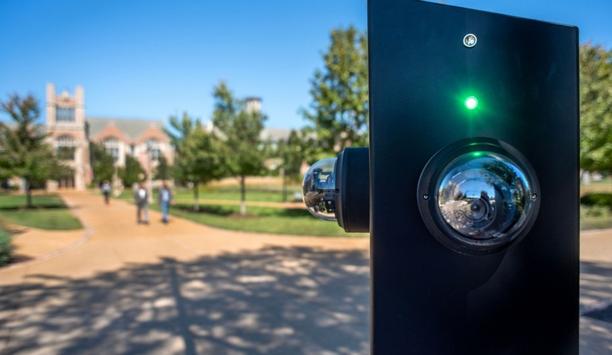
College campuses are meant to be places of learning, growth, and community. Fostering such an environment requires the deployment of policies and technologies that ensure safety and security. Considering the growing role of security technology in the higher education market, we asked this week’s Expert Panel Roundtable: What are the new applications for security technology in the college and university markets?

There is safety in numbers, or so the expression goes. Generally speaking, several employees working together tend to be safer than a single employee working alone. Even so, some environments require that workers complete their jobs alone, thus presenting a unique combination of security vulnerabilities. The U.S. Occupational Safety and Health Administration (OSHA) defines a lone worker as “an employee working alone, such as in a confined space or isolated location.” We asked this week’s Expert Panel Roundtable: How can security technologies help to protect "lone workers?"
Products

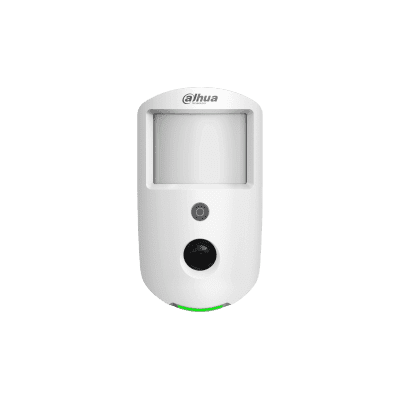






Videos


Institute security: Manufacturers & Suppliers

Technology's role in securing banks and financial institutions
Download
Security technologies promote real-time awareness in K-12 schools
Download
Integrated systems enable critical and compliant security for transportation
Download
Modernising physical access control
Download
Access. Intrusion. One estate.
Download