Hand geometry

Inner Range has released Integriti Idemia Biometric Integration Version 1.6, further strengthening Integriti's position as a unified security and access management platform through expanded biometric authentication capabilities and enhanced support for Idemia's latest biometric reader technologies. The Integriti Idemia Biometric Integration enables organisations to seamlessly combine advanced biometric authentication with Integriti's enterprise-grade access...

FARx, the world’s only fused-biometrics company, has launched the latest version of its software to help organisations stay ahead of AI-powered voice fraud. Advanced text-to-speech and voice cloning tools can now mimic human speech so convincingly that they are indistinguishable to the human listener, and legacy voice biometrics designed to authenticate human voices are unable to detect the difference. Recent data reveals a sharp rise in AI-related fraud, with 35% of UK businesses t...
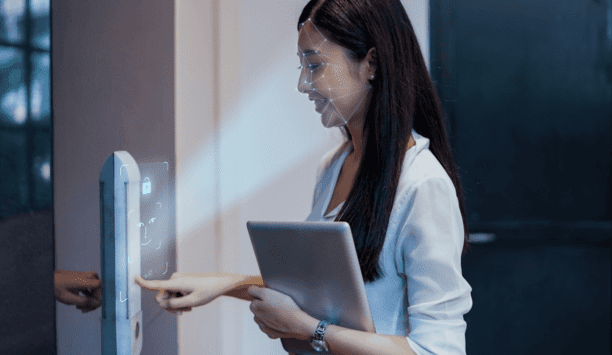
A lot has been said about door security — from reinforced door frames to locking mechanisms to the door construction — all of which is crucial. But what security measures are in place beyond the perimeter door in case the worst happens and it’s somehow breached? Hopefully, many more levels of access control are in place to prevent, or at least slow down, a perpetrator’s ability to compromise protected assets. Additional interior layers Interior security measures must...

iDenfy, a full-stack identity verification, compliance, and fraud prevention hub, has partnered with Virtual NGO, a US-based software company that helps licence NGOs and non-profit organisations. This partnership is designed to solve specific industry challenges and address the operational needs of such entities by ensuring complete Know Your Customer (KYC) compliance. With iDenfy’s verification software, Virtual NGO plans to scale faster and onboard more users, accepting global projects...

NEXT Biometrics has launched a new fingerprint sensor in response to customer requirements. The ‘L1 Slim’ is a new addition to its NEXT Basalt FAP 20 product series (formerly NEXT Access 300 series) and is the thinnest sensor of its kind, while maintaining the same security and performance. This optimises the integration process for identity verification module, point of sale terminal, tablet and other device makers. The sensor is also certified for use in India’s...

RealMan Robotics, a major innovator in embodied intelligence and modular robotic systems, made a powerful impression at Automate 2025, North America’s premier automation technology event. At booth No. 1852, RealMan unveiled its latest lineup of intelligent ultra-lightweight robotic arms, dual-arm platforms, and self-developed joint modules tailored for industrial automation, precision manufacturing, and human-robot collaboration. Dual-Arm lifting platform RealMan’s embodied dual-a...
News

iDenfy, a RegTech pioneer in identity verification and fraud prevention solutions, announced a new partnership with iGaming Express, a trusted consultancy company specialising in high-risk industries with a strong focus on the iGaming sector. By integrating iDenfy’s AI-powered identity verification software, iGaming Express will help its clients improve their verification flows through better conversions and complete compliance with Know Your Customer (KYC) regulations on a global scale, no matter the industry or jurisdiction. Complexities of international regulations iGaming Express is a consultancy known for its deep expertise in helping clients iGaming Express is a consultancy known for its deep expertise in helping clients navigate the complexities of international regulations, especially in heavily regulated, high-risk industries, such as iGaming. The company offers a comprehensive suite of services, including licencing support, strategic business planning, and legal advisory on various compliance matters, including KYC regulations, all tailored to its clients’ industry specifics. Innovative and more precise technologies As businesses operating in highly regulated sectors face rising scrutiny from global regulators, identity verification has emerged as a crucial element in maintaining compliance and protecting against fraud. With the increasing shift of high-risk industries to digital platforms, iGaming Express team’s main goal is to strengthen client trust and compliance through innovative and more precise technologies. iDenfy’s cutting-edge identity verification software iGaming Express looked for a fully automated KYC solution to meet these challenges Due to this factor, and the need to scale on a global level while catering to different clients’ needs, the consultancy platform decided to integrate iDenfy’s identity verification solution and improve remote onboarding for its partners. iGaming Express looked for a fully automated KYC solution to meet these challenges without sacrificing customer experience. Currently, with iDenfy’s cutting-edge identity verification software, the company can provide its clients with real-time biometric authentication and document verification across more than 200 countries. This shift has enabled iGaming Express to onboard clients seamlessly and securely. ID verification solution According to Domantas Ciulde, the CEO of iDenfy, businesses that deal with high-risk clients, for example, fintech or crypto platforms, including other industries like iGaming and sports betting, need to have specific licences in line with their operating country and jurisdictional requirements. iDenfy has partners all around the world, with expertise in helping onboard such high-risk clients. “Our ID verification solution detects risks in real-time, preventing bad actors from accessing services in the very first step of the customer journey,” explained Domantas Ciulde. iDenfy’s AML screening iGaming Express plans to incorporate iDenfy’s AML screening and KYB tools to enhance further The integration of iDenfy’s verification technology into iGaming Express's digital infrastructure has already yielded significant improvements. The automated system validates user identities through secure facial recognition and cross-referenced document checks, helping eliminate the possibility of fraud through fake as well as duplicate identities. As part of their roadmap, iGaming Express plans to incorporate iDenfy’s AML screening and Know Your Business (KYB) tools to further enhance their due diligence processes. Level of assurance and efficiency “When one of my trusted partners recommended iDenfy, the decision was clear. Our operations are fully remote, and until now, verifying a client’s identity without face-to-face interaction was challenging." "iDenfy brings us a level of assurance and efficiency we couldn’t find elsewhere. It allows us to verify identities instantly, while reducing risk and ensuring we meet our regulatory obligations,” noted Alex Szilaghi, the CEO of iGaming Express. Collaboration with iGaming Express “At iDenfy, we understand the unique compliance and fraud prevention needs of high-risk industries. Our collaboration with iGaming Express ensures that they can remotely verify client identities with accuracy and speed." "This is about more than compliance; it’s about enabling safer digital interactions and protecting both the business and its customers,” added Domantas Ciulde, the CEO of iDenfy. Complex identity manipulation Fraud schemes can involve complex identity manipulation and cross-border financial crimes In industries like online gambling, where fraud schemes can involve complex identity manipulation and cross-border financial crimes, reliable identity verification becomes essential. According to industry research, identity fraud contributes significantly to global financial losses, with the projected cost of online fraud expected to surpass $100 billion by 2029. Regulatory bodies worldwide are mandating tighter controls, and businesses are under pressure to implement reliable onboarding processes that prevent misuse while maintaining a smooth user experience. iDenfy’s scalable RegTech solutions As more high-risk sectors digitise their operations, collaborations like this serve as an example of how identity verification technology can drive both operational efficiency and long-term trust. With iDenfy’s scalable RegTech solutions, iGaming Express is well-positioned to continue delivering compliant, secure, and client-focused services in the evolving digital age.

When it comes to ensuring the security of the home, business, or any other property, high-end locksmiths in the UK play a crucial role. These professionals are experts in enhancing the security of the spaces and providing advanced solutions for the locksmithing needs. KBO Fire & Security answers some key questions about high-end locksmiths in the UK and how they can find the best in the business. What do locksmiths change? Locksmiths are skilled in changing, repairing, and installing various types of locks. Traditional Locks: This includes replacing or repairing traditional locks found on doors, windows, and cabinets. High-Security Locks: High-end locksmiths are experts in installing and maintaining high-security locks, providing an extra layer of protection for the property. Anti-Snap Locks: Anti-snap locks are designed to resist snapping attacks. High-end locksmiths can install these locks, making it difficult for burglars to break in. Can locksmiths open any door? A professional locksmith has the tools and knowledge to unlock them without causing damage Locksmiths are highly skilled at opening most types of doors and locks. Whether it’s a traditional lock, an electronic lock, or a high-security system, a professional locksmith has the tools and knowledge to unlock them without causing damage. However, it’s essential to provide proof of ownership or legal access when requesting such services to ensure security and legality. Can anti-snap locks be broken? While anti-snap locks are highly resistant to snapping attacks, no lock is entirely impervious to determined intruders. High-end locksmiths recommend combining anti-snap locks with other security measures to maximise protection. These locks significantly increase the time and effort required to break in, making them valuable to the security. How do I find a reputable locksmith? Finding a reputable locksmith is crucial to ensuring the security of the property. Here are some tips to help them locate a reliable, high-end locksmith: Verify the credentials: Ensure that the locksmith is licenced, insured, and certified by relevant industry bodies. Read the reviews properly: Look for customer reviews and testimonials to gauge the locksmith’s reputation. Ask for recommendations: Seek recommendations from friends, family, or colleagues who have used locksmith services. Check online directories: Utilise online directories like the KBO website for a list of certified locksmiths in the area. Request quotes: Obtain quotes from multiple locksmiths to compare services and costs. Verify their identification: Ensure the locksmith provides proper identification when they arrive at the location. KBO: Best residential locksmith service in the UK KBO offers high-quality locksmith services to secure the home and protect the family. Lock installations normally include five-lever mortice deadlocks, which must comply with standard BS3621. KBO is a proud member of the Master Locksmiths Association (MLA), specialising in residential locksmith services. In conclusion, high-end locksmiths are the partners in securing valuable assets. By choosing the right locksmith and the best security solutions, they can ensure peace of mind and safeguard the property against potential threats.

Invixium, a global provider of biometric access control and workforce management solutions, announces its participation at Intersec Saudi Arabia 2023, which is taking place from 3 to 5 October 2023, at the Riyadh International Convention & Exhibition Center, in Riyadh. Invixium will exhibit its full line of solutions focused on design, innovation, and superior quality. Saudi Arabia is making significant progress in the security industry and this event will bring together key government providers, agencies, organisational heads, and decision-makers in the region. Intersec Saudi Arabia 2023 Invixium's participation at Intersec Saudi Arabia 2023 is not just about showcasing products" “Saudi Arabia is a pivotal market for us," said Shiraz Kapadia, CEO & President at Invixium. “This region has witnessed immense growth and we will continue to invest in this thriving economy that embraces technological advancements and business development with open arms." He adds, "Our focus is to contribute to this transformative journey – Vision 2030, by offering our solutions to government and private sector enterprises in verticals like oil and gas, utilities, airports, hotels, and education. Invixium's participation at Intersec Saudi Arabia 2023 is not just about showcasing products; it underscores our unwavering dedication to enhance security measures in the Kingdom through world-class biometric access control and workforce management solutions.” Invixium’s array of products Taking center-stage will be Invixium’s array of products and solutions including IXM TITAN, their flagship solution for access control, workforce management, and visitor screening. This is the most advanced face recognition solution that boasts rugged construction, modern design, and dual biometric authentication. Among other standout products will be IXM TFACE–a highly versatile and slim dual biometric device, IXM VERTU–a thoughtfully engineered RFID card and mobile access reader, MERGE 2–an elegant fingerprint access control & time tracking device, and MYCRO–a simple fingerprint and card access control for door security. Latest IXM WEB 2.3 software With up to 3X faster face recognition speed, integration with Siemens SIPORT access control panel Furthermore, stepping into the spotlight will be the latest IXM WEB 2.3, a web-based, cloud-ready biometric software application. With up to 3X faster face recognition speed, integration with Siemens SIPORT access control panel software, and IndigoVision’s Video Management Software (VMS)–Control Centre, this enterprise-grade biometric software is known for its enhanced security and efficiency. Invixium's biometric products As the fastest-growing biometric brand in the Kingdom, Invixium has become synonymous with high quality, design, and innovation. Engineered to excel, Invixium’s solutions work in the most rugged and challenging environments where traditional access control solutions don’t work. Attendees of the event will have the opportunity to experience firsthand the capabilities of Invixium's biometric products and solutions on display in Hall 1, stand B-23 and interact with the company's team of biometric experts.

A biometric attendance system is a time and attendance tracking system that identifies and tracks employees' attendance using physical characteristics such as fingerprints or iris scans. This type of system is useful for tracking employee attendance, preventing time theft, and improving security. Time is money in this world. That is why businesses must find ways to reduce time wasted. Businesses can accomplish this by implementing a biometric attendance system. This article will explain how biometric attendance systems work and how they can benefit users' businesses. What is a biometric attendance system? A biometric attendance system is a time and attendance (TNA) system that uses biometric technology to verify employees' identities and track the time they enter and exit the workplace. If the user company uses a biometric attendance system, user employees will need to utilise the time and attendance machine's built-in biometric sensor to scan their face, fingerprints, iris, or hand geometry. The employee's arrival and leave timings will subsequently be recorded by the biometric attendance system. After collecting this attendance data, it can be utilised for a wide variety of purposes, including but not limited to creating attendance reports and determining salary and overtime pay. Biometric attendance systems use a biometric attendance machine, like a fingerprint time clock, or a biometric device, like facial recognition terminals or mobile ID terminals, along with biometric attendance tracking & management software to track employees' attendance. Accurate and cost-effective They are commonly recognised as more accurate and efficient than traditional attendance systems that simply use credentials like badges or ID cards, the saved time through biometric attendance systems can be used to positively affect employee morale, reduce costs and enhance employee productivity. Biometric attendance also helps businesses save time and money, especially if the user has multiple people working at different times of the day or on different shifts. Physical security access control systems It is much simpler to confirm an employee's identity before allowing them to enter restricted areas Because biometric attendance systems can also be used in physical security access control systems, it is much simpler to confirm an employee's identity before allowing them to enter restricted areas when these systems are put into place. Verifying the identification of an employee to ensure that they have safe access to the workplace while also keeping track of their attendance and absences in the system is made incredibly simple by this method. Industrial applications and physical characteristics Biometric attendance can be used in various industries including manufacturing, construction sites, restaurants, retail, and more. Since a biometric attendance management system uses physical characteristics to identify employees, it's not susceptible to theft or tampering. With a simple scan of a worker's face or fingerprint, businesses can ensure that every employee who is expected to be at work is there, eliminating the possibility of buddy punching (when one employee clocks in and out for another), proxy attendance, or fraud. Key features When it comes to biometric attendance systems, they are offered in a wide variety of configurations so that businesses can select the one that best meets their requirements and fulfills their needs. Nevertheless, there are a few key features that need to be included in every biometric attendance system. The ability to store and retrieve information about employees and their attendance records These include the capability to store and retrieve information about employees and their attendance records, as well as the seamless integration capability with the existing payroll system and time clock. Other features include the ability to store and retrieve information about employees and their attendance records. A biometric attendance system typically consists of the following key features: Enrollment of new employees using biometrics: One of the most essential features of a biometric attendance system is its ability to use a biometric attendance machine and biometric attendance system software to enroll and identify employees using their face, fingerprint, or iris. This feature makes it much easier to manage attendance and also provides a much more accurate attendance record, lowering the risk of fraudulent activities. Setting attendance rules: Biometric systems should allow administrators to easily set attendance rules and regulations. They can configure these rules based on many parameters such as employee type, department, shift, and so on. This means that a company can tailor attendance policies for different employees based on their job function and kind of work. Absence management: Because biometrics can be used for both authentication and identification, they can also be used for absence management. In the event of an emergency or other critical situation, in which the company needs to know if all of its employees are present and safe, this function can be invaluable. Business trip management: Business trip management through biometric attendance systems helps employers track both the time and location of their employees. This can be extremely helpful for individuals that have to travel a lot for their job, especially in industries like logistics or sales. Mobile app for employee mobile attendance: Employees can use their smartphones to manage their attendance by downloading a mobile app. This feature of the biometric system makes it extremely easy for employees to clock in/out, apply for leave, and submit emergency leave requests, among other things. Time & attendance reporting: This feature makes it simple for HR management to analyse patterns of attendance, and working hours, calculate wages, and prepare for payroll, among other things. Additional features There are also some additional features of the biometric system for tracking time and attendance, such as: Automatic attendance alerts: By sending out reminders when employees' attendance is overdue, users can better manage their staff's time. If an employee clock in at the office after their shift has ended, sensors will notify HR immediately. The biometric attendance system can also be set to record attendance at particular times, such as when employees leave work for the day. Employee scheduling & dispatching: Employees are automatically scheduled for shifts by using this feature of the biometric system. Employees can also be automatically dispatched to work by the biometric system. For example, if a truck driver arrives at the warehouse, he or she can be automatically dispatched to the loading dock and assigned a truck. This saves employees the hassle of having to go through the HR department and makes it easier for businesses to operate. All of these key features can be performed automatically with the help of the authentication speed and accuracy provided by biometrics technology, saving businesses time and money and providing a more efficient, streamlined system; additionally, employees will be able to get to work faster and more efficiently. A biometric attendance system, unlike traditional attendance systems, also includes extra security and privacy safeguards to ensure that an employee's biometric data is only utilised by authorised users. 5 Benefits in business: There are several advantages of biometric attendance systems over more conventional methods of tracking employee presence. Some of the most important benefits are as follows. 1) Increased Security: Biometric attendance provides a higher level of security as physical characteristics are unique to each individual Biometric attendance systems provide a much higher level of security than traditional time and attendance methods because physical characteristics are unique to each individual. For example, when an employee uses a biometric attendance register, their identity is quickly and reliably verified through their physical characteristics such as fingerprints or face scans. Biometric attendance systems also get rid of the need for time cards and ID badges, which are easy to lose or steal. Security access control To enhance data security and prevent theft, biometric attendance systems can also be used for security access control. When access control is integrated with biometric time and attendance, the system can manage the security of both users' businesses and the building as a whole by controlling access to employees. A more secure environment is possible as a result of this method being implemented. Not only can these systems be used to improve security and efficiency in business offices, but also schools. Additional security By using a student biometric attendance system, schools and universities can effectively monitor the attendance of their students and ensure that students do not "buddy-punch" each other to gain access to classes for which they may not be registered. Furthermore, schools and universities can quickly identify students on campus, adding a layer of security. 2) Improved Employee Efficiency: Employees will no longer have to rely on punch cards or manual sign-in sheets Employees can clock in and out more easily with the help of biometric time & attendance systems. Additionally, these systems enable more accurate and automated tracking of employees' attendance, which in turn makes HR and payroll departments more efficient. Furthermore, with an application for biometric attendance, employees will no longer have to rely on punch cards or manual sign-in sheets; allowing them to spend less time signing in and more time focusing on their tasks at hand. Biometric attendance systems provide more accurate information about the number of people present at work on any given day. This improves working efficiency for departments such as finance and business operations, allowing for more efficient scheduling and cost savings. 3) Reduces Payroll Costs: Biometric attendance systems can automate the time and attendance process, reducing the time-consuming manual paperwork that is typically required to pay an employee. Furthermore, biometric systems can eliminate payroll errors caused by illegible handwriting or "buddy punching," as well as other types of time theft that can cost users' companies a lot of money. 4) Increased Employee Satisfaction: A time and attendance system that is quick, precise, and easy to use will lead to happier workers. It is possible to do so with biometric attendance. Moreover, the system adds a layer of convenience with self-service capabilities that help workers operate more efficiently and boost their overall happiness with the organisation when used in conjunction with the mobile attendance app. 5) Easy to Deploy and Integration: The biometric time and attendance system are simple to install and integrate; most systems are easy to deploy and do not require extensive IT support. In terms of software, most biometric attendance software is designed to be plug-and-play, which means users don't need to create a new program or redesign their existing software; instead, they can be easily integrated with user existing HR software or other business systems such as payroll, HRIS, and other business applications. In terms of hardware, the biometric devices used in attendance systems are mostly compact and simple to install; they offer multiple interfaces such as RS232, USB, Ethernet, WiFi, and more, allowing users to connect them to their existing door access controllers easily. Conclusion: In conclusion, biometric attendance systems are beneficial to businesses in many ways, including accurate time and attendance tracking, heightened security, and enhanced productivity from staff. It can be used to keep better controls on employee attendance, which in turn reduces payroll costs for businesses. Biometric attendance systems can also offer users with real-time data to help the make informed personnel decisions. It is a simple and successful method for increasing the user company's bottom line. When making a selection, keep in mind the business ’ needs as well as the features that are most important to them.

Alcatraz AI, the pioneer in autonomous access control using 3D facial authentication and AI to create safe spaces, has raised a US$ 25 million Series A round. The round was led by Almaz Capital and included EBRD (The European Bank for Reconstruction and Development), Endeavour Catalyst, Silverline Capital and Golden Seeds, along with participation from existing investors JCI Ventures (the corporate venture arm of Johnson Controls), Ray Stata and LDV Partners. Series A funding round “At Alcatraz AI, we believe that safety and security is the first principle and we are committed to leading a new era of frictionless access control by leveraging the unique power of the human face to make accessing spaces as secure, quick and easy as unlocking your phone,” said Tina D’Agostin, CEO of Alcatraz AI. Tina D’Agostin adds, “We are excited to enter the next phase of our company's growth by partnering with our investors with a strong track record scaling companies globally that deliver next generation technology.” Next generation solutions The US$ 70 billion physical access control market is in need of next generation solutions The US$ 70 billion physical access control market is in need of next generation solutions that enable more modern and secure ways of unlocking where people work, live, study and play. The most commonly used credential to enter secured spaces is an access card that can be lost, replicated, or stolen. Alternative technologies, such as mobile and legacy biometric systems have not gained mainstream momentum due to implementation and user challenges. Transform the experience Since its founding in 2016, Alcatraz AI set out to transform the experience of entering spaces in the most highly secure manner, while enabling a completely passive and frictionless use case at doors for occupants and the security teams that manage them. Alcatraz AI’s flagship product, the Rock, is deployed at some of the most successful enterprises in the world, including 25 of the Fortune 500. Since 2020, the company has seen massive growth in the US and globally, with over ten countries deploying Alcatraz solutions, securing over 1 million employees. Almaz Capital Almaz is always on the lookout for technology applications that disrupt and transform established industries" Almaz Capital, a venture capital fund headquartered in Silicon Valley with offices in Berlin, focuses on disruptive deep-tech companies in the B2B software space. “We are thrilled to add Alcatraz AI to our portfolio of 25 companies,” said Daniil Stolyarov, Partner, Almaz Capital. “Almaz is always on the lookout for technology applications that disrupt and transform established industries. Alcatraz applies artificial intelligence to ensure that security, privacy and convenience is possible for autonomous access control.” Global expansion Alcatraz AI will focus on global expansion and product innovation to meet a variety of use cases as organisations continue to modernise their access control systems. “We are excited to support the team as it scales its biometric authentication technology to make entrance to buildings and spaces secure and frictionless,” notes Aziza Zakhidova, Principal, EBRD’S Venture Capital team, an early and growth stage equity investor for technology companies out of emerging Europe.

Does the user want to protect their build more conveniently and efficiently near? Then biometric access control might be exactly what user's looking for. Biometric access control systems are gaining popularity as a more secure way to safeguard physical places such as offices, government buildings, airports, hospitals, and department stores. Research findings According to the most recent FACT.MR research, the biometric access control segment is expected to dominate the physical access control system market, with a compound annual growth rate (CAGR) of 10.5%, and is poised to create a 5 billion dollar opportunity from 2021 to 2031. When compared to passwords, PIN codes, or token-based access control systems, biometric access control systems are more secure, convenient, fast, and cost-effective. But where does the user begin with it? In this guide, Aratek will go over the basics of biometric access control systems and why they're worth investing in. What is a biometric access control system? A biometric access control system determines whether or not to let a person into a building or a specific room based on the individual's unique physical biometric characteristics. It works by comparing something unique about the person such as the face, fingerprint, iris, palm, and hand geometry to a database of stored biometric templates about authorised users. If there is a match, the person is allowed in; otherwise, the person is denied access. It provides significant physical security benefits for protecting a wide variety of locations from intruders. These kinds of security systems have been widely used by a lot of enterprises and organisations to safeguard a broad range of locations, including commercial buildings, airports, banks, schools, and government facilities, among others. So, let's start from the beginning: what components make up a biometric access control system? Key components A biometric access control system primarily consists of two components: biometric terminal hardware and access management software: 1) A biometric terminal hardware, (such as a facial recognition terminal), authenticates users by comparing their biometric data against stored information. A biometric access control terminal is a device that combines biometric readers or sensors such as a facial recognition camera, fingerprint scanning sensor, iris scanner, and so on into a single compact device to provide secure access without the use of passwords. It is classified into the following popular access control device types based on the biometric characteristics it employs: Facial Recognition Terminal (with camera). Fingerprint Recognition Terminal (with fingerprint scanner). Iris Recognition Terminal (with iris scanner). Palm Vein Recognition Terminal (with infrared light). Hand Geometry Recognition Terminal (with hand geometry scanner). Multi-Factor Authentication Terminal (with multiple sensor readers such as RFID card reader, barcode scanner, or multi-biometrics scanners to build a more flexible and robust access control security solution.) 2) A biometric access control management software, which enrolls user information and biometric data, sets access control policies, and can even manage biometric terminals remotely across multiple sites. A biometric access control management software acts as a conduit between users, administrators, and biometric terminals. It allows administrators to enroll users with their personal information as well as their biometric data. Administrators can also utilise the software to create biometric controls and access policies that control user access within a facility based on the time of day, location, and even employee status (e.g., new hire). Time and attendance capabilities Additionally, some biometric access control software solutions provide time and attendance capabilities as well as powerful device management tools. The time and attendance features allow the access security system to control access while also tracking attendance. Furthermore, the device management features enable administrators to configure, maintain, monitor, and diagnose all access control terminals using a simple web platform, allowing them to perform maintenance tasks without physically visiting the terminal. The biometric devices and software work together to create a versatile biometric physical access control solution that helps businesses and organisations secure access while protecting assets and preventing unauthorised individuals from entering buildings and facilities. Workflow Let's dig a little deeper to see what happens when biometric technology is used to manage access control activities. A common example of this would be an office building where only authorised personnel have access to its door entry, checkpoints, or certain areas. The entire workflow would be as follows: Enroll Users: Administrators can enroll users or employees in the access management system by capturing their faces, fingerprints, iris or palm veins, and so on with biometric terminal devices. Set Up Access Privileges: After users have been enrolled, administrators can assign rules based on user roles, permitting them to perform specific actions within the system. When the process was finished and activated, enrolled users could use their biometric credentials to unlock doors and gain access to secure areas within the building. Capture Biometric Data When Gaining Access: When users attempt to gain access, the biometric access control terminal scans them. Users' facial scans, fingerprint scans, or iris scans are captured by the terminal devices' sensors. Verify Identity: The system controller receives information and determines whether or not the user is permitted to enter the building or specific areas. Users are granted access if their biometric data matches that of the enrolled users and the rules that have been set. They will be denied entry if their biometric data does not match (an alarm will be triggered in real-time). Create Access Control Events and Reports: The access management system keeps track of who is in the building or specific area at any given time and generates reports based on that information. Example If someone attempts to pass through without being recognised by the biometric, alarms will sound Here's a real-life example of how biometric access control works to secure a building. Consider the following scenario: A user utilises biometrics for a physical access control system to ensure that only authorised personnel is permitted to enter the building. Employees must first enter the office through a locked door or turnstiles when they come to work each day. They have to first provide biometric identifying credentials such as their face, fingerprint, or iris to the biometric access control terminals before they can enter. Access will be granted if he or she does have the proper authorisation. If someone attempts to pass through without being recognised by the biometric terminal device, alarms will sound and security guards will rush to the scene. Types of biometric access control systems Doesn't it sound promising? So, let's go on to explore the different types of biometric access control systems so that users have more information to think over before deploying biometrics for a physical access control system to secure their organisation. There are various types of biometric access control systems in use today, which can be classified based on their functionality and authentication methods. 1) Based on authentication methods: Biometric access control systems are categorised into two broad categories based on their authentication methods: Single-factor authentication biometric access control: These systems use only one form of biometric to authenticate users (e.g., facial recognition, fingerprint recognition, iris, or palm vein recognition). Multi-factor authentication biometric access control: These systems necessitate the use of two or more types of biometrics as well as additional authentication methods (for example, face + fingerprint, face + RFID card, fingerprint + PIN codes, and so on). 2) Based on how biometric terminal devices are used: There are two types of biometric access control systems based on how biometric terminal devices are used: contact and contactless (or touch and touchless). Contact biometric access control: These systems require the user to touch something before entering the secured area. For example, users need to touch the fingerprint sensor on the biometric terminal to capture fingerprint identification scans. Contactless biometric access control: These systems allow the user to enter a building without touching anything. For example, users simply scan their faces, a contactless RFID card, or an NFC mobile device to gain access - without touching anything. During the COVID-19 period, the contactless biometric access control system is gaining popularity to protect users from catching the virus by entering public places such as grocery stores, restaurants, banks, and other businesses. It usually has body temperature sensors and masks detection technology built in to provide a complete solution to ensure safety and hygiene. Why use a biometric access control system? Following the discussion of the access control system's technological components, Aratek will go over the benefits of using a biometric access control system and how it can help users' organisation and businesses. Biometrics for access control systems have grown in popularity in recent years because of their simplicity of use, security, and a range of far-reaching benefits. Here are four benefits why users should think about incorporating biometric technologies into their access security systems: 1) Secure Security concerns are always a motivator for organisations to implement biometric access control systems Biometric security technologies outperform traditional access control authentication methods such as PIN codes and passwords in terms of accuracy and security. Because the user has provided unique physical attributes, the biometric access control system eliminates the possibility of an unauthorised person gaining access to the building. Security concerns are always a motivator for organisations to implement biometric access control systems. For example, to boost security and manage staff in an automated manner, biometrics spending in European companies will continue to grow, reaching $6.1 billion by 2026, at an 18% five-year CAGR from 2021 to 2026, according to an IDC report. The real-world application: Biometric access control systems are a secure and accurate way of ensuring only authorised personnel to have access to sensitive healthcare facilities, patient records, and electronic health records. Increasingly, clinics and other healthcare facilities are turning to biometric technology to protect confidential patient data. A biometric system eliminates the need to remember passwords or carry physical security cards and ensures that only authorised personnel can gain access. Biometrics is particularly suited for healthcare organisations as it provides an extra layer of security that traditional authentication methods cannot offer. 2) Convenience Using biometrics for access control systems allows users to unlock doors without needing to remember any passwords. This means that users will not waste time looking for their keys or guessing user passwords. To open the door, users simply scan their faces, fingerprint, or eye. This makes gaining access much easier and more convenient for users while maintaining security. 3) Quick and Efficient A biometric access control system can allow employees to bypass the line by scanning their faces or iris One of the significant benefits of using biometric access control systems is to speed up the process of gaining entry into a building or specific areas. For example, consider a company that has a large manufacturing base with thousands of employees who must gain access to the factory daily. Instead of entering a password, a biometric access control system can allow employees to bypass the line by scanning their faces or iris, dramatically reducing access time and increasing user satisfaction. 4) Cost Saving Adopting a biometric access control system in user business can help them save money in the following ways: By prohibiting unauthorised employees from accessing the corporate property, biometric access control systems can save user money and help users avoid employee theft. Biometric technology makes it simple to identify who is entering a building and confirm that they have permission to do so. It can also easily prohibit employees who have been sacked or fired from gaining access to secure areas again. Biometric access control systems allow users to gain access to the building by using their face, fingerprint, or other distinctive attributes. In comparison to traditional access methods that use physical keys, tokens, fobs, or cards, this eliminates the need for replacements; that means users no longer have to pay the cost of replacing lost keys or cards. Adopting a biometric access control system can also reduce the number of false alarms, requiring fewer security guards to be employed. If users have a multi-entry office building, a biometric access control system allows users to use a single guard to monitor all doors through a centralized platform, rather than assigning someone to each entrance. If the biometric access control solution supports integration, users will be able to combine it with a third-party security system. With this benefit, users can quickly add biometric technology as an additional layer to their existing video surveillance system to increase business security eliminating the need to acquire a separate solution and saving user money. How to choose a biometric access control system that delivers? In the preceding sections, Aratek discussed what a biometrics access control system is and how it can benefit users. It’s time to learn how to pick the right solution. It has included three factors to consider below to help users choose the best one for their security needs. 1) Determine What Type of System User Need The first step in selecting a biometric access control system is determining what type of system the user needs. This question is related to the size and industry type of the organisation, the location user wants to deploy in, and the security levels they want to archive. For example, If users have a large building with a lot of employees and doors, they might need a multi-factor biometric access control system that combines facial recognition with RFID cards to quickly identify users while maintaining a higher level of security. If users require something more sophisticated, such as the ability to track employee attendance and check body temperature as they enter the building, a contactless system with attendance management features may be required. A user may also need this contactless system to provide extensive APIs so that the user can easily integrate it with any existing time attendance system and video surveillance system. 2) Evaluate User Experience A user must ensure that users do not have to think about anything while using the system Second, user experience is critical for adaptation, which means ensuring that users such as managers, administrators, and employees can use the biometric technology without becoming confused or frustrated. Biometrics should be simple to understand and use. A user must ensure that users do not have to think about anything while using the system. To archive, this, select a good biometric access control system with clear instructions and simple setup procedures. It should also have user-friendly features that allow administrators to quickly learn how to operate and manage the system while also putting users at ease. user will also save time and money by not having to hire an IT specialist to set up and manage the system. 3) Select a Solution That Fits The Budget Finally, once users have chosen what type of biometric access control system would fulfill their security needs, they may search for systems that are within their budget. When balancing user budget and access control purposes in this step, there are several factors to consider. For example, should users seek a provider who offers a total solution for combining biometric devices and software? or should users purchase hardware and software from separate vendors? When users consider the cost of installation, maintenance, and support services, selecting a total biometric access control solution may be the most cost-effective option for users. An overview Biometric access control systems are becoming a popular choice for access control due to their ease of use and advanced security features. It is widely used to boost identification accuracy levels and strengthen security in a variety of access control applications. Many organisations still rely on traditional types of access control authentication, such as magnetic swipe access control cards and PINs. These methods may be vulnerable to fraud and theft, and they are frequently cumbersome and slow. This is where biometric access control systems come into play. By incorporating biometric technology into user physical security systems, they can eliminate the need for keys, passwords, and cards. This simplifies things for everyone, including building managers and employees.

Expert commentary
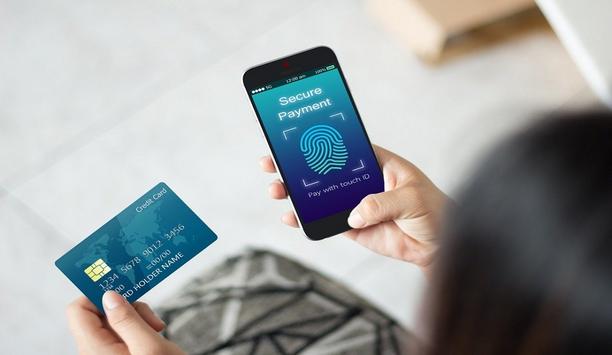
The growing mobile ownership rate, the emergence of more user-friendly banking apps, the tech-native younger generation, and, of late, the pandemic-induced shift to online, all create a fertile ground for mobile banking. Unfortunately, the acceleration of banking app adoption today goes hand in hand with the increase of targeted security threats. In 2022, a month wouldn’t go by without a headline-making mobile banking attack or incident that resulted in stolen funds and sensitive personal information from thousands of users. Security as an afterthought Nevertheless, a fair share of BFSI companies persists to treat security as an afterthought during and after mobile banking app development. The 2021 State of Mobile Banking App Security report shows that 82% of enterprise executives consider mobile channels important. However, 39% of respondents did not run any vulnerability analysis or penetration tests on their mobile solutions. Five-step guide Neglecting a banking app’s security is a dead-end track that leads to severe financial repercussions In the turbulent threat landscape of today, neglecting your banking application’s security is a dead-end track that leads only to severe financial and reputational repercussions. Being banking software developers with a long-standing experience in cybersecurity, we devised a five-step guide to help financial institutions build shell-proof mobile banking apps, maintain them this way, and safeguard customers from mobile security troubles. #1: Test security throughout SDLC and beyond The safety of mobile banking is a subject of many regional and industrial standards, so companies traditionally design the security architecture of their apps around these guidelines and call it a day. While regulatory compliance is vital, financial institutions often mistakenly bank on it alone and perform security-related activities late in the SDLC. As a result, there is a good chance pre-release quality assurance (QA) can discover deeply ingrained security flaws that will require fundamental corrections. What’s even worse, if the QA fails to do so, the app will be released with inherent vulnerabilities. Threat modeling Engineers should not only implement security controls into the source code but also review it for bugs and flaws The best way to make an app safe by design is to integrate security testing into the development lifecycle. At the start of the project, the team needs to explore relevant external and internal threats and, drawing on the analysis, specify security requirements for the application alongside functional and performance ones. At the design stage, it’s a great practice to perform threat modeling, as it allows developers to understand which elements of the app require protection most and what security controls will fit the purpose. Also, during the application development, engineers should not only implement security controls into the source code but also review it for bugs and flaws at each iteration. Thus, all vulnerabilities are rooted out immediately, before the app goes to production. #2: Implement a strong authentication layer Access control is the foundation of security, and mobile banking is no exception. By equipping an app with a proper authentication mechanism, banks ensure that only the customer is allowed to view and manage their personal funds, while third parties, malicious and not, are kept out, thus eliminating the risk of unauthorised access. Despite remaining a predominant user authentication method, passwords have long been showing their insufficiency in the modern threat landscape. Two-factor or biometric authentication Relying on physiological human characteristics to identify a person is highly accurate and spoof-proof Two-factor authentication, on the other hand, has many uses in the financial industry, and app user verification is one of them. Requiring two separate forms of identification, commonly a password and a single-use code sent via SMS, push notification, or email is still a much stronger secure option than passwords. Biometric identification is an authentication technology that gained traction only recently, but its efficiency propelled its adoption as a verification method in mobile apps across industries, with finance leading the way. Relying on physiological human characteristics, such as fingerprints, facial features, voice, or iris to identify a person, the technology is highly accurate and spoof-proof. #3: Encrypt user data and communications Financial institutions are no strangers to encryption. Most banks today leverage the virtually unbreakable 256-bit advanced encryption standard (AES) or equivalent methods to make customers’ personal and payment information inaccessible to unauthorised parties. Needless to say, a mobile banking app should incorporate similarly robust encryption mechanisms to protect user data. It can be the customary AES, but it can also be another encryption technology that fits the app’s specifics better. Transport Layer Security protocol It’s necessary to bake in specialised encryption mechanisms for securing app-to-device communication It is also important to secure the traffic between the app and the server, and the Transport Layer Security protocol (TLS) fits the bill here. Things can get more challenging if you plan on integrating your mobile app with wireless BLE and IoT technologies for proximity-based marketing, in-branch experience personalisation, and wayfinding. In this case, it’s necessary to bake in specialised encryption mechanisms for securing app-to-device communication and ward off man-in-the-middle attacks. # 4: Integrate in-app protection In recent years, due to the growth of malware targeting applications, bank customers were increasingly plagued with malicious software of all stripes. Of course, these days, there is strict oversight over financial cybercrime, and specialised law enforcement together with private-sector IT specialists usually take prompt measures to disarm emerging malware. Nevertheless, considering the steadily growing adoption of mobile banking, malicious software targeted at new apps will continue surfacing monthly while the existing scripts will be upgraded to circumvent dedicated safeguards. In-app protection By relying on in-app protection, banks can efficiently shield their app from emerging attacks To be a step ahead of the attackers, financial institutions need to embrace a more comprehensive approach and consider bolstering source-code security controls with robust in-app protection features. Designed by cybersecurity tech companies, in-app protection is a set of tools that can be easily integrated into an application. These solutions typically include mechanisms for security monitoring and malware detection, network connection manipulation, and external tampering that vendors update on a regular basis. Thus, by relying on in-app protection, banks can efficiently shield their app from emerging attacks. #5: Raise customers’ security awareness Regrettably, after the release, your mobile banking app’s security is not completely in your hands. Users' poor choices can easily obliterate all the efforts towards building and maintaining the solution impregnable. Some can turn off biometric authentication if they see no point in it, while others can click on a phishing link because it is sent from a domain looking just like yours. Hence, it’s not enough to deliver a highly protected mobile banking solution, you should also teach users how to render their app experience safe. Security education Banks need to educate their customers about the benefits and dangers of trusting third parties with app credentials First and foremost, banks need to educate their customers about good mobile banking security habits, from the importance of strong passwords and the benefits of two-factor or biometric authentication to the dangers of trusting third parties with app credentials and using public networks when conducting financial operations. However, banks should present this information in a detailed but engaging way, for example through short posts or animated videos, otherwise, there are a high chance customers will not bother to pay heed to it. Stay alert to stay secure Over the recent years, mobile banking has burgeoned, but with this growth came a whole new set of threats, exploiting apps’ inherent vulnerabilities, loose security controls, and customer unawareness, with the burden of warding them off falling on their owners. The battle for mobile banking security is ongoing, and to win it, banks need to respect security basics while also remaining open and flexible regarding emerging security tech.
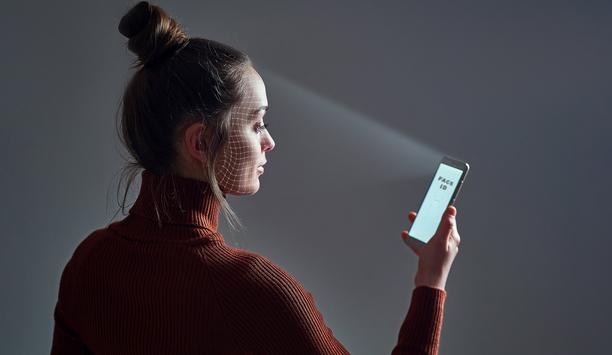
In the field of access control, face recognition has come a long way. Once considered too slow to authenticate people's identities and credentials in high traffic conditions, face recognition technology has evolved to become one of the quickest, most effective access control identity authentication solutions across all industries. Advancements in artificial intelligence and advanced neural network (ANN) technology from industry leaders like Intel have improved the accuracy and efficiency of face recognition. However, another reason the technology is gaining traction is due to the swiftly rising demand for touchless access control solutions that can help mitigate the spread of disease in public spaces. Effective for high volumes Face recognition eliminates security risks and is also virtually impossible to counterfeit Modern face recognition technology meets all the criteria for becoming the go-to solution for frictionless access control. It provides an accurate, non-invasive means of authenticating people's identities in high-traffic areas, including multi-tenant office buildings, industrial sites, and factories where multiple shifts per day are common. Typical electronic access control systems rely on people providing physical credentials, such as proximity cards, key fobs, or Bluetooth-enabled mobile phones, all of which can be misplaced, lost, or stolen. Face recognition eliminates these security risks and is also virtually impossible to counterfeit. Affordable biometric option Although there are other biometric tools available, face recognition offers significant advantages. Some technologies use hand geometry or iris scans, for example, but these options are generally slower and more expensive. This makes face recognition a natural application for day-to-day access control activities, including chronicling time and attendance for large workforces at construction sites, warehouses, and agricultural and mining operations. In addition to verifying personal credentials, face recognition can also identify whether an individual is wearing a facial covering in compliance with government or corporate mandates regarding health safety protocols. Beyond securing physical locations, face recognition can also be used to manage access to computers, as well as specialised equipment and devices. Overcoming challenges with AI So how did face recognition become so reliable when the technology was once dogged by many challenges, including difficulties with camera angles, certain types of facial expressions, and diverse lighting conditions? Thanks to the emergence of so-called "convolutional" neural network-based algorithms, engineers have been able to overcome these roadblocks. SecurOS FaceX face recognition solution FaceX is powered by neural networks and machine learning which makes it capable of authenticating a wide range of faces One joint effort between New Jersey-based Intelligent Security Systems (ISS) and tech giant Intel has created the SecurOS FaceX face recognition solution. FaceX is powered by neural networks and machine learning which makes it capable of authenticating a wide range of faces and facial expressions, including those captured under changing light, at different resolution levels, and varying distances from the video camera. Secure video management system A common face recognition system deployment begins with IP video cameras that feed footage into a secure video management system connected to a video archive. When the software initially enrolls a person’s face, it creates a "digital descriptor" that is stored as a numeric code that will forever be associated with one identity. The system encrypts and stores these numeric codes in a SQL database. For the sake of convenience and cost savings, the video server CPU performs all neural network processes without requiring any special GPU cards. Unique digital identifiers The next step involves correlating faces captured in a video recording with their unique digital descriptors on file. The system can compare newly captured images against large databases of known individuals or faces captured from video streams. Face recognition technology can provide multi-factor authentication, searching watchlists for specific types of features, such as age, hair colour, gender, ethnicity, facial hair, glasses, headwear, and other identifying characteristics including bald spots. Robust encryption SED-compatible drives rely on dedicated chips that encrypt data with AES-128 or AES-256 To support privacy concerns, the entire system features an encrypted and secure login process that prevents unauthorized access to both the database and the archive. An additional layer of encryption is available through the use of Self-Encrypting Drives (SEDs) that hold video recordings and metadata. SED-compatible drives rely on dedicated chips that encrypt data with AES-128 or AES-256 (short for Advanced Encryption Standard). Anti-spoofing safeguards How do face recognition systems handle people who try to trick the system by wearing a costume mask or holding up a picture to hide their faces? FaceX from ISS, for example, includes anti-spoofing capabilities that essentially check for the "liveliness" of a given face. The algorithm can easily flag the flat, two-dimensional nature of a face mask, printed photo, or image on a mobile phone and issue a "spoof" alarm. Increased speed of entry Incorporating facial recognition into existing access control systems is straightforward and cost-effective Incorporating facial recognition into existing access control systems is straightforward and cost-effective. Systems can operate with off-the-shelf security cameras and computers. Users can also leverage existing infrastructure to maintain building aesthetics. A face recognition system can complete the process of detection and recognition in an instant, opening a door or turnstile in less than 500ms. Such efficiency can eliminate hours associated with security personnel checking and managing credentials manually. A vital tool Modern face recognition solutions are infinitely scalable to accommodate global enterprises. As a result, face recognition as a credential is increasingly being implemented for a wide range of applications that transcend traditional access control and physical security to include health safety and workforce management. All these capabilities make face recognition a natural, frictionless solution for managing access control, both in terms of performance and cost.

Biometrics is most useful as an additional level of authentication — determining that you are who you say you are Over the years, the growth of biometric security technology has faced challenges of cost and pushback from users. Prices have been higher than more traditional technologies. In addition, users did not advocate storage of their personal biometric data by employers or the government. “I believe this is changing,” says Rueben Orr, CPP, vice president and co-owner of Denver-based Security Install Solutions and vice chairman of the ASIS International Physical Security Council. “People are using fingerprint technology to log into their computers and phone. They understand that this is a good way to protect the personal information stored in those devices.” “We’re also seeing new technologies. Some that we’ve seen include wearable technologies with some form of biometrics to identify who you are and using a phone to access a controlled door,” continues Orr. Traditional biometric technology Traditional biometric choices include fingerprint, hand print, iris recognition, retina recognition and voice recognition. The most frequently used biometric technology remains the fingerprint, observes Orr. Fingerprint readers are more affordable today, as are the software applications used to manage fingerprint systems. Retina recognition, which requires shining a light to the back of the eye, is still considered too invasive. Iris recognition, which looks at the pattern of the iris, is gaining popularity. “New biometric technologies are gaining traction, too,” says Orr. “Today, we are measuring heart rates, which are unique to individuals.” Security levels of authentication Biometrics is most useful as an additional level of authentication — determining that you are who you say you are. “We authenticate a person’s identity on three levels,” Orr says. “The first level is based on what you have — an access control card. Next there is what you know — a personal identification number or PIN. The third level is who you are, which is where biometrics come into play.” “Three factor authentication including biometrics is used to control access to high security doors like a server room or data centre.” Orr also cautions that two- and three-factor authentication can cause logjams if used improperly. “One government building in Washington, D.C., is the headquarters for a federal agency with 10,000 employees,” he says. “Most work at remote workplaces, but about 5,000 employees come into the building through turnstiles every day.” Biometrics is most useful as an additional level of authentication — determining that you are who you say you are “If it takes three seconds to authenticate each of those employees, it will take a long time to get people into the building every morning.” “Such busy buildings are creating exclusionary zones within the building where extra levels of authentication are used. Exclusionary zones include data centres, computer rooms, laboratories and other rooms that house sensitive materials and data. All federal agencies have these kinds of requirements today.” Credit card biometric systems Another developing area for biometric security technology is commerce, continues Orr. In light of the widespread news about identity theft and the online theft of customer information from retailers, Orr believes that credit card companies will eventually require biometric authentication to use a credit card. According to the Identity Theft Resource Center (ITRC), U.S. data breaches reached a record high of 783 in 2014, a 27.5 percent increase over 2013. To stem the tide of fraud, credit card companies are already developing biometric solutions. MasterCard and Zwipe, a technology developer based in Norway, are working on two credit card biometric systems, one for fingerprints and another for heartbeats. Affordability and convenience “I think that the financial industry will develop a biometric-based combination of digital certificates and wearable devices that will help to manage commerce securely,” says Orr. “As those solutions come to market, they will make it affordable to adapt them for use in physical security in ways that eliminate inconveniences.” “For instance, you might be wearing a bracelet that communicates with a reader and authenticates you as you reach for a door knob — eliminating the need to get a card out of your wallet, present it to a reader and then return it to your wallet.”
Case studies

Telaeris specialises in handheld readers for physical access control, emergency mustering, and identity validation. Their XPressEntry is a product line of rugged handheld devices capable of reading any badge technology, plus biometric authentication. Telaeris has deployed handheld badge readers for more than a decade. Telaeris purchased a wide range of embedded RFID readers from a variety of vendors to support the wide variety of badges in the industry. Unfortunately, each RFID module required custom integration and development, which was time-intensive. Worse, it only worked with a subset of card technologies. Telaeris required a powerful yet highly compact embedded RFID reader for its XPressEntry handheld multifactor access control solution. Telaeris team required an RFID reader with a small form factor for their next-generation handhelds A secure, universal reader technology When developing their XPID handheld badge readers, the Telaeris team required an RFID reader with a small form factor for their next-generation handhelds. It also had to be future-proofed by being able to read more badge technologies than any other handheld in the industry including SEOS, iClass, Prox, Indala, DESFire EV2, and PIV and simultaneously. For Telaeris and its XPressEntry product line security is a priority. They wanted encrypted keys to access credentials are stored securely in the reader and never leave, allowing identity badges to be simply presented to read customer secured data. Challenges Readers/writers must read an extensive array of card technologies used in the security industry Must have a very small form factor for embedded integration Must be easy to reconfigure to support customers deploying new badges or functionalities Must support storage of secure application keys inside the reader Telaeris needed to be able to quickly upgrade the reader module firmware to read the fingerprint template Flexibility to meet evolving customer needs Telaeris also needed the reader module firmware to be upgradable with minimal downtime. In one case, a customer requested an upgrade of their system to add multi-factor biometric validation using an integrated fingerprint reader in the XPressEntry product. Telaeris needed to be able to quickly upgrade the reader module firmware to read the fingerprint template, compare this to the live finger presented to the reader, and then provide the activity to the back-end access control system. Solutions The ELATEC TWN4 MultiTech 3 reader module supports all current RFID standards for the frequency ranges 125kHz and 13.56 MHz, and NFC for smartphones Small size fits the form-factor of customer hardware Supports quick, contactless remote configuration and updates Broad technical certifications covering most of the world With its flexible architecture and open API, the TWN4 MultiTech 3 reader module enabled remote reconfiguration to activate new customer card technologies and upgrade firmware to meet emerging security and functionality requirements. Results Configurable for all major card transponder technologies globally, the TWN4 MultiTech 3 reader module maximizes Telaeris’ market opportunities, eliminates inventory complexities, and helps them better serve customers using multiple card technologies. Their customers can now remotely reconfigure the XPressEntry to activate new card technologies and update the firmware to meet emerging security and functionality requirements Badge credentials are encrypted and securely stored in ELATEC's reader, providing Telaeris customers with secure, reliable user identification and access control. TWN4 MultiTech 3 reader module The ELATEC TWN4 MultiTech 3 reader module met Telaeris’ requirements and more. The reader is configurable for all major card transponder technologies globally, more than 60, maximising their market opportunities, eliminating inventory complexities, and helping them better serve customers using multiple technologies. And with its flexible architecture and open API, the TWN4 MultiTech 3 module can be remotely reconfigured to activate new card technologies or upgrade firmware to meet emerging security and functionality requirements. Telaeris’ XPressEntry is now the industry-pioneering handheld reader solution at schools, businesses, and government facilities.

Allegion’s Schlage HandPunch hand readers were installed, utilising turnstiles from the original construction project Allegion has completed a project to provide a biometric access control system at one of Europe’s largest ever construction projects, Queen Elizabeth Olympic Park, with the system installed verifying the credentials of over 10,000 workers during an 18-month build project. The project formed part of a £292 million construction scheme to transform Queen Elizabeth Olympic Park into its legacy state following the success of the 2012 London Olympic Games. It is second time Allegion has been involved in the landmark site. In 2007, when the regeneration project to build the Queen Elizabeth Olympic Park, first got under way, Allegion installed biometric handreaders at entrances to the construction site. The handreaders successfully enrolled and handled over 30 million transactions during this initial project, helping ensure the safety of 81,000 people. When the 2012 London Olympic Games were over, attention was turned to transforming the vast site once again. Main contractor, BAM Nutall, appointed Human Recognition Systems (HRS) to deploy a secure access control and workforce management system that could work at scale, and would be innovative and flexible enough to be easily relocated while also remaining cost effective. "Having worked together on a biometric access control and workforce management system for the construction of Queen Elizabeth Olympic Park in the build-up to the 2012 London Olympic Games, HRS and Allegion already had a successful track record at this iconic site" HRS selected Allegion as a partner to once again deliver one of the most advanced security solutions on the market today, incorporating biometrics. Allegion’s Schlage HandPunch hand readers were installed around the BAM-controlled 17km master site, utilising 24 turnstiles from the original construction project. Paul Taylor UK Sales Leader at Allegion, said: “Having worked together on a biometric access control and workforce management system for the construction of Queen Elizabeth Olympic Park in the build-up to the 2012 London Olympic Games, HRS and Allegion already had a successful track record at this iconic site. For this next major construction scheme, HRS developed and installed a system which once again used Allegion’s tried-and-tested Schlage HandPunch.” The Schlage HandPunch biometric reader uses field-proven hand geometry technology. It maps and verifies the size and shape of a person’s hand in less than one second, making it ideal for high throughput applications; and it is well-suited to the construction environment, as a user’s hand does not have to be clean or sterile for the reader to work. Construction workers at Queen Elizabeth Olympic Park were enrolled onto the system by inserting their hand onto the platen of the HandPunch hand reader and were also given an individual PIN number. To gain access, workers entered their PIN number on the keyboard of the hand reader and placed their hand on the platen. Each transaction was recorded, providing accurate information on the number of workers onsite and duration of stay. The use of hand geometry meant no fingerprints or palm prints were taken. Users therefore did not leave behind any trace of biometric data, so there were no privacy concerns with the use of the technology. Construction workers at Queen Elizabeth Olympic Park were enrolled onto the system by inserting their hand onto the platen of the HandPunch hand reader and were also given an individual PIN number Over time, the biometric access control solution proved its flexibility, and the access control points were re-sited as the 17km site perimeter altered over time. The redeployment of existing turnstiles and access control equipment from the original build ensured the project was managed sustainably. The system also provided robust health and safety information. Accreditation was tied to employee biometric details and featured an inbuilt alarm to warn managers of those whose accreditation was about to expire. If a worker was banned from a site, this change cascaded to every site networked with the central situation and managers could also store details in the system whenever an employee was involved in an accident. In addition to the health and safety, sustainability, and security advantages, biometrics also had cost benefits for the project, with the electronic system relying less on security personnel stationed at site access points. It also made it virtually impossible for site workers to clock in and out on behalf of each other, and the data provided meant more accurate payments could be made to contractors. BAM selected MSite software as an access control and workforce management solution that would work with the biometric technology to identify workers and manage their access rights to the site. A single instance of the software encompassed all 24 turnstiles, enabling reports to be combined from multiple satellite sites onto one system. HRS’ exclusive license to use CSCS (Construction Skills Certification Scheme) smart cards in conjunction with biometrics for access control enabled BAM to validate both the worker’s identity and CSCS accreditations, and allowed BAM to avoid costs for additional swipe cards, by utilising those already issued by CSCS.

The SNUH Clinical Research InstituteSNUH Clinical Research InstituteSince its establishment in 1885, Seoul National University Hospital has been one of the nation's finest medical facilities. One of the many excellent medical research departments in SNUH, the Clinical Research Institute is the first specialized organization for clinical research in Korea. The operation units in CRI include 3 research wards, 6 outpatient clinics, pharmacy department, clinical laboratory/core lab & serum bank, analytical/pharmacology lab, Pharmacoepidemiology Division, and Pharmacodynamic Laboratories.ChallengesCRI faced a problem. They didn't have an adequate human resources management system for their building filled with doctors, researchers, and administrative/security staff coming in and out. They had had an RFID access control system in place to limit access to certain areas of the building, but this just happened to make the human resources management more difficult.There were many cases where some employees who have terminated their employment did not properly return the RFID cards to the HR management office, and those unreturned cards were often misused by others. As a result, out of about 2,000 people working in the CRI building, the management office wasn't able to track almost 5-600 people. To protect their intellectual properties, people and expensive medical equipment, they decided they were in critical need for a security upgrade to a biometrics system, which effectively eliminates the possibility of fraudulent access using others' credentials as it requires biometric features of the entrant only specific to that individual. "For a place like CRI, where every bit of information needs protection and a variety of extremely high-priced medical equipment is kept, security means more than just a necessity." said project manager Do-Hyeong Kim, of the Domestic Sales Department of IDTECK.Choosing IDTECK "We contacted several local solutions providers to deliver the solution we needed, and after doing some research, we decided IDTECK would provide the best solution for us," said Hyeong-seop Kim, senior manager of CRI's Administrative Department. "Our key considerations in selecting IDTECK were hardware stability and experience in projects of similar scale. Our research revealed that compared to its competitors, IDTECK's products possess strength in ability of configuring and implementing large-scale systems," he added. Since IDTECK's readers and controllers offer strong communication via TCP/IP network and have stability built up over a number of years, they display a strong performance when applied to a large-scale access control system comprising of control panels and readers. These strengths, coupled with the competitive pricing, were recognized by CRI staff as compelling and served as the main reason for choosing IDTECK's solution. iTDC is IDTECK's multi-door access control panel with the capacity to control up to 4 readersProject requirementsThe building of the SNUH Clinical Research Institute has a total of 11 floors plus a basement. Access to certain floors or labs had to be restricted exclusively to authorized staff. About 2,000 users including researchers and administrative staff needed to be accommodated. Users on certain floor groups had to be managed in decentralized ways due to the large number of users on each floor and the high turnover rate, which is common to the medical research industry. Security for the basement had to be much tighter than other areas as it is where the power generation room, electric control room, and other such dangerous facilities are located.Solution: FINGER006 - fingerprint-recognition proximity cardThe FINGER006 is IDTECK's fingerprint-recognition proximity card reader with a keypad. The reason behind choosing the FINGER006 was mainly because the reader provides various authentication modes including RF card + fingerprint and RF card + password so that some researchers whose fingerprints are injured or damaged from using medical equipment can gain access using card + password verification in lieu of fingerprint verification. In some areas like radiation rooms where researchers need to enter with sterile gloves on, the card-only authentication mode was applied, and in the basement where several potentially dangerous facilities are located, the RF card + fingerprint + password authentication mode was applied for the highest security level.Meanwhile, the iTDC is IDTECK's multi-door access control panel with the capacity to control up to 4 readers. onfiguration using control panels like the iTDC is desirable where multiple reader units must work together as it offers both strong stability and a high level of securityThe FINGER006 readers were installed at 43 entry points including those for high security areas such as research labs, operating rooms, radiation rooms and administrative offices. For controlling these readers, 11 iTDC control panels were placed in secure control rooms across the building and then connected to host computers.The main server computer, which is responsible for across-the-board access control, was located in the Physical Control room while 4 client computers, responsible for security monitoring and user registration, were located in 4 different administrative offices on the 2nd, 3rd, 7th and 9th floors, respectively. The STARWATCH iTDC PRO II software was installed on those host computers, and a Hamster (Fingerprint Enrollment Device) and the FINGERPRINT ENROLLMENT PRO 2006 software was installed on each computer, allowing the administrators of each floor group to add users to the system individually.Convenience for the busy staff was also another consideration. While ensuring tight security on entry, exit was made quick and hands-free by installing PIR sensors at exits, in order to provide hands-free access for the researchers who often have to carry heavy loads outside. The STARWATCH iTDC PRO management software was configured to automatically delete those who had no entry events for 2 months, eliminating the problem in which those who have already left the institute still remained in the database. FINGER006, IDTECK's fingerprint recognition deviceBenefits realized"The administrative managers were very happy that they would no longer have to worry too much about security of the institute as they now have complete control over the entrants and an added layer of security with biometric verification," remarked Do-hyeong Kim, a domestic sales representative of IDTECK, adding, "One of the HR managers raved about the convenience and versatility offered by our management software. After all, they no longer worry about the unidentifiable entrants because fingerprint verification provides a virtually foolproof method of ensuring that the person who enters is the same authorized person."
Products
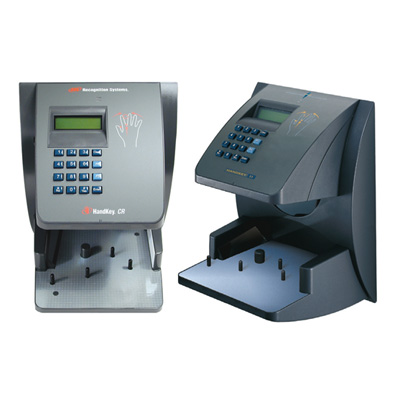
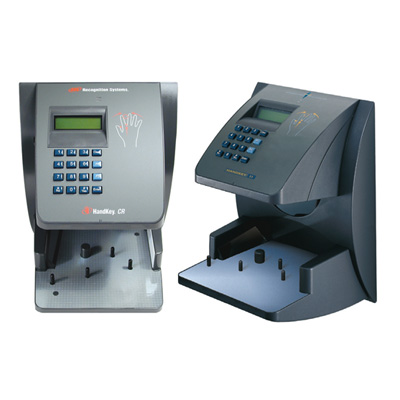
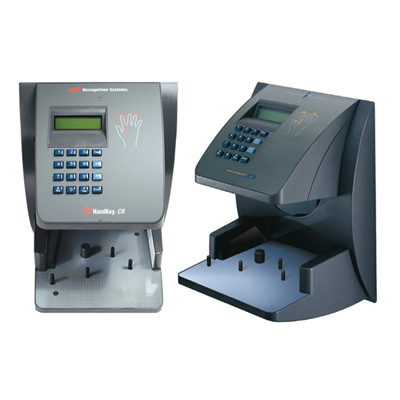
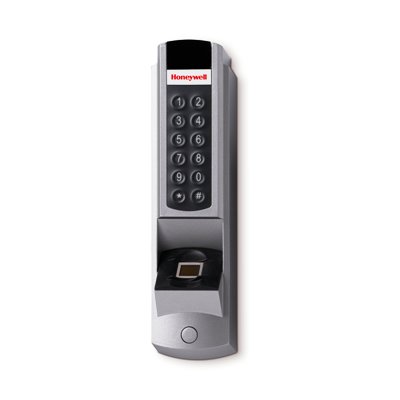
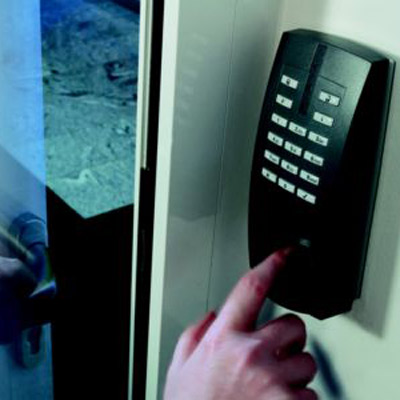

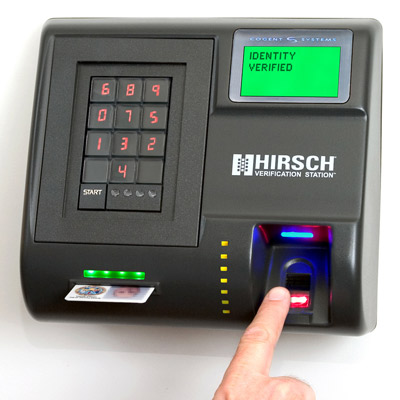
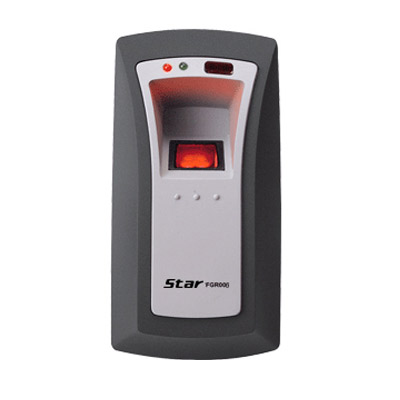
Hand geometry: Manufacturers & Suppliers

Technology's role in securing banks and financial institutions
Download
Security technologies promote real-time awareness in K-12 schools
Download
Integrated systems enable critical and compliant security for transportation
Download
Modernising physical access control
Download
Access. Intrusion. One estate.
Download