Fingerprint Locks
Allegion US, a provider of security solutions, technology and services, will be exhibiting and demonstrating interoperable electronic access control technologies and software at ISC East 2026 (booth #601), the security industry’s premier trade show in the Northeast occurring November 4–5, at the Javits Center in New York City. “Security leaders and integrators across the Northeast are under constant pressure to modernise infrastructure quickly without overcomplicating daily op...

HES, an ASSA ABLOY Group company and pioneer in electric strike innovation, launched the new HES Strike Selector Guide, an online tool that makes finding the right electric strike faster and easier. Guiding users through a series of simple questions, the selector delivers customised HES product recommendations based on opening conditions, lockset type, and application requirements. Choosing the right electric strike often requires evaluating hardware compatibility, fire-rated requirements, prel...

There was a time when physical security and cybersecurity occupied two very different worlds. One was concerned with the nuts and bolts of locks, doors and perimeter protection. The other focused on networks, software and digital threats. Today’s modern access control systems – used in everything from offices and hotels to hospitals and data centres – combine the two, fusing mechanical engineering and cloud platforms. That means that a door is no longer simply a physical barri...

ULTRALOQ, a best-selling smart lock brand under Xthings, a pioneer in IoT solutions, announces the launch and availability of its next-generation smart lock collection, built to redefine access and provide customers with a wide range of effortless entry experiences that best suit their lifestyle. The collection includes ULTRALOQ Bolt Mission, unveiled as the industry’s first ultra-wideband (UWB) enabled smart lock, featuring precise, hands-free approach-to-unlock functionality. Joining Bo...

Award-winning global security manufacturer, Gallagher Security is excited to announce the launch of the new ASSA ABLOY IP lock integration, delivering simplified installation of access control in challenging environments. Launched today, the solution reduces the high costs and complexity of traditional wired access control, by removing the need for extensive cabling and door controllers. It simplifies installation, particularly in retrofit or hard-to-wire locations. Enterprise-gr...

ABUS has welcomed a group of UK locksmiths to its Pfaffenhain manufacturing facility in Germany, giving customers the opportunity to see first-hand how its locking systems are manufactured. The group of new and existing customers spent several days in Germany, with the visit combining a tour of the Pfaffenhain factory with time to meet the ABUS team, learn more about the manufacturing process and explore the wider range of security solutions produced. Wider range of security solutions The Pfa...
News

Safetrust is demonstrating Aliro card and mobile credentials working side by side at Global Security Exchange (GSX) 2026, along with live Access Control Emulation (ACE), the Neural Adapter, and Badgeless Access powered by facial authentication. The company is exhibiting at booth 3545 at the Georgia World Congress Center in Atlanta, GA, September 14 – 16. Safetrust will also present a featured education session during the event: One Credential, Any Reader: How the Aliro Standard Ends Vendor Lock-In, presented by Jason Hart, CTO and Co-Founder, Safetrust on Tuesday, September 15 from 2:45 – 3:45 PM ET in Room B308/B309. About Aliro Aliro, the open credential and reader-communication standard from the Connectivity Standards Alliance, reached its 1.0 specification and certification program earlier this year. It gives enterprises a non-proprietary foundation for credentials, locks, and access systems across the Safetrust, Apple®, Google®, and Samsung® wallet ecosystems. The buyer value is interoperability: credentials from one supplier can work with readers from another. Last week Safetrust introduced the Aliro 1.0 Migration Card, a physical badge that lets enterprises move from proprietary access technologies to Aliro without replacing existing readers. Organisations issue and control the certificates themselves. One identity can work across Aliro-compatible readers from multiple vendors. At GSX, Safetrust is showing Aliro physical badges and mobile credentials provisioned from an organisation’s own digital certificates and working across multiple vendors. Neural Sensors and the Neural Adapter will show how Aliro can extend both new deployments and existing legacy readers without rewiring doors or replacing hardware. Why It matters Security and identity teams: Aliro replaces shared-secret, hardware-bound credentials with certificate-based mutual authentication, the same model already used across enterprise IT. IT and procurement: Non-proprietary, commodity credentials issued across multiple vendors lower identity costs and remove single-vendor lock-in, with no rip-and-replace required. Multi-tenant and campus operators: Each tenant can issue credentials from its own certificate authority, reducing re-badging while landlords retain control of shared infrastructure. Future-proofing: Since Aliro operates at the protocol layer, it supports crypto agility and post-quantum readiness (aligned with FIPS 203 and FIPS 204) without replacing hardware. "Aliro changed the conversation from 'what if' to 'what now," said Jason Hart, CTO and Co-founder, Safetrust. "We’re showing an open, certificate-based standard in production: one credential across card and mobile, working across vendors, with no proprietary lock-in." What you’ll see at booth 3545 Aliro Card and Mobile: The Aliro Migration Card and mobile wallet credentials operating side by side, provisioned with an organisation’s own digital certificates across vendors. Access Control Emulation (ACE): Virtualises iSTAR® and Mercury™ controllers on Neural devices, enrolling over IP with no changes to the existing access control system and eliminating the need for panels, IDF closets, and power supplies. Controllers can be patched over the air. Neural Adapter: Adds Aliro, MIFARE DESFire, and mobile wallet support to existing OSDP readers without rewiring doors or replacing hardware. Includes tamper detection and remote firmware updates. Badgeless Access: Facial authentication with liveness detection on the Neural Sensor's camera, radar, and LiDAR array. A single Neural device can serve as an Aliro-ready reader, an emulated controller, and an AI vision sensor, all managed through the Safetrust Cloud platform. "Running credentials, controller emulation, and vision as edge applications on one device lets organisations manage physical access under the same IT governance as the rest of their network," said Daniel Bailin, VP of Product Management, Safetrust.

Codelocks International Ltd, the global access control specialist, launches ConnectShare, a new range of smart locks that use mobile phones to make access and management easy. Part of the Connect by Codelocks solutions, these latest locks build on the success of Codelocks’ existing range of connected locks, adding several new features and enhanced connectivity. ConnectShare locks have three access modes – user code, RFID card and mobile phone. They are managed through the easy-to-use Codelocks Connect App, which allows complete remote management of the locks from a mobile device. Simple standalone lock “One of the standout features of this release is the mobile phone access sharing,” said Joanne Milne-Rowe, Managing Director at Codelocks International Ltd. “Administrators can send a time-bound credential directly to a user's phone, give them access to a lock, and revoke it at any time. The process is entirely device-to-device, with no hidden subscription fees like other products often have, and with no reliance on an internet connection at the lock itself. Users simply download the free app, and admins can remotely give them access with a few simple clicks.” “The Codelocks Connect App is central to the products too. Deep down, this is a simple standalone lock that’s easy to install and maintain. But paired with our app, it becomes the flexible and powerful solution that modern shared spaces need.” Time-sensitive codes Key features that can be enabled using the app include Codelocks NetCode® Technology for generating date and time-sensitive codes, GuestCode functionality that lets guests and temporary users set their own access code for the duration of their stay, and Do Not Disturb mode, which gives occupants privacy control – ideal for private spaces and changing rooms. The new features also include Multi-Admin functionality, which allows operators to assign shared management of individual locks, and Dual Authorisation, which adds an extra layer of protection for higher-security applications by requiring two valid credentials to be presented to unlock. ConnectShare locks introduce an activity log, a first for the Connect by Codelocks range of products. Unlike many other standalone locks, ConnectShare can log who has accessed a door and when, making it well suited to regulated environments in which sensitive materials or data may be present. Independent fire testing "We spent a lot of time listening to customers during the development of ConnectShare, and making sure what we built reflected what they actually asked for,” said Joanne Milne-Rowe. “It's backed by the same award-winning customer and technical support Codelocks is known for, so people aren't just getting a product; they're getting a service too." ConnectShare locks are available now: the CL4500CC, a medium-duty option with latch and mortice configurations, and the CL5500CC, a heavy-duty option supporting latch, lock and panic access. Both are available in Brushed Steel, with Solid Black also offered on the CL5500CC. ConnectShare locks have completed independent fire testing to BS EN 1634-1 for 30-minute and 60-minute timber door sets when installed with a Codelocks FireKit and performance testing to BS EN 12209.

Brivo, the AI innovator and pioneer in cloud-native physical security, announces the Schlage® XE360™ Series with RealSync™ lock is available within the Brivo Security Suite, delivering continuous, 24/7 Wi-Fi connectivity across all commercial doors at up to 70% lower cost per door than traditional hardwired systems. Historically, bringing electronic access control to secondary or interior openings—which account for approximately 75% of doors in a typical facility—has been cost-prohibitive due to extensive cabling, external power supplies, door controllers, and labour. Traditional hardwired systems Unlike conventional wireless locks that rely on periodic, scheduled "check-ins" or proprietary gateways, the Schlage® XE360™ Series with RealSync™ maintains a continuous cloud connection using existing building Wi-Fi infrastructure. Remote commands and access updates execute in less than 10 seconds. Benefits of Brivo - Schlage® XE360™ Series with RealSync™ integration include: True 24/7 Persistent Connectivity: Delivers instant remote lock and unlock execution, on-demand audit logs, and immediate door event alerts (such as forced or propped doors) without waiting for interval syncs. Streamlined Infrastructure: Connects directly over existing Wi-Fi networks, eliminating the need for dedicated control panels, proprietary wireless gateways, or expensive wiring runs. Up to 70% Cost Savings Per Door: Reduces upfront capital costs and installation complexity, making full-facility access control for every door economically viable. FleX Module™ Architecture: Easily upgrade existing doors from offline to real-time online locks by replacing the internal module rather than the entire lockset. Industry-Pioneering Battery Performance: Full year of battery life on standard AA batteries while remaining continuously connected to the network. Unified Security Operations: Centralises management of perimeter hardwired openings, interior wireless doors, video intelligence, and visitor management within a single Brivo Security Suite interface. Critical interior openings “For decades, security managers have had to compromise on which doors to secure because traditional hardwired access control simply didn't scale across an entire facility,” said Steve Van Till, Founder and President of Brivo. “The Schlage® XE360™ Series with RealSync™ integrated with the Brivo Security Suite eliminates the cost and infrastructure, making real-time visibility and policy enforcement achievable for every single door opening.” The integration empowers security integrators to approach facility security holistically, transitioning clients away from securing only primary entrances toward securing all critical interior openings—such as IT closets, administrative offices, and utility spaces. Major operational advancement Mike Ridgeway, Business Development Manager for Action Security Group Inc., an Alberta, Canada-based security integrator serving commercial and institutional organisations across Western Canada through its Accesio division, calls the Brivo-Schlage® XE360™ integration “a major operational advancement for both integrators and facility managers.” Adds Ridgeway, “The Schlage® XE360™ Series with RealSync™ gives us a new way to extend enterprise access control to more openings without the infrastructure and complexity traditionally required. For Action Security Group and our customers, it means faster deployment, greater flexibility, and a scalable path to bring more of the facility into the Brivo ecosystem with real-time visibility and control.” Available now, the Brivo integration with Schlage® XE360™ Series with RealSync™ will be exhibited along with other Brivo Security Suite products and features at the GSX show in Atlanta Sept. 14-16. Attendees are invited to stop by the Brivo booth 3525 to see a demonstration and meet with a Brivo expert.

Allegion US, a provider of security solutions, technology and services, launched Allegion Optimize™, a mobile application created to unify and streamline management of select Allegion products within one easy-to-use tool built with customers’ needs in mind. The release coincides with the latest firmware update for the award-winning LCN Senior Swing Series Auto Operator, making it the first device to utilise Optimise. Key features allow installers and facility teams to calibrate, adjust, maintain and troubleshoot the LCN Senior Swing with just the app, resulting in greater efficiency, precision and safety. Openings running smoothly Optimise creates a single, unified experience that reduces time and friction in device commissioning, diagnostics and firmware updates across connected Allegion solutions via Bluetooth® connection. By providing support throughout the device’s life cycle, facility teams not only gain improved efficiency but better insight into the data and controls that help keep their openings running smoothly. "Between 2018 and 2033, it’s predicted that up to 50 percent of the facility management workforce will retire,” said Emily Zentz, Allegion product manager, automatic operators. “As new facilities professionals step into the industry, it’s imperative that technology advances in line with their growing expectations. The Optimise app answers that call, positioning Allegion’s line of auto operators with a modern experience.” Greater level of control Setting adjustments, troubleshooting and calibration on the LCN Senior Swing is now even easier. In-app calibration, diagnostic tools, firmware updates and data management enable installers and facility teams to have a greater level of control over their buildings. Once the LCN Senior Swing is installed, the installer can run the calibration cycle from the app. This allows them to be safely on the ground and watch the door more closely to determine whether further adjustments are needed. Users can fine tune the settings on the Optimise app without removing the cover on the Senior Swing or climbing a ladder. When troubleshooting, Optimise provides details for any error codes or notifications, so the user can quickly review, digest and act upon that information before engaging with technical support. Multiple product categories Allegion Optimise won’t stop with the LCN Senior Swing. It is designed to be the new unified device management mobile application that will simplify the commissioning, configuration and ongoing maintenance of future Allegion connected devices across multiple product categories. Plans to support additional auto operators and electronic locks will be announced later this year. Allegion Optimise is available now in the Apple App Store® and Google Play™ store for use with LCN auto operators.
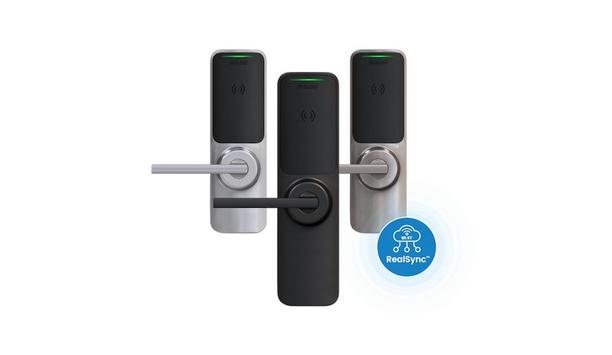
Allegion US, a provider of security solutions, technology and services, announces the expansion of the Schlage® XE360™ Series with RealSync™. Building upon the success of the XE360 Series offline locks introduced in 2024, this family of wireless locks can now provide building operators and administrators real-time device visibility and control without the need for additional wiring or infrastructure. This groundbreaking, fully wireless solution is designed to bring intelligent, real-time access control deeper into commercial buildings. It delivers the kind of management typically associated with wired access systems, but without the gateways, panels, wires or complex installation that usually comes with them. Wireless access control "The introduction of the XE360 Series with RealSync represents a seismic shift in the commercial access control landscape," said Nate Spitz, general manager, Schlage locks and access solutions at Allegion. "By leveraging a building's existing Wi-Fi infrastructure, we are breaking the traditional barriers of cost and complexity. This allows building owners and operators the ability to affordably scale real-time access to every door, fundamentally changing how the market approaches wireless access control." Historically, the commercial landscape has understood wireless access control over Wi-Fi as occurring periodically, meaning devices wake up on a set schedule (e.g., every 12 or 24 hours) to check in with the network. The XE360 Series disrupts this standard with RealSync™, Allegion’s first cloud-to-cloud communication protocol. RealSync enables persistent Wi-Fi connectivity, an always-on, continuous connection that allows for things like real-time monitoring alerts, instant remote lock and unlock capabilities, and immediate credential issuance or revocation from anywhere. Latest security enhancements At the core of this evolution is the innovative, interchangeable FleX™ Module. Properties that have previously deployed XE360 hardware as an offline solution can easily upgrade to real-time, persistent Wi-Fi connectivity simply by swapping the module. This forward thinking, modular design preserves the initial lock investment, reduces electronic waste, and allows security systems to evolve alongside the building's needs and technology demands. Not only do XE360 locks utilising RealSync provide real-time data and insights, but they can also take advantage of over-the-air firmware updates, deployed remotely, allowing openings to stay equipped with the latest security enhancements without requiring physical visits by facilities teams. This capability saves valuable time, reduces on-site maintenance, and enhances operational efficiency. For openings utilising XE360 devices in offline mode, at-the-door mobile updates are available. Proprietary power optimisation Because the XE360 Series with RealSync connects via existing Wi-Fi networks, it eliminates the need for hubs, door service routers and extensive cabling. This significantly reduces upfront capital expenditures and installation time for both new construction and retrofit applications. Additionally, Allegion has surmounted the typical six-month battery life barrier of wireless, Wi-Fi- enabled commercial locks. Through advanced, proprietary power optimisation, the XE360 can achieve over one-year of battery life using four standard AA batteries while maintaining its persistent Wi-Fi connection under suggested use. This drastically reduces operational demand, minimises maintenance visits, and lowers the total cost of ownership, all while allowing for the cost savings to be repurposed into additional deployments throughout the building. Cloud-based software platform The simplified setup and robust feature set of the XE360 Series with RealSync expands Allegion’s footprint well beyond traditional multifamily environments. The solution is purpose-built to scale across commercial spaces, small-to-medium businesses, student housing, and senior living facilities, with a strong architecture designed to support swift global expansion. For property managers and operators, the shift to RealSync is a significant operational advantage. The ability to manage credentials on demand, view real-time audit trails, and execute instant remote commands directly improves property security, strengthens tenant satisfaction, and ultimately helps drive higher Net Operating Income (NOI). Demonstrating immense market demand, multiple Physical Access Control Software (PACS) partners have already begun integrating with the new cloud-based software platform that powers RealSync prior to its commercial availability. Notably, longstanding PACS partner, Brivo, will be the first to offer a fully integrated RealSync solution to their ecosystem of security specifiers, dealers and end-users, later followed by additional partners.

Gunnebo Safe Storage is returning to Security Essen, to showcase how secure storage, connected locking technologies and cyber resilience are converging to shape the future of physical security. On stand 3A65 in Hall 3 within the Euro Defence Expo, visitors can explore TransitGuard, Gunnebo Safe Storage's mobile vault solution, developed to provide secure protection for cash, valuables and other high-value assets while in transit or in mission. As organisations continue to review how assets are secured throughout the supply chain, the movement of valuables between locations remains a critical area of focus. Wide range of security applications Gunnebo Safe Storage will also showcase its Gunnebo Encry high security electronic locks, highlighting how electronic locking technologies are supporting greater control, auditability and flexibility across a wide range of security applications. "One of the most significant shifts we're seeing is the link between physical security and cybersecurity," said Viktoria Lövberg, Director Strategic Key Distributors and Defence, Gunnebo Safe Storage Europe. "Customers are no longer evaluating these areas separately but looking for solutions to protect assets and support the resilience of the wider connected systems. Security Essen provides an excellent opportunity to discuss these challenges and share knowledge with customers, partners and industry professionals." Embedded alarm functionality A key focus at Security Essen will be the European Cyber Resilience Act (CRA) and its implications for connected security products. Olof Sandberg of Tecnosicurezza, will explain how dedicated locking systems have been developed to support the CRA framework through secure system architecture, controlled access management and lifecycle security considerations. Stephan Seifert of Gunnebo Safe Storage will focus on technical developments in safe storage design. His session, 'Minimising Risk: Combining Core Drill Protection and Integrated Alarm in One – Safes and Strong Rooms with Planar Protection,' will outline the implementation of planar protection systems designed to integrate resistance to core drilling attacks with embedded alarm functionality. "We want visitors to leave Security Essen and our stand with a clearer understanding of how physical security, connectivity and compliance requirements are becoming increasingly interconnected," added Viktoria. "Our objective is to share expertise and help organisations assess the security, operational and compliance considerations that will shape future security strategies and investment decisions."

Expert commentary

A key characteristic of many successful companies is that good ideas come from everyone, not just specific departments or job titles. What one person sees as obvious may be questioned by someone else who is less familiar with the product or process. This simple interaction can spark a whole new, faster, and better approach. While valuing tradition is important, if someone uses the phrase “that’s how we’ve always done it,” it’s essential to analyse the process to ensure it remains optimal. Business conditions change rapidly, and what was considered a perfect process last week may need adjustments this week. Comprehensive approach to innovation This comprehensive approach to innovation fosters continuous improvement across all aspects of the organisation Innovation should permeate every level of an organisation, from product development and customer experience to sustainability practices and employee training. This comprehensive approach to innovation fosters continuous improvement across all aspects of the organisation, allowing companies to stay agile, competitive, and in tune with their customers' constantly evolving needs. Addressing real-world challenges At the heart of pervasive innovation in the security industry lies the development of smart products and solutions that address real-world challenges. This approach integrates advanced technologies to enhance security while improving user experience. For instance, the integration of mobile credentials, biometrics, real-time wireless locks, intelligent keys, and cloud-connected access control systems exemplifies how technology can streamline operations and provide users with seamless and secure access. Offering user-friendly solutions These advancements reflect a deep understanding of user needs and preferences, offering solutions that are not only secure but also convenient and user-friendly. A notable example is UniKey's Kēvo, the first Bluetooth-enabled touch-to-open smart lock, introduced in 2013. Developed in partnership with Kwikset, this innovative product allowed users to unlock doors simply by tapping the lock with a compatible smartphone. By continuously innovating across various aspects of security products and solutions, companies can ensure that their offerings remain relevant and effective in addressing the evolving challenges of the security landscape. Design-driven features Products designed for quick and straightforward installation reduce labor costs and minimise downtime Innovation extends beyond technology to encompass design-driven features that prioritise user convenience and satisfaction. For instance, ease of installation is a critical factor in the adoption of new door hardware. Products designed for quick and straightforward installation reduce labor costs and minimise downtime, making them more attractive to both installers and end users. For electronic locks, long-lasting battery performance is essential for minimising maintenance and ensuring reliability. Products with extended battery life reduce the frequency of replacements and enhance user confidence. Incorporating antimicrobial finishes into door hardware addresses growing concerns about hygiene and cleanliness. Taking hygiene a step further, touchless technology in door hardware minimises physical contact, reducing the potential for cross-contamination and enhancing user convenience. Sustainability initiatives Sustainability initiatives in door hardware have evolved from niche considerations to central pillars of modern product development, not least of which is the growing consumer demand for sustainable products, which is influencing purchasing decisions. According to a Nielsen report, 66% of global consumers are willing to spend more on a product if it comes from a sustainable brand, leading many companies to prioritise the use of recycled and recyclable materials in their products. Beyond material selection, manufacturers are also refining their production processes to minimise environmental impact. Finishing processes are evolving to use non-toxic and low-impact finishing methods, such as powder coating and physical vapor deposition. Energy-efficient door hardware Energy-efficient door hardware plays a significant role in the overall energy conservation of buildings Energy-efficient door hardware plays a significant role in the overall energy conservation of buildings. Properly designed door hardware can help maintain a building’s thermal envelope, reducing heating and cooling demands. For instance, the HID® Signo™ access control reader includes improved power supply technology and energy-saving features that ensure reduced energy consumption when the reader is in a resting state. Environmental Product Declarations To further demonstrate their commitment to sustainability, many manufacturers seek certifications validating their environmental efforts. Environmental Product Declarations (EPD) and Leadership in Energy and Environmental Design (LEED) certifications have become key indicators of a product’s environmental performance. An EPD provides detailed information about the environmental impact of a product throughout its lifecycle, aiding in the transparency that architects and builders require to make informed choices. Similarly, LEED certification emphasises energy savings and broad environmental priorities, including water efficiency, CO₂ emissions reduction, and improved indoor environmental quality. Customer service and training Innovation is also making great strides in the behind-the-scenes efforts of customer service and training. Predictive maintenance technologies are revolutionising how companies manage product performance and customer support. By utilising data analytics and IoT technologies, companies can offer maintenance alerts, remote diagnostics, and connected support services that anticipate issues and failures before they occur. This shift from reactive to predictive maintenance minimises service disruptions and enhances customer trust by ensuring products operate at optimal levels. Digital training initiatives Digital training initiatives equip employees and customers with the skills needed to utilise new technologies In parallel, digital training initiatives equip employees and customers with the skills needed to utilise new technologies in a cost-effective and accessible manner. Digital installer certification programs, learning portals, and customer enablement initiatives are all part of a comprehensive strategy to equip stakeholders with the knowledge and skills they need to succeed. By investing in comprehensive training programs, companies foster a culture of adaptability and competence, ensuring that customers can fully leverage technological advancements. This approach not only enhances operational efficiency but also strengthens customer relationships by empowering them with the knowledge to make informed decisions. Incremental improvements While groundbreaking innovations often capture headlines, it’s the steady, incremental improvements that consistently deliver real-world value. Companies can achieve sustained growth and success by focusing on continuous innovation across all facets of the organisation. This quiet progress, though less visible, is often more impactful as it builds a solid foundation for long-term achievement. In a world where change is the only constant, fostering a culture of pervasive innovation is the key to sustained relevance and growth.

Digital access control has well-known benefits over traditional security, of course, but also costs attached to each stage of its lifetime. However, these costs are not fixed. Many factors – including building size, shape, type, location, national regulations and more – impact affordability and efficiency calculations. Crucially, the type of access solution a business selects – wired or wireless – impacts total operating costs, including during installation, running and any potential expansion or reconfiguration stages. Wireless installation Wiring premises can be expensive. So, the potential cost savings from choosing wireless digital access begin at the very start. Installation stage is the largest contributor to potential cost savings when businesses go wireless. In calculations for one report, access experts at ASSA ABLOY examined projected costs for a fictional 100-door installation. Labour savings for those who chose wireless over wired locks were 82.5%. Why? Firstly, because wireless installation is much faster. It is also less intrusive. Most wireless locking devices require little or no drilling of the door, whereas wired security needs cabling through and partly around a door – which means not just door damage, but the contracting of specialist electrical installers who may require multiple site visits. These costs add up. Digital access technology Torus aims for the highest level of LEED certification for all its new properties In Poland, for example, developer Torus aims for the highest level of LEED certification for all their new properties around Gdansk. Where possible, they choose products with Environmental Product Declarations (EPDs) and Green Circle documentation, favouring access solutions which reduce their carbon footprint. Wireless digital access technology is a natural choice. “The lack of wiring significantly reduces materials use, reduces costs, and ensures quick installation,” confirms Torus’ Roman Sokolowski. There’s no cabling, which cuts power consumption. There’s less damage to the building fabric and fitters make fewer journeys to and from the site. Adaptable locking solution By choosing a wireless solution, organisations also upgrade building security with little disruption. A wireless system makes it easier to improve security at an existing building via a retrofit process which does not inconvenience staff or disturb work routines. This was one goal at Plexal, a £15 million flexible work environment for London enterprise and academia. Plexal chose battery powered wireless locks integrated with DoorFlow, NetNodes’ online platform for managing and auditing building access. “Plexal required an adaptable locking solution for a range of different doors and, with no wiring required, it was quick and easy to install ASSA ABLOY Aperio® devices with minimal disruption,” confirms Stewart Johnson, Director at NetNodes. Cost savings with improved energy efficiency Choosing wireless over wired locking can play a vital role in reducing ongoing energy use Choosing wireless over wired locking can play an important role in reducing ongoing energy use – and, therefore, expenditure. Wholesale electricity prices in Europe are approximately double what they were in 2019, according to the IEA’s “Electricity 2024” report. For a variable cost such as energy, where businesses have little control over unit prices, it is critical to control usage, especially if high and/or changeable energy prices become what analysts at ING called “the new normal for business”. Thus, the fact that battery-powered locks consume much less energy than traditional wired solutions is increasingly relevant and important. Additional saving on energy costs Traditional wired door access devices often work via magnets connected permanently to mains electricity. These doors draw power around the clock to remain locked. Wireless locks work differently. They only “wake up” when presented with a credential, to make the access decision. This translates to an additional saving on energy costs during operation: more than 70%, or thousands of euros over a typical access system’s lifetime. Wireless digital access Wireless locks only need a change of their standard battery, which may be rechargeable Related energy and materials costs during in-use stage are also lower. Wireless locks only need a change of their standard battery – which may be rechargeable – typically once every two years. No specialist maintenance is required, saving on specialists and their travel to and from the site(s). By choosing wireless digital access, businesses help protect themselves against these ongoing costs, notably energy price increases and volatility. Cost-efficient flexible working, for staff and facilities managers Perhaps harder to quantify, but equally easy to imagine, the financial benefits of choosing a wireless digital solution are felt in the increased convenience and efficiency of daily operations. In the co-working sector, for example, flexible access to offices is a priority. As “fixed” office space rented by corporations continues to fall, co-working spaces are expected to keep growing, with one estimate suggesting almost 18% CAGR to 2030. To stand out from the competition, the founders of ULab in Alicante sought the latest innovations in access and design to create their 21st-century business centre. Part of the suite of digital access solutions from ASSA ABLOY, a SMARTair® system gave ULab real-time access management via battery-powered locks and Openowä, the Mobile Key solution for SMARTair, without any need to wire doors and other openings. SMARTair TS1000 Web interface With SMARTair and Openow, workspace residents can carry virtual keys on their smartphone With SMARTair and Openow, workspace residents can carry virtual keys on their smartphone; ULab’s security team update their rights over the air. An office manager can perform any operation remotely from the SMARTair TS1000 Web interface. In case of an emergency, they could lock-down the site or open doors remotely, for example. It’s convenient, efficient and boosts ULab’s security, benefiting users and managers. And because of SMARTair’s flexibility, they can comfortably welcome many more than their usual 100 daily users. “In addition to regular daily traffic, weekly traffic can almost multiply by 10 if an event is held,” says Enrique Burgos Pérez, Director at ULab. “We needed an access control system as flexible and convenient as SMARTair.” ASSA ABLOY benchmarking report Choosing wireless locks also adds flexibility – and can reduce costs – when an organisation reconfigures or expands their commercial space. High-quality wireless devices like SMARTair can typically be reinstalled at another opening without impacting reliability. They move to wherever is convenient. If a business is rethinking workspace to encourage flexible or hybrid work patterns, for example, cost efficiencies could be significant. Typical savings on office relocation or expansion are estimated at around 30% with wireless over wired locking, according to the same ASSA ABLOY benchmarking report. Cost efficiency and more control with ASSA ABLOY digital access To refit and improve their student accommodation, managers at the University of St Andrews sought energy- and cost-efficient access control. They chose Aperio, another innovative digital access solution from ASSA ABLOY. Approximately 1,600 doors so far are equipped with battery-powered Aperio escutcheons – without cabling. Aperio devices integrate fully with both the university’s existing central security system and their student ID card. University security managers continue to enjoy the efficiency benefits of monitoring and controlling access from a single point and in real-time, including for doors across multiple buildings. Aperio, another innovative digital access solution from ASSA ABLOY. Benefits of cost-efficiency In comparison to a wired solution, Aperio offers significant cost-efficiency benefits. Devices are wireless, so can be installed with little energy use and no need for wiring to the mains. They consume near-zero energy when idle and run on standard batteries, consuming little power during operation. Through the entire product life-cycle, Aperio combines reliability with cost effectiveness. “Aperio gives us central management and control,” says Pauline Brown, Associate Chief Information Officer at the University of St Andrews, “and contributes to our award-winning track record in energy efficiency.”

As part of ever-evolving technological advancements and the increase in digitisation, home security systems remain a vital piece of equipment for at least 39 million households in the U.S., and as many as 13 million more households may install new security systems in the next 12 months. Global home security market In addition, a recent study found that 60% of burglars are deterred from attempting a burglary when a home has a security system, looking for alternative targets that are easier. Another similar study found homes without security systems are 300% more likely to experience a burglary. It’s estimated the global home security market is expected to grow to $84.4 billion as more and more people install home security systems as a way to ensure their safety. High-tech security devices Home security systems and the technology behind them will continue to expand and integrate further With the ongoing need for home security systems and the introduction of technology such as Artificial Intelligence (AI), home security companies are finding new and innovative ways to improve the home security experience by installing high-tech security devices. These devices are changing how we protect our homes, valuables, families, pets, and more. As we look ahead to the future, home security systems and the technology behind them will continue to expand and integrate further within the home as AI evolves and takes on a more meaningful and deeper role in the home security industry. Features of AI-based home security systems Most home security systems already use AI regularly for features like smart cameras, motion sensors, and alarms. These offerings incorporate AI to detect and respond to potential security threats, differentiating between everyday activities and potential suspicious behaviour and then alerting homeowners based on the activity. As AI expands the capabilities of critical security features such as facial recognition, voice control connectivity, and enhanced video capabilities, it will significantly improve the traditional security systems we use today, providing additional means of not only protecting homes but also streamlining the overall home security system. Future advancements in AI home security systems Increased integration of security devices through AI As AI continues to evolve, we can expect to see increased integration and connectivity of devices included in a home security system and home – all powered by AI. This includes hardware such as cameras, motion detectors, keypads, sensors, and smart locks, as well as software, such as digital apps. This increased connectivity will not only make it easier for homeowners to manage their security system but also to customise their home and home security to meet their evolving needs. Voice control connectivity The new hands-free approach to home security enhances the user experience and opens up new possibilities Voice control connectivity is yet another key feature that is gaining popularity in AI-powered home security systems. Security system users can control and monitor their security systems using voice commands similar to how Amazon’s Alexa works, making security systems more convenient and user-friendly. The new hands-free approach to home security not only enhances the user experience but also opens up new possibilities for seamless integration with other smart home devices and mobile devices. AI will help personalise and individualise security settings Relying more heavily on facial recognition technology, AI algorithms integrated into home security systems will become more personalised and tailored to individual users based on their preferences. Imagine a security system that recognises each member of your family and adjusts its settings and alerts based on each user’s unique preferences and habits. Thanks to facial recognition improvements in recent years, this new level of customisation will enhance security and improve the ease of use, making home security more intuitive and user-friendly. By incorporating personalisation via AI into home security systems, simple tasks like disarming the system when returning home or arming the system before going to bed at night will be much more efficient, and security settings will be saved based on each user’s preferences. AI will analyse threats before they become emergencies AI-powered automation will play a heightened role in the future of home security systems as it learns to proactively analyse and respond to potential threats, security breaches, and emergencies like fires or carbon monoxide leaks. Through real-time monitoring, AI will begin to predict and prevent security breaches before they occur, working efficiently with human counterparts for an effective approach to security monitoring. Security monitoring AI linked to a carbon monoxide detector may notice the levels rising before they reach a dangerous level For example, through camera monitoring, AI will learn how to tell the difference between normal and suspicious activities, automatically adjusting your security settings and alerting you of a potential risk. Similarly, AI linked to a carbon monoxide detector may notice the levels rising before they reach a dangerous level and alert the security system user and monitoring service in advance. The AI evolution of home security The traditional idea of home security systems, with physical locks, keypads, and alarms, is rapidly changing into a more intelligent system powered by AI. Just as the cell phone industry revolutionised communication by making phones constantly accessible to us all, AI is on the cusp of transforming our home security systems into a much safer and more user-friendly experience. Shortly, we’ll see a world where every aspect of home security systems is easily accessible on one or multiple devices within the home or even on mobile devices, boosted by the help of AI. From keyless entry systems that recognise our faces to AI assistants that communicate with us and adjust settings based on our preferences, the possibilities are truly endless. A safer, smarter, and more secure future As AI continues to advance and becomes more integrated into home security systems and life in general, the future will bring enhanced safety, security, convenience, and peace of mind for homeowners. As we move towards a future where AI plays a larger role in our daily lives, we can expect to see a shift in the way we think about and approach home security systems – in fact, it’s already happening. The traditional security setup of the past is being replaced by a new era of intelligent, interconnected, and proactive home security systems that work seamlessly. With AI as our ally and incorporated into our home security systems, we can look forward to a safer, smarter, and more secure future for our communities, homes, and loved ones.
Security beat

Deploying artificial intelligence (AI) tools should be seen as a business initiative rather than a technology initiative, says Martin Soukup, CTO of Solink, a cloud-based video security and data intelligence platform. The approach makes a difference that plays out in practical terms. A technology initiative is tactical and solution-oriented, often solving an isolated problem within a single department's silo. In other words, it might solve just a security problem. In contrast, a business initiative is cross-disciplinary, driven by executive leadership to impact the entire organisation in a measurable way. “Viewing AI tools as a business initiative ensures they adapt to multiple departmental needs and drive high-level strategic growth rather than just fixing a localised technical issue,” says Soukup. AI platform combines video and business systems Demonstrating the value of embracing AI as a business initiative is Solink’s new video intelligence platform Demonstrating the value of embracing AI as a business initiative is Solink’s new video intelligence platform that combines video with business systems to detect threats and send real-time alerts. The capabilities are designed to help security teams operate smarter and more efficiently, supporting the next generation of lean, intelligence-driven security operations centers (SOCs). And benefits of the platform extend beyond security to include other parts of the business. “At the end of the day, video cameras only tell part of the story, much like looking at a 2D shape,” says Soukup. “They capture dimensions and colors, but only from a single perspective, even with powerful AI analysis providing traffic metrics, wait times, product interaction, and compliance logs. The addition of operational data, such as inventory, shipping, labor, and sales data, fills out that shape into 3D, adding critical context.” For example, while a camera simply shows three people standing in a line, and AI data flags that those individuals have been waiting for over five minutes, operational data lets you know also that a cashier has not checked into their shift yet. Combining these data streams gives businesses full situational awareness, turning passive observation into immediate, contextual intervention. AI agents handle repetitive tasks The Solink platform uses AI Agents, which are software that operates autonomously to handle manual, repetitive, or high-volume tasks based on specific instructions and tools. For Solink users, AI Agents unify their existing camera and data source investments into a single automated workflow. “AI Agents transform Solink from a security tool into an operational investment that benefits all departments,” says Soukup. “Modern operational leaders are turning to AI to scale productivity without increasing overhead.” Integrating business intelligence Operations checks compliance, loss prevention investigates theft, and security assesses threats Customers already use Solink to centralise video, integrate business intelligence, and trigger real-world responses like real-world alerts, two-way communication, or smart locks. AI Agents tie these pieces together, analyse the data and identify what matters most, and then take action either without human intervention or with humans in the loop. Businesses currently watch video manually across separate workflows. Operations checks compliance, loss prevention investigates theft, and security assesses threats. However, a human must always watch the footage to get results. Solink AI Agents automate this entire workflow. If an operational event can be seen on camera and matters to the business, a Solink Agent can be integrated to automatically review, assess, and trigger the next step in the workflow across hundreds or thousands of locations simultaneously. Calling all stakeholders to the discussion When discussing applications, stakeholders should include revenue and marketing officers, compliance officers, and line-of-business executives. Agents leverage existing infrastructure by adding an intelligent automation layer that drives efficiency and grows revenue across the entire organisation without large capital investment. Solink AI Agents will not replace employees; they empower lean teams to maximise their existing resources. Job descriptions will shift toward human-in-the-loop workflows where humans and machines collaborate. The AI Agent handles the high volume, filtering out noise and processing data at scale. Human employees set up and guide the Agents, give feedback to improve performance over time, and step in to make final decisions, managing the nuanced situations that require critical thinking, empathy, and deep context. Passive data visualisation In contrast, a Solink AI Agent is deployed with a clear mandate for a specific task, deliverable, or outcome Given the convergence of physical and digital security, AI Agents, not dashboards, are the right unit of enterprise AI deployment. Dashboards typically aggregate data without evaluating the context or importance of the source. Data looks identical whether it comes from 10 sources or 100. In contrast, a Solink AI Agent is deployed with a clear mandate for a specific task, deliverable, or outcome. This approach shifts the focus from passive data visualisation to active intent, creating a direct path of accountability and clear attribution for business results. With dashboards, everyone can see the problem, but nobody owns it. An agent with a mandate either did the job or it did not, and you can audit exactly what it saw and why it acted or did not. Overcoming obstacles to deploy AI agents The primary obstacles to integrating AI Agents into the physical security workflow are change management, building trust, and system interoperability. Physical security requires absolute reliability, which demands rigorous initial configuration to establish trust. Furthermore, Agents are only as effective as the data they can access. Overcoming these hurdles requires comprehensive team training, shifting organisational mindsets, and ensuring seamless integration with existing tools so the Agents have the full context needed to execute tasks accurately and integrate with human workflows seamlessly. Addressing common security challenges Several use cases are driving the deployment of AI Agents among Solink's customers Several use cases are driving the deployment of AI Agents among Solink's customers. Overnight guarding, loss prevention, and store readiness will be the first wave of use cases. These are proven, high-frequency scenarios in which Solink provides pre-built template Agents to address common security challenges out of the box. The second wave of use cases will include highly customisable occupancy tracking, health and safety, and food quality. Pre-built template Agents are coming for these next. In addition, custom, niche operational use cases can be tailored to a specific business environment. Just like hiring a specialised contractor, companies can deploy custom Agents to tackle unique operational challenges rapidly across all locations. Measuring the effectiveness of AI agents The effectiveness of AI Agents can be measured by multiple factors. Core Accuracy, and consistency and accuracy of detections and automated outputs. Business Outcomes delivered, such as reduced inventory loss, reduced fraud, and faster incident resolution. Financial Impact, measured through recovered budget, reduced operational overhead, and increased per-store conversion. There is a perception that AI Agents possess predictive or flawless capabilities, like stopping crime before it happens or operating perfectly in dark, chaotic environments. Not true, says Soukup. AI cannot understand ambiguous requests like "look for suspicious activity." Success requires explicit parameters, tools, and skills, defining what is acceptable, what is unauthorised, and how to handle the gray areas. Another misconception is that Agents need a fundamentally different security model than people. “I run security for this company as well as engineering, and I hold our own Agents to the same standard I would hold a third-party vendor,” says Soukup. “That means least privilege, full audit trails, anomaly detection, random audits, and no action they can't explain after the fact.”

2025 was another impactful year for mergers and acquisitions (M&As) in the security industry, which is undergoing an enormous transformation as global pioneers prioritise specialised technology to drive future growth. The year 2025 has been defined by massive corporate reorganisations, most notably Honeywell and Resideo spinning off core divisions to unlock shareholder value. Simultaneously, an aggressive wave of mergers and acquisitions is reshaping the landscape, with giants like ASSA ABLOY and Motorola Solutions absorbing innovators in AI-driven surveillance, cloud-native access control, and identity management. From residential security shifts to critical infrastructure enhancements, this article will summarise how these strategic moves signal a decisive industry pivot toward integrated and intelligent security ecosystems. Resideo to spin off ADI business Resideo Technologies, Inc. announced its intention to separate its ADI Global Distribution business from its Products & Solutions (P&S) business via a tax-free spin-off to shareholders. The separation is expected to be completed in the second half of 2026. P&S will continue as Resideo, a building products manufacturer of residential controls The goal is to unlock value, enhance operational performance, and improve strategic flexibility for both entities. After the separation, P&S will continue as Resideo, a building products manufacturer of residential controls and sensing solutions. ADI will become an independent public company and remain a global wholesale distributor of low-voltage products, including security and audio-visual solutions. Honeywell separates into three companies There are big changes pending at Honeywell, another global security industry company. Honeywell announced plans to separate its Automation and Aerospace businesses into two independent, publicly traded companies following a comprehensive portfolio evaluation. Combined with the previously announced spin-off of Advanced Materials, this strategy will create three distinct industry pioneers. The Automation and Aerospace separation is targeted for completion in the second half of 2026 as a tax-free transaction for shareholders. The largest portion of Honeywell’s traditional security business (cameras, access control, and fire safety) sits within the Building Automation segment of the new Honeywell Automation company. This unit includes products from recent major acquisitions, such as LenelS2. SimpliSafe’s new chapter SimpliSafe has agreed to be acquired by private equity firm GTCR from Hellman & Friedman SimpliSafe has agreed to be acquired by private equity firm GTCR from Hellman & Friedman, another private equity firm. As the third largest U.S. residential security provider, SimpliSafe will continue under the leadership of the current CEO, while its founders remain significant investors. GTCR, an experienced security industry investor, intends to support the company’s expansion and continued innovation in AI-powered, DIY home protection. This marks a new chapter in SimpliSafe’s mission to provide professional monitoring without long-term contracts. SimpliSafe is GTCR’s fifth investment in the security alarm industry, including prior investments in residential-focused security companies SecurityLink and Protection1, along with commercial-focused security companies HSM and Everon. Motorola grows technology portfolio Motorola Solutions grew its portfolio through acquisitions in 2025. The industry giant strategically expanded its safety and security ecosystem through the acquisition of four specialised technology firms. The company acquired Blue Eye to integrate AI-driven remote video monitoring and 24/7 security operations into its threat detection workflows. To support frontline workers, Motorola added Theatro’s voice-powered communication platform, which complements existing mobile and video technologies. Motorola further bolster its public safety capabilities with the acquisition of RapidDeploy, a cloud-native Next Generation 911 provider that offers real-time caller mapping and data analytics to accelerate emergency responses. Motorola also agreed to acquire InVisit to enhance its Avigilon Alta suite with cloud-based visitor management, streamlining guest registration and blocklist screening for enterprise security. These acquisitions aim to unify detection, communication, and response across various sectors, including retail, healthcare, and critical infrastructure. Allied sells majority stake in AMAG Allied Universal sold a majority stake in AMAG Technology to Shore Rock Partners In December, Allied Universal sold a majority stake in AMAG Technology to Shore Rock Partners. Shore Rock is a growth investor focused on critical infrastructure, with strategic backing from BellTower Partners. Allied Universal will retain a significant minority share. The sale is intended to allow 54-year-old AMAG, which provides integrated access control, identity, guest, and video management solutions, to operate independently from Allied Universal's services-based model for long-term growth. Shore Rock's plan is to invest in advancing AMAG's product line and customer relationships. With this transaction, David Sullivan, AMAG's President, will become CEO. Everon acquires ADT multifamily segment Commercial security provider Everon announced in September that it had entered into a definitive agreement to acquire the business-to-business (B2B) multifamily segment from ADT. This acquisition is a strategic extension that expands Everon's reach in the valuable multifamily market. It will allow the company to offer a more comprehensive portfolio of tailored solutions, including access control, video surveillance, and self-guided tour capabilities. Everon's CEO states that the deal enables them to help property owners and managers increase net operating income and improve operational efficiency. Dormakaba acquires TANlock and Avant-Garde Dormakaba, a global provider of access solutions, acquired TANlock GmbH in July Dormakaba, a global provider of access solutions, acquired TANlock GmbH in July. TANlock is a German firm specialising in innovative high-security access solutions for data centers and other critical infrastructure. The acquisition strengthens Dormakaba’s presence in the data center market. TANlock's intelligent system provides enhanced server cabinet security using electromechanical rack locks and various authentication modules. This solution is scalable, future-proof, and can be integrated into existing IT infrastructures for both retrofits and new installations. Dormakaba also agreed to acquire Indiana-based Avant-Garde Systems Inc. to strengthen its North American entrance control portfolio. This move bolsters Dormakaba’s presence in high-growth sectors like airports and data centers. Acre acquires REKS for AI Recent M&A activity also reflects the growing importance of artificial intelligence. For example, Acre Security acquired REKS, a purpose-built generative AI solution designed to transform access control, allowing professionals to use natural language queries for instant data insights. Integrated into Acre’s cloud-native ecosystem, this AI-powered platform prioritises data privacy while streamlining operations. Led by a new AI Development Team, Acre plans to expand these capabilities into intrusion detection and visitor management. Two acquisitions for Allegion Global security provider Allegion, through one of its subsidiaries, completed the acquisition of ELATEC Global security provider Allegion, through one of its subsidiaries, completed the acquisition of ELATEC, a manufacturer of security and access technology, specialising in RFID credentials and readers solutions designed in Germany and sold globally. ELATEC’s portfolio of readers leverages their internally developed software stack and ensures compatibility with nearly 100 credential types, making the company a pioneer in interoperability, which aligns well with Allegion’s partner-of-choice strategy. Allegion, also through one of its subsidiaries, acquired Brisant Secure Limited, a security hardware provider in the United Kingdom. Senstar acquires Blickfeld for LiDAR sensors Senstar Technologies Corporation has agreed to acquire Blickfeld, a specialist in 3D LiDAR sensors and software. Expected to close in Q1 2026, the acquisition integrates Blickfeld’s hardware into Senstar’s advanced security ecosystem. This strategic move expands Senstar’s addressable market into volume monitoring and traffic applications while enhancing its AI-powered situational awareness capabilities. Following the transaction, Blickfeld will operate largely independently as a subsidiary. ASSA ABLOY continues acquisition spree Global giant ASSA ABLOY was probably the most active company in the M&A market in 2025 Global giant ASSA ABLOY was probably the most active company in the M&A market in 2025, demonstrating aggressive market growth, strategically reinforcing its core business, and expanding its technological footprint across the global security marketplace. The acquisitions delivered on the company's strategy to strengthen its position in mature markets by integrating complementary products and solutions. A major theme for ASSA ABLOY was the enhancement of the door and perimeter security portfolio, particularly in the Americas. This effort included acquiring US-based Metal Products Inc. (MPI) for custom-made hollow metal doors and frames and International Door Products (IDP) for fire-rated steel door frames, both in the fall. Earlier in the year, ASSA ABLOY gained a stronger presence in Central Canada with the addition of Wallace & Wallace and Wallace Perimeter Security, a manufacturer, distributor, and installer of perimeter fencing, door, and gate solutions. The Entrance Systems Division also saw expansion with the acquisition of Belgium’s Kingspan Door Components, a manufacturer of sectional door panels. Furthermore, Door System, a Danish manufacturer of high-quality fire-rated doors, was signed for acquisition in the spring. Cloud-based platform ASSA ABLOY also made significant moves in electronic and access control solutions. Early 2025 saw two key acquisitions: Uhlmann & Zacher, a German supplier of access control handles and knobs, and InVue, a US-based provider of connected asset protection and access control solutions. Reinforcing this segment, SiteOwl, a pioneering cloud-based platform for physical security lifecycle management, was acquired in the summer. The spring acquisition of Pedestal PRO, a US manufacturer of access control pedestals and mounting solutions, further strengthens the electromechanical offerings in the Americas. ASSA ABLOY bolstered its capabilities in remote care technology with Germany’s TeleAlarm Group in late spring. HID Global expands in 2025 HID Global, a subsidiary of ASSA ABLOY, was also active on the M&A front in 2025 HID Global, a subsidiary of ASSA ABLOY, was also active on the M&A front in 2025, aggressively driving the convergence of physical and digital identity solutions and signaling a clear roadmap for security professionals. HID's move to purchase Vancouver-based IDmelon, announced in the autumn of 2025, targets the critical need for robust logical access control. IDmelon’s proprietary software platform transforms everyday identifiers, including existing physical credentials, smartphones, or biometrics, directly into enterprise-level FIDO (Fast IDentity Online) security keys. This approach streamlines an organisation’s transition to phishing-resistant, passwordless multi-factor authentication (MFA) and minimises the need for disruptive changes by integrating physical and digital access into a single, cohesive solution. Safer patient experience Separate from its focus on digital access, HID also bolstered its Identification Technologies Business Area by acquiring the Calmell Group. Calmell is a long-established manufacturer specialising in smart cards, smart paper, and magnetic tickets for the public transportation sector. This addition is expected to expand HID’s footprint and relevance in global public transportation ecosystems, allowing the Barcelona-headquartered firm to leverage HID’s core expertise in digital credentials to drive future-proof solutions for seamless mobility. Also, HID acquired Intelligent Observation to expand its Healthcare Real-Time Location Systems (RTLS) portfolio. Intelligent Observation provides a platform to reduce hospital-acquired infections (HAIs) by tracking hand hygiene compliance. The system uses wearable Near-Field Magnetic Induction (NFMI) devices and a cloud-based SaaS dashboard. This technology records and reports if healthcare workers sanitize appropriately, providing granular compliance data to administrators to enable a safer patient experience.

Big news on the mergers and acquisitions (M&A) front is closing out 2024, a year in which several shifts changed the face of the physical security manufacturer community. Announced in December, German giant Bosch Group is selling its Building Technologies division’s product business for security and communications technology to the European investment firm Triton. Bosch division selling to Triton The transaction encompasses three business units – Video, Access and Intrusion, and Communication – and thus the entire product business of Bosch Building Technologies that was offered for sale. All 4,300 associates employed in these units at more than 90 locations worldwide will be taken over. The transaction reflects a growing confidence in the security market among private equity companies such as Triton, Becklar, and Volaris. Sharing best practices Acre Security and Bosch will remain independent, standalone companies under Triton’s ownership Acre Security, previously acquired by Triton, has benefited from Triton’s strategic guidance and expertise, according to the company, which is confident Bosch will experience the same level of support and opportunity to thrive. Acre Security and Bosch will remain independent, standalone companies under Triton’s ownership, but will benefit from the potential to collaborate and share best practices as part of the broader Triton portfolio. Resideo acquires Snap One Earlier in 2024, there were other large M&A transactions. In the spring, Resideo Technologies, Inc., a manufacturer and distributor of technology-driven products and solutions, agreed to acquire Snap One Holdings Corp., a provider of smart-living products, services, and software to professional integrators. The transaction is valued at $1.4 billion, inclusive of net debt. Upon closing, Snap One becomes part of Resideo's ADI Global Distribution business. Honeywell buys Carrier’s Access Solutions In late 2023, Honeywell announced plans to enhance and strengthen its building automation capabilities with the acquisition of Carrier Global Corporation’s Global Access Solutions business for $4.95 billion, in an all-cash transaction. The acquisition, which played out through 2024, includes both hardware and software solutions, adding three respected brands to Honeywell’s portfolio with a focus on life safety and digital access solutions. Acquired brands include LenelS2, commercial and enterprise access solutions; Onity electronic locks; and Supra cloud-based electronic real estate lock boxes. Hirsch reemerges as an iconic brand The Identiv sale was originally announced in April, subject to regulatory approval Identiv announced plans to sell its physical security business and assets to Vitaprotech, the security solutions provider that also acquired British manufacturer, TDSI, in 2019. The Identiv sale was originally announced in April, subject to regulatory approval. As a result of the sale, Hirsch, a global security technology pioneer advancing physical security, video intelligence, cybersecurity, and digital identification solutions, announces the relaunch of its iconic brand and strengthened focus on the industry’s most complete high-security, end-to-end platform. Ease of use security solutions The move seeks to reposition Hirsch as the global pioneer in physical security, video intelligence, and identity solutions, protecting everything from small enterprises to critical national infrastructure. With a 43-year-strong foundation in the industry, Hirsch’s mission has always been empowering a secure, connected world, combining government-grade high security with ease of use. Milestone and Arcules unite Effective July 1, 2024, global video technology company Milestone Systems announced its merger with the cloud-based video surveillance solutions provider, Arcules. Both companies are owned by Japanese multinational Canon Inc. Based in Irvine, Calif., Arcules was spun off from Milestone in 2017. The merger brings together Milestone and Arcules’ best-in-class capabilities within video management software (VMS), video analytics, and video surveillance as a service (VSaaS), providing a complete video technology offering. More M&A stories in 2024 In other M&A moves in 2024, cloud-based workforce management software provider Synerion USA Inc. acquired cloud-based video surveillance and access control solutions platform Qumulex Inc. Also, the global pioneer in airspace awareness and security, Dedrone, became part of the public safety and technology company Axon. The acquisition unites two companies with a shared mission to improve public safety and national security by staying ahead of persistent and escalating threats, enabling faster, more effective responses and ultimately protecting more lives in more places.
Case studies

In a sector where budgets are always a focus of attention, delivering concrete returns to every investment is crucial. By digitalising access, healthcare premises – whether large hospitals or small clinics – can benefit from day one. They can improve staff and patient safety; quickly implement more efficient, time-saving workflows; and painlessly meet compliance demands. Healthcare sites always present complex access challenges. They must be welcoming, accessible public spaces. They often occupy large, sprawling areas; unfamiliar faces and first-time visitors are around every single day. At the same time, these premises inevitably have valuable and/or sensitive assets, including confidential data and medicines, which must be secured. Patients, doctors, nurses and support staff must feel safe. In labs and treatment suites, restricted materials and valuable equipment need both security and a compliant system for logging every access event. This has always been healthcare’s ‘business-as-usual’: it is a complex environment for any security manager. Meeting compliance demands Modern hospitals and clinics, however, now face an extra level of challenges – and opportunities. Their access system may benefit from integration with fire detection, CCTV and other building solutions, for example. With so many temporary and contract workers employed on-site, access is in constant motion. It needs to be tailored to specific and very different needs and, equally, revoked when any time-limited tasks are complete. In case of a security breach, rapid investigation is essential. Tracing and logging access to specific areas may also be a legal requirement, especially with new NIS2 regulations introduced for critical infrastructure, which demand proactive “hybrid” cyber/physical security frameworks for many healthcare premises. Relying on manual or siloed systems to complete these tasks could eat up hours or even days for security and even medical staff. Happily, there is a better way to work. Digital access devices The solution is access digitalisation. Digital access devices and credentials help to keep every hospital user safe. Unauthorised access is minimised because unapproved key copies rarely circulate and lost credentials are cancelled with a click. Employees and equipment are safer because more access points may be digitally secured. Issuing contractors and temporary staff with digital or even mobile credentials can further simplify the granting, amending and revoking of site access. Security teams waste less time handing out and collecting keys. Intelligent, intuitive software helps facilities managers stay in control even while they are off-site. Logging access to specific assets or areas becomes quick and simple: a few clicks rather than the laborious process of keeping manual logs up to date. “Access is such an important part of any holistic approach to safety,” says David Moser, SVP and Head of Digital Access Solutions at ASSA ABLOY Opening Solutions EMEIA. “Digitalising access immediately puts powerful tools in the hands of hospital management, delivering tangible daily benefits to meet security challenges head-on, improving efficiency and regulatory compliance at the same time.” Implementing digital access “There’s now a device to extend existing systems with digital control at almost any access point, whatever building solution is in place. Alternatively, we can equip customers with whole solutions to implement digital access from scratch, without invasive installation. So many efficiency and security benefits are within reach.” Below are three of many real-life examples which illustrate the ways healthcare premises have benefited from digital access beyond the most obvious security and safety aspects. By choosing ASSA ABLOY’s Aperio® wireless locks, integrated natively with an ARD access management solution, Centre Hospitalier Métropole Savoie (CHMS) could issue access rights tailored to individual staff and contractors and implement real-time control, helping to boost site safety. Because Aperio locks are wireless, the hospital introduced more layers of security without incurring excessive installation or operating costs, including for sensitive offices and drug stores. Access point functionality at CHMS now includes real-time management logs and remote door opening. Real-time management logs For convenience, staff now carry one credential programmed with their individual tailored permissions. “Having just a single badge, and not having to carry around heavy keys, has been a major advantage for us,” explains Béatrice Dequidt, Health Executive at CHMS. “We have implemented internal HR management procedures, creating badges that are automatically integrated into ARD's operating software,” adds Alain Gestin, CHMS’s IT Systems Architect. Aperio and ARD maintain compatibility of credentials with the French government’s electronic Health Professional Card (CPS), for added staff and management convenience. Personalised access permissions Hospital MAZ, in Zaragoza, also implemented a new ASSA ABLOY digital solution, SMARTair®, with real-time access functionality. Their online wireless access management system saves security managers’ time because they can implement all changes via the central system in real time, without needing to waste time walking through the hospital. Staff convenience is further enhanced: they now carry a smartcard programmed with their personalised access permissions. Custom-made cards double as employee IDs, so 625 staff and approximately 100 contractors only need to carry one. Their ASSA ABLOY system is also mobile access ready, making it easy for the hospital to issue and manage mobile keys in the future without hardware changes. “Digitalisation presents opportunities for healthcare organisations of every size and type to improve security while they also reduce costs ‘hidden’ in daily workflows,” explains David Moser. Convenient secure access Managing physical keys can impact nursing care, as pharmacy managers at Queen Elizabeth Hospital, Birmingham discovered. An older, mechanical system made it difficult for them to keep track of who held the right key. Searching for that person wasted time. They identified a better solution for convenient secure access to controlled medicines: programmable keys. With their CLIQ programmable key access solution, power to digital and electromechanical locks is supplied by a standard battery inside every key, so no wires are required – making it an ideal retrofit solution for hospital doors, cabinets and mobile drug trolleys. Audit trails for locks and padlocks are available on demand: nurse managers can quickly see who has accessed cabinets or drug trolleys. Key access solution “The message from all nursing staff is that patients are getting medicines much easier and in a more timely fashion,” says Inderjit Singh, Chief Pharmacist at QE Birmingham. “For us, the key return on investment is the quality of service we’re providing.” “Our expertise in access, established over decades, enables us to work with customers to get their access ready for what’s ahead,” adds David Moser. “With ASSA ABLOY, they digitalise with confidence.”

The Southeastern Pennsylvania Transportation Authority (SEPTA) is one of the nation’s largest public transportation agencies, with an average weekday ridership across the system of approximately one million passengers. SEPTA service extends throughout the five counties in and around the City of Philadelphia, including one rail line that serves Trenton, NJ. Modes of transportation include buses, trolleys, trackless trolleys, subway trains, regional heavy rail trains and special purpose vans. Primarily industrial environment Objective - Generate a specification list for a key control system, based on SEPTA’s salient needs and encompassing the widest number of manufacturers’ features. The specification is then put out to a competitive bidding process. In addition to the specification list, the product should be easy to use, reliable and durable and require minimal maintenance. The system is to be used 24/7 and 365 days a year, in a primarily industrial environment, for the issuance, tracking and reporting of key activity. The Challenge - SEPTA maintenance and money – collecting employees use keys to access money systems in the performance of their duties. The loss or theft of these keys increases the potential for theft of cash derived from passenger receipts. Previously, the keys were kept loose in a desk drawer and issued by management with only multiple copy paper forms as an audit trail. On one occasion, a maintenance employee lost a set of keys and didn’t report it for several days. Because the key ring was never found and because this left the operation more vulnerable to theft, all of the locks and keys had to be changed, incurring considerable time and expense. Following this incident, it was determined that a more thorough and reliable key control system was needed. Traditional tracking cabinet SEPTA also required a locking and tracking cabinet that could accommodate their over-sized bullet keys, used for opening the fare box cash vaults. The bullet-shaped steel enclosure and key weighs approximately one pound and cannot easily fit into a traditional tracking cabinet. Morse Watchmans Solution - KeyWatcher® Key Control System – The KeyWatcher is a custom designed solution that automatically records the access history of each key, including user, date and time of checkout/return, enabling SEPTA to keep control of regular keys and the bullet keys. The system releases assigned keys only to users with the proper authorisation code, and cannot be manipulated or easily tampered with. The unit’s rugged stainless steel construction and near indestructible key fobs are designed for the 24/7 heavy use that the SEPTA will demand and the illuminated key slots make accessing and returning keys easier. Biometric access data KeyPro® Performance Software – The userfriendly PC application software delivers real-time polling transactions, status, alarm and reporting capabilities for the KeyWatcher system. Activity reports can be customised to trace key movements by time, date and user code or biometric access data. Because the software allows the KeyWatcher Key Control System to be conveniently accessed and programmed remotely via an IP connection, control of the keys can be more efficiently and safely managed. Additionally, priority email alerts can be sent to management to keep them informed of the whereabouts of high security keys or if they have been accessed at odd hours. Performing administrative functions In Action - SEPTA has 15 KeyWatcher cabinets installed, including ten in bus garages throughout the region, two in maintenance shops, one in the operations control center, and two in the money counting facility. Most of these locations are used around the clock, every day of the year, with approximately 480 access/return transactions completed on an average weekday and about 100 over a weekend. Approximately 100 users have access to the keys. The key cabinets range in size from 16 key capacities to 48 key capacities and two of them include the custom designed locker for securing the bullet keys. The KeyPro Performance Software generates reports which provide accurate and detailed information, such as which employees accessed the keys, when they accessed them and when they were returned. Management also performs administrative functions such as accessing and programming the KeyWatcher system using this software. Competitive bidding process The Results - The SEPTA is a quasigovernmental agency and cannot select a particular model or manufacturer, as large procurements are subject to a competitive bidding process. Morse Watchmans provided the winning bid, both in 1997 and in 2008, and their products are durable and user friendly. SEPTA receives excellent value for the price. The KeyWatcher performs the activity tracking as required and the KeyPro Performance Software provides the managed activity reports. Upgrades are provided in response to requests for improvement and Morse Watchmans is quick to respond to special needs such as the custom modified locker for securing the bullet keys. Since the installation of the KeyWatcher system, SEPTA has been better able to manage the keys and in so doing, address their vulnerability and exposure to theft. In addition, because of the success of the system, all SEPTA keys are now secured in KeyWatcher cabinets.
Built in 1907, the Plaza Hotel is a treasured New York City landmark. It is the setting for the famous “Eloise” books, several films and has, over the decades, hosted eminent guests from the worlds of entertainment, politics and culture. The Plaza was closed in 2005 in order to undergo a multi-million-dollar renovation and re-opened in March, 2008 with its old-world luxury and elegance complemented by state-of-the-art technology. The property offers 282 hotel rooms and 167 private condo hotel units and is managed by Fairmont Hotels and Resorts. Implement a key control system that could accommodate the new plastic key cards as well as hard keys and allow the staff to have controlled access to the keys as required by their job functions. The system programming for accessing and returning keys needed to be flexible so that several different groups could be accommodated. In addition, a quick and easy audit trail was required so that any allegations of impropriety could be immediately addressed. Fingerprint identification access The Challenge - Prior to the renovations, the Plaza Hotel utilised hard keys for guest room access. Plastic key card technology was implemented as part of the renovation. While the individual guest room door locks can now be “interrogated” for their access history, it is still necessary to secure and control the security keys used by the staff to access the guest rooms and also for management to be able to interrogate the key control system for its access history. Because so many of the hotel staff may be required to enter a guest room (i.e. housekeeping, in-room dining, butler service, amenity waiters, etc.), programming of the system needs to accommodate up to eight different groups, working around the clock. Certain groups only have access to certain keys; some require fingerprint identification access and others require numerical code access. Additionally, management needs to be notified immediately if a key is not returned within the programmed parameters as well as who may have returned a damaged key. Proper authorisation code Solution - KeyWatcher® Key Control System — The KeyWatcher is a custom-configured solution that allows the Plaza to maintain key integrity and key control. It automatically records the access history of each key, including user, date and time of key access/ return. The system releases assigned keys only to users with the proper authorisation code (either fingerprint identification or numerical code), and cannot be manipulated or easily tampered with. The illuminated key slots make accessing and returning keys easier and the system as configured readily accommodates both hard keys and plastic key cards. KeyPro® Performance Software – The user-friendly PC application software delivers real-time transaction polling, key status, alarm and reporting capabilities for the KeyWatcher system. Activity reports can be customised to trace key movements by time, date and user code or biometric access data. And because the software allows the KeyWatcher Key Control System to be conveniently accessed and programmed remotely via an IP connection, control of the keys can be more efficiently and safely managed remotely as well. Priority email alerts can be sent to management to keep them informed of the whereabouts of high security keys or if they have been logged out for too long. Hotel security management The KeyWatcher system installed at the Plaza Hotel is used for controlling approximately 100 keys, the majority of which are key cards used by staff for guest room entrance. Using the The KeyPro Performance Software, hotel security management is able to program access to the keys for each of the eight different groups, allowing for overtime and for unscheduled work hours. The software also generates reports which provide accurate and detailed information, such as which employees accessed the keys, when they accessed them and when they were returned and notifies management if keys are not returned after a certain amount of time. Auditing key transactions The Results - The KeyWatcher system has allowed the Plaza Hotel security management team to maintain control and integrity of plastic key cards used for guest room access in addition to their hard keys. Transaction reports are generated two-three times a week, but at any time the system can be queried as to which keys are out and who has them. This capability speeds up the process of monitoring and auditing key transactions and, in the event of an allegation of impropriety, the quickly produced information helps to resolve situations in a more timely manner.
Challenge: The ever-present concerns of crime and risk are motivating business managers across all industries to implement superior security systems. According to Security magazine’s “Security @ the Millennium” white paper presentation, …criminals annually steal $603 billion in assets while also creating an additional $1.1 trillion worth of lost productivity.” Furthermore, employee theft, property crime and access control, respectfully, are the leading threats to companies’ asset protection. Client: In the casino industry especially, these security threats are weighing heavily on the minds of managers. It is common for casino employees to be entrusted with keys that permit access to different levels of security every day. Considering the millions of dollars exchanged throughout casinos daily, a reliable, secure system to control access to company keys is essential. The Oneida Bingo and Casino, located on the Oneida Indian Reservation in Green Bay, WI faced this security challenge, and was successful in implementing a key management system that gave the gaming facility total accountability. Key management system One problem facing Oneida, and most casinos, is the checking in and out of floor keys. Throughout Oneida’s daily gaming hours, a team of about ten employees would remove money from the casino floor to be accounted for in other areas. The team had to wait an average of 15 minutes while a supervisor signed the keys out under the watchful eyes of security personnel. This unnecessary waste of time, labour and productivity signalled that a new system needed to be investigated. Project: As a result, in early 1998 Project Re-Key was launched with Tom VanDeHei as Project Manager. VanDeHei was assigned the daunting task of implementing a brand new key management system throughout the casino. Provider: VanDeHei had partnered with Morse Watchman, a Connecticut-based security management company, to set up new locks and discovered that they offered a key management system, known as the KeyWatcher. Key storage locker system KeyWatcher is a sophisticated key storage locker system. Its security management features include personal user codes that allow access to colour-coded “Smart Keys“, which are tracked using detailed security reports. The Smart Keys sound an alarm if they’re not returned within a designated time period. Protocol: “I researched the KeyWatcher and found it to be a security system versatile enough to meet Oneida’s specific key control needs. I told the managers, ‘this is the only system I’ve found that can do it all,'” VanDeHei explained. But before the casino could get the KeyWatcher installed, VanDeHei had to make sure the system met Wisconsin Gaming Commission regulations. VanDeHei teamed with others to write a comprehensive manual describing the KeyWatcher and its proposed use in the casino. Three training sessions Implementation: After reviewing the manual, the Commission found that the KeyWatcher met all their criteria and Oneida was granted clearance to implement it. VanDeHei and the Morse Watchman team set up ten KeyWatchers throughout the casino all linked to a central computer. The casino’s 1300 employees underwent three training sessions to become familiar with the system in conjunction with the casino’s new policies and procedures. Benefits: The results, in VanDeHei’s words, were “phenomenal.” “The wait for ten employees to get their keys has decreased from 15 minutes to less than 90 seconds. We’ve had three audits since last December and every key has been accounted for, which is unheard of with other systems,” VanDeHei informed. Developed custom software Furthermore, VanDeHei and Morse Watchman engineers developed custom software to produce special key tracking reports, enforce policies and procedures, and increase employee productivity. Special hand readers were installed that substituted for the employees’ user codes. Oneida implemented the system into all six of their casinos. All of the KeyWatchers are linked to a main server run by an administrator in the security department. The Smart Keys have made it easy to account for all the keys, regardless of department or site location. High-level security companies Success: VanDeHei is very frank concerning his assessment of the company and its products. “Among the thousands of companies, Morse Watchman is one of the best companies I have ever worked with. They worked closely with us to install the system, program our customised software, and train our employees,” VanDeHei commented. “You’d be amazed how many times a day we access keys in this place, and still achieve 100% accountability from the KeyWatcher.” Like all high-level security companies, gaming facilities such as Oneida Bingo and Casino can’t afford to gamble with the security of its keys. Thankfully, the KeyWatcher from Morse Watchman is making 100% key accountability a lock.
Auburn University – A state university with approximately 22,000 students and 7,000 faculty and staff members located in Auburn, Alabama. Technology Objective - To provide a secure and safe environment for the students, faculty and university staff through successful key management and access control. Tremendous security concern The Challenge - Auburn University has more than 230 buildings spread out across campus and is continually put to the test keeping vulnerable areas secure (e.g., dorms, libraries, laboratories), while providing easy access to authorised individuals. With many of the buildings on campus more than 100 years old, traditional locks and keys play a significant role in access control and key management is a tremendous security concern. Morse Watchmans Solution - KeyWatcher—Wall-mounted Key Storage Cabinet eliminates outdated lock boxes, unreliable manual logs, and messy key identification tags. The KeyWatcher intelligent key management system helps prevent lost or stolen keys by only releasing assigned key to users with the proper authorisation code and recording the access history of each key, including user, date, and time of checkout/return. Wide-range of security In Action - Auburn selected the KeyWatcher system based on the wide-range of security and access control issues the solution was able to help overcome. Utilising seven KeyWatcher key banks, Auburn allows security, facility and emergency personnel to access authorised keys to secure areas when needed, as well as track when the keys are taken, who has them and when they are returned. In turn, should a key be checked out longer than authorised, KeyWatcher alerts the central system and personnel to the oversight. The Results - Since the keys no longer need to be carried at all times, key exposure is minimised, greatly reducing the number of lost keys and the potential for security breaches by unauthorised individuals. Keys are tracked while in use, including times and user names, ensuring prompt return when no longer in use or notifying the appropriate person should a key go checked out beyond the specified period of time.
Darwin International Airport (DIA) in Australia’s Northern Territory is the region’s largest airport and the 10th busiest airport in Australia. Serving in excess of two million passengers every year, DIA also shares its runways with the Royal Australian Air Force’s RAAF Base Darwin. A $60 million expansion approved for DIA will double the amount of passengers and planes it can handle and will help reinforce DIA’s reputation as an international transit point between Europe, Asia and Australia. The airport terminal currently services both international and domestic flights with separate cargo handling facilities. Mechanical master key system Security operations at the airport have also been under review, including management and control of facility keys. It was found that the manually-managed mechanical master key system in use at the airport had several security risks associated with it, such as lost keys and the lack of oversight as to who was accessing doors and gates and when such access was occurring. To meet the needs of DIA, an automated, more secure system was installed featuring a Morse Watchmans KeyWatcher® key control system and a new access control security system with electronic locks and programmable keys. Key management system The deployment of the new access control and key management system involved replacing all conventional door lock cylinders with a Cyberlock access control system; installing USB-connected key authorisers; implementing back of house management control software and servers; and integrating the Morse Watchmans KeyWatcher key cabinet with the Cyberlock system. An additional undertaking was required to enable wireless capability for the access control system at remote locations on the airport property. Morse Watchmans KeyPro software and KeyWatcher’s email notifications are utilised to send alarms and transaction data to the access control system. Illuminated key slots In total, more than 180 new electronic keys became part of the system. When not in use or permanently allocated, they are secured in the KeyWatcher cabinet. The automated key cabinet allows access only to pre-authorised users and all key access activity is automatically recorded for tracking purposes. Designed for convenience as well as security, the electronic key control system makes it easy for users to access or return keys with illuminated key slots and return anywhere features. The KeyWatcher system offers the airport an increased level of security and control by preventing unauthorised key access and reducing lost or misplaced keys. In this way, employees or temporary users such as contractors who have reason to be on the premises and are preapproved in the system can access a key from the cabinet without having to sign in or require the presence of security or management personnel. Added level of security Once a key is removed from the cabinet, in order to activate it the user must update the access control rights for the key at a USB-connected authoriser. When the key is returned, it must first be presented to the key authoriser to extract the audit trail showing which locks the key had touched prior to replacing it in the key cabinet. The KeyWatcher automatically records the access history of each key, including user, date and time of key access/return. Reports can be generated as needed and the cabinet’s built-in RS-232 communication ports allow ease of use for direct connectivity to printers or other devices, or networked connectivity via Ethernet. By controlling access to the keys and knowing when they were accessed and by whom, DIA has enhanced their investment in the access control system with an added level of security.
Round table discussion

Technological leaps in the last several decades have revolutionised biometrics. The technologies are constantly evolving, spanning facial recognition to iris scanning to fingerprints, to provide new levels of security and convenience. Biometrics are everywhere, from smartphones to border control, constantly evolving to meet the needs of our increasingly digital world. They are also more accurate and easier to use than ever. We asked this week's Expert Panel Roundtable: What’s new with biometrics?

Historically, the emphasis of security systems has been on reactivity, whether it’s providing video evidence of an incident or data to support a resulting investigation. Reactivity is core to impactful security, but increasingly, systems are also seeking to be more proactive. A proactive system seeks to prevent events from happening in the first place, thus mitigating the harm to an organisation, and making the need for a reactive response moot. We asked this week’s Expert Panel Roundtable: How can security systems be proactive? Please provide a couple of examples.

Biometrics is both a mature technology in the physical security world and an innovation perpetually on the cutting edge. Biometric technologies received a boost during the COVID pandemic when “touchless” became a buzzword with particular relevancy to the world of biometrics. Higher security needs, such as “two-factor authentication,” are also driving demand for biometric products. We asked this week’s Expert Panel Roundtable: What are the latest technology trends in biometrics?
Products









Videos




Fingerprint Locks: Manufacturers & Suppliers

Technology's role in securing banks and financial institutions
Download
Security technologies promote real-time awareness in K-12 schools
Download
Integrated systems enable critical and compliant security for transportation
Download
Modernising physical access control
Download
Access. Intrusion. One estate.
Download