Emergency lighting

Ranger Fire and Security has welcomed D&G Security Systems to the Group, further strengthening its presence and service offering in the Midlands. Founded in 2011 and based in Stourport-on-Severn, Worcestershire, the team at D&G has spent 15 years designing, installing and maintaining systems for domestic, commercial and industrial customers across the public and private sectors. A broader range of fire and security services D&G delivers a range of services to customers, span...

Hochiki Europe will be at stand 140 at Zagreb Fair on 7 and 8 October. It will show its fire detection systems and emergency lighting to customers across the Adriatic region. Hochiki Europe will exhibit at the Adria Security Summit 2026 as a silver sponsor. The summit takes place at Zagreb Fair, Croatia, on 7 and 8 October 2026. It is organised by a&s Adria and is the largest annual security and safety event in Southeast Europe. It brings together manufacturers, system integrators, distribu...

Hochiki Europe will exhibit at Fire and Security India, running from the 3rd to 5th September, bringing its trusted fire detection and life safety range to one of South Asia's largest fire and security gatherings. Founded in Japan in 1918, Hochiki has spent over a century designing and manufacturing fire detection technology. As international standards such as EN 54 and UL become more widely specified alongside domestic requirements on major Indian projects, the show is an important opportunity...

Ranger Fire and Security announces the acquisition of Midlands-based MarkOne Safety Solutions, further expanding its presence in the West Midlands and strengthening its capacity to deliver comprehensive fire safety services across the UK. MarkOne Safety Solutions specialises in the design, supply, installation, commissioning and maintenance of fire safety and emergency lighting systems. Over its near 20-year history, the business has built a strong reputation for delivering tailored and high-st...
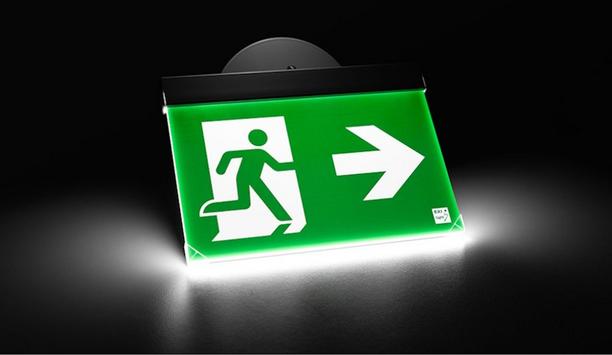
With Idesco Oy acquiring Exilight, effective January 1, 2026, they will start providing safety and emergency lighting products as part of the offering. Exilight products will remain under Exilight brand within Idesco product range. Exilight was established in 2003 and it is one the most recognised safety and emergency lighting brands in Finland. The Exilight safety and emergency lighting product portfolio is one the broadest on the market, also internationally. The products are designed and man...

Reliable broadband connectivity is essential for emergency services and public protection and disaster relief (PPDR) organisations to coordinate responses, share real-time information, and maintain situational awareness during critical incidents. Frequentis, a global safety-critical solutions expert, and Lyfo, a Dutch network technology specialist, are entering into a strategic partnership to advance network connectivity over 4G/5G for safety-critical applications and enable high-capacity mobil...
News

Ranger Fire and Security has now announced its acquisition of Plymouth-based Universal Fire and Security Ltd, marking the business’s strategic entry into the South West of England. Founded in 2001 by Mark Gibson, Universal began as a security-focused provider before expanding into fire protection services, building a strong reputation across Devon and Cornwall for its technical expertise and customer service. New installations for a strong and loyal customer base The company’s comprehensive offering includes intruder detection systems, CCTV, fire alarms, AOV (automatic opening vent) systems, access control systems, emergency lighting, call systems, fire extinguishers, maintenance and monitoring and automatic gates and barriers. Universal’s focus has been geared towards maintenance and maintenance-related services which is more than 90%+ of the business and the balance being new installations for a strong and loyal customer base. The company’s culture and customer-focused business model coupled with focus on maintenance-related services aligns closely with Ranger’s strategy for building a nationwide network of trusted, customer service-driven fire and security specialists. Key step in Ranger’s mission By joining the Ranger Group, Universal will benefit from enhanced operational and technological support, while increasing opportunities for cross-selling and collaboration across the South West and the wider Ranger network. The move represents another key step in Ranger’s mission to build a fire and security services provider that is truly national in scope, combining strong regional expertise with a unified, customer-focused approach. Mark Bridges, CEO of Ranger Fire and Security, said: “We are honoured to be chosen by Mark [Gibson] and team in a highly competitive process to be his partner moving forward and opening the next chapter as part of the Ranger Group.” High-quality fire and security services Mark and Chris were a huge focus for Ranger in our due diligence and they have demonstrated a strong ambition to grow organically and through acquisition. They are a great cultural fit to the team and we are extremely delighted to have them on board as the lead for the work in Devon and Cornwall. Mark Gibson, Founder and Managing Director of Universal Fire and Security, said: “At Universal we pride ourselves on our repeat business and loyal customer base which is a testament to the high-quality fire and security services we deliver across the South West." “A major pull for joining the Ranger Group is being able to benefit from the Group’s operational expertise, helping us ensure we are providing the most high-quality service possible, while also enabling us to expand our reach across not only the South West region, but beyond into other parts of the country.” Ranger’s growing presence across the UK and Ireland Universal Fire and Security’s introduction into the Ranger team marks Ranger’s thirteenth acquisition since launching in early 2024 and its sixth this year. The addition further strengthens Ranger’s growing presence across the UK and Ireland, building on the recent acquisitions of B-Safe Group and Aqua Fire Prevention in Ireland and IRN Security in Scotland. With backing from Hyperion Equity Partners, Ranger is on a mission to become the pioneering one-stop provider for fire and security services across the UK and Ireland. Through strategic acquisitions and investment in technology and talent, Ranger offers a comprehensive range of services at a regional and national level, all while providing a seamless customer experience.
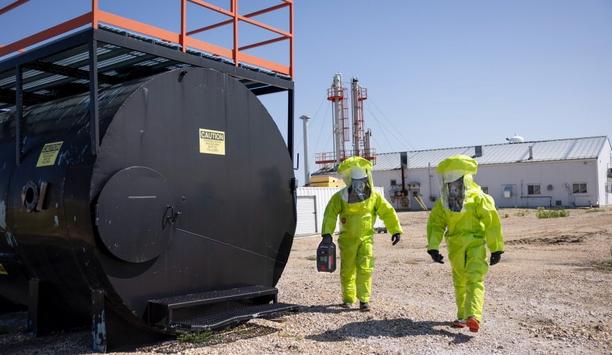
Blackline Safety Corp, a pioneer in connected safety technology, announces that its EXO 8 area monitor has been named a 2025 Firehouse Innovation Award winner — marking the eighth major industry honor this year for the groundbreaking device. The Firehouse Innovation Awards celebrate the most advanced technologies supporting firefighting and emergency response. In announcing the winners, Firehouse Magazine praised EXO 8 for ‘setting a new standard as the only area monitor that detects eight different gases and gamma radiation in a single, rugged, portable device,’ calling it ‘a game changer for firefighters who operate in high-stakes environments.’ Emergency response teams “Earning our eighth award this year is a powerful testament to EXO 8’s impact,” said Cody Slater, CEO and Chair, Blackline Safety. “It’s redefining what teams expect from area monitoring — connecting responders and industrial crews to the critical data they need to make faster, safer decisions when it matters most.” EXO 8 is the only portable area monitor that combines gas and gamma radiation detection in a single connected unit, streaming data live to the cloud so emergency response teams get instant visibility in situations where they often face unknown hazards. Other major recognitions In addition to this latest award, EXO 8 has earned seven other major recognitions in 2025 for its innovation, design and impact on worker and public safety, including: Two Occupational Health & Safety (OH&S) New Product of the Year Awards Red Dot Design Award Préventica Paris Innovation Award Three OH&S Industrial Hygiene Awards Visualising activity timelines This week, Blackline Safety also refreshed its EXO 8 analytics report within the Blackline Live platform, which delivers real-time visibility into devices, people and safety across worksites. This update gives EXO users a deeper understanding of their area monitor data, and the ability to see gas readings by location or track gamma trends over time, making it easier to visualise activity timelines and simplify audits and reporting. “Firefighters and first responders put everything on the line to protect others,” Slater added. “At Blackline, we’re driven by the belief that they deserve that same level of protection in return. With EXO’s real-time monitoring and data, we can give them the visibility, confidence and connection they need to get home safe at the end of the day.”

At GSX 2025 –Ernest N. Morial Convention Centre, New Orleans, September 29 to October 1, booth #3619 - Vismo will demonstrate its new “Checkpoints”, which uses QR codes at key points in a building or venue to create timestamped logs of presence. Not requiring a GPS location, Checkpoints’ QR code readings are automatically recorded in Vismo’s secure portal immediately the codes are scanned by phone. Vismo Protect App’s panic button “Checkpoints enables employers to know exactly where their staff have been - and when,” says Vismo Director of Global Sales, Colin Dale. “That’s critical for ensuring safety and maintaining operational oversight - including where security companies’ clients require verification for ensuring accountability and attendance by security personnel as legally agreed." “Checkpoints also raises the bar for safety of personnel, who can use the Vismo Locate & Protect App’s panic button on their phone if in danger. That will alert admin teams, who will contact emergency services if necessary.” Webinar: Prior to GSX 2025, Vismo will run a 30-minute free webinar, on Teams, about Checkpoints on September 24 with Colin. Supports new laws Checkpoints will support the Terrorism Act 2025, also known as Martyn’s Law, when it comes into effect Checkpoints supports Intro. 0991 - the Safe Hotels Act - a new law of New York City for stronger standards for safety and staffing, including when cleaning on their own in hotel rooms. Similarly, the tool can also be used for supporting lone healthcare workers, a sector shocked by the murder of nurse Joyce Grayson during a scheduled check at a Connecticut halfway house in 2023. In the UK, Checkpoints will support the Terrorism (Protection of Premises) Act 2025, also known as Martyn’s Law, when it comes into effect. The act is designed to improve security and preparedness for potential terrorist attacks at public premises and events, following the attack. It’s named after Martyn Hett, who died in the 2017 Manchester Arena terrorism attack. mSafety smart watch Also on booth #3619, Vismo will demonstrate Sony’s mSafety smart watch that can be used for addressing the needs of workers in specific roles and industries. Vismo is integrating mSafety with its own backoffice operations, secure portal included, to ensure that mSafety’s location tracking, panic button and “man down” detection are supported by Vismo.

i-PRO Americas Inc. (formerly Panasonic Security), a major global manufacturer of edge computing cameras for security and public safety, announced the launch of the ClassSecure safety system, an end-to-end life safety solution designed to help K-12 schools respond to classroom emergencies faster and more effectively. At the heart of the system is a discreet panic button that enables educators to instantly alert both law enforcement and school staff when an emergency occurs. When activated, the system also turns on a specially designed, privacy-protected, classroom camera, providing critical visual confirmation to first responders and administrators. Security with privacy Cameras in classrooms remain in Privacy Mode, with lenses concealed and screens blacked out “In an emergency, every second counts — speed is critical, and even a moment’s delay can alter the outcome,” said Masami Eguchi, President of i-PRO Americas. “ClassSecure gives teachers simple tools to call for help while giving police and school staff the real-time intelligence they need to act quickly and decisively.” Critically, the system balances security with privacy. Cameras in classrooms remain in Privacy Mode, with lenses concealed and screens blacked out, unless an emergency alert is triggered. Once activated, the camera instantaneously delivers a full view of the classroom to aid response efforts. NovoTrax life safety platform “The goal is to create safer classrooms without compromising trust,” Eguchi said. “Educators and parents want to know that privacy is respected while providing first responders with the information they need when it matters most.” ClassSecure is built on the NovoTrax life safety platform, empowering school officials with real-time visibility and control over their entire security ecosystem during an incident. NovoTrax achieves this by integrating disparate systems, streamlining communication, and enabling automatic door lockdowns—all while ensuring seamless coordination with emergency responders. Panic button solution ClassSecure can be deployed in a variety of ways to fit each school’s unique needs Designed with flexibility in mind, ClassSecure can be deployed in a variety of ways to fit each school’s unique needs. It can operate as a standalone panic button solution, or as part of a comprehensive safety ecosystem that includes body-worn cameras and campus-wide video protection for added situational awareness and accountability. ClassSecure is a flexible, advanced safety system inspired by and fully compliant with Alyssa’s Law, which mandates silent panic alarms in schools to accelerate police response. Protecting students and teachers As the law gains traction across the U.S., ClassSecure offers school communities a smarter, faster way to respond to threats—protecting students and teachers while respecting classroom privacy. The new system is available now, through i-PRO’s network of authorised partners. Comprehensive training and certification will be required to ensure each installation meets the highest standards of implementation and support.
Johnson Controls, the pioneer for smart, healthy and sustainable buildings, is reinforcing its commitment to providing comprehensive life safety solutions across industries by unveiling solutions designed specifically for the non-acute healthcare and correctional facilities industries. The company’s non-acute bundled solution combines advanced security and fire prevention technologies to help modernise healthcare facilities, improve safety and enhance overall patient and staff experience. Additionally, Johnson Controls is expanding its correctional facilities offerings to address the growing challenges of outdated and often overlooked buildings, helping communities ensure that they have the necessary infrastructure to enhance security and emergency response. Enhancing security and efficiency in non-acute healthcare As demand for clinics, urgent care centres, outpatient facilities, and other non-acute healthcare environments increases, Johnson Controls is providing bundled solutions that integrate critical aspects of security and fire prevention technologies including: Video Surveillance & Access Control – Strengthening physical security and facility oversight with AI and data analytics. Weapons & Gunshot Detection – Leveraging a cloud-based security solution to enhance threat prevention. Fire Safety Innovations – Suppression systems such as connected sprinkler systems and emergency lighting that can improve safety. Integrating advanced security “By integrating advanced security, fire prevention and technologies that connect building systems, Johnson Controls is helping to create safer, more resilient non-acute healthcare environments,” said James Burke, vice president, product sales & lifecycle solutions at Johnson Controls. “Our latest bundle leverages industry expertise and advanced technology to streamline operations, optimise staffing resources and can enhance patient and staff safety in outpatient clinics, urgent care centres, long-term care facilities and more. In these settings—where staff are stretched thin and operational efficiency directly impacts patient care—having the right technologies and service helps to provide a safe, comfortable environment for both patients and caregivers.” Strengthening correctional facilities Johnson Controls has taken steps to enhance security for penal facilities, including state and federal prisons In parallel, Johnson Controls has taken steps to enhance security for correctional facilities including state and federal prisons, county and local jails and detention centres. Across the U.S. and Canada, Johnson Controls is addressing the challenges that correctional facilities can face due to outdated infrastructure and decades of underinvestment by upgrading HVAC, fire, and security systems to modern standards, improving both safety and operational efficiency. Johnson Controls security systems Johnson Controls provides correctional facilities with tailored solutions such as video surveillance, visitor management, fire detection systems, fire suppression and more to help create safer and more secure environments for both the occupants and facilities. “Nearly one-third of correctional facilities are over 50 years old and are in critical need of key upgrades – from security systems to mechanical equipment,” said Greg Parker, vice president, lifecycle solutions at Johnson Controls. “Not only can these upgrades enhance overall conditions and safety for facility personnel, inmates and visitors, but the utility bills can also be lower due to overall operational efficiency.” Physical and cyber security Johnson Controls has a strong fact across industry sectors and continues to develop tailored solutions Johnson Controls has a strong presence across industry sectors and continues to develop tailored solutions that prioritise security alongside efficiency and sustainability. With a focus on innovation, the company is committed to expanding its expertise in high-growth industries, including healthcare, education, government and data centres, by delivering advanced solutions that strengthen physical and cyber security, safeguard critical infrastructure and ensure resilient operations. Next era for commercial buildings Johnson Controls proudly celebrates its 140th anniversary in 2025, marking a legacy of innovation and leadership in smart, safe, healthy and sustainable solutions. The company continues to redefine building performance, driving the next era for commercial buildings, transforming industries and powering its customers’ missions.

Intrado Life & Safety, a global pioneer in public safety solutions announced a partnership with GeoComm, a provider of Geographical Information Systems (GIS) data. This partnership aims to enhance data available via Intrado’s Spatial Insight product by integrating interior GIS data from critical buildings, including schools, airports, courts, and hospitals, thereby improving emergency response capabilities. Spatial Insight offering "The call centres that support our first responders may have the address of a building such as a school or hospital that is experiencing an emergency, but just the address alone is not enough to locate someone in need inside the building," said Jaz Lin, Head of Product at Intrado. Jaz Lin adds, "Our partnership with GeoComm and the extensions it enables to our Spatial Insight offering help provide public safety call takers the detailed information they need to get help to the right people in the right places at the right time. Room-specific location significantly reduces response times, ensuring first responders reach the right room and improve outcomes." Public and school safety solutions "It is critical to enable interoperability within public safety and school safety solutions to increase access to critical information. In this case, the indoor GIS maps provide increased situational awareness for 911 emergency response," said Jeff Liebl, GeoComm President & CEO. Jeff Liebl adds, "This partnership represents our commitment to supporting community safety to save lives and protect property when seconds matter." Public Safety Answering Points GeoComm’s indoor maps and other useful sources of supplemental emergency information, including automotive telematics and supplementary data supplied from mobile devices including mobile phones are available to Public Safety Answering Points (PSAPs) for free with Intrado’s Spatial Insight. With Intrado and third-party integrations, as well as stand-alone modes, Spatial Insight enables field teams with the best possible detailed information about the emergency at hand. Intrado Spatial Insight will be on display at the 2024 APCO International’s Annual Conference & Expo on August 5 & 6 in Orlando, Florida.

Expert commentary
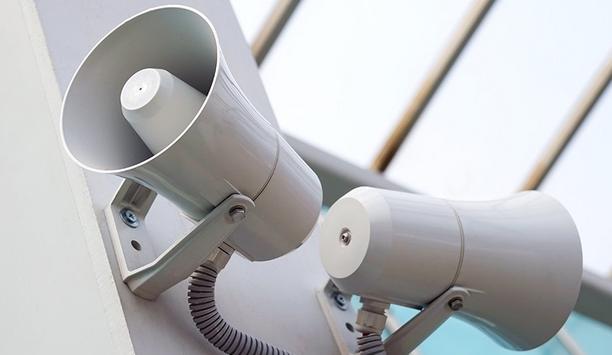
TOA Corporation (UK) Ltd discuss what changes COVID-19 has bought to the installation of VA/PA Systems and how the integration of IP has impacted on that. With a year and a half of global uncertainty, we have seen huge changes in what VA/PA systems will need to deliver in order to provide safe and robust solutions with advanced zone and directional messaging. The impact of COVID has pushed installers to re-think what end-users need long-term to manage any future changes in guidelines especially for large events and complex applications such as travel hubs and how the integration of IP will assist with installing safe systems in the future. Providing public announcements PA/VA has been one of the few parts of our industry that has remained consistent and buoyant during the lockdown. It has been the ideal time for public buildings to upgrade as restrictions did not apply to the construction industry and many installations were actually fast-tracked in the hope that when restrictions lifted commercial properties could open as quickly as possible. PA/VA has been one of the few parts of our industry that has remained consistent This was coupled with the knowledge that changes would have to be made to address the increased demand in providing public announcements outside the standard evacuation messages that most VA/PA have been traditionally used for and enable the impact of having to be flexible to deliver multiple messages. Flexible system management So what is changing? Leading in VA/PA is the availability of IP which enables more flexible system management. It allows installation/solution management engineers to offer remote access to complex systems from a central control room meaning that they can maintain and control systems from one hub and operate for multiple areas on large complex sites such as an airport or stadiums. This provides not only a better level of technical coverage across a whole site but also allows an engineer to monitor and fault find without the delay of waiting to being able to access a specific area. This is especially important for vulnerable applications such as schools and health facilities as it enables them to control and reduce the amount of interaction with engineers they need to give physical access to – therefore reducing risk. Potentially less maintenance This makes it more financially viable for both the end-user and the maintenance provider Long-term, IP also makes these systems much more cost-effective. For example, one engineer can manage a hub of multiple locations with potentially less maintenance call-out costs. This makes it more financially viable for both the end-user and the maintenance provider to justify the initial investment. With these systems being paramount to people’s safety remote intervention allows for swift fault finding and problem resolution in a more effective response time and cost-effective way. To enable this the biggest development has been the integration between product manufacturers and software developers. They have been able to collaborate greatly to get products such a horn speakers to connect via industrial standard network protocols giving much greater flexibility in remote system management. Multi-rack systems The technology involved in VA/PA, especially integrating with IP, has seen huge growth recently and we are involved in projects that involve multi-rack systems to enable controlled zone management and evacuation options with greater collaboration between integrators to get the systems to work effectively. VA/PA systems must be at the forefront of long term solutions and sustainability As more people are allowed to gather in larger numbers public-facing buildings need to address their evacuation and voice announcement procedures in order to be compliant. They need to be able to deliver clear and effective messages to their visitors in order to remain open whenever guidelines change. VA/PA systems must be at the forefront of long-term solutions and sustainability. The other area of VA/PA that has changed immensely in the last 18 months is the vast difference in messaging requirements that organisations need. Public safety announcements Systems that have been used infrequently for emergency situations only are now delivering daily messages with public safety announcements. In reality, although we all hope that we will never go back to the peak of lockdown, installations must be robust to cope with any situation in the future. Many smaller spaces that wouldn’t have thought they would need a PA system at all now understand that they too have an obligation to deliver public information and guidance and on a regular daily basis and this will lead to system designs being scaled up and down to meet the broadening array of applications that require VA/PA and how this is managed in the event that new protocols have to be introduced. Detailed technical plans Systems should be certified on the European Standard EN 54-16 and should be expertly designed Design and planning should be key when sourcing the right solution. Systems should be certified on the European Standard EN 54-16 and should be expertly designed to specification with detailed technical plans and tailor-made to the requirements of the end-user. With people’s safety in your hands, you cannot get these systems wrong so it is important that installers are able to draw on the expert technical team resources that we, as a manufacturer, offer in adhering to this standard and for us to be able to provide a commissioning service to sign off on these important safety systems. Compared with traditional lights and sounders systems we believe the future of evacuation will be voice-based. In our ever-increasing culturally diverse world we have to embrace systems that need to be multi-lingual or be able to dedicate a message to a specific target audience and be able to be drilled down to zones and give much more directional information. Multi-zoned academies As office buildings get taller, health facilities become super hospitals or schools upgrade into multi-zoned academies we have to be able to evacuate or hold back evacuation to enable safe crowd control. In order to facilitate this VA will have to replace traditional systems or work in tandem with them. We must point out that in residential high-rise properties the primary method of evacuation, to comply to BS 8629, would still be traditional lights and sounders even if you install a separate VA system. Voice Alarm and Public Address is a long-term investment, especially as the global situation may take many years to recover, and as manufacturers working with our integrators and software developers we must continue to lead in the development of the best systems to ensure we can keep everyone safe.

Small and medium businesses of all kinds encountered unprecedented challenges during the COVID-19 pandemic. And now that businesses have reopened, they are facing new obstacles through each stage of recovery. Business owners need to look for solutions that can help them manage these issues now and beyond. Challenges ranging from lack of cash flow to staffing challenges to IT security issues for businesses with remote workers can be lessened by security and automation solutions. One of the main challenges following the height of the COVID-19 pandemic for small and medium businesses is cash flow. Mitigating negative effects In the aftermath of the pandemic, both demand and supply chains continue to be disrupted, causing implications for cash flow across industries. Business owners can help mitigate negative effects to cash flow by finding more ways to save money A particularly impacted industry is retail, which continues to struggle due to reduced foot traffic. Business owners can help mitigate negative effects to cash flow by finding more ways to save money and helping prevent other crisis-level situations before they occur. Security and automation devices are an ideal solution to manage energy and monitor for situations that could cause damage or loss. Energy management: Smart lighting: With an automated security system, lights can be programmed to go on and off to give the illusion of an occupied storefront or can be easily turned off remotely if left on by accident. This can help keep energy costs down by only using lighting when needed. Smart thermostat: Business owners can also manage energy usage at one or many locations by using a smart thermostat and setting up automated schedules. For example, they can set their thermostat according to their open and close hours and lower the use of energy from those devices while the store is empty. Temperature and flooding alerts: Devices to measure unanticipated temperature changes or detect flooding can help a business owner act quickly to prevent damage or loss to stock and equipment due to extreme heat, cold, or a flood. After the crisis already endured during the pandemic, it is important that business owners have the chance to prevent further unexpected disasters. Medium business owners Staffing challenges are a prevalent issue for businesses across the nation Staffing challenges are a prevalent issue for businesses across the nation. Due to the lack of employees, small and medium business owners now must work more to help keep their businesses running. Security and automation solutions like remote system management, instant alerts and activity reports and professional monitoring can help them keep their business functional and protected even if they need to step away or check on another location. Remote system management: Business owners can use an app to lock and unlock their businesses or arm and disarm their security system 24/7 from virtually anywhere in the world. They can also ensure all doors are locked after the last employee has left for the night. This can allow them to keep their security level consistent even with fewer employees. With security cameras, business owners can take a live look into their business from anywhere using their mobile app. This is an especially helpful feature if a small business owner has multiple locations and wants to check in at another location from work or home. Instant alerts and activity reports: With an automated security system, business owners can get instant alerts to keep them up to date on what is happening at the business while they’re away. This helps owners stay in control even with reduced staffing or while new employees are being trained. Professional monitoring: Security systems with professional monitoring can help save lives and protect property, whether a burglar alarm or a fire alarm is set off in the business. When an alarm sounds, a live person will respond immediately and ensure emergency services are on the way. This can give business owners peace of mind while they are away from their business, knowing that their livelihood and life’s work is always protected. Physical security systems Cyberattacks increased dramatically during the pandemic, according to the FBI Another key change for small and medium businesses due to the pandemic is more employees working remotely. What many businesses overlook, however, is that remote workers that aren’t properly protected can cause a major threat to a business’s network. In addition to that, cyberattacks increased dramatically during the pandemic, according to the FBI, and small businesses need to stay alert. Just as with physical security systems, employing the right cybersecurity solutions can reduce the risk of cyberattacks. Cybercriminals are just like burglars-looking for easy victims without protection in place. Cybersecurity solutions like firewalls and VPNs (virtual private networks) can help protect the business network and beyond. Shielding business computers Managed firewall: Firewalls help protect against bad actors by shielding business computers or the overall network from malicious Internet traffic. Just one small error in the configuration could result in a hacker gaining access to credit card transactions, or other sensitive patient or customer data. A managed firewall service allows companies to receive the benefits of sophisticated firewall solutions and outsource the complexity associated with operating them. VPNs: Businesses can extend their firewall protection to wherever employees are working, including their homes, with VPN This is a crucial need in limiting risk due to the expanded post-pandemic remote workforce, which is expected to double pre-pandemic numbers by 2025, according to Upwork. Medium business owners As small and medium business owners encounter the difficulties of the post-pandemic ‘new normal,’ they can look to security and automation solutions to help keep them on their feet. Beyond that, security systems and cybersecurity solutions are a great investment to help ensure the protection of a small business both online and physically, while also providing convenience, insight and peace of mind to business owners.

Johnson Controls recently unveiled the findings of its 2018 Energy Efficiency Indicator (EEI) survey that examined the current and planned investments and key drivers to improve energy efficiency and building systems integration in facilities. Systems integration was identified as one of the top technologies expected to have the biggest impact on the implementation in smart buildings over the next five years, with respondents planning to invest in security, fire and life-safety integrations more so than any other systems integration in the next year. As advanced, connected technologies drive the evolution of smart buildings, security and safety technologies are at the center of more intelligent strategies as they attribute to overall building operations and efficiencies. SourceSecurity.com spoke with Johnson Controls, Building Solutions, North America, VP of Marketing, Hank Monaco, and Senior National Director of Municipal Infrastructure and Smart Cities, Lisa Brown, about the results of the study, smart technology investments and the benefits of a holistic building strategy that integrates security and fire and life-safety systems with core building systems. Q: What is the most striking result from the survey, and what does it mean in the context of a building’s safety and security systems? The results show an increased understanding about the value of integrating safety and security systems with other building systems Hank Monaco: Investment in building system integration increased 23 percent in 2019 compared to 2018, the largest increase of any measure in the survey. When respondents were asked more specifically what systems they we planning to invest in over the next year, fire and life safety integration (61%) and security system integration (58%) were the top two priorities for organisations. The results show an increased understanding about the value of integrating safety and security systems with other building systems to improve overall operations and bolster capabilities beyond the intended function of an individual system. Q: The survey covers integration of fire, life safety and security systems as part of "smart building" systems. How do smarter buildings increase the effectiveness of security and life safety systems? Hank Monaco: A true “smart building” integrates all building systems – security, fire and life-safety, HVAC, lighting etc. – to create a connected, digital infrastructure that enables individual technologies to be more intelligent and perform more advanced functions beyond what they can do on their own. For example, when sensors and video surveillance are integrated with lighting systems, if abnormal activity is detected on the building premise, key stakeholders can be automatically alerted to increase emergency response time. With integrated video surveillance, they also gain the ability to access surveillance footage remotely to assess the situation. When sensors and video surveillance are integrated with lighting systems abnormal activity on the premise can automatically be detected Q: How can integrated security and life safety systems contribute to greater energy efficiency in a smart building environment? Hank Monaco: Security, fire and life-safety systems can help to inform other building systems about how a facility is used, high-trafficked areas and the flow of occupants within a building. Integrated building solutions produce a myriad of data that can be leveraged to increase operational efficiencies. From an energy efficiency standpoint, actionable insights are particularly useful for areas that are not frequently occupied or off-peak hours as you wouldn’t want to heat or cool an entire building for just one person coming in on the weekend. When video surveillance is integrated with HVAC and lighting systems, it can monitor occupancy in a room or hallway. The video analytics can then control the dimming of lights and the temperature depending on occupant levels in a specific vicinity. Similarly, when access control systems are integrated with these same systems, once a card is presented to the reader, it can signal the lights or HVAC system to turn on. In this example, systems integration can ultimately help enable energy savings in the long run. Security and life safety systems contribute to help enable greater energy efficiency and energy savings in the long run Q: What other benefits of integration are there (beyond the core security and life safety functions)? Hank Monaco: Beyond increased security, fire and life-safety functions, the benefits of systems integration include: Increased data and analytics to garner a holistic, streamlined understanding of how systems function and how to improve productivity Ability to track usage to increase efficiency and reduce operational costs Enhanced occupant experience and comfort Increased productivity and workflow to support business objectives Smart-ready, connected environment that can support future technology advancements Q: What lesson or action point should a building owner/operator take from the survey? How can the owner of an existing building leverage the benefits of the smart building environment incrementally and absent a complete overhaul? Lisa Brown: Johnson Controls Energy Efficiency Indicator found that 77% of organisations plan to make investments in energy efficiency and smarter building technology this year. This percentage demonstrates an increased understanding of the benefits of smart buildings and highlights the proactive efforts building owners are taking to adopt advanced technologies. There is an increased understanding that buildings operate more effectively when different building systems are connected As smart buildings continue to evolve, more facilities are beginning to explore opportunities to advance their own spaces. A complete overhaul of legacy systems is not necessary as small investments today can help position a facility to more easily adopt technologies at scale in the future. As a first step, it’s important for building owners to conduct an assessment and establish a strategy that defines a comprehensive set of requirements and prioritises use-cases and implementations. From there, incremental investments and updates can be made over a realistic timeline. Q: What is the ROI of smart buildings? Lisa Brown: As demonstrated by our survey, there is an increased understanding that buildings operate more effectively when different building systems are connected. The advanced analytics and more streamlined data that is gathered through systems integration can provide the building-performance metrics to help better understand the return on investment (ROI) of the building systems. This data is used to better understand the environment and make assessments and improvements overtime to increase efficiencies. Moreover, analytics and data provide valuable insights into where action is needed and what type of return can be expected from key investments.
Security beat

The coronavirus pandemic had a monumental impact on all aspects of the business world, including the security industry. However, amid the gloom and doom, many security professionals also saw opportunity: New ways the industry’s products could be applied to address the challenges of coping with the virus. This article will review some of those opportunities, based on our reporting throughout the year and including links back to the original articles. During and after the pandemic, security systems are an important asset when it comes to helping to keep occupants and buildings safe as employees return to work. For example, video analytics can provide insight into how spaces have previously been used and can help to predict where and when occupants encounter each other or congregate. Role of thermal cameras These foot-traffic patterns can inform settings for a variety of devices - like ventilation and temperature controls - and even help owners create social distancing plans and monitor personal protective equipment (PPE) compliance. Thermal surveillance, a mainstay of traditional physical security and outdoor perimeter detection, began being deployed early in the pandemic to quickly scan employees, contractors and visitors as part of a first line of defence to detect COVID-19 symptoms. These systems provide flexibility and can offer integrations with multiple VMS platforms and access control devices These systems provide flexibility and can offer integrations with multiple VMS platforms and access control devices. Thermal cameras can be a tool for detecting fever, but any use of the technology for this purpose is full of qualifications and caveats. Importantly, how the camera system is configured makes all the difference in whether temperature readings are accurate, and the downside of inaccurate readings is obvious - and potentially deadly. Temperature detection systems FDA guidelines limit how the cameras are used, not to mention guidance from other regulatory/government bodies such as the CDC. One of our Expert Roundtable panelists compares the market to a “wild west scenario,” and almost all the panelists are clear about how customers should approach the market: Buyer beware. There are many companies jumping into selling temperature detection systems to the state, local governments, hospitals, airports and local businesses, but do they know how to drive one? Anyone can get behind a car and drive it into a wall by accident. The same can happen with a temperature detection system. Customers need to know what questions to ask to ensure they maximise the accuracy of body temperature detection systems. Rise of contactless Spread of the novel coronavirus has jolted awareness of hygiene as it relates to touching surfaces such as keypads. No longer in favor are contact-based modalities including use of personal identification numbers (PINs) and keypads, and the shift has been sudden and long-term. Both customers and manufacturers were taken by surprise by this aspect of the virus’s impact and are therefore scrambling for solutions. Immediate impact of the change includes suspension of time and attendance systems that are touch-based Immediate impact of the change includes suspension of time and attendance systems that are touch-based. Some two-factor authentication systems are being downgraded to RFID-only, abandoning the keypad and/or biometric components that contributed to higher security, but are now unacceptable because they involve touching. "Users do not want to touch anything anymore,” says Alex Zarrabi, President of Touchless Biometrics Systems (TBS). Facial recognition system Another contactless system that benefits from concerns about spread of COVID-19 is facial recognition. New advancement in software, specifically in the areas of algorithms, neural networks and deep learning and/or artificial intelligence (AI), have all dramatically improved both the performance and accuracy of facial recognition systems, further expanding its use for an increasing number of applications. A low-tech solution - the face mask - became a leading preventative measure during the pandemic. But, a high-tech solution is necessary to ensure that everyone is wearing them. Cameras powered by artificial intelligence can now identify whether or not people entering a facility are wearing facemasks and help enforce adherence to mask mandates. This technology is proving to be a cost-effective solution that reduces risks of confrontations over masks policies and gives managers the data they need to document regulatory compliance and reduce liability. Smart video analytics Other technology approaches, including artificial intelligence (AI), were also brought to bear during the pandemic. The German data analytics powerhouse G2K, for example, has developed a Corona Detection and Containment System (CDCS) that is ready for immediate use in record time. Detection takes place in combination with AI-supported data analysis to specifically identify virus hotspots and distribution routes, as well as to identify other potentially infected persons. One specific AI application fuels the reopening of the world and successfully keeps the spread of the virus abated One specific AI application fuels the reopening of the world and successfully keeps the spread of the virus abated. A “collaborative security” application includes a synthesis of smart video analytics, facial recognition, object identification/detection, and thermal cameras that can support the reopening of businesses globally when installed within those facilities frequented by customers. Enforcing social distancing Several applications have been successful to date and will increase in usability in the foreseeable future, creating “smart cities” working together towards a safer, more secure world. The site of one pilot programme is the 250,000-square-foot HID Global facility in Austin. For the pilot programme, 80 HID Location Services readers were installed in a wide area in the facility, including a variety of environments. Initially 30 badges and 30 fobs, all BLE-enabled, were issued to employees. If a badge identifies another nearby beacon (suggesting a social distancing failure), it emits a blinking LED light, which can be seen by the offending co-worker. To ensure social distancing, a Bluetooth Low Energy (BLE) beacon is emitted from an employee’s fob (or from a badge that has the same functionality). The beacon communicates peer-to-peer with a beacon emitted by another employee’s fob or badge to alert if the location of the two employees is less than six feet apart. For contact tracing, the beacons communicate via a nearby “reader” (a BluFi BLE-to-Wi-Fi gateway) to the Bluzone cloud-based software-as-a-service. COVID-19 white papers In addition, we published several White Papers in 2020 that addressed various aspects of the coronavirus pandemic. They included: The top five security lessons learned that apply across all industries navigating COVID-19. Using video analytics to keep staff, visitors and customers safe by enforcing social distancing. How antimicrobial treatment on door handles and levers can reduce disease spread. How companies can put in extra precautions that will continue to grow and adapt with their environment over the long-term. Determining the practicalities and capabilities of today's thermal cameras to accurately detect body temperature.

Intelligent solutions, such as those derived from artificial intelligence, help critical infrastructure organisations make sense of vast amounts of data. These integrated applications, such as advanced video analytics and facial recognition, can automatically pinpoint potential breaches and significant events, and send alerts to the appropriate personnel, departments, and agencies. These solutions can be powerful in unifying disparate command centre technologies, fusing critical data input from emergency calls and responder activity to enhance situational awareness. Electrical substations are particularly vulnerable (and in need of extra security) due to their role in power distribution and the nature of their equipment. The challenge power utilities worldwide are facing is finding an affordable solution, which can help detect, deter and facilitate an informed response to a substation security event. Data capture form to appear here! U.S. regulations In the United States, this need is furthered by the physical security mandate CIP-014 issued by the North American Electric Reliability Corporation (NERC), calling for identification of security issues, vulnerability assessments and deployment of appropriate processes and systems to address. CIP-014 identification of security issues, vulnerability assessments and deployment of appropriate processes and systems to address CIP-104 specifically calls for implemented security plans that include measures to deter, detect, delay, assess, communicate, coordinate and respond to potential physical threats and vulnerabilities. Manufacturers of video and other systems are designing products to serve the critical infrastructure market. For example, Dahua Technology offers explosion-proof cameras with a combination of rugged reliability and superior optics that is a fit for surveillance of explosive and corrosive environments, including chemical plants, refineries, and other facilities in the oil and gas industry. This explosion-proof series of cameras are housed in enclosures that are certified to the ATEX and IECEx standards for equipment in explosive atmospheres. Each explosion-proof camera features Dahua’s Starlight technology for ultra low-light sensitivity and high-definition sensors that deliver clear images in real-time. They are IP68-rated to prevent water and dust ingress. Each explosion-proof camera features Dahua’s Starlight technology for ultra low-light sensitivity and high-definition sensors that deliver clear images in real-time Video footage in extreme temperatures Another manufacturer, Videotec, offers a range of cameras and housings that provide video footage regardless of aggressive external factors, such as ice cold, scorching heat, desert sand, the force of sea or wind, total darkness, pollution, corrosion and even explosive agents. SightSensor thermal systems enable a utility to detect and respond to substation security incidents across multiple sitesSightLogix smart thermal camera systems have been deployed to protect substations for electric utilities and other critical infrastructure facilities. SightSensor thermal systems enable a utility to detect and respond to substation security incidents across multiple sites, ranging from copper theft to vandalism while also meeting regulatory compliance. At each substation facility, Thermal SightSensors are positioned along the perimeter, and are paired with a high-resolution pan-tilt-zoom camera for alarm assessment. When a Thermal SightSensor detects an intruder, the target’s location information is sent over the network to a SightTracker PTZ controller, which automatically zooms and steers PTZ cameras to follow the intruder. The target’s location is also displayed on a topology site map to provide real-time situational awareness. Alarms are sent to the utility’s 24-hour security operations centre, which will contact law enforcement in real time when unauthorised intrusions are detected. Integrated intrusion detection and lighting systems The Senstar LM100 hybrid perimeter intrusion detection and intelligent lighting system is simplifying security at one U.S. electrical utility company. For years, the utility company had integrated its perimeter intrusion detection and lighting systems. The company has now installed the Senstar LM100 which provides detection and lighting in one product and saves them over $80,000 per site. The savings are a result of the reduction of electrical requirements, conduit, grounding, and associated labor, as well as the removal of certain equipment from project scope that are required for the two-system integration. The Senstar LM100’s perimeter LED-based lighting acts as an initial deterrent. If an intruder persists and an attempt to cut, climb or otherwise break through the fence is detected, the closest luminaire begins to strobe, and an alert is sent via a security management system. The intruder knows immediately they have been detected and that their exact location is known by security and others in the vicinity.

Video surveillance cannot address all the security challenges in education, but it is a valuable tool and among the least obtrusive options available. And the list of security challenges that video can address grows every day. Video systems can provide real-time monitoring of school premises and facilitate rapid response to incidents. New advances such as video analytics are currently underutilised in the education arena. Historically, video has been used as a forensic tool in the education market, providing critical information about an incident after the fact. But that generalisation is changing. Today, networking enables video images to be shared throughout a school system, travelling over existing networks, empowering a more centralised security management structure, and making video more valuable. In particular, higher education institutions are more likely to view live video, given the larger campuses, greater number of buildings, and more public areas where staff and students congregate. Challenges for securing a school environment Multiple challenges in the education market for security goods and services (from a video perspective) include wide open spaces that make securing schools with video surveillance cameras difficult since the vast amount of coverage required can be cost-prohibitive. Second, state and federal regulations must be taken into account and balanced with the need to protect student privacy. Panoramic cameras are one tool to address challenges, as a single 360-degree camera can replace between 4 and 5 PTZ cameras Finally, schools and colleges face dwindling budgets, which means security solutions must deliver more coverage and functionality, while also being cost-effective to deploy. Panoramic cameras are one tool to address these challenges, as a single 360-degree camera can replace between four and five traditional pan-tilt-zoom cameras, resulting in fewer cameras and more coverage – all at a lower cost for hardware and licensing. Data capture form to appear here! Intelligent cameras with video analytics Video surveillance with video analytics can be deployed to monitor areas at certain times of day. For example, once school starts, there shouldn’t be a lot of activity in the parking lot or in particular areas around the school. For these situations, intelligent cameras with video analytics can be used to detect activity in those areas of interest to alert school security that something may need their attention. Radar detection is ideal for perimeters, where a device can be set up unobtrusively to alert when someone enters a particular area. ACC 6 video management software with Avigilon Appearance Search technology provides advanced video analytics search The goal in a potentially dangerous situation is to speed up response times. The faster you’re able to detect something using technology, the faster you’re able to respond. Therefore, being able to identify something happening in a parking lot and alert school resource officers could provide 30 seconds or a minute head start for response, which can get the school into a lockdown situation and get first responders on site more quickly. Video cameras with low-light capability It’s been shown that using lighting at night can deter crime. However, it can be expensive to keep a building and grounds illuminated all night, every night. To mitigate these concerns and potential costs, there are video cameras available with extreme low-light capability that allows them to see in near-dark or in some cases complete darkness. This allows a school to save money by turning lights off while achieving a level of surveillance performance similar to daytime deployments. There are video cameras available with extreme low-light capability to see in near-dark or complete darkness Facing above-average student incident rates and student disciplinary concerns at some schools, a school system in the United States sought to upgrade its video surveillance system to allow better local and remote monitoring in important areas. Avigilon high-definition cameras with self-learning video analytics and access control solutions were installed in 101 schools, and ACC 6 video management software with Avigilon Appearance Search technology provides advanced video analytics search. A deep learning artificial intelligence search engine can sort through hours of footage and allow operators to click on a button and search for all instances of a person or vehicle across all cameras on a site, quickly and efficiently.
Case studies

Hochiki Europe, working with Italian installer ELE.CO SRL, has completed the installation of a combined fire detection and emergency lighting system at a KOKO Emporio store in the Turin area. KOKO Emporio is a well-established value and family retailer with several stores across Torino and Moncalieri, offering home, clothing and lifestyle products to shoppers across the region. The store in question spans 800 square metres across a ground floor and basement. As with any busy retail floor, aisles and stock displays can make it harder for customers to find the nearest exit in an emergency, particularly those unfamiliar with the layout. The store needed a fire detection system that met current compliance requirements alongside emergency lighting capable of guiding staff and customers to safety during a fire or power failure. ESP intelligent fire detection ELE.CO SRL specified Hochiki's FIREscape+, which combines ESP intelligent fire detection with emergency lighting on a single four loop control panel. ALN-EN smoke sensors with adjustable sensitivity were installed throughout to reduce false alarms, and EN 54-23 compliant visual alarm devices were added to make alarm activation clearly visible to every occupant, working alongside ESP sounders to give full audible coverage. The basement presented a particular challenge. It houses separate retail and warehouse areas with long aisles, stock boxes and stairways, so the emergency lighting needed to keep the space illuminated and evacuation routes clear during a power outage. High power luminaries connected to the FIREscape+ panel now cover this area, guiding staff and customers to the nearest exit if the power fails or an evacuation is needed. Multi-site retail environment Ervin Peza, owner of ELE.CO SRL, said: "Hochiki's FIREscape+ system reduced installation costs significantly compared to installing two separate systems, making it the right choice for this application. Combining fire and emergency lighting on a single panel and loop reduces cabling, which simplifies both installation and maintenance." He added: "KOKO's new integrated fire and emergency lighting system means the store can run smoothly, day to day, with customers confident that any fire will be picked up quickly and that they can find their way to safety. Hochiki's addressable technology means the system can pinpoint the exact location of an incident and guide people along the safest route out, even if the power goes down." The installation shows how a combined, addressable fire and emergency lighting system can meet the practical demands of a busy, multi-site retail environment, giving store owners one system to manage rather than two.

Nightwatch Security & Telephone LLC, Sedalia, Mo., took a common problem for first responders – ready access to schools in an emergency – and turned it into a positive with a cloud management platform. Nightwatch owner Jeff Kesterson is partnering with local law enforcement on implementing an Emergency Response Platform (ERP) which gives police, sheriff and state highway patrol agencies in Sedalia and Pettis County greater accessibility and situational awareness at local school campuses. Cloud management platform The company provides access control, intrusion detection and video surveillance, managed via the Connect ONE Leveraged through the Connect ONE® by Connected Technologies cloud management platform, first responders and School Resource Officers (SROs) can view real-time activity at local schools, initiate immediate access, or lock down the protected premises. Nightwatch is the systems integrator and physical security service provider to the Sedalia School District (Sedalia 200), one of the largest districts in the county with over 4,500 students in PK-12 facilities; Sacred Heart School; La Monte R-IV School in neighbouring La Monte, Mo., and Greenridge R-VIII. The company provides access control, intrusion detection and video surveillance, managed through the Connect ONE cloud platform management interface. Remote locking and unlocking capabilities “We asked Connected Technologies to develop a simple way to update, administer and input agency officer’s codes/credentials for the schools through Connect ONE,” said Jeff Kesterson. “They came back with the ERP, which unifies all the school’s individual systems into one interface for viewing, management and control without separate site logins. It goes even further, and allows remote locking and unlocking capabilities during critical threats,” he said. Fobs and system permissions Users can manage the fobs and system permissions in one place for all the schools viathe ERP Kesterson added that first responders, as well as SROs at each school, maintain access with proximity access control key fobs, but updating the devices to stay current with staffing changes was unwieldy. Now, users can manage the fobs and system permissions in one place for all the schools through the ERP. Sedalia 200 school administration manages more than 700 fobs annually, utilising the Connect ONE platform daily. The ERP provides agencies with a separate login with certain designated permissions for first responders who can only see customer site locations shared by Nightwatch. Via the emergency dashboard, first responders can login to view cameras (where implemented), unlock doors and outputs, activate task functions, initiate lockdown and view recent activity. Door access control and camera viewing The Sedalia Police Department has access to schools within the city limits: Sedalia 200 which includes 10 schools plus administration and maintenance buildings and Sacred Heart School. The Missouri State Highway Patrol A has access to the same schools as the Pettis County Sheriff’s Office The Pettis County Sheriff’s Office has access to Sedalia 200 schools and buildings; Sacred Heart School; La Monte R-IV; and Greenridge R-VIII school districts. The Missouri State Highway Patrol A has access to the same schools as the Pettis County Sheriff’s Office. The ERP allows Nightwatch to easily set up various zones of jurisdiction, giving first responders access to the schools they are obligated/expected to respond to an emergency. Of the four school districts using the ERP, all except Sacred Heart School provide both door access control and camera viewing/playback to the departments with access. ERP for enhanced accessibility and response Commander Joshua Howell, Operation's Support Bureau, Sedalia Police Department, said the ERP is a huge timesaver, and allows the department to administer key fob credentials, streamlining the process when personnel access requires modification. “Ease of administering credentials was important and adding or removing personnel from the system was clunky before the ERP. Instead of logging into all the school systems separately, we can look at everything in one place,” he said. Commander Howell added that the platform allows authorities to unlock doors if an emergency responder doesn’t have a proximity device, saving time as opposed to dispatching a patrol officer to the scene. The Pettis County Sheriff’s Office is also leveraging the ERP for enhanced accessibility and response readiness. School safety planning Sheriff’s Office has over 650 square miles in the county, including Sedalia and smaller cities “This has been a great tool for us,” said Sergeant John Cline, SRO Unit Supervisor, Pettis Co. Sheriff’s Office. “We’re continuing to build it out and have integrated it into our school safety planning. Being able to remotely manage key fobs and initiate lockdowns – there’s substantial benefit to having that immediate control,” he said. The Sheriff’s Office has jurisdiction over 650 square miles in the county, including Sedalia and several smaller cities. It manages some 40 key fob credentials issued to patrol officers and SROs assigned to the schools. SROs serve the daily law enforcement needs of the schools, but if they aren’t available to provide access in an emergency, the ERP provides that function in real-time. Emergency Response Platform Nightwatch provided training on the interface to the units, and Sgt. Cline said it was intuitive “Our schools recognise the importance of having a close relationship with law enforcement,” Sgt. Cline continued. “Being able to get into a building quickly when seconds count has made the relationship that much stronger,” he said. Nightwatch provided training on the interface to the departments, and Sgt. Cline said it was intuitive and easy to grasp in a one-hour session. “The Emergency Response Platform allows Connect ONE dealers to partner with local law enforcement by providing the tools they need to defuse an emergency quickly and effectively with powerful information to view and control facility security,” says Dan Simon, Co-Founder, Connect ONE. “It’s a great solution to assist in public safety while also ensuring you keep a customer long-term.” Other benefits of the Emergency Response Platform A single application screen to add or remove agency personnel system codes/access credentials from shared customer systems. System codes are included in profile templates, so permissions come pre-defined for simple additions by the agency. Permissions may only be modified by the dealer to prevent misconfiguration; customers will maintain the ability to view the permissions without making changes. Activity by agency personnel is reviewable by the customer in reporting and notifications. Connect ONE and the ERP is the unified, cloud management platform for schools that’s making a difference with easier access while increasing situational awareness for first responders.

Fire protection solutions manufacturer, Advanced, has supplied intelligent fire panels to 5 Aldermanbury Square, London, as part of a major refurbishment. Advanced’s high-performance, fault-tolerant MxPro 5 analogue addressable fire panels provide industry-pioneering protection to all areas of the 22-story building. Updating fire panel network 5 Aldermanbury Square is located in the City of London with the Eric Parry-designed landmark delivering exceptional views across the London skyline. Fire safety and security specialists, Pacific Security Systems Ltd, was contracted to undertake the upgrade of the building’s current Advanced fire panel network. Existing Advanced MX4000 Pacific Security Systems was involved in the design, installation, and commissioning of the fire system The existing system was an Advanced MX4000 so migrating the system over to new MxPro 5 panels was the obvious solution due to the useful backward compatibility. Since all work had to be completed overnight to ensure the system was fully operational during the day, this compatibility proved essential. Pacific Security Systems was involved in the design, installation, and commissioning of the fire system. New MxPro 5 panels 12 MxPro 5 panels were installed along with an Advanced graphics system and a two-stage staff alarm for false alarm management. Advanced’s special build service was also able to design and build a bespoke floor-standing double annunciator that sits on the network via the PEN network device and provides: zonal indication; sounder control; damper status and control; fire phone control; sprinkler and wet riser indication. optical smoke detectors The Advanced system is linked to over 3,000 devices including access control systems, dampers, BMS, and plant shutdowns. The system uses Apollo protocol and Discovery optical smoke detectors are installed throughout. Kirk Short, Director of Pacific Security Systems Ltd, said “Advanced’s ability to provide a full package of panels, graphics, and special-build service is why we have been specifying and installing their equipment for over 10 years." Fast network and user-friendly controls MxPro 5 panels provide a powerful platform and comprehensive cause and effect functions" "The MxPro 5 panels provide a powerful platform, comprehensive cause and effect functions, a fast network, and user-friendly controls and were the ideal solution for 5 Aldermanbury Square." "Their backward compatibility enabled us to upgrade the system overnight while maintaining essential fire protection throughout the refurbishment – no easy feat!” Essential and robust fire protection Matthew Jones, Head of Sales for UK and Ireland at Advanced, said, “We are delighted that Advanced’s fire panels are providing essential fire protection to the RIBA-award-winning 5 Aldermanbury Square." "Our MxPro 5 panels are designed to make life as easy as possible, delivering robust protection that offers real peace of mind, all backed up by our highly rated technical support.” Multiprotocol fire panel MxPro 5 is the fire industry’s pioneering multiprotocol fire panel and is certified by FM Approvals to EN 54 Parts 2 and 4. It offers customers a choice of four detector protocols and a completely open installer network, backed up by free training and support. MxPro 5 can be used in single-loop, single-panel format, or easily configured into high-speed networks of up to 200 panels covering huge areas. Ease of installation and configuration, as well as its wide range of peripheral options, make MxPro 5 customisable to almost any application. False alarm management capabilities An optional AlarmCalm button allows trained occupants to verify if they believe a local fire signal is a false alarm too The MxPro 5’s stand-out false alarm management capabilities are available as standard. AlarmCalm delivers unprecedented control of verification and investigation delays. By dividing sites up into virtual false alarm ‘building areas’ independent of fire zones, much more precise control of false alarm management and reduction strategies can be achieved, that exactly fit the needs of each part of a building. An optional AlarmCalm button allows trained occupants to verify if they believe a local fire signal is a false alarm too, a highly effective way of eliminating unwanted alarms. RS232 connection The MxPro 5 BMS/graphics interface allows BMS systems and graphical control PCs to be easily integrated with the MxPro 5 series of fire control panels and remote terminals using a simple RS232 connection. Multiple interfaces can be connected to the network catering to sites requiring control from several graphical PCs. Advanced portfolio As a world pioneer in the development and manufacture of intelligent fire systems, Advanced products are specified in locations around the world, from single-panel installations to large, multi-site networks. The Advanced portfolio includes complete fire detection systems, multiprotocol fire panels, extinguishing control, false alarm management, and reduction systems as well as emergency lighting. Advanced is owned by FTSE 100 company Halma PLC, a global group of life-saving technology companies with a clear purpose to grow a safer, cleaner, healthier future for everyone, every day.

Amthal has installed a bespoke integrated system, designed to ensure the fire safety and security of staff, volunteers, and visitors at Youth Talk, a local youth counselling service. Youth Talk Based in St Albans, Youth Talk provides free confidential counselling services to young people aged 13 to 25 who live, work, or study in the local area. With over 3,500 counselling sessions taking place each year, the safety and security of its staff and clients are of paramount importance. Around-the-clock protection Amthal installed a security solution that included intruder alarms, fire safety measures, and access control To help Youth Talk meet its security and fire safety needs, Amthal designed and installed a comprehensive security solution that included intruder alarms, fire safety measures, and access control technologies. The system is designed to provide around-the-clock protection to the premises and ensure that any security breaches or incidents can be remotely detected and responded to accordingly. Safe, non-judgmental, and confidential space Says David Barker, CEO of Youth Talk, “Since 1997 thousands of young people have trusted us to provide a safe, non-judgmental, and confidential space to talk." He adds, "Demand for the service has never been greater and our recent move to new, larger premises is part of our five-year strategy for growth. Working with Amthal has been great and we are looking forward to a productive relationship going forwards." Safe and secure service They worked closely with us to design the system and ensure installation worked sensitively" David Barker continues, “They worked closely with us to design the system and ensure installation worked sensitively around our dedicated counselling services." He adds, "We now have peace of mind that our staff, volunteers, and those who attend our services are safe and secure and that our premises are protected around the clock.” Intruder alarm system The intruder alarm system is designed to detect any unauthorised access to the premises and instantly alert the monitoring centre, which can then notify the police if necessary. The system is also fully integrated with access control technologies, ensuring that only authorised personnel can enter the building at any time. Fire safety measures To further enhance safety, fire safety measures include smoke detectors, heat sensors, and emergency lighting, all of which are monitored 24/7. The system provides early detection of any fire risks and provides prompt alerts to the occupants, helping to minimise the risk of injury or damage. Installing an integrated security system We are confident that the new systems will provide long-term security for Youth Talk" Paul Rosenthal, Sales Director of Amthal, added, "We are proud to have partnered with Youth Talk to design and install an integrated security system that meets their unique and growing needs." He adds, "Our team of experts worked closely with the charity to ensure that the overall solution provides the necessary protection, while also being user-friendly and easy to operate. We are confident that the new systems will provide long-term security for Youth Talk and the young people it so closely supports." Advanced electronic fire and security solutions Independently owned, Amthal is dedicated to satisfying end-user needs for security safety and convenience offering design, installation, service, and remote monitoring of advanced electronic fire and security solutions, including intruder, Fire, Access, and CCTV systems. Amthal is accredited by the Security Systems and Alarm Inspection Board (SSAIB) United Kingdom Accreditation Services (UKAS) and British Approvals for Fire Equipment (BAFE.)

Meeting Machines wanted to create a stylish, Windows-based, meeting room door display that would combine LED lights, Power Over Ethernet (POE), touch-screen scheduling, and contactless RFID-based meeting check-in. “We saw an opportunity to build a very high quality, industrial-grade solution. We chose ELATEC to be the RFID provider not only because of the quality and the high service level but also because of the programmability and the multi-function capability of the TWN4 MultiTech Nano module. The very small size of the module enabled us to have a flush-mounted, attractive solution,” explained Sheldon Downey, President, Meeting Machines. Corporate conference rooms To integrate an RFID reader into a slim, lightweight display unit that can be mounted to a wall or window without taking up too much space. The reader had to work with a Windows-based operating system, accommodate a variety of RFID card technologies, and meet all physical design specs. The Meeting Machines meeting room display met market demand for a streamlined, integrated device that eliminated the need to mount and connect separate touch screen displays, RFID readers, and LED occupancy indicator lights. The slim device is a stylish improvement to corporate conference rooms that supports fast and easy check-in using employer-issued ID badges. Meeting Machines selected the TWN4 MultiTech Nano over competing technologies because it allows them to accommodate the many different card technologies their Fortune 1000 customers use, including those of multi-national clients. Highly configurable RFID readers The superb ELATEC support people were able to turn our firmware around in hours" They also cited ELATEC’s outstanding service and technical support, which enabled them to customise their firmware and get to market quickly. “The superb ELATEC support people were able to turn our firmware around in hours. I’ve told the guys at my factory that I won’t even entertain other options anymore, because ELATEC does such a great job,” said Sheldon Downey, President at Meeting Machines. With the TWN4 MultiTech Nano remote programmability, as Meeting Machines’ business expands, they will be able to push new features and capabilities out to their client base remotely, avoiding costly touch labour. The new system is already taking off, and Downey is excited by the possibilities he sees in the continued partnership with ELATEC. “Fortune 1000 companies want quality, style, and customer service. That meets perfectly with ELATEC’s capabilities.” ELATEC is a pioneer in the design and manufacture of highly configurable RFID readers for user authentication in access control and authorisation applications. Their multifunctional readers can be programmed to support a broad range of RFID technologies and applications.

The Kalyani Group had promoted Kalyani Wheels as a part of its diversification plan. Kalyani Wheels then had a technical collaboration with Lemmerz Werke, Germany. Subsequently, Lemmerz Werke became a joint venture partner and the new company was christened as Kalyani Lemmerz Ltd (KLL). The company manufactures Wheel Rims for utility vehicles, light and heavy commercial vehicles and tractors. Wheel rim technology Lemmerz is a pioneer in wheel rim technology and supplies to automotive manufacturers. KLL manufacturers wheel rims using the flat stock, cold pressing and flow forming method pioneered by the Lemmerz Group. This process gives Kalyani Lemmerz a competitive edge over other wheel rim manufacturers. The HR team was also spending time on providing ad-hoc reports post payroll KLL's HR department was responsible was processing its payroll. The HR team desired to focus on labour law issues. Also running a payroll in-house came with the risks of information and data leakage resulting in compromising the confidentiality of data. The HR team was also spending time on providing ad-hoc reports post payroll. KLL approached TopSource Worldwide to provide a comprehensive payroll solution that needed to be delivered on time, accurately and be able to respond to their growing needs. Comprehensive payroll solution TopSource Worldwide provided an end-to-end payroll service that freed up HR to continue to focus on HR related activities. Special reports were developed as part of the automation initiatives to produce Bonus Calculation, CTC summary, LIC reconciliations and Trust PF contributions. Timelines (including working on Sundays if required) are being followed by TopSource Worldwide to deliver the service. KLL has to no longer spend time on administrative work and queries related to payroll. The HR team is able to focus on core HR issues and industrial relations. They have eliminated the risk of issues caused due to employee dissatisfaction if HR issues are not handled in a timely manner. They also have the added benefit of a flexible service provider to meet their adhoc reporting requirements.
Round table discussion

There is safety in numbers, or so the expression goes. Generally speaking, several employees working together tend to be safer than a single employee working alone. Even so, some environments require that workers complete their jobs alone, thus presenting a unique combination of security vulnerabilities. The U.S. Occupational Safety and Health Administration (OSHA) defines a lone worker as “an employee working alone, such as in a confined space or isolated location.” We asked this week’s Expert Panel Roundtable: How can security technologies help to protect "lone workers?"

Sharing data between security and building management devices can provide a route to maximise building usage and minimise costs. In today's Internet of Things (IoT) environment, tying together a variety of systems is easier than ever. For an update, we asked this week's Expert Panel Roundtable: What are the benefits of integrating security technology with building management systems (BMS)?

With fewer employees working in the office, and more of them working from home, it is no longer necessary for each employee to have their ‘own’ desk. Rather, desks may be used by various people at different times, as needed on an ad hoc basis. This arrangement, known as ‘hot desking,’ maximises space efficiency and reduces unneeded office space. We asked this week’s Expert Panel Roundtable: What will be the impact of ‘hot desking’ on the security marketplace?

Technology's role in securing banks and financial institutions
Download
Security technologies promote real-time awareness in K-12 schools
Download
Integrated systems enable critical and compliant security for transportation
Download
Modernising physical access control
Download
Access. Intrusion. One estate.
Download