Electronic security systems - Expert commentary

In the age of massive data breaches, phishing attacks and password hacks, user credentials are increasingly unsafe. So how can organisations secure accounts without making life more difficult for users? Marc Vanmaele, CEO of TrustBuilder, explains. User credentials give us a sense of security. Users select their password, it's personal and memorable to them, and it's likely that it includes special characters and numbers for added security. Sadly, this sense is most likely false. If it's anythi...

IHS Markit projects that the market for physical electronic access control solutions has grown to over $5.2 billion in 2018. The market has experienced stable and predictable growth rates that have hovered around 6 percent over the past several years. Electronic locks remain both the largest and the fastest growing product type in access control, representing nearly 40% of the global market size for all access control equipment. Impact of technological developments While market growth rates ha...

Edward Snowden’s name entered the cultural lexicon in 2013, after he leaked thousands of classified National Security Agency documents to journalists. He’s been variously called a traitor, a patriot, a revolutionary, a dissident and a whistleblower, but however you personally feel about him, there’s one way to categorise him that no one can dispute: He’s a thief. There’s no doubt about it: Snowden’s information didn’t belong to him, and the scary truth...

It amazes me how in a few short years security systems have gone from simple, dumb cameras witnessing events to intelligent eyes, ears, speech and touch solutions that boost situational awareness far beyond human capabilities. It seems the only senses missing from the equation now are smell and taste. And who knows, someone might be working on those in a lab somewhere right now. But what’s really fascinating to me is how the Internet of Things (IoT) has opened a world of possibilities for...

Today, customers are demanding immediacy, personalisation and seamless services from their providers and our desire for instant gratification means that those servicing the public need to provide easy, fast, smooth and continuous ways to meet customer expectations. This is where interactive kiosks can really help organisations to deliver a high level of service in an easy to use, automated way. In recent years, kiosks have fast gained popularity, not only because they enhance customer satisfac...

Market dynamics are changing the U.S. residential security market, creating new business models that better appeal to the approximately 70% of households without a security system. Smart home adjacencies have helped revitalise the traditional security industry, and alternative approaches to systems and monitoring for the security industry are emerging, including a new batch of DIY systems. Growth in the residential security market and its position as the channel for smart home solutions have at...

When asked about what the market should be thinking about in 2018, I am left offering an answer that serves as an urgent call to action: prepare yourself for change! The security industry is soon likely to see a dramatic shift from the traditional segmentation of commercial and residential security. Smart phones, mobile technologies, cloud computing, and having everything provided ‘as a service’ in peoples’ lives means users of buildings have a new set of expectations. In many...

Throughout the UK there are many examples of smart city transformation, with key industries including transport, energy, water and waste becoming increasingly ‘smart’. A smart city is a one that uses information and communication technologies to increase operational efficiency, share information with the public and improve both the quality of government services and resident welfare. Smart access is an important step forward in providing technologically advanced security manag...

PenTesting, also known as “ethical hacking” or “white-hat hacking,” has always been viewed as the “sexy” side of cybersecurity, a task that is far more exciting than monitoring systems for intrusions, shoring up defenses, or performing compliance audits. Numerous security conferences are devoted to the fine art of attempting to hack into systems – with an owner’s full knowledge and permission – and reporting on the results. At an organisat...

Students consider many factors when choosing where to study and to live. Undoubtedly, they are increasingly aware of their security needs. Halls of residence that work in tandem with modern lifestyle technologies are attractive to this new generation of students. Simply installing some basic PIN-pads at communal entrances, with no intelligent access control back-up, is little better than a wide open door. The real key is electronic access control. This white paper from ASSA ABLOY&nb...

At ONVIF, we believe our perspective for 2017 turned out to be reasonably accurate. We did see an increasing interest for interoperability all the way to system-to-system level; not only within the security industry, but also in neighbouring industries where the prospects for IoT have drastically improved. I believe the industry as such has matured in its relation to IoT and today we can imagine how IoT will play a part of smarter and safer system deployments. Increased cybersecurity threat T...

Rapid changes in the physical security market this year have largely overshadowed one arena where change has slowed down in 2017 – mergers and acquisitions (M&A). Although there were no “mega-mergers” as in years past (such as Axis-Canon and Johnson Controls-Tyco, M&A activity still made headlines last year on SourceSecurity.com. In 2017, we wrote about M&A news involving companies such as HID Global, Eagle Eye Networks, ADT, and Honeywell. ...

The physical security market continues to experience growth as users look to capitalise on the promises of emerging technologies and because of this, 2017 proved to be a great year for Oncam. In fact, this year was the best year in Oncam's history in terms of sales, as 360-degree fisheye cameras have gone from being a “specialty” camera used only in certain applications to a primary device for enabling total situational awareness. Today, many of our customers leverage 360-degree ca...

Companies have vast amounts of data at their fingertips to help them make better business decisions about how to secure their buildings and improve business processes. What we will see next year is more companies determining HOW to use their data to help make better business decisions. Physical identity and access management systems with intuitive dashboards will help users determine how to use their data to save money. For example, reducing manual processes can free up hours of time. CSOs can f...

Recent developments in physical security systems have enabled us to expand access control using IT infrastructure. By eliminating the need for hard wiring to a central panel or controller, IP-based systems enable installations that are non-proprietary, flexible and scalable. This means not only a more versatile solution, but also a more cost-efficient one. A network-based system can be enlarged by one door, and one reader, at a time, unlike some traditional systems where controllers or panels o...

Mobile access is probably the largest emerging trend in the security marketplace, but it is only one of several that are changing the face of the access control market. Another factor showing potential to change the market is the emergence of location systems and positioning systems, as reflected by HID Global’s recent acquisition of Bluvision, a provider of real-time location tracking system for assets and employees, and building information modeling (BIM) is impacting how consultants do...
![[Download] House Of Smart Cards: How assumptions can open dangerous security gaps](https://www.sourcesecurity.com/img/news/612/hid-smart-access-920.jpg)
In early 2016, dialogue between ASIS International in Europe and HID Global around access technology identified the need to take a closer look at why sometimes cutting-edge technology is not as effective as it should be in real world applications. Central to the issue were security gaps caused when elements are combined that do not match the same level of sophistication. This resulted in ASIS conducting a study amongst its European members with HID Global providing support o...

The top influencing trends in the security industry at ISC West 2017 will be big data, cyber security and the Internet of Things More than a thousand companies will be showing off their latest and greatest technologies and services at this year’s ISC West in Las Vegas. With so much to look at and experience, will you be able to pinpoint the next big thing or things that will dominate the security market in 2017? A good way to predict those upcoming trends is to look at w...

Customers are increasingly requesting both mechanical and electronic services for their doors In most buildings, security is a hybrid solution of both mechanical and electronic security products. Locksmiths take care of the mechanical door hardware and the integrators focus on the electronic security technology. However, for consumers, this traditional division of labour means they must deal with two different companies for the same door - one to design, install and service a...

Ongoing attacks on private networks drew attention in 2016. Most public were the Wikileaks and other privacy violations during the 2016 election cycle. Whether or not the information had a bearing on the election outcome will never truly be known, but one’s overall sense of privacy is shaken. In many ways, these attacks and other less publicised cybercrimes were the result of a perfect storm. Organisations struggled with the sheer volume and constantly changing threats from advanced malwa...

At the end of last year, we anticipated that data gathering and analysis would continue to be a strong trend, and that certainly proved to be the case in 2016. More and more organisations are seeing the value of the intelligence provided by diverse systems’ data. The number and variety of networked systems and devices – both security and non-security – continued to grow steadily in the last year, and the data these disparate sources create has proven highly...

The shift from wired to wireless access control was expected to gather pace in 2016—and that has happened. This year we at Assa Abloy surveyed a large cross-section of security professionals, seeking their insight into the changing market. Comparing our data with research we did in 2014 showed a clear trend towards wireless access control. Wireless access data Our 2014 survey found 23% of commercial properties using a wireless or hybrid wired/wireless access control s...

New construction has continued to grow as a result of low interest rates in 2016 and that has positively impacted the security marketplace. Yet the limited availability of skilled labour is becoming a large issue as it leads to higher cost of labour. This also creates a challenge in recruiting, training, and retraining a capable staff in building construction and maintenance activities. As a result, there is a continued desire to improve our efficiency in production, commissioning and the manage...

This executive brief explores the security risks associated with using CSN instead of reading the data protected by security mechanisms. When contactless smart cards are implemented and deployed properly, they represent one of the most secure identification technologies available. However, some manufacturers, in an attempt to sell a ‘universal’ reader capable of reading almost any contactless smart card technology, actually disable the built-in security...

Part 11 of our Security in Healthcare series The Joint Commission’s mission is to continuously improve health care for the public, in collaboration with other stakeholders Compliance with Joint Commission accreditation can impact hospital and healthcare safety and security decisions, and can even drive security system improvements at healthcare facilities. An independent, not-for-profit organisation, The Joint Commission accredits and certifies nearly 21...

CSR applies to the security industry in many different ways and can be practised by small or large businesses What exactly is Corporate Social Responsibility (CSR) and how does it apply to the security industry? Let’s look at how two very different companies – Axis Communications and FGH Security – each put CSR at the heart of their operations. Corporate Social Responsibility means different things to different people, and is often used as a catchall for one...

Summary Date: Tuesday, September 20, 2016 Time: 10:00am PT / 1:00pm ET / 5:00pm UTC Duration: 45 minutes + Q&A What's the webinar about? Mobile credentials are one of the most exciting areas of the access control market. The transformation caused by the development of various mobile solutions in payment, banking, ticketing and automation is poised to deliver similar changes in the access control industry. Mobile credentials are now entering the market...

The age of robotics is fast approaching. To be successful, security systems integrators need to understand how these machines fit in the security of their clients, according to industry experts. “The integrators did not begin this trend,” says Bill Bozeman, President and CEO of the PSA Security Network, cooperative of security product suppliers and system integration companies. “They did not say, ‘Oh boy I can’t wait to introduce robotics into my portfolio'. This i...
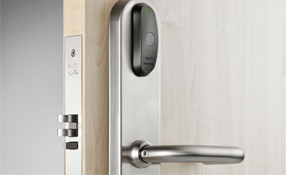
The security industry as a whole is migrating from the historical mechanical lock to the newest technology of electronic locks Mechanical locks and keys date back thousands of years and have undergone many changes, but the industry’s transition to electronic locks might be the most important, lasting, and surprisingly affordable security and safety change of all. The objective behind the creation of locks so long ago remains: to control a value on the other side...

Workplace mobility is on the rise, which means organisations have an increasing number of employees who travel or work from home. In fact, there were 96.2 million mobile workers in 2015 and IDC predicts that mobile workers will account for nearly three quarters (72.3 percent) of the total U.S. workforce by 2020. While the growth of mobile workers is a boon to productivity both inside and outside the workplace, it also creates unique communication challenges – especially in emergency situat...

Technology's role in securing banks and financial institutions
Download
Security technologies promote real-time awareness in K-12 schools
Download
Integrated systems enable critical and compliant security for transportation
Download
Modernising physical access control
Download
Access. Intrusion. One estate.
Download
