Digital Video Recorders

Since most businesses use online platforms like websites, mobile apps, or APIs for their client interactions, they are prone to cybercrime a lot through the internet. To protect them from such threats, Indusface is using its advanced technology-driven platform, reports such vulnerabilities and threats to the users, and provides virtual protection and security until the software vulnerability is fixed. Analytics Insight has engaged in an exclusive interview with Ashish Tandon, CEO, and Co-founde...

Hexagon’s Safety, Infrastructure & Geospatial division launches HxGN dC3 Video | Cloud, a new AI-enhanced, cloud-based video management system that enables more agile and resilient surveillance operations. With the increasing availability of reliable high-bandwidth connections, organisations are adopting a cloud-first strategy and turning to video surveillance as a service (VSaaS) for physical security, especially in distributed installations with many sites. The new cloud offering b...

Ten years ago, a corporate social responsibility initiative by a Glasgow-based cybersecurity firm sparked what would become a movement for change. That initiative, led by Stuart Macdonald of SERIC, brought 500 young people to Glasgow Caledonian University for a single-day event to explore opportunities in STEM. On Friday 13 June 2025, SmartSTEMs returns to where it all began, Glasgow Caledonian University, once again welcoming 500 young people through the doors, not just to learn about science...

IDScan.net, a pioneering provider of AI-powered identity verification technology, has released its 2024 Annual ID Fraud Report, revealing a sharp rise in fraudulent ID activity across finance, logistics, and security-sensitive industries. Drawing on data from more than 150 million ID scans conducted in 2024, the report shows a significant increase in fraud attempts driven by synthetic identities, deepfakes, and manipulated digital documents. IDScan.net’s proprietary system Id...

Alibaba Group and SAP SE announced a strategic partnership to jointly accelerate enterprise innovation and digital transformation through advanced cloud and AI technologies. The partnership combines SAP’s industry-pioneering enterprise software with Alibaba Cloud’s secure, scalable cloud infrastructure and cutting-edge AI capabilities. SAP’s enterprise cloud solutions Alibaba Cloud will be part of the latest SAP Infrastructure as a Service (IaaS) Certification Program, to fu...

ASIS International, the world’s largest association for security management professionals, has announced its programming lineup for Global Security Exchange (GSX) 2025 with in-person and digital experiences taking place 29 September – 1 October at the Ernest N. Morial Convention Centre in New Orleans, LA, and via the online GSX event platform. “It has been an honour pioneering this year’s selection committee and we are excited to present another year...
News

DigiCert, a pioneering provider of digital trust, released findings from a new survey that uncovers a significant gap between enterprise awareness of quantum computing threats and actual preparedness. The research shows that while 69% of organisations recognise the risk quantum computing poses to current encryption standards, only 5% have implemented quantum-safe encryption, and 46.4% report that substantial portions of their encrypted data could be compromised. Smart homes and cloud services With encryption underpinning online banking and medical records to smart homes The findings highlight a critical inflection point: Enterprises know the quantum clock is ticking, yet few have taken meaningful steps to secure their digital future. With encryption underpinning everything from online banking and medical records to smart homes and cloud services, ensuring its strength and resilience is fundamental for protecting sensitive data. Quantum-safe PKI solutions and frameworks “The quantum era presents both a significant risk and a transformative opportunity as we reach an inflection point for enterprise security,” said Kevin Hilscher, Senior Director of Product Management at DigiCert. “Organisations should already be into the early phases of their quantum readiness plan – starting with asset discovery and risk assessment, with the ultimate goal of crypto-agility. The groundwork being laid today will determine which organisations are positioned to maintain trust and resilience when quantum computing becomes a reality." "DigiCert is supporting this journey with quantum-safe PKI solutions and frameworks that help enterprises manage complexity and take action with confidence.” Quantum computing A majority of corps believing quantum computers will break current encryption within 5 years Despite a majority (69%) of organisations believing quantum computers will break current encryption within five years, preparedness remains low: only 38% feel “very prepared” for quantum threats, while 19.2% claim they are “extremely prepared.” This gap highlights a clear disconnect—enterprises recognise the threat but are slow to act due to perceived complexity, uncertainty, and believe that quantum computing is still a long way off. DigiCert’s research With the largest stores of sensitive data, enterprises are also the most at risk. DigiCert’s research aims to bridge the gap between hype and action, providing clarity and strategy as cryptography evolves. It also points to a broader strategic opportunity: Enterprises can maximise return on investment in Public Key Infrastructure (PKI) by making quantum-readiness a key driver of their current security planning. Quantum-safe encryption DigiCert’s research aims to bridge the gap between hype and action, providing clarity “The fact that only 5% of organisations have implemented quantum-safe encryption, despite widespread awareness of the threat, should be a wake-up call,” said Dr. Jim Goodman, CTO at Crypto4A. “Migrating to post-quantum cryptography isn’t just a software patch—it’s a foundational shift that requires full visibility into your cryptographic environment, upgrades to hardware, migration to quantum-safe roots of trust, and cross-functional coordination. Those already underway are ahead of the curve and better equipped to handle what’s next.” DigiCert recommends four steps According to the 2025 edition of the book, “Post-Quantum Cryptography for Dummies,” DigiCert recommends four steps for organisations to transition to a quantum-safe security posture: Inventory cryptographic assets. Organisations should first inventory their certificates, algorithms, and other cryptographic assets, prioritise them based on their level of criticality and decide what needs to be upgraded or replaced. Prioritise replacing encryption algorithms for crypto that needs to be trusted for a long time. Examples include roots of trust, eSignatures and long-lived IoT devices. Explore and test the ways in organisation incorporates post-quantum cryptography (PQC) algorithms. Begin testing upgrade paths and interoperability in non-production environments. Become crypto-agile. After completing the inventory, achieving crypto-agility involves asset visibility, establishing methods for deploying encryption technologies and the ability to respond quickly when security issues arise. By identifying and managing crypto assets now, organisations can position themselves defensively against the threat of post-quantum cyberattacks and lay the foundation for a secure and trusted digital future. Research methodology This research was commissioned by DigiCert and conducted independently by Los Angeles-based Propeller Insights, which surveyed 1,042 senior and C-level cybersecurity managers in the United States, the United Kingdom and Australia.

iDenfy, the fast-growing compliance and fraud prevention company, has once again made headlines by securing top positions in G2’s 2025 Spring Report. The global software review platform named iDenfy as the number one service in several categories, including the Implementation Index for Identity Verification, the Relationship Index for both Identity Verification and Anti-Money Laundering (AML), as well as the EMEA Regional Grid in AML solutions. G2’s reports iDenfy’s position as one of the most trusted providers in the compliance and fraud prevention space This latest recognition showcases iDenfy’s position as one of the most trusted providers in the compliance and fraud prevention space. G2’s reports are based entirely on real customer feedback and independently collected data from social networks and other online sources. With more than 2.9 million verified reviews. G2 remains a go-to platform for software buyers evaluating their options in a rapidly evolving technology landscape. Manual approval and email verification All reviews on G2 require manual approval and email verification to ensure authenticity, which makes the platform one of the most trusted sources of software recommendations now. iDenfy currently holds a rating of 4.9 out of 5 stars, with dozens of positive reviews praising the company’s responsiveness, intuitive platform, and customisable features. As identity fraud continues to rise globally and regulatory expectations intensify, iDenfy remains committed to staying ahead to help businesses protect their users. iDenfy’s momentum in 2025 iDenfy’s momentum in 2025 is a reflection of both its technology and its customer-first approach iDenfy’s momentum in 2025 is a reflection of both its technology and its customer-first approach. Since its founding, the company has invested heavily in creating a comprehensive platform that balances automation with human expertise. Now, iDenfy supports identity verification for over 3,000 ID types across more than 200 countries and territories. From passports and national ID cards to driver's licences and residence permits, its system can instantly recognise and extract key data with high accuracy. Advanced biometric authentication In addition to document verification, iDenfy offers advanced biometric authentication that includes facial recognition and 3D liveness detection tools. This technology helps to distinguish real users from fraudsters who are attempting to use photos, videos, or even 3D masks- to get through the system. To ensure the highest levels of security, each verification is backed by 24/7 human oversight. iDenfy’s review team professionals monitor automated checks and manually review flagged cases in under three minutes. Thanks to this hybrid model, iDenfy maintains a 99.99% success rate, continually refining its processes to close in on perfection. Fraud prevention landscape As digital platforms scale, the demand for secure and seamless identity verification increases as well “These awards validate the intense work our team has been doing behind the scenes to ensure we're offering both the most secure and user-friendly tools in the market. Every review we receive reflects the trust our clients place in us, especially in today’s rapidly evolving fraud landscape,” said Domantas Ciulde, the CEO of iDenfy. The fraud prevention landscape has become more challenging than ever. Globally, fraud losses are expected to exceed $343 billion between 2023 and 2027, driven by increasingly sophisticated scams, synthetic identities, and data breaches. As digital platforms scale, the demand for secure and seamless identity verification increases as well. Adopt smarter compliance tools Governments and regulators are pushing for stricter Know Your Customer (KYC) and Anti-Money Laundering (AML) policies, putting pressure on businesses to adopt smarter compliance tools. “Our vision is rooted in simplicity and security. We’re not just solving a compliance problem — we’re helping businesses build trustworthy relationships with their customers by making fraud prevention accessible, scalable, and simple to deal with,” explained Viktor Vostrikov, the Chief Marketing Officer of iDenfy. Enterprises and regulated institutions iDenfy’s platform is used by fintechs, real estate platforms, art and luxury item resellers Now, iDenfy’s platform is used by fintechs, real estate platforms, art and luxury item resellers, online gaming companies, crypto platforms, e-commerce businesses, music distribution companies, social media networks, and other online businesses worldwide. Their clients include global enterprises and regulated institutions that rely on iDenfy not only for compliance but also for user experience and operational efficiency. Believe transparency “We believe transparency builds trust. That’s why we actively seek feedback from our users and are keen to implement suggestions into our roadmap." "These G2 accolades aren’t just wins for us, they’re proof that listening to customers pays off,” added Domantas Ciulde, the CEO of iDenfy.

Colt Technology Services (Colt), the digital infrastructure company, announced an expansion to its multi-award winning On Demand Network as a Service (NaaS) platform with the addition of new features designed to enhance businesses’ cloud services, boost resilience and provide greater autonomy for organisations needing flexibility, security and choice in the dynamic market environment. The three new features - available now - are On Demand Diversity, Dedicated Cloud Ports and new Multi-Vendor ‘Offnet’. Colt’s On Demand NaaS platform Colt’s On Demand NaaS platform gives businesses choice and flexibility, enabling them to consume Colt’s On Demand NaaS platform gives businesses choice and flexibility, enabling them to consume their network services on an agile, scalable, ‘per use’ basis, as they would their cloud services. Organisations can choose whether to connect via a portal or API; they can add or remove services and capacity, and benefit from real-time delivery for Colt’s on net services. They can also choose between fully flexible ‘by the hour’ billing, or longer subscription models. Colt’s continued commitment The new features are added as part of Colt’s continued commitment to expanding its On Demand NaaS platform to meet the evolving needs of its global customers. On Demand Diversity allows businesses to select different network routes for their Ethernet, Cloud and Internet services using a self-serve ordering system in the Colt NaaS platform. The ability to request access-level diversity ‘on demand’ improves network performance; bolsters resilience and disaster recovery; and supports deeper levels of compliance. Colt’s NaaS platform Cloud Ports are also open now via Colt’s NaaS platform, offering greater scalability for businesses Dedicated Cloud Ports are also available now via Colt’s NaaS platform, offering greater scalability for businesses’ cloud solutions and complementing the hosted cloud capability already live in the platform. Previously, access to cloud services from organisations including AWS, Microsoft and Google was available already in NaaS through shared ‘hosted’ cloud ports, which could be set up quickly via the portal or APIs. Dedicated Cloud Ports feature The new Dedicated Cloud Ports feature offers direct, private connections to the cloud and offering high capacity, reliability and security. Selecting Dedicated Cloud Ports through the Colt NaaS platform gives businesses an effortless service experience, cost transparency and unparalleled network reach as they can connect to the cloud from millions of locations worldwide. Colt’s own network infrastructure New Multi-Vendor Offnet feature enhances flexibility and efficiency for Colt’s customers The new Multi-Vendor Offnet feature enhances flexibility and efficiency for Colt’s customers, by enabling them to choose from hundreds of carrier partners when they connect a new ‘offnet’ location which is not directly part of Colt’s own network infrastructure. With many businesses choosing a multi-vendor strategy to best fit their global organisation, Colt’s NaaS platform offers a convenient, fast and cost-effective way to build this infrastructure. Colt cloud consumption model Peter Coppens, VP Infrastructure and Connectivity Solutions, Colt Technology Services said, “Dynamic businesses which adapt to changing macro conditions have a market advantage, so organisations are looking for new ways to build in flex. Colt has brought the “cloud consumption model” to the networking world, enabling customers to break away from the slow, static world of traditional networking." "Colt’s intuitive, self-serve NaaS platform provides this, with flexibility, choice and scale. We’ll continue to expand our fantastic NaaS platform and we’ll develop exciting new features to make life easier for our customers”. Colt digital infrastructure services Colt revolutionised the way businesses provision their digital infrastructure services. Its On Demand platform – launched more than seven years ago - was the earliest, first-to-market iteration of NaaS, providing a simplified, automated self-service platform which cut through complexity and reimagined the ordering and provisioning process. Now, organisations have access through the NaaS portal to: 32,000 Colt-connected buildings and over 275 cloud points of presence across Europe, Asia and North America 130,000 locations served by dedicated fibre (FTTX) Millions of locations delivered via carrier partners in over 180 locations with one SLA, one contract and one contact MEF Naas Excellence Awards 2024 Colt recently secured six wins for its NaaS platform at the global MEF Naas Excellence awards 2024. These are: NaaS Service Provider of the Year – Global NaaS Service Provider of the Year – Europe SD WAN Service Provider of the Year – Europe Best NaaS Vision - Service Provider Best Services Ecosystem Automation Platform Service Automation Leadership – Europe

Frequentis Germany has been awarded the contract to plan and supply the operations and control centre system for the police of the Free State of Thuringia. As a general contractor, Frequentis is responsible for the installation and commissioning of all system components. These include Frequentis’ 3020 LifeX communication system, an operations control system from T-Systems Information Services GmbH, and the IT and network infrastructure provided by Siemens AG. Integrated communications system With the integrated operations and control centre system, the Thuringian police will be provided with a state-wide standardised and future-oriented solution for emergency call handling and managing police operations in daily service and special situations. Integrated communications system is prepared for the connection to the future nationwide broadband digital “By awarding this contract, we have reached an important milestone in the implementation of the Thuringian police's digitalisation concept. We are now taking a major step towards modern, future-proof control centre technology. The new system will further optimise our operational coordination and thus ensure the improved safety of the citizens of Thuringia,” explains Thomas Quittenbaum, Vice President at the Thuringian state police directorate. The integrated communications system is already prepared for the connection to the future nationwide broadband digital radio system for authorities and organisations with security tasks. Digital transformation “As general contractor, Frequentis has the overall responsibility for the successful implementation of this important project. We are ensuring that all components of the operations and control centre system interact perfectly." "With the commissioned technologically mature, highly available, and secure solution, we are supporting the digital transformation of the state police of the Free State of Thuringia,” says Marcel Haar, Managing Director Frequentis Germany. With this contract, Frequentis further expands the company's pioneering market position: police organisations in more than half of all German federal states already rely on the innovative technological and conceptual capabilities of the global corporation.

Powering digital access with energy-harvesting technology frees organisations from wiring and even batteries. However, to meet the challenges of the future, digital access needs more. It needs technologies and software platforms flexible enough to grow and adapt with the evolving needs of each organisation, protecting their investment in digital access while delivering an ROI every day. Digital access solutions Kinetic energy generated by inserting the intelligent key is harvested to power the lock’s security features Using decades of expertise in designing and engineering key-based access cylinders and solutions, ASSA ABLOY developed PULSE, key-based digital access powered by innovative energy-harvesting technology and part of ASSA ABLOY's suite of digital access solutions. With ABLOY PULSE, the kinetic energy generated by inserting the intelligent key is harvested to power the lock’s encrypted digital security. This energy source – keyholder input – is completely renewable and contributes to building sustainability goals. Latest generation of technology Building users enjoy everyday convenience. They carry one PULSE key pre-programmed with all their access rights. It has an RFID tag inside and can also operate readers, whether on wireless locks or wall-mounted beside an electrified opening. Building users do not need to carry two credentials. To enhance site security and user privacy, PULSE credentials are powered by Seos®, the latest generation of technology with the highest encryption and authentication standards. ABLOY PULSE building managers PULSE locking cylinders and keys are self-powered by reliable energy-harvesting technology ABLOY PULSE offers building managers reliable security they can trust. They can equip almost any opening with a device range which includes door cylinders, cam-locks, furniture locks and padlocks for indoor and outdoor use. There is no cabling, wiring or batteries required: PULSE locking cylinders and keys are self-powered by reliable energy-harvesting technology. Integrate with building solutions “ABLOY PULSE offers customers a flexible solution to digitalise their access management and make their access ready for what’s ahead. It has been developed to integrate easily with their building solutions,” says Jarno Onnela, PULSE Product Manager at ABLOY. “PULSE cylinders are fast and cost-efficient to install, because they require no major adjustments to a door. An installer simply swaps out an existing mechanical cylinder.” ASSA ABLOY Access® software ABLOY PULSE can be managed from cloud-based ASSA ABLOY Access® software ABLOY PULSE can be managed from cloud-based ASSA ABLOY Access® software. This intuitive solution enables organisations to manage access from anywhere. Both keys and cylinders are reusable and reprogrammable: managing staff turnover becomes faster and simpler for facilities teams. Security staff can issue access and block lost keys from wherever they are. Advantages of PULSE technology The unique advantages of PULSE technology have already been recognised by awards juries in Europe, the Middle East and beyond. It was named the Sustainability Champion Award winner at Intersec 2024, Dubai. In 2022, PULSE cylinders’ energy-harvesting performance earned the Construction Energy Award at the BYGGERI fair in Denmark. ABLOY PULSE commercial buildings The unique advantages of PULSE technology have already been recognised by awards juries in Europe “ABLOY PULSE already protects many different types of site, from commercial buildings and multi-residential housing, to education and healthcare premises,” adds Jarno. “New functionalities in ASSA ABLOY Access management software, such as support for reservation systems, continue to further expand use-cases. We have also extended the availability of this innovative solution to new markets including Scandinavia, France, the UK, Poland, Singapore, Hong Kong and Benelux countries.” Extend the range of locking solutions with ASSA ABLOY Access ASSA ABLOY Access also integrates seamlessly with the ABLOY CUMULUS mobile and keyless access solution. Completely customisable, with intuitive APIs and SDKs for app development, CUMULUS becomes part of each customer’s individual workflows in a way specific to their own organisation. In addition, the revolutionary CUMULUS Controller adds mobile access capability to any electric or electronic lock – from any brand. ABLOY CUMULUS instantly makes digital access mobile-ready. It can go wherever the customer needs.

Umazi, a pioneer in digital identity verification solutions, has welcomed the latest report from CFIT, Fighting Economic Crime Through Digital Verification: The Case for Adopting a Digital Company ID in the UK. The report highlights the potential to revolutionise business operations in the UK by improving efficiency, security, and trust. Innovating business verification CFIT has convened over 70 pioneer organisations to design and develop the Digital Company ID—a unique digital representation of a business entity for digital verification. Umazi has been very supportive of this initiative, playing an active role in discussions with CFIT throughout the Minimal Viable Product phase, and is joining two Working Groups established by CFIT. Driving compliance innovation Cindy Van Niekerk, CEO & Founder of Umazi said: “We have eagerly anticipated this report, and it’s fantastic to see momentum building behind such a transformative initiative. At Umazi, we’ve spent the past four years driving innovation in ‘Know Your Business’ (KYB) and compliance to combat economic crime, and we are proud to contribute to this critical effort.” “We have been in close discussions with the CFIT team, and it’s encouraging to see the UK leading the way in fostering fintech solutions that address fraud and financial crime at scale”. Van Niekerk continues: “For us, Digital Company ID is not just about preventing fraud and financial crime—it’s about driving efficiency, reducing redundancy, and empowering businesses with more trusted, seamless processes." Securing business ecosystems Umazi has accumulated significant knowledge and experience around the pain points Van Niekerk further highlighted the urgency of addressing economic crime, stating "Over 1.2 million incidents of fraud were committed in the UK in 2023—equivalent to nearly two fraudulent acts every minute, according to ONS data.” “This staggering figure underscores the need for robust, digital-first solutions like the Digital Company ID to enhance trust, security, and transparency across the business ecosystem. By leveraging innovation and collaboration, we can significantly reduce the prevalence of fraud and create a more resilient financial landscape." During the last four years of building and piloting its reusable digital business identity platform Umazi has accumulated significant knowledge and experience around the pain points which can be solved with digital IDs and the R&D grants from Innovate UK have helped particularly with developing some of the more cutting edge, AI-related aspects of its product suite. Streamlining compliance CFIT has established a group tasked with building and testing a consented SME data exchange With Umazi being invited to join both the ‘Trust and Governance’ and ‘Market Opportunity’ Working Groups that CFIT has recently formed, Van Niekerk anticipates Umazi will be able to make a significant contribution to laying the foundations for digital business IDs in the UK to CFIT has also established a group tasked with building and testing a consented SME data exchange to create a MVP for a Digital Company ID solution and facilitate its use in processes such as opening a new bank account. This is truly a UK initiative at the forefront of innovation, pioneer the charge of streamlining business verification without reducing the level of compliance. Empowering business security Van Niekerk concluded: "Umazi is committed to supporting CFIT's vision by offering our expertise in business digital identity verification to ensure the successful implementation of the Digital Company ID.” “We believe that this initiative aligns with our mission to create a more secure and efficient business environment in the UK and it’s heartening to see UK based and funded firms being supported in taking a leading role in shaping the future in this space.” “We are proud to be flying the UK flag as a UK-established organisation funded and supported by UK angels and growth support infrastructure. It is a true testament to what is possible."

Expert commentary

The average business owner or investor has some kind of security precaution in place, especially in the after-hours when there are fewer deterrents to inhibit criminal activity. Security guards, video surveillance systems, motion sensor lights, or even just fake cameras placed around the property are some of the common options people choose. Future of overnight security Smart business owners are starting to realise, however, that some of these traditional security measures are becoming antiquated and no longer cutting. The now and future of overnight security is in remote guarding. Pioneered by companies like Los Angeles-based Elite Interactive Solutions, which was founded back in 2007, remote guarding is revolutionising the overnight security business. Minimising criminal activity Remote guarding is fast becoming the most popular choice among commercial end-user property owners Remote guarding utilises a combination of cutting-edge technology, “digital guards,” highly trained security agents, and local law enforcement if and when necessary to minimise the potential of criminal activity. For those adequately enlightened to its overwhelmingly impressive crime prevention capabilities, remote guarding is fast becoming the most popular choice among commercial end-user property owners to secure and protect their investments. What Is remote guarding? Remote guarding is a revolutionary concept and increasing trend in security systems that utilises a combination of methods to effectively analyse potential threats to property. Cameras and/or other monitoring devices running highly advanced algorithmic software are installed in strategic areas or vulnerable places onsite and remotely located security agents are immediately notified of any activity within a designated perimeter of the property. A blend of AI, cybersecurity, and video analytics When properly deployed by an expert provider, the technology stack includes a proprietary blend of video analytics, artificial intelligence, cybersecurity, and more. Done right, “noise” is effectively filtered out, allowing agents to act on legitimate alerts and achieve zero false alarms communicated to first responders. Today, there are a lot of terms and descriptions tossed around about remote guarding, remote video, virtual guarding, etc., but those attributes must be present to represent the true definition of the offering and its many virtues. Realtime situational awareness Many systems have a two-way speaker that allows the security agent to give a verbal warning When specially trained security agents are alerted to trespassers, possible intruders, or other suspicious activity, they analyse the situation in real-time and determine the necessary level of action. Many systems have a two-way speaker that allows the security agent to give a verbal warning, known as a voice-down, to the individual(s) that they are being watched. Most perpetrators, often believing the response is emanating directly from security personnel on the property itself rather than from a remote command centre, flee immediately. However, if the threat persists, the security agent enlists local law enforcement to get on the scene. Customised remote guarding When properly deployed, remote guarding systems are also customised to specific properties. A team of consultants visits the client’s property to evaluate its vulnerabilities and where to best place cameras and/or other monitoring devices for system efficacy. Traditional security shortfalls According to Keith Bushey, a retired commander for the Los Angeles Police Department, there is much frustration between law enforcement officers and potential victims of crime due to the historically unreliable performance of traditional burglar alarm systems and central monitoring stations. He states about 90% of security-related calls are false alarms, a problem that has been well-documented through the years. Onsite challenges When a legitimate emergency does occur, the perpetrators have often already done their damage When a legitimate emergency does occur, the perpetrators have often already done their damage and/or escaped by the time law enforcement arrives. Onsite security guards are not the remedy either as they bring their own set of issues and challenges. Unexpected costs Traditional security systems can also have unexpected costs. The cost is not only in the security guards’ paycheck or the cost of the equipment itself. The cost comes when an actual incident occurs. In worst-case scenarios, the security guard(s) are injured, the business suffers inventory loss, and/or damage is sustained to the property. The medical and other costs for the security guard(s), the loss of inventory, property damage, deployment of law enforcement resources, and possible fallout of legal expenses all add up. Even in the best-case scenario, false alarm expenses incur if law enforcement is dispatched. These, among many others, are some of the primary issues that remote guarding resoundingly answers as a superior alternative. A bounty of benefits Remote guarding systems have been proven to cut costs and be more effective than traditional security systems. Even though the monthly monitoring costs of remote guarding are significantly higher than traditional intrusion detection system monitoring, the much higher effectiveness in crime reduction, elimination of false alarms, and augmenting or replacement of manned guards result in a substantially higher return on investment (ROI) to the end user. Easy tracking of threats The security cameras already have their image captured on record, making them easier to track down For example, case studies have demonstrated reduced security costs for clients by 60%, on average. These reductions have come from the costs of security staff, inventory, or property loss, plus saving money on insurance premiums and deductibles. The nature of remote guarding reduces the risk and costs of false alarms, with professional security agents able to determine an actual threat before law enforcement is called. In a rare instance when a perpetrator escapes before law enforcement arrives or can detain the individual(s), the security cameras already have their image captured on record, making them easier to track down and identify. Reduction of false alarms The significant reduction in false alarms is greatly appreciated by law enforcement, as it allows them to focus on real emergencies or crises. Better relationships are also developed between clients and law enforcement, as remote guarding systems are highly reliable in providing accurate and real-time information to officers as they approach the scene. In short, it assists law enforcement in doing their job more effectively, as well as more safely thanks to having eyewitness information before engaging in an active crime scene. Partnership When you combine the decreased cost with the increased efficiency and success rate, it is easy to see why many commercial end-user property owners across the country are making the shift to remote guarding. It’s also an outstanding opportunity for professional security dealers and integrators to partner with a remote guarding services provider to bring a superior solution to their end customers and pick up a recurring monthly revenue stream in the process.

Daniel May of Consort reviews the integration of access control systems in healthcare settings, outlining the benefits and key considerations decision-makers must make throughout product specifications. From patient safety and traversal to the protection of sensitive data and pharmaceuticals, healthcare environments are faced with several operational challenges. And where security remains at the forefront of decision-making, modern access control systems may often hold the answers. Physical security systems Hospitals in particular have developed into multi-faceted spaces that house hundreds to thousands of patients, staff and visitors at any one time. In England for example, research has found in the three months leading to June 2023, an average of 44,626 people visited major hospital A&E departments each day, with over 16 million attendances typically recorded over the course of a year-not to mention an additional nine million logged at other minor units. For any building, this level of sustained footfall can request severe security difficulties For any building, this level of sustained footfall can invite severe security tests. With that, the need to deploy effective physical security systems in healthcare is clear. And so, as access control continues to become more readily adopted and new products enter the market, decision-makers are reminded to consider the requirements of their building, ensuring they select the solutions most suited to their settings and budget. Security controlled Patient safety will always remain the top priority in healthcare settings, and where matters of health and social care come into question, a diverse set of professional regulatory bodies are tasked with setting and maintaining high standards. When it comes to healthcare premises specifically, patient security and perimeter security often come hand in hand and are amongst the most pressing of challenges that decision-makers must face. To help address operational planning and potential design concerns in the NHS, the Health Building Note (HBN), provides general design guidance for healthcare buildings under HBN 00-01-citing the use of access control measures as a way of maintaining security and protecting the safety of patients, staff and visitors. Use of access control Hospital buildings control varied levels of access for a number of security purposes Hospital buildings, for example, must control varied levels of access for a number of operational and security purposes. Routine scenarios exist where vulnerable patients are under monitoring and thus refrained from exiting the premises for their own safety, while at the same time, permitted staff must be able to reach their patients and medicines when required. For this, the use of access control is key. Equally, access credentials can also help management teams keep track of those who may be entering or exiting rooms with equipment and pharmaceutical supplies, deterring any unwanted visitors and opportunists in the process. Incorporation of access control systems On a similar note, regulations have set a minimum standard for how personal data should be stored and managed in healthcare environments, giving decision-makers an added responsibility to regulate staff-controlled areas with patient medical records. While instances of personal data breaches are rare, healthcare facilities and professionals are at legal risk should confidential data be found misused or missing. As such, the incorporation of access control systems has become essential in keeping data storage areas secure, with intuitive online systems capable of permitting access to staff with the correct credentials while simultaneously tracking who has requested clearance at digital entry points. HBN guidance Healthcare experts are better fitted to control the sheer volume of people entering and exiting To function effectively, healthcare facilities must always be perceived as safe places by the people who reside within them, and as HBN guidance implies, a unified physical security system can help address key safety and security concerns while enhancing patient and staff experience. Opportunely, access control systems are more accessible and adaptable than ever and combine several technologies such as mechanical locks and automatic doors with electronic access credentials in the form of smartphone apps, badge readers and biometric scanners. By integrating these systems into the building’s existing infrastructure, healthcare professionals are better equipped to control the sheer volume of people entering and exiting the premises without impairing the general flow of movement and coordination around the facility. Better by design Despite the clear benefits offered to healthcare facilities, there are a number of considerations to be mindful of when choosing an access control solution. Poorly implemented systems can have an adverse effect on security and functionality - quickly costing healthcare organisations time and budget to rectify and replace the inadequate products that don’t meet the building’s requirements. For that reason, decision-makers and design teams are reminded that there is no single solution that fits all healthcare buildings. As such, it’s crucial for decision-makers to understand the systems that are being put in place throughout each of the touchpoints in their facility. Clear collaboration is required during periods of specification, where together, teams can ensure the selected product works on all angles, from meeting fire safety and sustainability standards to aesthetics and scalability. Modern access control products Scalability is a key area that decision-makers must review when selecting access control systemsFrequently overlooked, scalability is a key area that decision-makers must review when selecting access control systems. Such is their diverse nature; healthcare facilities can often change and develop as years go by, and by selecting a system that facilitates growth, such as a cloud-based solution-security and efficiency is long-established. While modern access control products are known for seamless integration, there are some systems that may restrict the ability to use different vendors throughout the remainder of the building’s infrastructure. This, in effect, causes a monopolisation of products throughout the estate, which can have an adverse effect on growth by increasing costs and reducing the levels of service associated with the security system already in place. Improve security and safety A scalable and reliable access control system will continue to improve security and safety by adapting to a building’s new requirements-and all while having minimal impact on its operational network. And so, while technology will no doubt continue to influence and transform the access control market, healthcare facilities and their professionals must continue to remain educated on their own systems, ensuring they have the best options in place to keep their patients, staff and visitors safe and secure for years to come.

Global transportation networks are becoming increasingly interconnected, with digital systems playing a crucial role in ensuring the smooth operation of ports and supply chains. However, this reliance on technology can also create vulnerabilities, as demonstrated by the recent ransomware attack on Nagoya Port. As Japan's busiest shipping hub, the port's operations were brought to a standstill for two days, highlighting the potential for significant disruption to national economies and supply chains. Transportation sector The attack began with the port's legacy computer system, which handles shipping containers, being knocked offline. This forced the port to halt the handling of shipping containers that arrived at the terminal, effectively disrupting the flow of goods. The incident was a stark reminder of the risks associated with the convergence of information technology (IT) and operational technology (OT) in ports and other critical infrastructures. This is not an isolated incident, but part of a broader trend of escalating cyber threats targeting critical infrastructure. The transportation sector must respond by bolstering its defences, enhancing its cyber resilience, and proactively countering these threats. The safety and efficiency of our transportation infrastructure, and by extension our global economy, depend on it. Rising threat to port security and supply chains XIoT, from sensors on shipping containers to automatic cranes, are vital to trendy port functions OT, once isolated from networked systems, is now increasingly interconnected. This integration has expanded the attack surface for threat actors. A single breach in a port's OT systems can cause significant disruption, halting the movement of containers and impacting the flow of goods. This is not a hypothetical scenario, but a reality that has been demonstrated in recent cyberattacks on major ports. Adding another layer of complexity is the extended Internet of Things (XIoT), an umbrella term for all cyber-physical systems. XIoT devices, from sensors on shipping containers to automated cranes, are now integral to modern port operations. These devices are delivering safer, more efficient automated vehicles, facilitating geo-fencing for improved logistics, and providing vehicle health data for predictive maintenance. XIoT ecosystem However, the XIoT ecosystem also presents new cybersecurity risks. Each connected device is a potential entry point for cybercriminals, and the interconnected nature of these devices means that an attack on one, which can move laterally and can have a ripple effect throughout the system. The threat landscape is evolving, with cybercriminals becoming more sophisticated and their attacks more damaging with a business continuity focus. The growing interconnectivity between OT and XIoT in port operations and supply chains is also presenting these threat actors with a greater attack surface. Many older OT systems were never designed to be connected in this way and are unlikely to be equipped to deal with modern cyber threats. Furthermore, the increasing digitisation of ports and supply chains has led to a surge in the volume of data being generated and processed. This data, if not properly secured, can be a goldmine for cybercriminals. The potential for data breaches adds another dimension to the cybersecurity challenges facing the transportation sector. Role of cyber resilience in protecting service availability Cyber resilience refers to organisation's ability to prepare for, respond to, and recover from threats As the threats to port security and supply chains become increasingly complex, the concept of cyber resilience takes on a new level of importance. Cyber resilience refers to an organisation's ability to prepare for, respond to, and recover from cyber threats. It goes beyond traditional cybersecurity measures, focusing not just on preventing attacks, but also on minimising the impact of attacks that do occur and ensuring a quick recovery. In the context of port operations and supply chains, cyber resilience is crucial. The interconnected nature of these systems means that a cyberattack can have far-reaching effects, disrupting operations not just at the targeted port, but also at other ports and throughout the supply chain. A resilient system is one that can withstand such an attack and quickly restore normal operations. Port operations and supply chains The growing reliance on OT and the XIoT in port operations and supply chains presents unique challenges for cyber resilience. OT systems control physical processes and are often critical to safety and service availability. A breach in an OT system can have immediate and potentially catastrophic physical consequences. Similarly, XIoT devices are often embedded in critical infrastructure and can be difficult to patch or update, making them vulnerable to attacks. Building cyber resilience in these systems requires a multi-faceted approach. It involves implementing robust security measures, such as strong access controls and network segmentation, to prevent attacks. It also involves continuous monitoring and detection to identify and respond to threats as they occur. But perhaps most importantly, it involves planning and preparation for the inevitable breaches that will occur, ensuring that when they do, the impact is minimised, and normal operations can be quickly restored. Building resilience across port security and supply chains In the face of cyber threats, the transport sector must adopt a complete method of cybersecurity In the face of escalating cyber threats, the transportation sector must adopt a comprehensive approach to cybersecurity. This involves not just implementing robust security measures, but also fostering a culture of cybersecurity awareness and compliance throughout the organisation. A key component of a comprehensive cybersecurity strategy is strong access controls. This involves ensuring that only authorised individuals have access to sensitive data and systems. It also involves implementing multi-factor authentication and regularly reviewing and updating access permissions. Strong access controls can prevent unauthorised access to systems and data, reducing the risk of both internal and external threats. Network segmentation Network segmentation is another crucial measure. By dividing a network into separate segments, organisations can limit the spread of a cyberattack within their network. This can prevent an attack on one part of the network from affecting the entire system. Network segmentation also makes it easier to monitor and control the flow of data within the network, further enhancing security. Regular vulnerability assessments and patch management are also essential. Vulnerability assessments involve identifying and evaluating potential security weaknesses in the system, while patch management involves regularly updating and patching software to fix these vulnerabilities. These measures can help organisations stay ahead of cybercriminals and reduce the risk of exploitation. EU’s NIS2 Directive EU’s NIS2 Directive came into effect, and member states have until October 2024 to put it into law The transportation sector must also be prepared for greater legislative responsibility in the near future. The EU’s NIS2 Directive recently came into effect, and member states have until October 2024 to put it into law. The Directive aims to increase the overall level of cyber preparedness by mandating capabilities such as Computer Security Incident Response Teams (CSIRTs). Transport is among the sectors labelled as essential by the bill, meaning it will face a high level of scrutiny. Getting to grips with the complexities of XIoT and OT integration will be essential for organisations to achieve compliance and avoid fines. Global transportation infrastructure Finally, organisations must prepare for the inevitable breaches that will occur. This involves developing an incident response plan that outlines the steps to be taken in the event of a breach. It also involves regularly testing and updating this plan to ensure its effectiveness. A well-prepared organisation can respond quickly and effectively to a breach, minimising its impact and ensuring a quick recovery. In conclusion, mastering transportation cybersecurity requires a comprehensive, proactive approach. It involves implementing robust technical measures, fostering a culture of cybersecurity awareness, and preparing for the inevitable breaches that will occur. By taking these steps, organisations can enhance their cyber resilience, protect their critical operations, and ensure the security of our global transportation infrastructure.
Security beat

Companies at GSX 2023 emphasised new ways that technologies such as artificial intelligence (AI) and the cloud can address long-standing issues in the security market. Among the exhibitors at the event in Dallas were companies seeking creative ways to apply technology, lower costs, and make the world a safer place. Reflecting on the exhibition, here are some additional takeaways. Expanding AI at the edge i-PRO is a company reflecting the continued expansion of edge AI capability in the security market. Today, more than half of the company’s lineup supports AI at the edge so the customer has a wide choice of form factors when seeking to leverage the feature set. AI processing relay, extended warranty i-PRO is increasing their warranty period from 5 to 7 years, which could be a lifetime warranty in some cases I-PRO also has an “AI processing relay” device that accepts non-AI video streams and applies edge analytics. AI has progressed from a high-end technology to a feature available in a variety of cameras at different price points. i-PRO is also increasing its warranty period from 5 to 7 years, which could be a lifetime warranty in some cases depending on a customer’s refresh schedule and lifecycle management. Active Guard, MonitorCast The company’s video management system (Video Insight) is continuing to build new features including “Active Guard,” an integrated metadata sorter. Their access control platform, MonitorCast, is a Mercury-based solution that is tightly integrated with Video Insight. Their embedded recorders now have PoE built in. “We can move at a faster pace to fill out our product line since leaving Panasonic,” says Adam Lowenstein, Director of Product Management. “We can focus our business on adapting to the market.” Emphasis on retail and other verticals Shoplifting is a timely issue, and retail is a vertical market that got a lot of attention at GSX 2023. “We see a lot of retailers who are primarily interested in protecting employee safety, but also assets,” says Brandon Davito, Verkada’s SVP of Product and Operations. “Shrinkage is a CEO-level priority.” “Retailers are getting more engaged with security posture, instead of letting perpetrators walk,” Davito adds. Intrusion detection Verkada has an intrusion product that will notify a central station if there is an alarm On the alarm side, Verkada has an intrusion product that will notify a central station if there is an alarm, and operators can review videos to confirm the alarm. Other capabilities seeking to discourage trespassers include sirens, strobes, and “talkdown” capabilities. International expansion Verkada continues to expand internationally with 16 offices in all, including Sydney, Tokyo, and London. The core value proposition is to enable customers to manage their onsite infrastructure more simply, including new elements such as PTZ cameras, intercoms, and visitor management. Verkada emphasises ease of use, including a mobile application to allow access to be managed across the user base. Forging partnerships “We are committed to the channel and industry, and we continue to build relationships and expand our reach,” says Davito. Among the industry relationships is a new partnership with Convergint, which was hinted at during the show and announced later the same day. They are also expanding their partnerships with Schlage, Allegion, and ASSA ABLOY. Working with other verticals They offer new features for K -12 schools, and a new alarm platform is easier to deploy and manage Verkada has also found success across multiple other verticals, notably healthcare, where they integrate with an electronic medical records system. They offer new features for K-12 schools, and a new alarm platform is easier to deploy and manage. They are integrating wireless locks to secure interior doors in schools, looking to secure the perimeter, and installing guest management systems. Transitioning the mid-market to the cloud Salient is squarely focused on the “mid-market,” a large swath of systems somewhere between small businesses and enterprise-level systems. Pure cloud systems are not as attractive to this market, which has a built-out infrastructure of on-premise systems. Adding a camera to an existing system is easier and less expensive than tying it to the cloud. Benefits of cloud It’s a market that may not be ready for the pure cloud, but there are benefits to be realised from adding a cloud element to existing systems. “We are continuing to augment our premise-based solutions with added cloud capabilities and flexibility,” says Sanjay Challa, Salient’s Chief Product Officer. The feedback Salient hears from their customers is “I want to own my data.” The hybrid cloud approach offers the right mix of control, flexibility, and unit economics. Cloud add-on capabilities We want to provide the flexibility for customers to go full-cloud as it becomes more economically attractive" Cloud add-on capabilities include bringing more intelligence about system operation to the user via the cloud. Over time, Salient expects to sell more cloud-centric offerings based on feedback from integrators and customers. “We want to provide the flexibility for customers to go full-cloud as it becomes more economically attractive over time,” says Challa. Vaidio AI technology Salient seeks to be a transition pioneer to help customers realise the path to the cloud. Their approach is “crawl, walk, run,” and helping customers make the transition at each stage. Salient has added AI to its product offering, incorporating Vaidio AI technology from IronYun into a powerful suite and broad array of on-premise analytics, which are gaining traction. The seamless approach makes it easy for customers to embrace AI analytics, although Salient remains broadly committed to open systems. Addressing ‘soft’ features for integrators AMAG is in the process of enhancing its product line with the next generation of access control panels. However, “product” is just part of the new developments at AMAG. In addition to “hard” features (such as products), the company is looking to improve its “soft” features, too; that is, how they work with the integrator channel. Integrator channel Rebuilding a process to make your organisation more efficient, is relatively easy; it just takes a lot of persistence" “We have the depth of our legacy customer base we can learn from, we just need to close the feedback loop quicker,” says Kyle Gordon, AMAG’s Executive Vice President of Global Sales, Marketing, and commercial Excellence, who acknowledges the value of reinstating face-to-face meetings after COVID. “We are laser-focused on nurturing our integrator channel,” he says. “Developing new features takes time, but rebuilding a process to make your organisation more efficient, that’s relatively easy; it just takes a lot of persistence,” says Gordon. More cohesive internal communication is another useful tool, he says. Disrupting the cloud based on price Wasabi is working to make cloud applications less expensive by offering a “disruptive” price on cloud storage, $6.99 per terabyte per month (80% less than hyperscalers). Contending “hyperscalers” like AWS are charging too much for cloud storage, Wasabi is using its own intellectual property and server equipment co-located in data centres around the world. Wasabi sells “hot cloud storage,” which refers to the fact that they only have one tier of storage and data is always accessible. In contrast, a company such as AWS might charge an “egress fee” for access to data stored in a “colder” tier. Cloud storage “We saw that several video surveillance companies had not yet adopted cloud storage, and we saw an opportunity to make it easy to use,” said Drew Schlussel, Wasabi’s Senior Director of Product Marketing. “We just install a little bit of software that allows them to store data in the cloud and bring it back from the cloud.” Performance, protection (cybersecurity), and price Wasabi works with integrators, resellers, and distributors and also integrates with VMS companies Wasabi works with integrators, resellers, and distributors and also integrates with VMS companies such as Genetec and Milestone. Emphasising performance, protection (cybersecurity), and price, their data centres are certified to SOC 2 and ISO 27001 standards. Faster throughput for weapons detection Xtract One is a young company focusing on weapons detection in a time of accelerated concern about gun issues post-COVID. Founded in Canada and based on technology developed at McMaster University, Xtract One has found a niche in providing weapons detection at stadiums and arenas. These customers already have budgets, and it is easy to shift the money to a newer, faster technology. Madison Square Garden in New York City is among its customers. Cost savings solution Xtract One can increase throughput to 30 to 50 people per entrance per minute (compared to 5 to 6 people per minute when using metal detectors). The solution doesn’t require anyone to empty their pockets and the system alarms on items beyond guns and knives. Using Xtract One allows customers to reduce the number of screening lanes and security staff, providing additional cost savings, all while getting fans through the screening process in half the time. Purpose-built sensors The system uses purpose-built sensors looking for specific characteristics, such as reflective and density properties In addition to stadiums and arenas, Xtract One, formerly Patriot One, is also getting “inbound” interest from schools, hospitals, manufacturers, and other verticals that makeup 50% of their business. “We’re on a rocket ride, mainly because the weapons issues are not going away,” says Peter Evans, CEO and Director at Xtract One. The system uses purpose-built sensors looking for specific characteristics, such as reflective and density properties, all correlated by an AI engine. Providing early warning of violence ZeroEyes is another company focused on weapons detection. Their AI gun detection system works with video images to identify if someone is “brandishing” (carrying) a weapon. In other words, the system does not detect concealed weapons. Identifying someone carrying a weapon provides early warning of a possible violent act. Increased response with AI-enables images Images are identified by AI and sent to a monitoring centre where a human confirms the image before contacting first responders. Knowing the location of a shooter enables staff to lock entry points, move people to safety, and direct first responders. The company was founded to leverage existing camera views to stop mass shootings and gun violence by reducing response times.

A pioneer in the access control sector since 1971, AMAG Technology is looking to the future and the next generation of products that will expand its services to customers. “In our vision, we have advanced approaches that will not only provide our partners with advanced technologies but also ones that are easier to install with tools to expand their services,” says David Sullivan, who was appointed President of the venerable access control company in September 2022. New challenges at AMAG Sullivan brings a new outlook to the AMAG business, a part of Allied Universal, and a new vision to lead the company into the future. We caught up with David Sullivan to discuss his new challenges at AMAG and the journey ahead as the company looks to the future. Q: How does your background inform your approach to leading AMAG? I believe that it helps me to define a vision for AMAG that will be unique and on the leading edge of our industry David Sullivan: With the exception of only a few short years, my career has been in access control. I have experience with several systems and have had the privilege to manage several successful access control companies. As a result, I bring a great deal of experience into my role at AMAG. I believe that it helps me to define a vision for AMAG that will be unique and on the leading edge of our industry. Q: How would you describe AMAG’s journey over the last several years and how do you see the future? Sullivan: Prior presidents of AMAG always shared their leadership vision and direction with senior leaders located in the United Kingdom. This had an impact on the full direction of the business, sometimes limiting its ultimate success. Before I became a part of AMAG, these senior leaders that were located in the UK retired, placing for the first time the full management responsibilities of the president. This has allowed me to integrate the business into a single team, with single objectives, and a single vision. We expect to begin to reveal this new vision in the coming weeks. We are excited about the future of AMAG and believe we will surprise the industry with our new products and approach in the coming months and years. Q: How important is it that a manufacturer provides both hardware and software solutions? How does AMAG’s approach (in general) differentiate it in the market? We can design the complete solution, providing functionality that others may find more difficult to accomplish Sullivan: Regardless of the manufacturer, we all provide hardware and software. An access control solution is not complete without both. Some of us choose to make our panels, and others do not. Those who are dependent on third-party suppliers are restricted to the developments and direction of that company, and while it might be perceived to be an open technology, it still is proprietary to the hardware manufacturer. AMAG has controlled its manufacturing of panels from day one. The result means that we can design the complete solution, providing functionality that others may find more difficult to accomplish. Q: How does the breadth of AMAG’s product suite provide advantages to customers and/or integrators? Sullivan: AMAG’s product portfolio is unique and provides the end user with an end-to-end identity management solution from one company. Our Control Room PSIM, Symmetry CONNECT Identity Management Solution, Symmetry Access Control, and Symmetry GUEST solutions all integrate to provide the user with a broad set of features and capabilities from a single provider. There is no finger-pointing when we come to support your system. We hold full responsibility for making it work and can quickly provide a resolution to any application difficulties the user may be experiencing. Q: How does AMAG address the divide between on-prem and cloud systems? How do you help customers make the transition and/or plan for the future? We are in the early stages of developing our next generation of access control in which we intend to provide on-prem Sullivan: In our current product portfolio, we have three products that are cloud-based. Our mobile credential platform (Symmetry Mobile), our visitor management solution (Symmetry GUEST), and our physical identity and access management solution (Symmetry CONNECT) are all offerings that operate in the cloud. We are in the early stages of developing our next generation of access control in which we intend to provide on-prem, web client, and cloud-based offerings. One of the primary objectives is to ensure that the large installed base of systems that are out there today will be able to migrate not only to our next generation but as well to the cloud if the client so desires. Q: What is AMAG’s approach to mobile credentialing? Sullivan: As an access control provider, adding Symmetry Mobile credentialing to our portfolio just made sense. We want our customers to have a forward-thinking solution with the opportunity to save money not only on the physical badges but the cost of printing and distributing badges. Mobile credentials can be easily issued and revoked remotely, reducing administrative overhead, and eliminating the need for physical inventory management. Organisations can centrally configure what devices are used and the read range for each type of device and operating system, thus providing flexibility. Symmetry Mobile offers a customised questionnaire that controls access and reduces liabilities. Q: What has surprised you the most in your first year or so leading AMAG? Not many companies are blessed with such a broad portfolio that is supported by a resource-rich company Sullivan: I wouldn’t say I was surprised by this as much as happy to see, but I would say that the quality of our people was a pleasant surprise. As well, the AMAG product offering is broad and has some unique elements. When coupled with the depth of the resources that we have in AMAG, I know that we are second to none. Not many companies are blessed with such a broad portfolio that is supported by a resource-rich company that has so many talented people. Q: Please describe your dealer channel, and how you are seeking to expand it. Sullivan: The AMAG products are sophisticated and typically are installed for higher-end applications. With this sophistication comes a need to be well able to install such a solution. We have a strong group of certified and loyal partners who help us to deliver these enterprise solutions. We desire to provide our existing partners with updated and competitive systems to offer to their end users. Q: What is the security industry’s (and/or AMAG’s) biggest challenge in the next five years? We need to find ways to provide both our channel partners and the customers with solutions that are easily integrated Sullivan: I believe that the advancements that we are seeing in technology provide our industry with the opportunity to truly change how security is provided to our collective customers. As we advance these solutions, we will need to do so responsibly and in a way that helps the channel’s abilities. We need to find ways to train our partners to both install and support these more complex solutions. At the same time, we need to find ways to provide both our channel partners and the customers with solutions that are easily integrated, moving away from proprietary closed systems to open and cohesive solutions. This will ensure that the users get the best, and most complete solutions. Q: What does the industry as a whole misunderstand about AMAG -- time to set the record straight! Sullivan: Well, I am not ready to openly share where we are heading. We are in the process of putting together some advanced approaches to how we will do business with our partners. We are focused on providing tools that will enhance their services to their customers, and with products that are leading edge. I can only state that all should keep their eyes on AMAG, because over the next few years, we are going to surprise some people, and more importantly make our loyal partners quite powerful.

New buzzwords were abundant in the articles that generated the most clicks on our website in 2022. From the metaverse to the Internet of Things, from frictionless access control to artificial intelligence (AI), the topics most popular among our site’s visitors were at the cutting edge of change and innovation in the physical security marketplace. Here is a review of the Top 10 Articles of 2022, based on reader clicks, including links to the original content: Metaverse will promote collaboration and enable more efficiencies for security Metaverse is a familiar buzzword currently, but few people grasp what it means. In the simplest terms, the metaverse is an online “place” where physical, virtual, and augmented realities are shared. The term, Metaverse, suggests a more immersive online environment that combines elements of augmented reality (AR) and virtual reality (VR). For the physical security industry, the looming creation of a complex online environment offers possibilities and challenges. Establishing identity will be a central principle of the metaverse, and various biometrics are at the core of ensuring the identity of someone interacting in the virtual world. Cybersecurity elements are also key. On the benefits side, the security market is already taking advantage of technologies related to the eventual evolution of the metaverse. For example, the industry has deployed AR to provide information about a door lock’s status on a screen, headset, or smart glasses as a patrolling guard walks by. What are the security challenges of the transportation industry? Because transit agencies rely on several IoT devices, they get exposed to higher cybersecurity risks Rapid technological advancement, increasing urbanisation, and the growing expectations of commuters and governments are pressuring transit industry players to modernise. Commuters, urban planners, first responders, and other stakeholders want to use transit data to support their decision-making. Transit agencies’ security and operations teams need closer collaboration to stay ahead. However, for many years, most transit agencies have relied on siloed, proprietary systems. Because transit agencies rely on an ever-growing number of Internet of Things (IoT) devices, they also get exposed to higher cybersecurity risks as there are more network access points to manage. The future is here: ADT’s innovation lab evaluating robots and indoor drones New robots and indoor drones for security applications are on the horizon, based on the work of ADT Commercials’ Innovation Lab, which is evaluating the latest technologies’ value to customers and some typical use cases. The ideal use of humanoid robots is to perform jobs that are considered repetitive, dirty, dangerous, and/or mundane. In security, that describes most security guard positions. As the name implies, autonomous indoor drones are focused on flying indoors versus the outdoor environment, which is heavily regulated by the U.S. Federal Aviation Administration (FAA). Flying autonomously indoors not only eliminates FAA oversight but also will enable ADT Commercial to offer another choice to customers to further reduce their dependencies on and costs of human guards. Innovative security: the key to business efficiency, cost savings, and more Organisations have shifted business focus countless times since the onset of the pandemic. While many leaders have been primarily concerned with the immediate health and safety of their customers and employees, 2022 has given rise to a new trend. More than ever, business leaders are seeking security solutions that increase operational efficiency and cost savings as well as improve logistics and business insight. As working environments become more complex, organisations looking to drive higher productivity and profitability margins should consider security upgrades that prioritise integrated analytics and automation. Shoplifting today is more sophisticated, and so are the tools to fight it One tool to fight shoplifting is analytics, which can be used to determine where shrink is occurring Shoplifting is often viewed as petty theft by individuals, but that is not always the case. Overall, shoplifting is becoming more sophisticated and coordinated. Traditional “shoplifting” has two major differences when compared to organised retail crime (ORC). The differences are numbers and motivation. ORC consists of groups working together to monetise theft, very different than an individual taking an item they need. One tool to fight to shoplift is analytics, which can be used to determine where shrink is occurring. Understanding where crimes take place helps retailers make strategic decisions about where to place their loss prevention efforts. Oosto offers 10 reasons to switch to frictionless access control in commercial buildings Access control for buildings is nothing new. It’s only in recent years that the urgency to implement smarter, more efficient, and more convenient forms of access control has increased, in the context of public and private sector digital transformation. Upheavals from the COVID-19 pandemic have forced organisations to re-think, pivot, and invest in new technology solutions that will incorporate Artificial Intelligence (AI) and Machine Learning, to gain speed in their operations, glean actionable insights from their video analytics, and enhance productivity with their teams. Which security trend is here to stay? Technologies and trends in the security marketplace come and go with some regularity. But how can you tell which trends are gaining traction and which amount to “the flavor of the month.” For example, while many physical security departments were hesitant to consider cloud-connected solutions in the past, they now better understand the benefits these solutions bring and how they can help them utilize their resources to achieve business goals while minimising overall operational complexity. Other technologies mentioned in the article include mobile credentials, AI-based analytics, video management systems, cybersecurity, and a new emphasis on data. What do these technology trends have in common? They are opening new possibilities for greater system efficiency and functionality. In short, they are playing a role in transforming our industry. GSX 2022 reflects changing technologies and evolving role of security The role of the security director increasingly will encompass facets of cybersecurity and physical security GSX 2022 in Atlanta highlighted the changing role of security in the enterprise. The role of the security director increasingly will encompass facets of cybersecurity as well as physical security. Transitioning to an operation that incorporates both disciplines requires a workforce that embraces education and building new skills. Education and the opportunity to build new skills are evident everywhere at GSX, including in the hundreds of education sessions and also in the knowledge shared on the show floor in the exhibit hall. Consolidation changing the face of the security market Consolidation is a dominant trend in the security marketplace. Large companies typically swallow up smaller companies as a means of expanding both their technology portfolios and their geographic reach. Sometimes a big fish is swallowed up by an even bigger fish. Despite the pandemic and resulting economic challenges, the security market has continued to be a desirable environment for both big players and startups, which then provide abundant acquisition targets for larger companies. This article highlighted recent mergers and acquisition news. Six trends at the intersection of video and AI Video has evolved beyond the capabilities of advanced imaging and performance to include another level: Artificial Intelligence. Video imaging technology combines with AI, delivers a wealth of new data, not just for traditional physical security applications, but for a much deeper analysis of past, present, and even future events across the enterprise. This is more than a big development for the physical security industry; it is a monumental paradigm shift that is changing how security system models are envisioned, designed, and deployed. Much of the heightened demand for advanced video analytics is being driven by six prevalent industry trends.
Case studies

Gunnebo Entrance Control has successfully installed its BoardSec intelligent airport boarding gate system at Chongqing Jiangbei International Airport’s Terminal 3, as part of a major smart renovation and upgrade program. As the primary international gateway for Chongqing - one of the world's most populous cities - Jiangbei International Airport handled over 40 million passengers in 2024, ranking among the top ten busiest airports in mainland China. Gunnebo’s top visual recognition technology To enhance security and streamline airport operations, Gunnebo Entrance Control has supplied over 150 BoardSec systems, integrating advanced biometric face recognition and cutting-edge visual behaviour identification technology to revolutionise self-boarding. Traditional boarding gates often struggle to detect complex passenger behaviours. Gunnebo’s Top Visual Recognition Technology leverages high-precision camera arrays and deep-learning algorithms to identify over 20 types of risky behaviours, including tailgating, reversing, and unattended luggage. If an item is left unattended beyond a set time, the system automatically alerts staff—reducing manual checks and improving efficiency by 90%. Gunnebo Entrance Control’s intelligent boarding solution Implementation of Gunnebo Entrance Control’s intelligent boarding key has enhanced active efficiency Chongqing Jiangbei International Airport has praised the system’s ability to optimise passenger experience while enabling data-driven operational management. The implementation of Gunnebo Entrance Control’s intelligent boarding solution has significantly enhanced operational efficiency while ensuring a smoother, more secure journey for passengers. This innovation supports the vision of Chongqing International Airport becoming a pioneering intelligent aviation hub in China. Advancements in 5G and edge computing Says Davis Zhang, Vice-President China for Gunnebo Entrance Control: “As a trusted intelligent solution provider for nearly 100 international airports worldwide, Gunnebo Entrance Control is proud to support Chongqing’s digital transformation." "With advancements in 5G and edge computing, we remain committed to driving innovation in China’s civil aviation industry. This project is a testament to our global capability to transform large transport hubs - delivering security, efficiency, and an enhanced passenger experience without compromise.” BoardSec’s next-generation The system uses truly even in hard conditions like strong backlighting or mask-wearing BoardSec’s next-generation multi-spectrum face recognition system enables seamless identity verification - passengers simply walk through the gate as dual-mode imaging (near-infrared and visible light) confirms identity in just 0.3 seconds with 99.98% accuracy. The system operates effectively even in challenging conditions such as strong backlighting or mask-wearing. By eliminating manual code scanning, BoardSec cuts queue times by 70%, increasing single-gate capacity from 180 to 320 passengers per hour. Real-time monitoring of gate operations Gunnebo Entrance Control has also equipped the airport with an intelligent equipment management platform, providing real-time monitoring of gate operations, passenger flow, and system health. Powered by AI, the platform automatically opens additional gates during peak demand, initiates remote diagnostics for maintenance issues, and boosts overall operational efficiency by 60%.

Opened to mark the 100th anniversary of Bauhaus’ founding, the Bauhaus Museum Dessau is a comprehensive public presentation of the Bauhaus Dessau Foundation collection. On show for the very first time, this valuable collection includes around 49,000 catalogued exhibits and is the second-largest Bauhaus collection in the world. Transparency and simplicity Located in the centre of the city, the museum is a building within a building – a suspended concrete structure inside a glass shell. Its architecture is characterised by transparency and simplicity in both concept and aesthetics. The glass façade reflects the surroundings to different degrees or can be transparent, depending on lighting conditions. An intelligent digital key system It should fit unobtrusively within the building's sophisticated architectural concept Requirements for an intelligent digital key system in the museum were set out in advance. The chosen solution must enable the simplest possible management of access authorisations. It should also fit unobtrusively within the building's sophisticated architectural concept. eCLIQ programmable digital key As in the Bauhaus main building and master houses, the Bauhaus Foundation chose a proven system: ASSA ABLOY’s eCLIQ programmable digital key solution. “The building has an increasingly digital future,” says David Moser, SVP and Head of Digital Access Solutions at ASSA ABLOY Opening Solutions EMEIA. “Choosing a digital solution like eCLIQ, rather than mechanical access, can help organisations to work smarter and collaborate better.” Benefits of digital access: security, convenience, reliability An eCLIQ system can bring digital access to almost any opening, helping filter authorised entry “The electromechanical CLIQ master key system has already proven itself extremely well in the Bauhaus main building and the master houses in Dessau,” explains Uwe Becker, Managing Director of Becker Sicherheitstechnik GmbH, the museum’s security partner on the project. The eCLIQ system is a fully digital version of the CLIQ electromechanical key-operated solution. An eCLIQ system can bring digital access to almost any opening, helping filter authorised entry through doors and much more. Convenient and robust solution Robust, durable cylinders and padlocks with eCLIQ technology can protect lifts, server racks, furniture, gates, mailboxes, cabinets, and more with the same level of control as sensitive doors. Every key has an integrated chip, which makes it unique. As a result, keys may be programmed individually to meet specific needs and access permissions. For keyholders, it’s a convenient solution. Versatility and security benefits The versatility and security benefits of eCLIQ are demonstrated whenever a key is lost. Each key’s access authorisations can be removed individually by reprogramming the cylinders. For greater flexibility, eCLIQ also enables access authorisations to be issued on a time-limited basis, which simplifies the management of external service providers such as maintenance contractors and cleaners. “Digitalisation helps all kinds of organisations to boost their site security and makes everyday access more convenient for everyone – employees, visitors, and contractors,” adds David Moser. Aesthetics and the switch to digital All eCLIQ keys and cylinders are compatible with the high demands that Bauhaus places on design All eCLIQ keys and cylinders are compatible with the high demands that Bauhaus places on design. They blend seamlessly with the varied installation situations of different doors and with the overall building concept in Dessau. A standard battery inside each key powers the eCLIQ cylinder and encrypts the data transfer between the lock, key, and system. With eCLIQ, there is no need to wire cylinders or doors, which leaves building designs intact. Digital transition “ASSA ABLOY’s innovative access solutions can help you digitalise and truly future-proof access at almost any kind of site or building,” says David Moser. “Our vast range of reliable, convenient solutions showcase the value of the digital transition and can be tailored to meet any organisation’s needs or goals.”

ZeroEyes, the creators of the only AI-based gun detection video analytics platform that holds the full US Department of Homeland Security SAFETY Act Designation announced that its proactive gun detection and intelligent situational awareness solution is deployed at the University of New Haven. This integration marks the first time a Connecticut university has adopted ZeroEyes, enhancing the safety and security measures across the campus and surrounding areas. University of New Haven The University of New Haven, located on a suburban campus near New Haven, Connecticut, serves a community of over 10,000 students, faculty, and staff. Its comprehensive, multilayered safety and security strategy ensures protection 24/7/365 with features such as electronic card access gates, CCTV cameras, emergency phones, and the LiveSafe app, which facilitates real-time communication with the University Police Department that patrols the entire campus. Threat identify, assess, and respond With the deployment of ZeroEyes, the campus's security infrastructure is even better equipped to identify With the deployment of ZeroEyes, the campus's security infrastructure is even better equipped to identify, assess, and respond to potential gun-related threats. “The security of our campus and the safety of our students, faculty, staff, and visitors are our paramount priority,” said Adam Brown, chief of the University of New Haven Police Department. AI-based gun-detection system “From our first conversations with ZeroEyes, it was clear they could help enrich the safety and security of our community by offering an AI-based gun-detection system that uses the most advanced technology – supported by a specially trained operations center – to identify and analyze the presence of a firearm." "Testing, implementing, and integrating ZeroEyes into our safety and security systems and protocols has been seamless. ZeroEyes’ expertise in this critical area of public safety provides an important tool that enhances the safety and security of our community.” Situational awareness software If a gun is identified, images are instantly shared with the ZOC which is staffed 24/7/365 ZeroEyes’ AI gun detection and intelligent situational awareness software layers onto existing digital security cameras. If a gun is identified, images are instantly shared with the ZeroEyes Operations Centre (ZOC), the industry’s only U.S.-based, fully in-house operation centre, which is staffed 24/7/365 by specially trained U.S. military and law enforcement veterans. If these experts determine that the threat is valid, they dispatch alerts and actionable intelligence including visual description, gun type, and last known location, to local law enforcement and university security as quickly as 3 to 5 seconds from detection. Campus safety “Our collaboration with the University of New Haven underscores their unwavering dedication to campus safety in Connecticut,” said Mike Lahiff, CEO, and co-founder of ZeroEyes. “By integrating our AI gun detection solution, the university is taking a significant step forward in safeguarding its students, faculty, and staff. We are honored to support their mission to create a secure educational environment.”

World Trade Centre (WTC) Amsterdam is home to more than 300 companies. The commitment of its security team to providing a safe working environment in WTC’s fixed and flexible offices goes without saying. However, building managers wanted more from their access solution. More than just an office space, WTC Amsterdam has complementary onsite facilities, including childcare, a gym, physiotherapy clinic, bar/café, dry cleaning service and more. All its facilities must be cleaned and serviced regularly: they sought a more time-efficient way to manage the many contractors and suppliers who come and go every day. Modern digital solution Modern digital solution would provide better oversight of movement around the building They also hoped a modern digital solution would provide better oversight of movement around the building, including usage data to improve maintenance scheduling. For convenience during installation and day-to-day management they targeted a wire-free solution – for simpler, less disruptive switching of 1,000 doors from mechanical locks to digital access – and intuitive management, allowing for easy changing of individual access authorisations, even at the last minute. Digital access system With all these criteria in mind, WTC Amsterdam managers decided on ASSA ABLOY’s smart key digital access system, eCLIQ. They upgraded doors from mechanical to digital access simply by swapping the existing cylinder for an eCLIQ device. Doors are unlocked by battery-powered user smart keys, with a typical battery lifespan of 10 years. “Providing these doors with wired access control would be a huge job and become costly. Instead, we opted for the eCLIQ solution,” explains Sander Borggreve, Facility Manager at WTC Amsterdam. Concrete improvements in operations Scheduling is further simplified by storing keys with a Traka key management system The ROI in terms of workflow benefits has been significant. “Granting temporary controlled access to third parties is very easy with the eCLIQ system. We can set access for a certain period of time, but we can also revoke it at any time,” says Sander. Scheduling is further simplified by storing keys with a Traka key management system. After removing a key from the cabinet, authorised team members enter it into the adjacent eCLIQ Wall Programming Device. In seconds, the key is issued with its fine-grained access rights – covering both door-by-door and time validity. Maintenance and operations With the eCLIQ system, WTC Amsterdam gained not only control but also insights into usage and user flows. This data now informs maintenance and operations, reducing the overall Total Cost of Ownership for the solution. “eCLIQ works very pleasantly in practice. My employees are very satisfied with how the keys work,” says Rutger Barendse of D&B The Facility Group, who provide security staff for WTC Amsterdam. “It is easy as pie!” adds Sander.

In any construction project, meticulous recording and management of door hardware is critical —although often prone to human error. What if there was a way to harness digital technology to fulfil this crucial requirement in a dependable, efficient, agile way? Located in several cities around India, Edifice Consultants Pvt Ltd. specialises in designing climate-responsive architectural structures that harmonise with their surroundings. Complex standards and regulations Each project undertaken reflects Edifice’s collaborative ethos and dedication to enhance the immediate environment, while fostering the well-being of building users, local residents, and the landscape. Edifice’s work across commercial, residential, industrial and public service sectors has received multiple prestigious awards. Designing buildings for so many segments and industries requires broad and deep knowledge of complex standards and regulations. The experience and expertise of ASSA ABLOY have proved invaluable. Specification with Openings Studio™ ASSA ABLOY has provided Edifice with solutions for more than 750 fire-rated and non-fire doors To streamline door specification, Edifice requires digital software that can cut manual mistakes and maintain the process’s accuracy, which is essential to efficient building design. Their chosen solution — Openings Studio™ — takes a rigorous approach, speeding up specification iterations to condense the revision cycle, improve time management and help hit Edifice’s ambitious project timelines. To date, ASSA ABLOY has provided Edifice with solutions for more than 750 fire-rated and non-fire doors, via the Openings Studio plugin for Autodesk® Revit®. These include doors and door hardware suited to data centre deployment, among them mechanical mortise locks, exit devices, door closers and master-keying solutions from ASSA ABLOYs portfolio of trusted brands such as Yale and Sargent. Collaborating for transparency and project efficiency An industry-leading specification software tool and BIM plugin, Openings Studio integrates with design software to create and visualise openings for complete door, frame and hardware schedules and specifications. Its flexibility — and availability on multiple types of devices — means all specification changes are incorporated quickly and transparently, helping project delivery dates to remain on target. The Openings Studio environment also simplifies collaboration and data sharing among all project stakeholders. It helps manage openings over the full project lifecycle, from planning and estimation to installation and beyond. Door solution specifications Openings Studio maintains a unified digital thread that connects all project partners to eliminate confusion For these reasons, Openings Studio is deployed all over the world as a specification and ordering tool for building projects. It can deliver detailed door solution specifications directly to popular packages such as Revit® and ARCHICAD®, drawing on a detailed database with colour, size, thickness and certifications for every product; as well as installation and compliance information, Environmental Product Declarations (EPDs) and more. With ongoing use throughout a building’s lifetime, Openings Studio maintains a unified digital thread that connects all project partners to eliminate the confusion that comes with stakeholders having to juggle multiple versions of documents. Management of door hardware “Openings Studio has always been helpful in projects,” explains Gaurav Nirmalkar, Designer at Edifice. “Personally, I have used it in three of the data centres and it never disappoints. The simple and crisp interface is a plus point.” “Recording and management of door hardware is the most important thing in the construction industry. Openings Studio is a good choice for it.”

HID, the worldwide pioneer in trusted identity solutions, announces that the University of Dundee is updating its city campus estate implementing HID® Mobile Access® and signature HID Signo™ readers throughout its buildings to guarantee it has a modern, secure, and reliable access control system to allow staff and students to enter using both RFID cards and smartphones. Mobile-ready HID Signo readers The project will involve buying and installing new mobile-ready HID Signo readers at around 40 buildings – a staged rollout being completed over two years by a specialist security installer, Scottish Communications Group. In addition, the University has purchased 10,000 HID Mobile Access licences to offer its academic community the option to use their Apple and Android smartphones for touchless entry into its facilities. Safe and secure modern system “We wanted a modern system which is safe, secure, and easy for everyone to use,” says Colin Stebbing, the University’s Head of Precinct Services. “Complying with forthcoming legislation was also another important project requirement." "With bills like Martyn’s Law soon to be enacted, ensuring the University is ready for this was important given that we must protect to ensure everyone is safe. The HID solution enables us to not only lock down buildings immediately, but it has built-in functionality which we can leverage over time, meaning we’ve invested in ‘future proof’ equipment which will last us long term.” University of Dundee A thriving institution with ambitious development plans, it is currently building a new £40 million facility The University of Dundee is a public research university in Scotland renowned for its academic excellence in dentistry, medicine, science and engineering, and life sciences. Based in the heart of the city, it is home to over 16,000 students, and 3,300 staff and is ranked 33rd in the Sunday Times Good University Guide 2024. A thriving institution with ambitious development plans, it is currently building a new £40 million facility called the Innovation Hub. This will offer commercial organisations flexible laboratory, meeting, and office space and, over the next 10 years, it is anticipated the Hub will help create up to 280 new high-quality jobs. Touchless smartphone entry The new HID Signo readers integrate with the University’s existing AEOS access control software from Nedap. Supporting both native Bluetooth® and Near Field Communication (NFC) connectivity, they allow touchless smartphone entry and are fast to install as the wiring uses common protocols like OSDP [Open Supervised Device Protocol] and Wiegand. Furthermore, existing access cards already in circulation can be used with the new HID Signo readers thereby speeding up the rollout. University's challenges Historically, the University used to print and issue plastic RFID cards so staff and students could access buildings. This process was laborious and time-consuming, especially during peak times like Freshers Week when some 2,500 – 3,000 undergraduate and postgraduate students enrolled. Issuing cards was logistically complex due to the high demand and the need for thorough identity checks, which could take up to 10 minutes per card. HID Mobile Access Shifting to HID Mobile Access completely changes this and delivers wireless credentialling Shifting to HID Mobile Access – which utilises cloud-based HID Origo management software integrating with the AEOS system – completely changes this and delivers wireless credentialling. This significantly simplifies all the licencing, allocation of credentials, setting of building access rights, and validating or revoking of IDs – all of which are done virtually and remotely. Mobile credential “Once registered by Student Services in AEOS, a student simply gets an email to their phone, they tap on a link, the app automatically uploads and a mobile credential is granted,” says Paul Brady, HID’s End User Business Manager for Physical Access Control Solutions. “Not only does this improve the overall student experience because it’s substantially quicker and more efficient, but it’s far more sustainable as you’re not issuing PVC cards anymore.” Dual system approach While the strategy and aspiration are for the university population to shift wholesale to mobile access, its approach is to operate a dual system. “We recognise that some visitors and staff still want to use a physical pass and not all employees have a university-issued mobile credential,” explains Stebbing. “HID Signo readers allow us to run both credential types in tandem, with HID Mobile Access giving us the option to scale up to include digital wallets from Apple and Google, as well as integrate with digital campus cards should we decide to go down this route in the future.” FARGO DTC4500e printers FARGO range integrates easily with the AEOS software so that Student Services staff can issue physical IDs Given RFID cards are still required, the University of Dundee utilises its reliable FARGO DTC4500e printers to back up this transition to digital transformation. The FARGO range of ID card printers integrates easily with the AEOS software so that Student Services staff can easily issue physical IDs themselves. “HID Signo readers are going in now across the main buildings including the Innovation Hub site,” says Stuart Leslie, Scottish Communications Group’s director. Encryption, communications, and authentication standards “HID’s reputation is built on reliability and security with its solutions supporting the latest encryption, communications, and authentication standards." "Their devices have an open architecture so they’re easy to install and integrate which reduces the cost for the university and makes time to value that much quicker.” Motorola MOTORTRBO Ion smart radios In addition, the Scottish Communication Group is supplying Motorola MOTORTRBO Ion smart radios to the University’s security staff. The radios will be configured to run HID Mobile Access so they can open doors fitted with the new HID Signo readers. Because these smart radios also link to the University’s CCTV, alarm systems, and CriticalArc Safezone® App, security staff need to carry only a single device to fulfill their duties.
Products
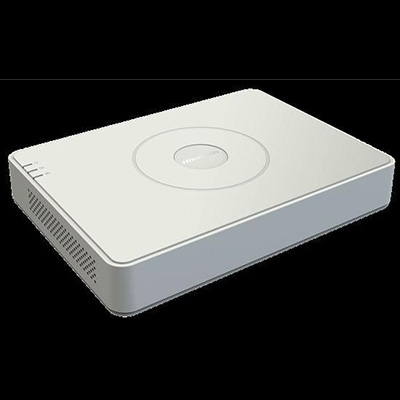

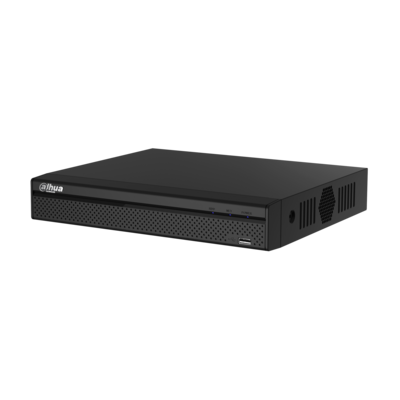
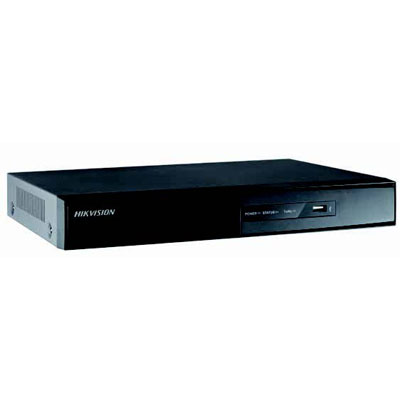

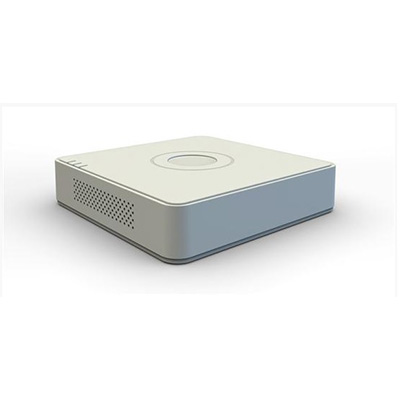
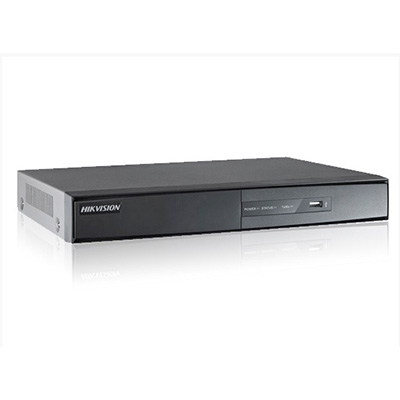
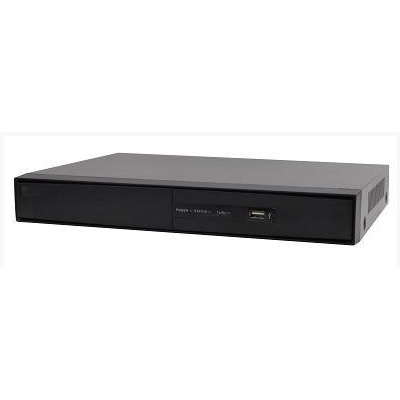
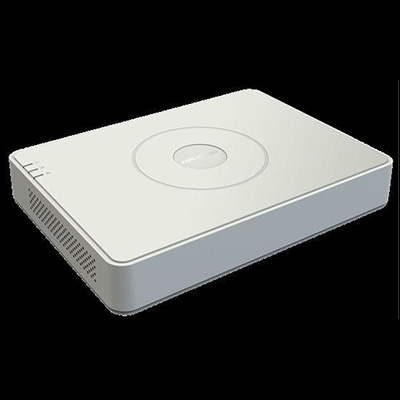

Round table discussion

There is no shortage of threats facing security professionals, including some that are new and emerging. Understanding various new threats allows individuals and organisations to take proactive steps to protect themselves, but the first step is to identify what those threats are. Early detection of threats can minimise the impact of a successful attack, whatever the vulnerability at issue. We asked this week’s Expert Panel Roundtable: What new and emerging threats will physical security professionals need to be prepared for in the future?

Technology can be a powerful tool, but it can also be misused. Ethical principles help ensure that technology is used in a way that minimises risks and avoids causing harm to people or society. Issues could include factors such as data privacy and algorithmic bias of certain technologies. As the security industry embraces advanced and evolving technologies, we asked this week’s Expert Panel Roundtable: What are the biggest ethical considerations of using emerging technologies in physical security?

Technological leaps in the last several decades have revolutionised biometrics. The technologies are constantly evolving, spanning facial recognition to iris scanning to fingerprints, to provide new levels of security and convenience. Biometrics are everywhere, from smartphones to border control, constantly evolving to meet the needs of our increasingly digital world. They are also more accurate and easier to use than ever. We asked this week's Expert Panel Roundtable: What’s new with biometrics?
White papers

Simple Security Solutions for SMBs
Download
Security investments retailers should consider for their 2021 budget
Download
Understanding video management systems
Download
H.265 High Efficiency Coding: Video compression for security applications
Download
Innovative edge storage solutions for the video surveillance industry
Download
Enhanced Ethernet Technology (ePoE)
DownloadVideos


Digital Video Recorders: Manufacturers & Suppliers
- Dahua Technology Digital Video Recorders
- Hikvision Digital Video Recorders
- Vicon Digital Video Recorders
- Honeywell Security Digital Video Recorders
- Hanwha Vision Digital Video Recorders
- Bosch Digital Video Recorders
- eneo Digital Video Recorders
- LILIN Digital Video Recorders
- MobileView Digital Video Recorders
- Uniview (UNV) Digital Video Recorders
- Dedicated Micros Digital Video Recorders
- DALI Digital Video Recorders
- Genie CCTV Limited Digital Video Recorders
- LTV Europe Digital Video Recorders
- 360 Vision Digital Video Recorders
- Messoa Digital Video Recorders
- artec Digital Video Recorders
- Everfocus Digital Video Recorders
- Visionhitech Digital Video Recorders
- Vanderbilt Digital Video Recorders

Technology's role in securing banks and financial institutions
Download
Security technologies promote real-time awareness in K-12 schools
Download
Integrated systems enable critical and compliant security for transportation
Download
Modernising physical access control
Download
Access. Intrusion. One estate.
Download